Migration
Sketch
Migration
Migration –
A change in residence
that is intended to
be permanent.
Little Haiti, Miami, Florida
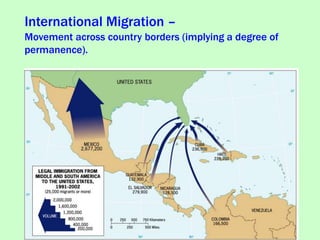
International Migration –
Movement across country borders (implying a degree of
permanence).
Internal Migration -
Movement within a single country’s borders (implying a
degree of permanence).
Why do People Migrate?
Key Question:
Why do People Migrate?
• Forced Migration – Human migration flows
in which the movers have no choice but to
relocate.
• Voluntary Migration – Human migration
flows in which the movers respond to
perceived opportunity, not force.
Key Issue 1, Ch 3 Migration
Pg 81
Types of Push and Pull Factors
• Lack of jobs
• Poverty
• Lack of basic needs
• Environment (disasters)
• Overcrowding
• Oppression
• Restrictive norms
• War
• Economic issues
Push Pull
• Economic opportunity
• Higher standard of
living
• Peace
• Cultural diversity
• Religious or political
tolerance
Migration
Push and Pull Factors
Directions: Walk around the room and read each picture about
migration. Then tell which category of migration it fits into your
ESPN chart. Also label the type of image it is. See example:
Image 1
Year: 1900
Place: Italy
A family
leaves for
America, the
“Land of
Opportunity.”
Directions: Walk around the room and read each picture about
migration. Then tell which category of migration it fits into your
ESPN chart. Also label the type of image it is. See example:
#1, Italian family, Pull,
economic opportunity,
Image 2 Hurricane Katrina, 2005
Image 3
When: 1937
Place: USA, Oklahoma
Comment: Lack of water drove many “Okies” out to
new places with the promise of jobs.
Image 4 When: 1980
Place: Cuba
Mariel Boat Lift
Castro suddenly permitted
people to leave Cuba. He
opened the jails and thousands
left for Miami, including
Scarface.
Image 5
When: 1995
Place: Turkey
Comment: Guest
Workers arrive in
Germany for
work.
Image 6
When: 1880’s
Place: Nebraska
Comment: We left big city life to build a new life in the
Great Plains of America.
Image 7
When: Present Day
Where: Brasîlia, Capital of Brazil
Comments: Many migrants live in poor quality housing on
the city’s edge.
Image 8
We have to run from others who want to kill us. We are
refugees.
Our country is overrun by drugs and gangs. It is not
safe and there are no good jobs.
Image 9
When: Present Day
Place: Cuidad Juarez
Migrants will often risk their lives in hopes of economic
opportunities that will enable them to send money home
(remittances) to their family members who remain behind.
Economic Conditions –
Image 10
In Montserrat, a 1995 volcano made the southern half of the
island, including the capital city of Plymouth, uninhabitable.
People who remained migrated to the north or to the U.S.
Environmental Conditions
Image 11
East Asia
Image 12
In late 1800s and
early 1900s,
Chinese migrated
throughout
Southeast Asia to
work in trade,
commerce, and
finance.
Image 13
About 700,000 Jews
migrated to then-
Palestine between
1900 and 1948.
After 1948, when the
land was divided into
two states (Israel and
Palestine), 600,000
Palestinian Arabs fled
or were pushed out of
newly-designated
Israeli territories.
Image 14
Guest Workers
• Guest workers – migrants whom a country
allows in to fill a labor need, assuming the
workers will go “home” once the labor need
subsides.
- have short term work visas
- send remittances to home country
Refuge
A person who flees across an international boundary because of a well-
founded fear of being persecuted for reasons of race, religion,
nationality, membership of a particular social group, or political opinion.
Push Pull
A stable government in the migrant’s chosen destination.
War or famine in the migrant’s country of origin.
Political persecution in a migrant’s homeland
Family in migrant’s chosen destination
Plentiful jobs in the migrant’s chosen destination
Lack of employment in a migrant’s city of residence.
Religious persecution in a migrant’s chosen homeland.
Natural disaster that threatens a migrant’s home.
Your example:
• Push-Pull Factors-push factors induce people to leave. Pull
factors encourage people to move to an area.
Exit Ticket
Why do People Migrate?
(at least 3 reasons)
Where do People Migrate?
Key Question:
Causes/Effects of
Migration in Africa
Take out
African Migrations Activity Sheet
The Last Time…
•Last night I saw the sun set for the
last time, and its light shine upon
the tree tops, and the land, and the
water, that I am never to look upon
again.
–Manawa, Creek Indian, prior to his
forced march west in 1836.
Forced Migration
• What did forced migration look like in
Africa?
– Video segment – true story, but since no video
existed, historians rely on oral stories from
enslaved peoples.
Forced Migration – the Atlantic Slave Trade
Life in Barbados
• Read from Bickles book
• Slide Show Barbados
Causes/Effects of
Forced Migration in Africa
Tribal wars, selling
slaves for guns
Tribal warfare, some
strong tribes
Triangle slave trade/
Sugar/Rum/Slaves
Less workers in Africa,
enslaved Africans in
Americas, prostitutes
Capitalism, free
markets
Slaves as workers,
segregation in
Americas
What is the title of this graph?
Bantu Migration
What were two causes that led the Bantu to migrate
all the way to the Kalahari Desert?
Lack of food supply Move from W Africa to
S Africa
Increased population
pressures
Spread over 120
languages traced to
Bantu
Spread of culture
Causes/Effects of
Migration in Africa
19th and 20th Century
Colonization of Africa by Europe
Causes/Effects of
Migration in Africa
Colonial scramble for
new sources of raw
materials
Discovery of quinine
to stop malaria
Scramble for new
markets
Enslaving of native
African populations
Capitalism, free
markets
Some development; by
1914, all of Africa
colonized by Europeans
Turn this sheet over…
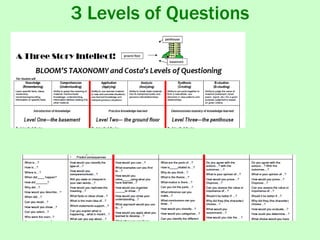
3 Levels of Questions
•Exit Ticket:
•With a partner, create 3 questions
about migration.
–Use the Three Levels of Questions
–Create one question for each level based
on your understanding of migration
• Impact of Migration
• Forced Migration
• European migration on African history
Push Pull
A stable government in the migrant’s chosen destination.
War or famine in the migrant’s country of origin.
Political persecution in a migrant’s homeland
Family in migrant’s chosen destination
Plentiful jobs in the migrant’s chosen destination
Lack of employment in a migrant’s city of residence.
Religious persecution in a migrant’s chosen homeland.
Natural disaster that threatens a migrant’s home.
Your example:
• Push-Pull Factors-push factors induce people to leave. Pull
factors encourage people to move to an area.
–Write three (3) essays about migration.
–Use your notes and all worksheets we
used this week:
–Question 1: 100 words minimum
• What push/pull factors directly impact
migration patterns? Cite examples to
support your thinking.
1. What push/pull factors directly
impact migration patterns?
–¶1-There are many factors that affect
migration patterns. Push Factors are
situations that “push” a person to migrate. For
example,
(now talk about a few)
–¶2-In addition to push factors there are pull
factors. These factors “pull” a person to
migrate. For example, (now talk about a few)
2. How do ESPN factors affect
migration and immigration patterns?
–There are many ESPN factors that affect
migration patterns. Many people migrate for
economic reasons. For example, coming to
America because of job opportunities is an
economic reason. Another reason is social.
(now talk about Social, then Political, and
finally eNvironmental. Use your ESPN chart
from the pictures we did in class.)
3. How did Forced Migration affect
Africa AND the Americas?
–Forced migration was a terrible tragedy that
seriously affected the entire African continent.
It also affected the Americas and the
Caribbean. Let’s talk about Africa first. Forced
migration was caused by (now use your
cause/effects chart on forced migration, the
movie Amistad, and your knowledge to finish
the answer.)
–Forced migration also affected the Americas.
Tear essays out of spiral
•Staple in this order:
–Staple Essay on top (#1)
–Put ESPN chart #2
–Put Cause/Effects chart #1
–I Can sheet on the bottom
–Push/Pull Chart
Two minute cleanup to “Help!”
Tables like this
Bins like this
Where do People Migrate?
Key Question:
Global Migration Flows
• Between 1500 and 1950, major global
migration flows were influenced largely by:
– Exploration
– Colonization
– The Atlantic Slave Trade
• Impacts the place the migrants leave and
where the migrants go.
Major Global Migration Flows
From 1500 to 1950
Regional Migration Flows
• Migrants go to neighboring countries:
- for short term economic opportunities.
- to reconnect with cultural groups
across borders.
- to flee political conflict or war.
Economic
Opportunities
Islands of
Development –
Places within a
region or country
where foreign
investment, jobs,
and infrastructure
are concentrated.
Economic
Opportunities
In late 1800s and
early 1900s,
Chinese migrated
throughout
Southeast Asia to
work in trade,
commerce, and
finance.
Reconnecting
Cultural Groups
About 700,000 Jews
migrated to then-
Palestine between
1900 and 1948.
After 1948, when the
land was divided into
two states (Israel and
Palestine), 600,000
Palestinian Arabs fled
or were pushed out of
newly-designated
Israeli territories.
Jerusalem, Israel: Jewish settlements on the West Bank.
National Migration Flows
• Also known as internal migration
- eg. US, Russia, Mexico
Guest Workers
• Guest workers – migrants whom a country
allows in to fill a labor need, assuming the
workers will go “home” once the labor need
subsides.
- have short term work visas
- send remittances to home country
Refugees
A person who flees across an international boundary because of a well-
founded fear of being persecuted for reasons of race, religion,
nationality, membership of a particular social group, or political opinion.
• Subsaharan Africa
• North Africa and Southwest Asia
• South Asia
• Southeast Asia
• Europe
Regions of Dislocation –
What regions generate the most refugees?
The Sudan –
Fighting in the Darfur region of the Sudan has generated thousands of
refugees. In eastern Chad, the Iridimi refugee camp is home to almost 15,000
refugees from the Darfur province, including the women in this photo.
Imagine you are from an extremely poor country,
and you earn less than $1 a day. Choose a
country to be from, and look for it on a map.
Assume you are a voluntary migrant. You look at
your access to transportation and the
opportunities you have to go elsewhere. Be
realistic, and describe how you determine where
you will go, how you get there, and what you do
once you get there.
How do Governments Affect
Migration?
Key Question:
Governments Place
Legal Restrictions on Migration
• Immigration laws – laws that restrict or
allow migration of certain groups into a
country.
– Quotas limit the number of migrants from each
region into a country.
– A country uses selective immigration to bar
people with certain backgrounds from entering.
Waves of Immigration
Changing immigration laws, and changing push and pull
factors create waves of immigration.
Post-September 11
One goal of international organizations involved
in aiding refugees is repatriation – return of the
refugees to their home countries once the threat
against them has passed. Take the example of
Sudanese refugees. Think about how their land
and their lives have changed since they became
refugees. You are assigned the daunting task of
repatriating Sudanese from Uganda once a
peace solution is reached. What steps would you
have to take to re-discover a home for these
refugees?
This was the original TG for push/pull
Think about a type of migration
List the push and pull factors.
Then, write a letter in the first person (if you
were not involved, pretend you were your
grandmother or whomever) to another family
member at “home” describing how you came to
migrate to your destination.

World Geography - Unit 4 migration

  • 1.
  • 2.
  • 3.
    Migration Migration – A changein residence that is intended to be permanent. Little Haiti, Miami, Florida
  • 4.
    International Migration – Movementacross country borders (implying a degree of permanence).
  • 5.
    Internal Migration - Movementwithin a single country’s borders (implying a degree of permanence).
  • 6.
    Why do PeopleMigrate? Key Question:
  • 7.
    Why do PeopleMigrate? • Forced Migration – Human migration flows in which the movers have no choice but to relocate. • Voluntary Migration – Human migration flows in which the movers respond to perceived opportunity, not force.
  • 8.
    Key Issue 1,Ch 3 Migration Pg 81
  • 9.
    Types of Pushand Pull Factors • Lack of jobs • Poverty • Lack of basic needs • Environment (disasters) • Overcrowding • Oppression • Restrictive norms • War • Economic issues Push Pull • Economic opportunity • Higher standard of living • Peace • Cultural diversity • Religious or political tolerance
  • 10.
  • 11.
    Directions: Walk aroundthe room and read each picture about migration. Then tell which category of migration it fits into your ESPN chart. Also label the type of image it is. See example:
  • 12.
    Image 1 Year: 1900 Place:Italy A family leaves for America, the “Land of Opportunity.”
  • 13.
    Directions: Walk aroundthe room and read each picture about migration. Then tell which category of migration it fits into your ESPN chart. Also label the type of image it is. See example: #1, Italian family, Pull, economic opportunity,
  • 14.
    Image 2 HurricaneKatrina, 2005
  • 15.
    Image 3 When: 1937 Place:USA, Oklahoma Comment: Lack of water drove many “Okies” out to new places with the promise of jobs.
  • 16.
    Image 4 When:1980 Place: Cuba Mariel Boat Lift Castro suddenly permitted people to leave Cuba. He opened the jails and thousands left for Miami, including Scarface.
  • 17.
    Image 5 When: 1995 Place:Turkey Comment: Guest Workers arrive in Germany for work.
  • 18.
    Image 6 When: 1880’s Place:Nebraska Comment: We left big city life to build a new life in the Great Plains of America.
  • 19.
    Image 7 When: PresentDay Where: Brasîlia, Capital of Brazil Comments: Many migrants live in poor quality housing on the city’s edge.
  • 20.
    Image 8 We haveto run from others who want to kill us. We are refugees.
  • 21.
    Our country isoverrun by drugs and gangs. It is not safe and there are no good jobs. Image 9 When: Present Day Place: Cuidad Juarez
  • 22.
    Migrants will oftenrisk their lives in hopes of economic opportunities that will enable them to send money home (remittances) to their family members who remain behind. Economic Conditions – Image 10
  • 23.
    In Montserrat, a1995 volcano made the southern half of the island, including the capital city of Plymouth, uninhabitable. People who remained migrated to the north or to the U.S. Environmental Conditions Image 11
  • 24.
  • 25.
    In late 1800sand early 1900s, Chinese migrated throughout Southeast Asia to work in trade, commerce, and finance. Image 13
  • 26.
    About 700,000 Jews migratedto then- Palestine between 1900 and 1948. After 1948, when the land was divided into two states (Israel and Palestine), 600,000 Palestinian Arabs fled or were pushed out of newly-designated Israeli territories. Image 14
  • 27.
    Guest Workers • Guestworkers – migrants whom a country allows in to fill a labor need, assuming the workers will go “home” once the labor need subsides. - have short term work visas - send remittances to home country
  • 28.
    Refuge A person whoflees across an international boundary because of a well- founded fear of being persecuted for reasons of race, religion, nationality, membership of a particular social group, or political opinion.
  • 29.
    Push Pull A stablegovernment in the migrant’s chosen destination. War or famine in the migrant’s country of origin. Political persecution in a migrant’s homeland Family in migrant’s chosen destination Plentiful jobs in the migrant’s chosen destination Lack of employment in a migrant’s city of residence. Religious persecution in a migrant’s chosen homeland. Natural disaster that threatens a migrant’s home. Your example: • Push-Pull Factors-push factors induce people to leave. Pull factors encourage people to move to an area.
  • 30.
    Exit Ticket Why doPeople Migrate? (at least 3 reasons)
  • 31.
    Where do PeopleMigrate? Key Question:
  • 32.
  • 33.
  • 34.
    The Last Time… •Lastnight I saw the sun set for the last time, and its light shine upon the tree tops, and the land, and the water, that I am never to look upon again. –Manawa, Creek Indian, prior to his forced march west in 1836.
  • 35.
    Forced Migration • Whatdid forced migration look like in Africa? – Video segment – true story, but since no video existed, historians rely on oral stories from enslaved peoples.
  • 36.
    Forced Migration –the Atlantic Slave Trade
  • 40.
    Life in Barbados •Read from Bickles book • Slide Show Barbados
  • 42.
    Causes/Effects of Forced Migrationin Africa Tribal wars, selling slaves for guns Tribal warfare, some strong tribes Triangle slave trade/ Sugar/Rum/Slaves Less workers in Africa, enslaved Africans in Americas, prostitutes Capitalism, free markets Slaves as workers, segregation in Americas
  • 43.
    What is thetitle of this graph?
  • 44.
    Bantu Migration What weretwo causes that led the Bantu to migrate all the way to the Kalahari Desert?
  • 45.
    Lack of foodsupply Move from W Africa to S Africa Increased population pressures Spread over 120 languages traced to Bantu Spread of culture Causes/Effects of Migration in Africa
  • 46.
    19th and 20thCentury Colonization of Africa by Europe
  • 47.
    Causes/Effects of Migration inAfrica Colonial scramble for new sources of raw materials Discovery of quinine to stop malaria Scramble for new markets Enslaving of native African populations Capitalism, free markets Some development; by 1914, all of Africa colonized by Europeans
  • 48.
  • 49.
    3 Levels ofQuestions
  • 50.
    •Exit Ticket: •With apartner, create 3 questions about migration. –Use the Three Levels of Questions –Create one question for each level based on your understanding of migration • Impact of Migration • Forced Migration • European migration on African history
  • 51.
    Push Pull A stablegovernment in the migrant’s chosen destination. War or famine in the migrant’s country of origin. Political persecution in a migrant’s homeland Family in migrant’s chosen destination Plentiful jobs in the migrant’s chosen destination Lack of employment in a migrant’s city of residence. Religious persecution in a migrant’s chosen homeland. Natural disaster that threatens a migrant’s home. Your example: • Push-Pull Factors-push factors induce people to leave. Pull factors encourage people to move to an area.
  • 52.
    –Write three (3)essays about migration. –Use your notes and all worksheets we used this week:
  • 53.
    –Question 1: 100words minimum • What push/pull factors directly impact migration patterns? Cite examples to support your thinking.
  • 54.
    1. What push/pullfactors directly impact migration patterns? –¶1-There are many factors that affect migration patterns. Push Factors are situations that “push” a person to migrate. For example, (now talk about a few) –¶2-In addition to push factors there are pull factors. These factors “pull” a person to migrate. For example, (now talk about a few)
  • 55.
    2. How doESPN factors affect migration and immigration patterns? –There are many ESPN factors that affect migration patterns. Many people migrate for economic reasons. For example, coming to America because of job opportunities is an economic reason. Another reason is social. (now talk about Social, then Political, and finally eNvironmental. Use your ESPN chart from the pictures we did in class.)
  • 56.
    3. How didForced Migration affect Africa AND the Americas? –Forced migration was a terrible tragedy that seriously affected the entire African continent. It also affected the Americas and the Caribbean. Let’s talk about Africa first. Forced migration was caused by (now use your cause/effects chart on forced migration, the movie Amistad, and your knowledge to finish the answer.) –Forced migration also affected the Americas.
  • 57.
    Tear essays outof spiral •Staple in this order: –Staple Essay on top (#1) –Put ESPN chart #2 –Put Cause/Effects chart #1 –I Can sheet on the bottom –Push/Pull Chart
  • 58.
    Two minute cleanupto “Help!” Tables like this Bins like this
  • 59.
    Where do PeopleMigrate? Key Question:
  • 60.
    Global Migration Flows •Between 1500 and 1950, major global migration flows were influenced largely by: – Exploration – Colonization – The Atlantic Slave Trade • Impacts the place the migrants leave and where the migrants go.
  • 61.
    Major Global MigrationFlows From 1500 to 1950
  • 62.
    Regional Migration Flows •Migrants go to neighboring countries: - for short term economic opportunities. - to reconnect with cultural groups across borders. - to flee political conflict or war.
  • 63.
    Economic Opportunities Islands of Development – Placeswithin a region or country where foreign investment, jobs, and infrastructure are concentrated.
  • 64.
    Economic Opportunities In late 1800sand early 1900s, Chinese migrated throughout Southeast Asia to work in trade, commerce, and finance.
  • 65.
    Reconnecting Cultural Groups About 700,000Jews migrated to then- Palestine between 1900 and 1948. After 1948, when the land was divided into two states (Israel and Palestine), 600,000 Palestinian Arabs fled or were pushed out of newly-designated Israeli territories.
  • 66.
    Jerusalem, Israel: Jewishsettlements on the West Bank.
  • 67.
    National Migration Flows •Also known as internal migration - eg. US, Russia, Mexico
  • 68.
    Guest Workers • Guestworkers – migrants whom a country allows in to fill a labor need, assuming the workers will go “home” once the labor need subsides. - have short term work visas - send remittances to home country
  • 69.
    Refugees A person whoflees across an international boundary because of a well- founded fear of being persecuted for reasons of race, religion, nationality, membership of a particular social group, or political opinion.
  • 70.
    • Subsaharan Africa •North Africa and Southwest Asia • South Asia • Southeast Asia • Europe Regions of Dislocation – What regions generate the most refugees?
  • 71.
    The Sudan – Fightingin the Darfur region of the Sudan has generated thousands of refugees. In eastern Chad, the Iridimi refugee camp is home to almost 15,000 refugees from the Darfur province, including the women in this photo.
  • 72.
    Imagine you arefrom an extremely poor country, and you earn less than $1 a day. Choose a country to be from, and look for it on a map. Assume you are a voluntary migrant. You look at your access to transportation and the opportunities you have to go elsewhere. Be realistic, and describe how you determine where you will go, how you get there, and what you do once you get there.
  • 73.
    How do GovernmentsAffect Migration? Key Question:
  • 74.
    Governments Place Legal Restrictionson Migration • Immigration laws – laws that restrict or allow migration of certain groups into a country. – Quotas limit the number of migrants from each region into a country. – A country uses selective immigration to bar people with certain backgrounds from entering.
  • 75.
    Waves of Immigration Changingimmigration laws, and changing push and pull factors create waves of immigration.
  • 76.
  • 77.
    One goal ofinternational organizations involved in aiding refugees is repatriation – return of the refugees to their home countries once the threat against them has passed. Take the example of Sudanese refugees. Think about how their land and their lives have changed since they became refugees. You are assigned the daunting task of repatriating Sudanese from Uganda once a peace solution is reached. What steps would you have to take to re-discover a home for these refugees?
  • 78.
    This was theoriginal TG for push/pull Think about a type of migration List the push and pull factors. Then, write a letter in the first person (if you were not involved, pretend you were your grandmother or whomever) to another family member at “home” describing how you came to migrate to your destination.

Editor's Notes