Migration
MigrationThe movement from one place to anotherPeople have always movedDiversity in US a result of movement of peoples over time. Migration strongly influenced by social, economic, military and political developments.
What is Migration?Movement of people within a country’s geographical boundaries and across national boundaries. Refugees- migrants, but unable or unwilling to return because, or fear of, persecutionDisplaced Person- forced to leave home because of violence, conflict, persecution but has not crossed international border
MigrationEven though Transcontinental migration has increased…Most migration occurs in relatively limited geographical area.Rwandans to Tanzania, Mexicans to US.Africa highest # of migrants (33%), North America (21%), Europe (17%), Asia (15%), Latin America (11%)
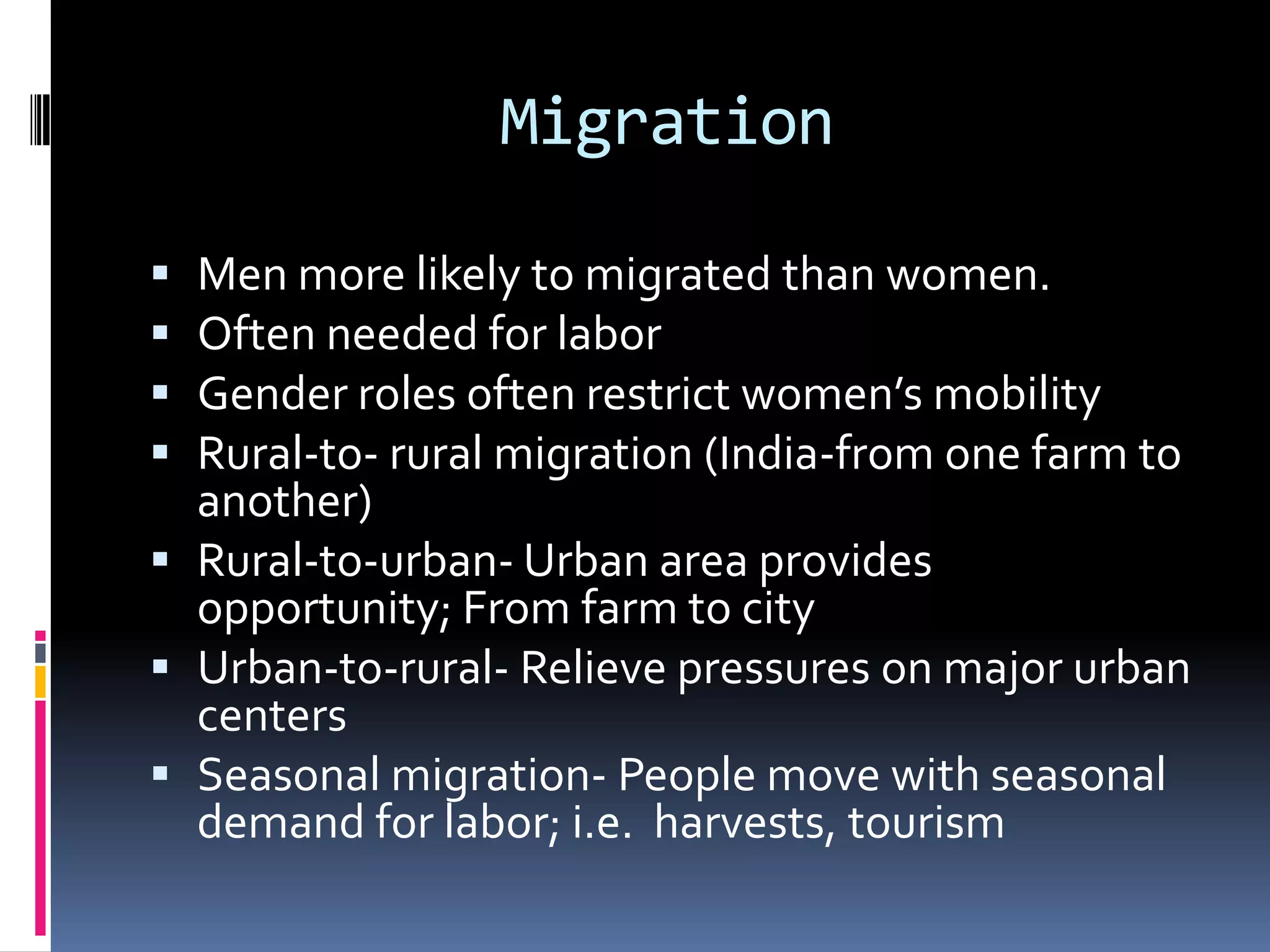
MigrationMen more likely to migrated than women.Often needed for laborGender roles often restrict women’s mobilityRural-to- rural migration (India-from one farm to another)Rural-to-urban- Urban area provides opportunity; From farm to cityUrban-to-rural- Relieve pressures on major urban centersSeasonal migration- People move with seasonal demand for labor; i.e.  harvests, tourism
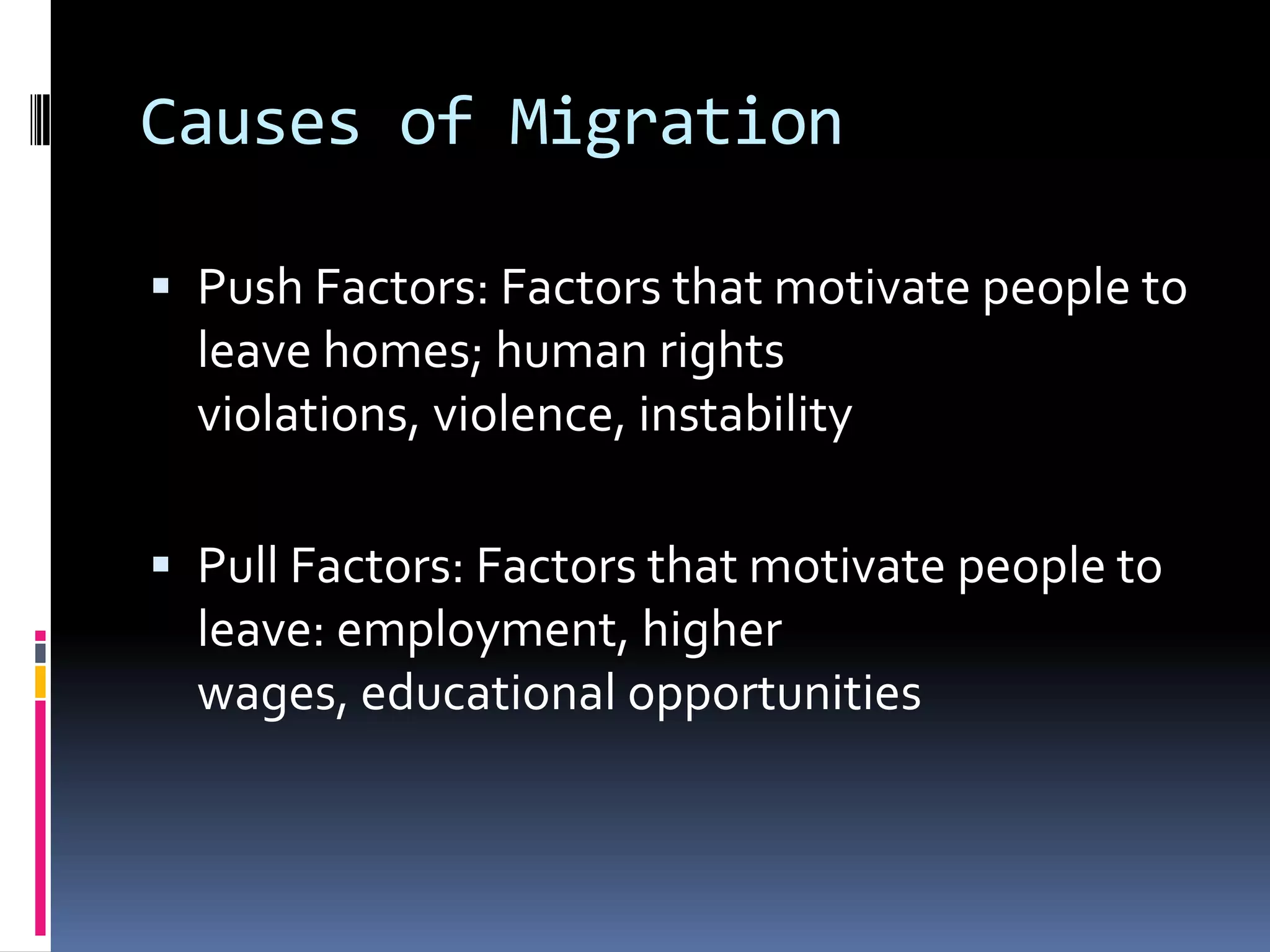
Causes of MigrationPush Factors: Factors that motivate people to leave homes; human rights violations, violence, instabilityPull Factors: Factors that motivate people to leave: employment, higher wages, educational opportunities
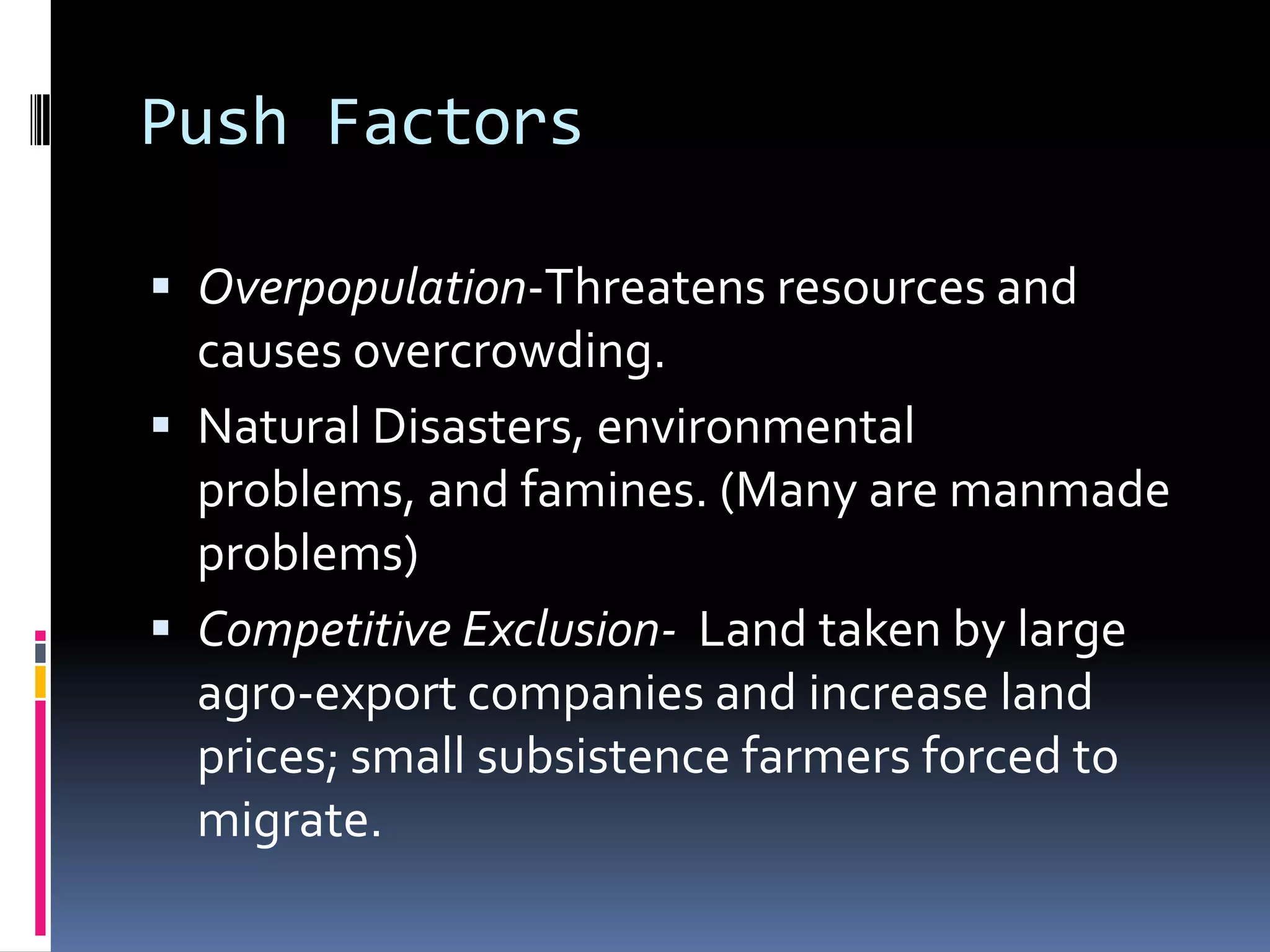
Push FactorsOverpopulation-Threatens resources and causes overcrowding.Natural Disasters, environmental problems, and famines. (Many are manmade problems)Competitive Exclusion-  Land taken by large agro-export companies and increase land prices; small subsistence farmers forced to migrate.
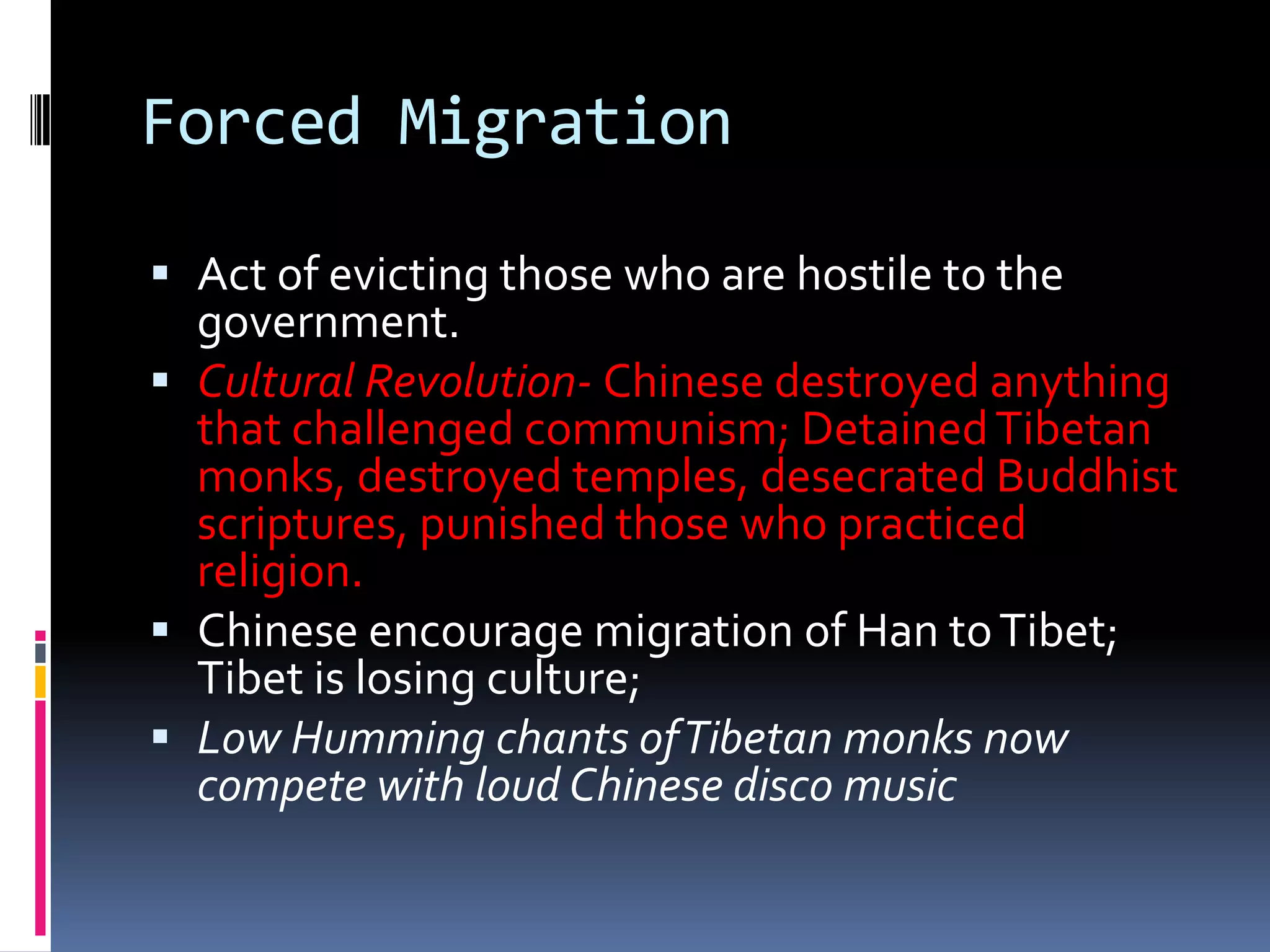
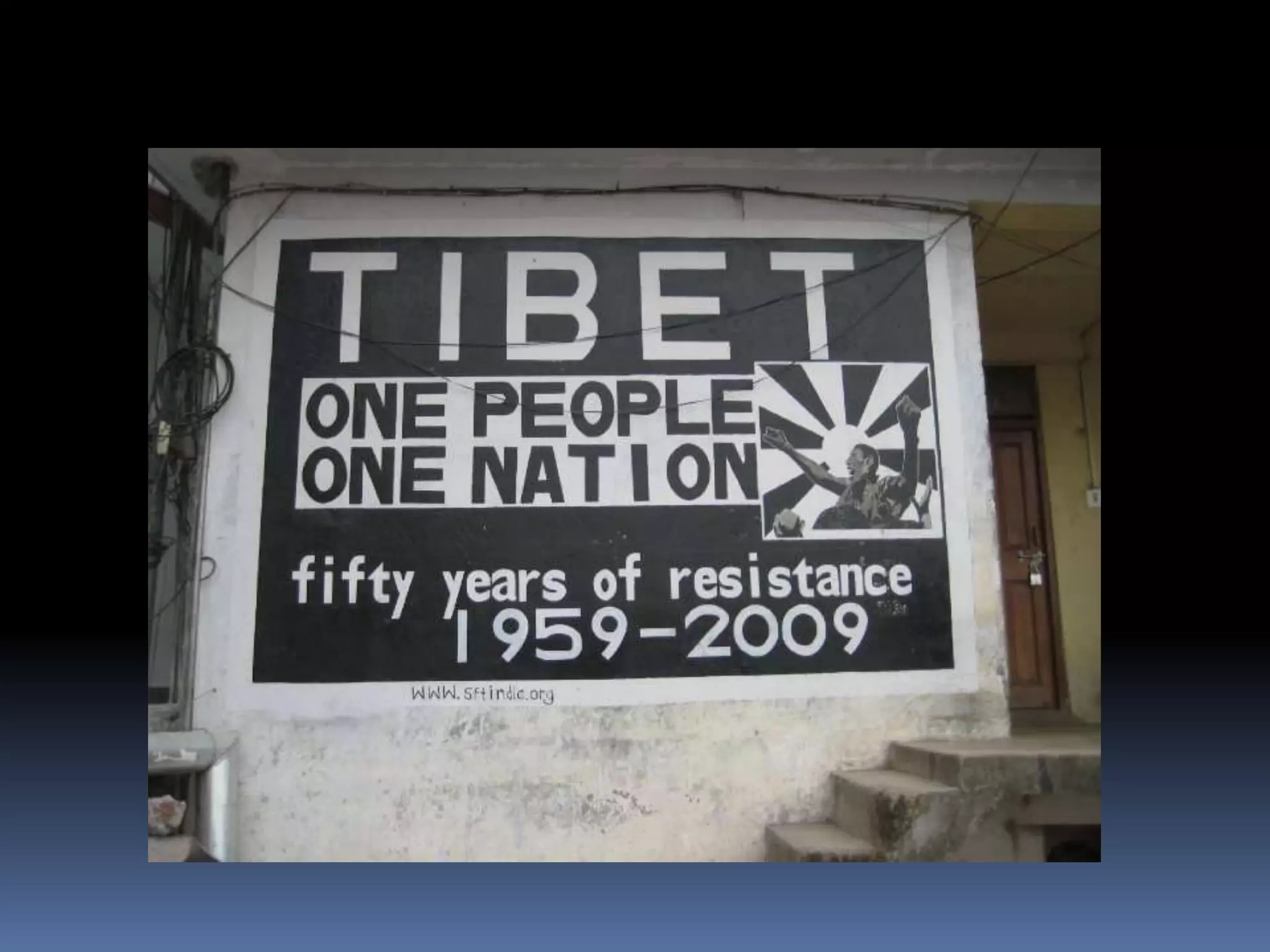
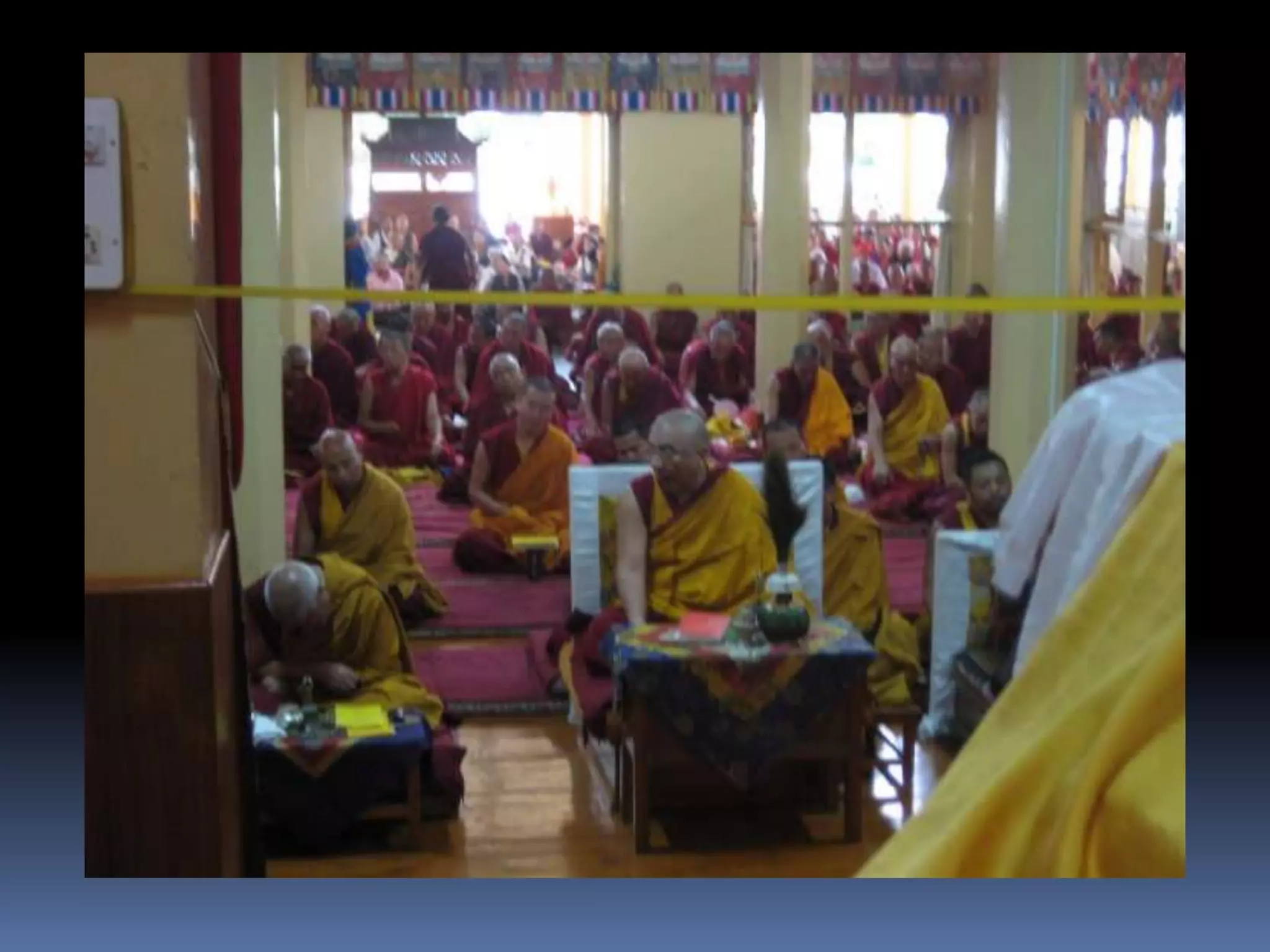
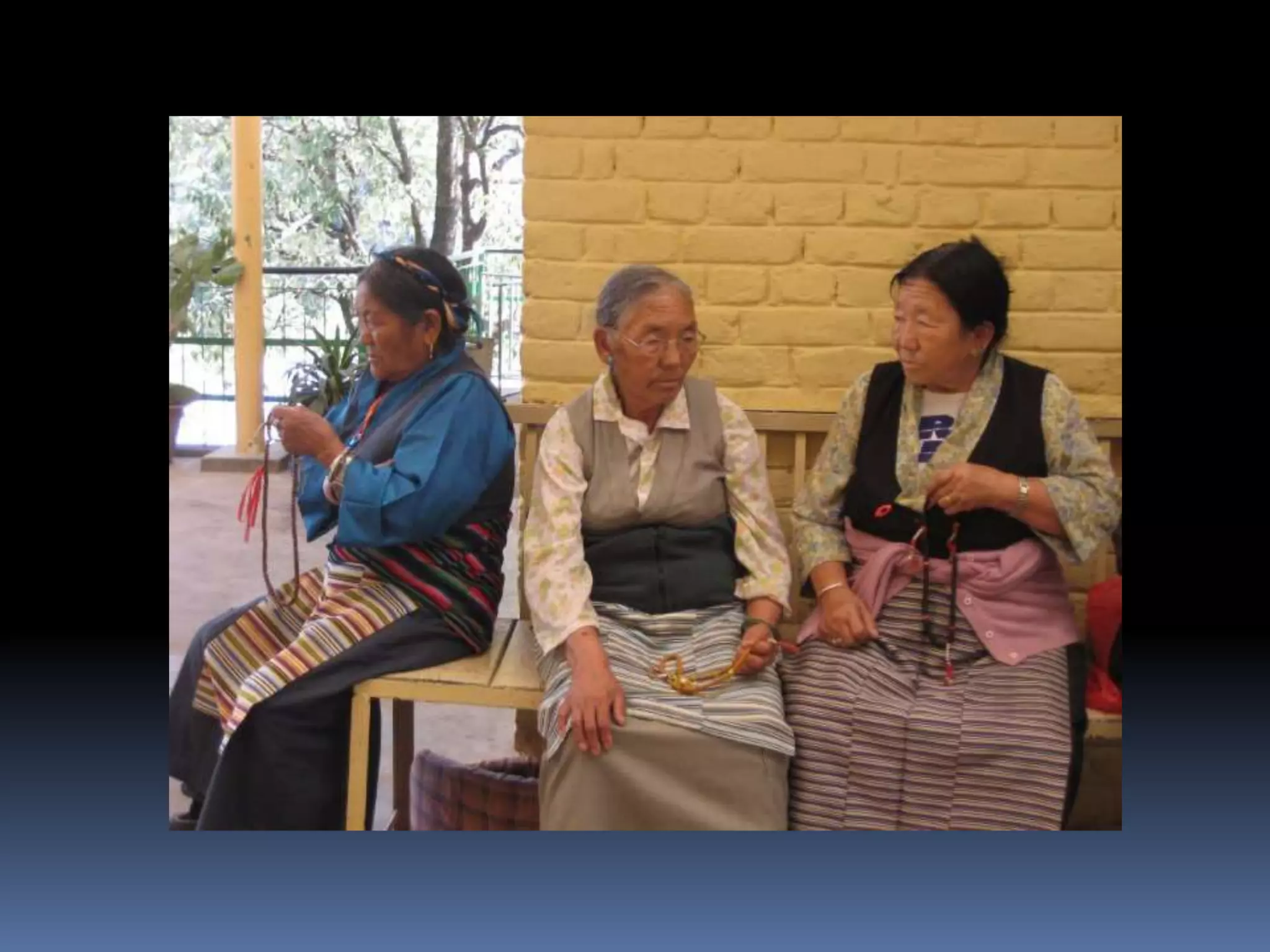
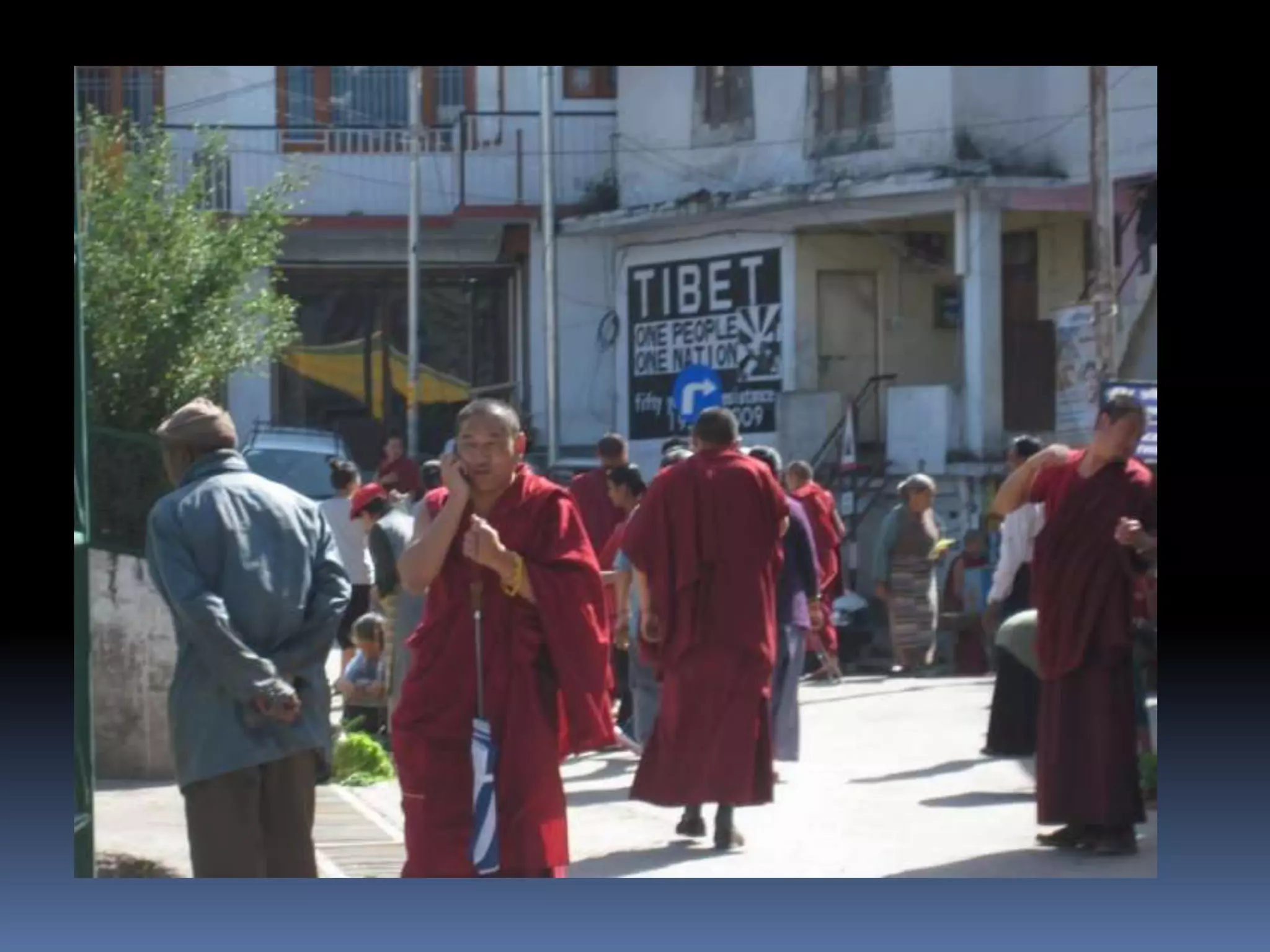
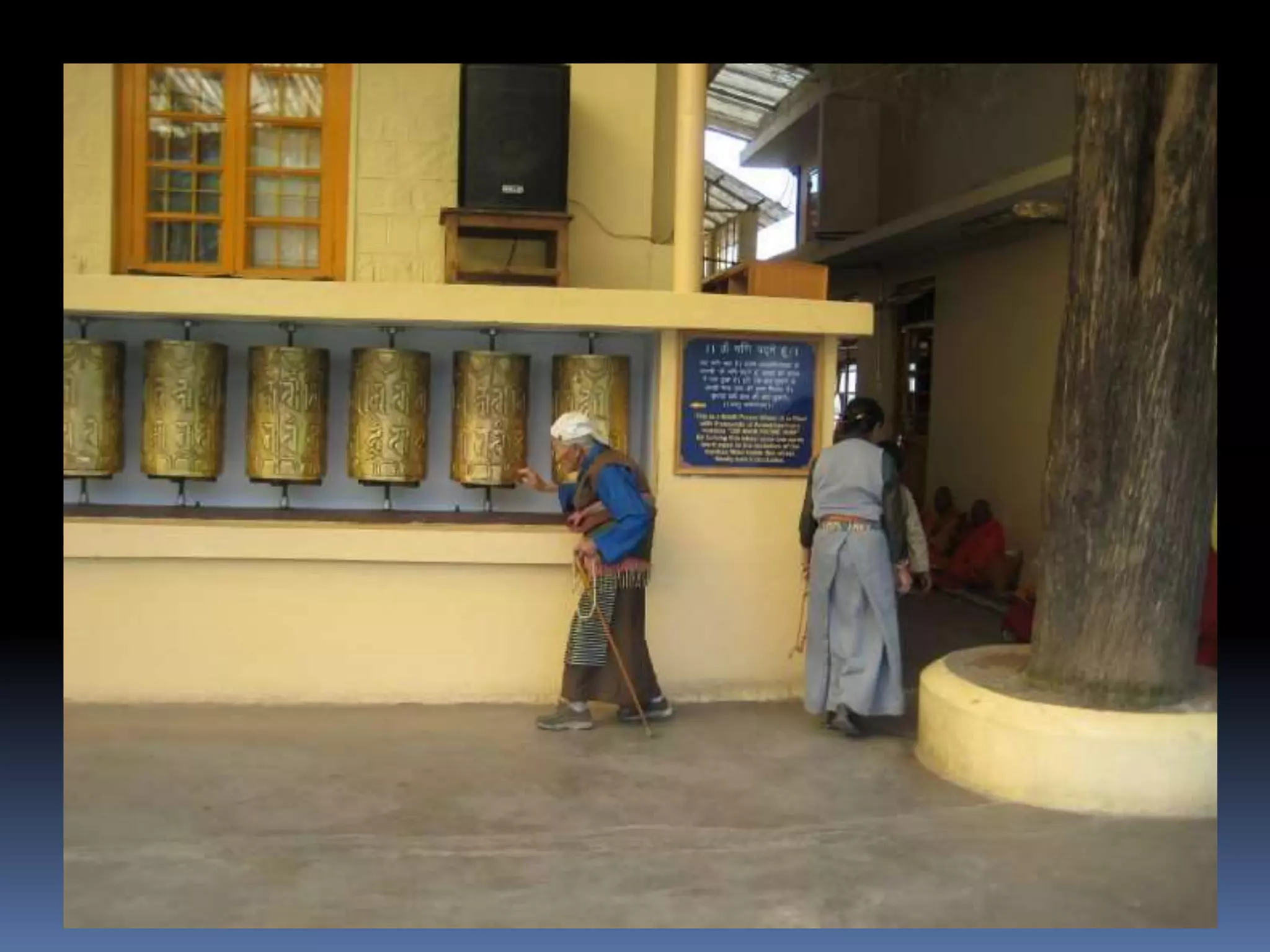
Forced MigrationAct of evicting those who are hostile to the government.Cultural Revolution- Chinese destroyed anything that challenged communism; Detained Tibetan monks, destroyed temples, desecrated Buddhist scriptures, punished those who practiced religion.Chinese encourage migration of Han to Tibet; Tibet is losing culture;Low Humming chants of Tibetan monks now compete with loud Chinese disco music
Violence and ConflictMany leave Colombia because of 4 decades of violence; most are young and highly educated.Ethnic conflict & civil wars in Africa=4 million refugees500,000 Kurds in WestVietnamese to Hong Kong and US2 million Iraqi refugees in Syria & Jordan; 2 million internally displaced (2008)
PalestineBetween 1947-1948- 800,000 Palestinians became refugees; Israel says Palestinians leave was voluntary3.5 million Palestinian refugees; 1 million in refugee camps; many born & raised in campsPalestinians have moved & been expelled in Lebanon, North Africa, Kuwait & Syria.No resolve in sight.
Pull FactorsEconomic Opportunities= greater access to health care, consumer services, modern way of lifeRural-Urban migration=move away from agricultureCompanies need for inexpensive and reliable laborAlso results in human smuggling
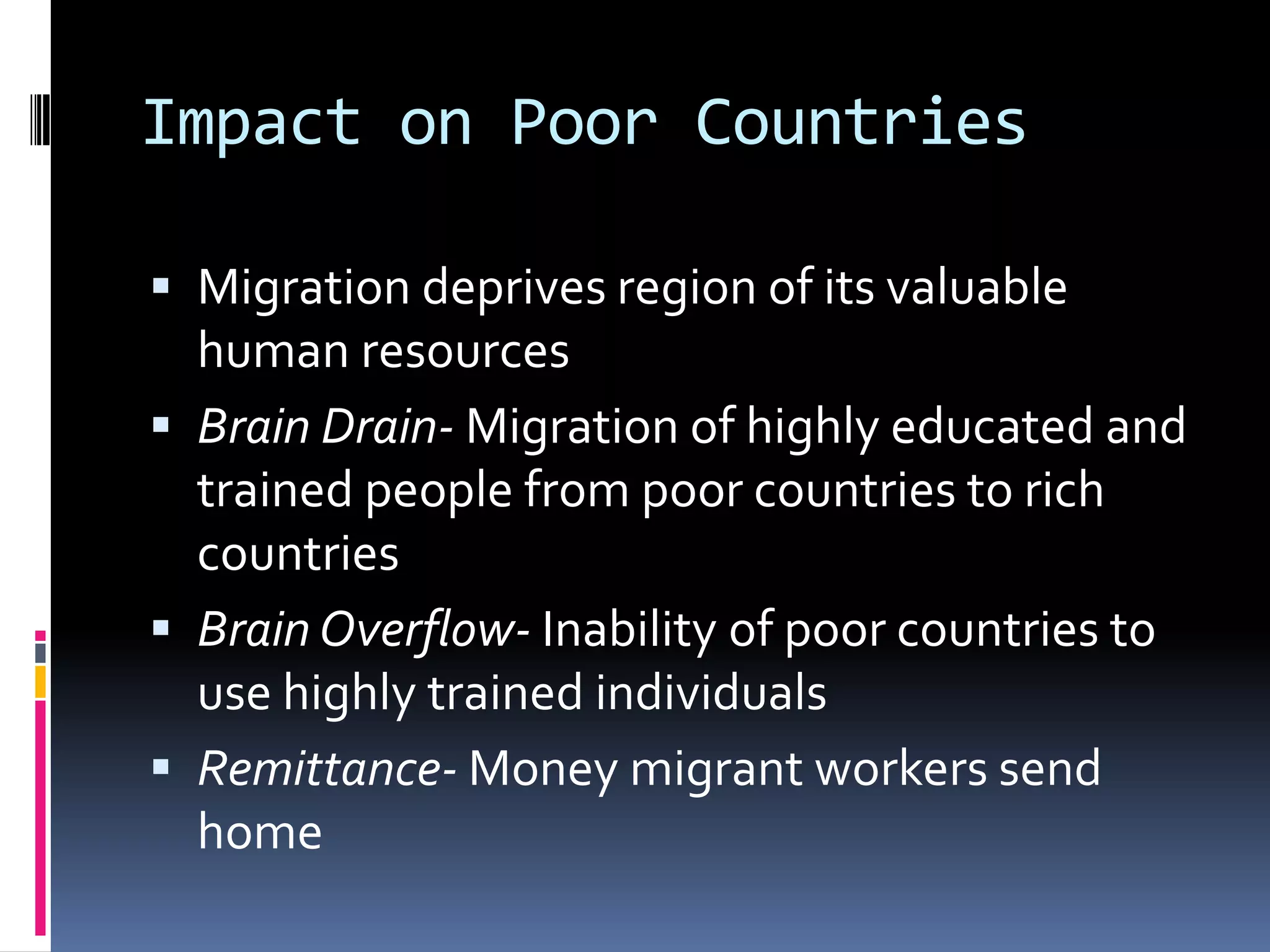
Impact on Poor CountriesMigration deprives region of its valuable human resourcesBrain Drain- Migration of highly educated and trained people from poor countries to rich countriesBrain Overflow- Inability of poor countries to use highly trained individualsRemittance- Money migrant workers send home
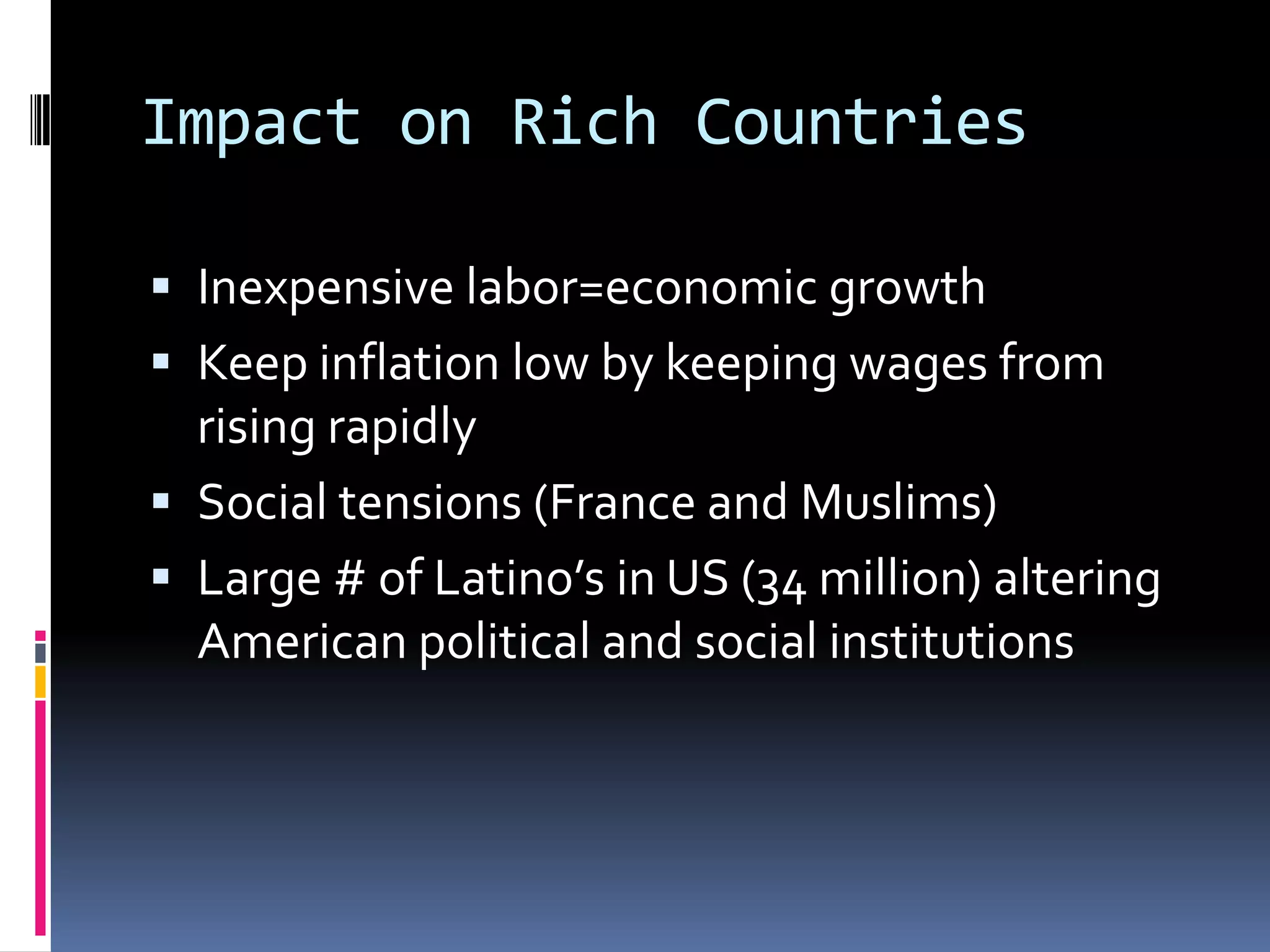
Impact on Rich CountriesInexpensive labor=economic growthKeep inflation low by keeping wages from rising rapidlySocial tensions (France and Muslims)Large # of Latino’s in US (34 million) altering American political and social institutions

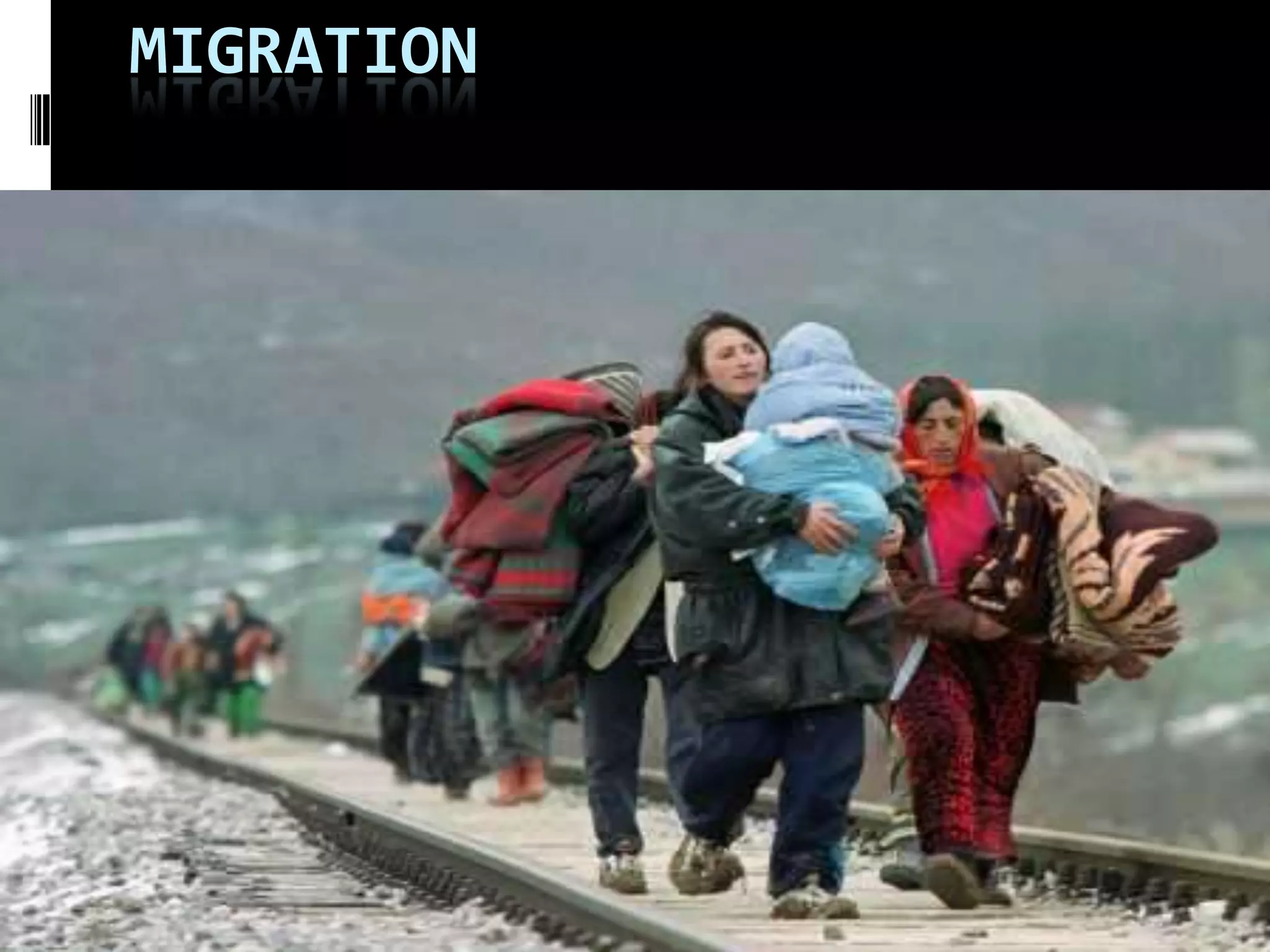
Migration

  • 1.
  • 2.
    MigrationThe movement fromone place to anotherPeople have always movedDiversity in US a result of movement of peoples over time. Migration strongly influenced by social, economic, military and political developments.
  • 3.
    What is Migration?Movementof people within a country’s geographical boundaries and across national boundaries. Refugees- migrants, but unable or unwilling to return because, or fear of, persecutionDisplaced Person- forced to leave home because of violence, conflict, persecution but has not crossed international border
  • 4.
    MigrationEven though Transcontinentalmigration has increased…Most migration occurs in relatively limited geographical area.Rwandans to Tanzania, Mexicans to US.Africa highest # of migrants (33%), North America (21%), Europe (17%), Asia (15%), Latin America (11%)
  • 5.
    MigrationMen more likelyto migrated than women.Often needed for laborGender roles often restrict women’s mobilityRural-to- rural migration (India-from one farm to another)Rural-to-urban- Urban area provides opportunity; From farm to cityUrban-to-rural- Relieve pressures on major urban centersSeasonal migration- People move with seasonal demand for labor; i.e. harvests, tourism
  • 6.
    Causes of MigrationPushFactors: Factors that motivate people to leave homes; human rights violations, violence, instabilityPull Factors: Factors that motivate people to leave: employment, higher wages, educational opportunities
  • 7.
    Push FactorsOverpopulation-Threatens resourcesand causes overcrowding.Natural Disasters, environmental problems, and famines. (Many are manmade problems)Competitive Exclusion- Land taken by large agro-export companies and increase land prices; small subsistence farmers forced to migrate.
  • 8.
    Forced MigrationAct ofevicting those who are hostile to the government.Cultural Revolution- Chinese destroyed anything that challenged communism; Detained Tibetan monks, destroyed temples, desecrated Buddhist scriptures, punished those who practiced religion.Chinese encourage migration of Han to Tibet; Tibet is losing culture;Low Humming chants of Tibetan monks now compete with loud Chinese disco music
  • 15.
    Violence and ConflictManyleave Colombia because of 4 decades of violence; most are young and highly educated.Ethnic conflict & civil wars in Africa=4 million refugees500,000 Kurds in WestVietnamese to Hong Kong and US2 million Iraqi refugees in Syria & Jordan; 2 million internally displaced (2008)
  • 16.
    PalestineBetween 1947-1948- 800,000Palestinians became refugees; Israel says Palestinians leave was voluntary3.5 million Palestinian refugees; 1 million in refugee camps; many born & raised in campsPalestinians have moved & been expelled in Lebanon, North Africa, Kuwait & Syria.No resolve in sight.
  • 17.
    Pull FactorsEconomic Opportunities=greater access to health care, consumer services, modern way of lifeRural-Urban migration=move away from agricultureCompanies need for inexpensive and reliable laborAlso results in human smuggling
  • 18.
    Impact on PoorCountriesMigration deprives region of its valuable human resourcesBrain Drain- Migration of highly educated and trained people from poor countries to rich countriesBrain Overflow- Inability of poor countries to use highly trained individualsRemittance- Money migrant workers send home
  • 19.
    Impact on RichCountriesInexpensive labor=economic growthKeep inflation low by keeping wages from rising rapidlySocial tensions (France and Muslims)Large # of Latino’s in US (34 million) altering American political and social institutions