Downloaded 216 times




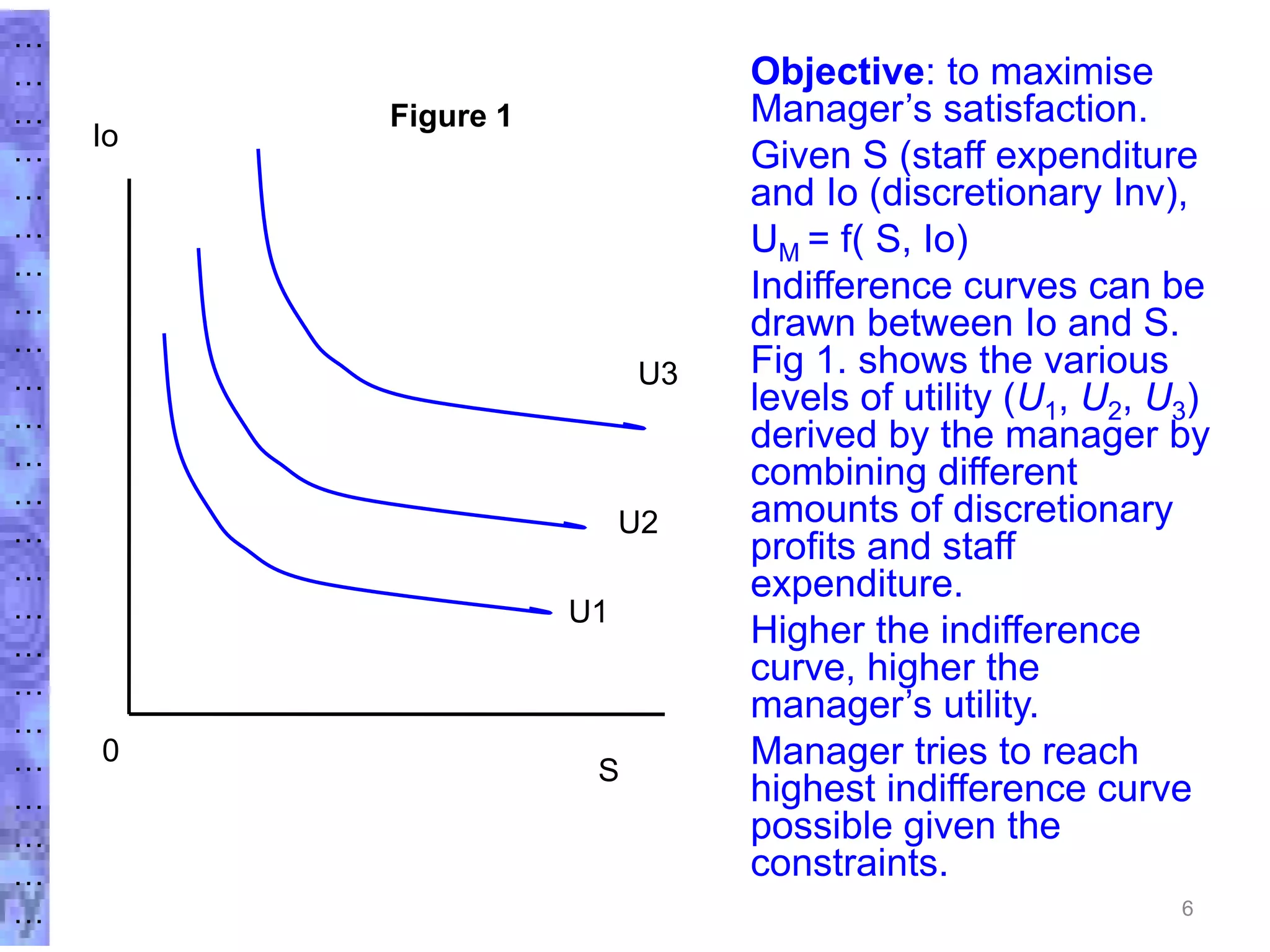
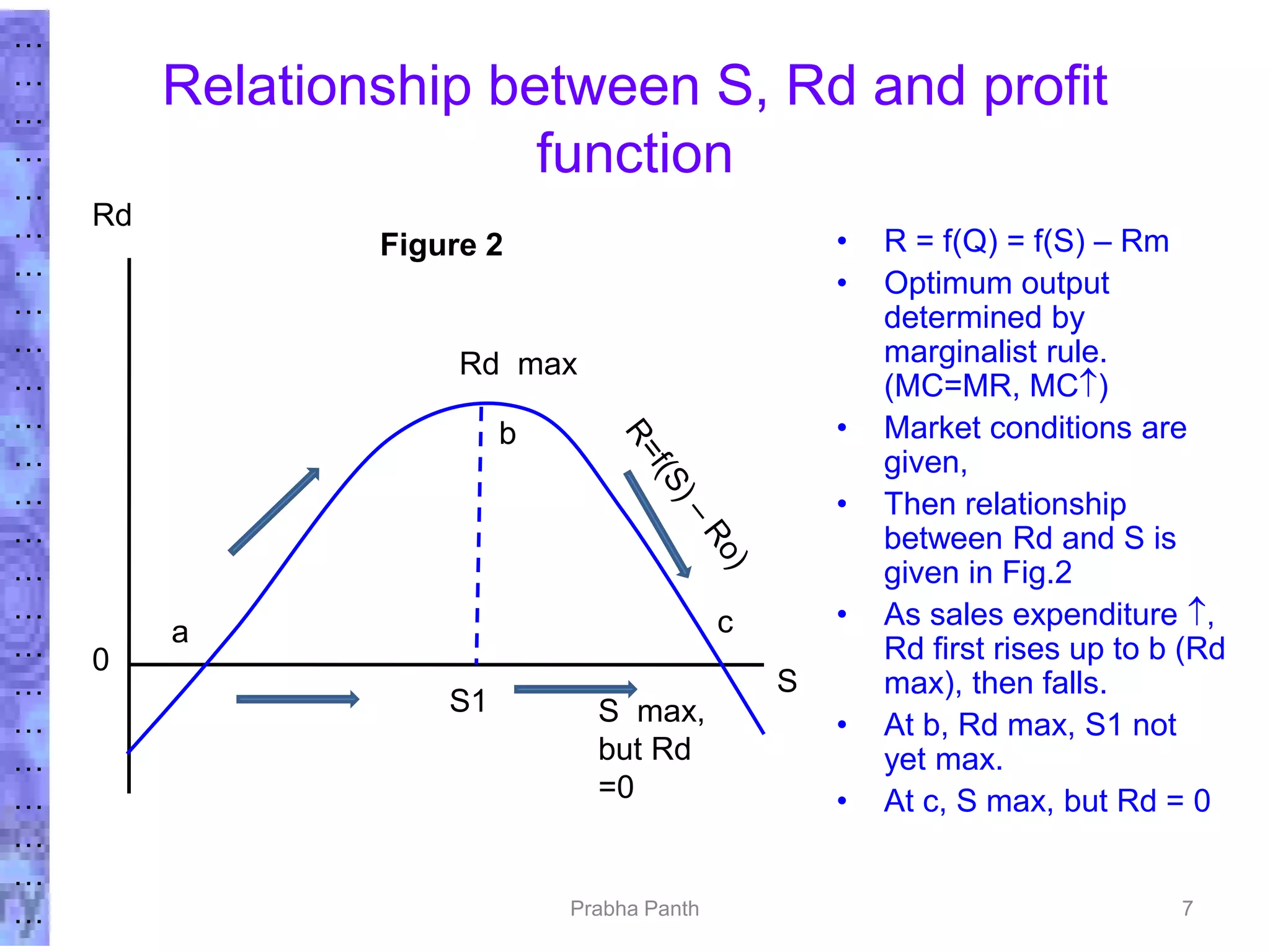
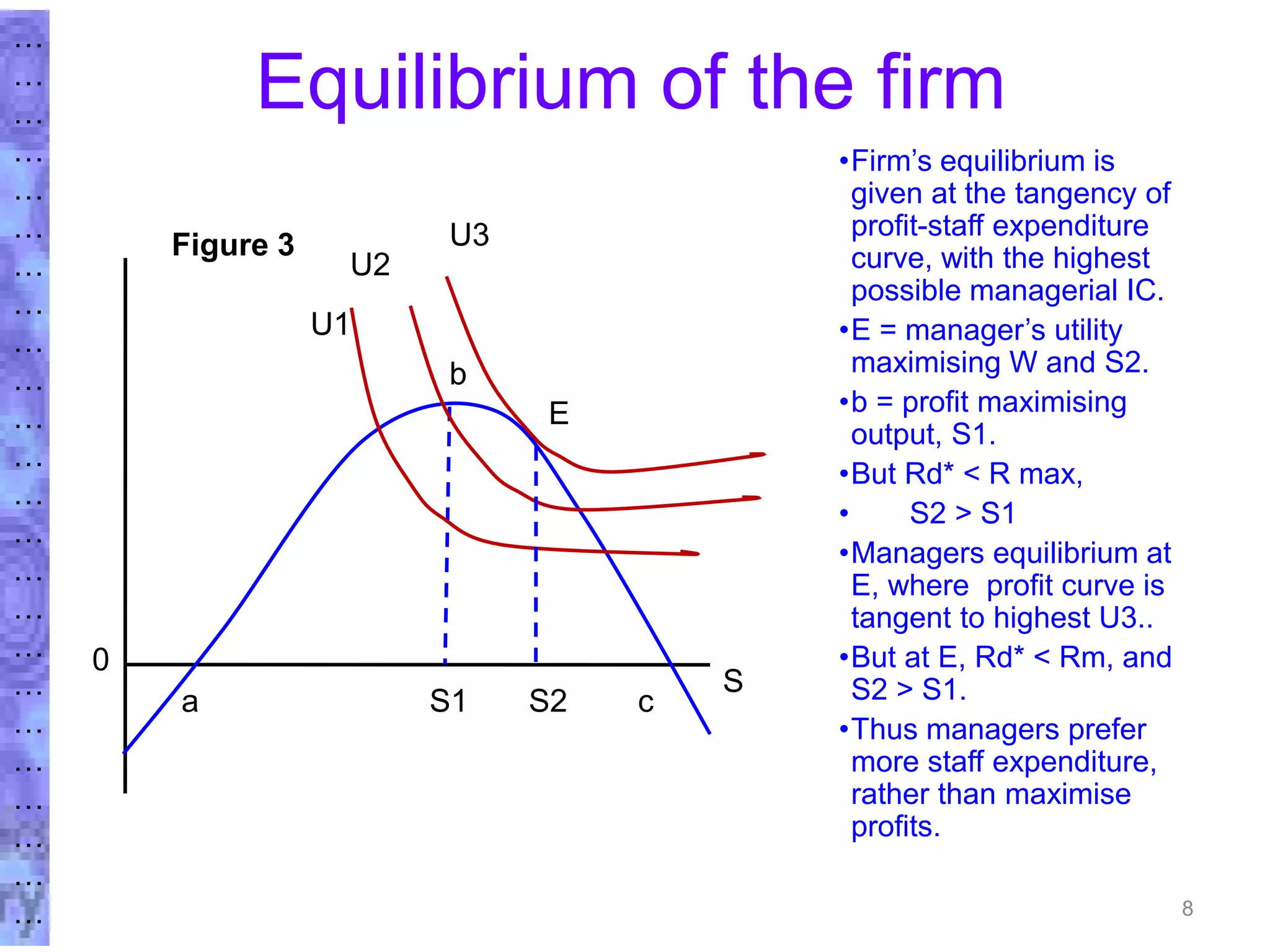
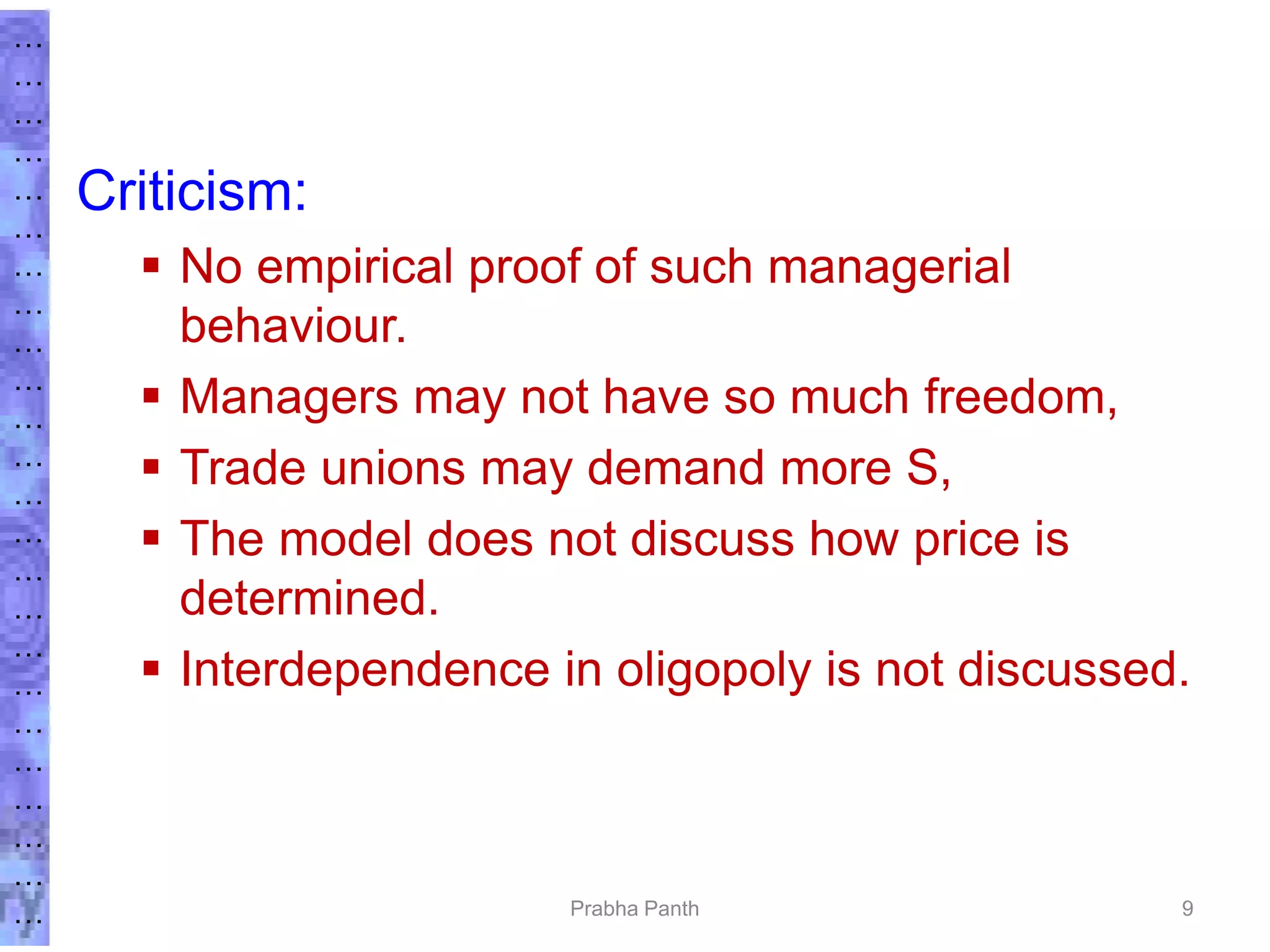

1) Williamson's model of managerial discretion posits that in imperfect markets, managers will seek to maximize their own utility rather than profits for owners. 2) The model suggests that manager's utility depends on three variables: staff expenditures which boost sales and prestige; management emoluments such as perks; and discretionary investments for ego and pride. 3) Managers have an area of discretion between the actual profits earned and the minimum profits expected by owners, within which they can allocate resources to maximize their own satisfaction defined by the three variables.


