IS-LM
EQUILIBRIUM
Prof. Prabha Panth
Osmania University
Hyderabad
2
Macro Equilibrium
• The IS curve shows different equilibrium
points in the Commodity or Goods market.
• The LM curve shows different equilibrium
points in the Money Market.
• Both show the levels of Y with different
rates of interest.
• Now equilibrium in both Goods and Money
market has to be determined
simultaneously.
Prabha Panth
3
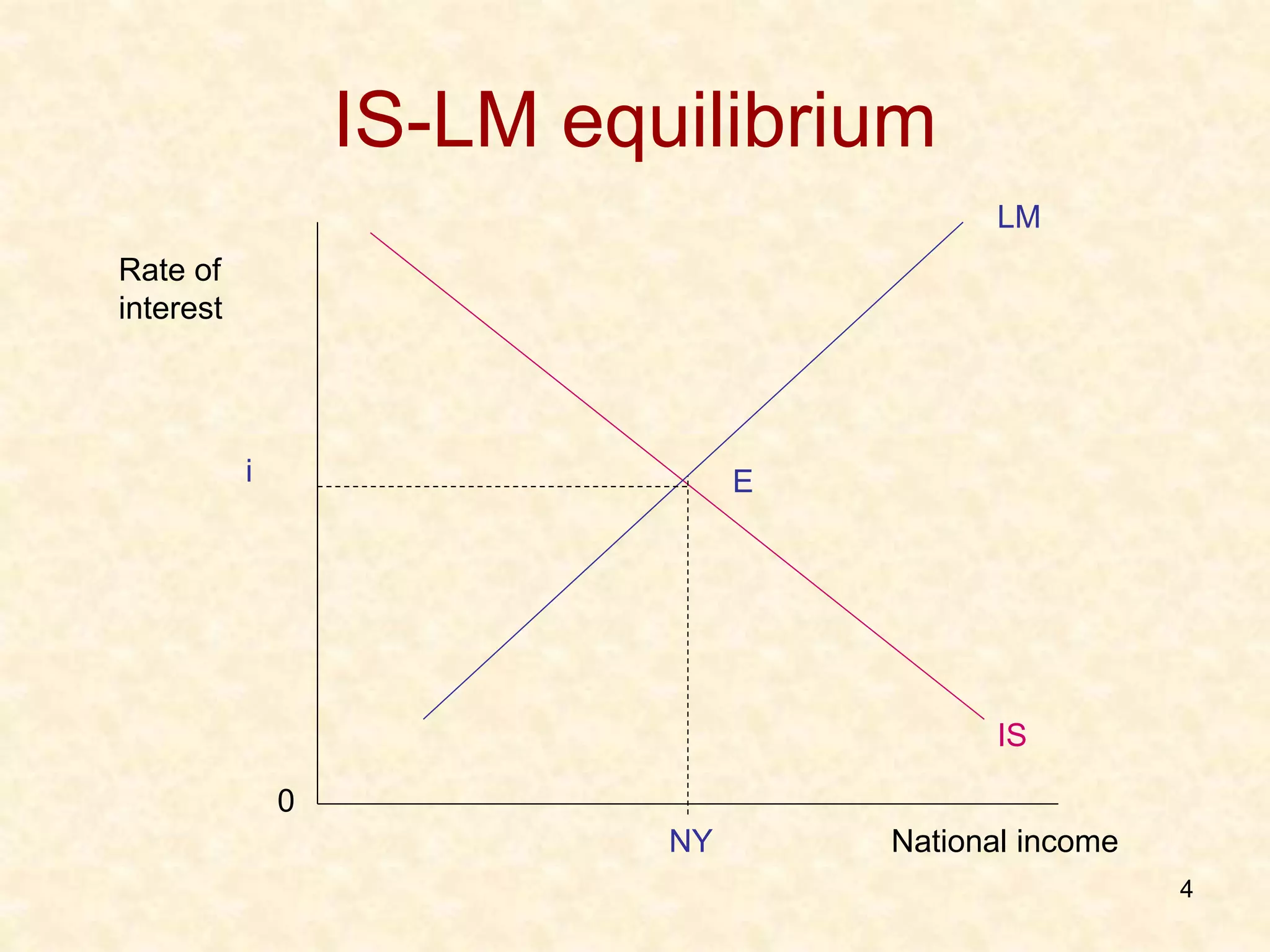
• The Macro equilibrium is the point
where the IS curve intersects the
LM curve.
• At this equilibrium point:
1. The Goods Market is in equilibrium,
that is the Aggregate D = Aggregate S
or Output,
2. The Money Market is in equilibrium,
that is Demand for Money = Supply of
Money.
Prabha Panth
4
IS-LM equilibrium
Rate of
interest
0
National income
IS
LM
i
NY
E
5
• The IS-LM curve model integrates the theory
of money with the theory of income
determination.
• It is thus able to synthesise the monetary and
fiscal policies.
• The IS-LM curve is based on:
1. The Investment demand function,
2. Consumption functions,
3. Money demand function, and
4. Quantity of money.
If any of these changes, then the equilibrium level of
income will also change.
Prabha Panth
6
Effects of change in MS
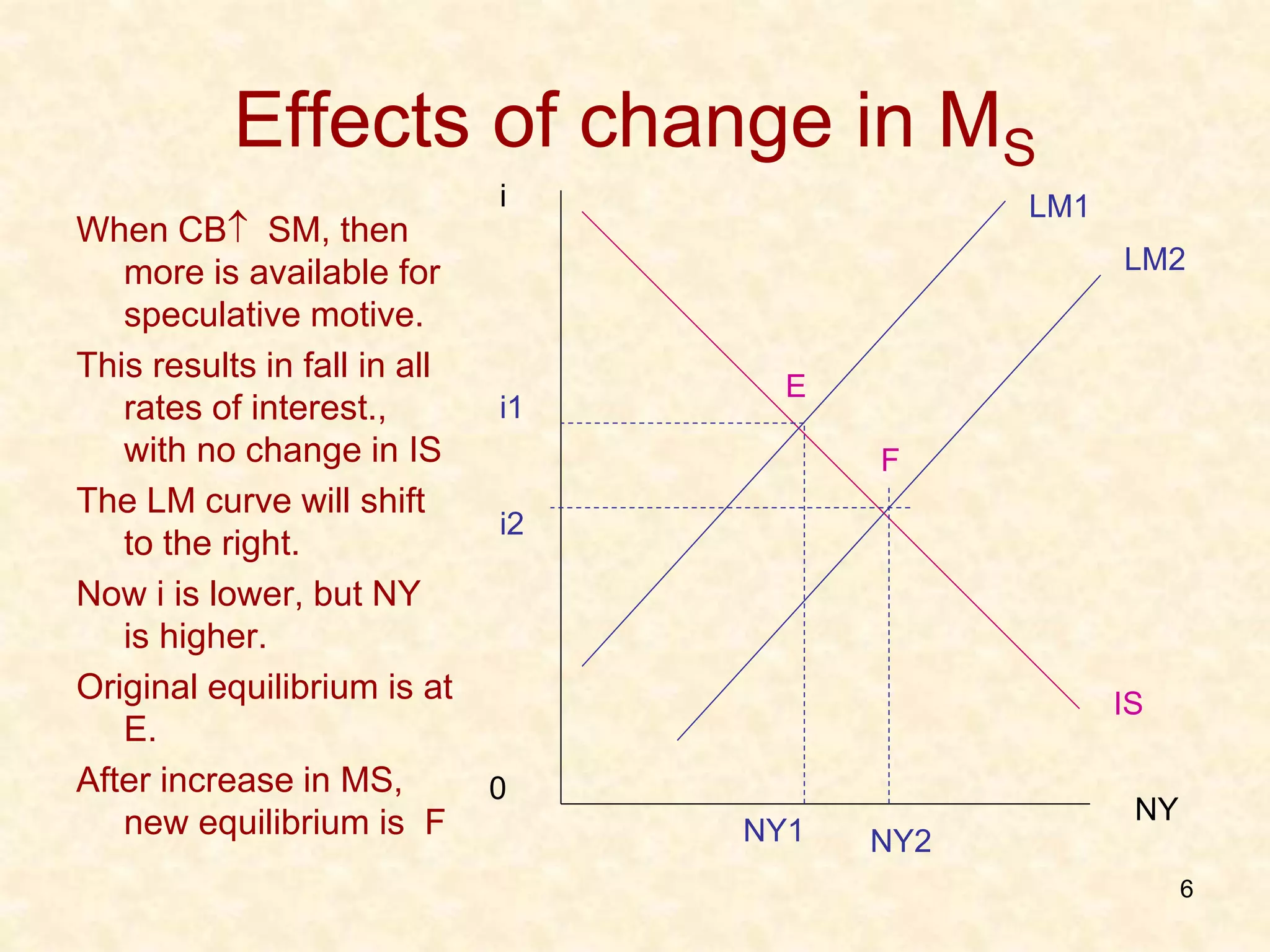
When CB SM, then
more is available for
speculative motive.
This results in fall in all
rates of interest.,
with no change in IS
The LM curve will shift
to the right.
Now i is lower, but NY
is higher.
Original equilibrium is at
E.
After increase in MS,
new equilibrium is F
i
NY
IS
LM1
E
i1
NY1
LM2
F
i2
NY2
0
7
Changes in MPS and MPC
When MPC or
MPS , the
aggregate D
curve shifts
upwards.
With no change
in LM curve,
NY will increase,
Rate of i will also
increase.
New equilibrium
will shift from E
to F
i
NY
IS1
LM
E
i1
NY1
IS2
i2
F
NY2
0
8
Criticism of IS-LM Model
• It assumes that i is flexible, and not fixed by CB.
• It assumes that Investment is interest elastic. If it
is not, then the model does not apply.
• The real and money markets are not
independent but inter-dependent (Patinkin,
Milton Friedman).
• Patinkin points out that it ignores impact on
prices.
• When money supply or demand changes, prices
will be affected.
Prabha Panth

IS LM equilibrium

  • 1.
  • 2.
    2 Macro Equilibrium • TheIS curve shows different equilibrium points in the Commodity or Goods market. • The LM curve shows different equilibrium points in the Money Market. • Both show the levels of Y with different rates of interest. • Now equilibrium in both Goods and Money market has to be determined simultaneously. Prabha Panth
  • 3.
    3 • The Macroequilibrium is the point where the IS curve intersects the LM curve. • At this equilibrium point: 1. The Goods Market is in equilibrium, that is the Aggregate D = Aggregate S or Output, 2. The Money Market is in equilibrium, that is Demand for Money = Supply of Money. Prabha Panth
  • 4.
  • 5.
    5 • The IS-LMcurve model integrates the theory of money with the theory of income determination. • It is thus able to synthesise the monetary and fiscal policies. • The IS-LM curve is based on: 1. The Investment demand function, 2. Consumption functions, 3. Money demand function, and 4. Quantity of money. If any of these changes, then the equilibrium level of income will also change. Prabha Panth
  • 6.
    6 Effects of changein MS When CB SM, then more is available for speculative motive. This results in fall in all rates of interest., with no change in IS The LM curve will shift to the right. Now i is lower, but NY is higher. Original equilibrium is at E. After increase in MS, new equilibrium is F i NY IS LM1 E i1 NY1 LM2 F i2 NY2 0
  • 7.
    7 Changes in MPSand MPC When MPC or MPS , the aggregate D curve shifts upwards. With no change in LM curve, NY will increase, Rate of i will also increase. New equilibrium will shift from E to F i NY IS1 LM E i1 NY1 IS2 i2 F NY2 0
  • 8.
    8 Criticism of IS-LMModel • It assumes that i is flexible, and not fixed by CB. • It assumes that Investment is interest elastic. If it is not, then the model does not apply. • The real and money markets are not independent but inter-dependent (Patinkin, Milton Friedman). • Patinkin points out that it ignores impact on prices. • When money supply or demand changes, prices will be affected. Prabha Panth