Downloaded 28 times
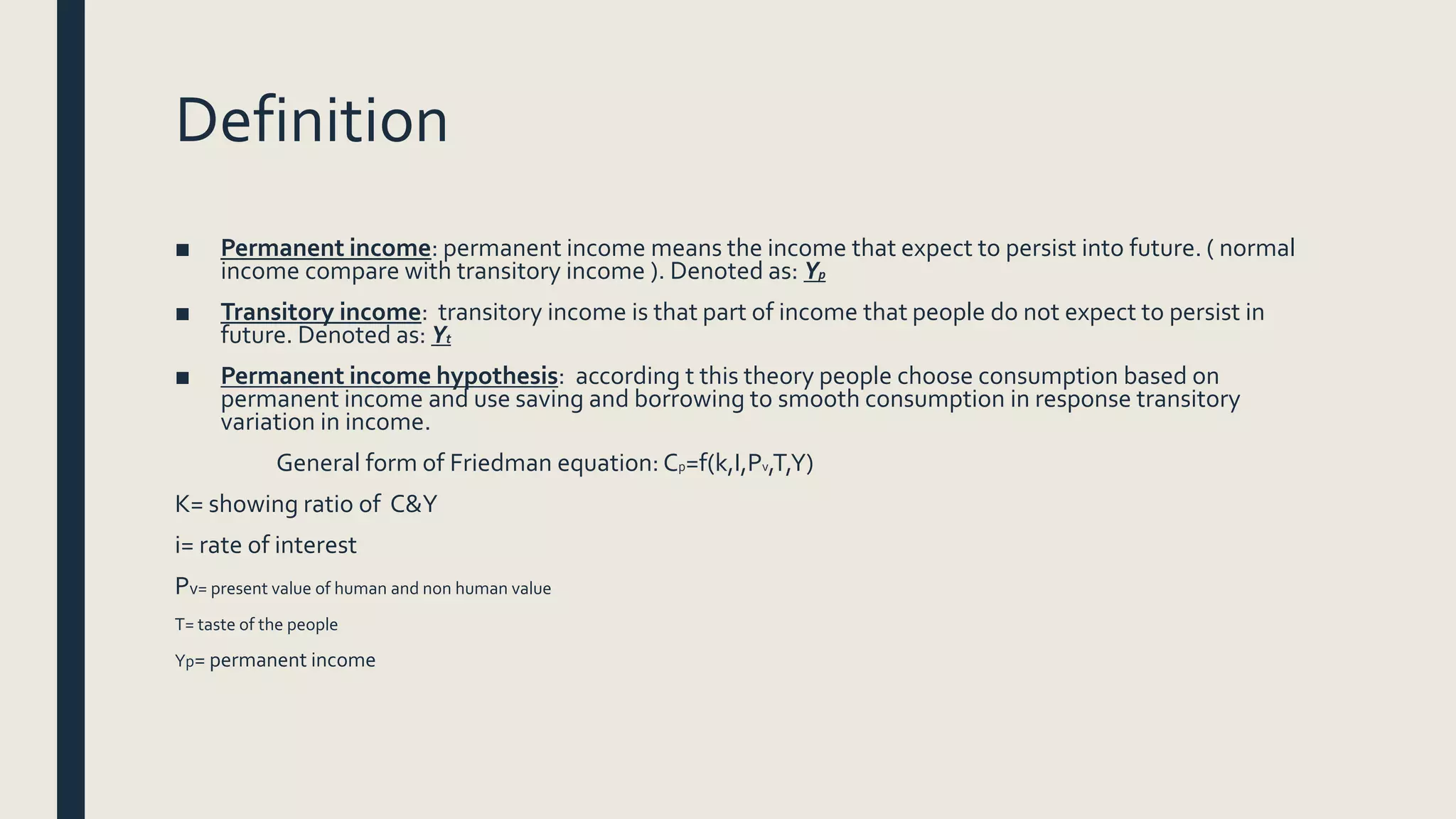


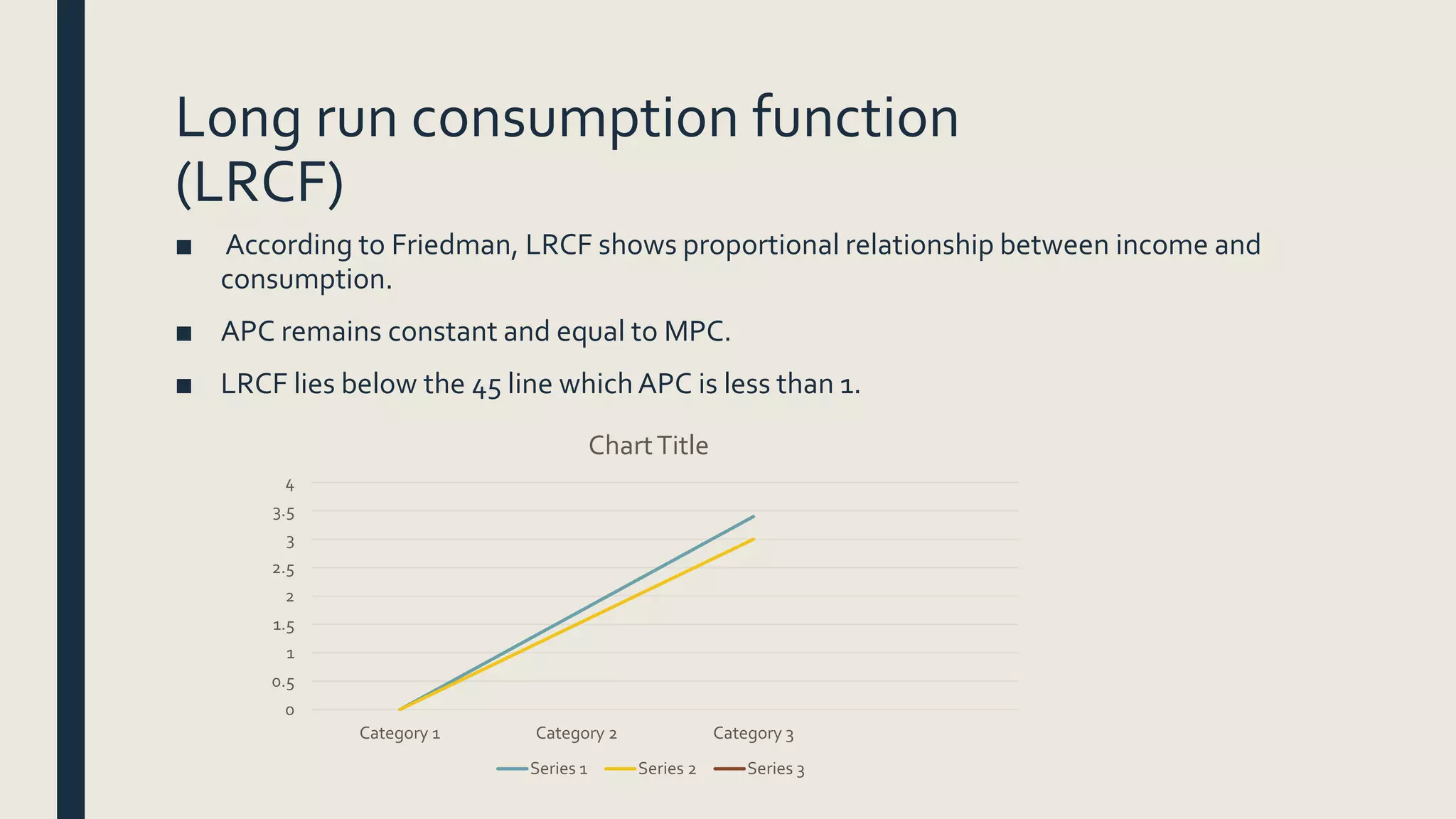

Permanent income hypothesis states that consumption is based on permanent income rather than current income. Permanent income refers to income that is expected to persist in the future, while transitory income does not persist. According to the hypothesis, people smooth consumption in response to transitory income variations by using savings and borrowing. The hypothesis assumes tastes and interest rates remain stable over time. In the short run, the consumption function shows consumption is less proportional to income than in the long run, where proportionality is achieved through savings adjustments. Critics argue the hypothesis ignores differences in preferences between rich and poor and does not account for effects of windfalls on consumption.


