Economics DefinitionsTheory of the FirmIB HL EconomicsWill Congleton
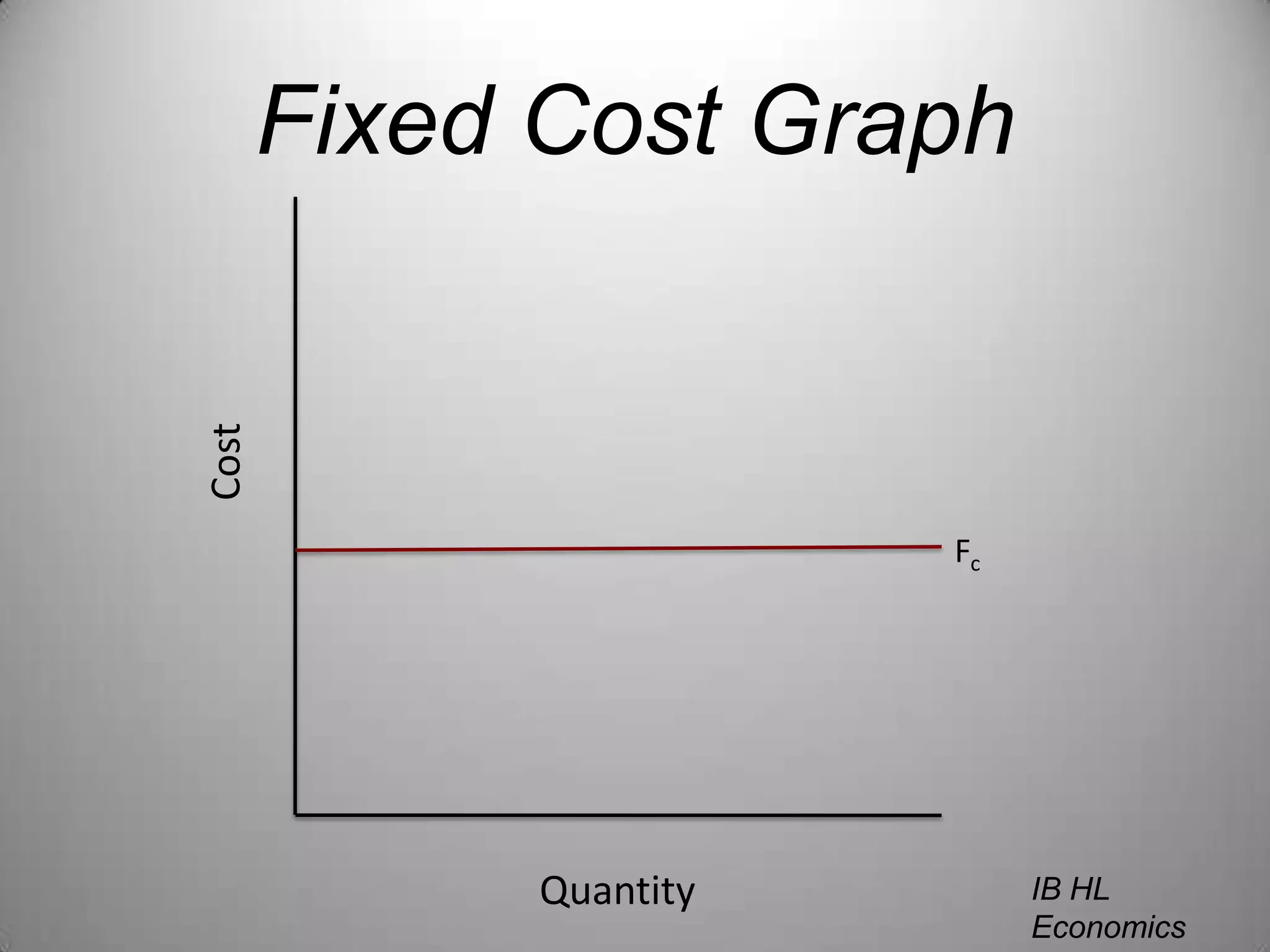
Fixed CostsFixed costs are costs of production that do not change based on output. They remain constant despite the number of products produced.e.g. Building cost, LandIB HL EconomicsWill Congleton
Fixed Cost GraphCostFcQuantityIB HL EconomicsWill Congleton
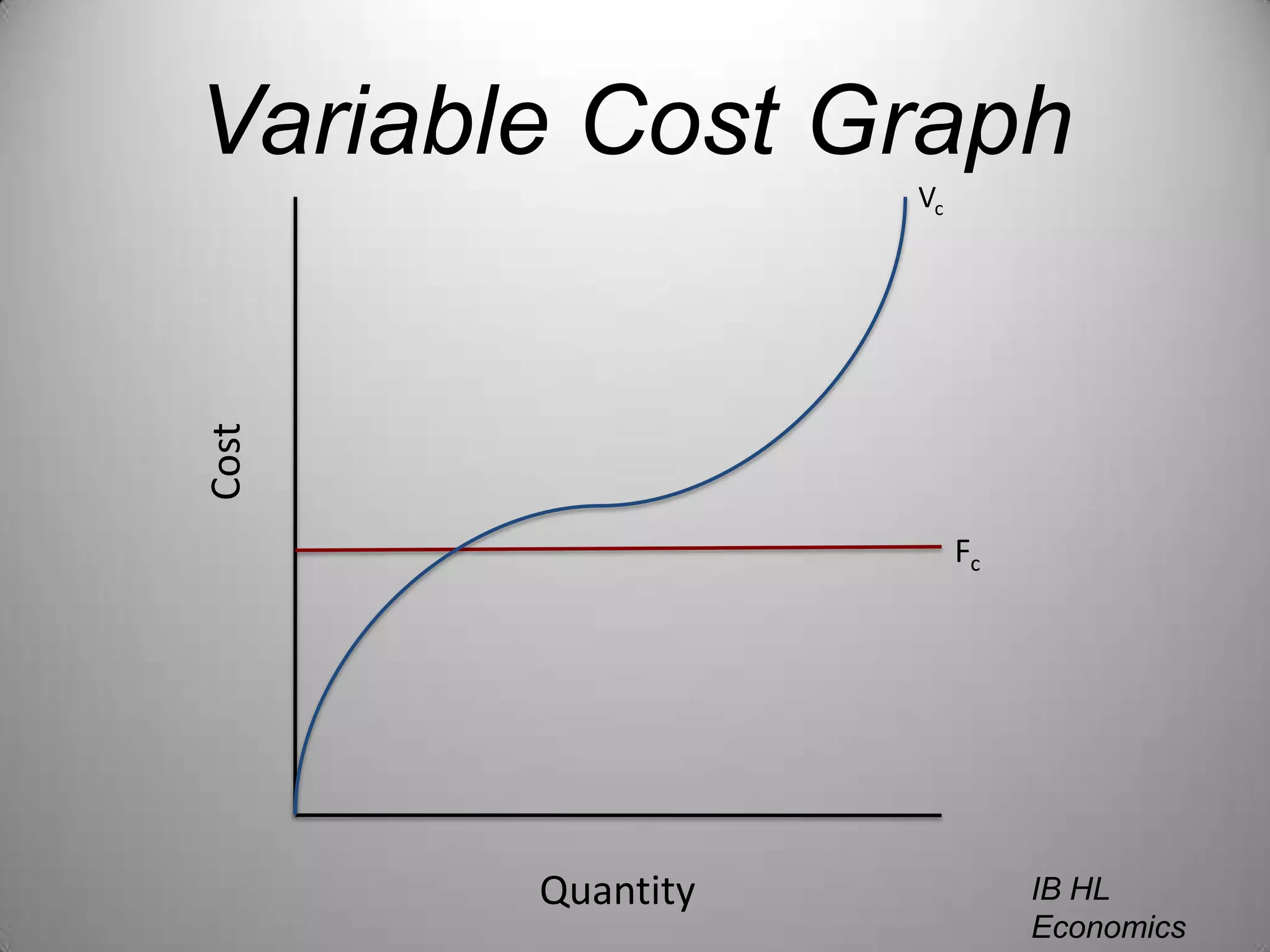
Variable CostsVariable costs are costs of production that change based on output. They differentiate as the number of products produced changes.e.g. Labor, Materials, ProductionIB HL EconomicsWill Congleton
Variable Cost GraphVcCostFcQuantityIB HL EconomicsWill Congleton
Laws of ReturnThe laws of return dictate how much return is created based on output. The laws of return can be observed along the variable cost curve.IB HL EconomicsWill Congleton
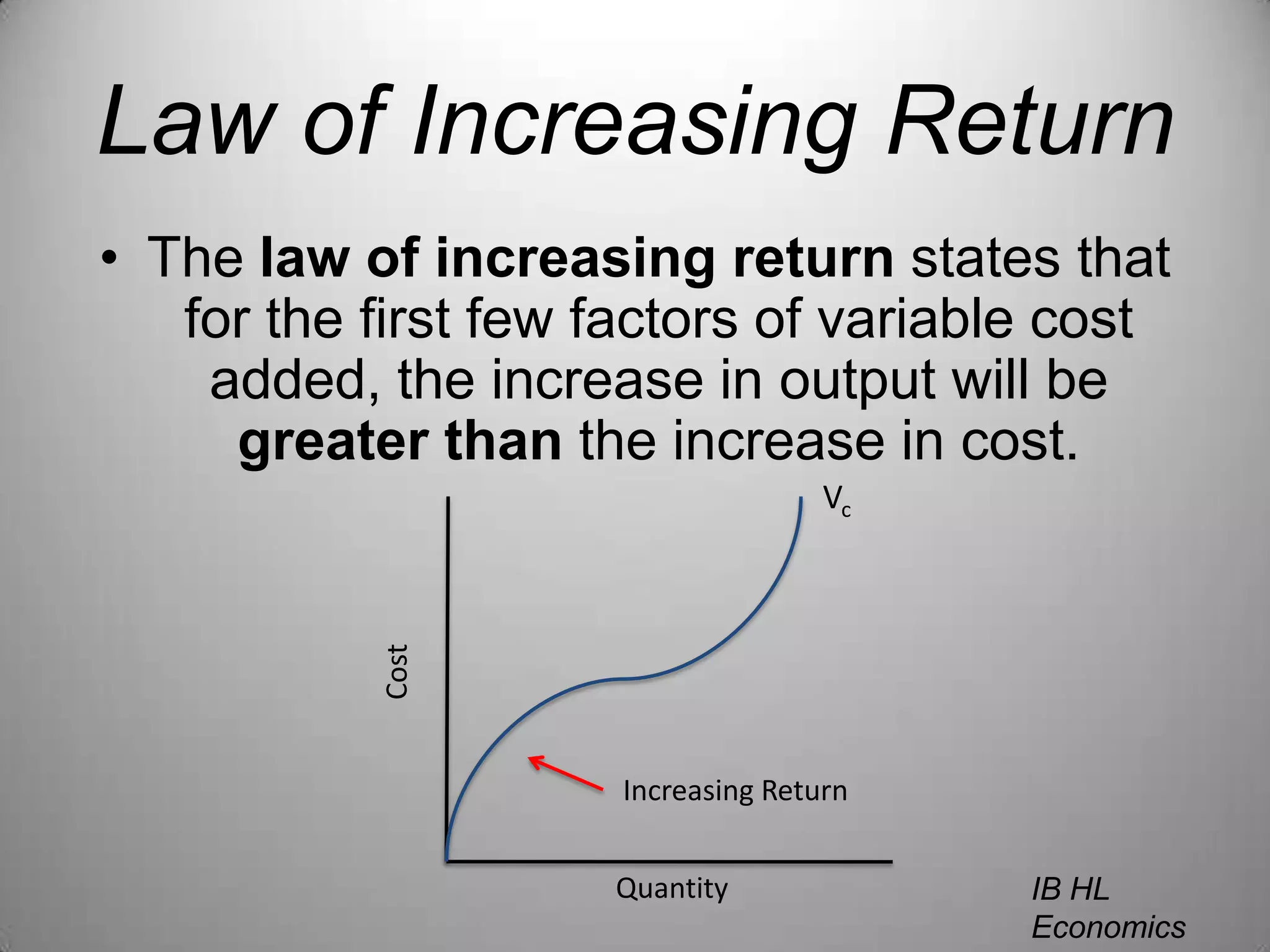
Law of Increasing ReturnThe law of increasing return states that for the first few factors of variable cost added, the increase in output will be greater than the increase in cost.VcCostIncreasing ReturnQuantityIB HL EconomicsWill Congleton
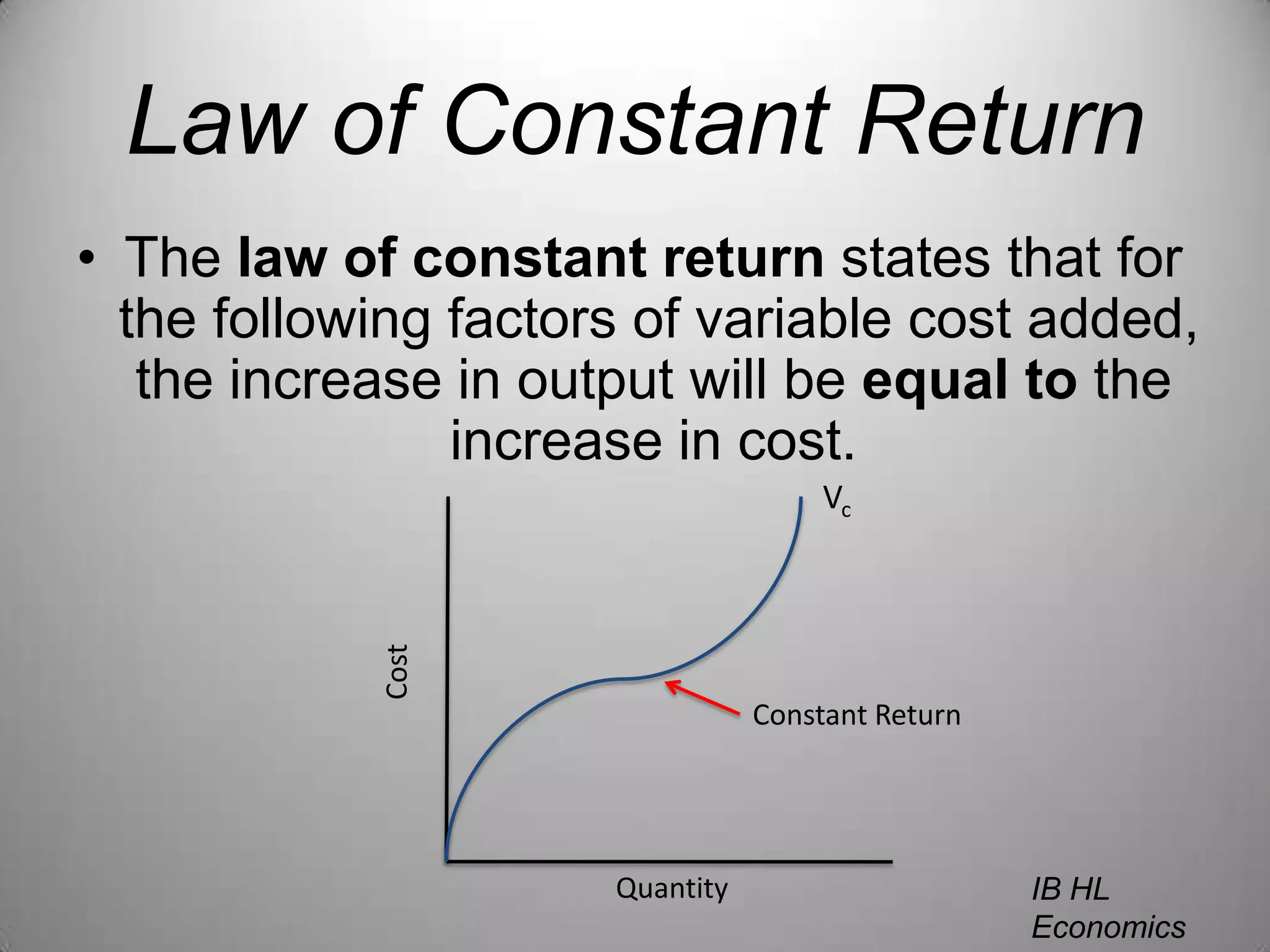
Law of Constant ReturnThe law of constant return states that for the following factors of variable cost added, the increase in output will be equal to the increase in cost.VcCostConstant ReturnQuantityIB HL EconomicsWill Congleton
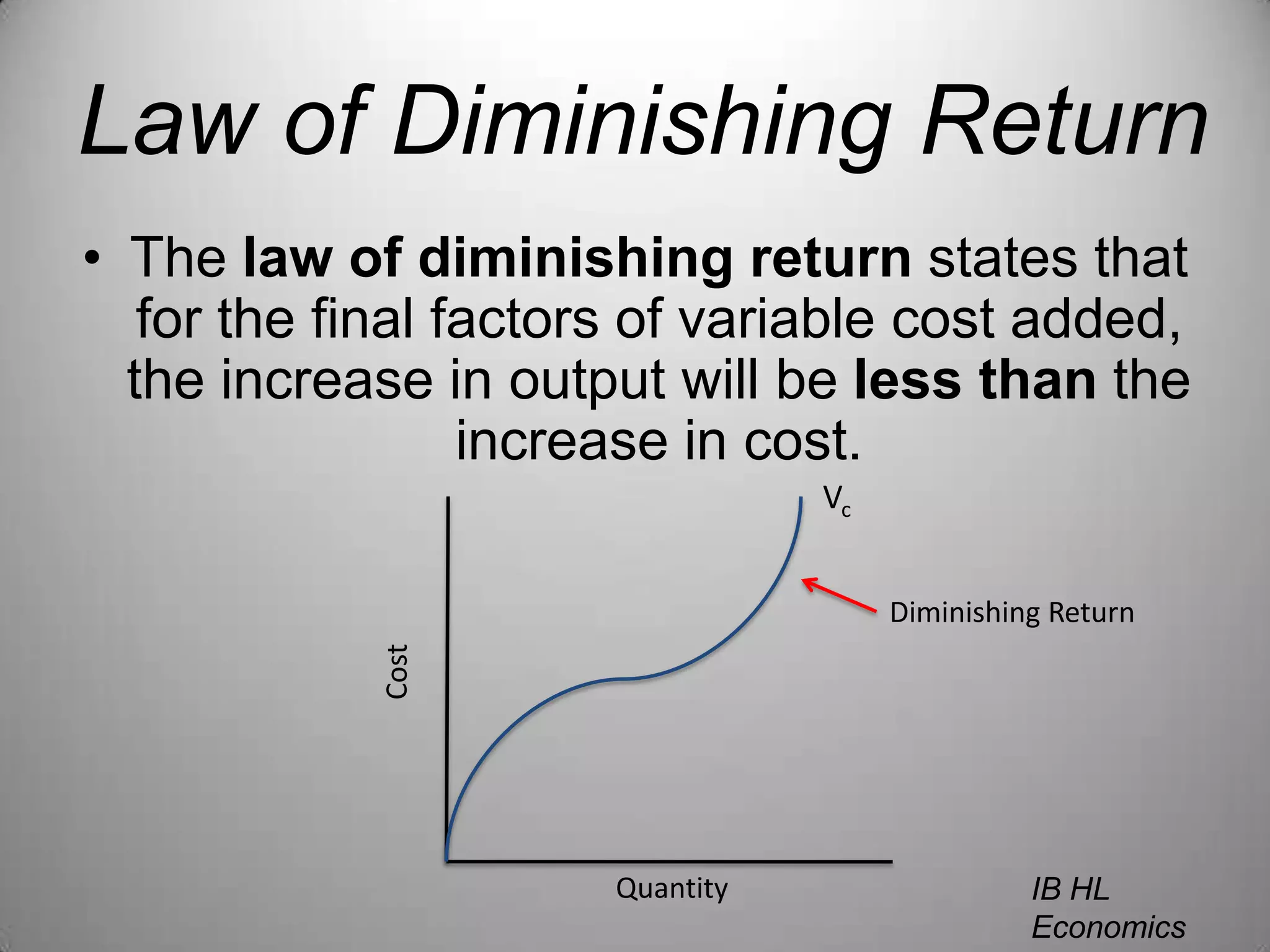
Law of Diminishing ReturnThe law of diminishing return states that for the final factors of variable cost added, the increase in output will be less than the increase in cost.VcDiminishing ReturnCostQuantityIB HL EconomicsWill Congleton
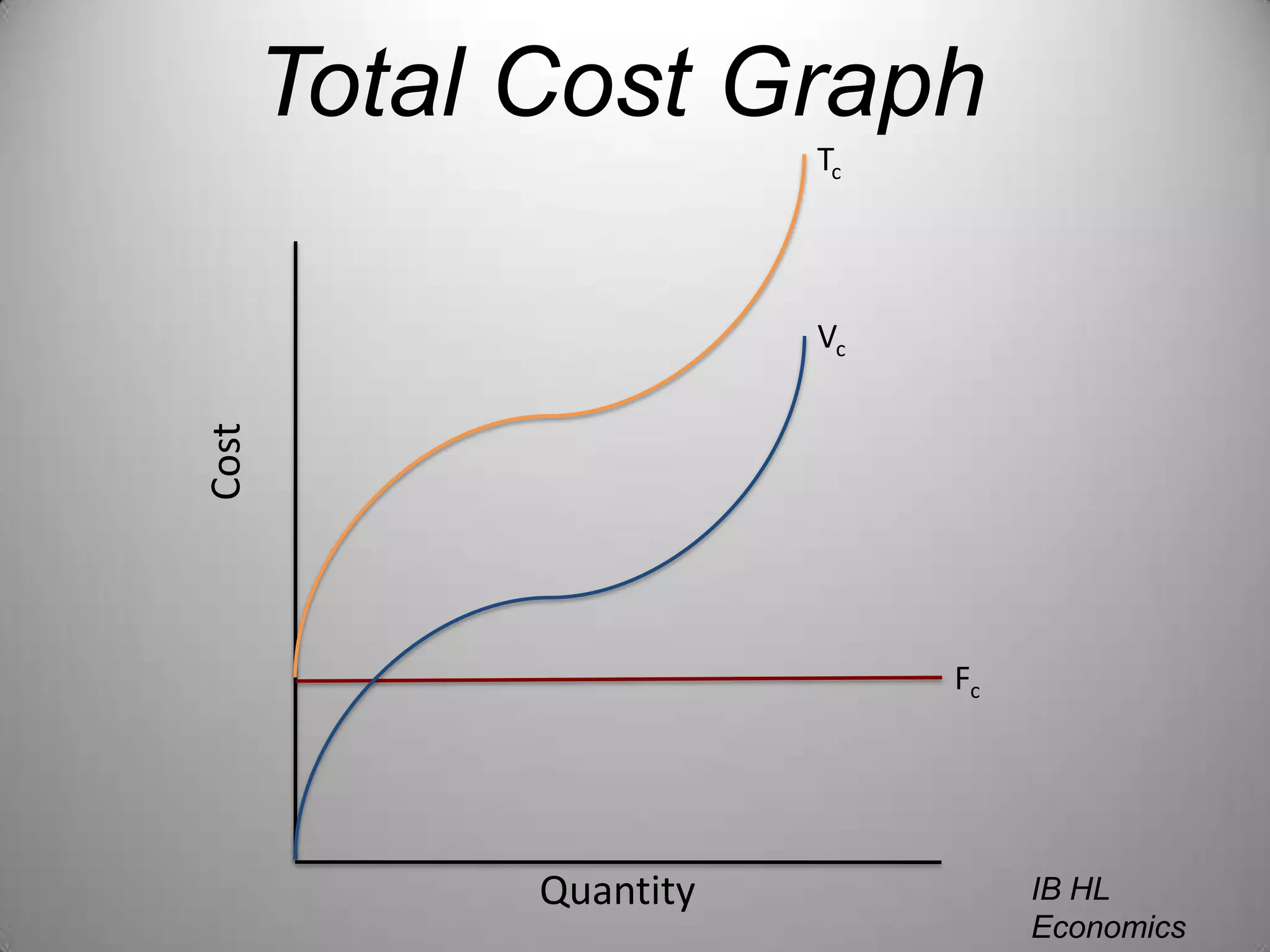
Total CostThe Total Cost is the combination of all factors of cost, namely variable and fixed costs. Represented as an equation, total cost is equal to the sum of the variable and fixed cost.IB HL EconomicsWill Congleton
Total Cost GraphTcVcCostFcQuantityIB HL EconomicsWill Congleton
Total RevenueTheTotal Revenue is the revenue generated from the sale of any number of products. As an equation, it is represented as price multiplied by the quantity sold.IB HL EconomicsWill Congleton
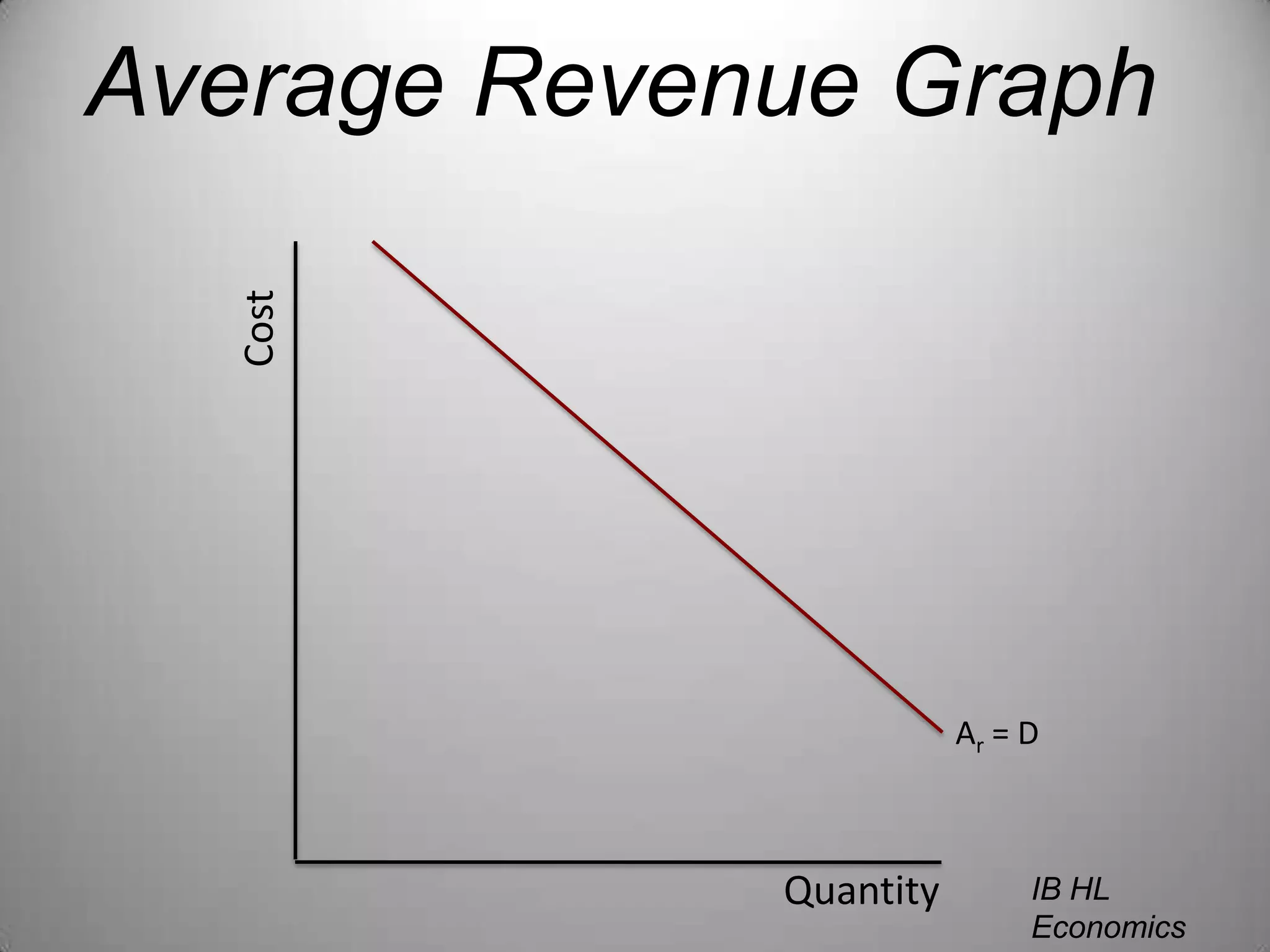
Average RevenueThe Average Revenue is the revenue received as an average for each product sold. That is, it is the total revenue divided by the quantity produced. On a graph, average revenue is assumed to be equal to the demand for a productIB HL EconomicsWill Congleton
Average Revenue GraphCostAr = DQuantityIB HL EconomicsWill Congleton
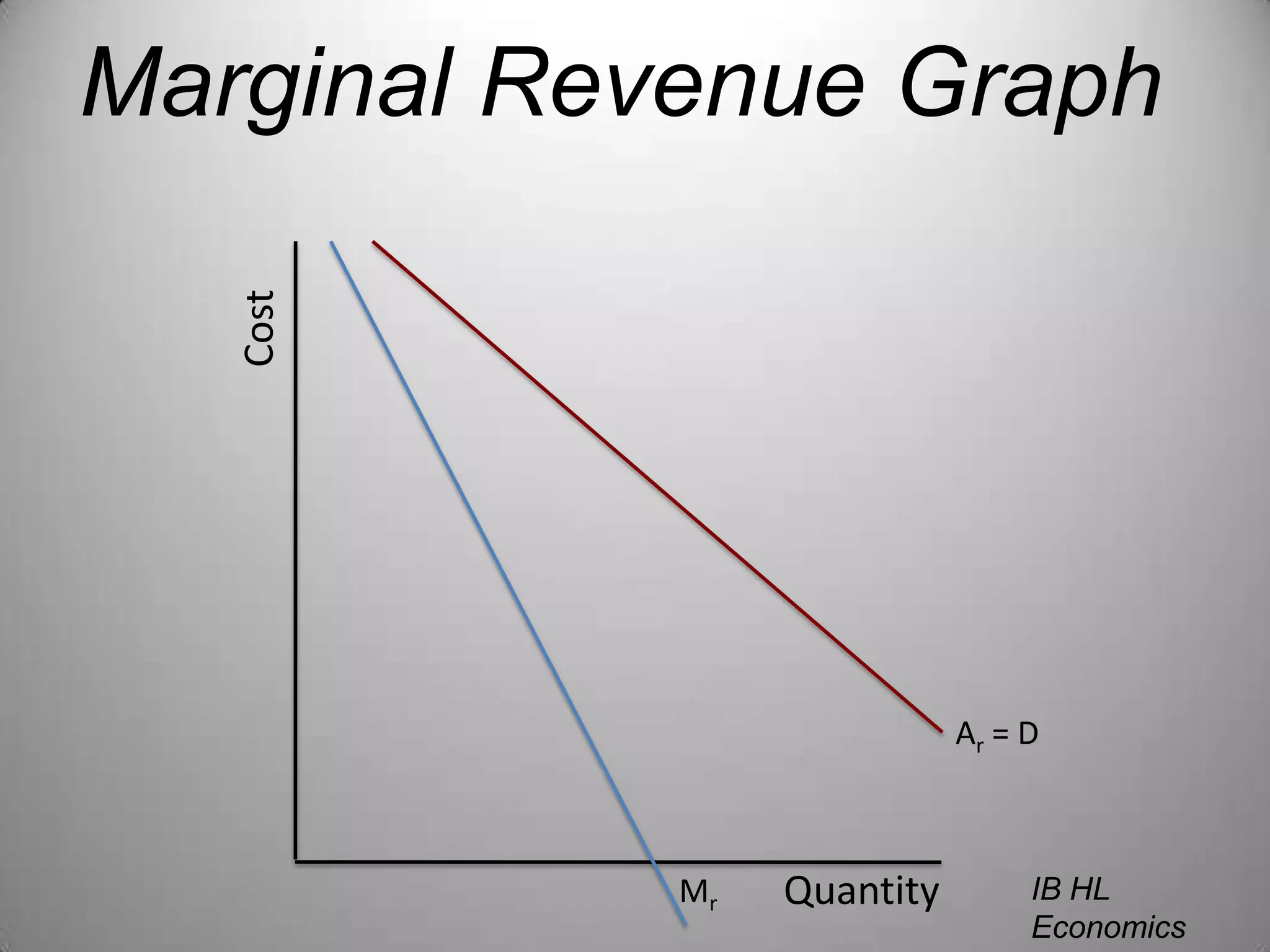
Marginal RevenueTheMarginal Revenue is the revenue gained by selling an additional unit of a good or service. Graphically, is it generally assumed to be equivalent to half of the Ar value, though this relationship is not always true.IB HL EconomicsWill Congleton
Marginal Revenue GraphCostAr = DQuantityIB HL EconomicsWill CongletonMr
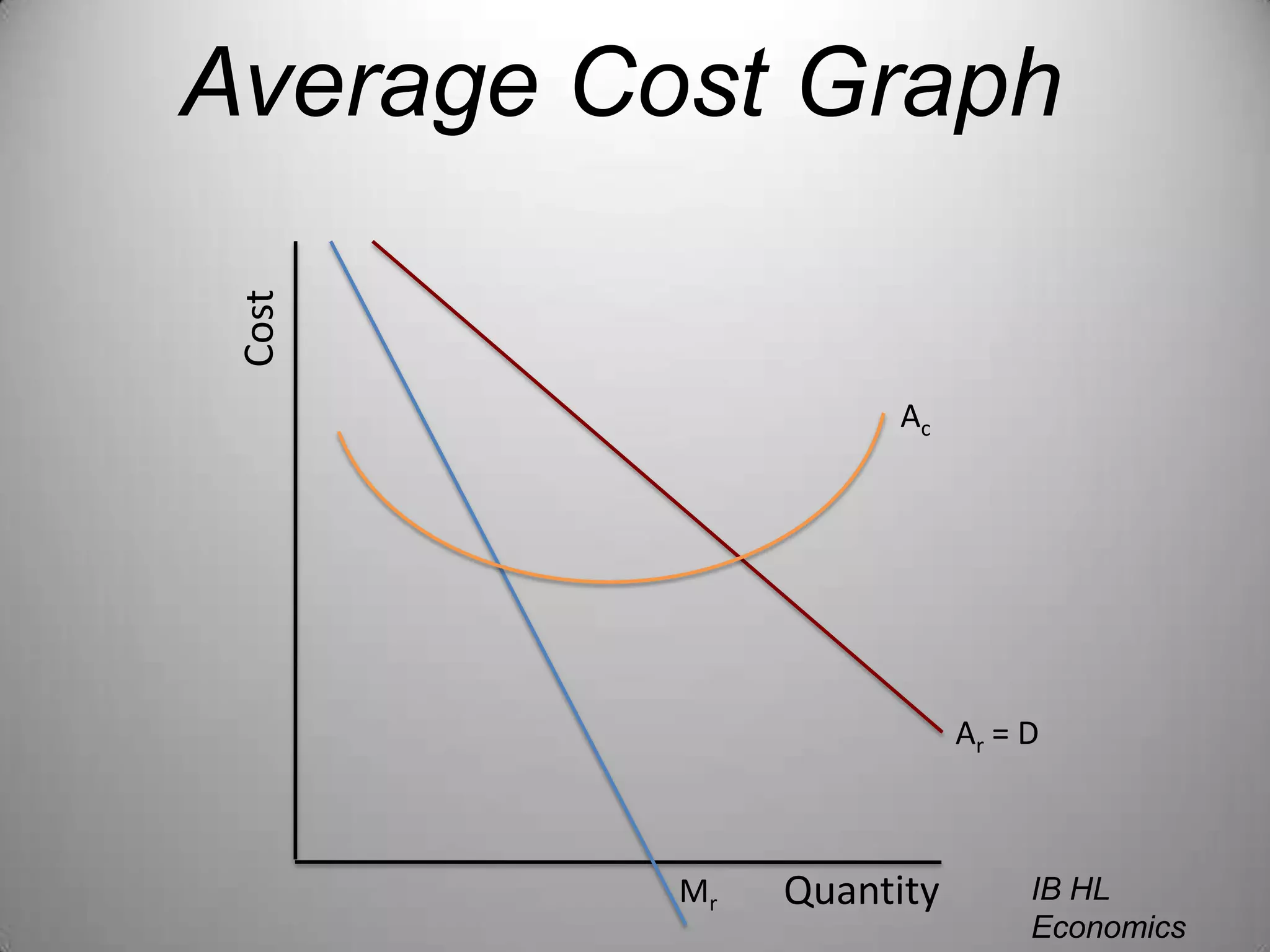
Average CostThe Average Cost is the average cost of production per unit. Represented as an equation, the average cost is the total cost divided by the quantity produced. Graphically the average cost is usually curved, representing the idea of diminishing return.IB HL EconomicsWill Congleton
Average Cost GraphCostAcAr = DQuantityIB HL EconomicsWill CongletonMr
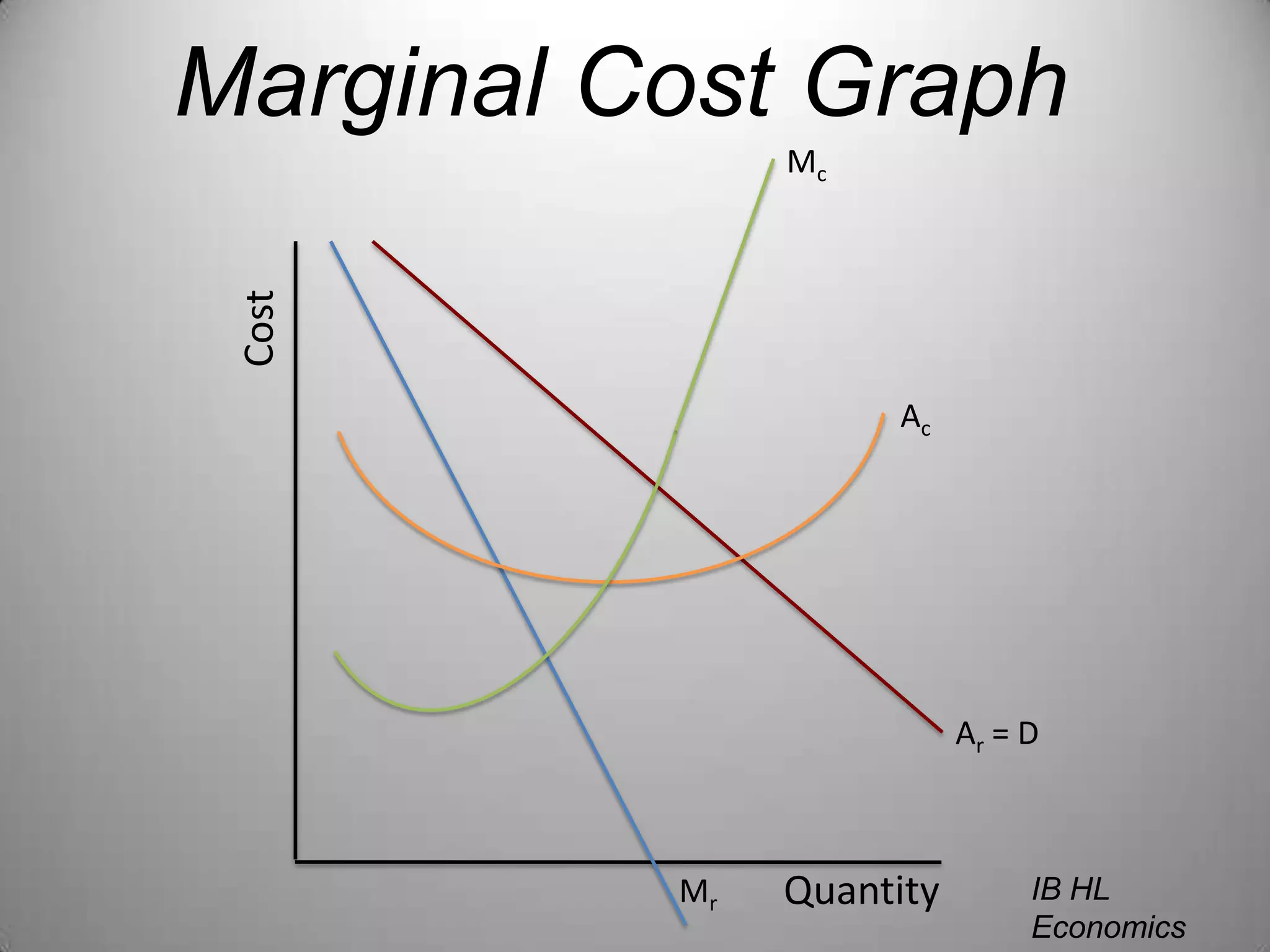
Marginal CostTheMarginal Cost is the additional cost of producing an additional unit of output. As an equation, it can be represented as half of the average cost, though more often than not it deviates from this qualification. IB HL EconomicsWill Congleton
Marginal Cost GraphMcCostAcAr = DQuantityIB HL EconomicsWill CongletonMr
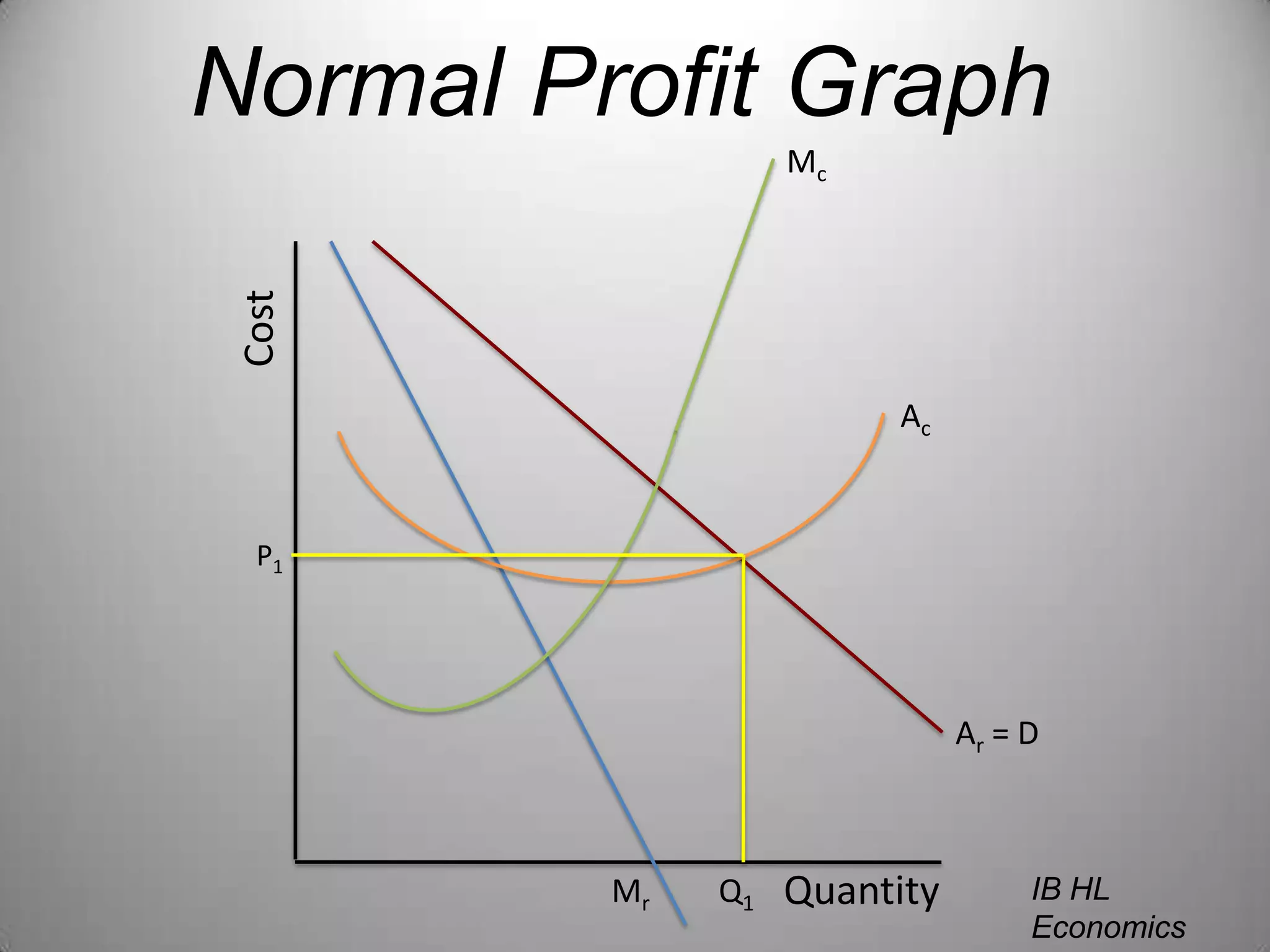
Normal ProfitNormal Profit is when the revenue generated is equal to the cost of production. Graphically, this means that Q1 falls at a point on which Ar and Ac overlap, or are equal.IB HL EconomicsWill Congleton
Normal Profit GraphMcCostAcP1Ar = DQuantityIB HL EconomicsWill CongletonMrQ1
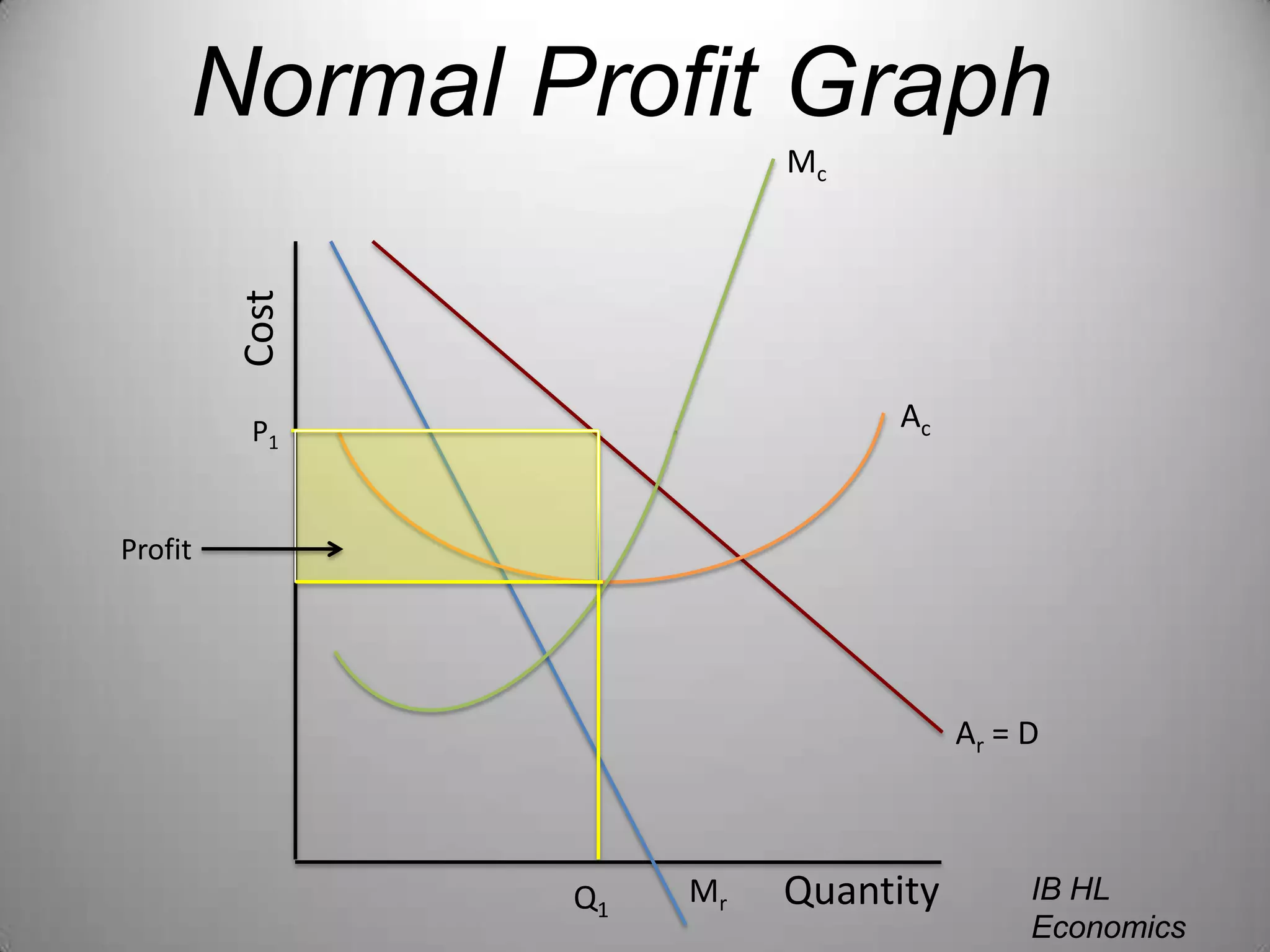
Abnormal ProfitAbnormal Profit is when the revenue generated is greater than the cost of production. Graphically, this means that Q1 falls at a point on which Ar is above, or greater than Ac. The area above the Ac point to the Ar intercept is equal to the profit generated by sales.IB HL EconomicsWill Congleton
Normal Profit GraphMcCostAcP1ProfitAr = DQuantityIB HL EconomicsWill CongletonMrQ1
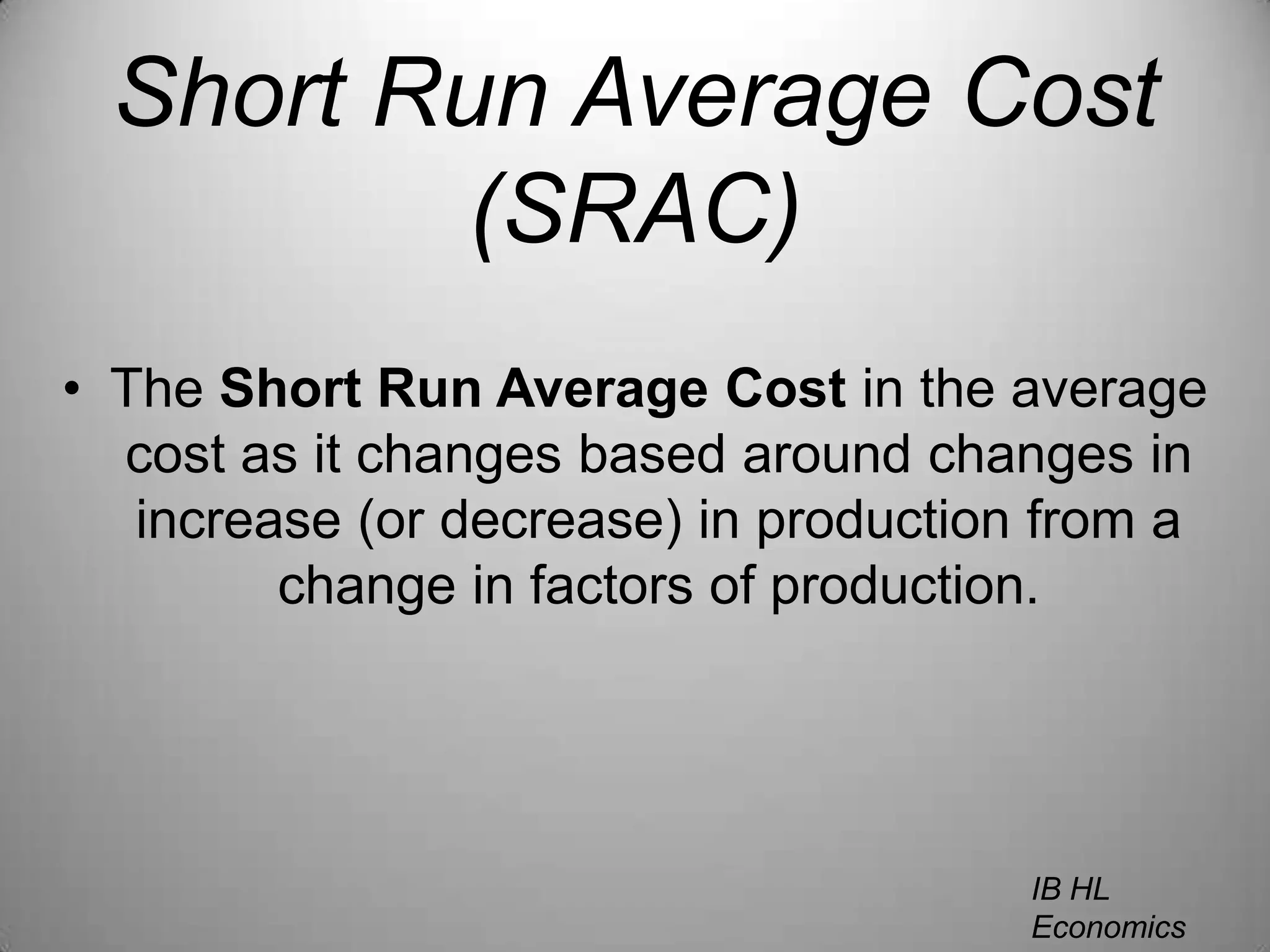
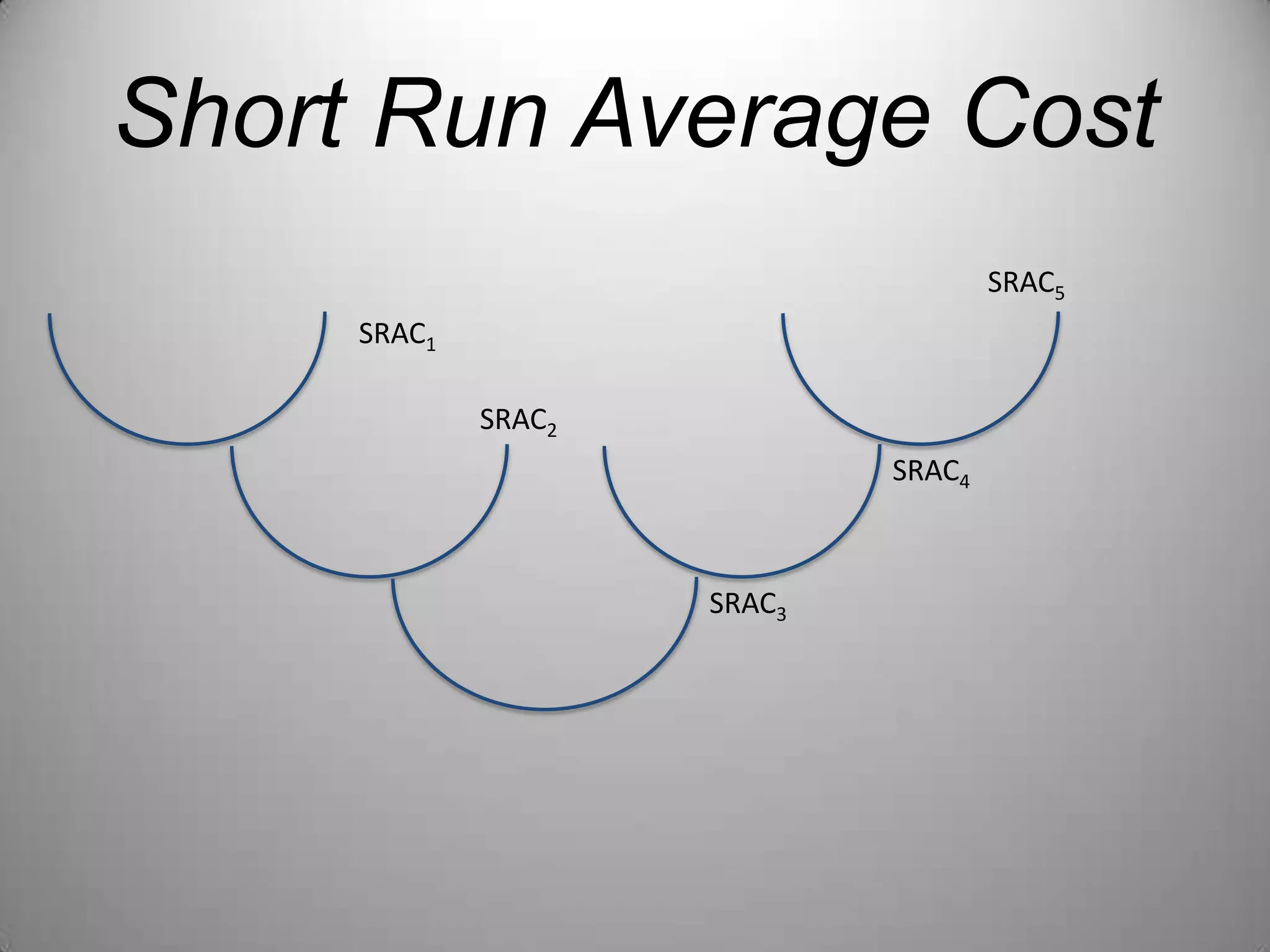
Short Run Average Cost (SRAC)The Short Run Average Cost in the average cost as it changes based around changes in increase (or decrease) in production from a change in factors of production.IB HL EconomicsWill Congleton
Short Run Average CostSRAC5SRAC1SRAC2SRAC4SRAC3
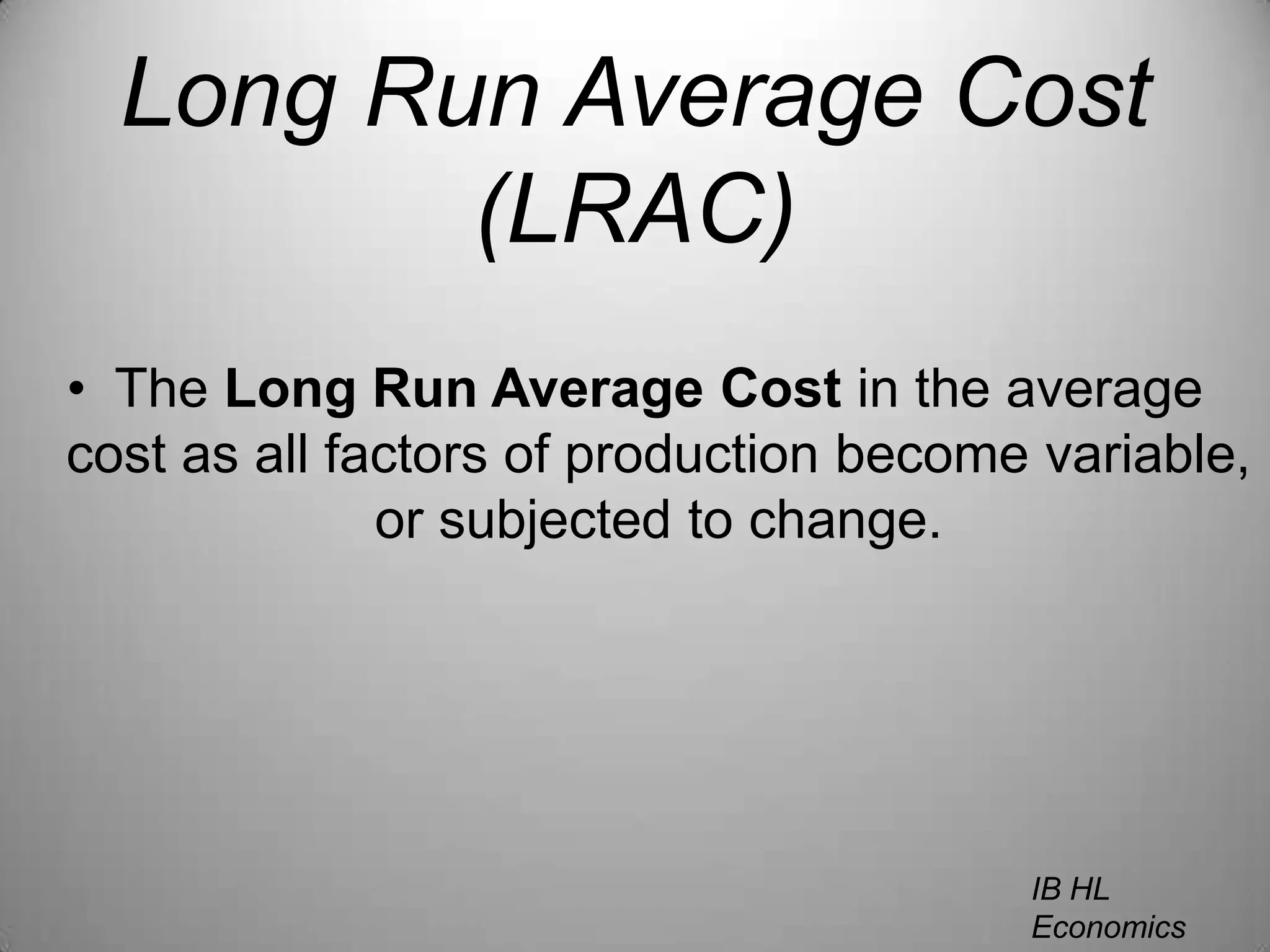
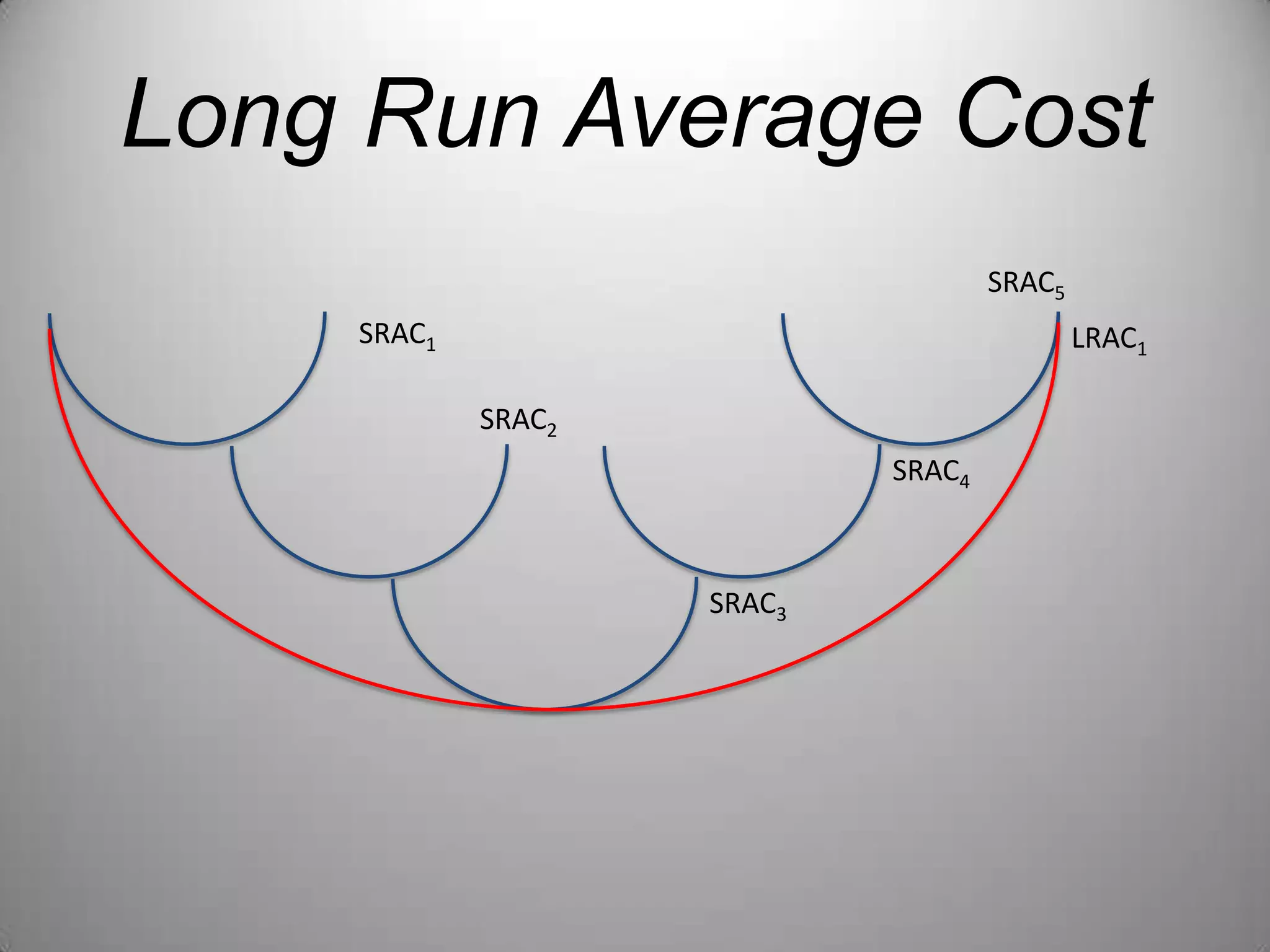
Long Run Average Cost (LRAC)The Long Run Average Cost in the average cost as all factors of production become variable, or subjected to change.IB HL EconomicsWill Congleton
Long Run Average CostSRAC5SRAC1LRAC1SRAC2SRAC4SRAC3
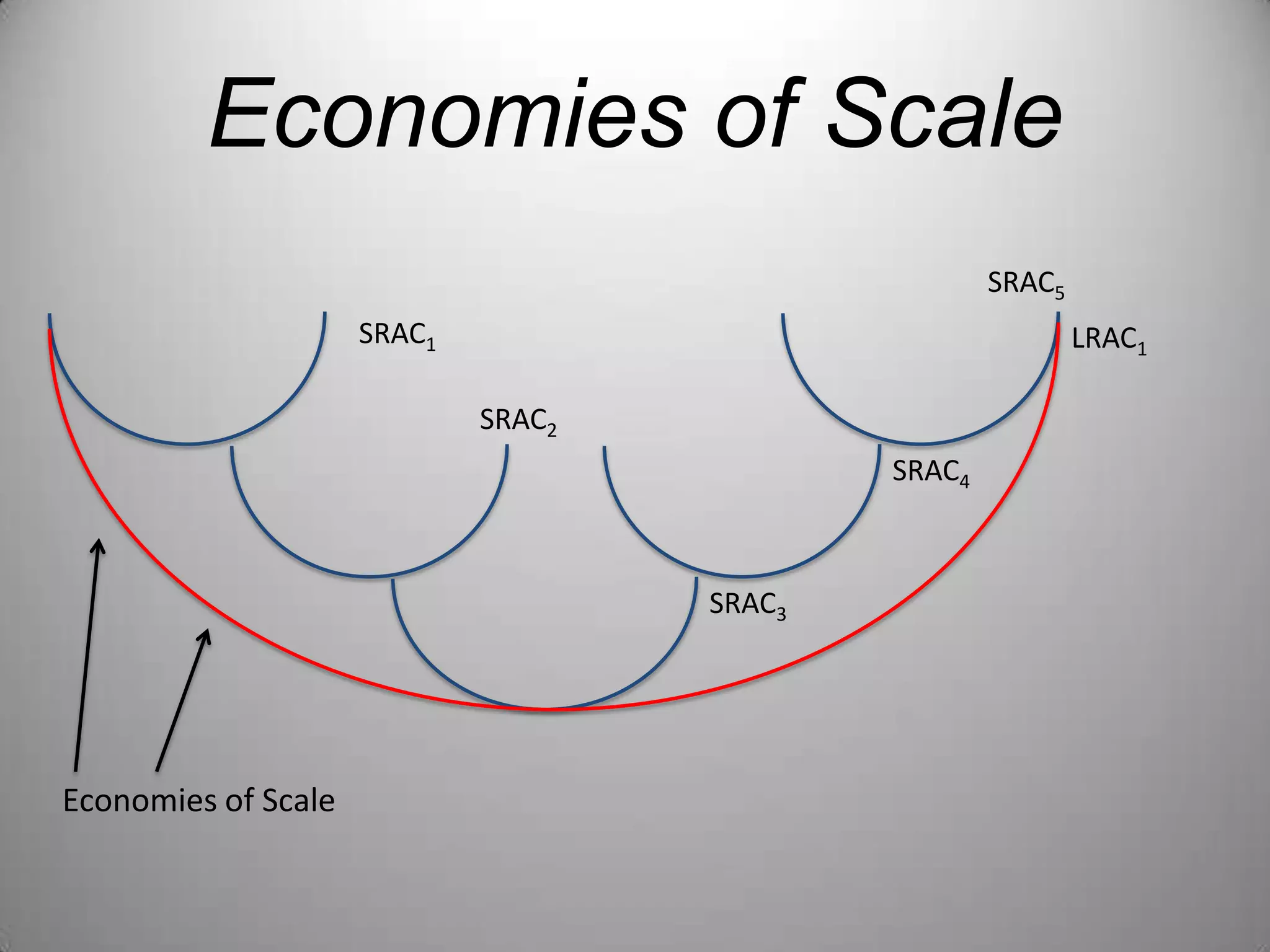
Economies of ScaleEconomies of Scale are any fall in long-run unit (average) cost that comes as the result of a firms change in production scale. Economies of scale can be shown on a short and long run graph.IB HL EconomicsWill Congleton
Economies of ScaleSRAC5SRAC1LRAC1SRAC2SRAC4SRAC3Economies of Scale
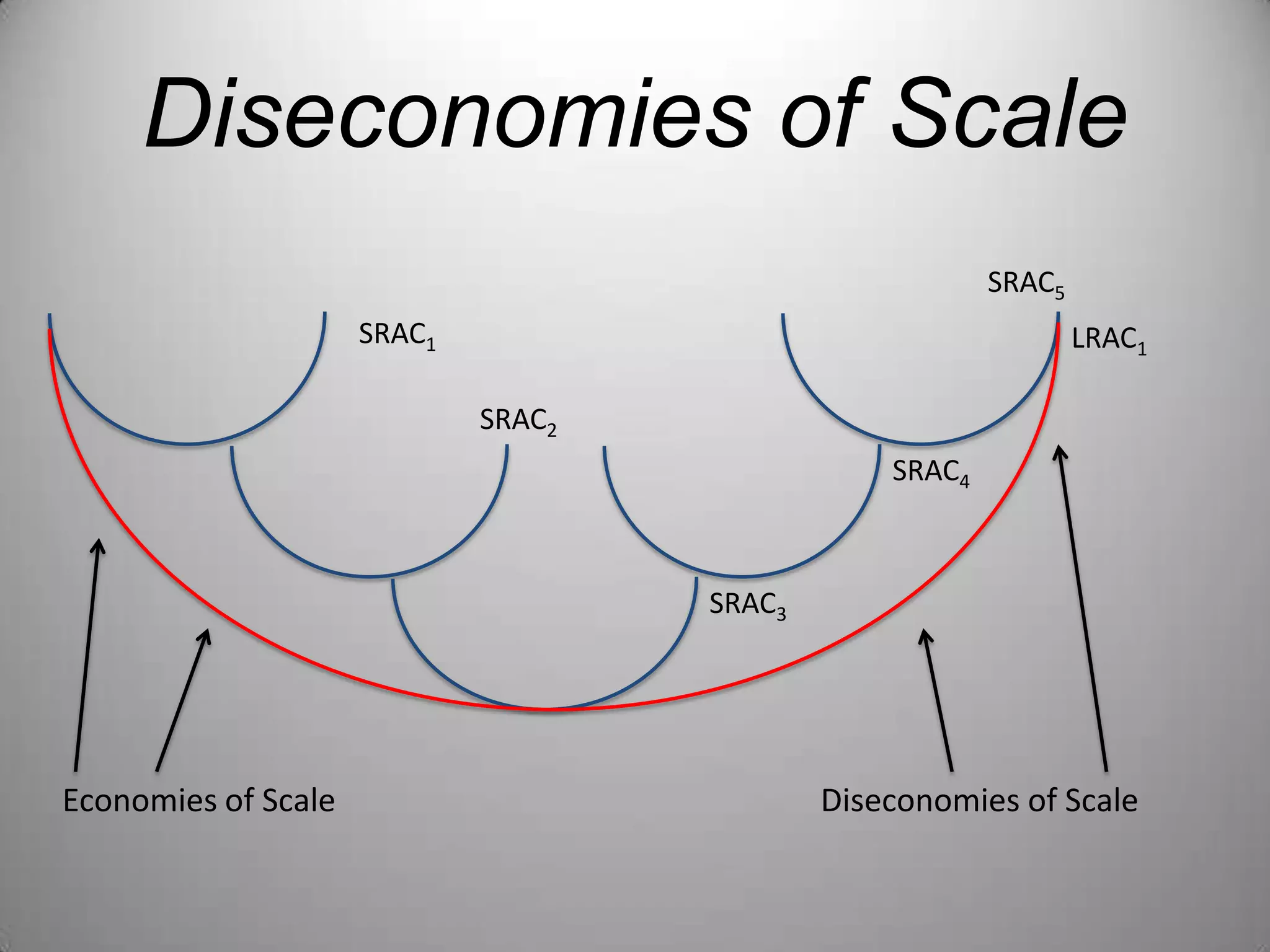
Diseconomies of ScaleDiseconomies of Scale are any an increase in long-run unit (average) cost that comes as the result of a firms change in production scale. Economies of scale can be shown on a short and long run graph.IB HL EconomicsWill Congleton
Diseconomies of ScaleSRAC5SRAC1LRAC1SRAC2SRAC4SRAC3Diseconomies of ScaleEconomies of Scale

Theory of the firm

  • 1.
    Economics DefinitionsTheory ofthe FirmIB HL EconomicsWill Congleton
  • 2.
    Fixed CostsFixed costsare costs of production that do not change based on output. They remain constant despite the number of products produced.e.g. Building cost, LandIB HL EconomicsWill Congleton
  • 3.
    Fixed Cost GraphCostFcQuantityIBHL EconomicsWill Congleton
  • 4.
    Variable CostsVariable costsare costs of production that change based on output. They differentiate as the number of products produced changes.e.g. Labor, Materials, ProductionIB HL EconomicsWill Congleton
  • 5.
    Variable Cost GraphVcCostFcQuantityIBHL EconomicsWill Congleton
  • 6.
    Laws of ReturnThelaws of return dictate how much return is created based on output. The laws of return can be observed along the variable cost curve.IB HL EconomicsWill Congleton
  • 7.
    Law of IncreasingReturnThe law of increasing return states that for the first few factors of variable cost added, the increase in output will be greater than the increase in cost.VcCostIncreasing ReturnQuantityIB HL EconomicsWill Congleton
  • 8.
    Law of ConstantReturnThe law of constant return states that for the following factors of variable cost added, the increase in output will be equal to the increase in cost.VcCostConstant ReturnQuantityIB HL EconomicsWill Congleton
  • 9.
    Law of DiminishingReturnThe law of diminishing return states that for the final factors of variable cost added, the increase in output will be less than the increase in cost.VcDiminishing ReturnCostQuantityIB HL EconomicsWill Congleton
  • 10.
    Total CostThe TotalCost is the combination of all factors of cost, namely variable and fixed costs. Represented as an equation, total cost is equal to the sum of the variable and fixed cost.IB HL EconomicsWill Congleton
  • 11.
    Total Cost GraphTcVcCostFcQuantityIBHL EconomicsWill Congleton
  • 12.
    Total RevenueTheTotal Revenueis the revenue generated from the sale of any number of products. As an equation, it is represented as price multiplied by the quantity sold.IB HL EconomicsWill Congleton
  • 13.
    Average RevenueThe AverageRevenue is the revenue received as an average for each product sold. That is, it is the total revenue divided by the quantity produced. On a graph, average revenue is assumed to be equal to the demand for a productIB HL EconomicsWill Congleton
  • 14.
    Average Revenue GraphCostAr= DQuantityIB HL EconomicsWill Congleton
  • 15.
    Marginal RevenueTheMarginal Revenueis the revenue gained by selling an additional unit of a good or service. Graphically, is it generally assumed to be equivalent to half of the Ar value, though this relationship is not always true.IB HL EconomicsWill Congleton
  • 16.
    Marginal Revenue GraphCostAr= DQuantityIB HL EconomicsWill CongletonMr
  • 17.
    Average CostThe AverageCost is the average cost of production per unit. Represented as an equation, the average cost is the total cost divided by the quantity produced. Graphically the average cost is usually curved, representing the idea of diminishing return.IB HL EconomicsWill Congleton
  • 18.
    Average Cost GraphCostAcAr= DQuantityIB HL EconomicsWill CongletonMr
  • 19.
    Marginal CostTheMarginal Costis the additional cost of producing an additional unit of output. As an equation, it can be represented as half of the average cost, though more often than not it deviates from this qualification. IB HL EconomicsWill Congleton
  • 20.
    Marginal Cost GraphMcCostAcAr= DQuantityIB HL EconomicsWill CongletonMr
  • 21.
    Normal ProfitNormal Profitis when the revenue generated is equal to the cost of production. Graphically, this means that Q1 falls at a point on which Ar and Ac overlap, or are equal.IB HL EconomicsWill Congleton
  • 22.
    Normal Profit GraphMcCostAcP1Ar= DQuantityIB HL EconomicsWill CongletonMrQ1
  • 23.
    Abnormal ProfitAbnormal Profitis when the revenue generated is greater than the cost of production. Graphically, this means that Q1 falls at a point on which Ar is above, or greater than Ac. The area above the Ac point to the Ar intercept is equal to the profit generated by sales.IB HL EconomicsWill Congleton
  • 24.
    Normal Profit GraphMcCostAcP1ProfitAr= DQuantityIB HL EconomicsWill CongletonMrQ1
  • 25.
    Short Run AverageCost (SRAC)The Short Run Average Cost in the average cost as it changes based around changes in increase (or decrease) in production from a change in factors of production.IB HL EconomicsWill Congleton
  • 26.
    Short Run AverageCostSRAC5SRAC1SRAC2SRAC4SRAC3
  • 27.
    Long Run AverageCost (LRAC)The Long Run Average Cost in the average cost as all factors of production become variable, or subjected to change.IB HL EconomicsWill Congleton
  • 28.
    Long Run AverageCostSRAC5SRAC1LRAC1SRAC2SRAC4SRAC3
  • 29.
    Economies of ScaleEconomiesof Scale are any fall in long-run unit (average) cost that comes as the result of a firms change in production scale. Economies of scale can be shown on a short and long run graph.IB HL EconomicsWill Congleton
  • 30.
  • 31.
    Diseconomies of ScaleDiseconomiesof Scale are any an increase in long-run unit (average) cost that comes as the result of a firms change in production scale. Economies of scale can be shown on a short and long run graph.IB HL EconomicsWill Congleton
  • 32.