Indira Gandhi National Tribal University
Amarkantak, (M.P.)
Presentation on
Labour Economics
Topic: Modern Theory Of Wage Determination
Present By:-
Govind Dayal Mahala
Wage Determination
• A "wage determination" is the listing of wage
rates and work benefit rates for each
classification of laborers and mechanics. This is
determined by the skill, effort, knowledge,
experience etc.
Theories of Wage Determination Classified Into
three Group
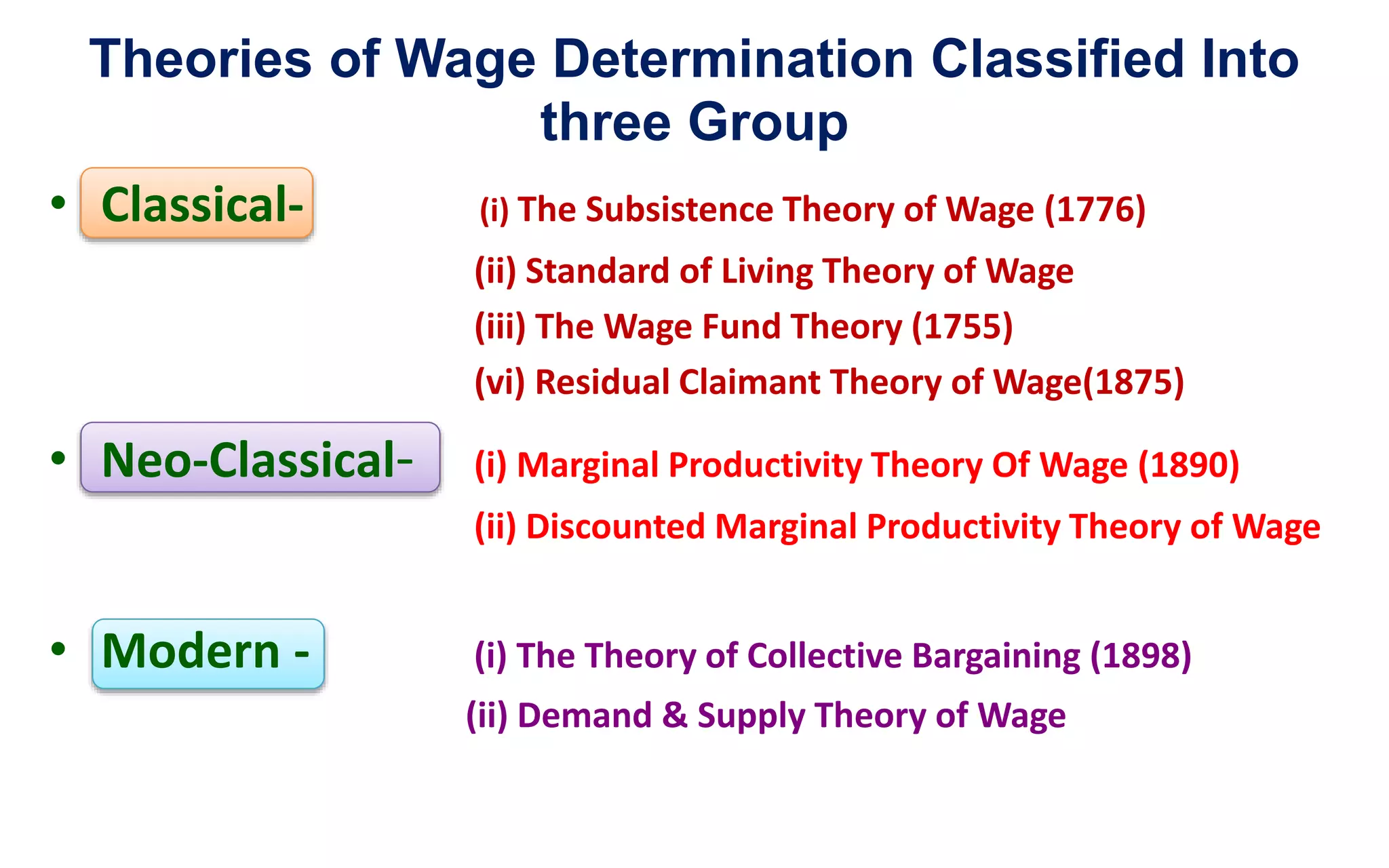
• Classical- (i) The Subsistence Theory of Wage (1776)
(ii) Standard of Living Theory of Wage
(iii) The Wage Fund Theory (1755)
(vi) Residual Claimant Theory of Wage(1875)
• Neo-Classical- (i) Marginal Productivity Theory Of Wage (1890)
(ii) Discounted Marginal Productivity Theory of Wage
• Modern - (i) The Theory of Collective Bargaining (1898)
(ii) Demand & Supply Theory of Wage
Theory of Collective Bargaining
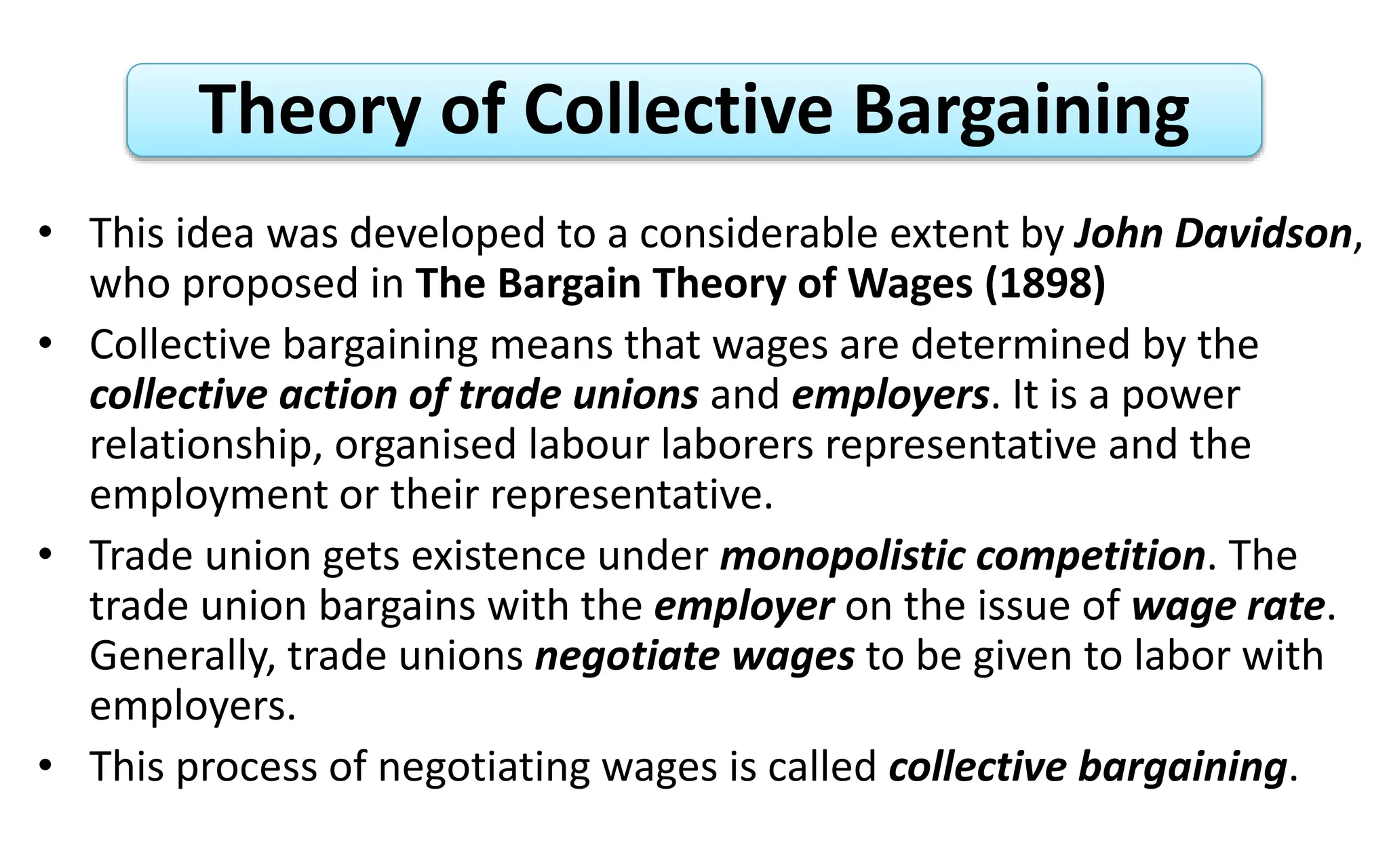
• This idea was developed to a considerable extent by John Davidson,
who proposed in The Bargain Theory of Wages (1898)
• Collective bargaining means that wages are determined by the
collective action of trade unions and employers. It is a power
relationship, organised labour laborers representative and the
employment or their representative.
• Trade union gets existence under monopolistic competition. The
trade union bargains with the employer on the issue of wage rate.
Generally, trade unions negotiate wages to be given to labor with
employers.
• This process of negotiating wages is called collective bargaining.
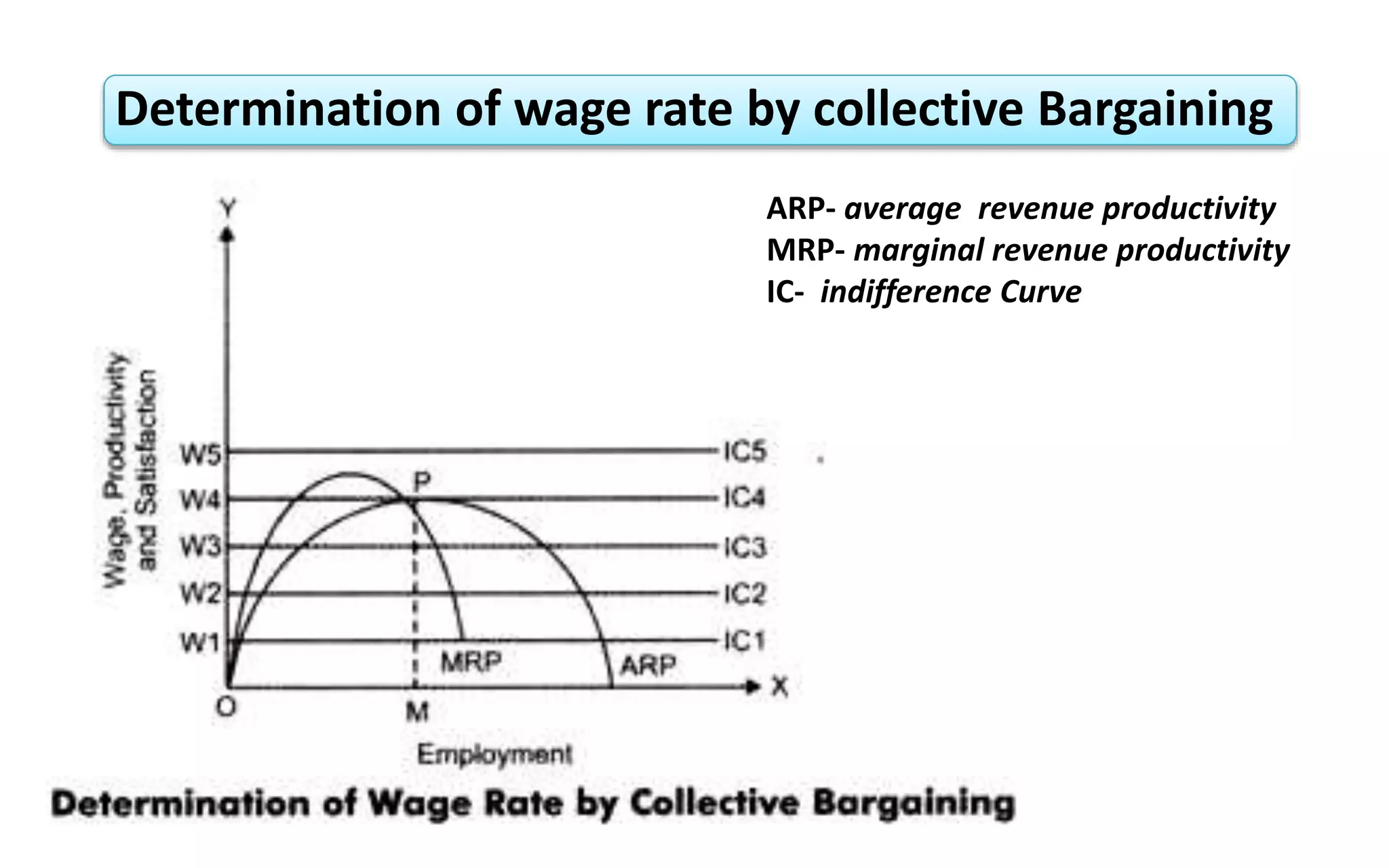
Determination of wage rate by collective Bargaining
ARP- average revenue productivity
MRP- marginal revenue productivity
IC- indifference Curve
• ARP represents the average revenue productivity curve and MRP
represents marginal revenue productivity curve.
• IC1, IC2, IC3, IC4, and IC5 show indifference curves at different
wage rates with respect to the satisfaction of trade unions.
• In this case, trade union would prefer the wage rate at point P
where indifference curve is tangent to ARP.
• At point P, the wage rate is OW4 and number of labor is OM.
• In case the wage rates goes up from OW4, then the employer
would suffer losses and he/she needs to close his/her unit.
According to modem economists, trade unions contribute
in raising wage rates by adopting the following measures:
• Helps in reducing labor exploitation by ensuring that the wage rates are equal to
VMP (value of marginal product). This can be done by increasing the bargaining
power of labor by trade unions.
• Helps in increasing the MRP (marginal revenue productivity) of labor through
different ways, such as convincing employers to provide new and advanced
machines to labor and inculcating the values of honesty and thrift among
workers. Another way to increase MRP is by restricting the supply of labor.
• Reduces the supply of labor by convincing the government to pass immigration
laws, reduce working hours, and limit the entry of labor in the trade union. This is
done to increase wage rates.
• Helps in increasing the standard wage rates. If the standard wage rate increases,
then it would automatically increases the wage rates of labor. This is a modern
method adopted by trade unions for increasing the wage rate.
Demand & Supply Theory of Wage
• The marginal productivity & bargaining of labour does not
determine the actual rate of the wages.
• It simply sets the maximum limit of wages; the minimum limit is set
by the standard of living of the workers.
• The employers try to pay less than the marginal product of labour
and the workers try to get more than the cost of living.
• The actual rates are determined between these two limits,
depending on the relative strength of the employers and the
workers’ organisations.
• The wage-rate in a particular industry is determined by the demand for
and the supply of labour.
• Labour is demanded because of its productivity and so the employer
demands the labour up to the level at which the wage-rate is equal to the
value of the marginal product of labour.
• The supply of labour depends, its supply price, which depends on the
standard of living of the workers, the strength of trade unions and various
other factors.
• The workers supply their labour up to the point at which the rate of wages
becomes equal to the cost of living.
• The equipment rate of wage established when the demand for labour is
equal to its supply.
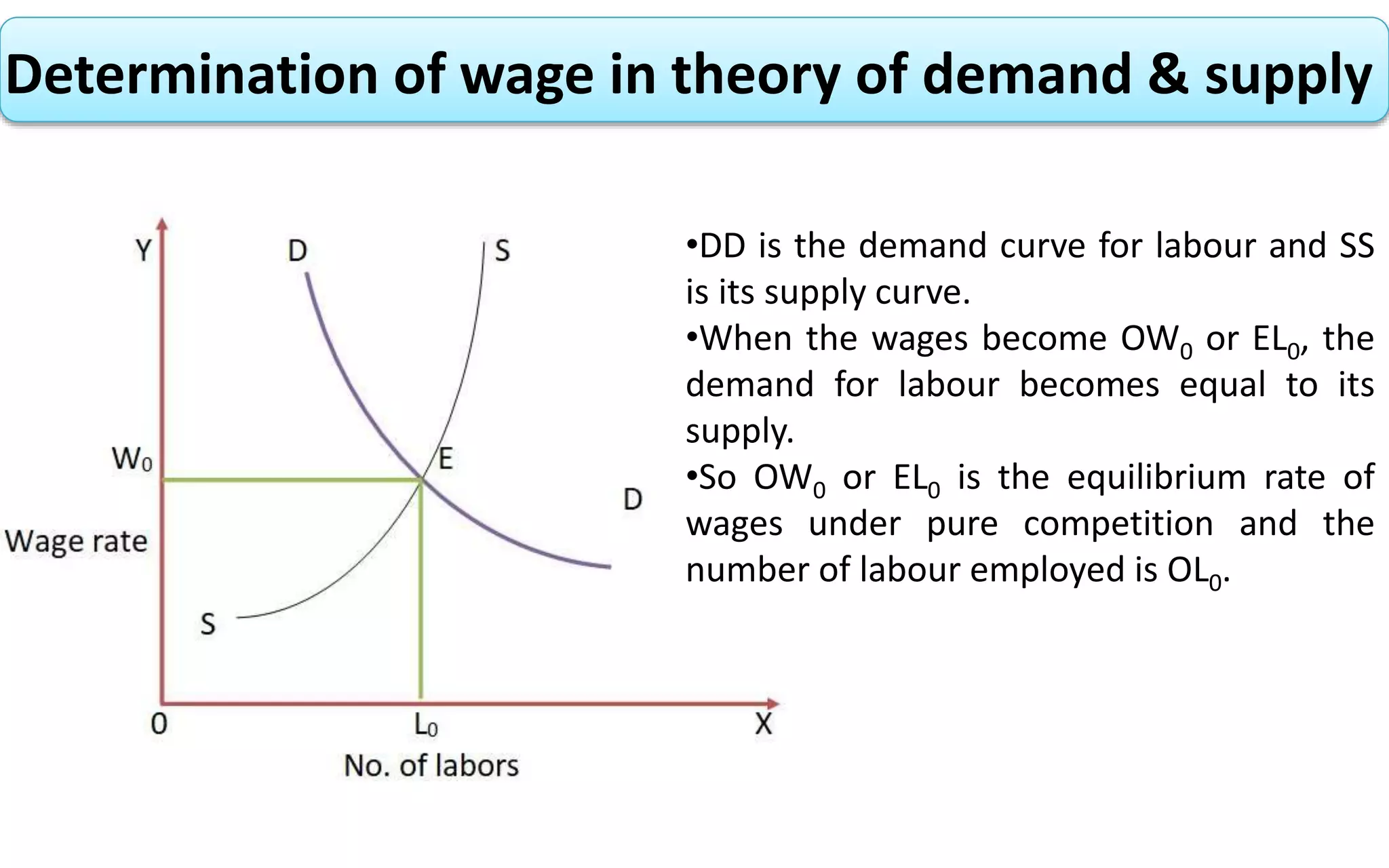
Determination of wage in theory of demand & supply
•DD is the demand curve for labour and SS
is its supply curve.
•When the wages become OW0 or EL0, the
demand for labour becomes equal to its
supply.
•So OW0 or EL0 is the equilibrium rate of
wages under pure competition and the
number of labour employed is OL0.

Modern theory of wage determination

  • 1.
    Indira Gandhi NationalTribal University Amarkantak, (M.P.) Presentation on Labour Economics Topic: Modern Theory Of Wage Determination Present By:- Govind Dayal Mahala
  • 2.
    Wage Determination • A"wage determination" is the listing of wage rates and work benefit rates for each classification of laborers and mechanics. This is determined by the skill, effort, knowledge, experience etc.
  • 3.
    Theories of WageDetermination Classified Into three Group • Classical- (i) The Subsistence Theory of Wage (1776) (ii) Standard of Living Theory of Wage (iii) The Wage Fund Theory (1755) (vi) Residual Claimant Theory of Wage(1875) • Neo-Classical- (i) Marginal Productivity Theory Of Wage (1890) (ii) Discounted Marginal Productivity Theory of Wage • Modern - (i) The Theory of Collective Bargaining (1898) (ii) Demand & Supply Theory of Wage
  • 4.
    Theory of CollectiveBargaining • This idea was developed to a considerable extent by John Davidson, who proposed in The Bargain Theory of Wages (1898) • Collective bargaining means that wages are determined by the collective action of trade unions and employers. It is a power relationship, organised labour laborers representative and the employment or their representative. • Trade union gets existence under monopolistic competition. The trade union bargains with the employer on the issue of wage rate. Generally, trade unions negotiate wages to be given to labor with employers. • This process of negotiating wages is called collective bargaining.
  • 5.
    Determination of wagerate by collective Bargaining ARP- average revenue productivity MRP- marginal revenue productivity IC- indifference Curve
  • 6.
    • ARP representsthe average revenue productivity curve and MRP represents marginal revenue productivity curve. • IC1, IC2, IC3, IC4, and IC5 show indifference curves at different wage rates with respect to the satisfaction of trade unions. • In this case, trade union would prefer the wage rate at point P where indifference curve is tangent to ARP. • At point P, the wage rate is OW4 and number of labor is OM. • In case the wage rates goes up from OW4, then the employer would suffer losses and he/she needs to close his/her unit.
  • 7.
    According to modemeconomists, trade unions contribute in raising wage rates by adopting the following measures: • Helps in reducing labor exploitation by ensuring that the wage rates are equal to VMP (value of marginal product). This can be done by increasing the bargaining power of labor by trade unions. • Helps in increasing the MRP (marginal revenue productivity) of labor through different ways, such as convincing employers to provide new and advanced machines to labor and inculcating the values of honesty and thrift among workers. Another way to increase MRP is by restricting the supply of labor. • Reduces the supply of labor by convincing the government to pass immigration laws, reduce working hours, and limit the entry of labor in the trade union. This is done to increase wage rates. • Helps in increasing the standard wage rates. If the standard wage rate increases, then it would automatically increases the wage rates of labor. This is a modern method adopted by trade unions for increasing the wage rate.
  • 8.
    Demand & SupplyTheory of Wage • The marginal productivity & bargaining of labour does not determine the actual rate of the wages. • It simply sets the maximum limit of wages; the minimum limit is set by the standard of living of the workers. • The employers try to pay less than the marginal product of labour and the workers try to get more than the cost of living. • The actual rates are determined between these two limits, depending on the relative strength of the employers and the workers’ organisations.
  • 9.
    • The wage-ratein a particular industry is determined by the demand for and the supply of labour. • Labour is demanded because of its productivity and so the employer demands the labour up to the level at which the wage-rate is equal to the value of the marginal product of labour. • The supply of labour depends, its supply price, which depends on the standard of living of the workers, the strength of trade unions and various other factors. • The workers supply their labour up to the point at which the rate of wages becomes equal to the cost of living. • The equipment rate of wage established when the demand for labour is equal to its supply.
  • 10.
    Determination of wagein theory of demand & supply •DD is the demand curve for labour and SS is its supply curve. •When the wages become OW0 or EL0, the demand for labour becomes equal to its supply. •So OW0 or EL0 is the equilibrium rate of wages under pure competition and the number of labour employed is OL0.