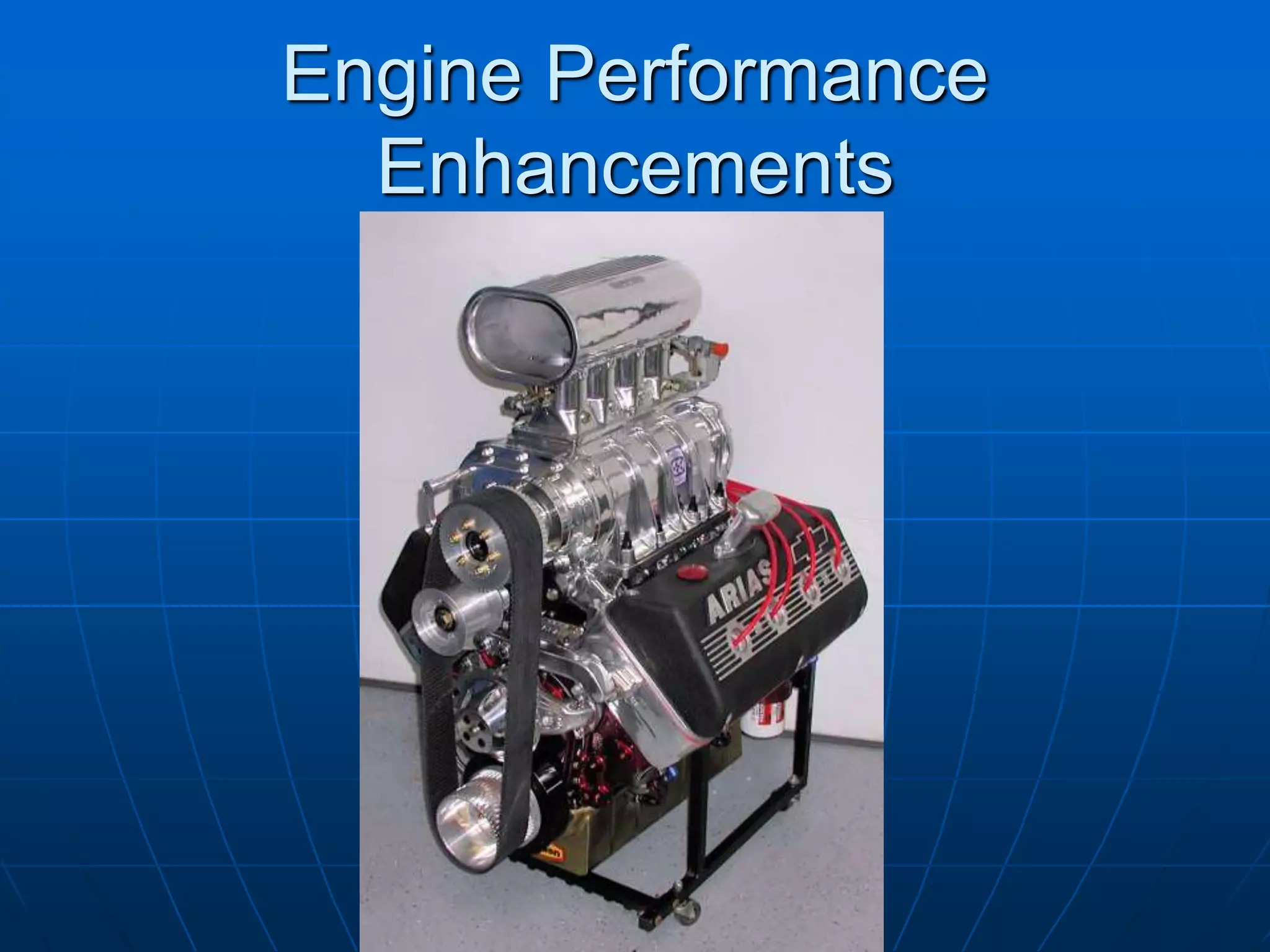
Engine Performance
Enhancements
Horsepower VS Torque
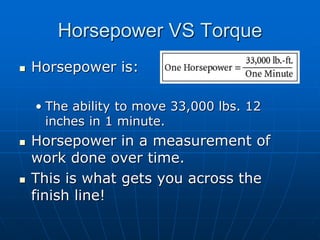
 Horsepower is:
• The ability to move 33,000 lbs. 12
inches in 1 minute.
 Horsepower in a measurement of
work done over time.
 This is what gets you across the
finish line!
Torque
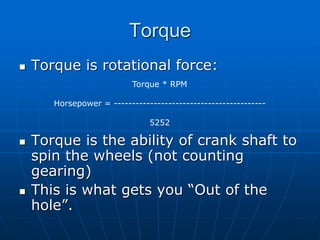
 Torque is rotational force:
 Torque is the ability of crank shaft to
spin the wheels (not counting
gearing)
 This is what gets you “Out of the
hole”.
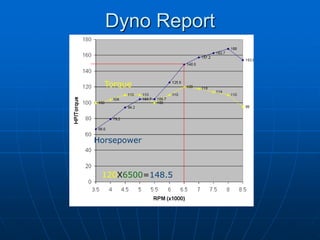
Torque * RPM
Horsepower = ------------------------------------------
5252
Horsepower
Torque
120X6500=148.5
Dyno Report
Where do we want Hp and Tq?
 Cars like to have the torque peak:
• mid to upper middle of rpm band
• Less mass to get moving
 Trucks like the torque peak:
• Lower to middle of rpm band
• Better for pulling loads
• Heavier vehicles
 Diesels make torque at low rpm (1,000-2,000rpm)
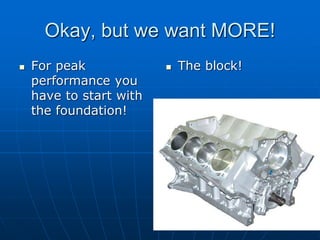
Okay, but we want MORE!
 For peak
performance you
have to start with
the foundation!
 The block!
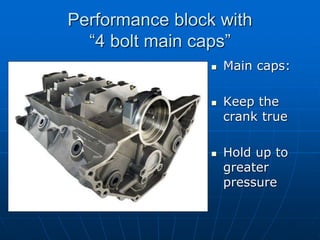
Performance block with
“4 bolt main caps”
 Main caps:
 Keep the
crank true
 Hold up to
greater
pressure
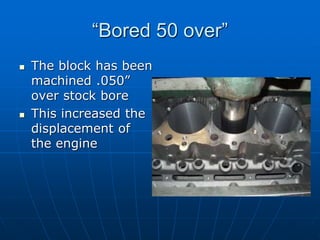
“Bored 50 over”
 The block has been
machined .050”
over stock bore
 This increased the
displacement of
the engine
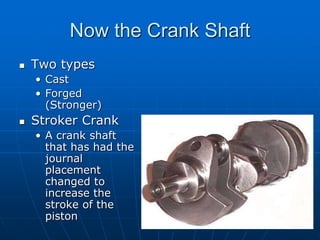
Now the Crank Shaft
 Two types
• Cast
• Forged
(Stronger)
 Stroker Crank
• A crank shaft
that has had the
journal
placement
changed to
increase the
stroke of the
piston
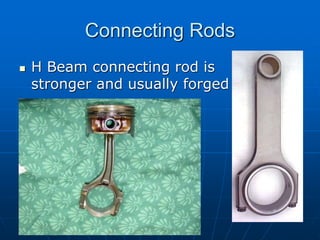
Connecting Rods
 H Beam connecting rod is
stronger and usually forged
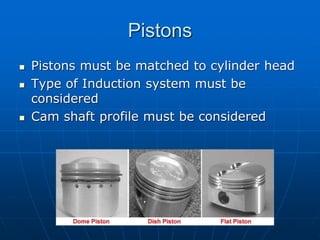
Pistons
 Pistons must be matched to cylinder head
 Type of Induction system must be
considered
 Cam shaft profile must be considered
Cam Shafts
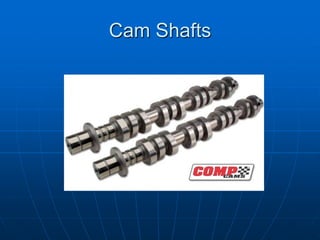
Cam Shafts
 The lobes of the cam will actuate the
valves
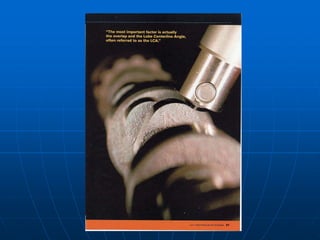
 Cam Shaft profiles are described by
three things:
• Lift = How high the lobes are (measured
in 1,000th of an inch)
• Duration = How long the valve is
opened (measured in Degrees)
• Overlap = how long two valves are open
(measured in Degrees)
Roller Rockers and Lifters
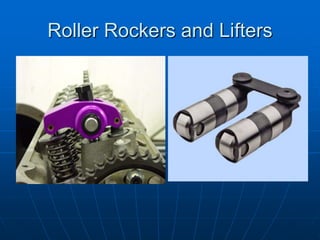
Roller Rockers
 Roller rocker arms:
 Reduce the side load on the valve
stem
 Reduce friction
 Can be used with higher profile cam
shafts
 Allow for increased rpm
Roller Lifters
 Reduce friction on cam shaft
 More positive push on push rod
 Allow for increased rpm.
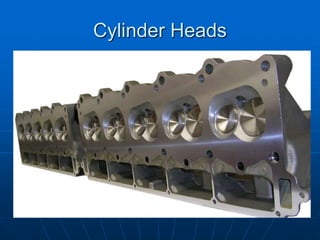
Cylinder Heads
Cylinder Heads
 Performance Cylinder Heads are the
best performance improvement you
can make
 Performance heads are CNC milled
for precise flow and volume
consistency
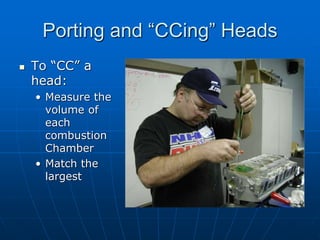
Porting and “CCing” Heads
 To “CC” a
head:
• Measure the
volume of
each
combustion
Chamber
• Match the
largest
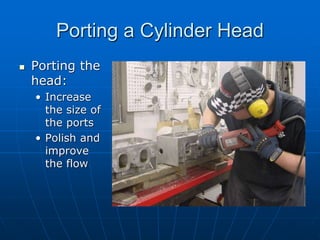
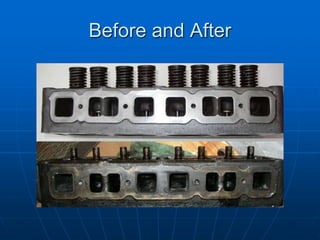
Porting a Cylinder Head
 Porting the
head:
• Increase
the size of
the ports
• Polish and
improve
the flow
Before and After
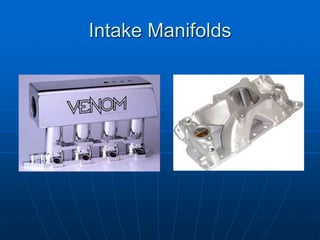
Intake Manifolds
Intake Manifolds
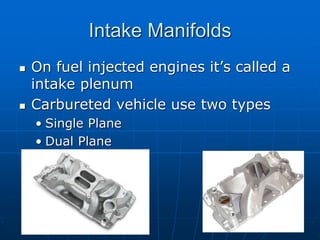
 On fuel injected engines it’s called a
intake plenum
 Carbureted vehicle use two types
• Single Plane
• Dual Plane
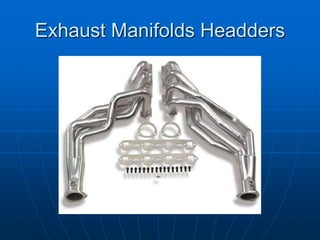
Exhaust Manifolds Headders
Header Pipes
 Header pipe come in two types
• Shorty Equal length
• Full header Equal length
 Equal length promotes better
exhaust scavenging
 Equalizes flow from all ports in head
Balance and Blue Print
 Balanced engine
• All parts (piston, rods) are made to be
same weight
• Crank is balanced
 Blue Printing engines
• All parts are measured and recorded
• Parts are assembled to very close
tolerences
Now put it all together!
Engine Assembly Video

Engine performance enhancements

  • 1.
  • 2.
    Horsepower VS Torque Horsepower is: • The ability to move 33,000 lbs. 12 inches in 1 minute.  Horsepower in a measurement of work done over time.  This is what gets you across the finish line!
  • 3.
    Torque  Torque isrotational force:  Torque is the ability of crank shaft to spin the wheels (not counting gearing)  This is what gets you “Out of the hole”. Torque * RPM Horsepower = ------------------------------------------ 5252
  • 4.
  • 5.
    Where do wewant Hp and Tq?  Cars like to have the torque peak: • mid to upper middle of rpm band • Less mass to get moving  Trucks like the torque peak: • Lower to middle of rpm band • Better for pulling loads • Heavier vehicles  Diesels make torque at low rpm (1,000-2,000rpm)
  • 6.
    Okay, but wewant MORE!  For peak performance you have to start with the foundation!  The block!
  • 7.
    Performance block with “4bolt main caps”  Main caps:  Keep the crank true  Hold up to greater pressure
  • 8.
    “Bored 50 over” The block has been machined .050” over stock bore  This increased the displacement of the engine
  • 9.
    Now the CrankShaft  Two types • Cast • Forged (Stronger)  Stroker Crank • A crank shaft that has had the journal placement changed to increase the stroke of the piston
  • 10.
    Connecting Rods  HBeam connecting rod is stronger and usually forged
  • 11.
    Pistons  Pistons mustbe matched to cylinder head  Type of Induction system must be considered  Cam shaft profile must be considered
  • 12.
  • 13.
    Cam Shafts  Thelobes of the cam will actuate the valves  Cam Shaft profiles are described by three things: • Lift = How high the lobes are (measured in 1,000th of an inch) • Duration = How long the valve is opened (measured in Degrees) • Overlap = how long two valves are open (measured in Degrees)
  • 15.
  • 16.
    Roller Rockers  Rollerrocker arms:  Reduce the side load on the valve stem  Reduce friction  Can be used with higher profile cam shafts  Allow for increased rpm
  • 17.
    Roller Lifters  Reducefriction on cam shaft  More positive push on push rod  Allow for increased rpm.
  • 18.
  • 19.
    Cylinder Heads  PerformanceCylinder Heads are the best performance improvement you can make  Performance heads are CNC milled for precise flow and volume consistency
  • 20.
    Porting and “CCing”Heads  To “CC” a head: • Measure the volume of each combustion Chamber • Match the largest
  • 21.
    Porting a CylinderHead  Porting the head: • Increase the size of the ports • Polish and improve the flow
  • 22.
  • 23.
  • 24.
    Intake Manifolds  Onfuel injected engines it’s called a intake plenum  Carbureted vehicle use two types • Single Plane • Dual Plane
  • 25.
  • 26.
    Header Pipes  Headerpipe come in two types • Shorty Equal length • Full header Equal length  Equal length promotes better exhaust scavenging  Equalizes flow from all ports in head
  • 27.
    Balance and BluePrint  Balanced engine • All parts (piston, rods) are made to be same weight • Crank is balanced  Blue Printing engines • All parts are measured and recorded • Parts are assembled to very close tolerences
  • 28.
    Now put itall together! Engine Assembly Video