What are
waves?
Wave
Definition: A disturbance that transfers
energy from place to place.
What carries waves? A medium, a
medium is the material through which a
wave travels.
A medium can be a gas, liquid, or solid.
Not all waves require a
medium to travel.
Light from the sun travels through
empty space.
What causes waves?
Waves are created
when a source of
energy causes a
medium to vibrate.
A vibration is a
repeated back and
forth or up and down
motion.
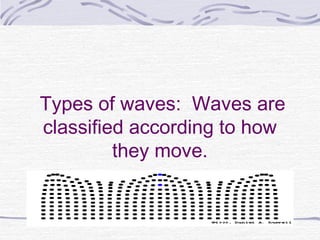
Types of waves: Waves are
classified according to how
they move.
Transverse wave
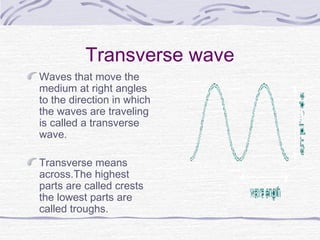
Waves that move the
medium at right angles
to the direction in which
the waves are traveling
is called a transverse
wave.
Transverse means
across.The highest
parts are called crests
the lowest parts are
called troughs.
Longitudinal Wave
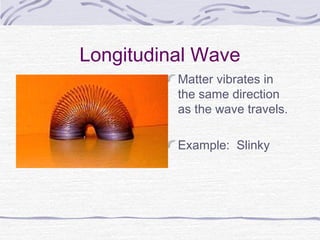
Matter vibrates in
the same direction
as the wave travels.
Example: Slinky
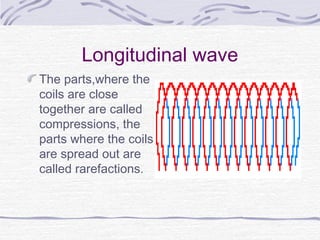
Longitudinal wave
The parts,where the
coils are close
together are called
compressions, the
parts where the coils
are spread out are
called rarefactions.
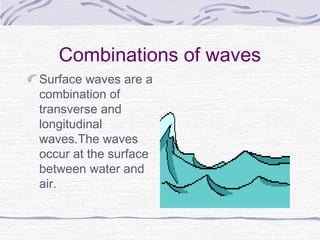
Combinations of waves
Surface waves are a
combination of
transverse and
longitudinal
waves.The waves
occur at the surface
between water and
air.
Properties of Waves
Basic Properties of Waves
Amplitude
Wavelength
Frequency
Speed
Amplitude
Amplitude is the maximum distance the particles of the
medium carrying the wave move away from their rest
positions.
The farther the medium moves as it vibrates the larger the
amplitude of the resulting waves. The greater the
amplitude the greater the amount of energy
Amplitude of transverse
waves
The amplitude of a transverse wave is
the maximum distance the medium
moves up or down from its rest position.
You can find the amplitude of a
transverse wave by measuring the
distance from rest to crest or rest to
trough.
Amplitude of a longitudinal
wave.
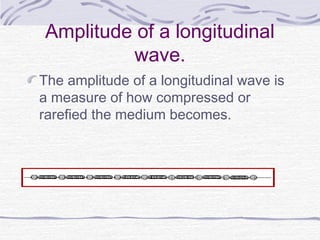
The amplitude of a longitudinal wave is
a measure of how compressed or
rarefied the medium becomes.
Wavelength
A wave travels a certain distance before
it starts to repeat. The distance
between two corresponding parts of a
wave is its wavelength.
Transverse measure from crest to crest
or trough to trough.
Longitudinal measure from one
compression to the next.
Frequency
The number of complete waves that
pass a given point in a certain amount
of time.
AKA number of vibrations per second.
Frequency measured in hertz (Hz).
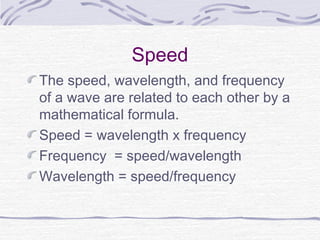
Speed
The speed, wavelength, and frequency
of a wave are related to each other by a
mathematical formula.
Speed = wavelength x frequency
Frequency = speed/wavelength
Wavelength = speed/frequency
Speed
Waves in different
mediums travel at
different speeds.
However, in a given
medium and under
the same conditions
the speed of the
wave is constant.
Chapter 15 -3
Ways Waves Interact
Reflection
Refraction
Diffraction
Interference
Constructive
Destructive
Standing Waves
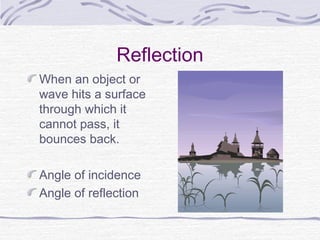
Reflection
When an object or
wave hits a surface
through which it
cannot pass, it
bounces back.
Angle of incidence
Angle of reflection
Examples of reflection
Mirror
Echo
Ball against a wall
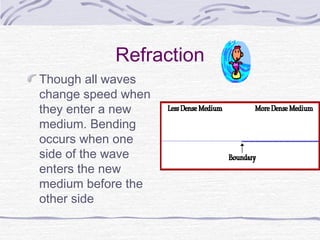
Refraction is when a wave
moves from one medium into
another medium at an angle, it
changes speed as it enters
the second medium which
causes it to bend. The
bending of waves due to a
change in speed is called
refraction.
Refraction
Though all waves
change speed when
they enter a new
medium. Bending
occurs when one
side of the wave
enters the new
medium before the
other side
Diffraction
When a wave passes a barrier or
moves through a hole in a barrier it
bends and spreads out.
Interference
Constructive interference occurs
whenever two waves combine to make
a wave with a larger amplitude.
Destructive interference when the
amplitudes of two waves combine
producing a smaller amplitude.
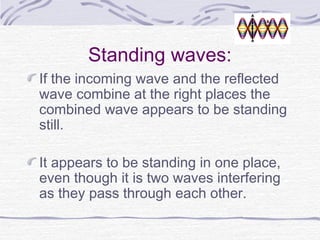
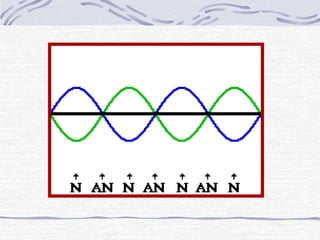
Standing waves:
If the incoming wave and the reflected
wave combine at the right places the
combined wave appears to be standing
still.
It appears to be standing in one place,
even though it is two waves interfering
as they pass through each other.
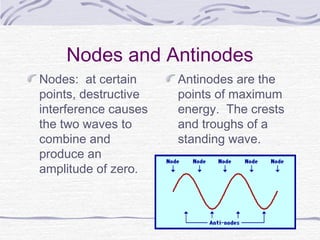
Nodes and Antinodes
Nodes: at certain
points, destructive
interference causes
the two waves to
combine and
produce an
amplitude of zero.
Antinodes are the
points of maximum
energy. The crests
and troughs of a
standing wave.

Waves

  • 1.
  • 2.
    Wave Definition: A disturbancethat transfers energy from place to place. What carries waves? A medium, a medium is the material through which a wave travels. A medium can be a gas, liquid, or solid.
  • 3.
    Not all wavesrequire a medium to travel. Light from the sun travels through empty space.
  • 4.
    What causes waves? Wavesare created when a source of energy causes a medium to vibrate. A vibration is a repeated back and forth or up and down motion.
  • 5.
    Types of waves:Waves are classified according to how they move.
  • 6.
    Transverse wave Waves thatmove the medium at right angles to the direction in which the waves are traveling is called a transverse wave. Transverse means across.The highest parts are called crests the lowest parts are called troughs.
  • 7.
    Longitudinal Wave Matter vibratesin the same direction as the wave travels. Example: Slinky
  • 8.
    Longitudinal wave The parts,wherethe coils are close together are called compressions, the parts where the coils are spread out are called rarefactions.
  • 9.
    Combinations of waves Surfacewaves are a combination of transverse and longitudinal waves.The waves occur at the surface between water and air.
  • 10.
  • 11.
    Basic Properties ofWaves Amplitude Wavelength Frequency Speed
  • 12.
    Amplitude Amplitude is themaximum distance the particles of the medium carrying the wave move away from their rest positions. The farther the medium moves as it vibrates the larger the amplitude of the resulting waves. The greater the amplitude the greater the amount of energy
  • 13.
    Amplitude of transverse waves Theamplitude of a transverse wave is the maximum distance the medium moves up or down from its rest position. You can find the amplitude of a transverse wave by measuring the distance from rest to crest or rest to trough.
  • 14.
    Amplitude of alongitudinal wave. The amplitude of a longitudinal wave is a measure of how compressed or rarefied the medium becomes.
  • 15.
    Wavelength A wave travelsa certain distance before it starts to repeat. The distance between two corresponding parts of a wave is its wavelength. Transverse measure from crest to crest or trough to trough. Longitudinal measure from one compression to the next.
  • 16.
    Frequency The number ofcomplete waves that pass a given point in a certain amount of time. AKA number of vibrations per second. Frequency measured in hertz (Hz).
  • 17.
    Speed The speed, wavelength,and frequency of a wave are related to each other by a mathematical formula. Speed = wavelength x frequency Frequency = speed/wavelength Wavelength = speed/frequency
  • 18.
    Speed Waves in different mediumstravel at different speeds. However, in a given medium and under the same conditions the speed of the wave is constant.
  • 19.
  • 20.
  • 21.
    Reflection When an objector wave hits a surface through which it cannot pass, it bounces back. Angle of incidence Angle of reflection
  • 22.
  • 23.
    Refraction is whena wave moves from one medium into another medium at an angle, it changes speed as it enters the second medium which causes it to bend. The bending of waves due to a change in speed is called refraction.
  • 24.
    Refraction Though all waves changespeed when they enter a new medium. Bending occurs when one side of the wave enters the new medium before the other side
  • 25.
    Diffraction When a wavepasses a barrier or moves through a hole in a barrier it bends and spreads out.
  • 26.
    Interference Constructive interference occurs whenevertwo waves combine to make a wave with a larger amplitude. Destructive interference when the amplitudes of two waves combine producing a smaller amplitude.
  • 27.
    Standing waves: If theincoming wave and the reflected wave combine at the right places the combined wave appears to be standing still. It appears to be standing in one place, even though it is two waves interfering as they pass through each other.
  • 29.
    Nodes and Antinodes Nodes:at certain points, destructive interference causes the two waves to combine and produce an amplitude of zero. Antinodes are the points of maximum energy. The crests and troughs of a standing wave.