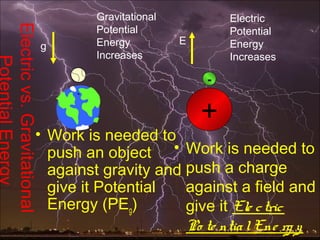
Electric vs. Gravitational       Gravitational           Electric
                                 Potential               Potential
                                 Energy          E       Energy
                             g
                                 Increases               Increases

                                                     -


                                                     +
                    • Work is needed to
                      push an object • Work is needed to
                      against gravity and push a charge
                      give it Potential   against a field and
                      Energy (PEg)        give it Ele c tric
                                          Po te ntia l Ene rg y
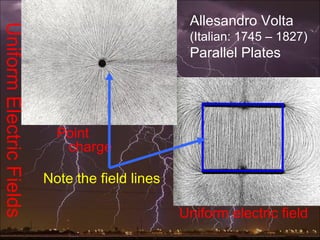
Allesandro Volta
Uniform Electric Fields
                                                  (Italian: 1745 – 1827)
                                                  Parallel Plates


                            Point
                             charge

                          Note the field lines

                                                 Uniform electric field
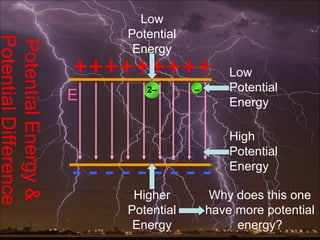
Low
                           Potential
Potential Difference
Potential Energy &
                            Energy
                       +++++++++               Low
                              2–       –       Potential
                       E                       Energy

                                               High
                                               Potential
                       ---------               Energy

                            Higher          Why does this one
                           Potential       have more potential
                            Energy              energy?
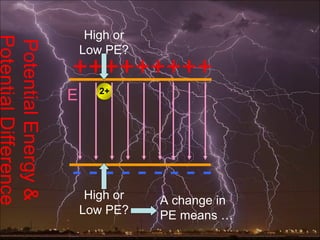
High or
Potential Difference
Potential Energy &
                           Low PE?
                       +++++++++
                       E      2+


                       ---------
                            High or   A change in
                           Low PE?    PE means …
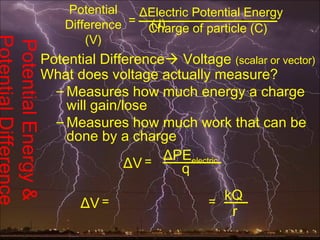
Potential   ΔElectric Potential Energy
                     Difference = Charge of particle (C)
                                  (J)
                         (V)
Potential Energy &

               Potential Difference Voltage (scalar or vector)
               What does voltage actually measure?
                 – Measures how much energy a charge
                   will gain/lose
                 – Measures how much work that can be
                   done by a charge
                                   ΔPEelectric
                              ΔV =   q

                       ΔV =                   = kQ
                                                  r
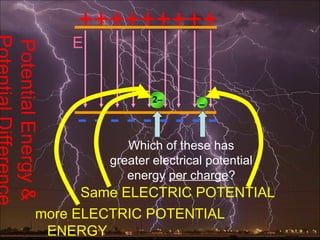
+++++++++
                     E
Potential Energy &


                                 2–
                                          –

                     ---------
                            Which of these has
                         greater electrical potential
                            energy per charge?
                   Same ELECTRIC POTENTIAL
             more ELECTRIC POTENTIAL
              ENERGY
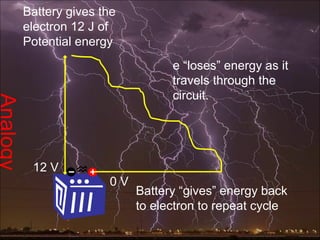
Battery gives the
      electron 12 J of
      Potential energy
                                e “loses” energy as it
                                travels through the
                                circuit.
Analogy


          12 V
                     0V
                          Battery “gives” energy back
                          to electron to repeat cycle
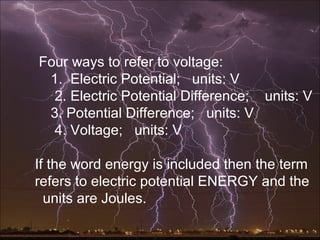
Four ways to refer to voltage:
 1. Electric Potential; units: V
  2. Electric Potential Difference; units: V
 3. Potential Difference; units: V
  4. Voltage; units: V

If the word energy is included then the term
refers to electric potential ENERGY and the
  units are Joules.
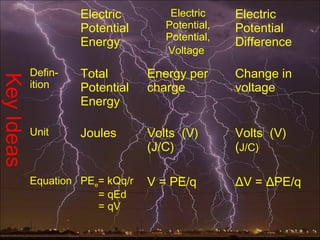
Electric         Electric    Electric
                     Potential       Potential,   Potential
                                     Potential,
                     Energy                       Difference
                                     Voltage

            Defin-   Total        Energy per      Change in
Key Ideas


            ition    Potential    charge          voltage
                     Energy

            Unit     Joules       Volts (V)       Volts (V)
                                  (J/C)           (J/C)

            Equation PEe= kQq/r   V = PE/q        ΔV = ΔPE/q
                        = qEd
                        = qV
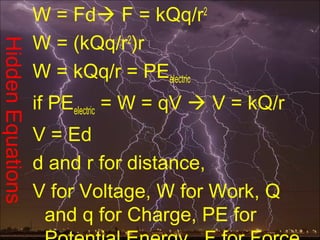
W = Fd F = kQq/r2
                   W = (kQq/r2)r
Hidden Equations


                   W = kQq/r = PEelectric
                   if PEelectric = W = qV  V = kQ/r
                   V = Ed
                   d and r for distance,
                   V for Voltage, W for Work, Q
                    and q for Charge, PE for

Ch10 - potential difference and electric potential energy

  • 2.
    Electric vs. Gravitational Gravitational Electric Potential Potential Energy E Energy g Increases Increases - + • Work is needed to push an object • Work is needed to against gravity and push a charge give it Potential against a field and Energy (PEg) give it Ele c tric Po te ntia l Ene rg y
  • 3.
    Allesandro Volta Uniform ElectricFields (Italian: 1745 – 1827) Parallel Plates Point charge Note the field lines Uniform electric field
  • 4.
    Low Potential Potential Difference Potential Energy & Energy +++++++++ Low 2– – Potential E Energy High Potential --------- Energy Higher Why does this one Potential have more potential Energy energy?
  • 5.
    High or Potential Difference PotentialEnergy & Low PE? +++++++++ E 2+ --------- High or A change in Low PE? PE means …
  • 6.
    Potential ΔElectric Potential Energy Difference = Charge of particle (C) (J) (V) Potential Energy & Potential Difference Voltage (scalar or vector) What does voltage actually measure? – Measures how much energy a charge will gain/lose – Measures how much work that can be done by a charge ΔPEelectric ΔV = q ΔV = = kQ r
  • 7.
    +++++++++ E Potential Energy & 2– – --------- Which of these has greater electrical potential energy per charge? Same ELECTRIC POTENTIAL more ELECTRIC POTENTIAL ENERGY
  • 8.
    Battery gives the electron 12 J of Potential energy e “loses” energy as it travels through the circuit. Analogy 12 V 0V Battery “gives” energy back to electron to repeat cycle
  • 9.
    Four ways torefer to voltage: 1. Electric Potential; units: V 2. Electric Potential Difference; units: V 3. Potential Difference; units: V 4. Voltage; units: V If the word energy is included then the term refers to electric potential ENERGY and the units are Joules.
  • 10.
    Electric Electric Electric Potential Potential, Potential Potential, Energy Difference Voltage Defin- Total Energy per Change in Key Ideas ition Potential charge voltage Energy Unit Joules Volts (V) Volts (V) (J/C) (J/C) Equation PEe= kQq/r V = PE/q ΔV = ΔPE/q = qEd = qV
  • 11.
    W = FdF = kQq/r2 W = (kQq/r2)r Hidden Equations W = kQq/r = PEelectric if PEelectric = W = qV  V = kQ/r V = Ed d and r for distance, V for Voltage, W for Work, Q and q for Charge, PE for