Electrostatics
   Electrons        Sitting Still
Charge
    inherent property of matter, one of the 7 fundamental units
    only two types of charge, positive & negative
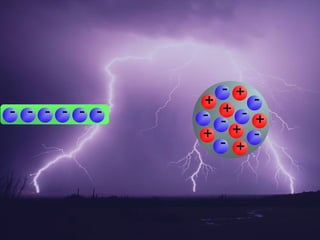
    charge of proton & electron are exactly equal, but
   oppositely charged
    Constants
            Electrons and Protons are equal in charge
Rules for looking at Charges
Law of Conservation of Charge
   the net electric charge of a system must remain constant


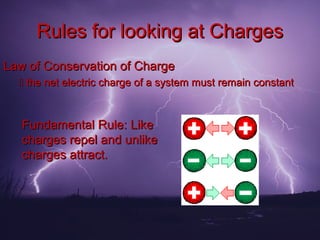
   Fundamental Rule: Like
   charges repel and unlike
   charges attract.
3 ways to charge
1. Friction
      charge is transferred due to the
     friction of materials in contact. (Since
     friction depends on the type of
     materials, so does this)
2. Contact  When 2 objects touch, e’s
     flow from one to the other
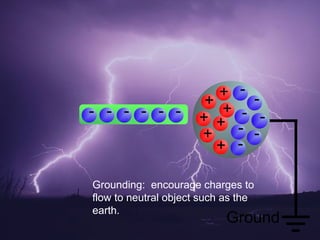
3. Induction  Charging an object without
     actually touching it.
+ -
 - + +
+ - - -   - - - - - -
 - + +
   + -
+       -
                         +             -
- - - - - -           +       -
                       + +           -
                                     -
                                     -
                                     -
                                     -
                                     -
                                     -
                         +     -       -
                       +       -

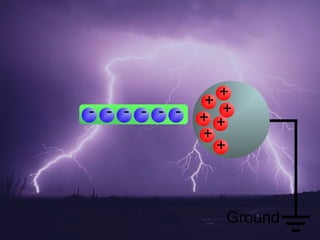
Grounding: encourage charges to
flow to neutral object such as the
earth.
                            Ground
Ground
      +
        +
      + +
     +      - - - - - -
        +
     +
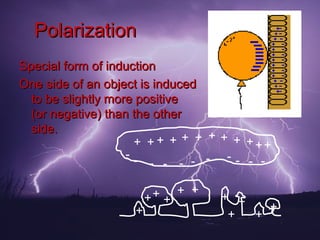
Polarization
Special form of induction
One side of an object is induced
  to be slightly more positive
  (or negative) than the other
  side.
                     + +  + + + + + + + +++
                    --
                        - - -  - -- -- - -

                       + ++ + +   + +
                   +                    +
                                   +  +
4 ways to travel
1. Insulator  e’s don’t flow easily
2. Semiconductor  sometimes conducts,
   sometimes insulates
3. Conductors  e’s flow easily
4. Super conductors  substance that has
   no resistance when its temp gets close to
   absolute zero.
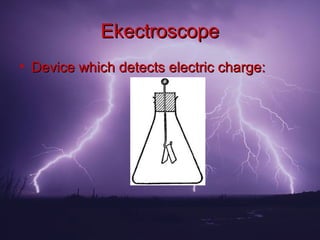
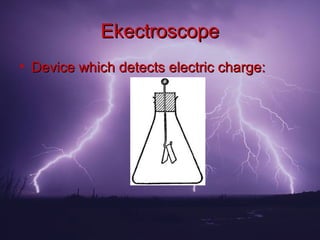
Ekectroscope
• Device which detects electric charge:
Ekectroscope
• Device which detects electric charge:

4 electrostatic intro

  • 1.
    Electrostatics Electrons  Sitting Still Charge  inherent property of matter, one of the 7 fundamental units  only two types of charge, positive & negative  charge of proton & electron are exactly equal, but oppositely charged  Constants Electrons and Protons are equal in charge
  • 2.
    Rules for lookingat Charges Law of Conservation of Charge  the net electric charge of a system must remain constant Fundamental Rule: Like charges repel and unlike charges attract.
  • 3.
    3 ways tocharge 1. Friction  charge is transferred due to the friction of materials in contact. (Since friction depends on the type of materials, so does this) 2. Contact  When 2 objects touch, e’s flow from one to the other 3. Induction  Charging an object without actually touching it.
  • 4.
    + - -+ + + - - - - - - - - - - + + + -
  • 5.
    + - + - - - - - - - + - + + - - - - - - - + - - + - Grounding: encourage charges to flow to neutral object such as the earth. Ground
  • 6.
    Ground + + + + + - - - - - - + +
  • 7.
    Polarization Special form ofinduction One side of an object is induced to be slightly more positive (or negative) than the other side. + + + + + + + + + +++ -- - - - - -- -- - - + ++ + + + + + + + +
  • 8.
    4 ways totravel 1. Insulator  e’s don’t flow easily 2. Semiconductor  sometimes conducts, sometimes insulates 3. Conductors  e’s flow easily 4. Super conductors  substance that has no resistance when its temp gets close to absolute zero.
  • 9.
    Ekectroscope • Device whichdetects electric charge:
  • 10.
    Ekectroscope • Device whichdetects electric charge:

Editor's Notes

  • #3 Notice that it doesn’t say charge cannot be created or destroyed.