Water Pollution –Cause, Effects
& Control
Presented By:
Jagan Kumar Ojha
M.Sc. in Community Health Nursing
SUM Nursing College
What is water pollution?
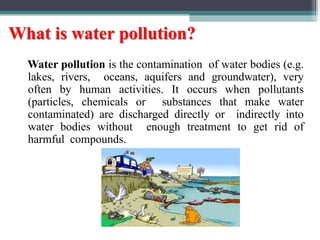
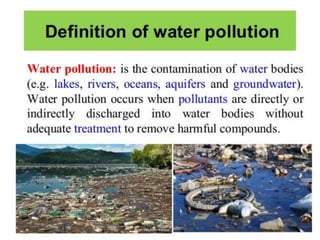
Water pollution is the contamination of water bodies (e.g.
lakes, rivers, oceans, aquifers and groundwater), very
often by human activities. It occurs when pollutants
(particles, chemicals or substances that make water
contaminated) are discharged directly or indirectly into
water bodies without enough treatment to get rid of
harmful compounds.
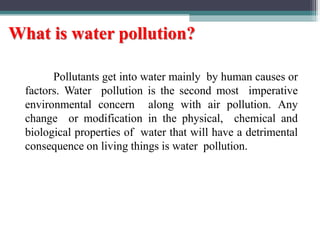
Pollutants get into water mainly by human causes or
factors. Water pollution is the second most imperative
environmental concern along with air pollution. Any
change or modification in the physical, chemical and
biological properties of water that will have a detrimental
consequence on living things is water pollution.
What is water pollution?
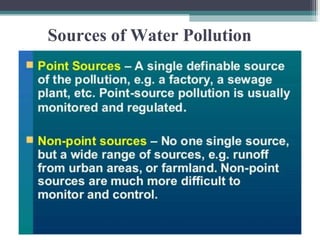
Sources of Water Pollution
There are various classifications of water
pollution. The two chief sources of water pollution
can be seen as Point andNon-Point.
1.Point source pollution
Point source pollution refers to contaminants that enter a
waterway through a discrete conveyance, such as a pipe or
ditch.
Examples-
▫ discharges from a sewage treatment plant, a factory,
▫ a city storm drain.
2. Non-point source pollution
Non-point source (NPS) pollution refers to diffuse
contamination that does not originate from a single discrete
source.
NPS pollution is often accumulative effect of small amounts of
contaminants gathered from a large area.
•The leaching out of nitrogen compounds from agricultural
land which has been fertilized is a typical example.
Sources of Water Pollution
Pollutant Types and Sources
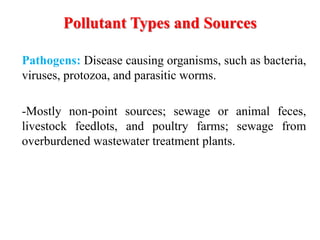
Pathogens: Disease causing organisms, such as bacteria,
viruses, protozoa, and parasitic worms.
-Mostly non-point sources; sewage or animal feces,
livestock feedlots, and poultry farms; sewage from
overburdened wastewater treatment plants.
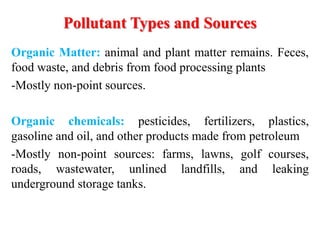
Organic Matter: animal and plant matter remains. Feces,
food waste, and debris from food processing plants
-Mostly non-point sources.
Organic chemicals: pesticides, fertilizers, plastics,
gasoline and oil, and other products made from petroleum
-Mostly non-point sources: farms, lawns, golf courses,
roads, wastewater, unlined landfills, and leaking
underground storage tanks.
Pollutant Types and Sources
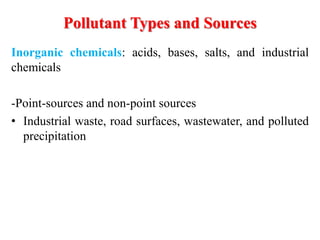
Inorganic chemicals: acids, bases, salts, and industrial
chemicals
-Point-sources and non-point sources
• Industrial waste, road surfaces, wastewater, and polluted
precipitation
Pollutant Types and Sources
Heavy Metals: lead, mercury, cadmium, and arsenic
-Point sources and non-point sources
 Industrial discharge, unlined landfills, some household
chemicals, and mining processes.
 Heavy metals can also occur naturally in some
groundwater.
Pollutant Types and Sources
Physical Agents: heat and suspended solids
-Point sources and non-point sources
• Heat from industrial processes and suspended solids
from soil erosion
Pollutant Types and Sources
What are the types of water
pollution?
There are many types of water pollution
because water comes from many sources.
Here are a few types of water pollution:
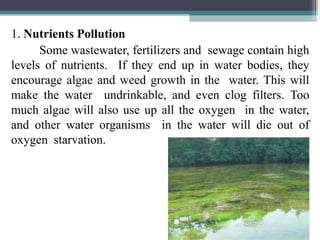
1. Nutrients Pollution
Some wastewater, fertilizers and sewage contain high
levels of nutrients. If they end up in water bodies, they
encourage algae and weed growth in the water. This will
make the water undrinkable, and even clog filters. Too
much algae will also use up all the oxygen in the water,
and other water organisms in the water will die out of
oxygen starvation.
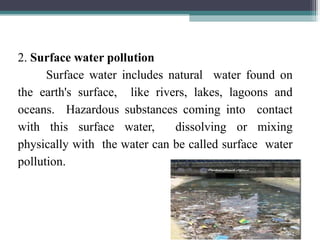
2. Surface water pollution
Surface water includes natural water found on
the earth's surface, like rivers, lakes, lagoons and
oceans. Hazardous substances coming into contact
with this surface water, dissolving or mixing
physically with the water can be called surface water
pollution.
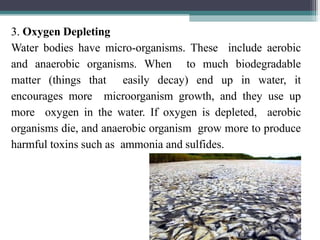
3. Oxygen Depleting
Water bodies have micro-organisms. These include aerobic
and anaerobic organisms. When to much biodegradable
matter (things that easily decay) end up in water, it
encourages more microorganism growth, and they use up
more oxygen in the water. If oxygen is depleted, aerobic
organisms die, and anaerobic organism grow more to produce
harmful toxins such as ammonia and sulfides.
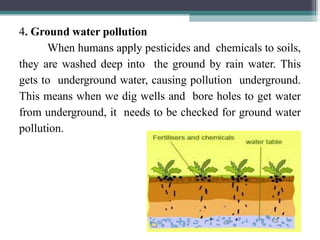
4. Ground water pollution
When humans apply pesticides and chemicals to soils,
they are washed deep into the ground by rain water. This
gets to underground water, causing pollution underground.
This means when we dig wells and bore holes to get water
from underground, it needs to be checked for ground water
pollution.
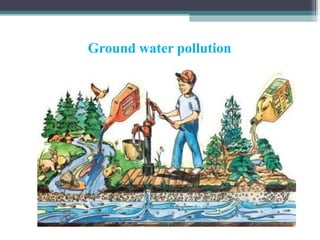
Ground water pollution
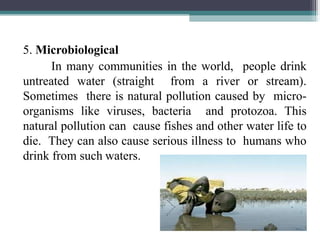
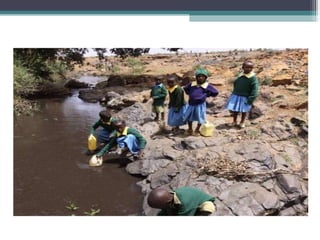
5. Microbiological
In many communities in the world, people drink
untreated water (straight from a river or stream).
Sometimes there is natural pollution caused by micro-
organisms like viruses, bacteria and protozoa. This
natural pollution can cause fishes and other water life to
die. They can also cause serious illness to humans who
drink from such waters.
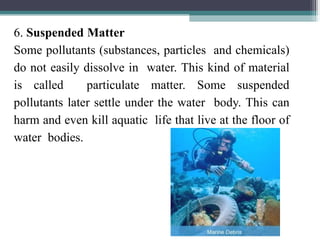
6. Suspended Matter
Some pollutants (substances, particles and chemicals)
do not easily dissolve in water. This kind of material
is called particulate matter. Some suspended
pollutants later settle under the water body. This can
harm and even kill aquatic life that live at the floor of
water bodies.
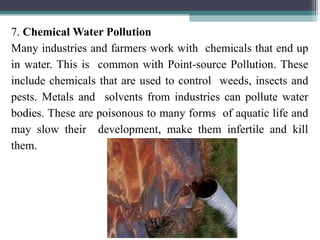
7. Chemical Water Pollution
Many industries and farmers work with chemicals that end up
in water. This is common with Point-source Pollution. These
include chemicals that are used to control weeds, insects and
pests. Metals and solvents from industries can pollute water
bodies. These are poisonous to many forms of aquatic life and
may slow their development, make them infertile and kill
them.
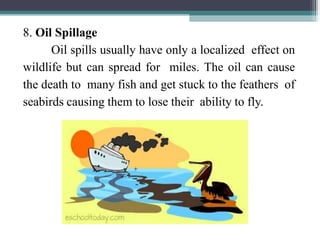
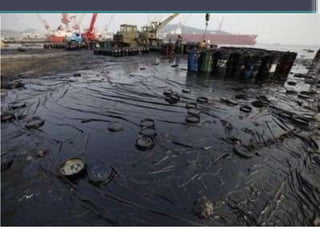
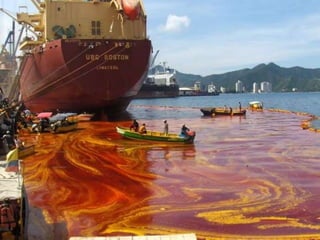
8. Oil Spillage
Oil spills usually have only a localized effect on
wildlife but can spread for miles. The oil can cause
the death to many fish and get stuck to the feathers of
seabirds causing them to lose their ability to fly.
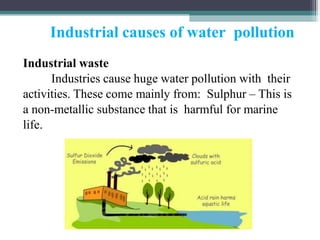
Industrial causes of water pollution
Industrial waste
Industries cause huge water pollution with their
activities. These come mainly from: Sulphur – This is
a non-metallic substance that is harmful for marine
life.
Oil Pollution by Oil Industries
Routine shipping, run-offs and dumping of oils on the
ocean surfaces happen everyday. Oil spills cause major
problems, and can be extremely harmful to local marine
wildlife such as fish, birds and sea otters and other aquatic life.
Because oil does not dissolve, it stays on the water surface and
suffocates fish. Oil also gets caught in the feathers of sea birds,
making it difficult for them to fly. Some animals die as a result.
Other causes of water pollution
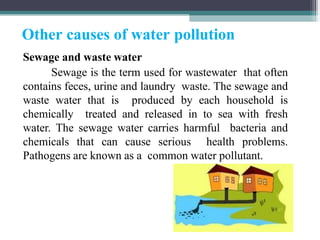
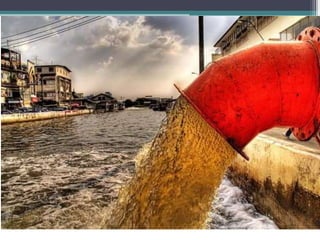
Sewage and waste water
Sewage is the term used for wastewater that often
contains feces, urine and laundry waste. The sewage and
waste water that is produced by each household is
chemically treated and released in to sea with fresh
water. The sewage water carries harmful bacteria and
chemicals that can cause serious health problems.
Pathogens are known as a common water pollutant.
Mining activities
Mining is the process of crushing the rock and
extracting coal and other minerals from underground.
These elements when extracted in the raw form
contains harmful chemicals and can increase the
amount of toxic elements when mixed up with water
which may result in health problems.
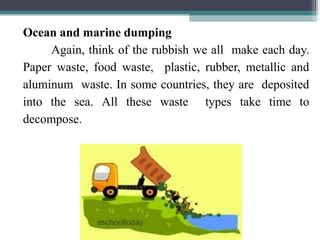
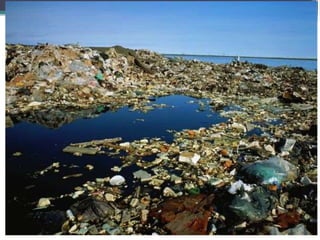
Ocean and marine dumping
Again, think of the rubbish we all make each day.
Paper waste, food waste, plastic, rubber, metallic and
aluminum waste. In some countries, they are deposited
into the sea. All these waste types take time to
decompose.
Underground storage and tube leakages
Many liquid products (petroleum products) are stored
in metal and steel tubes underground. Other sewage
systems run in underground tubes. Overtime, they rust
and begin to leak. If that happens, they contaminate
the soils, and the liquids in them end up in many
nearby water bodies.
SUMMARIZATION
THANK YOU

Water pollution- Sources and Causes

  • 1.
    Water Pollution –Cause,Effects & Control Presented By: Jagan Kumar Ojha M.Sc. in Community Health Nursing SUM Nursing College
  • 3.
    What is waterpollution? Water pollution is the contamination of water bodies (e.g. lakes, rivers, oceans, aquifers and groundwater), very often by human activities. It occurs when pollutants (particles, chemicals or substances that make water contaminated) are discharged directly or indirectly into water bodies without enough treatment to get rid of harmful compounds.
  • 4.
    Pollutants get intowater mainly by human causes or factors. Water pollution is the second most imperative environmental concern along with air pollution. Any change or modification in the physical, chemical and biological properties of water that will have a detrimental consequence on living things is water pollution. What is water pollution?
  • 6.
    Sources of WaterPollution There are various classifications of water pollution. The two chief sources of water pollution can be seen as Point andNon-Point.
  • 7.
    1.Point source pollution Pointsource pollution refers to contaminants that enter a waterway through a discrete conveyance, such as a pipe or ditch. Examples- ▫ discharges from a sewage treatment plant, a factory, ▫ a city storm drain.
  • 8.
    2. Non-point sourcepollution Non-point source (NPS) pollution refers to diffuse contamination that does not originate from a single discrete source. NPS pollution is often accumulative effect of small amounts of contaminants gathered from a large area. •The leaching out of nitrogen compounds from agricultural land which has been fertilized is a typical example.
  • 9.
  • 10.
    Pollutant Types andSources Pathogens: Disease causing organisms, such as bacteria, viruses, protozoa, and parasitic worms. -Mostly non-point sources; sewage or animal feces, livestock feedlots, and poultry farms; sewage from overburdened wastewater treatment plants.
  • 11.
    Organic Matter: animaland plant matter remains. Feces, food waste, and debris from food processing plants -Mostly non-point sources. Organic chemicals: pesticides, fertilizers, plastics, gasoline and oil, and other products made from petroleum -Mostly non-point sources: farms, lawns, golf courses, roads, wastewater, unlined landfills, and leaking underground storage tanks. Pollutant Types and Sources
  • 12.
    Inorganic chemicals: acids,bases, salts, and industrial chemicals -Point-sources and non-point sources • Industrial waste, road surfaces, wastewater, and polluted precipitation Pollutant Types and Sources
  • 13.
    Heavy Metals: lead,mercury, cadmium, and arsenic -Point sources and non-point sources  Industrial discharge, unlined landfills, some household chemicals, and mining processes.  Heavy metals can also occur naturally in some groundwater. Pollutant Types and Sources
  • 14.
    Physical Agents: heatand suspended solids -Point sources and non-point sources • Heat from industrial processes and suspended solids from soil erosion Pollutant Types and Sources
  • 15.
    What are thetypes of water pollution? There are many types of water pollution because water comes from many sources. Here are a few types of water pollution:
  • 16.
    1. Nutrients Pollution Somewastewater, fertilizers and sewage contain high levels of nutrients. If they end up in water bodies, they encourage algae and weed growth in the water. This will make the water undrinkable, and even clog filters. Too much algae will also use up all the oxygen in the water, and other water organisms in the water will die out of oxygen starvation.
  • 17.
    2. Surface waterpollution Surface water includes natural water found on the earth's surface, like rivers, lakes, lagoons and oceans. Hazardous substances coming into contact with this surface water, dissolving or mixing physically with the water can be called surface water pollution.
  • 18.
    3. Oxygen Depleting Waterbodies have micro-organisms. These include aerobic and anaerobic organisms. When to much biodegradable matter (things that easily decay) end up in water, it encourages more microorganism growth, and they use up more oxygen in the water. If oxygen is depleted, aerobic organisms die, and anaerobic organism grow more to produce harmful toxins such as ammonia and sulfides.
  • 19.
    4. Ground waterpollution When humans apply pesticides and chemicals to soils, they are washed deep into the ground by rain water. This gets to underground water, causing pollution underground. This means when we dig wells and bore holes to get water from underground, it needs to be checked for ground water pollution.
  • 20.
  • 21.
    5. Microbiological In manycommunities in the world, people drink untreated water (straight from a river or stream). Sometimes there is natural pollution caused by micro- organisms like viruses, bacteria and protozoa. This natural pollution can cause fishes and other water life to die. They can also cause serious illness to humans who drink from such waters.
  • 23.
    6. Suspended Matter Somepollutants (substances, particles and chemicals) do not easily dissolve in water. This kind of material is called particulate matter. Some suspended pollutants later settle under the water body. This can harm and even kill aquatic life that live at the floor of water bodies.
  • 24.
    7. Chemical WaterPollution Many industries and farmers work with chemicals that end up in water. This is common with Point-source Pollution. These include chemicals that are used to control weeds, insects and pests. Metals and solvents from industries can pollute water bodies. These are poisonous to many forms of aquatic life and may slow their development, make them infertile and kill them.

  • 25.
    8. Oil Spillage Oilspills usually have only a localized effect on wildlife but can spread for miles. The oil can cause the death to many fish and get stuck to the feathers of seabirds causing them to lose their ability to fly.
  • 26.
    Industrial causes ofwater pollution Industrial waste Industries cause huge water pollution with their activities. These come mainly from: Sulphur – This is a non-metallic substance that is harmful for marine life.
  • 27.
    Oil Pollution byOil Industries Routine shipping, run-offs and dumping of oils on the ocean surfaces happen everyday. Oil spills cause major problems, and can be extremely harmful to local marine wildlife such as fish, birds and sea otters and other aquatic life. Because oil does not dissolve, it stays on the water surface and suffocates fish. Oil also gets caught in the feathers of sea birds, making it difficult for them to fly. Some animals die as a result.
  • 30.
    Other causes ofwater pollution Sewage and waste water Sewage is the term used for wastewater that often contains feces, urine and laundry waste. The sewage and waste water that is produced by each household is chemically treated and released in to sea with fresh water. The sewage water carries harmful bacteria and chemicals that can cause serious health problems. Pathogens are known as a common water pollutant.
  • 32.
    Mining activities Mining isthe process of crushing the rock and extracting coal and other minerals from underground. These elements when extracted in the raw form contains harmful chemicals and can increase the amount of toxic elements when mixed up with water which may result in health problems.
  • 34.
    Ocean and marinedumping Again, think of the rubbish we all make each day. Paper waste, food waste, plastic, rubber, metallic and aluminum waste. In some countries, they are deposited into the sea. All these waste types take time to decompose.
  • 36.
    Underground storage andtube leakages Many liquid products (petroleum products) are stored in metal and steel tubes underground. Other sewage systems run in underground tubes. Overtime, they rust and begin to leak. If that happens, they contaminate the soils, and the liquids in them end up in many nearby water bodies.
  • 37.
  • 38.