Mechanical department 
Class :m11 
Semester : I 
GUIDED BY :
 bhavesh makwana 
 Enrollment no: 140500119052 
 Mech11
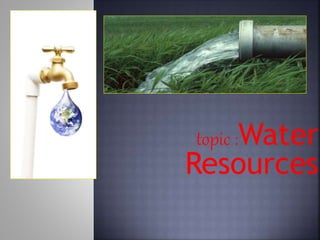
topic :Water 
Resources
 Introduction. 
 About Water resources. 
 Division of water resources. 
 Source of Water resources. 
 Uses of Water.
This is virtual booklet of water resources is 
going to be about how people use water, how we 
would have to take care of it and many things 
that with this booklet you should learn. Also 
with this booklet you should learn how to not 
waste the water and enjoy you to practice it to 
save this beautiful world.
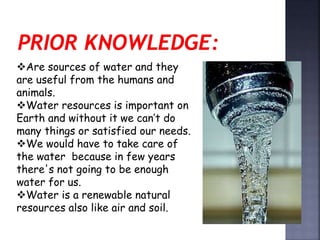
Are sources of water and they 
are useful from the humans and 
animals. 
Water resources is important on 
Earth and without it we can’t do 
many things or satisfied our needs. 
We would have to take care of 
the water because in few years 
there's not going to be enough 
water for us. 
Water is a renewable natural 
resources also like air and soil.
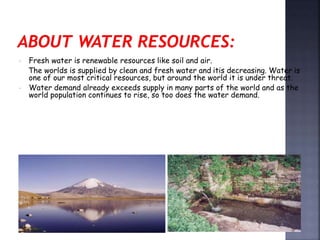
 Fresh water is renewable resources like soil and air. 
The worlds is supplied by clean and fresh water and itis decreasing. Water is 
one of our most critical resources, but around the world it is under threat. 
 Water demand already exceeds supply in many parts of the world and as the 
world population continues to rise, so too does the water demand.
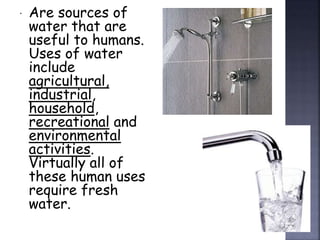
 Are sources of 
water that are 
useful to humans. 
Uses of water 
include 
agricultural, 
industrial, 
household, 
recreational and 
environmental 
activities. 
Virtually all of 
these human uses 
require fresh 
water.
Division of Water 
resources: 
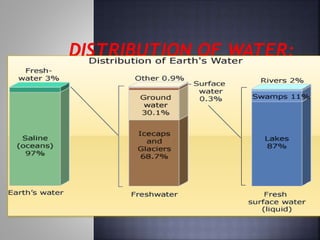
Water resources are divisible into two distinct 
categories : the surface-water resources and the 
ground-water resources. Each of these categories 
is a part of the earth's water circulatory system, 
called the hydrologic cycle, and is derived from 
precipitation, which is rainfall plus snow.
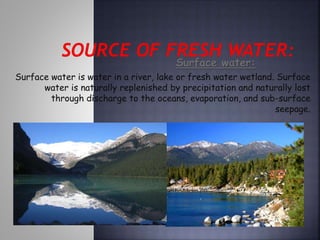
Surface water: 
Surface water is water in a river, lake or fresh water wetland. Surface 
water is naturally replenished by precipitation and naturally lost 
through discharge to the oceans, evaporation, and sub-surface 
seepage.
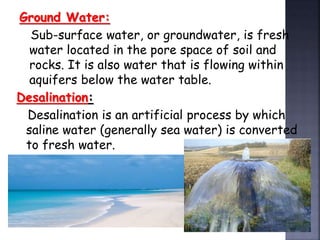
Ground Water: 
Sub-surface water, or groundwater, is fresh 
water located in the pore space of soil and 
rocks. It is also water that is flowing within 
aquifers below the water table. 
Desalination: 
Desalination is an artificial process by which 
saline water (generally sea water) is converted 
to fresh water.
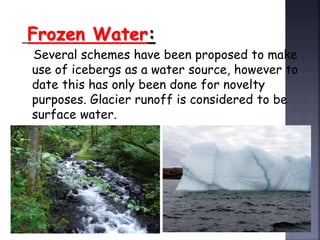
Frozen Water: 
Several schemes have been proposed to make 
use of icebergs as a water source, however to 
date this has only been done for novelty 
purposes. Glacier runoff is considered to be 
surface water.
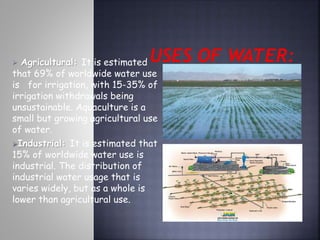
 Agricultural: It is estimated 
that 69% of worldwide water use 
is for irrigation, with 15-35% of 
irrigation withdrawals being 
unsustainable. Aquaculture is a 
small but growing agricultural use 
of water. 
Industrial: It is estimated that 
15% of worldwide water use is 
industrial. The distribution of 
industrial water usage that is 
varies widely, but as a whole is 
lower than agricultural use.
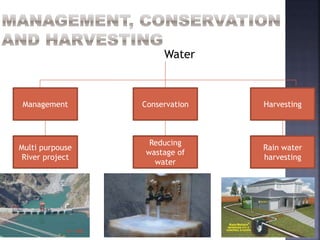
Water 
Management Conservation Harvesting 
Multi purpouse 
River project 
Reducing 
wastage of 
water 
Rain water 
harvesting
• Rain Water Harvesting (RWH)- It is a process of 
collecting, conveying & storing water from rainfall in 
an area – for beneficial use. 
• Storage is done in tanks, reservoirs, underground 
storage- groundwater 
• It is neither energy-intensive nor labour-intensive
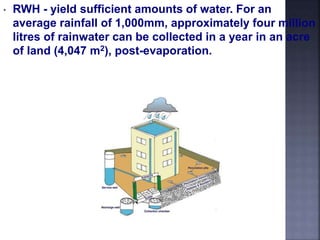
• RWH - yield sufficient amounts of water. For an 
average rainfall of 1,000mm, approximately four million 
litres of rainwater can be collected in a year in an acre 
of land (4,047 m2), post-evaporation. 
Rain Water Harvesting
1.Provides self-sufficiency to water supply. 
2.Reduces the cost for pumping of ground water. 
3.Provides high quality water, soft and low in minerals. 
4.Improves the quality of ground water through dilution 
when recharged.
 What you can do to conserve water? 
 Use only as much water as you require. Close the 
taps well after use. While brushing or other use, do 
not leave the tap running, open it only when you 
require it. See that there are no leaking taps. 
 Use a washing machine that does not consume too 
much water. Do not leave the taps running while 
washing dishes and clothes.
 Install small shower heads to reduce the flow of the 
water. Water in which the vegetables & fruits have been 
washed - use to water the flowers & plants. 
 At the end of the day if you have water left in your water 
bottle do not throw it away, pour it over some plants. 
 Re-use water as much as possible 
 Change in attitude & habits for water 
conservation 
 Every drop counts!!!
5. Reduces soil erosion & flooding in urban areas. 
6.The rooftop rain water harvesting is less expensive & 
easy to construct, operate and maintain. 
7. In desert, RWH is the only relief. 
8. In saline or coastal areas & Islands, rain water provides 
good quality water.
water resources
water resources

water resources

  • 1.
    Mechanical department Class:m11 Semester : I GUIDED BY :
  • 2.
     bhavesh makwana  Enrollment no: 140500119052  Mech11
  • 3.
  • 4.
     Introduction. About Water resources.  Division of water resources.  Source of Water resources.  Uses of Water.
  • 5.
    This is virtualbooklet of water resources is going to be about how people use water, how we would have to take care of it and many things that with this booklet you should learn. Also with this booklet you should learn how to not waste the water and enjoy you to practice it to save this beautiful world.
  • 6.
    Are sources ofwater and they are useful from the humans and animals. Water resources is important on Earth and without it we can’t do many things or satisfied our needs. We would have to take care of the water because in few years there's not going to be enough water for us. Water is a renewable natural resources also like air and soil.
  • 7.
     Fresh wateris renewable resources like soil and air. The worlds is supplied by clean and fresh water and itis decreasing. Water is one of our most critical resources, but around the world it is under threat.  Water demand already exceeds supply in many parts of the world and as the world population continues to rise, so too does the water demand.
  • 8.
     Are sourcesof water that are useful to humans. Uses of water include agricultural, industrial, household, recreational and environmental activities. Virtually all of these human uses require fresh water.
  • 9.
    Division of Water resources: Water resources are divisible into two distinct categories : the surface-water resources and the ground-water resources. Each of these categories is a part of the earth's water circulatory system, called the hydrologic cycle, and is derived from precipitation, which is rainfall plus snow.
  • 11.
    Surface water: Surfacewater is water in a river, lake or fresh water wetland. Surface water is naturally replenished by precipitation and naturally lost through discharge to the oceans, evaporation, and sub-surface seepage.
  • 12.
    Ground Water: Sub-surfacewater, or groundwater, is fresh water located in the pore space of soil and rocks. It is also water that is flowing within aquifers below the water table. Desalination: Desalination is an artificial process by which saline water (generally sea water) is converted to fresh water.
  • 13.
    Frozen Water: Severalschemes have been proposed to make use of icebergs as a water source, however to date this has only been done for novelty purposes. Glacier runoff is considered to be surface water.
  • 14.
     Agricultural: Itis estimated that 69% of worldwide water use is for irrigation, with 15-35% of irrigation withdrawals being unsustainable. Aquaculture is a small but growing agricultural use of water. Industrial: It is estimated that 15% of worldwide water use is industrial. The distribution of industrial water usage that is varies widely, but as a whole is lower than agricultural use.
  • 15.
    Water Management ConservationHarvesting Multi purpouse River project Reducing wastage of water Rain water harvesting
  • 16.
    • Rain WaterHarvesting (RWH)- It is a process of collecting, conveying & storing water from rainfall in an area – for beneficial use. • Storage is done in tanks, reservoirs, underground storage- groundwater • It is neither energy-intensive nor labour-intensive
  • 17.
    • RWH -yield sufficient amounts of water. For an average rainfall of 1,000mm, approximately four million litres of rainwater can be collected in a year in an acre of land (4,047 m2), post-evaporation. Rain Water Harvesting
  • 18.
    1.Provides self-sufficiency towater supply. 2.Reduces the cost for pumping of ground water. 3.Provides high quality water, soft and low in minerals. 4.Improves the quality of ground water through dilution when recharged.
  • 19.
     What youcan do to conserve water?  Use only as much water as you require. Close the taps well after use. While brushing or other use, do not leave the tap running, open it only when you require it. See that there are no leaking taps.  Use a washing machine that does not consume too much water. Do not leave the taps running while washing dishes and clothes.
  • 20.
     Install smallshower heads to reduce the flow of the water. Water in which the vegetables & fruits have been washed - use to water the flowers & plants.  At the end of the day if you have water left in your water bottle do not throw it away, pour it over some plants.  Re-use water as much as possible  Change in attitude & habits for water conservation  Every drop counts!!!
  • 21.
    5. Reduces soilerosion & flooding in urban areas. 6.The rooftop rain water harvesting is less expensive & easy to construct, operate and maintain. 7. In desert, RWH is the only relief. 8. In saline or coastal areas & Islands, rain water provides good quality water.