• NAME – KAPTAN SAGAR R
• ENROLLMENT NO. – 130140106021
• SUB. – HYDROLOGY & WATER RESOURCES
ENGINEERING
• TOPIC – CAUSES OF FLOOD
Primarily all floods are due to the surface
runoff. Actually the floods are the results of a
favourable combination of precipitation and the
characteristics of the water shed.
The causes of flooding in all the major river
systems are :
1. Intense rainfall
2. Topography of the catchment
3. Sedimentation of rivers and reservoirs
4. Obstruction in river flow
5. Failure of dam
6. Failure of river embankment
7. Inadequate cross drainage works
8. Contraction of waterway
An intense rainfall can occur only over a comparatively
small area. Whenever such a precipitation bursts over a small
watershed, it results in a high surface runoff, which reaches the main
channel faster than it can be discharge, flooding the low lying area
along the stream. The seriousness of the flood will depend upon the
following factors.
The intensity and duration of precipitation
• Surface slopes of the watershed
• Nature of the surface soil and covering vegetation
For mountainous regions the relation of intensity of
rainfall and slope of the surface have been found to have a good
relationship. The same intensity of rainfall produces more
discharge in a mountainous region than plain area.
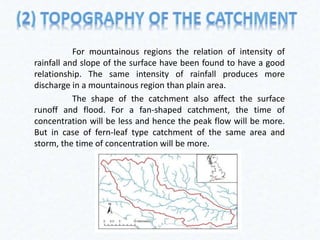
The shape of the catchment also affect the surface
runoff and flood. For a fan-shaped catchment, the time of
concentration will be less and hence the peak flow will be more.
But in case of fern-leaf type catchment of the same area and
storm, the time of concentration will be more.
If the top soil layer in the catchment area is loose and the
vegetation cover is less, the tributaries flowing through such
areas carry heavy sediment load. This sediment load is
deposited in the river bed and the reservoir in which the river
merges. Thus, the cross-section of the river become shallow
resultion in overtopping of water during heavy rains. Due to
siltation in reservoirs, the storage capacity of the reservoirs
decreases, resulting in flooding of the downstream area.
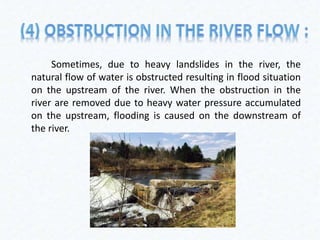
Sometimes, due to heavy landslides in the river, the
natural flow of water is obstructed resulting in flood situation
on the upstream of the river. When the obstruction in the
river are removed due to heavy water pressure accumulated
on the upstream, flooding is caused on the downstream of
the river.
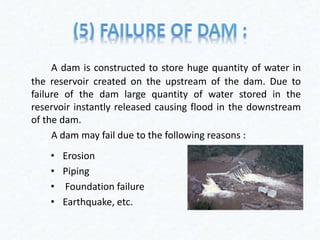
A dam is constructed to store huge quantity of water in
the reservoir created on the upstream of the dam. Due to
failure of the dam large quantity of water stored in the
reservoir instantly released causing flood in the downstream
of the dam.
A dam may fail due to the following reasons :
• Erosion
• Piping
• Foundation failure
• Earthquake, etc.
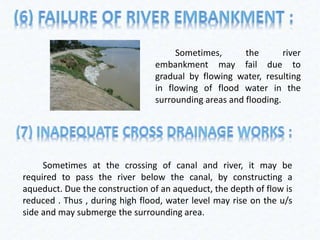
Sometimes, the river
embankment may fail due to
gradual by flowing water, resulting
in flowing of flood water in the
surrounding areas and flooding.
Sometimes at the crossing of canal and river, it may be
required to pass the river below the canal, by constructing a
aqueduct. Due the construction of an aqueduct, the depth of flow is
reduced . Thus , during high flood, water level may rise on the u/s
side and may submerge the surrounding area.
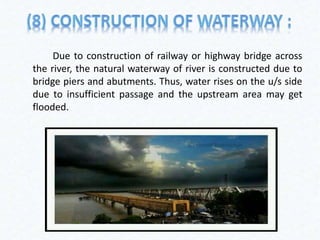
Due to construction of railway or highway bridge across
the river, the natural waterway of river is constructed due to
bridge piers and abutments. Thus, water rises on the u/s side
due to insufficient passage and the upstream area may get
flooded.
CAUSES OF FLOOD

CAUSES OF FLOOD

  • 1.
    • NAME –KAPTAN SAGAR R • ENROLLMENT NO. – 130140106021 • SUB. – HYDROLOGY & WATER RESOURCES ENGINEERING • TOPIC – CAUSES OF FLOOD
  • 2.
    Primarily all floodsare due to the surface runoff. Actually the floods are the results of a favourable combination of precipitation and the characteristics of the water shed.
  • 3.
    The causes offlooding in all the major river systems are : 1. Intense rainfall 2. Topography of the catchment 3. Sedimentation of rivers and reservoirs 4. Obstruction in river flow 5. Failure of dam 6. Failure of river embankment 7. Inadequate cross drainage works 8. Contraction of waterway
  • 4.
    An intense rainfallcan occur only over a comparatively small area. Whenever such a precipitation bursts over a small watershed, it results in a high surface runoff, which reaches the main channel faster than it can be discharge, flooding the low lying area along the stream. The seriousness of the flood will depend upon the following factors. The intensity and duration of precipitation • Surface slopes of the watershed • Nature of the surface soil and covering vegetation
  • 5.
    For mountainous regionsthe relation of intensity of rainfall and slope of the surface have been found to have a good relationship. The same intensity of rainfall produces more discharge in a mountainous region than plain area. The shape of the catchment also affect the surface runoff and flood. For a fan-shaped catchment, the time of concentration will be less and hence the peak flow will be more. But in case of fern-leaf type catchment of the same area and storm, the time of concentration will be more.
  • 6.
    If the topsoil layer in the catchment area is loose and the vegetation cover is less, the tributaries flowing through such areas carry heavy sediment load. This sediment load is deposited in the river bed and the reservoir in which the river merges. Thus, the cross-section of the river become shallow resultion in overtopping of water during heavy rains. Due to siltation in reservoirs, the storage capacity of the reservoirs decreases, resulting in flooding of the downstream area.
  • 7.
    Sometimes, due toheavy landslides in the river, the natural flow of water is obstructed resulting in flood situation on the upstream of the river. When the obstruction in the river are removed due to heavy water pressure accumulated on the upstream, flooding is caused on the downstream of the river.
  • 8.
    A dam isconstructed to store huge quantity of water in the reservoir created on the upstream of the dam. Due to failure of the dam large quantity of water stored in the reservoir instantly released causing flood in the downstream of the dam. A dam may fail due to the following reasons : • Erosion • Piping • Foundation failure • Earthquake, etc.
  • 9.
    Sometimes, the river embankmentmay fail due to gradual by flowing water, resulting in flowing of flood water in the surrounding areas and flooding. Sometimes at the crossing of canal and river, it may be required to pass the river below the canal, by constructing a aqueduct. Due the construction of an aqueduct, the depth of flow is reduced . Thus , during high flood, water level may rise on the u/s side and may submerge the surrounding area.
  • 10.
    Due to constructionof railway or highway bridge across the river, the natural waterway of river is constructed due to bridge piers and abutments. Thus, water rises on the u/s side due to insufficient passage and the upstream area may get flooded.