FOLIC ACID
(Vitamin – B9)
PRESENTED BY,
D.KEERTHANA- M.PHARM 1ST YR,
DEPT.OF PHARMACEUTICAL CHEMISTRY
INTRODUCTION
 Vitamin B9 also called folate or folic acid, is one of
8 B vitamins. All B vitamins help the body convert
food into fuel, which is used to produce energy.
 Folic acid is the synthetic form of B9, found in
supplements and fortified foods ,while folate
occurs naturally in foods.
DEFINITION
 The word of folic acid is derived from latin word
folium means leaf and it is also isolated leafy
vegetable spinach.
 Folic acid is water soluble vitamin, folic acid itself
not biologically active but its biological importance
is due to Tetrahydrofolate and other derivatives.
ACTIVE FORM
Tetrahydrofolate(THF or FH 4) is the active form of
folic acid.
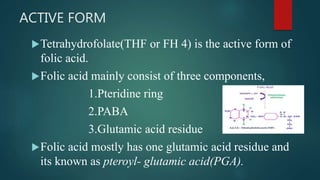
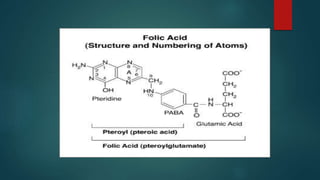
Folic acid mainly consist of three components,
1.Pteridine ring
2.PABA
3.Glutamic acid residue
Folic acid mostly has one glutamic acid residue and
its known as pteroyl- glutamic acid(PGA).
PHYSICAL AND CHEMICAL
PRPOPERTIES
Folic acid appears as odorless orange-yellow needles.
Folic acid is water soluble vitamin, meaning the body
does not store them.
Odorless; Tasteless;
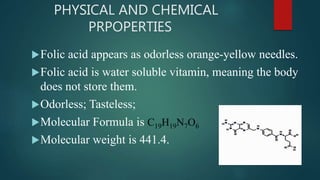
Molecular Formula is C19H19N7O6
Molecular weight is 441.4.
BIOSYNTHESIS
Animals, including humans, cannot
synthesize folate and therefore must obtain
folate from their diet.
All plants and fungi and certain protozoa,
bacteria can synthesize folate de novo
through variations on the same biosynthetic
pathway.
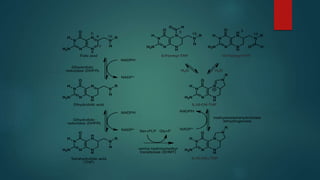
The folate molecule is synthesized from pterin
pyrophosphate, para-aminobenzoic acid, and
glutamate through the action of dihydropteroate
synthase and dihydrofolate synthase.
Pterin is in turn derived in a series of
enzymatically catalyzed steps from guanosine
triphosphate (GTP), while para-aminobenzoic
acid is a product of the shikimate pathway.
Tetrahydrofolate the enzyme of folic acid, is
actively involved in one carbon metabolism.
THF serves as an acceptor or donor unit in a
variety if reactions involving amino acids and
nucleotide metabolism.
The one carbon unit binds with THF at
position N5 or N10 of pteroyl structure.
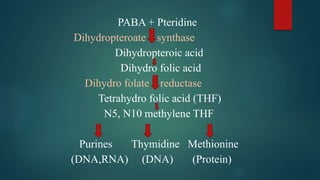
PABA + Pteridine
Dihydropteroate synthase
Dihydropteroic acid
Dihydro folic acid
Dihydro folate reductase
Tetrahydro folic acid (THF)
N5, N10 methylene THF
Purines Thymidine Methionine
(DNA,RNA) (DNA) (Protein)
FUNCTIONS OF B9
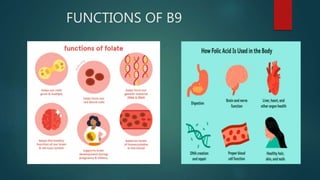
Folate is needed to help our cells grow and
multiply, which makes it a key vitamin in
periods of rapid growth and development,
such as pregnancy and infancy.
Folate is particularly important to help
develop the baby’s skull and spinal cord,
which is why low levels of this vitamin,
before and during pregnancy, can lead to
severe birth defects, called neural tube
defects.
Folate and vitamin B12 share many functions in
the body. For example, they both work together to
create our genetic material (DNA), form healthy
red blood cells and support the normal
functioning of our brain and nervous system.
Both vitamins, alongside vitamin B6, also
collaborate in the breaking down of
homocysteine, an amino acid that can put us at
higher risk of cardiovascular disease, when
present in high amounts.
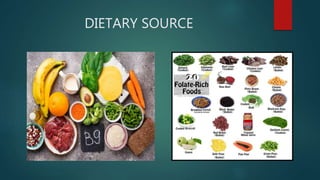
DIETARY SOURCE
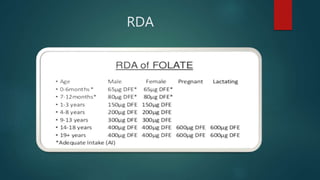
RDA
DEFICIENCY
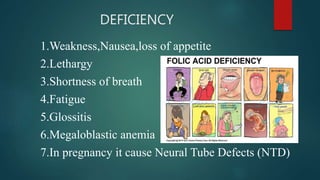
1.Weakness,Nausea,loss of appetite
2.Lethargy
3.Shortness of breath
4.Fatigue
5.Glossitis
6.Megaloblastic anemia
7.In pregnancy it cause Neural Tube Defects (NTD)
THERAPEUTIC USES
Prevention of certain birth defects.
Make healthy red blood cells.
Treat anemic condition in both adults and children.
Acts by helping the body produce and maintain
new cells.
Folate is also important for the synthesis and repair
of DNA and other genetic material, and its
necessary for cells to divide.
REFERENCES
https://www.mountsinai.org/health-
library/supplement/vitamin-b9-folic-acid.
https://www.medicalnewstoday.com/articles/ importance.
Harper’s Biochemistry 25th edition.
https://pubchem.ncbi.nlm.nih.gov/compound/Folic-acid
section=CCS Base-Classification.
https://en.wikipedia.org/wiki/Folate.
https://lookfordiagnosis.com/mesh_info.php?term=nucleic
+acid+synthesis+inhibitors&lang
Folic acid

Folic acid

  • 1.
    FOLIC ACID (Vitamin –B9) PRESENTED BY, D.KEERTHANA- M.PHARM 1ST YR, DEPT.OF PHARMACEUTICAL CHEMISTRY
  • 2.
    INTRODUCTION  Vitamin B9also called folate or folic acid, is one of 8 B vitamins. All B vitamins help the body convert food into fuel, which is used to produce energy.  Folic acid is the synthetic form of B9, found in supplements and fortified foods ,while folate occurs naturally in foods.
  • 3.
    DEFINITION  The wordof folic acid is derived from latin word folium means leaf and it is also isolated leafy vegetable spinach.  Folic acid is water soluble vitamin, folic acid itself not biologically active but its biological importance is due to Tetrahydrofolate and other derivatives.
  • 4.
    ACTIVE FORM Tetrahydrofolate(THF orFH 4) is the active form of folic acid. Folic acid mainly consist of three components, 1.Pteridine ring 2.PABA 3.Glutamic acid residue Folic acid mostly has one glutamic acid residue and its known as pteroyl- glutamic acid(PGA).
  • 6.
    PHYSICAL AND CHEMICAL PRPOPERTIES Folicacid appears as odorless orange-yellow needles. Folic acid is water soluble vitamin, meaning the body does not store them. Odorless; Tasteless; Molecular Formula is C19H19N7O6 Molecular weight is 441.4.
  • 7.
    BIOSYNTHESIS Animals, including humans,cannot synthesize folate and therefore must obtain folate from their diet. All plants and fungi and certain protozoa, bacteria can synthesize folate de novo through variations on the same biosynthetic pathway.
  • 8.
    The folate moleculeis synthesized from pterin pyrophosphate, para-aminobenzoic acid, and glutamate through the action of dihydropteroate synthase and dihydrofolate synthase. Pterin is in turn derived in a series of enzymatically catalyzed steps from guanosine triphosphate (GTP), while para-aminobenzoic acid is a product of the shikimate pathway.
  • 10.
    Tetrahydrofolate the enzymeof folic acid, is actively involved in one carbon metabolism. THF serves as an acceptor or donor unit in a variety if reactions involving amino acids and nucleotide metabolism. The one carbon unit binds with THF at position N5 or N10 of pteroyl structure.
  • 11.
    PABA + Pteridine Dihydropteroatesynthase Dihydropteroic acid Dihydro folic acid Dihydro folate reductase Tetrahydro folic acid (THF) N5, N10 methylene THF Purines Thymidine Methionine (DNA,RNA) (DNA) (Protein)
  • 12.
  • 13.
    Folate is neededto help our cells grow and multiply, which makes it a key vitamin in periods of rapid growth and development, such as pregnancy and infancy. Folate is particularly important to help develop the baby’s skull and spinal cord, which is why low levels of this vitamin, before and during pregnancy, can lead to severe birth defects, called neural tube defects.
  • 14.
    Folate and vitaminB12 share many functions in the body. For example, they both work together to create our genetic material (DNA), form healthy red blood cells and support the normal functioning of our brain and nervous system. Both vitamins, alongside vitamin B6, also collaborate in the breaking down of homocysteine, an amino acid that can put us at higher risk of cardiovascular disease, when present in high amounts.
  • 15.
  • 16.
  • 17.
    DEFICIENCY 1.Weakness,Nausea,loss of appetite 2.Lethargy 3.Shortnessof breath 4.Fatigue 5.Glossitis 6.Megaloblastic anemia 7.In pregnancy it cause Neural Tube Defects (NTD)
  • 18.
    THERAPEUTIC USES Prevention ofcertain birth defects. Make healthy red blood cells. Treat anemic condition in both adults and children. Acts by helping the body produce and maintain new cells. Folate is also important for the synthesis and repair of DNA and other genetic material, and its necessary for cells to divide.
  • 19.
    REFERENCES https://www.mountsinai.org/health- library/supplement/vitamin-b9-folic-acid. https://www.medicalnewstoday.com/articles/ importance. Harper’s Biochemistry25th edition. https://pubchem.ncbi.nlm.nih.gov/compound/Folic-acid section=CCS Base-Classification. https://en.wikipedia.org/wiki/Folate. https://lookfordiagnosis.com/mesh_info.php?term=nucleic +acid+synthesis+inhibitors&lang