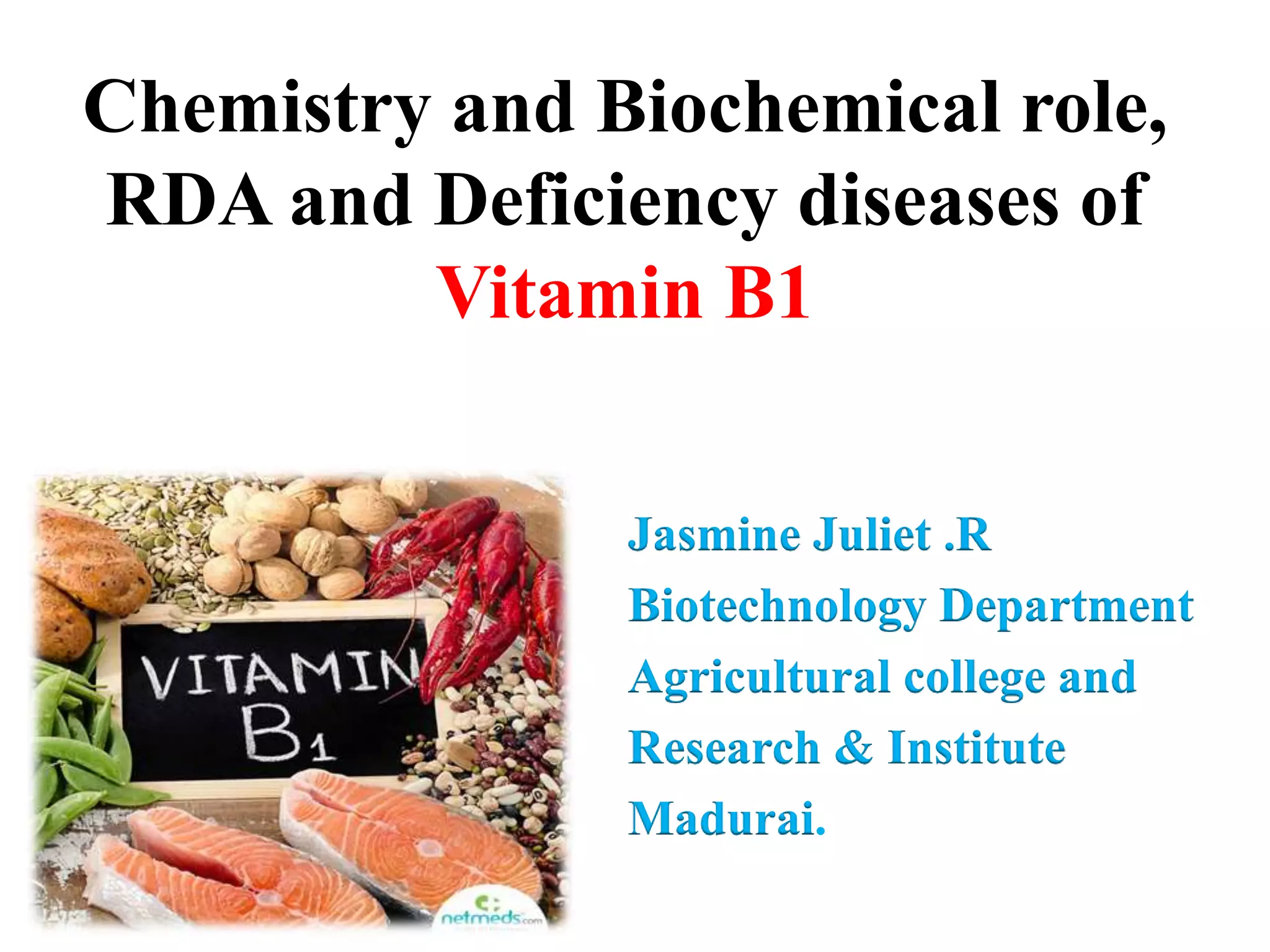
Chemistry and Biochemical role,
RDA and Deficiency diseases of
Vitamin B1
Jasmine Juliet .R
Biotechnology Department
Agricultural college and
Research & Institute
Madurai.
Thiamine (Vitamin B1) - Introduction
Thiamine (anti-beri beri or antinuritic vitamin)
is water soluble.
 It has a specific coenzyme, Thiamine
pyrophosphate (TPP or cocarboxylase) which
is mostly associated with carbohydrate
metabolism.
Thiamine (Vitamin B1) - Chemistry
 Thiamine is soluble in water and easily destroyed by heat or
oxidation especially in the presence of baking soda.
 The term Thiamine indicates that it is a sulphur- and nitrogen-
containing substance.
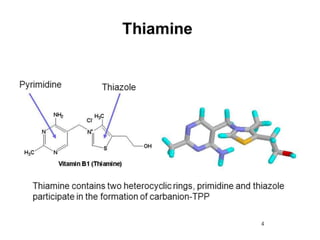
 Thiamine contains a pyrimidine ring and a thiazole ring held
by a methylene bridge.
Thiamine (Vitamin B1) - Chemistry
 Thiamine is the only natural compound with thiazole
ring.
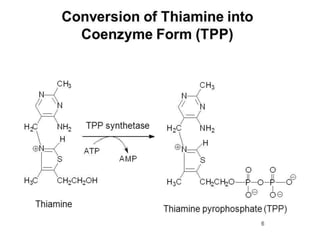
 The alcohol (OH) group of thiamine is esterified with
phosphate (2 moles) to form the coenzyme, Thiamine
pyrophosphate (TPP or cocarboxylase).
 The pyrophsphate moiety is donated by ATP and the
reaction is catalysed by the enzyme thiamine
pyrophosphate transferase.
Thiamine (Vitamin B1) - Biochemical
functions
(I) The coenzyme, Thiamine pyrophosphate or cocarboxylase
is intimately connected with the energy releasing reactions in
the carbohydrate metabolism.
(II) The enzyme Pyruvate dehydrogenase catalyses ( Oxidative
decarboxylation) the irreversible conversion of pyruvate to
acetyl CoA.
 This reaction is dependent on TPP, besides the other
coenzymes.
Thiamine (Vitamin B1) – Biochemical
functions
(III) α - Ketoglutarate dehydrogenase is an enzyme of
the citric acid cycle.
 This enzyme is comparable with pyruvate
dehydrogenase and requires TPP.
(IV) Transketolase of the hexose monophosphate shunt
is dependent on TPP.
Thiamine (Vitamin B1) – Biochemical
Functions
(V) The branched chain α - Keto acid
dehydrogenase (decarboxylase) catalyses the
oxidative decarboxylation of branched chain
aminoacids (Valine, Leucine, and isoleucine) to
the respective keto acids.
This enzyme also requires TPP.
Thiamine (Vitamin B1) – Biochemical
Functions
(VI) TPP plays an important role in the
transmission of nerve impulse.
It is believed that TPP is required for
acetylcholine sythesis and the ion
translocation of neural tissue.
Thiamine (Vitamin B1) – Biochemical
Functions
 (VII) Thiamine plays a role in the conversion of the
aminoacid tyrptophan to Niacin.
 (VIII) Thiamine has several indirect functions in the
body because of its role in energy metabolism like:
 Maintenance of appetite.
 Maintenance of muscle tone
 Maintenance of healthy mental attitude.
Thiamine (Vitamin B1) - Recommended
dieary allowance (RDA)
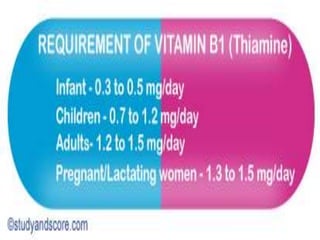
The daily requirement of thiamine depends on
the intake of carbohydrate.
 A dietary supply of 1-1.5mg/day is
recommended for adults (about
0.5mg/1000cals of energy).
Thiamine (Vitamin B1) – Dietary
Sources
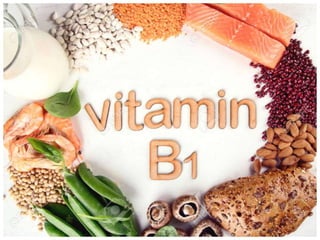
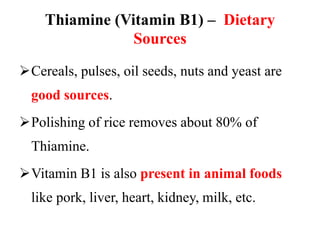
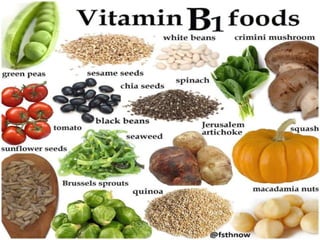
Cereals, pulses, oil seeds, nuts and yeast are
good sources.
Polishing of rice removes about 80% of
Thiamine.
Vitamin B1 is also present in animal foods
like pork, liver, heart, kidney, milk, etc.
Thiamine (Vitamin B1) – Deficiency
Symptoms
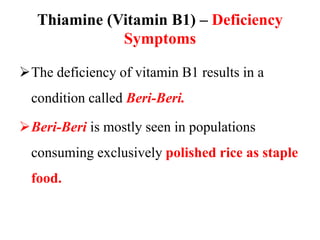
The deficiency of vitamin B1 results in a
condition called Beri-Beri.
Beri-Beri is mostly seen in populations
consuming exclusively polished rice as staple
food.
Thiamine (Vitamin B1) – Deficiency
Symptoms
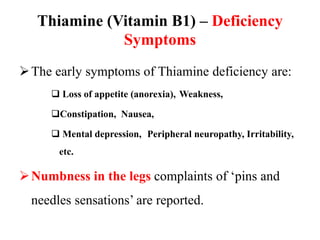
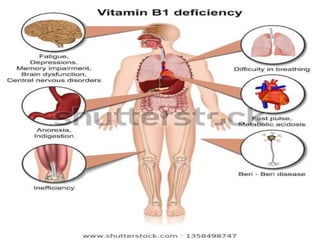
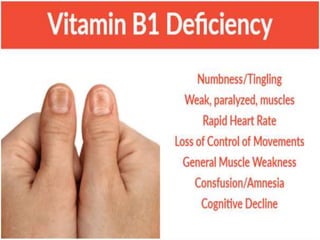
The early symptoms of Thiamine deficiency are:
 Loss of appetite (anorexia), Weakness,
Constipation, Nausea,
 Mental depression, Peripheral neuropathy, Irritability,
etc.
Numbness in the legs complaints of ‘pins and
needles sensations’ are reported.
Vitamin b1
Vitamin b1
Vitamin b1

Vitamin b1

  • 1.
    Chemistry and Biochemicalrole, RDA and Deficiency diseases of Vitamin B1 Jasmine Juliet .R Biotechnology Department Agricultural college and Research & Institute Madurai.
  • 2.
    Thiamine (Vitamin B1)- Introduction Thiamine (anti-beri beri or antinuritic vitamin) is water soluble.  It has a specific coenzyme, Thiamine pyrophosphate (TPP or cocarboxylase) which is mostly associated with carbohydrate metabolism.
  • 4.
    Thiamine (Vitamin B1)- Chemistry  Thiamine is soluble in water and easily destroyed by heat or oxidation especially in the presence of baking soda.  The term Thiamine indicates that it is a sulphur- and nitrogen- containing substance.  Thiamine contains a pyrimidine ring and a thiazole ring held by a methylene bridge.
  • 5.
    Thiamine (Vitamin B1)- Chemistry  Thiamine is the only natural compound with thiazole ring.  The alcohol (OH) group of thiamine is esterified with phosphate (2 moles) to form the coenzyme, Thiamine pyrophosphate (TPP or cocarboxylase).  The pyrophsphate moiety is donated by ATP and the reaction is catalysed by the enzyme thiamine pyrophosphate transferase.
  • 8.
    Thiamine (Vitamin B1)- Biochemical functions (I) The coenzyme, Thiamine pyrophosphate or cocarboxylase is intimately connected with the energy releasing reactions in the carbohydrate metabolism. (II) The enzyme Pyruvate dehydrogenase catalyses ( Oxidative decarboxylation) the irreversible conversion of pyruvate to acetyl CoA.  This reaction is dependent on TPP, besides the other coenzymes.
  • 9.
    Thiamine (Vitamin B1)– Biochemical functions (III) α - Ketoglutarate dehydrogenase is an enzyme of the citric acid cycle.  This enzyme is comparable with pyruvate dehydrogenase and requires TPP. (IV) Transketolase of the hexose monophosphate shunt is dependent on TPP.
  • 10.
    Thiamine (Vitamin B1)– Biochemical Functions (V) The branched chain α - Keto acid dehydrogenase (decarboxylase) catalyses the oxidative decarboxylation of branched chain aminoacids (Valine, Leucine, and isoleucine) to the respective keto acids. This enzyme also requires TPP.
  • 11.
    Thiamine (Vitamin B1)– Biochemical Functions (VI) TPP plays an important role in the transmission of nerve impulse. It is believed that TPP is required for acetylcholine sythesis and the ion translocation of neural tissue.
  • 12.
    Thiamine (Vitamin B1)– Biochemical Functions  (VII) Thiamine plays a role in the conversion of the aminoacid tyrptophan to Niacin.  (VIII) Thiamine has several indirect functions in the body because of its role in energy metabolism like:  Maintenance of appetite.  Maintenance of muscle tone  Maintenance of healthy mental attitude.
  • 16.
    Thiamine (Vitamin B1)- Recommended dieary allowance (RDA) The daily requirement of thiamine depends on the intake of carbohydrate.  A dietary supply of 1-1.5mg/day is recommended for adults (about 0.5mg/1000cals of energy).
  • 18.
    Thiamine (Vitamin B1)– Dietary Sources Cereals, pulses, oil seeds, nuts and yeast are good sources. Polishing of rice removes about 80% of Thiamine. Vitamin B1 is also present in animal foods like pork, liver, heart, kidney, milk, etc.
  • 21.
    Thiamine (Vitamin B1)– Deficiency Symptoms The deficiency of vitamin B1 results in a condition called Beri-Beri. Beri-Beri is mostly seen in populations consuming exclusively polished rice as staple food.
  • 22.
    Thiamine (Vitamin B1)– Deficiency Symptoms The early symptoms of Thiamine deficiency are:  Loss of appetite (anorexia), Weakness, Constipation, Nausea,  Mental depression, Peripheral neuropathy, Irritability, etc. Numbness in the legs complaints of ‘pins and needles sensations’ are reported.