Visual Perception
   Illusions &
   Paradoxes
         d
          Priyadarshi Patnaik
           Associate Professor
Department of Humanities & Social S i
D           fH       ii     S i l Sciences
             IIT Kharagpur
What about visuals?
Many things which are visually communicated or
perceived are biologically determined
But many other things are learnt
Visuals communicate power
Visuals communicate emotions
Visuals communicate culture
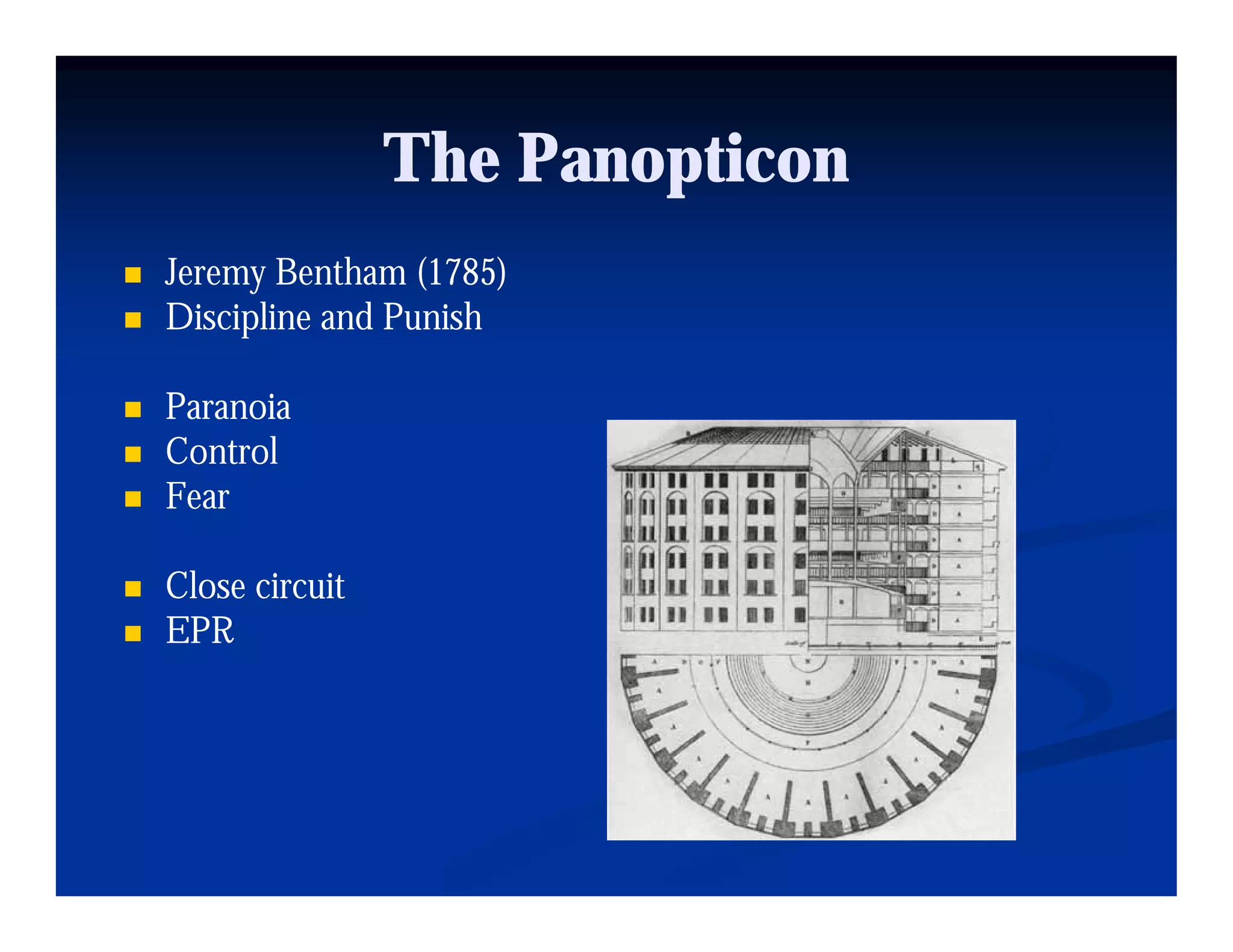
The Panopticon
Jeremy Bentham (1785)
Discipline and Punish

Paranoia
Control
Fear

Close circuit
EPR
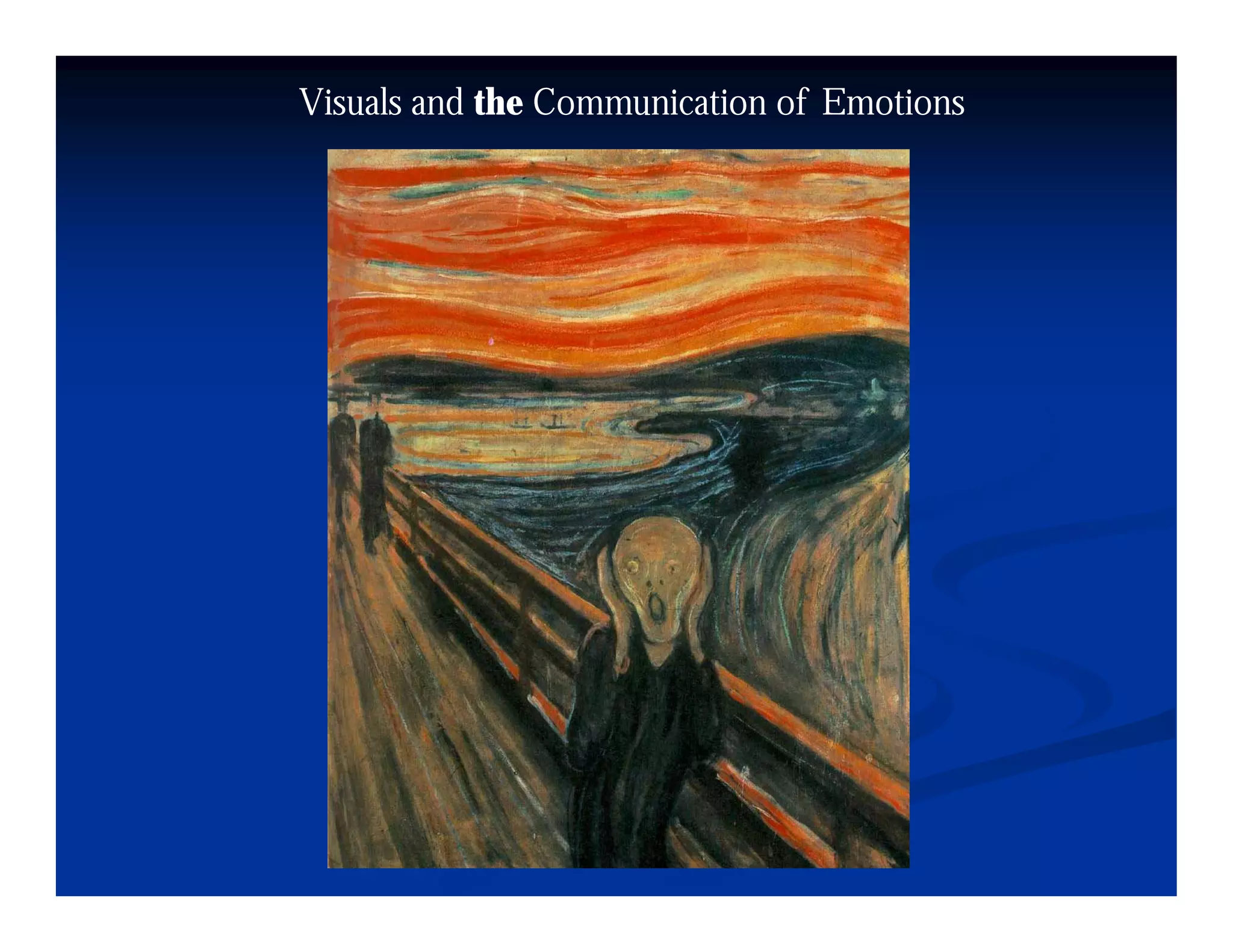
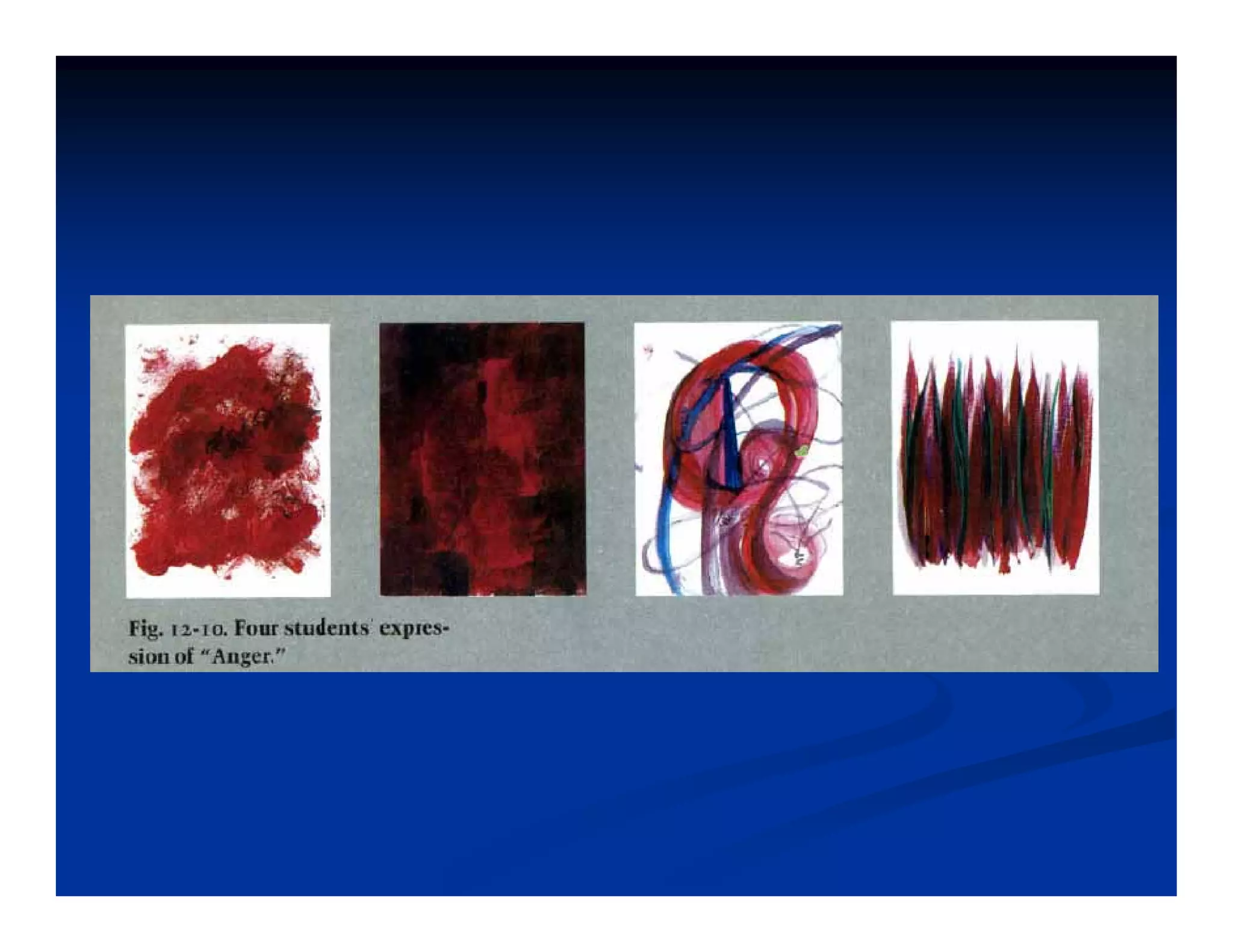
Visuals and the Communication of Emotions
What is perception?

      Sensation

          +

     Interpretation
In philosophy psychology and the cognitive
   philosophy, psychology,
sciences, perception is the process of attaining
awareness or understanding of sensory
information. The word "perception" comes
from the Latin words perceptio percipio and means
                        perceptio, percipio,
"receiving, collecting, action of taking
possession,
possession apprehension with the mind or
senses."
When external stimuli is transmitted to our brain
through our senses – sensation
Devoid of any definition, any interpretation,
meaning
The simplest building block
But then it is taken up by the mind and analyzed
Memory is stirred up remembering used
                    up,
Sensation identified, matched, given a name,
defined,
defined interpreted and remembered for future
use
Part of what we perceive comes through the
senses from the objects before us; another part
always comes out of our own head

                William J
                Willi James
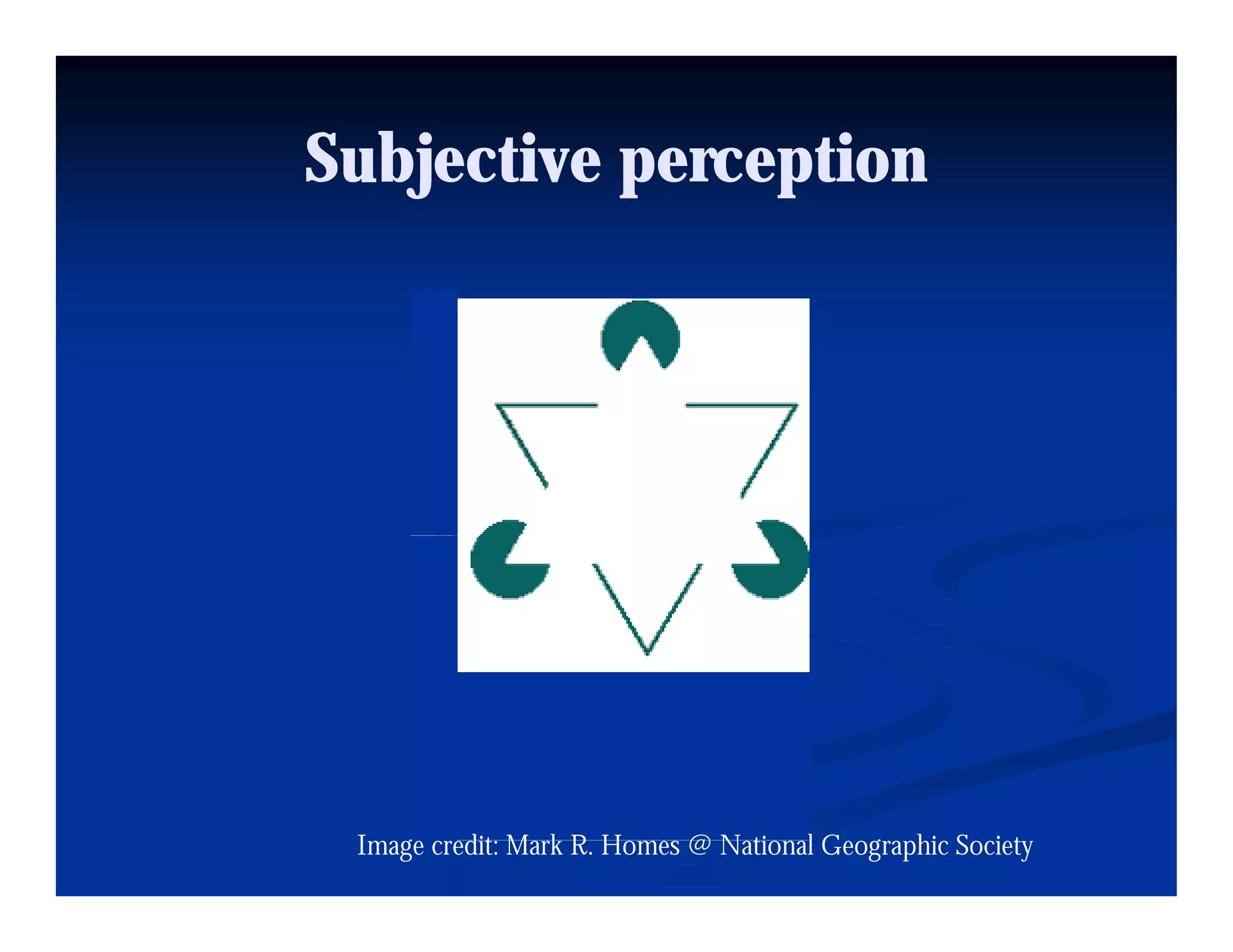
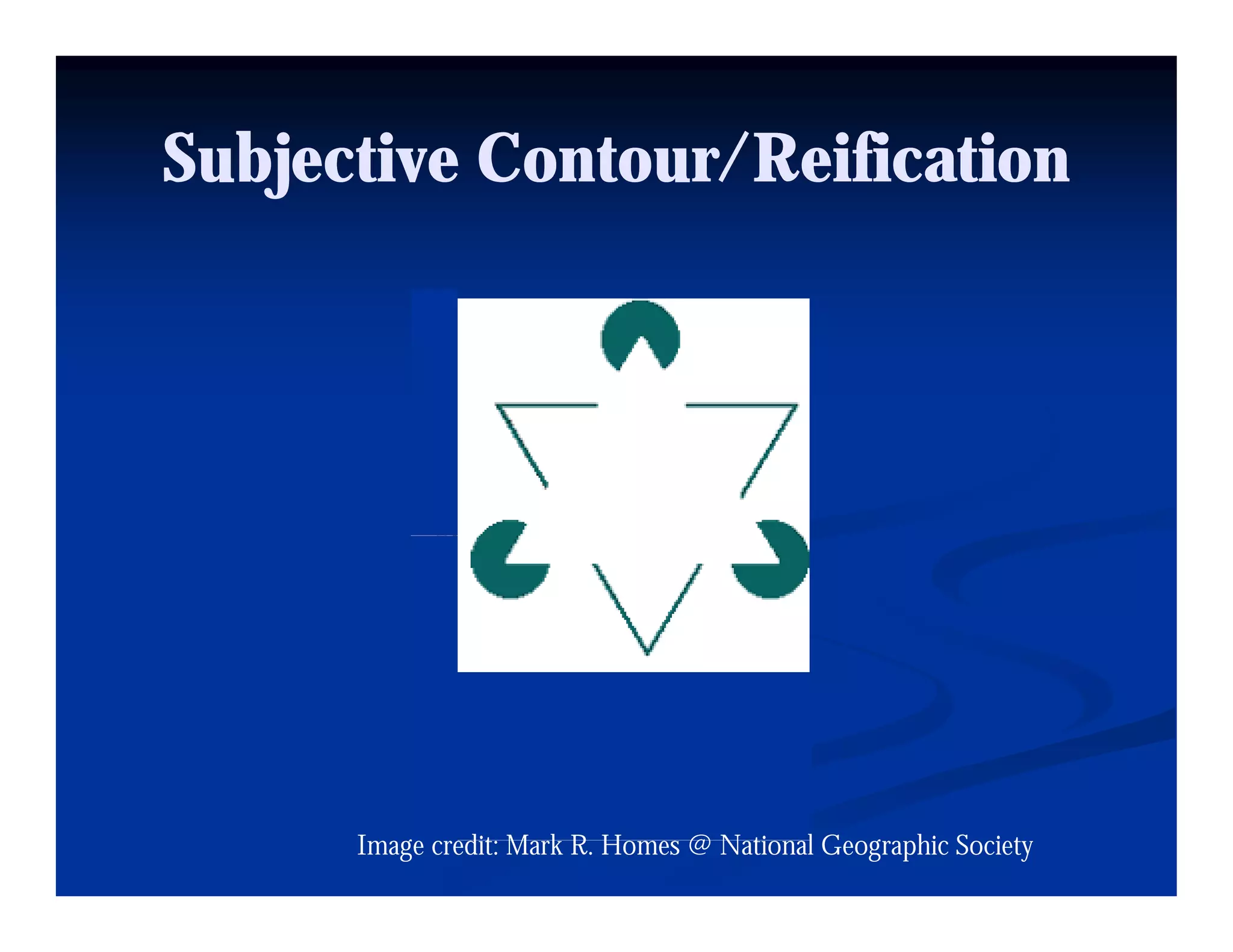
Subjective perception


 Image credit: Mark R. Homes @ National Geographic Society
To resolve ambiguities and make sense of the
world, the brain also creates shapes from
incomplete data.
            data

The i l
Th triangle you saw was d l d b I li
                        developed by Italian
psychologist Gaetano Kanizsa.
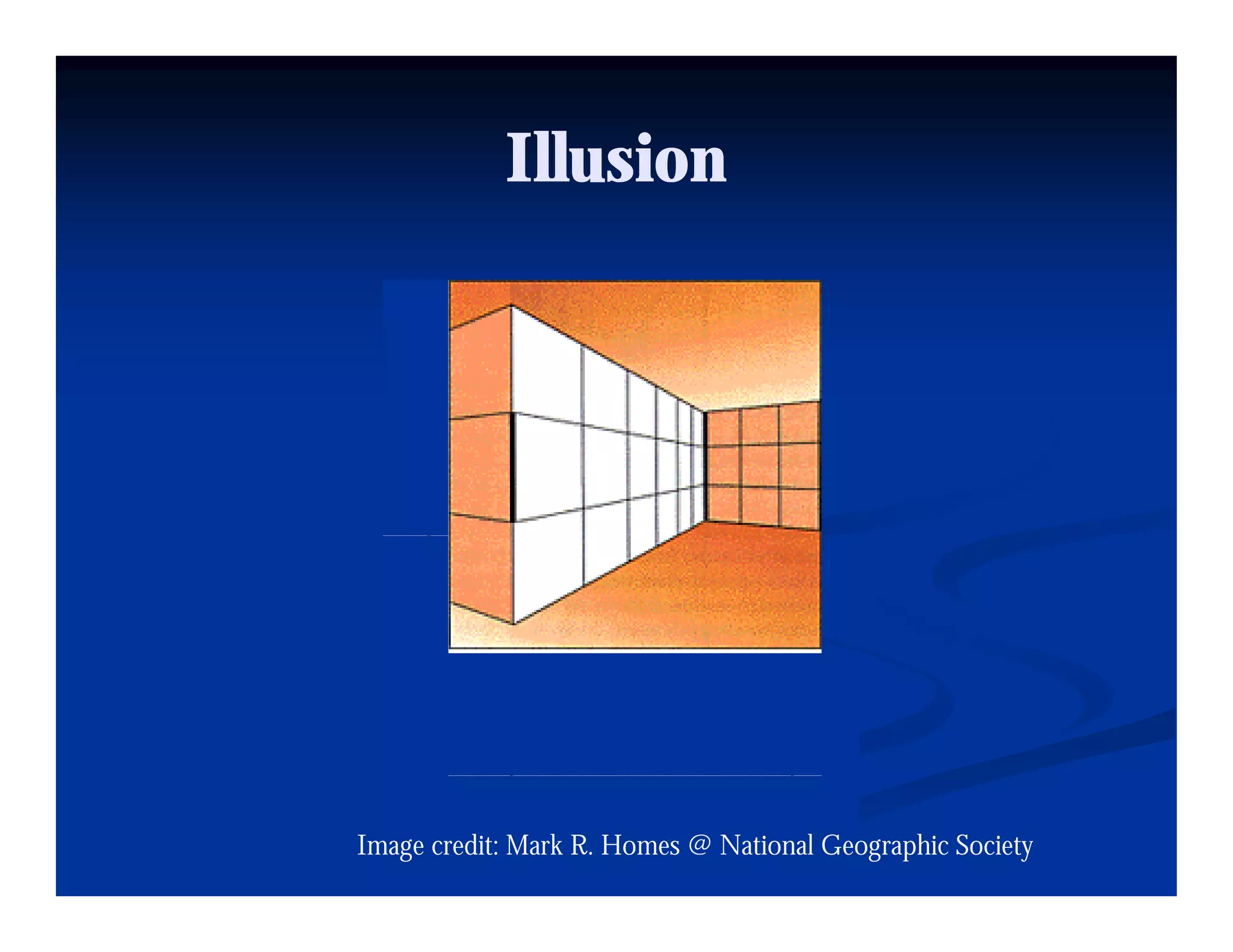
Illusion


Image credit: Mark R. Homes @ National Geographic Society
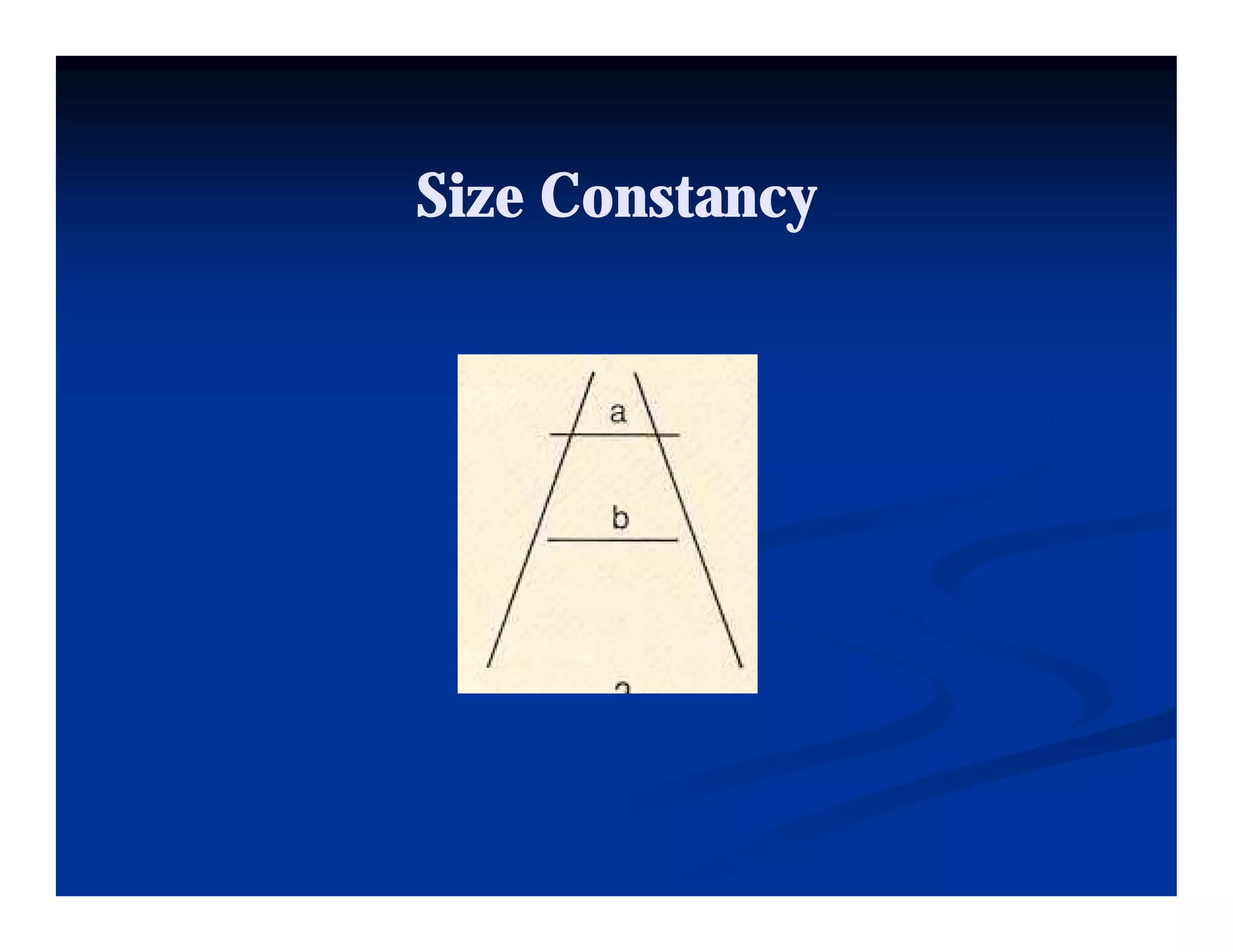
Illusion created because of “size constancy
                               size constancy”
effect to be discussed a little later.
Orientation


Image credit: Mark R. Homes @ National Geographic Society
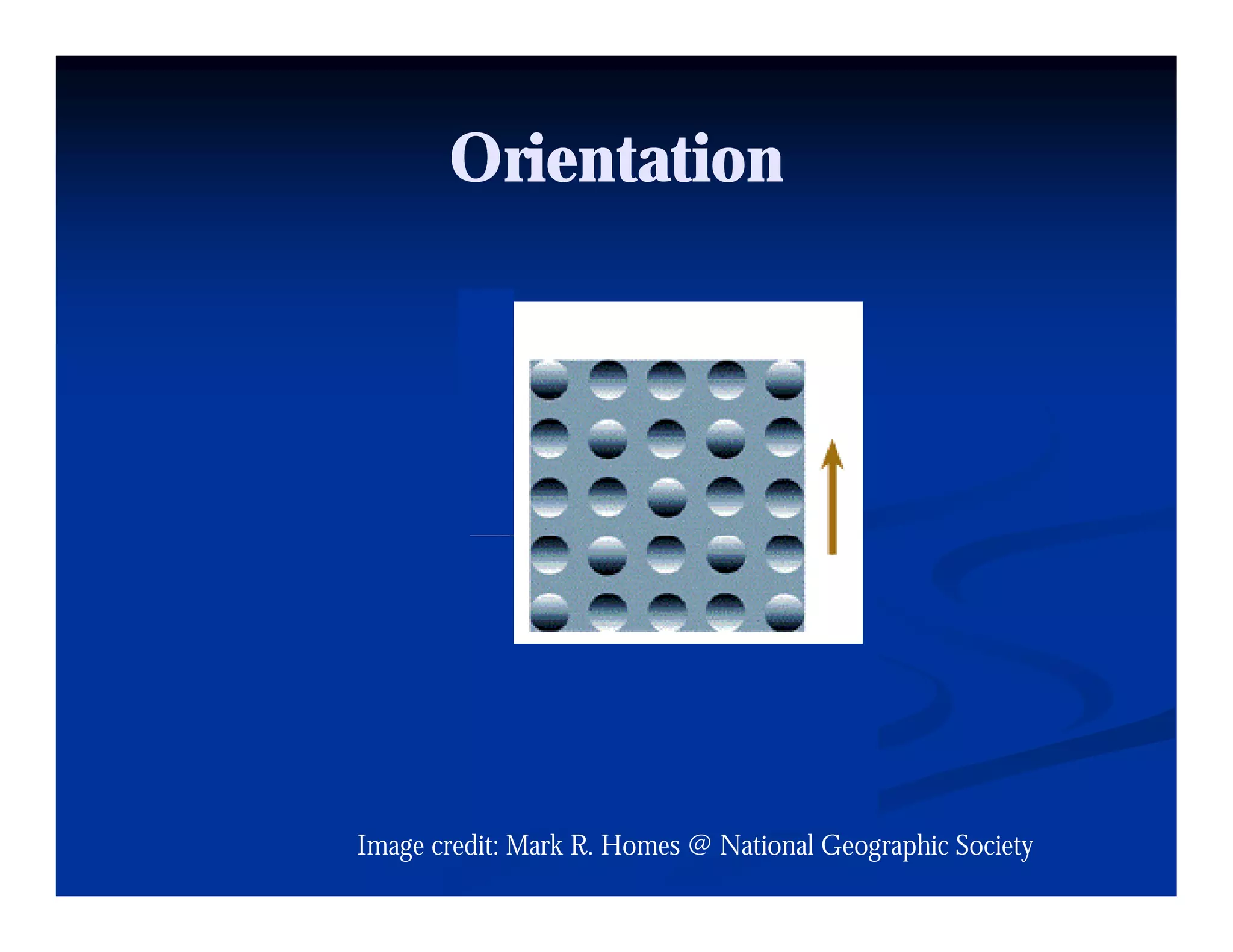
According to noted neuroscientist V.
                                  V
Ramachandran of University of California, San
Diego,
Diego the brain can make guesses based on
information available and some simple
assumptions
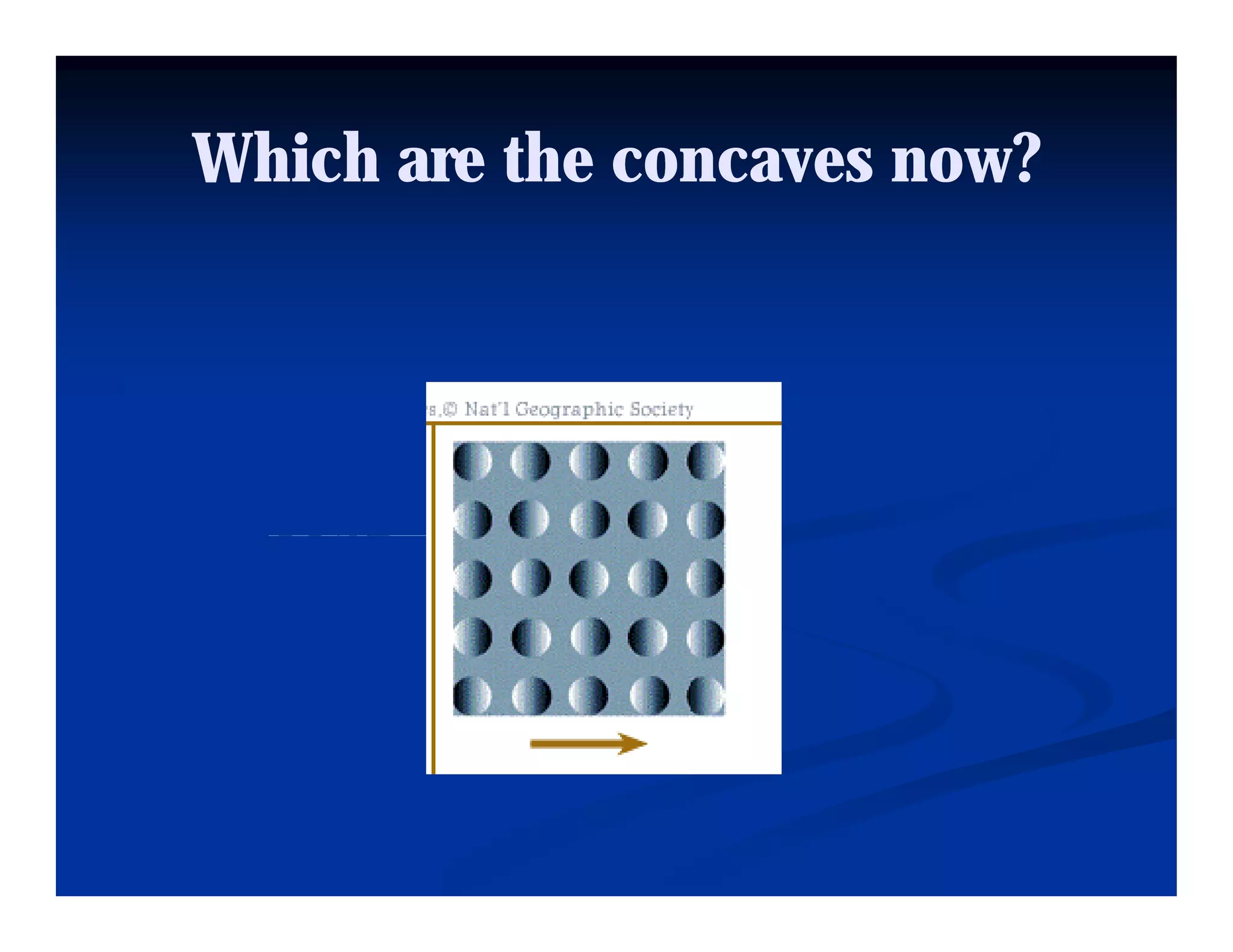
Pattern of shadows
Light
Li h usually from top
           ll f
Which are the concaves now?
Orientation
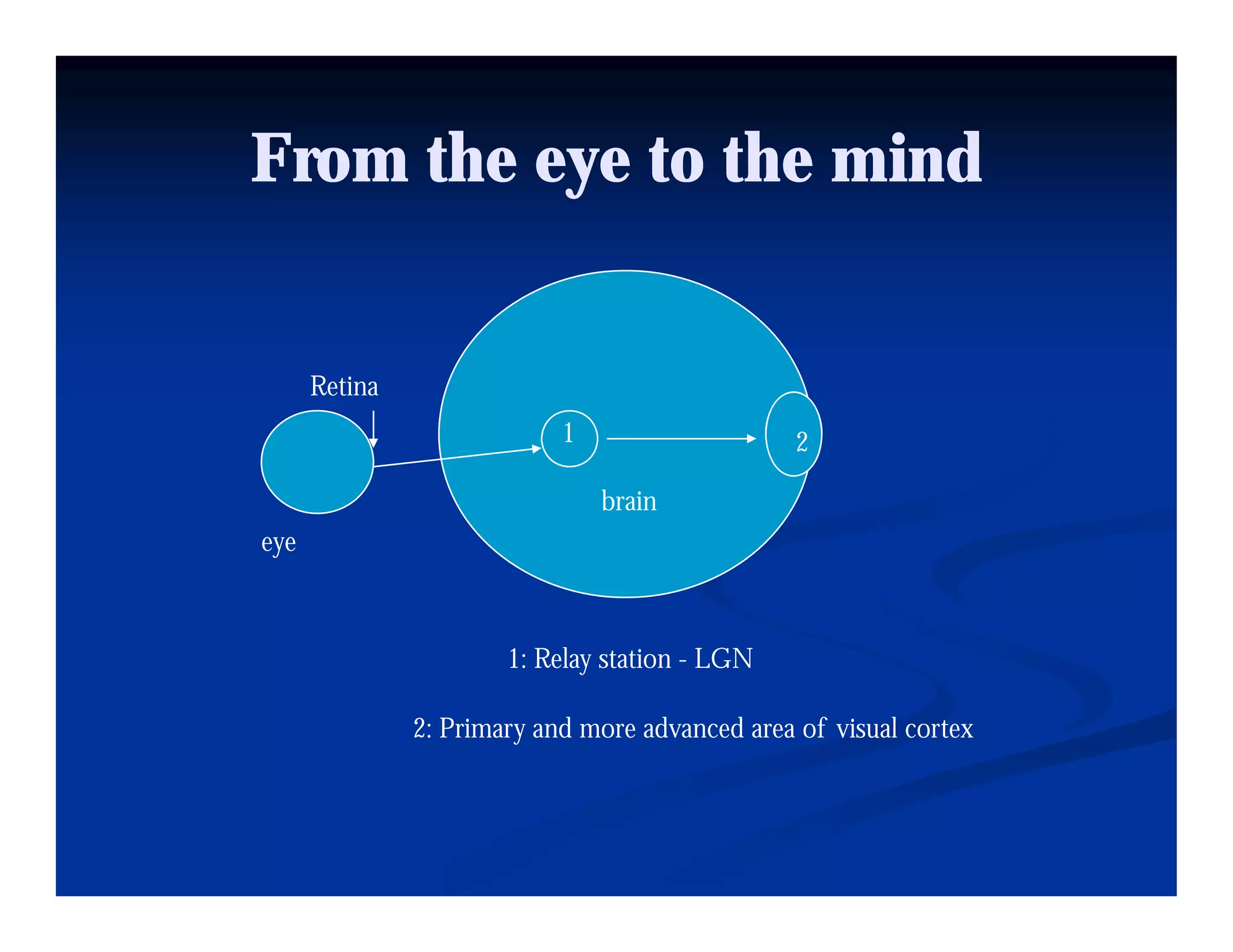
From the eye to the mind


      Retina
                            1                    2

                                brain
eye


                       1: R l t ti
                       1 Relay station - LGN

               2: Primary and more advanced area of visual cortex
Rods: Monochrome and in low light
Cones: colour vision
Attention
The perceptual process of selecting certain
inputs for inclusion in our conscious experience
or awareness at any given time
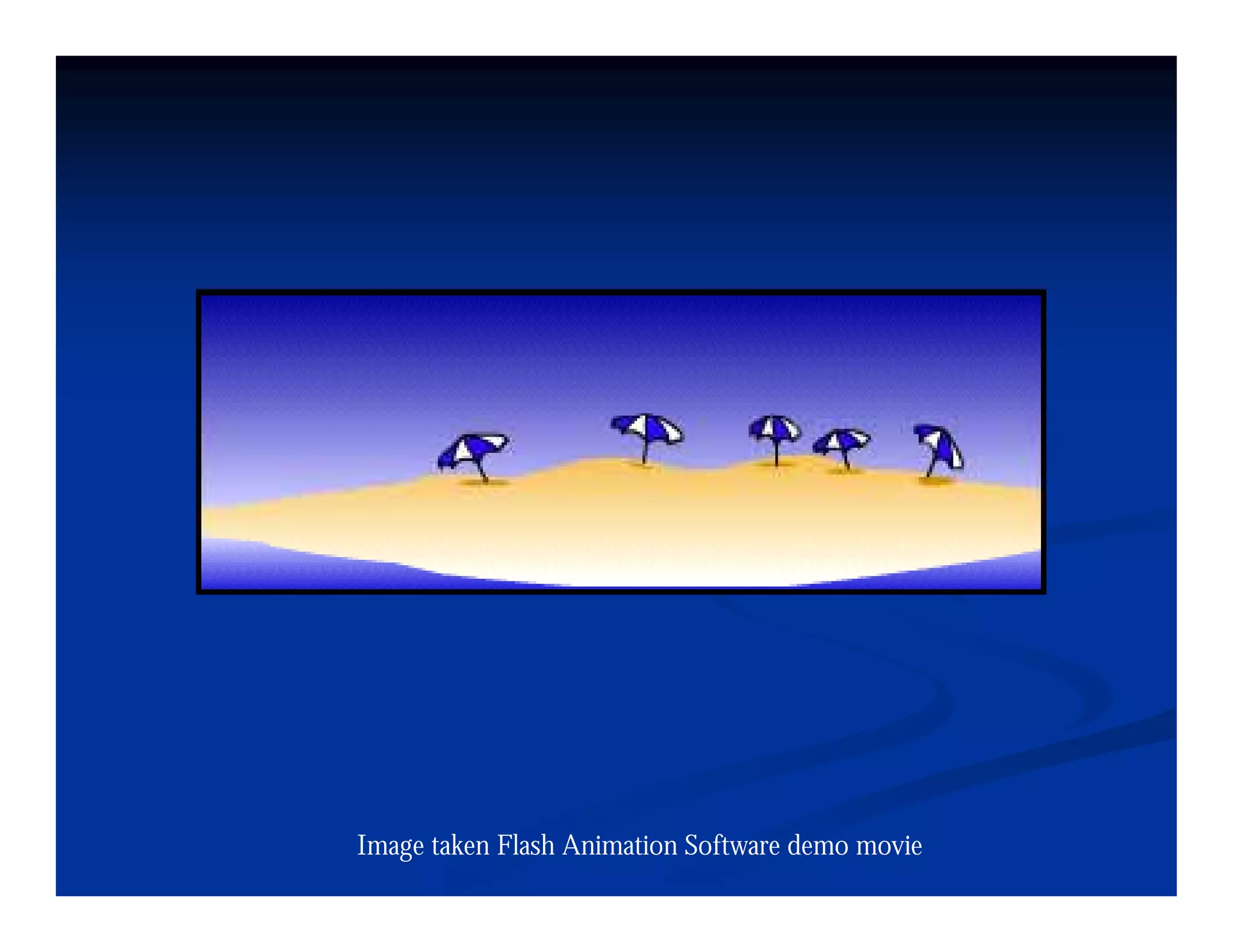
Flash animation


Image taken Flash Animation Software demo movie
Filtering
Why does focus shift?

We filter, partly bl ki certain i
W fil          l blocking    i inputs

         Limited Mental Capacity
Perception is taking in, filtering and interpretation to
make sense of the world. Memory and learning play an
important part, but so do certain innate organizational
abilities of the mind, highlighted by Gestalt
psychologists.

The limits of my perception are the limits of my world
The word is the world (since it takes us a step further
and helps us cognize what we have perceived)
What we shall do next
Form perception
Colour perception
Depth
D h perception
             i

These will give us some idea of how and why we
visually perceive the many things that we do.
       yp                y     g
Form Perception and
      Gestalt
      G    l
Gestalt (German) used to indicate the form-
                                        form-
forming capabilities of the mind (Whole form
approach) and the belief that this holistic
perception is innate to the mind
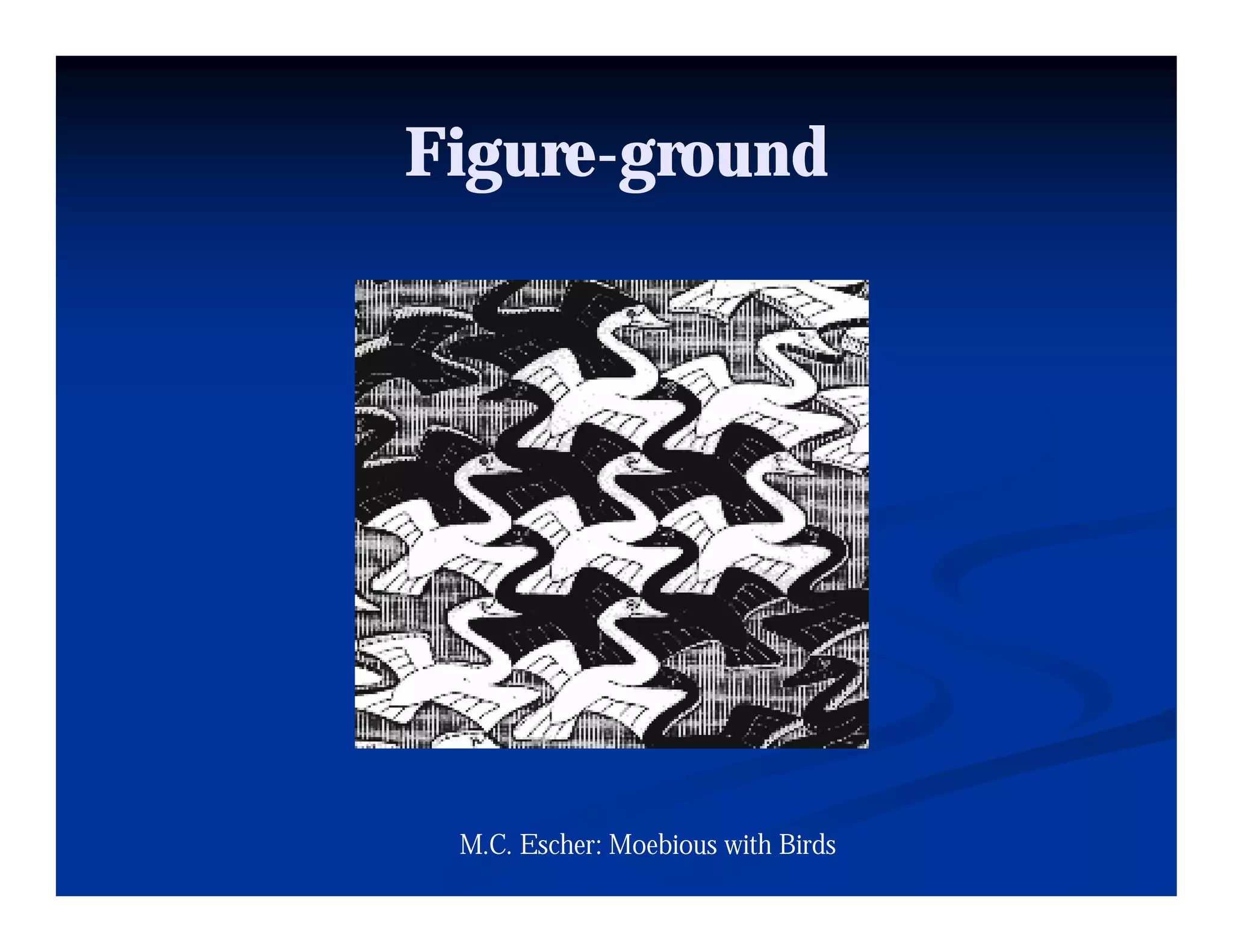
Figure-g ou d
Figure-ground
  gu e


 M.C. Escher: Moebious with Birds
The visual system uses an innate binary division
– the figure we look at and the ground which is
everything else and forms the background
This relation is reversible
But
B we cannot perceive the same thing as fi
                      i h          hi     figure
and ground at the same time – it requires a
mental switching
       l i hi
Gestalt
Max Wertheimer
Kurt Koffka
Wolfgang K hl
W lf     Kohler

We are surrounded by sounds and forms that do
not have a sole meaning. At any moment, our
                       g        y       ,
perception is what gives it form and meaning.
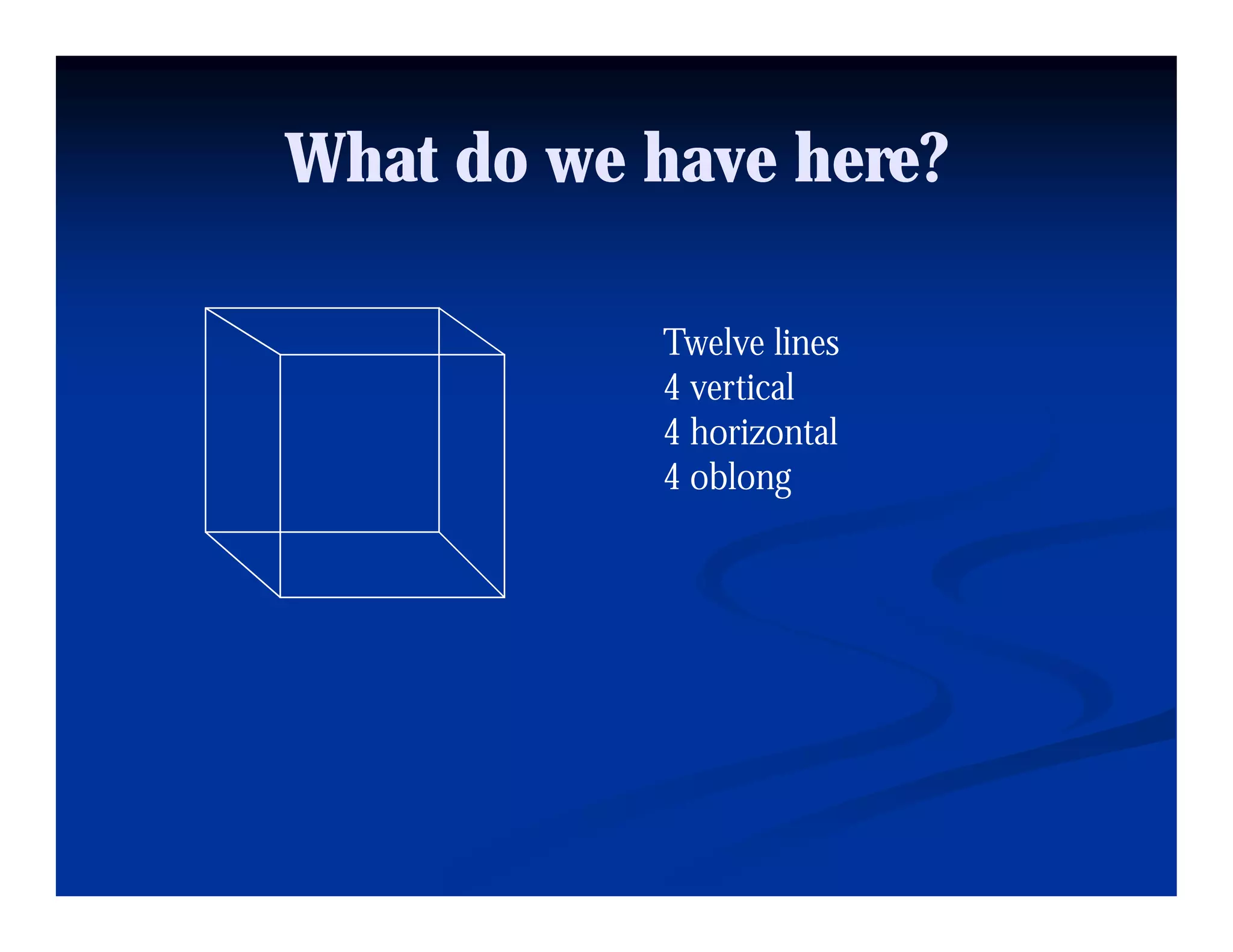
What do we have here?

           Twelve lines
           4 vertical
           4 horizontal
           4 oblong
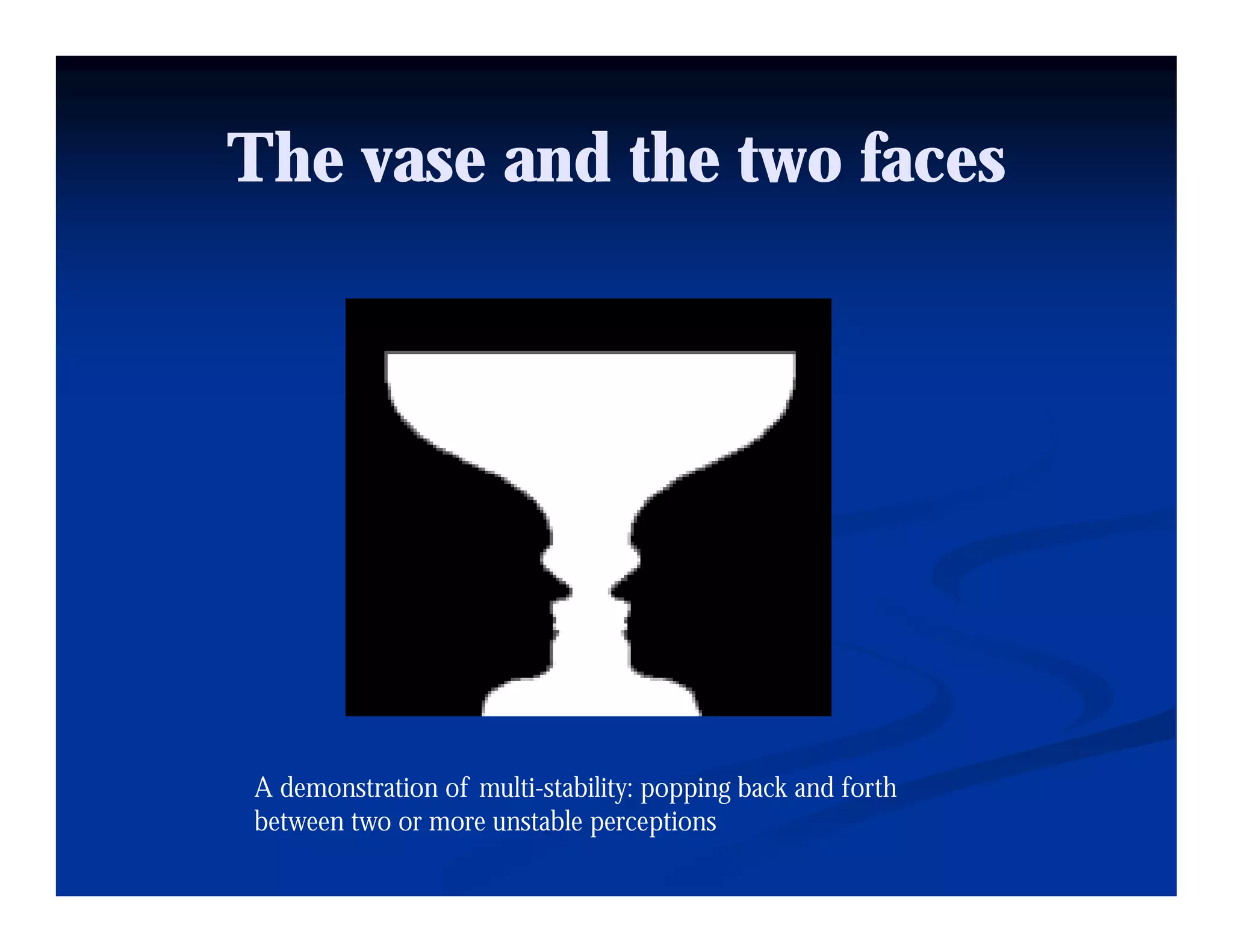
The vase and the two faces


A demonstration of multi-stability: popping back and forth
between two or more unstable perceptions
Organization in form perception


           The whole is more
           than the sum of its
            h h          fi
                  parts
A Poem

    A Black Coat
It was a dark evening
         d k      i
     Simple Life
Subjective Contour/Reification


      Image credit: Mark R. Homes @ National Geographic Society
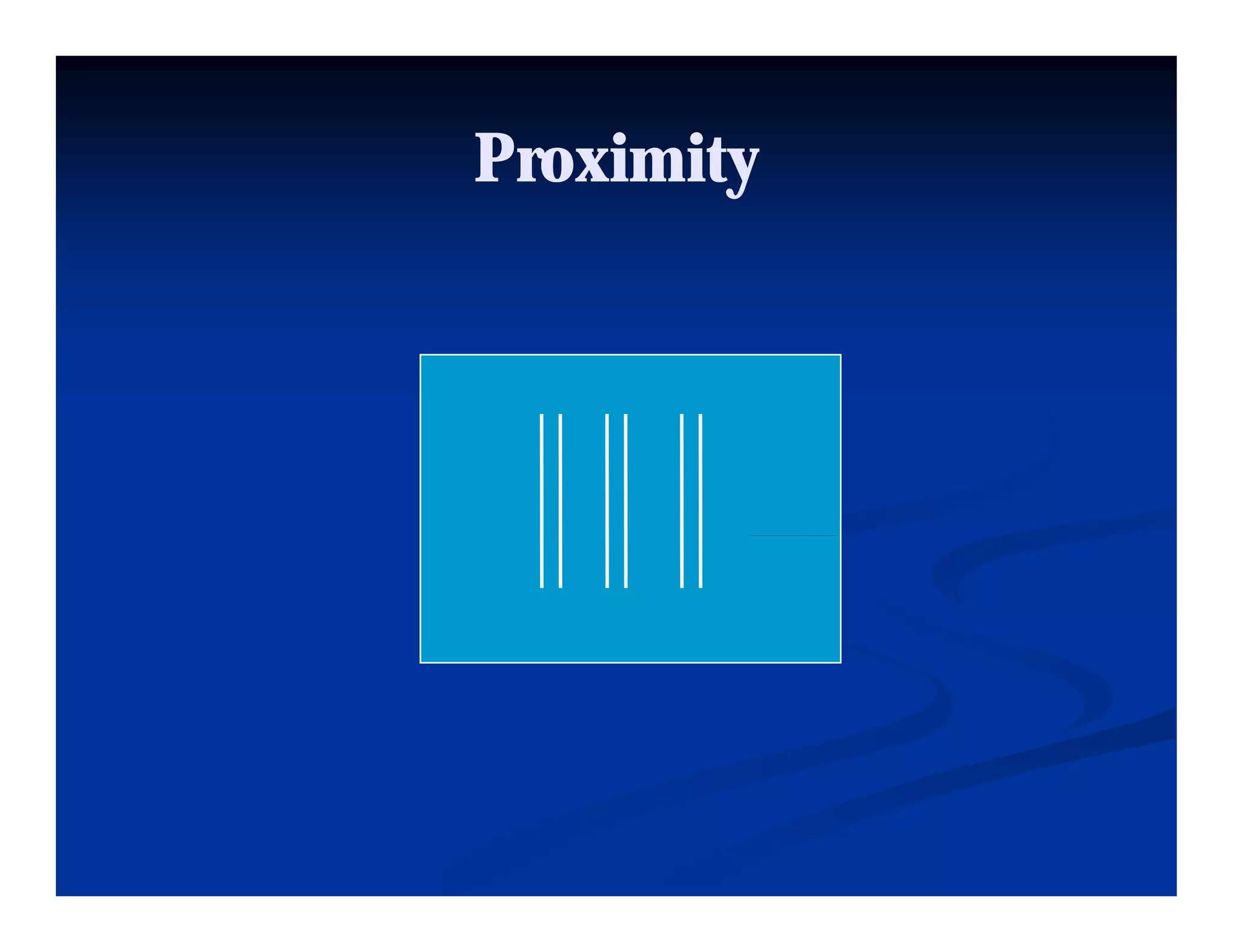
Proximity
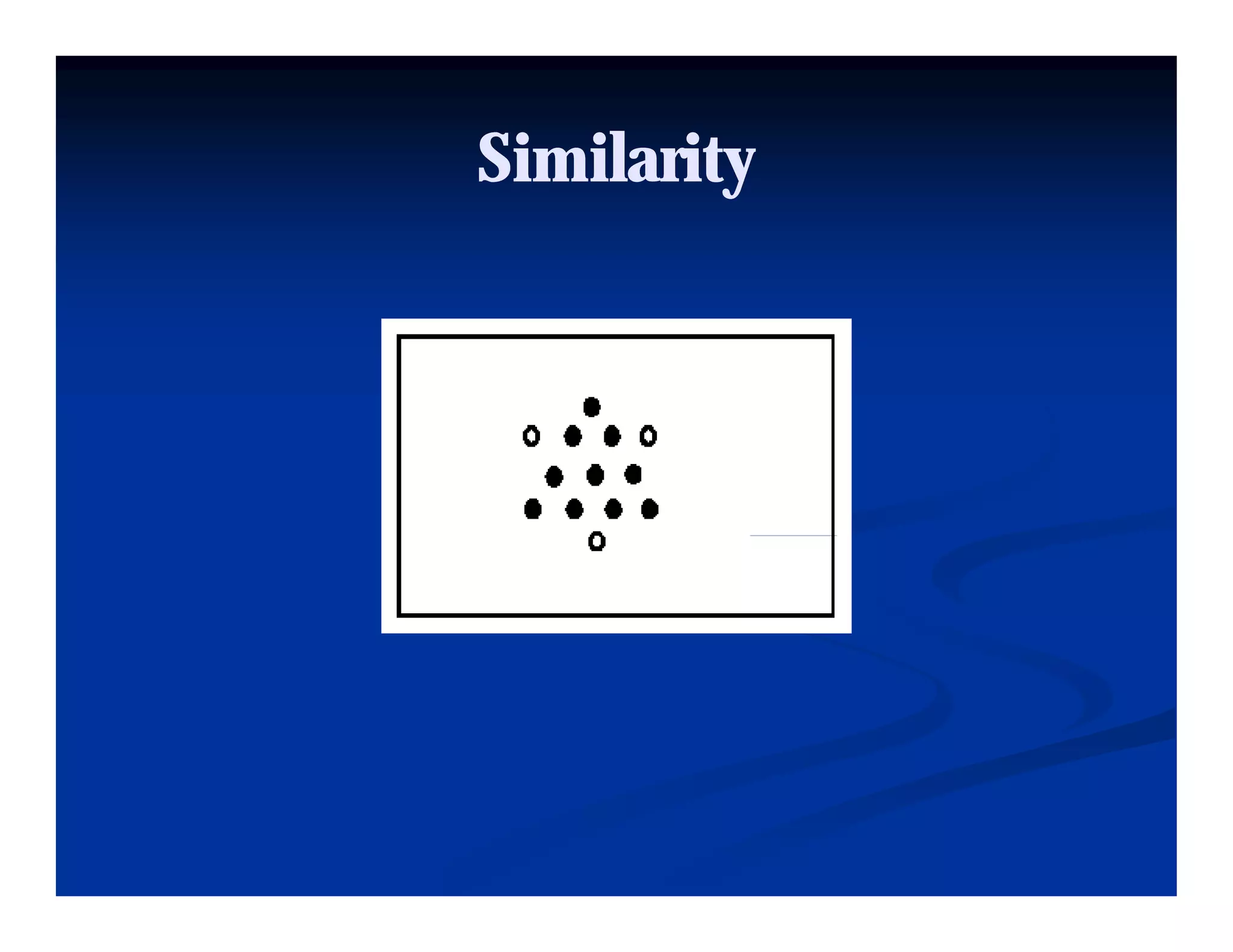
Similarity
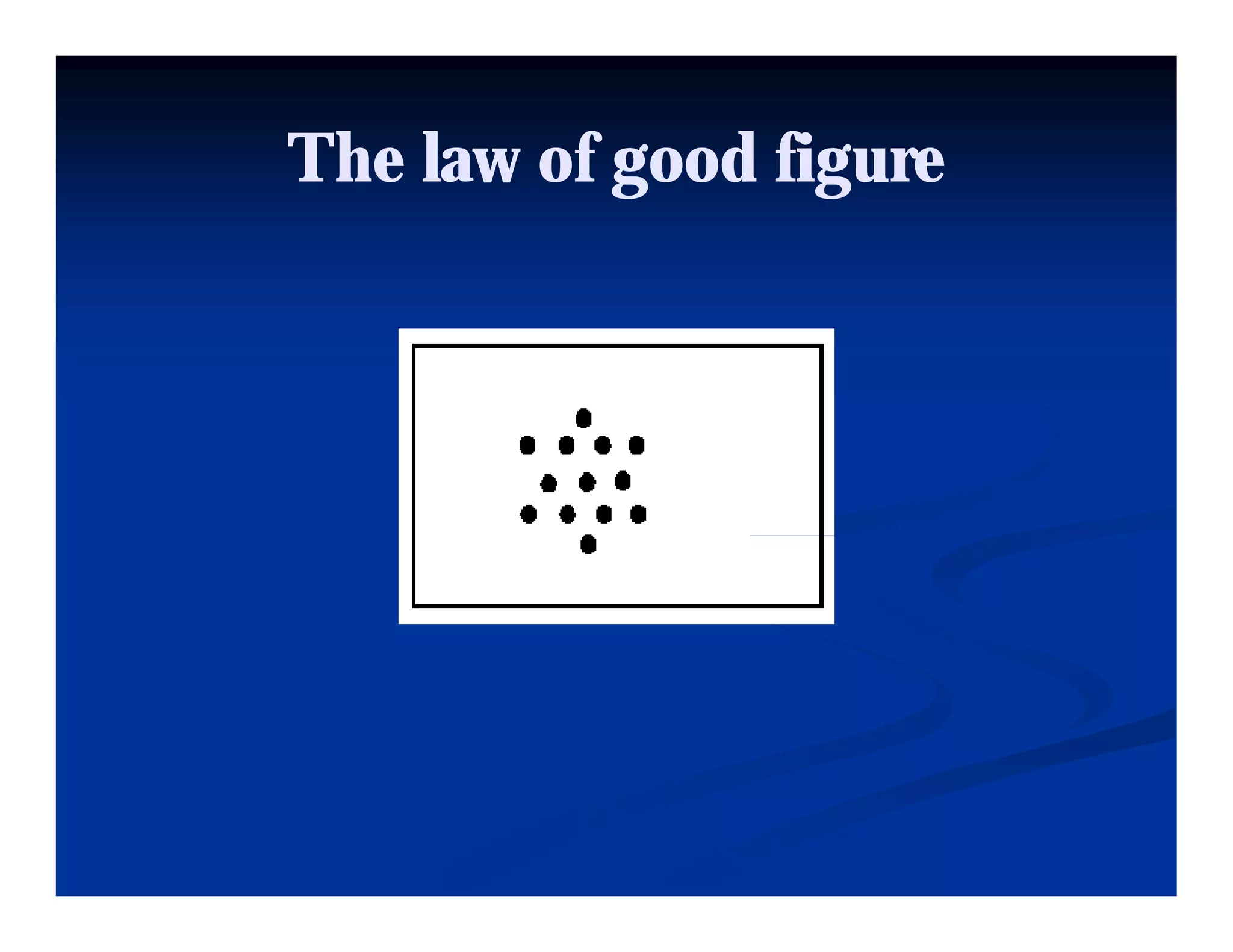
The law of good figure
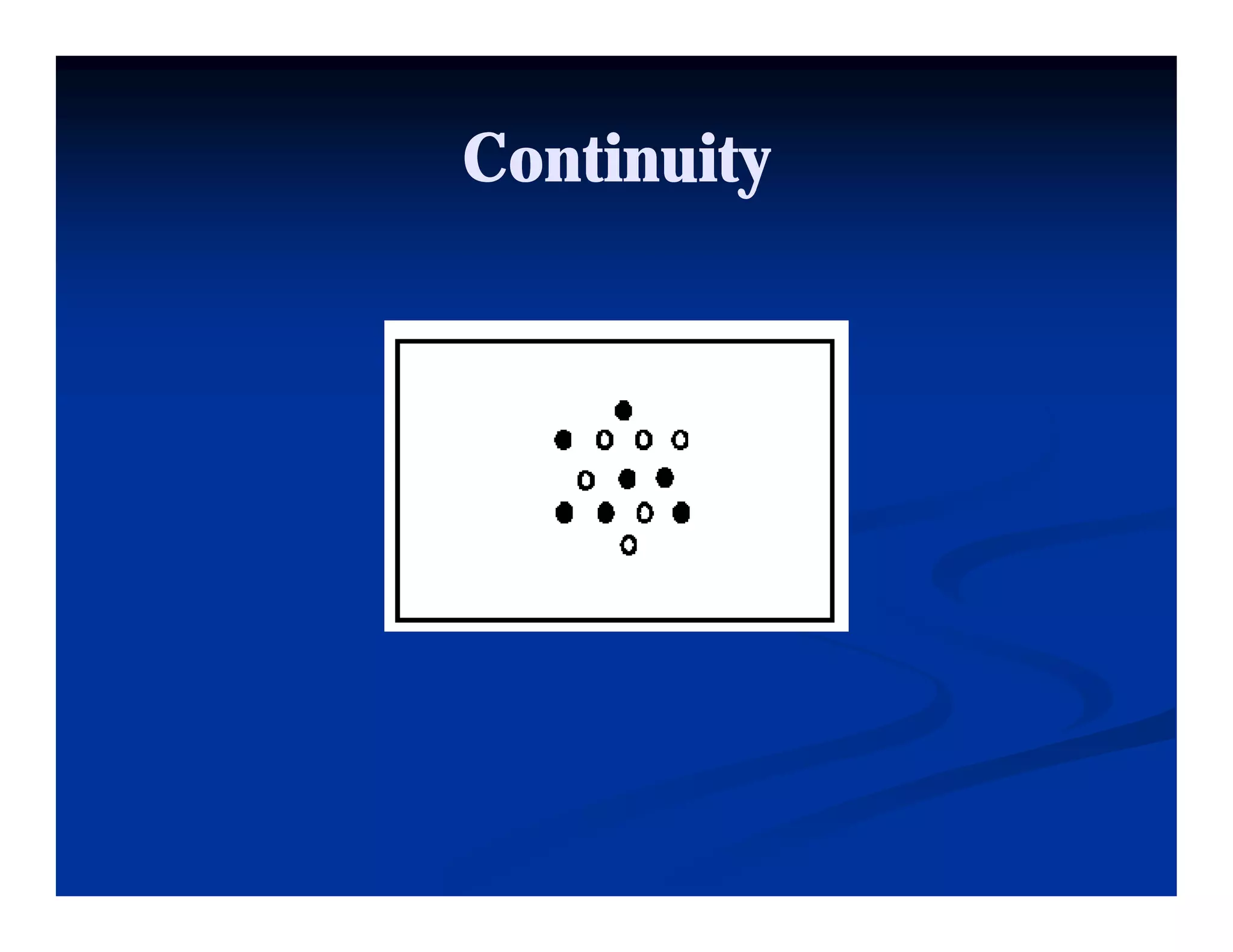
Continuity
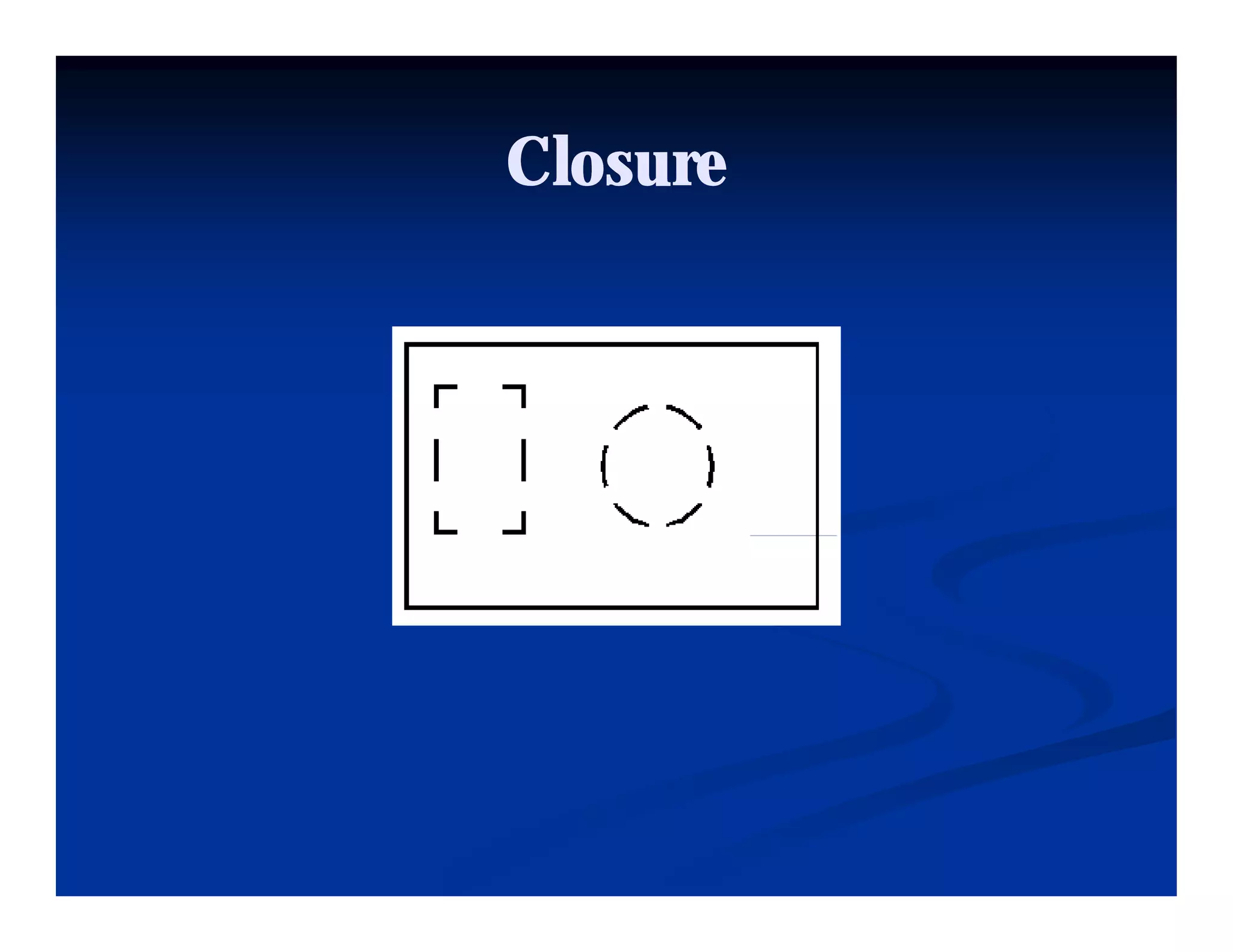
Closure
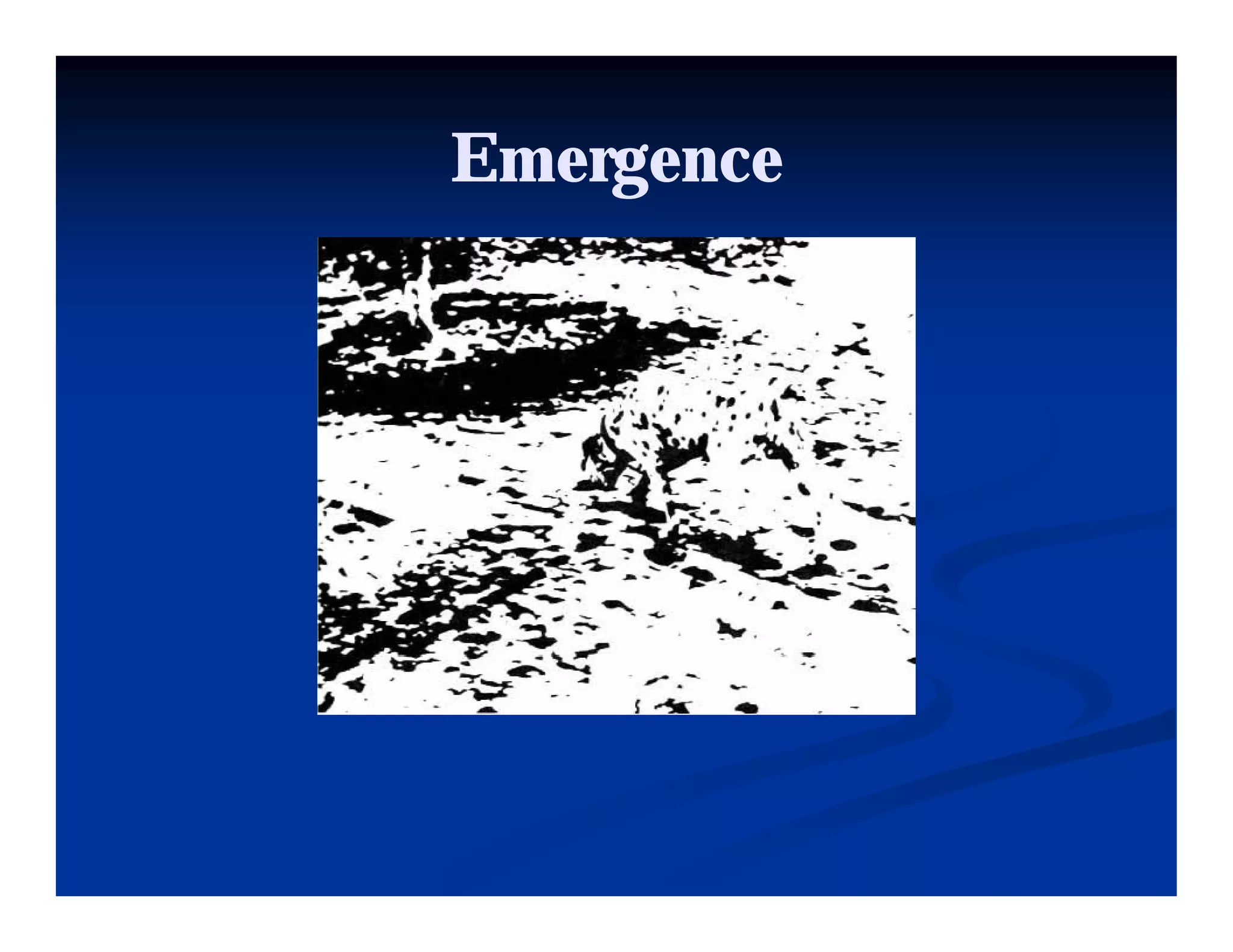
Emergence
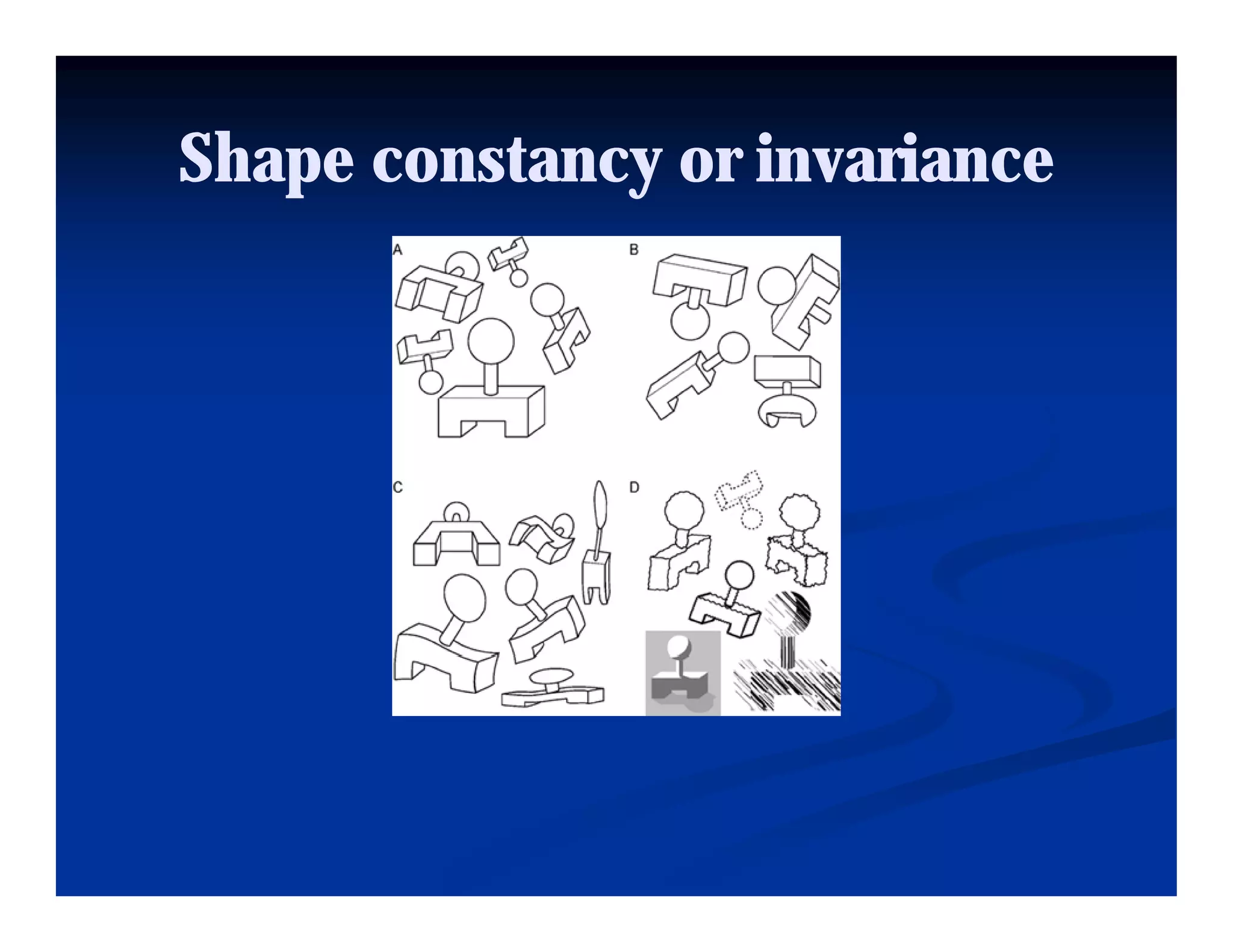
Shape constancy or invariance
Analysis
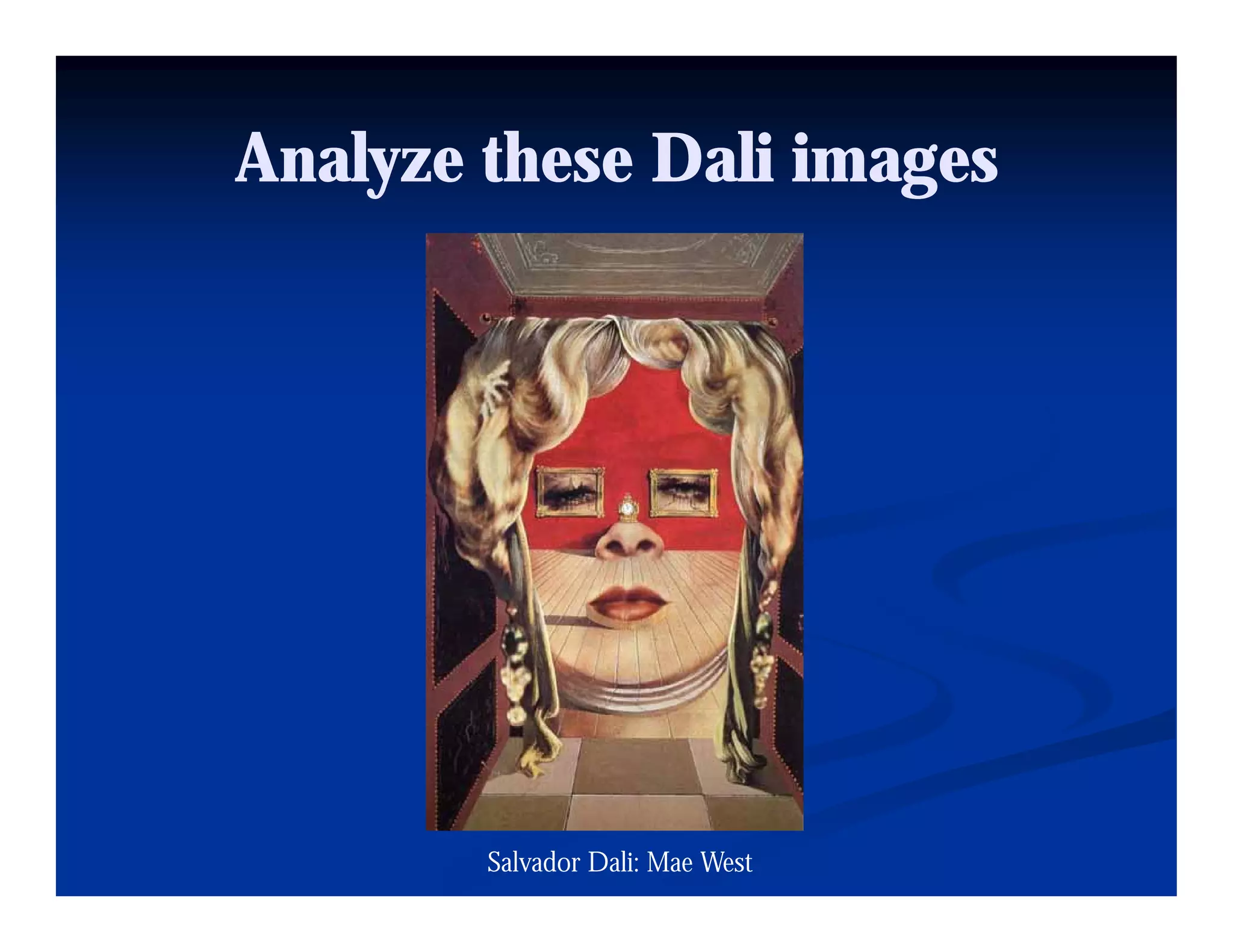
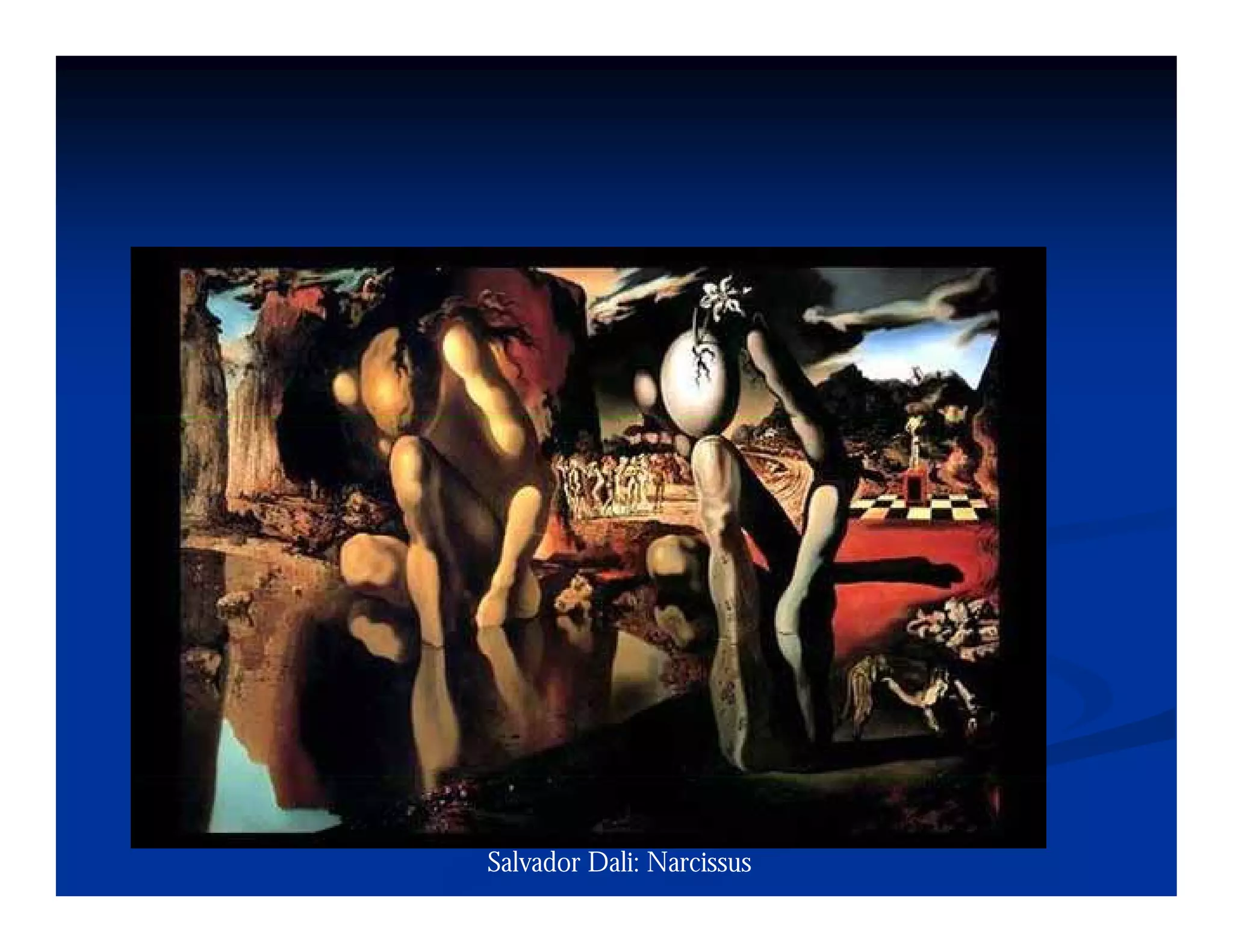
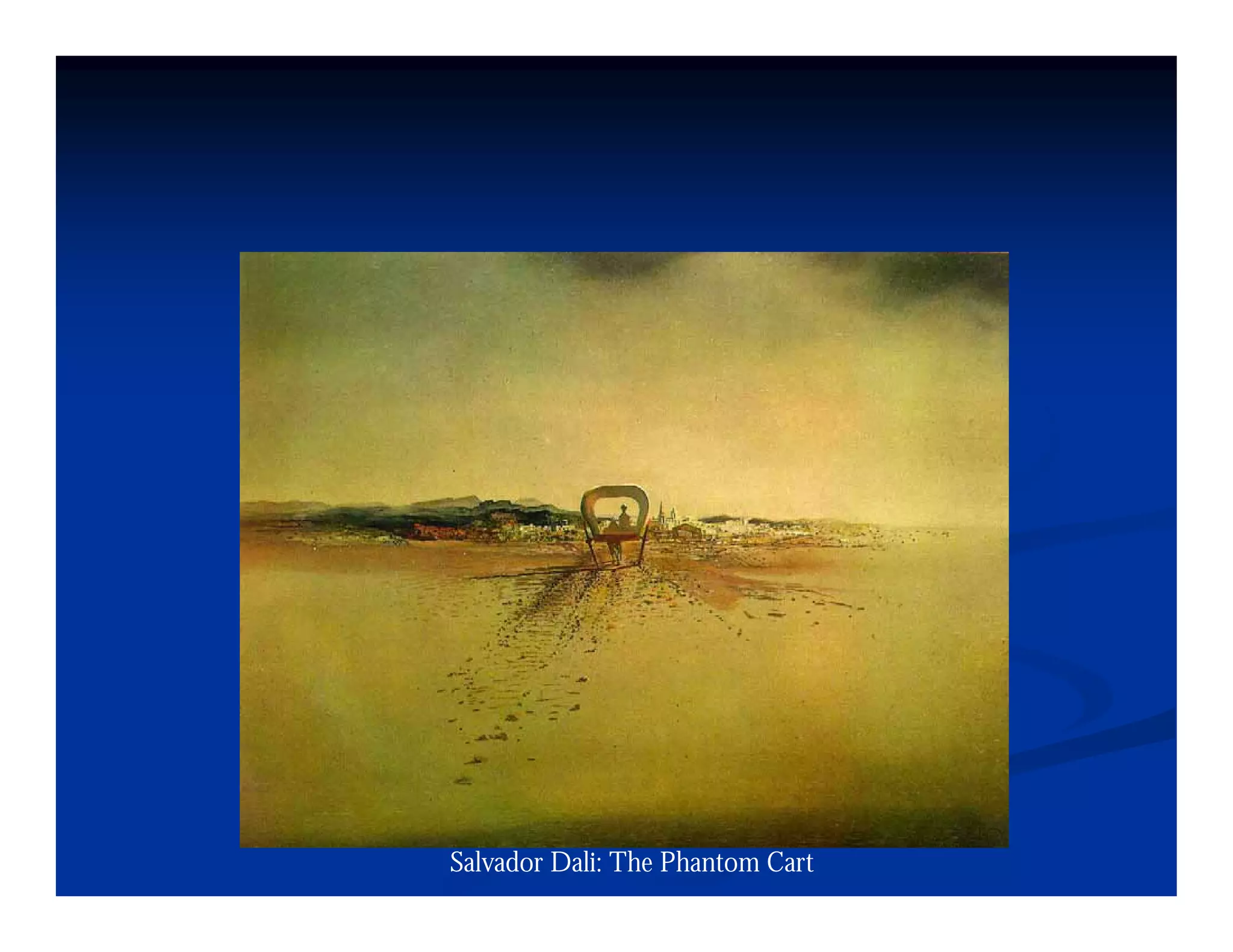
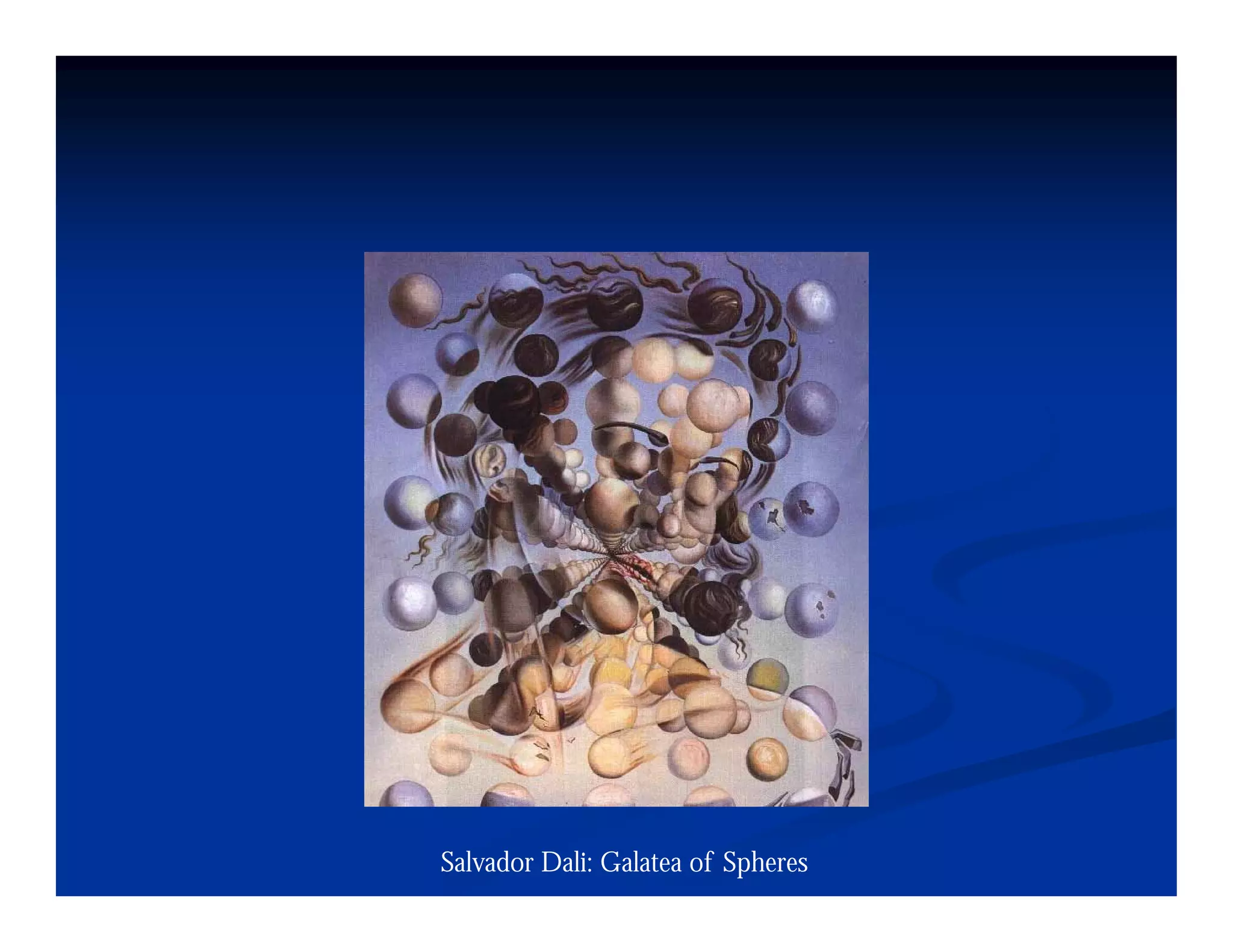
Analyze these Dali images


        Salvador Dali: Mae West
Salvador Dali: Narcissus
Salvador Dali: The Phantom Cart
Salvador Dali: Galatea of Spheres
Depth Perception
Depth Perception
D th P      ti

   Monocular

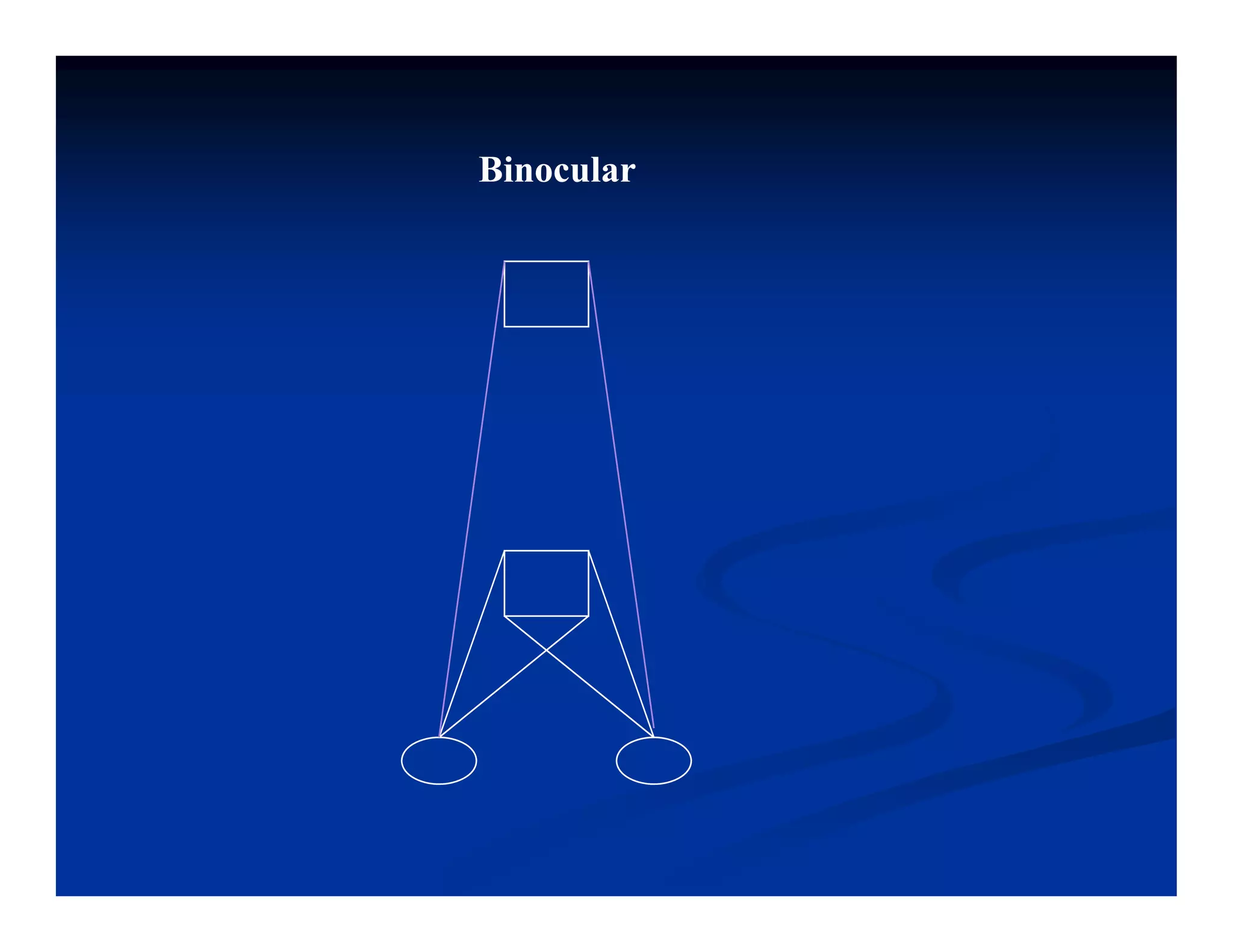
    Binocular
Binocular
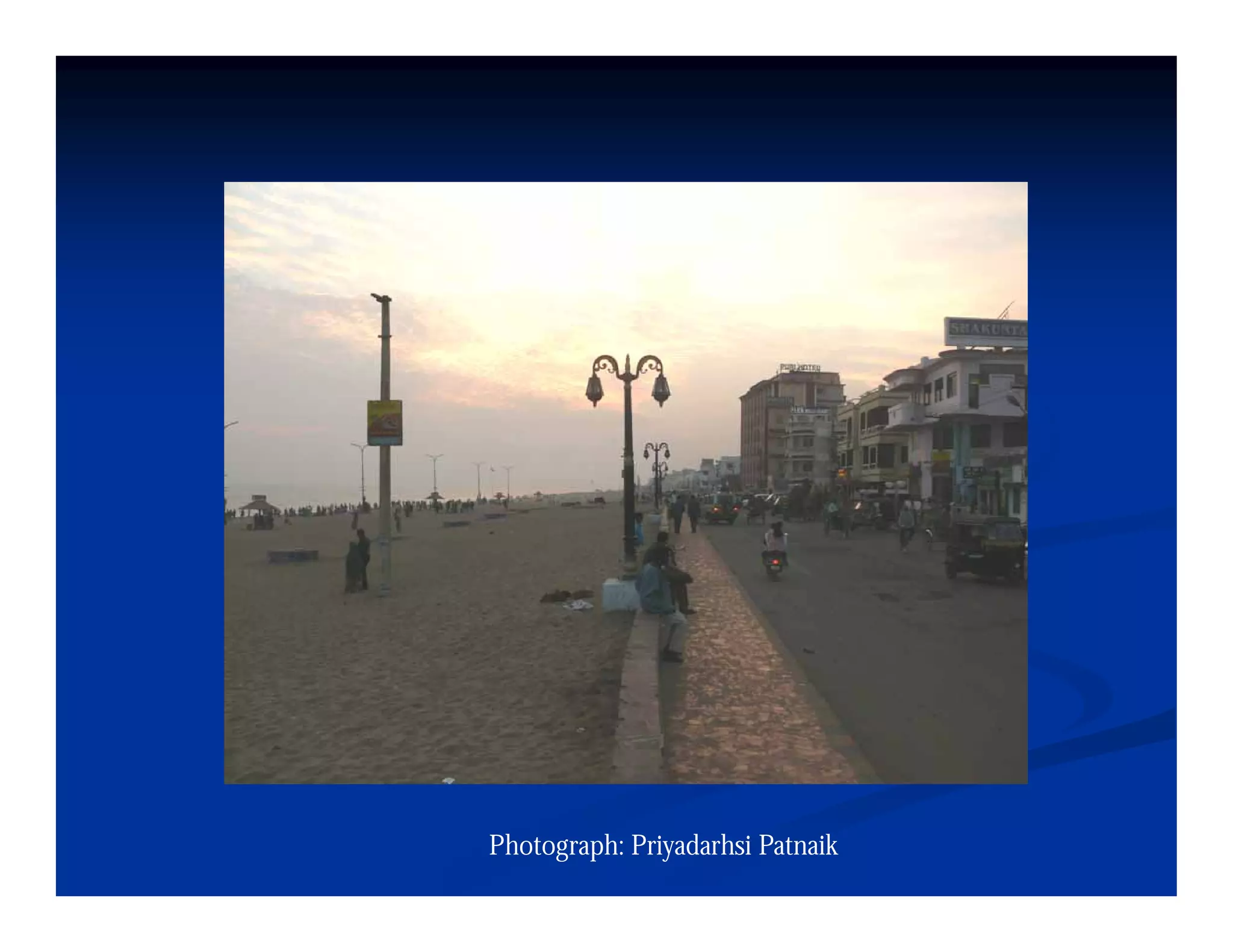
Photograph: Priyadarhsi Patnaik
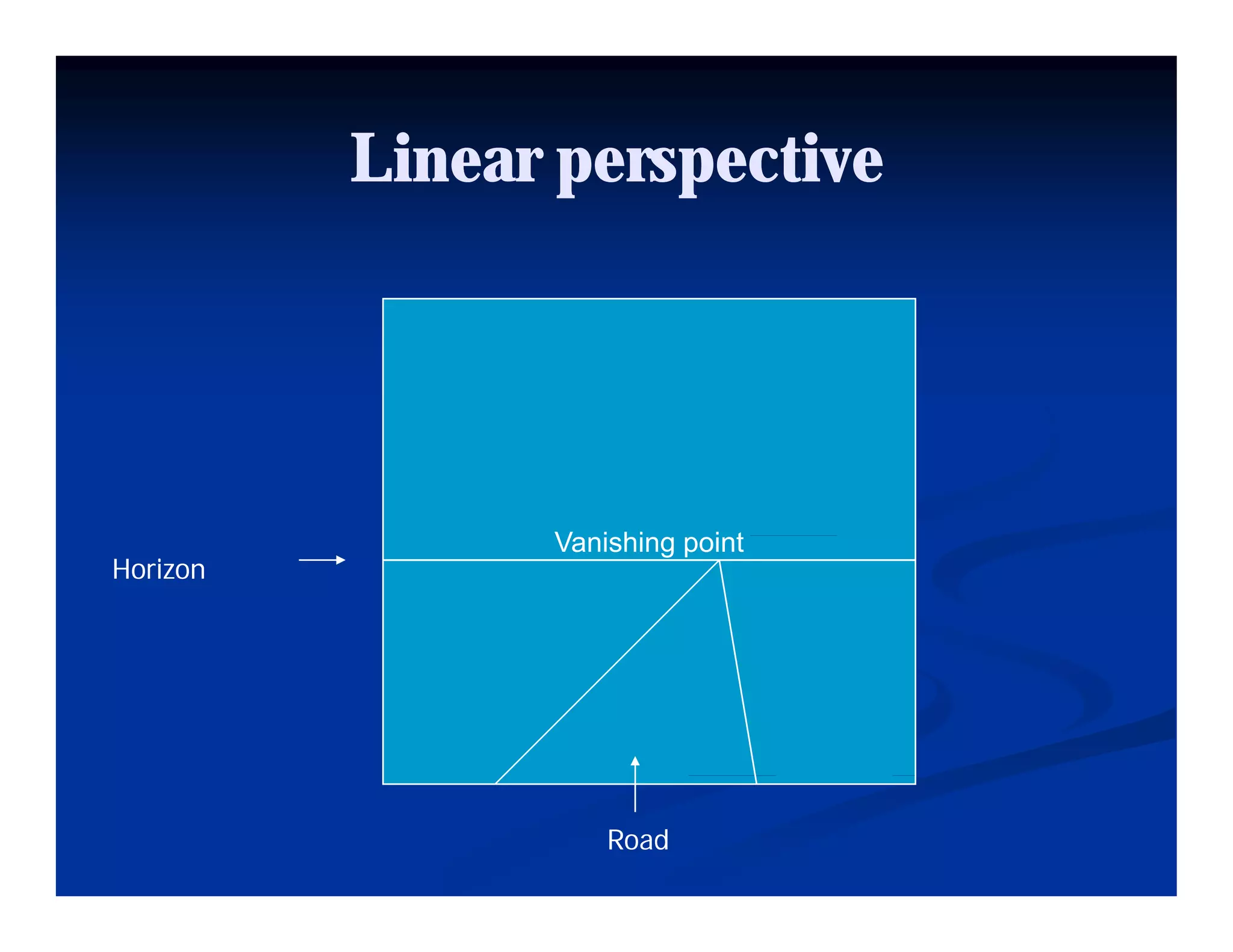
Linear perspective


                Vanishing i t
                V i hi point
Horizon


                   Road
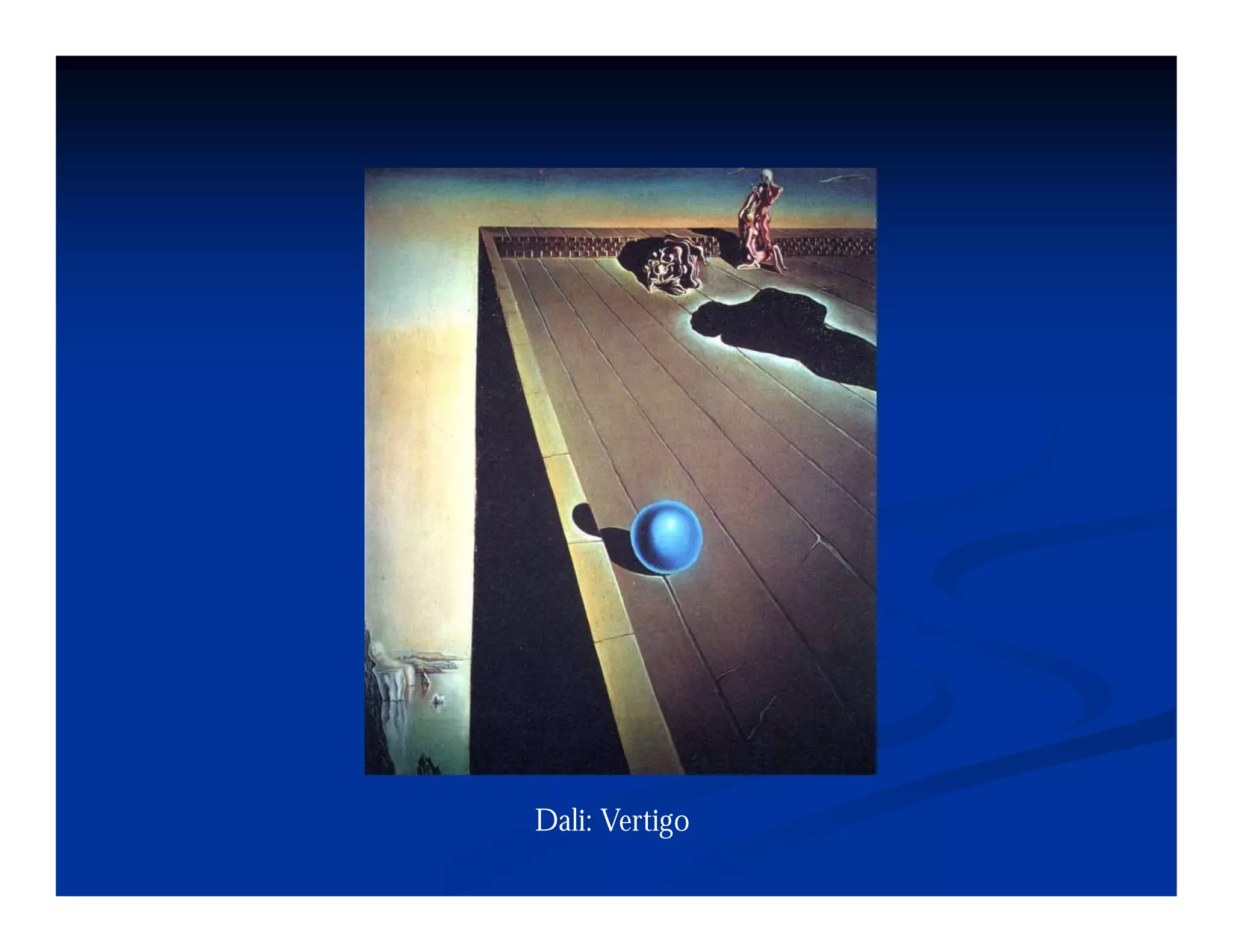
Dali: Vertigo
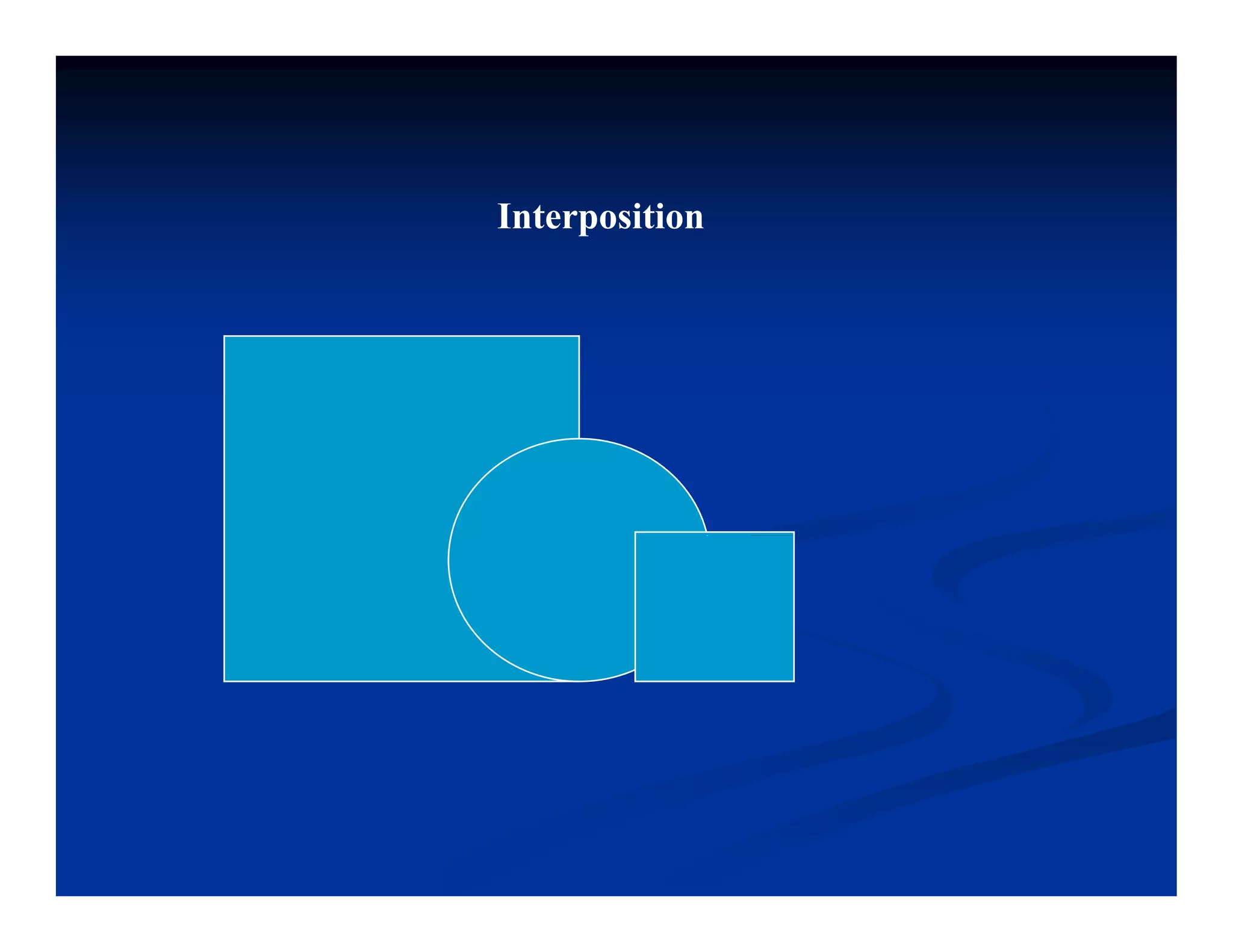
Interposition
Relative Size
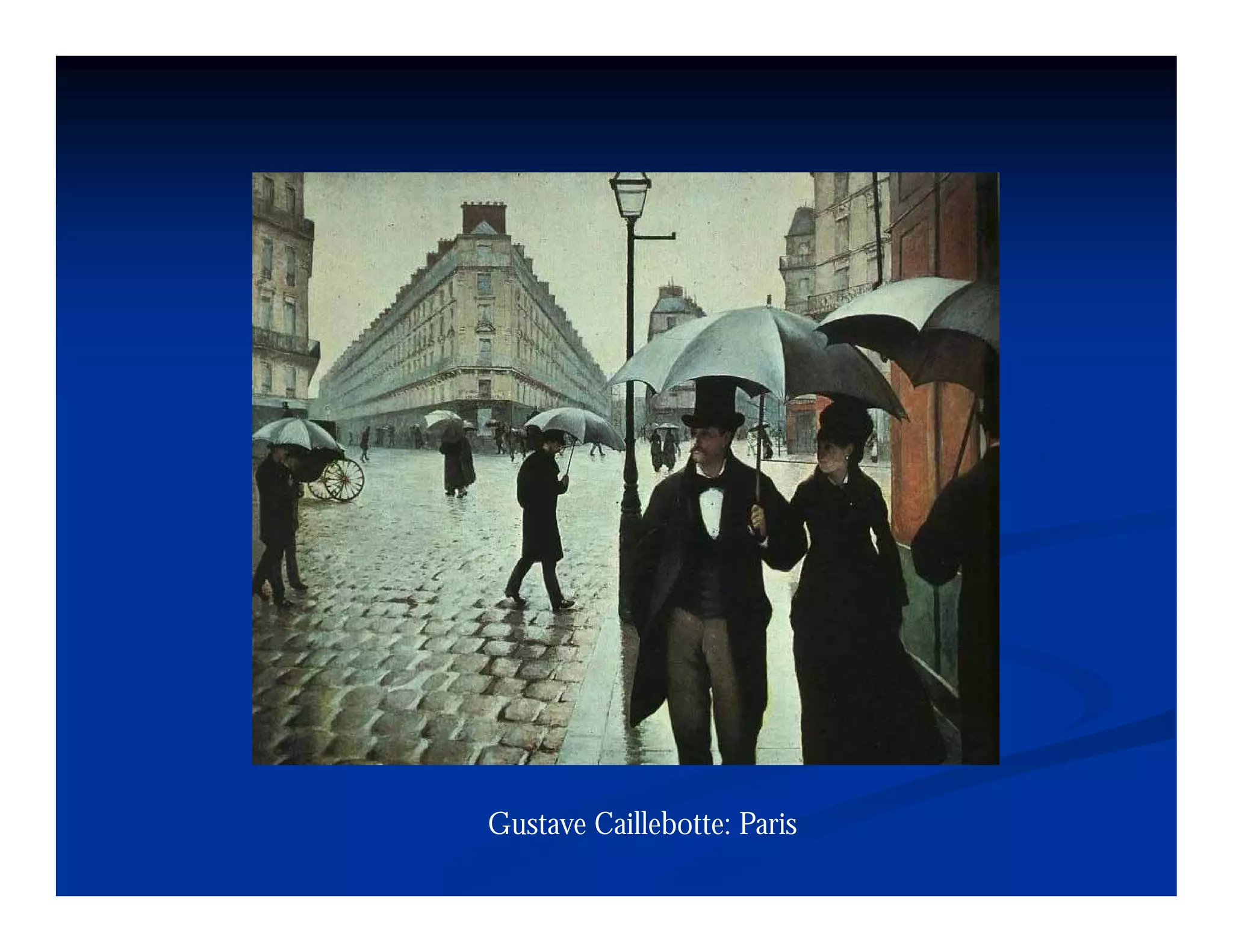
The farther an object is from the eye, the smaller
                                  eye
it looks
The episode of the buffalos
Gustave Caillebotte: Paris
Size Constancy
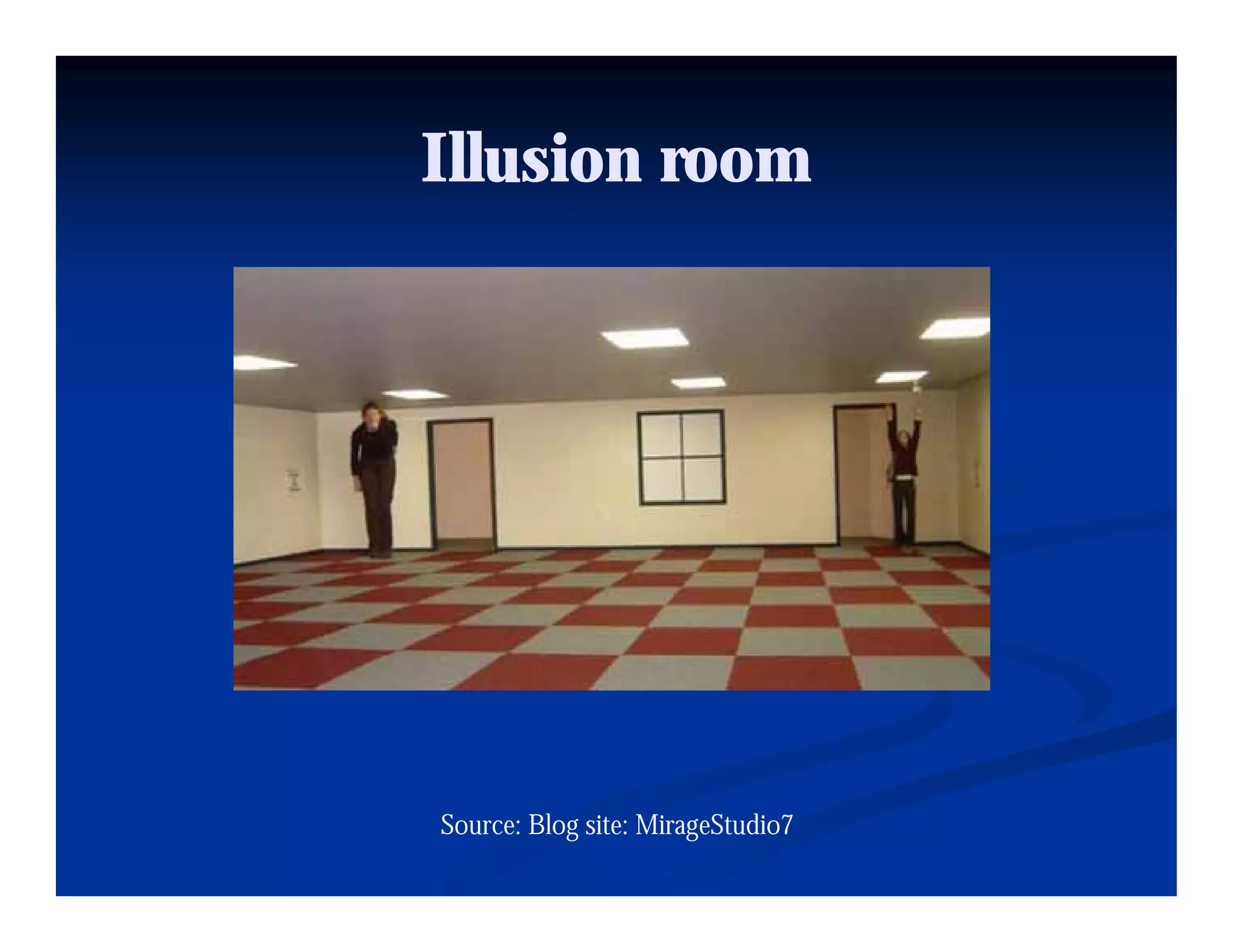
Illusion room


Source: Blog site: MirageStudio7
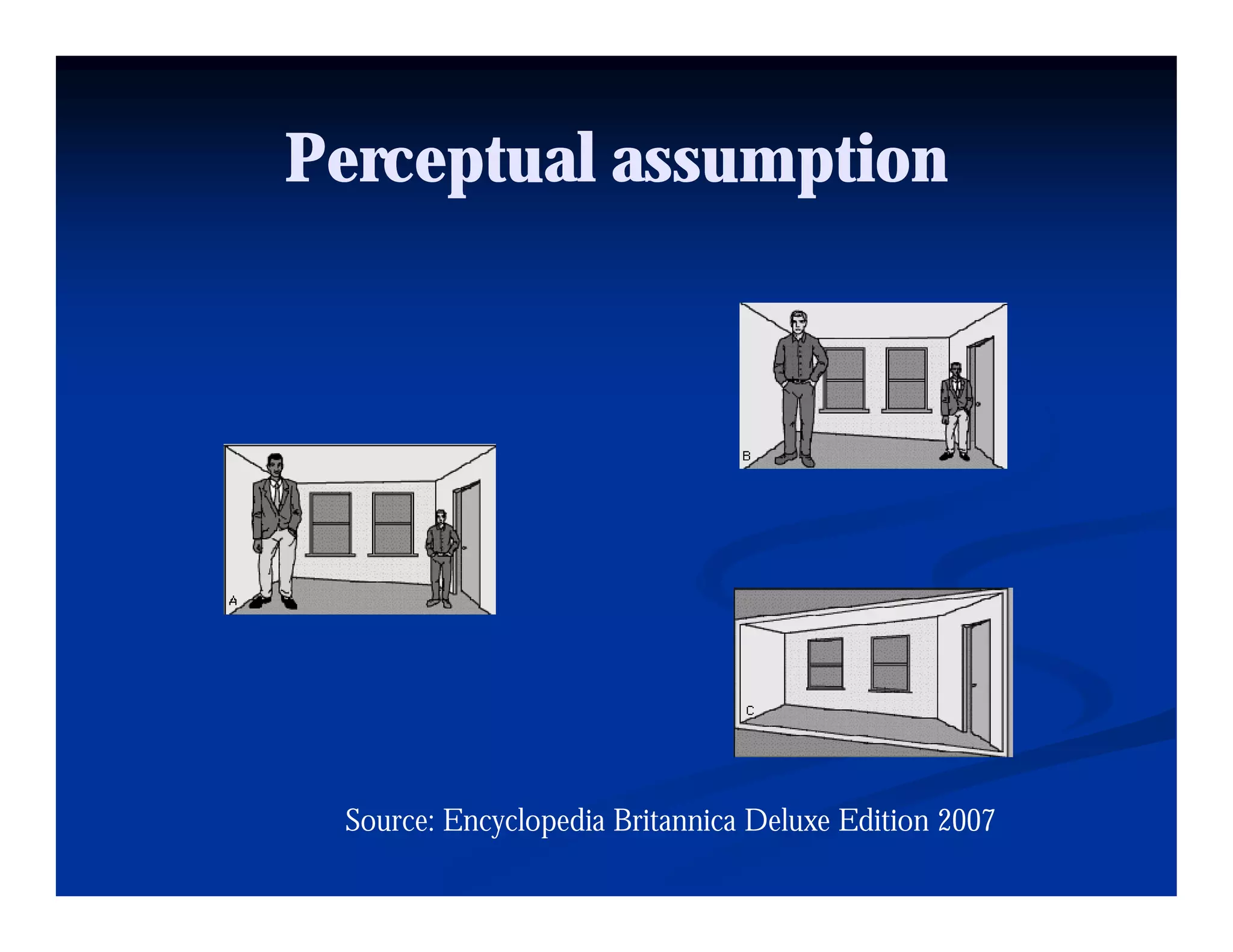
Perceptual assumption


 Source: Encyclopedia Britannica Deluxe Edition 2007
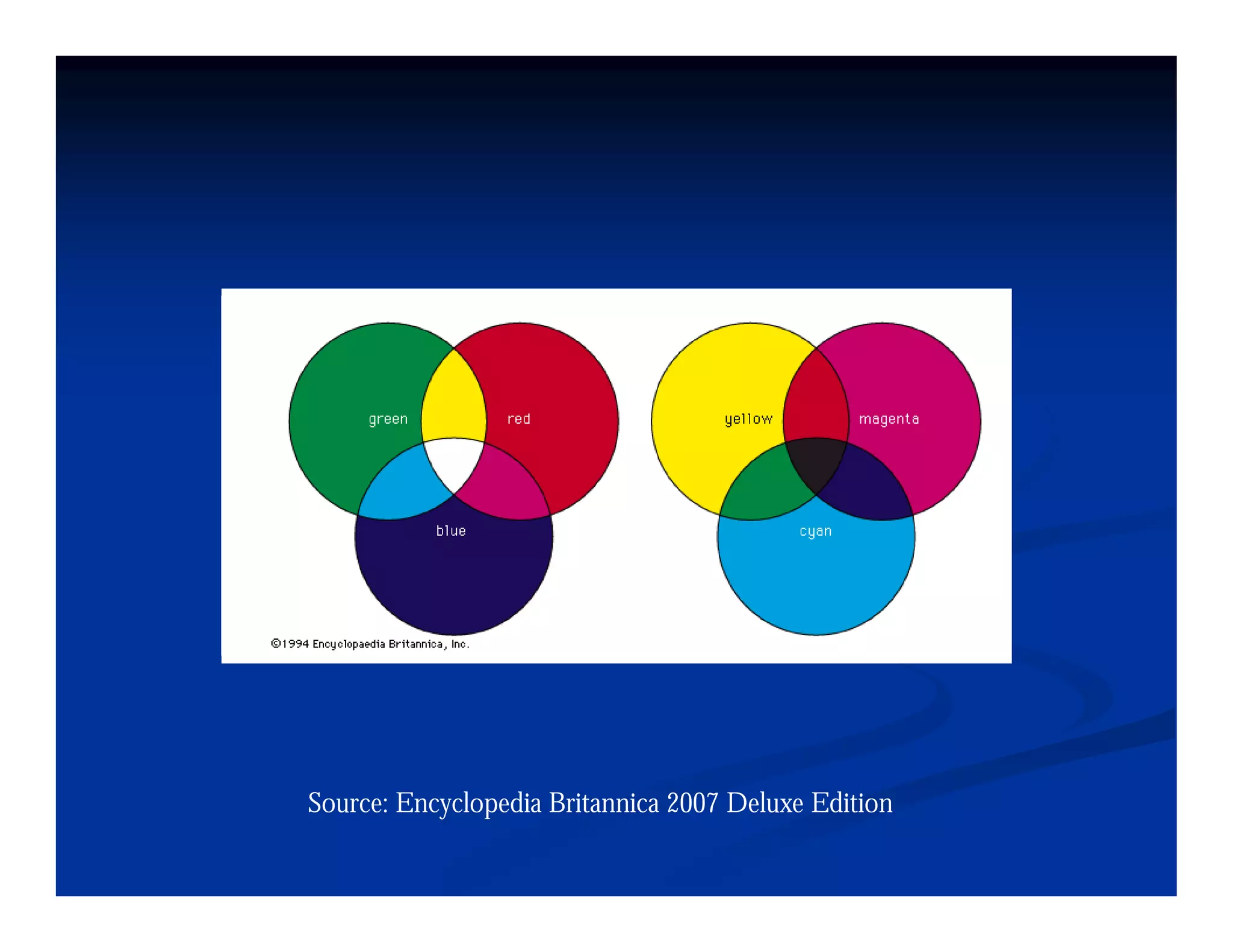
Colour Perception
Source: Encyclopedia Britannica 2007 Deluxe Edition
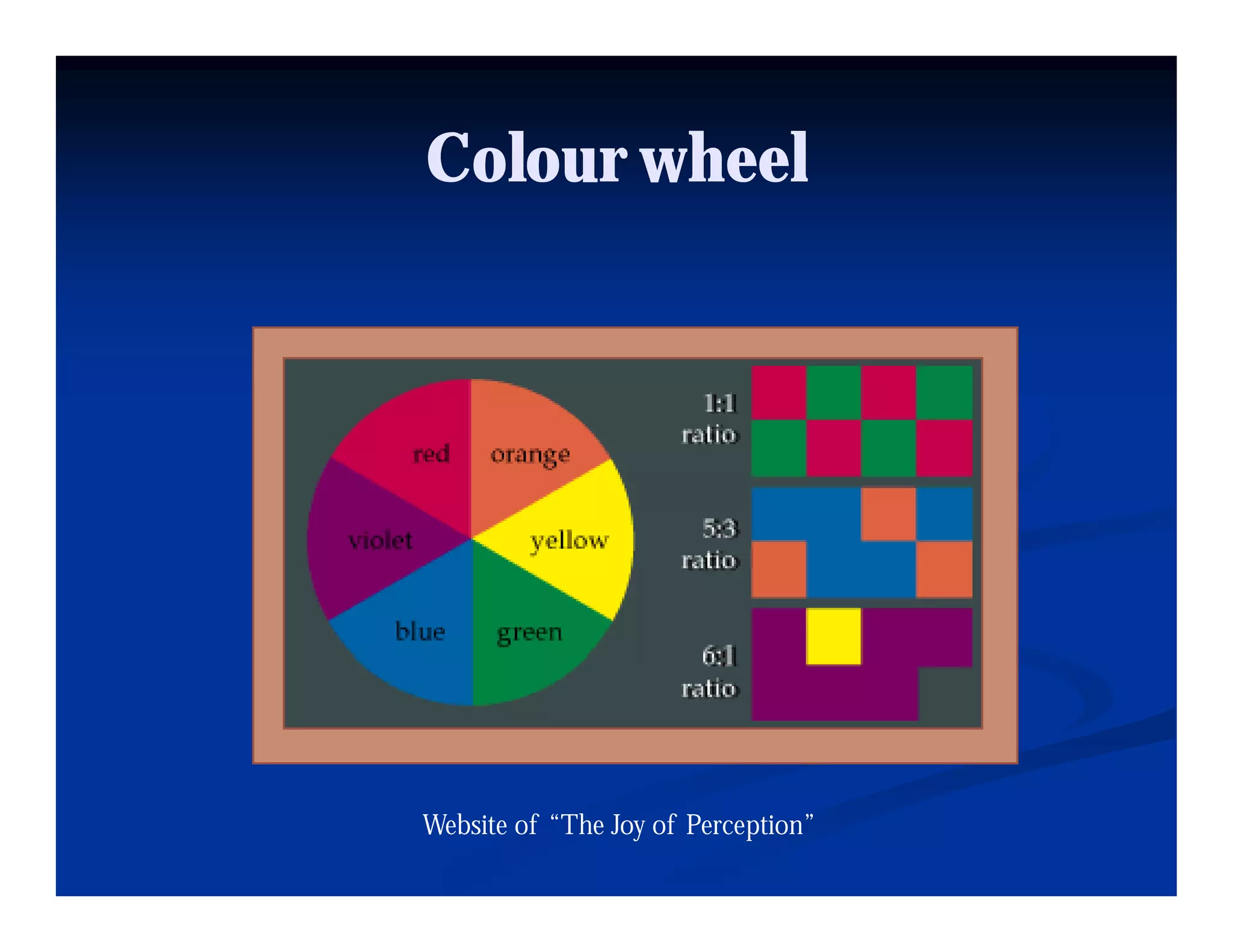
Colour wheel


Website of “The Joy of Perception”
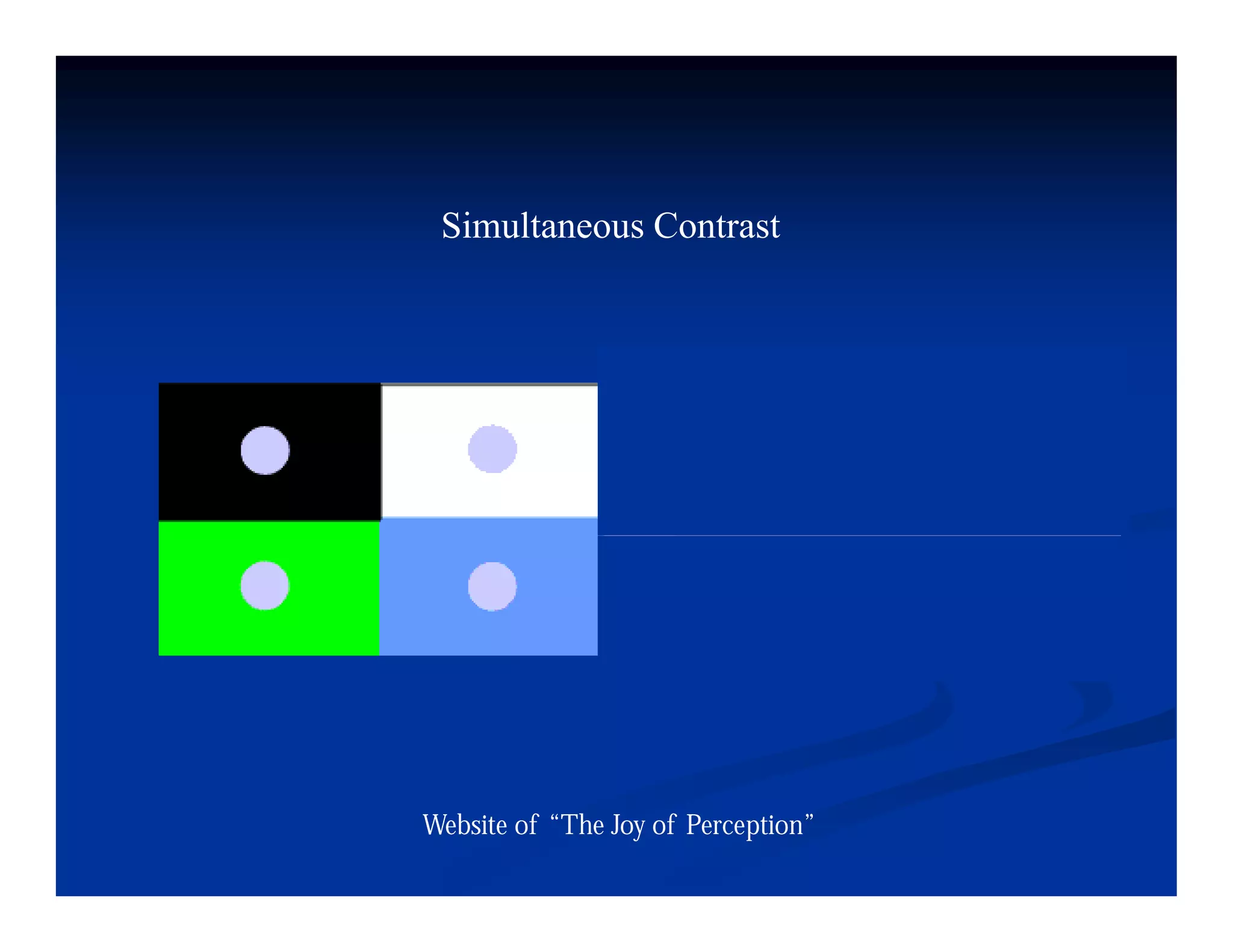
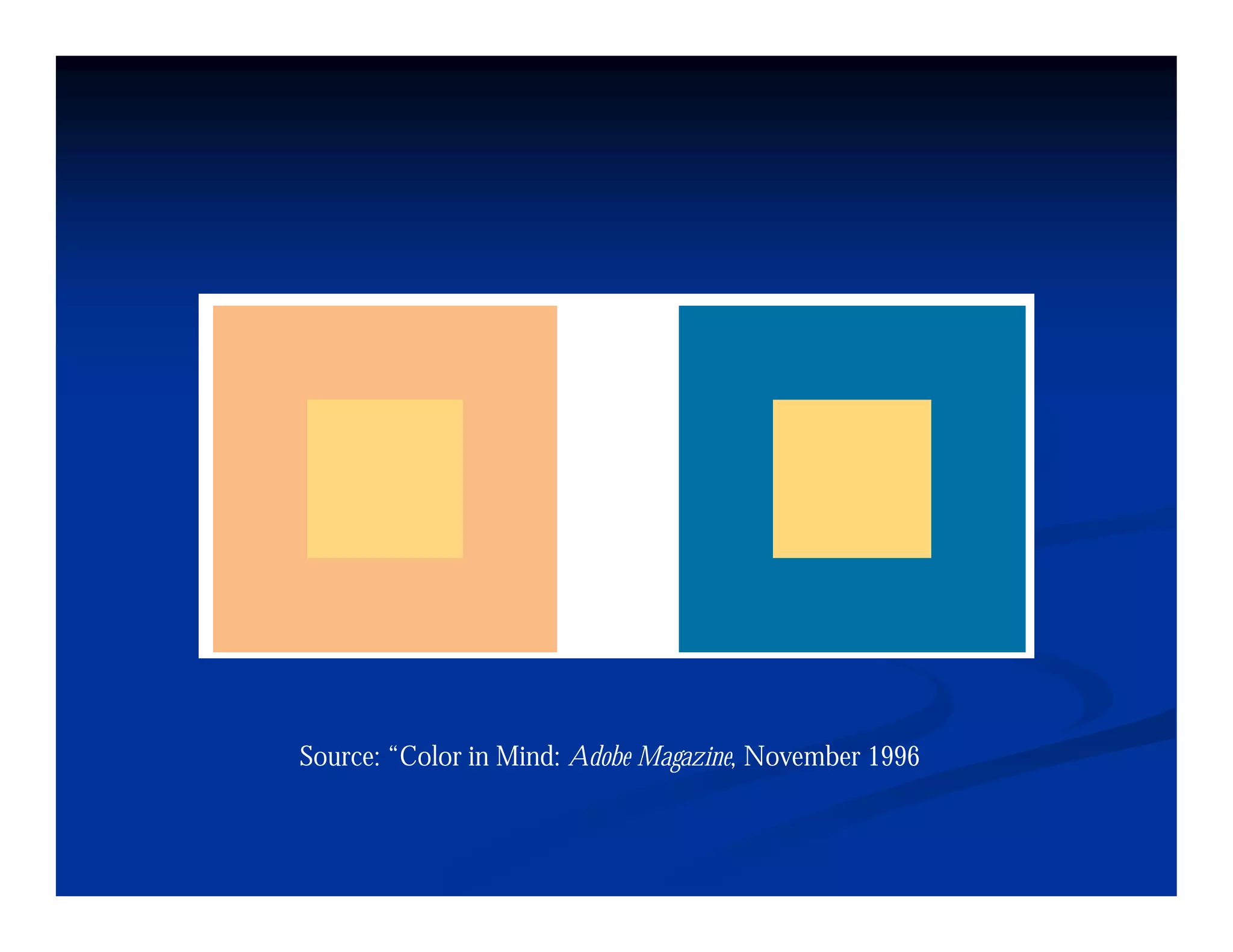
Simultaneous Contrast


Website of “The Joy of Perception”
Source: “Color in Mind: Adobe Magazine, November 1996
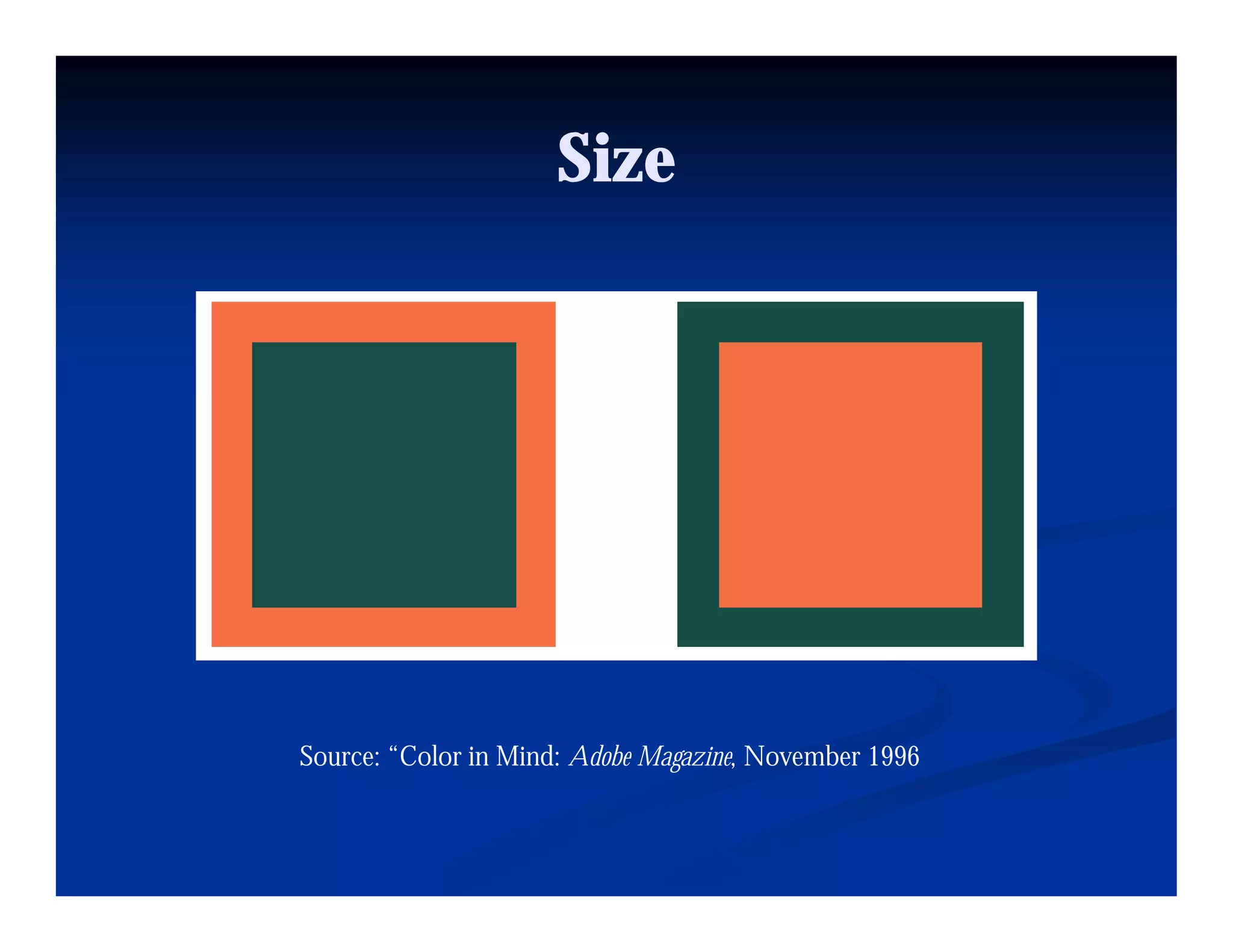
Size


Source: “Color in Mind: Adobe Magazine, November 1996
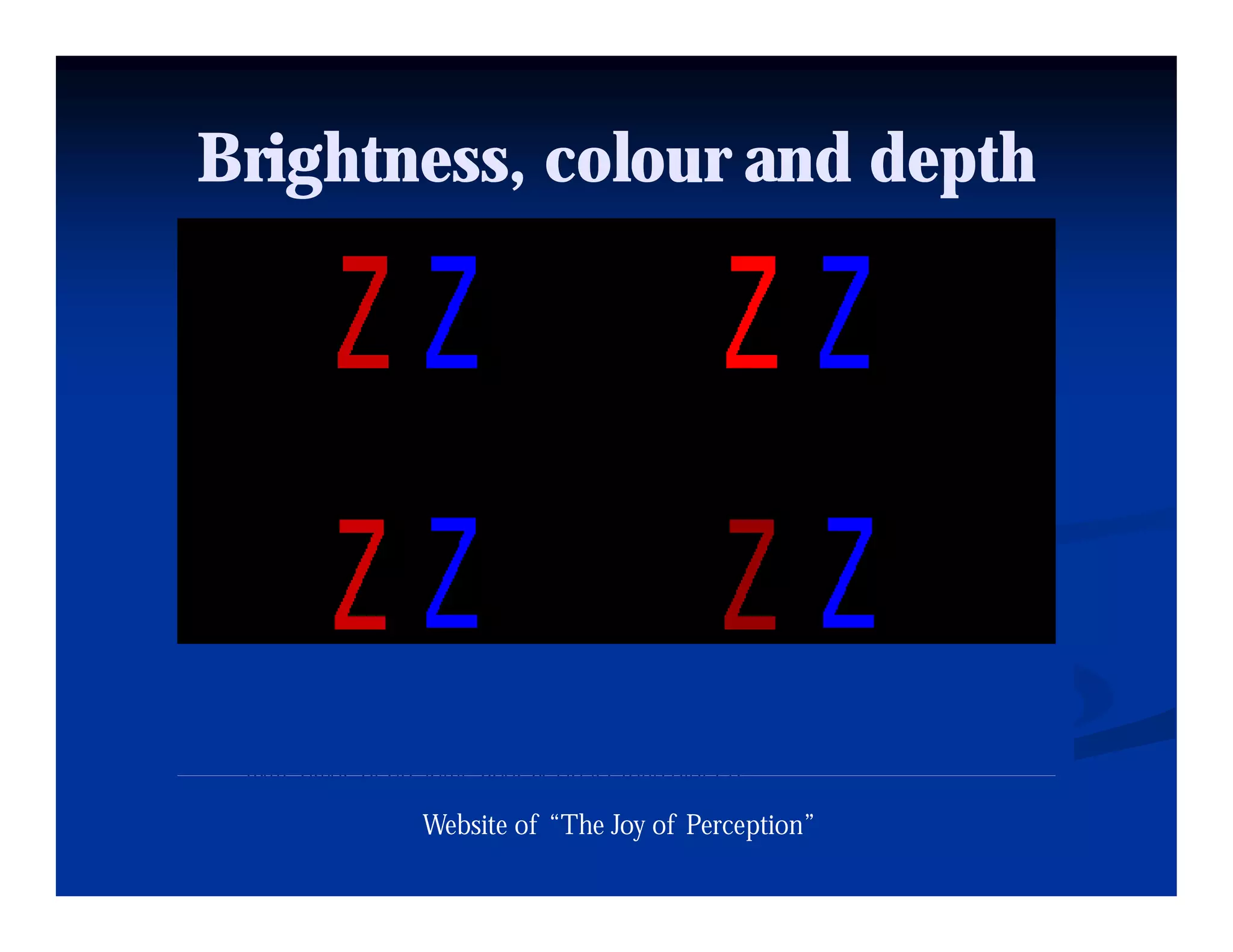
Brightness, colour and depth


       Website of “The Joy of Perception”
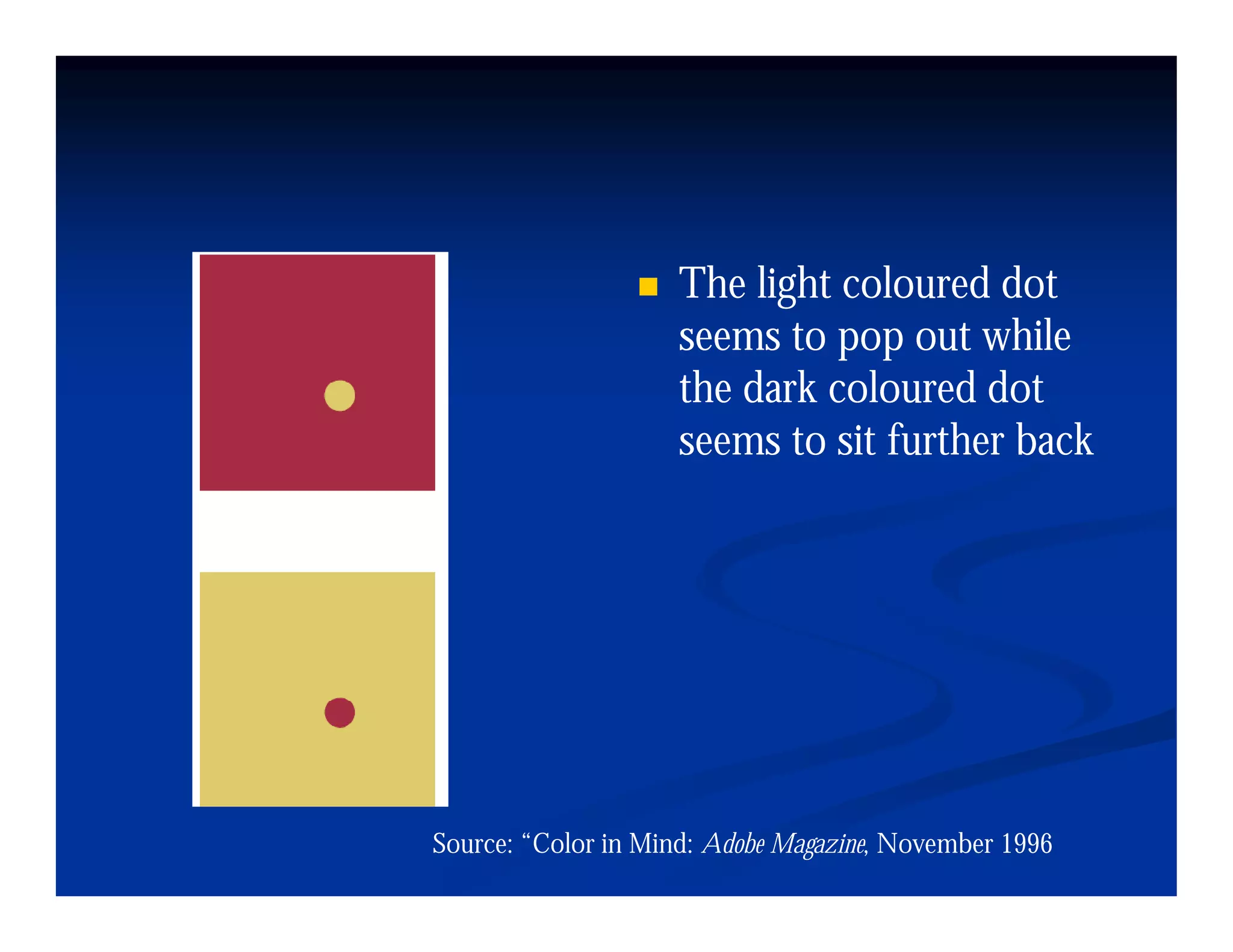
The light coloured dot
                     seems to pop out while
                     the dark coloured dot
                     seems to sit further back


Source: “Color in Mind: Adobe Magazine, November 1996
Analysis
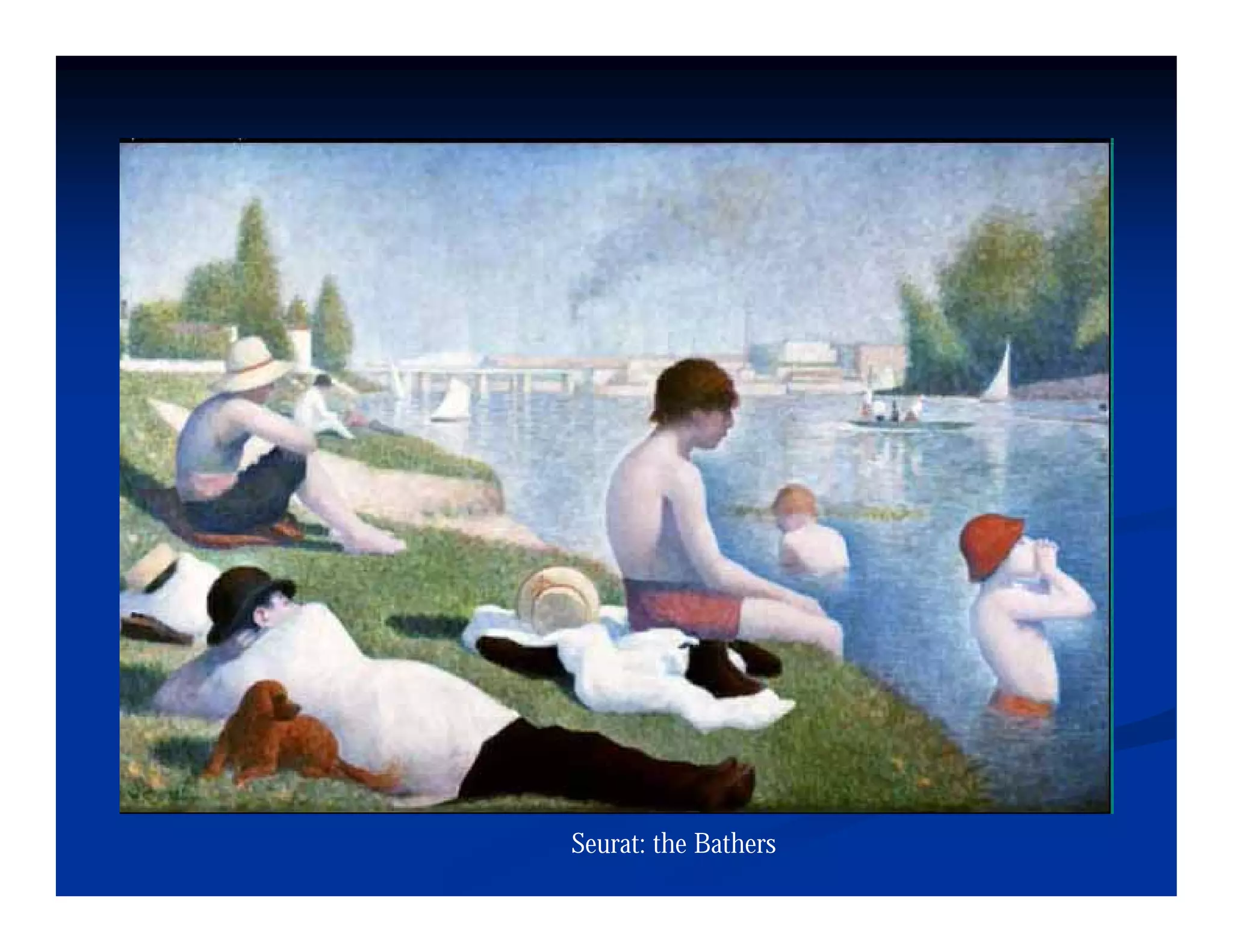
Seurat: the Bathers
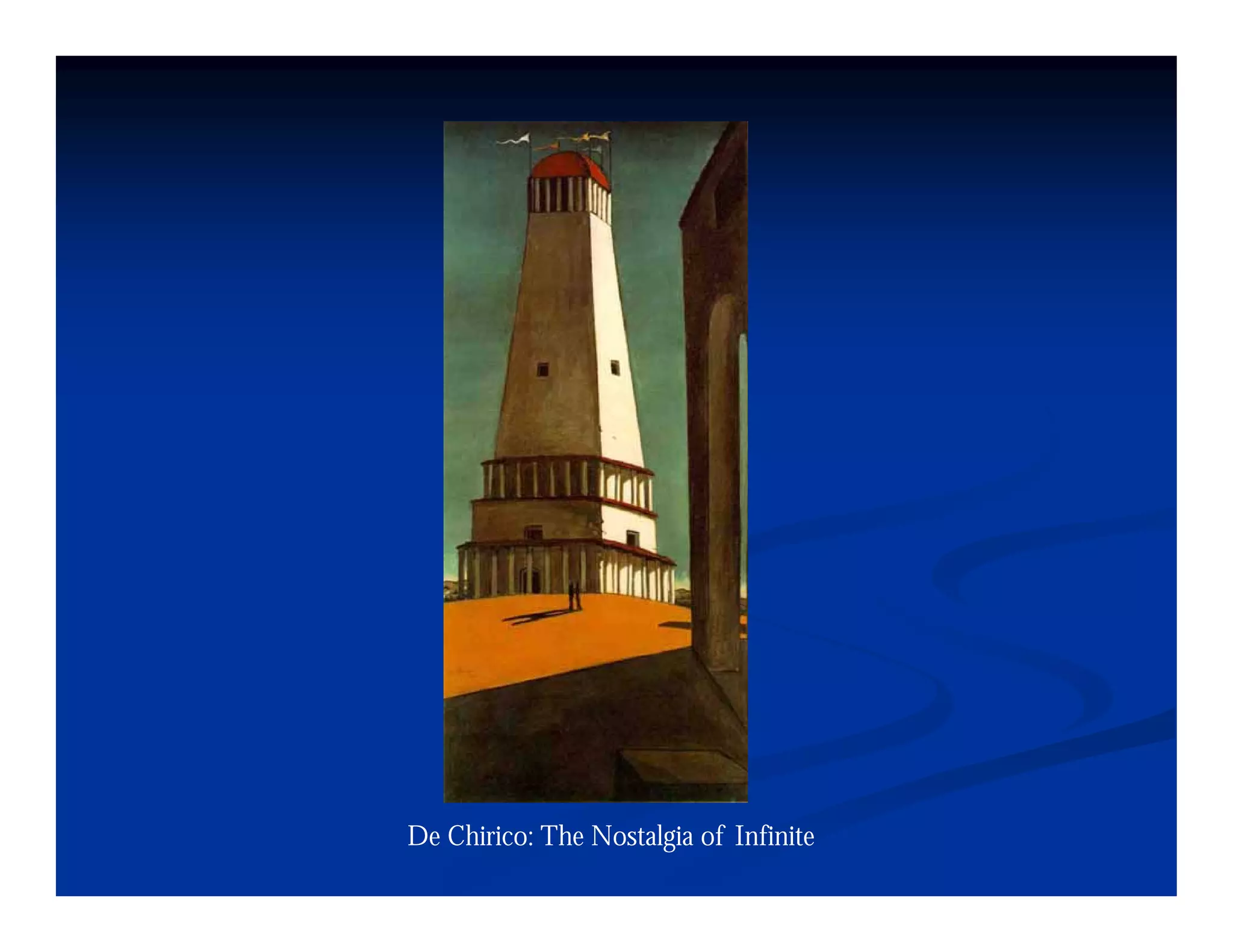
De Chirico: The Nostalgia of Infinite
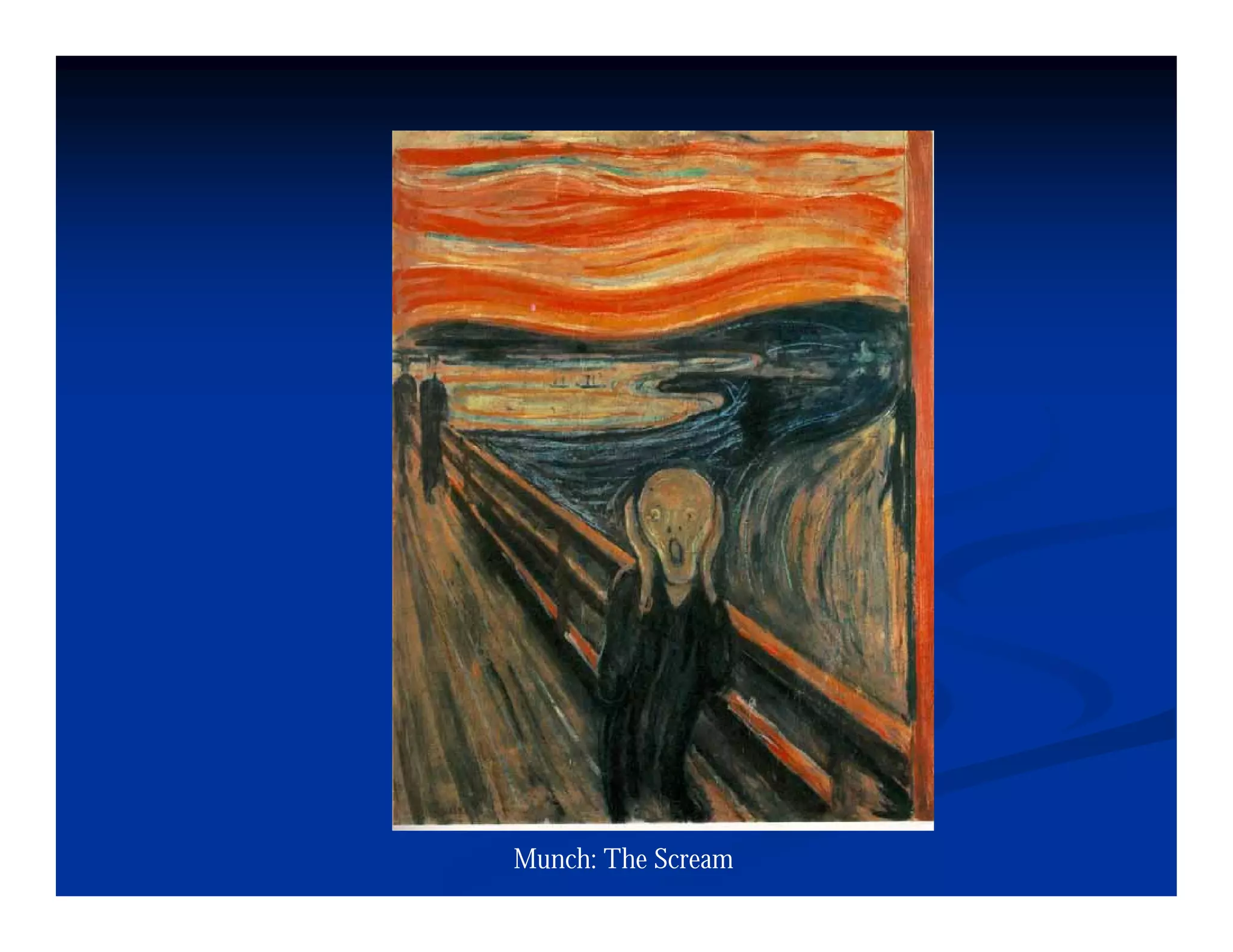
Munch: The Scream
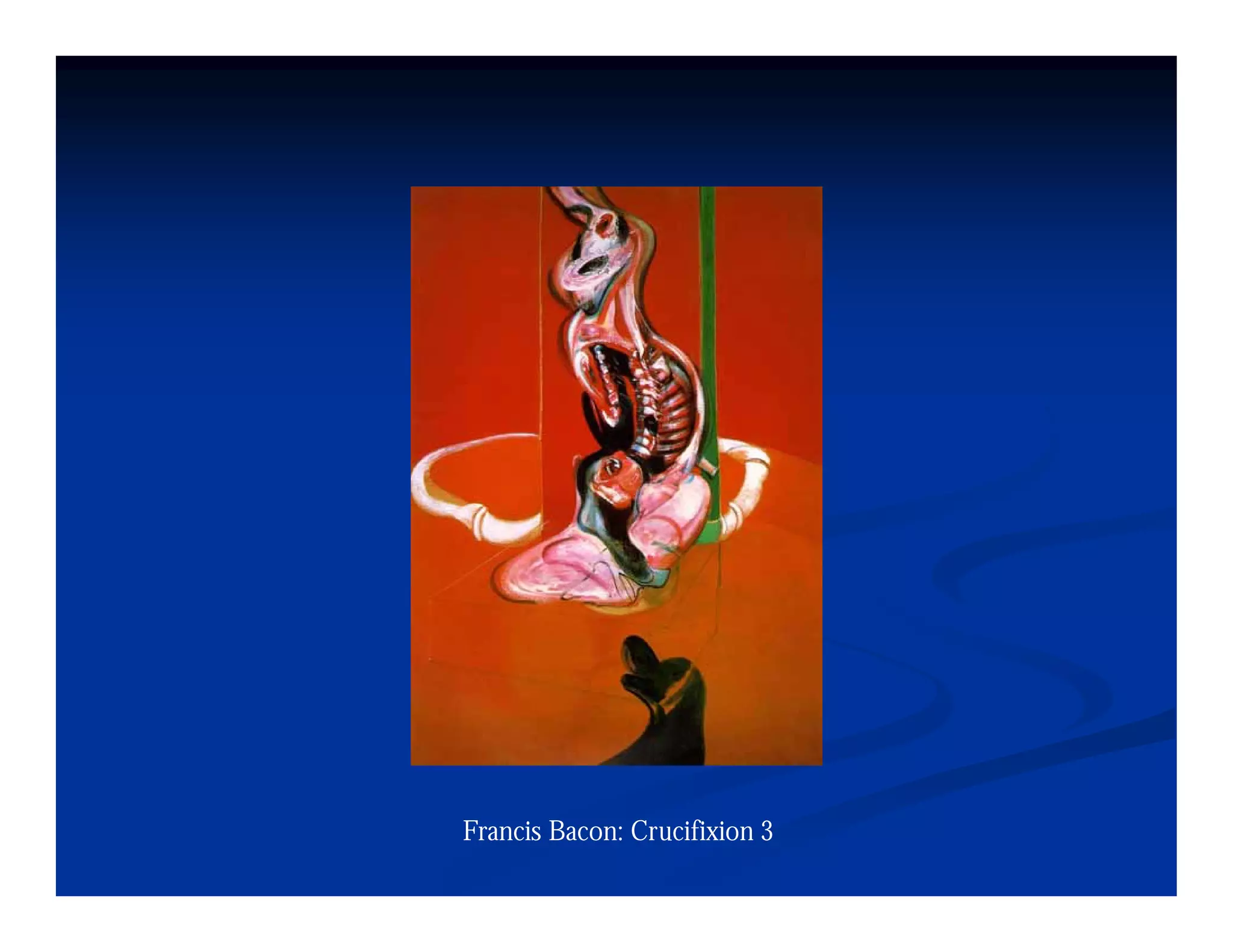
Francis Bacon: Crucifixion 3
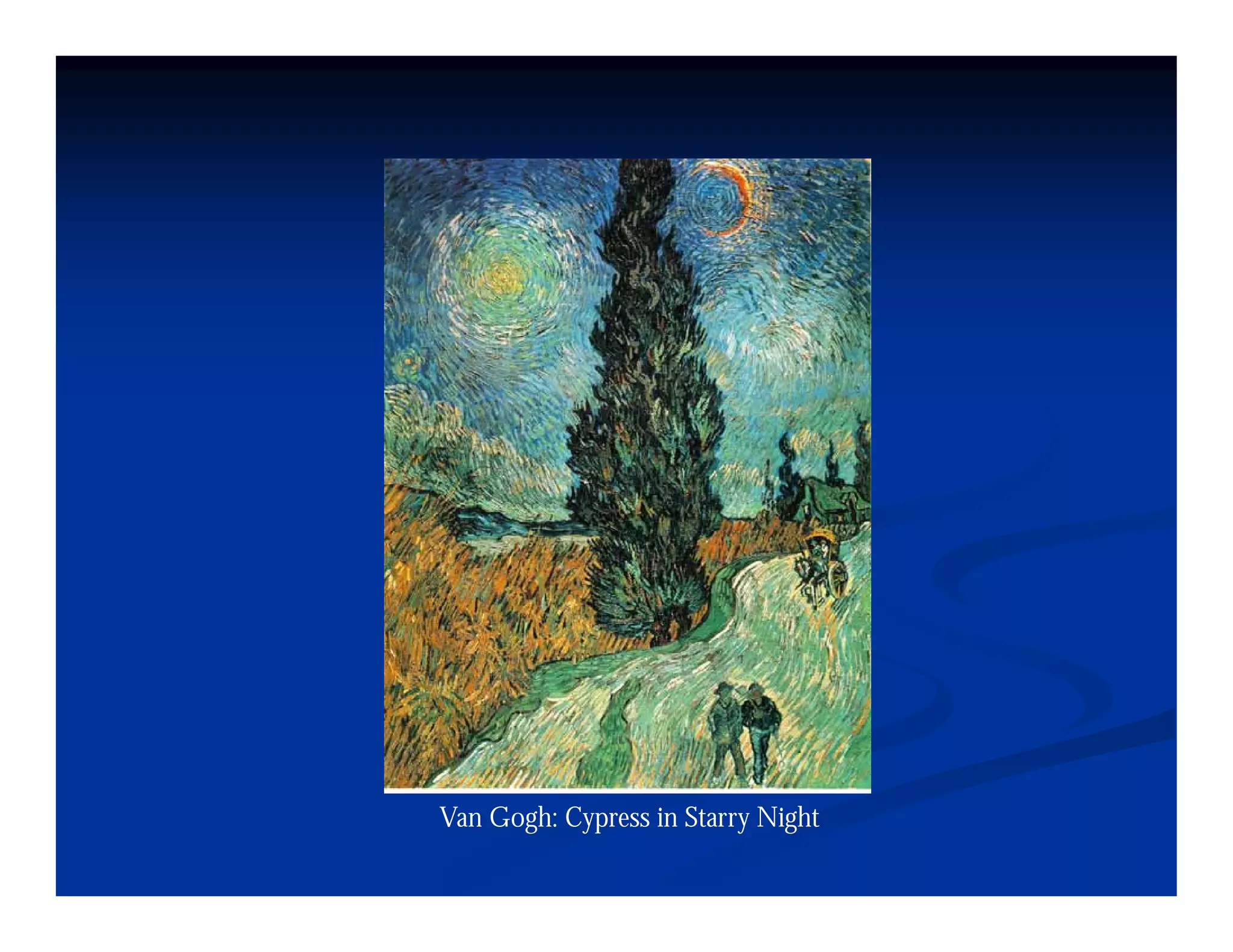
Van Gogh: Cypress in Starry Night
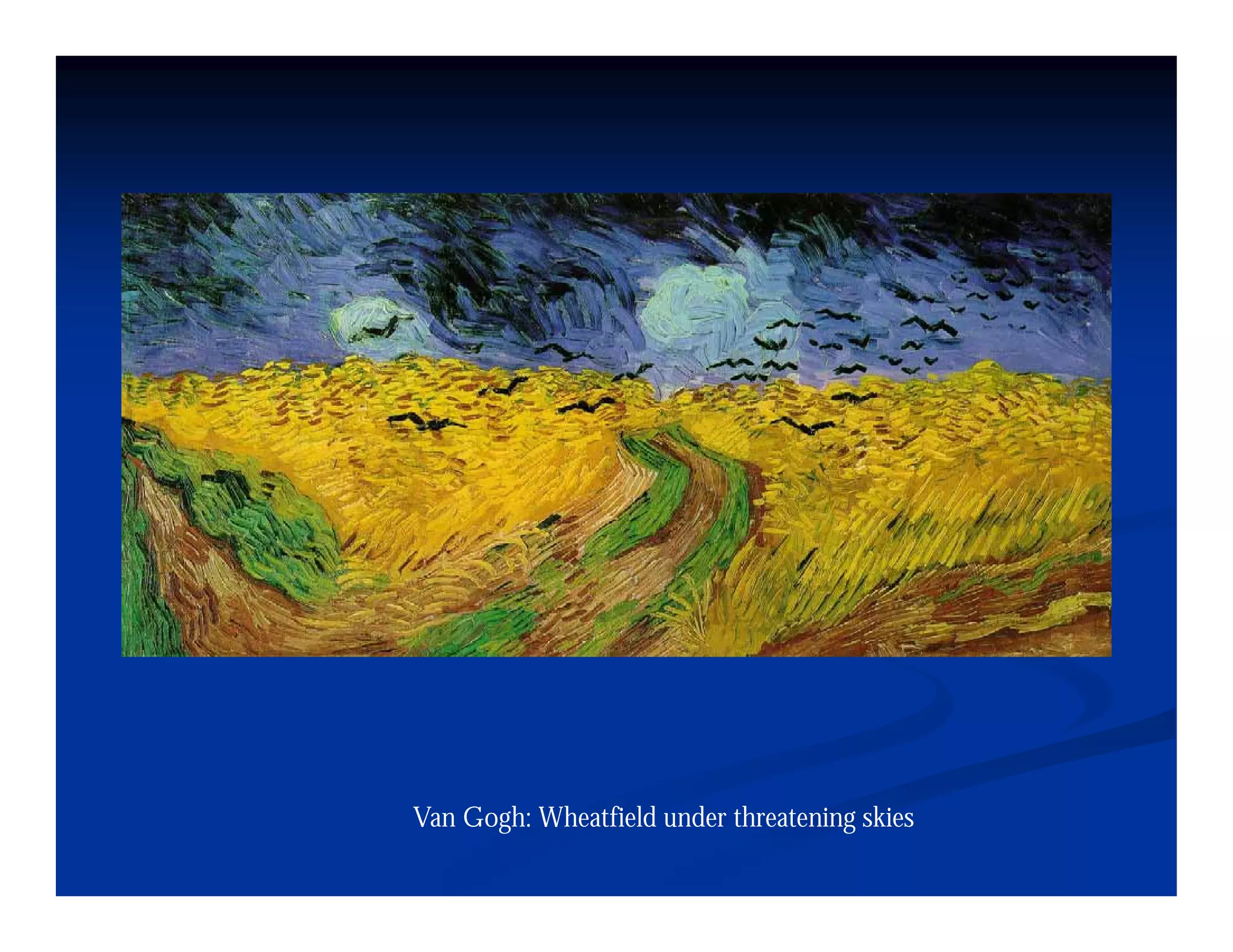
Van Gogh: Wheatfield under threatening skies
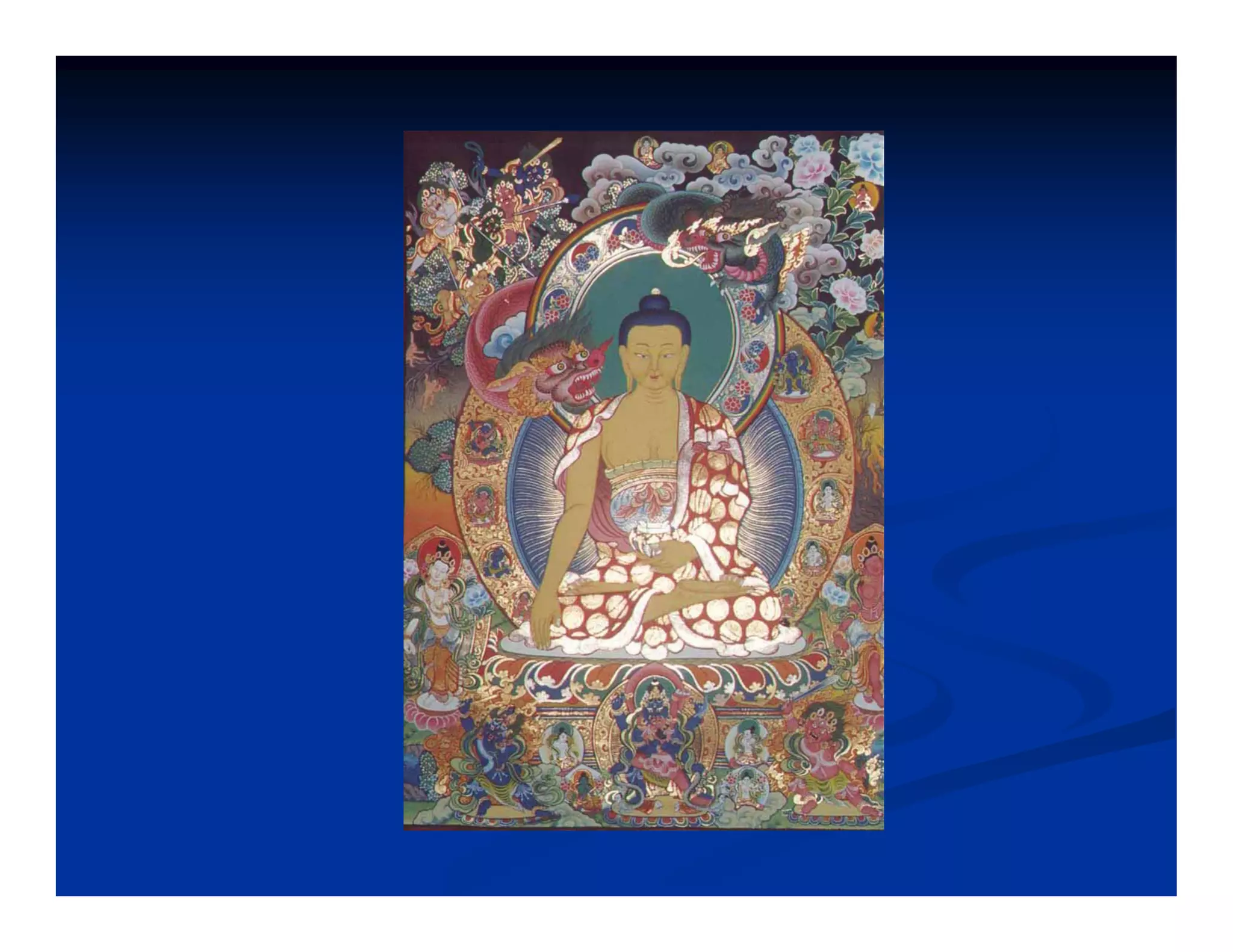
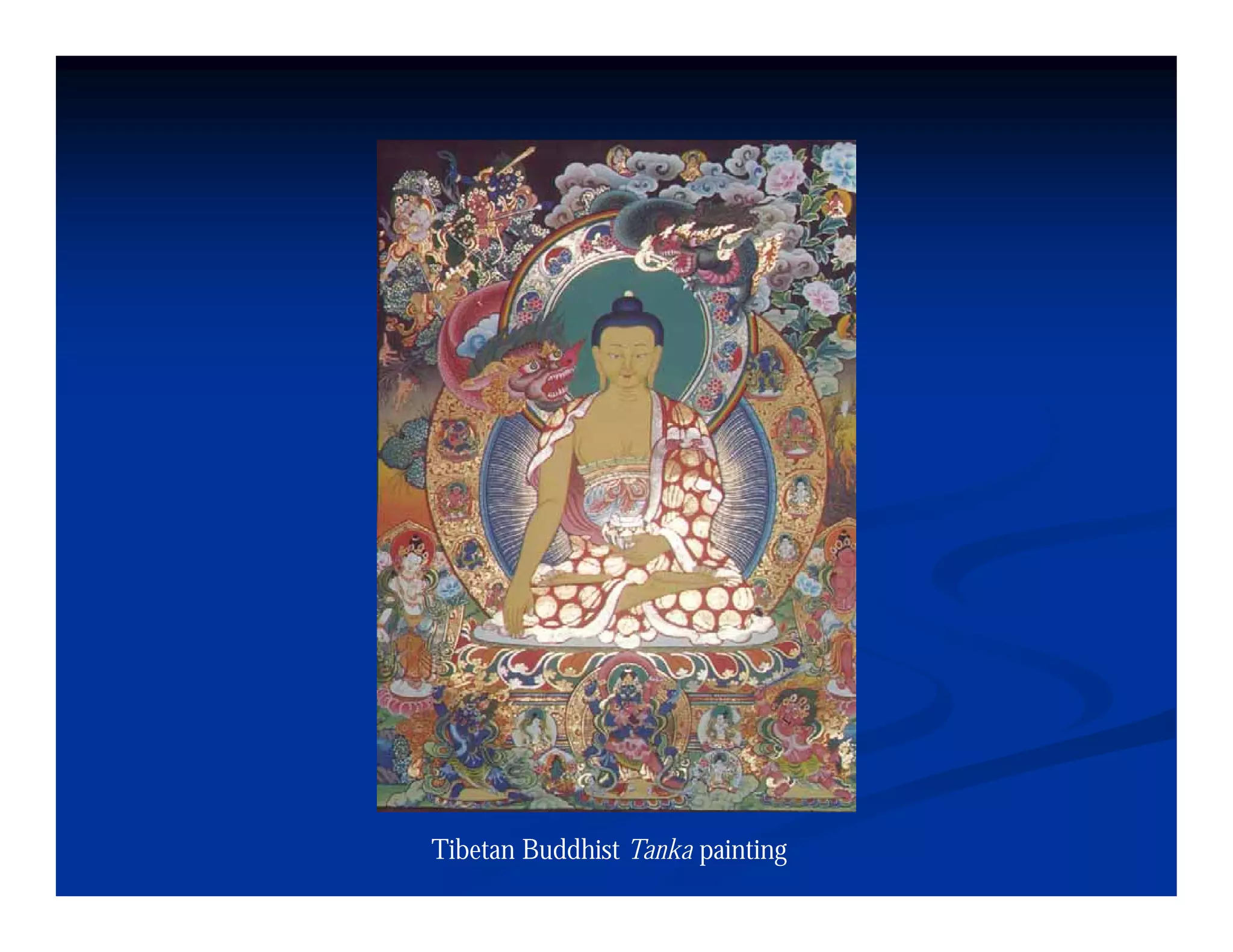
Tibetan Buddhist Tanka painting
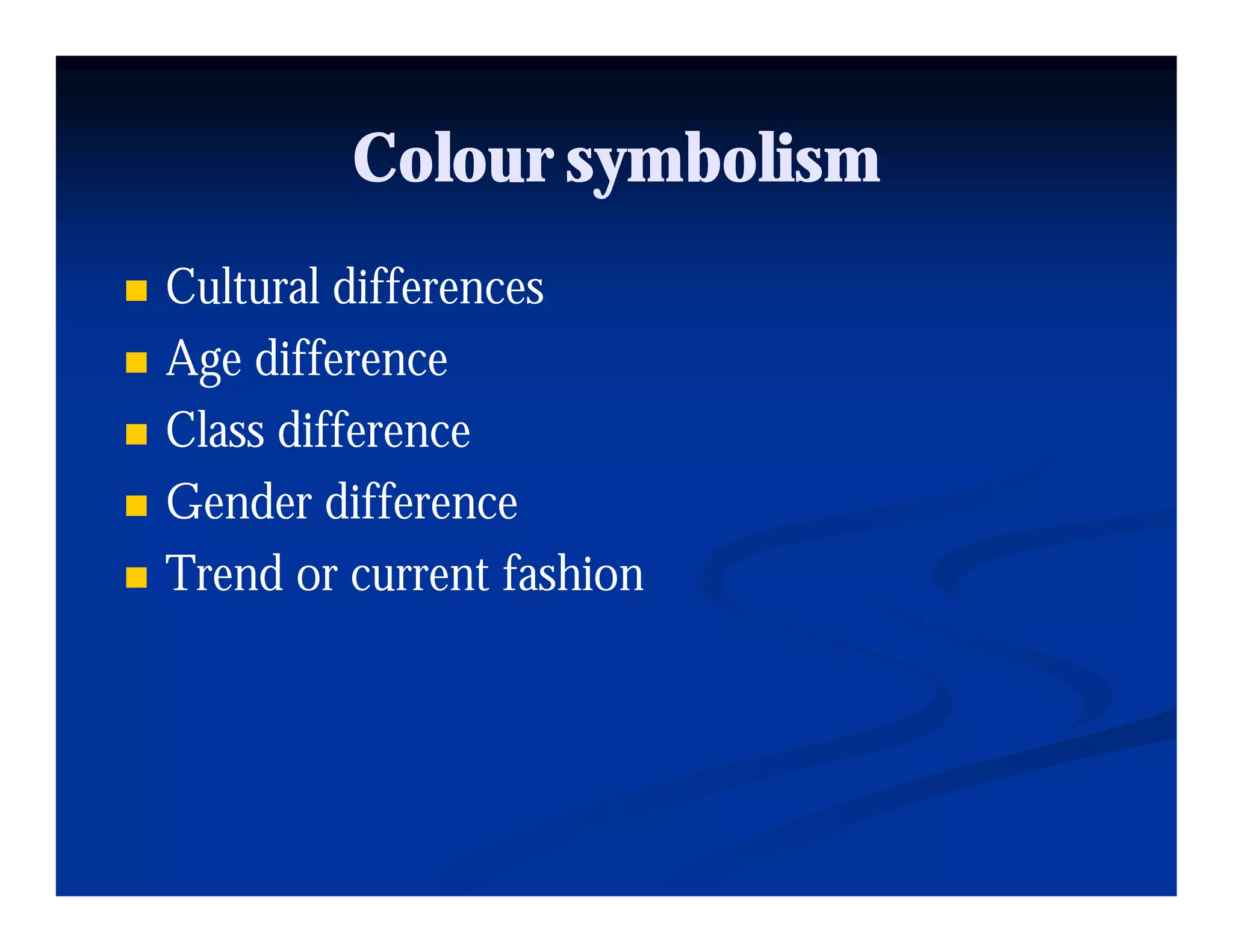
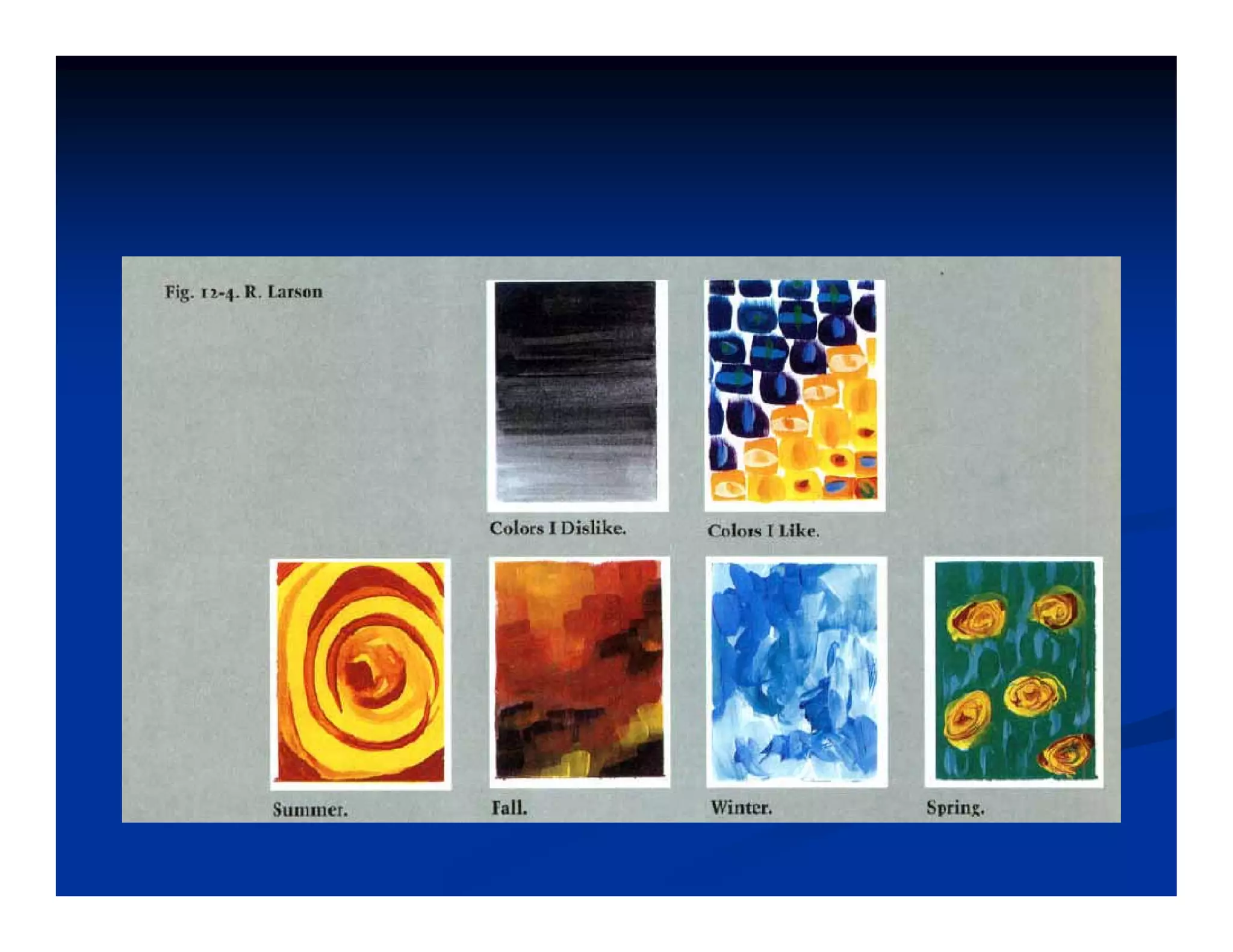
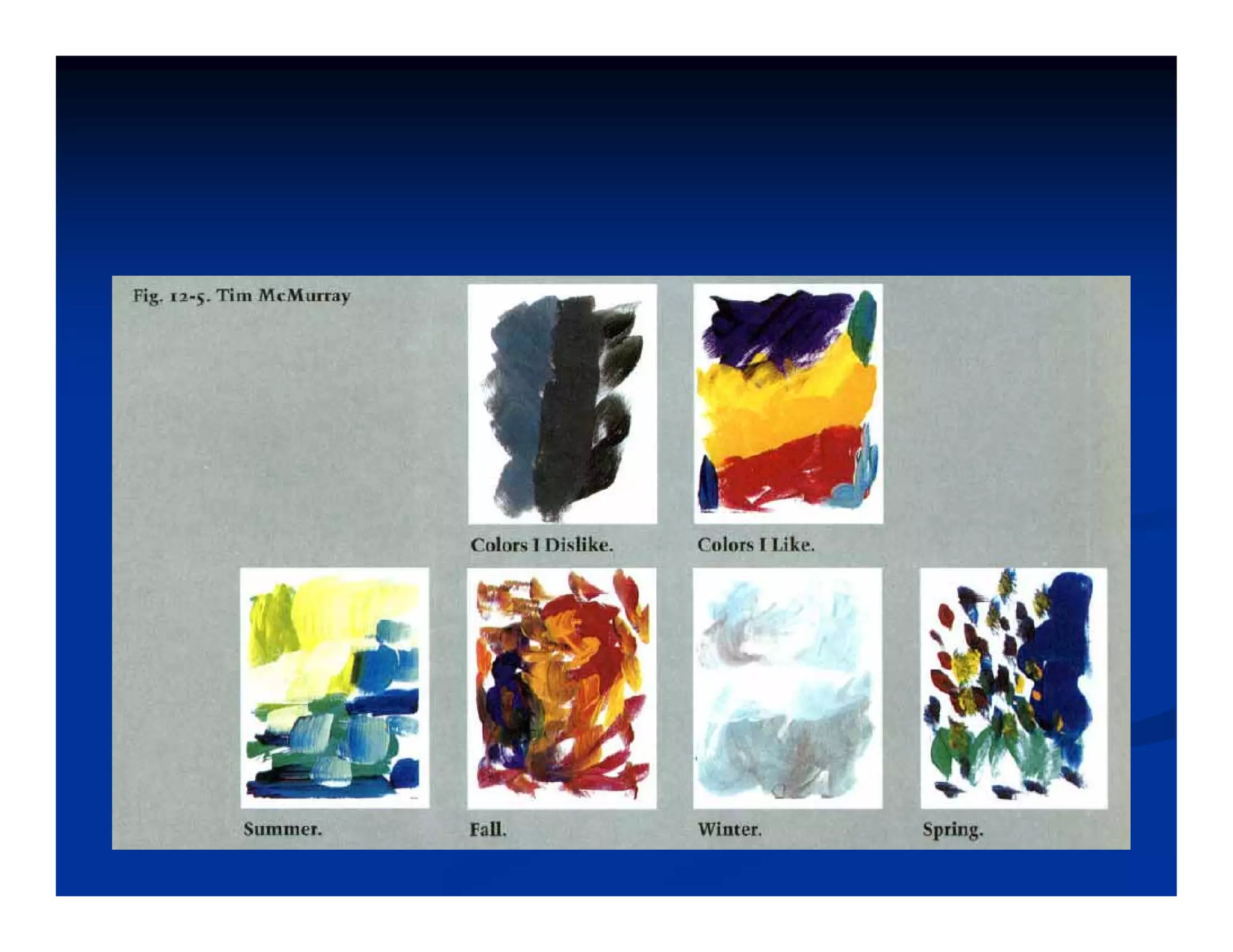
Colour symbolism
Cultural differences
Age difference
Class difference
Cl diff
Gender difference
Trend or current fashion
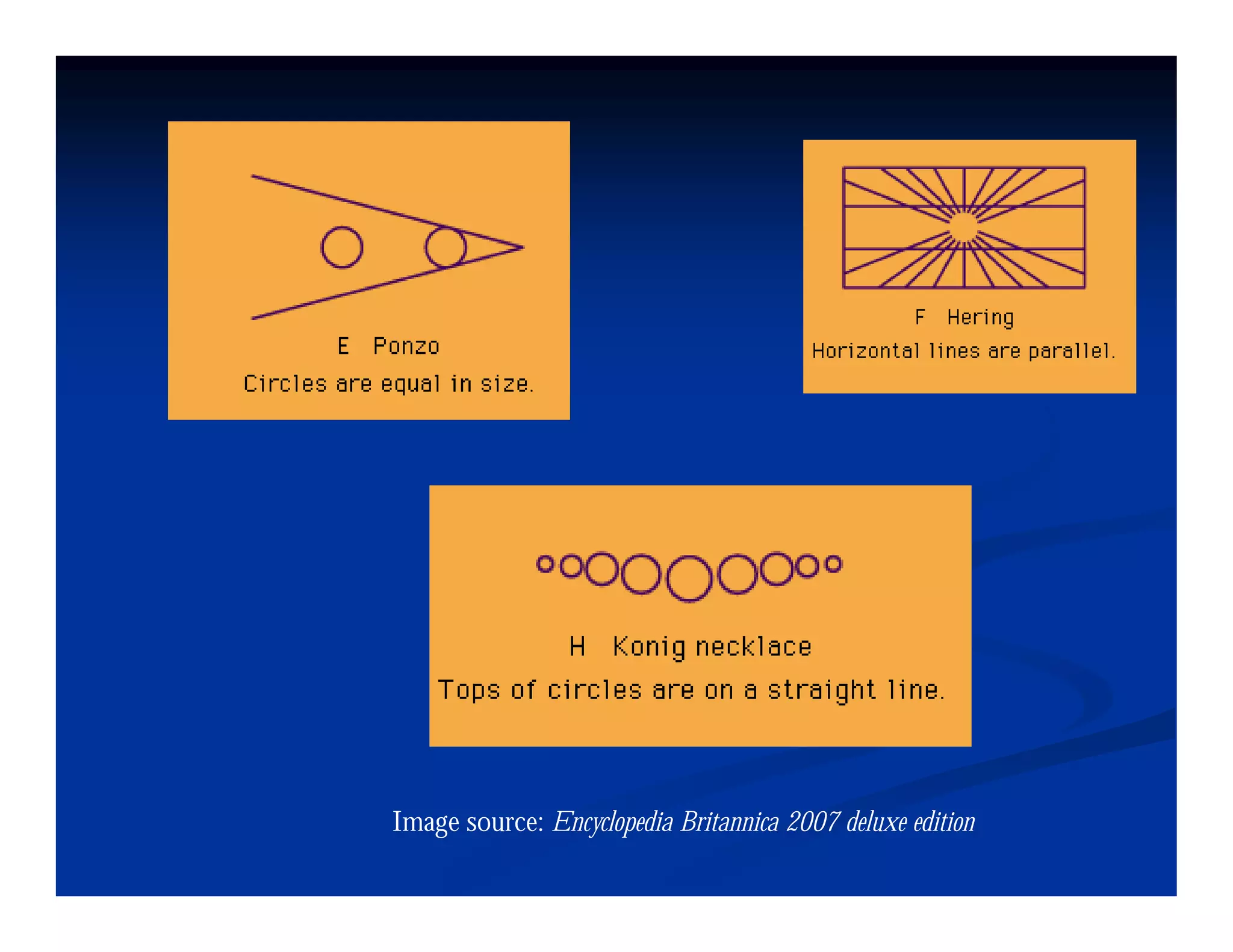
Illusion
There is an innate ambiguity in retinal input. For a
                         g y              p
given retinal image, there are infinite number of three
dimensional images available for interpretation. Usually
we get the interpretation right. When we don’t, we have
       t th i t rpr t ti ri ht Wh          d ’t      h
an illusion.
Some illusions arise because there are more than one
possible interpretations.
An illusion is a distortion of the senses, revealing how
the brain normally organizes and interprets sensory
stimulation.
Types of
Ambiguous illusions are pictures or objects that
        g                     p             j
elicit a perceptual 'switch' between the alternative
interpretations.
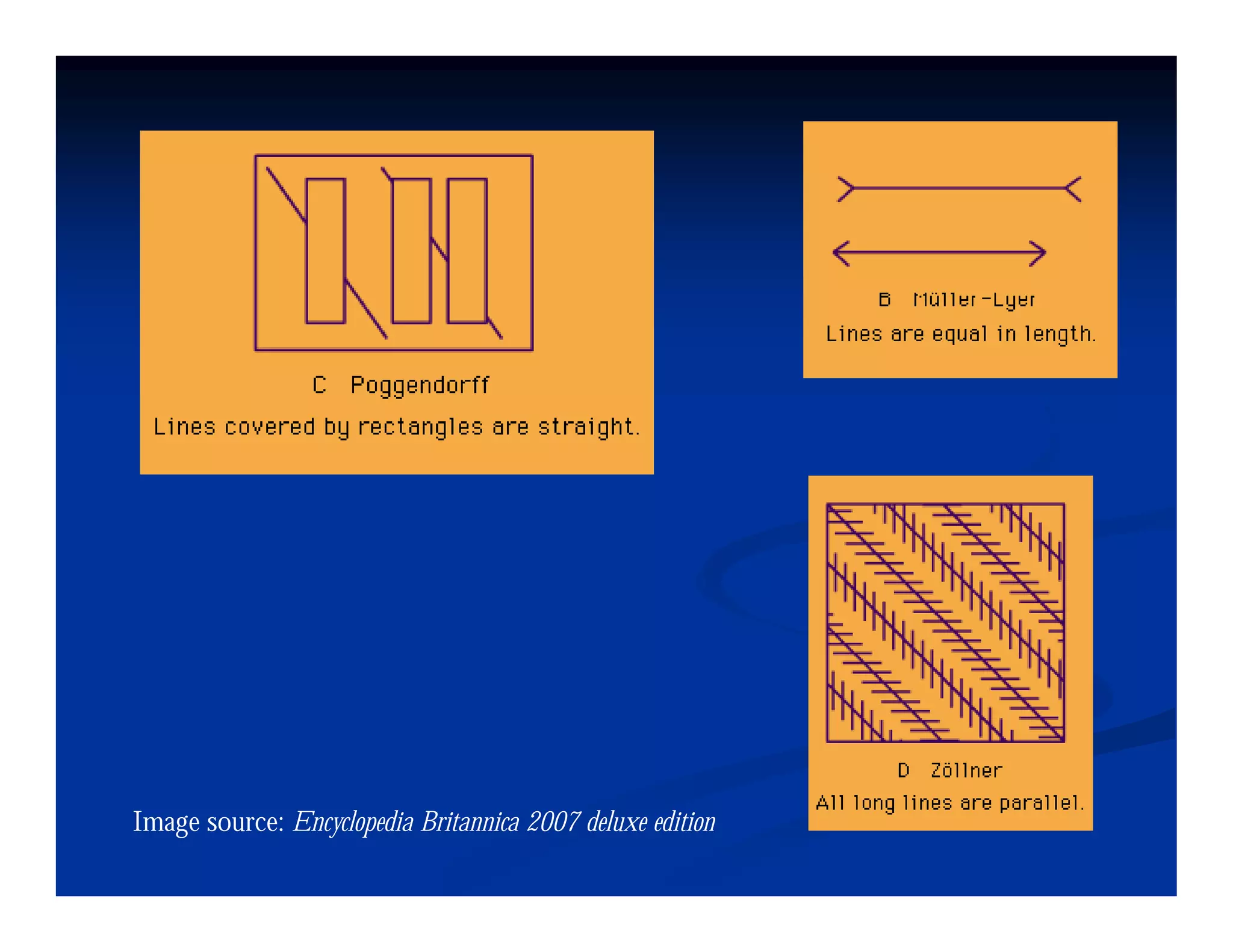
Distorting illusions are characterized by distortions
of size, length, or curvature.
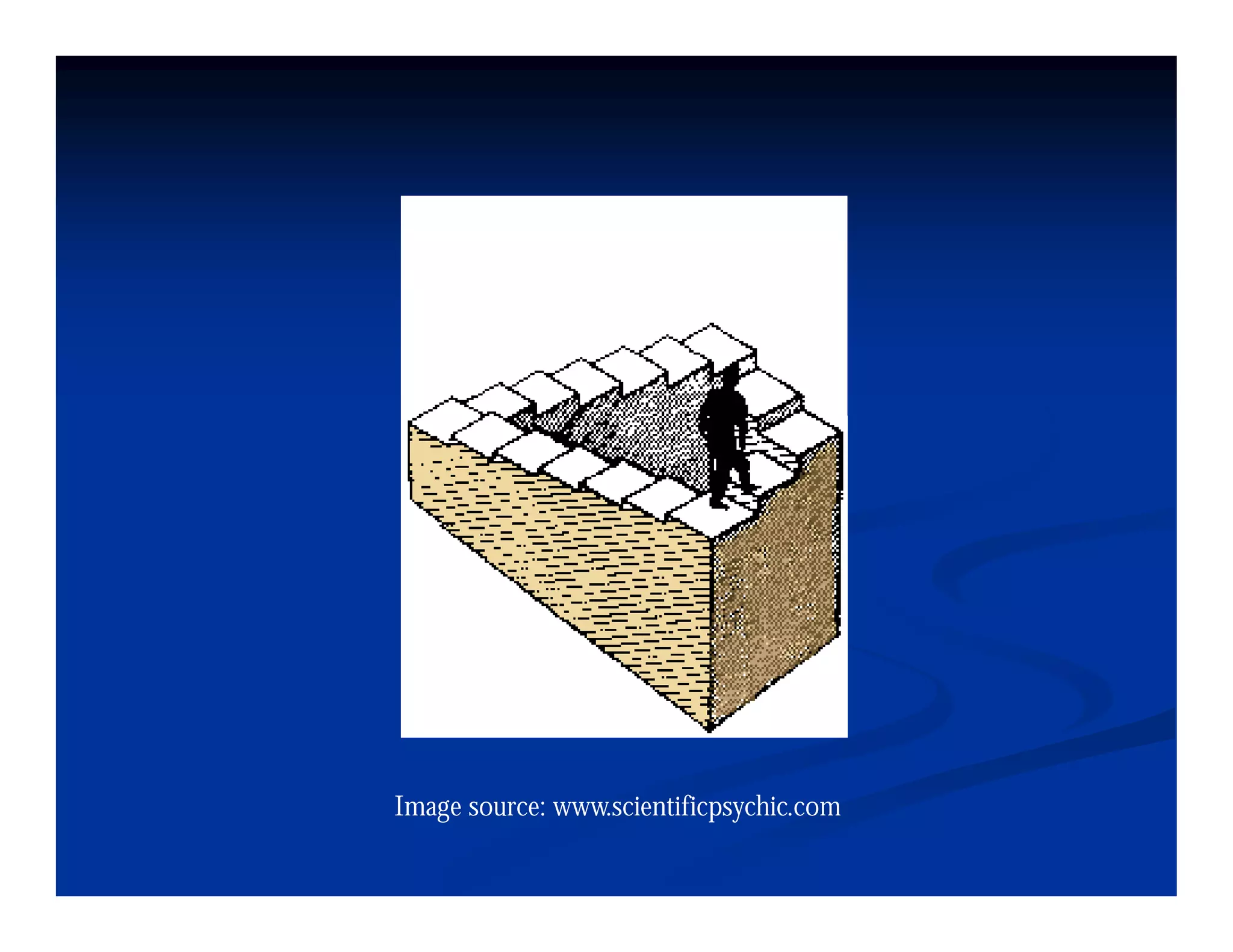
Paradox illusions are generated by objects that are
paradoxical or impossible.
     d i l i             ibl
Fictional illusions (Hallucinations) are defined as
the perception of objects that are g
     p     p          bj            genuinely not there
                                              y
to all but a single observer, such as those induced by
schizophrenia or a hallucinogen.
Image source: Encyclopedia Britannica 2007 deluxe edition
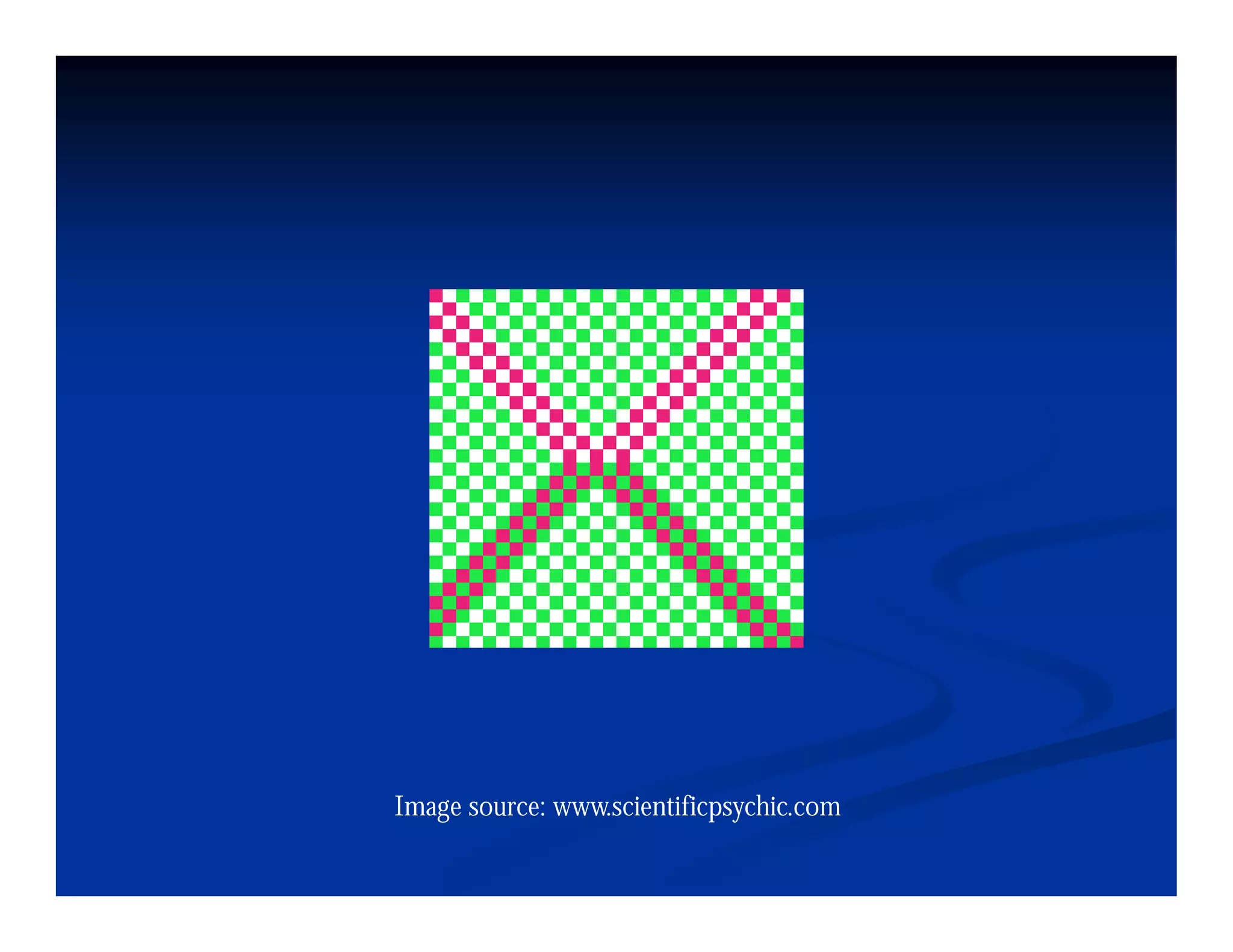
Image source: www.scientificpsychic.com
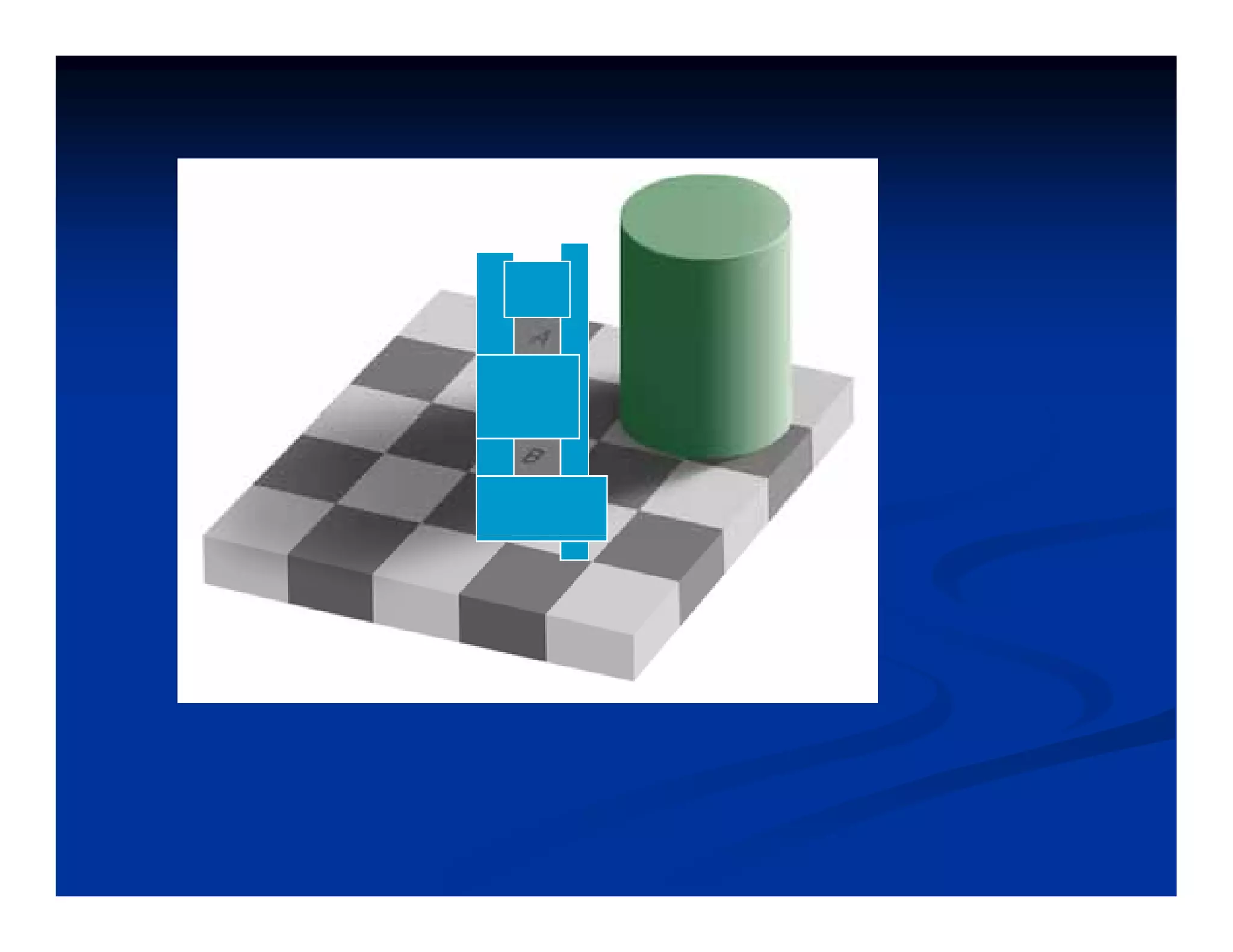
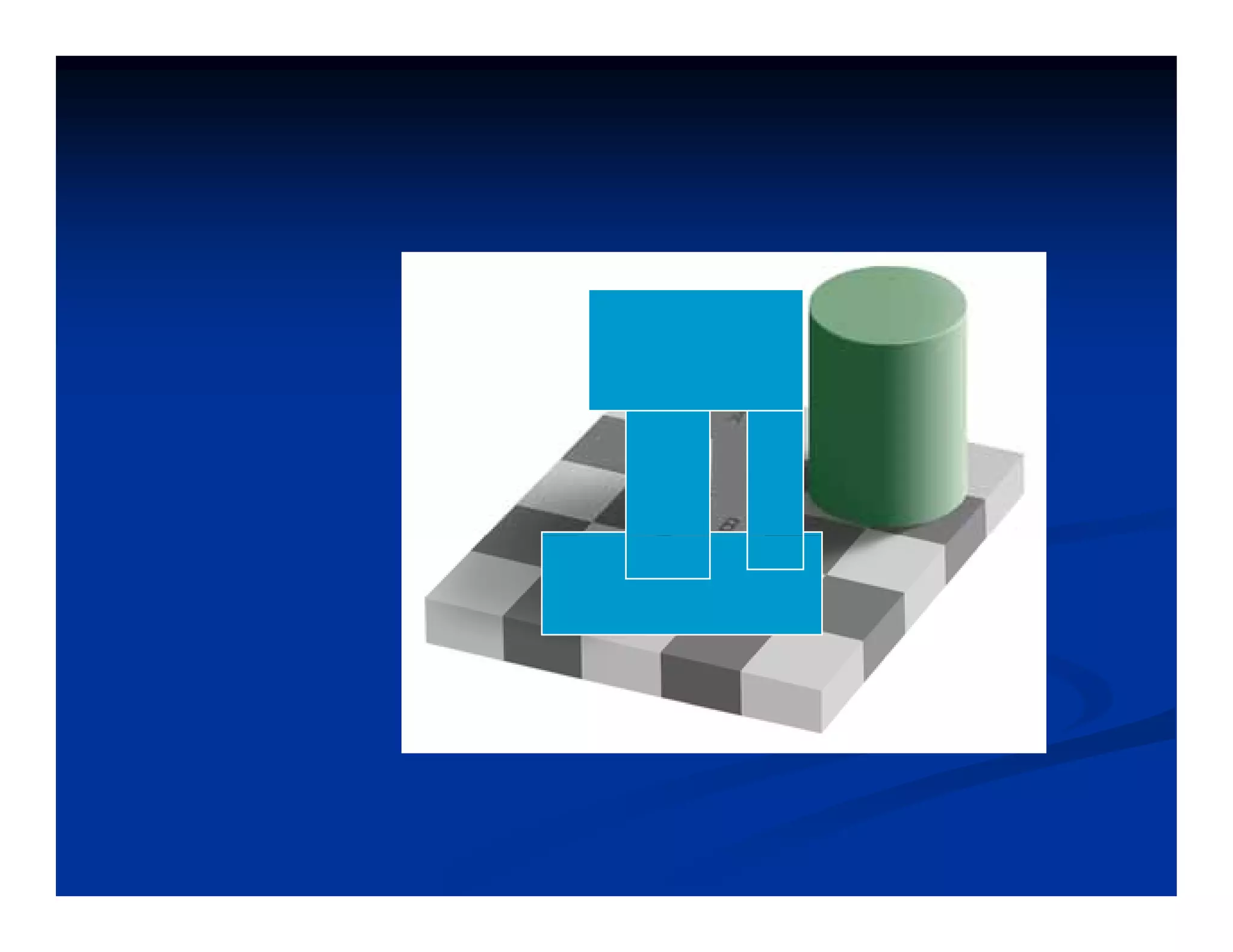
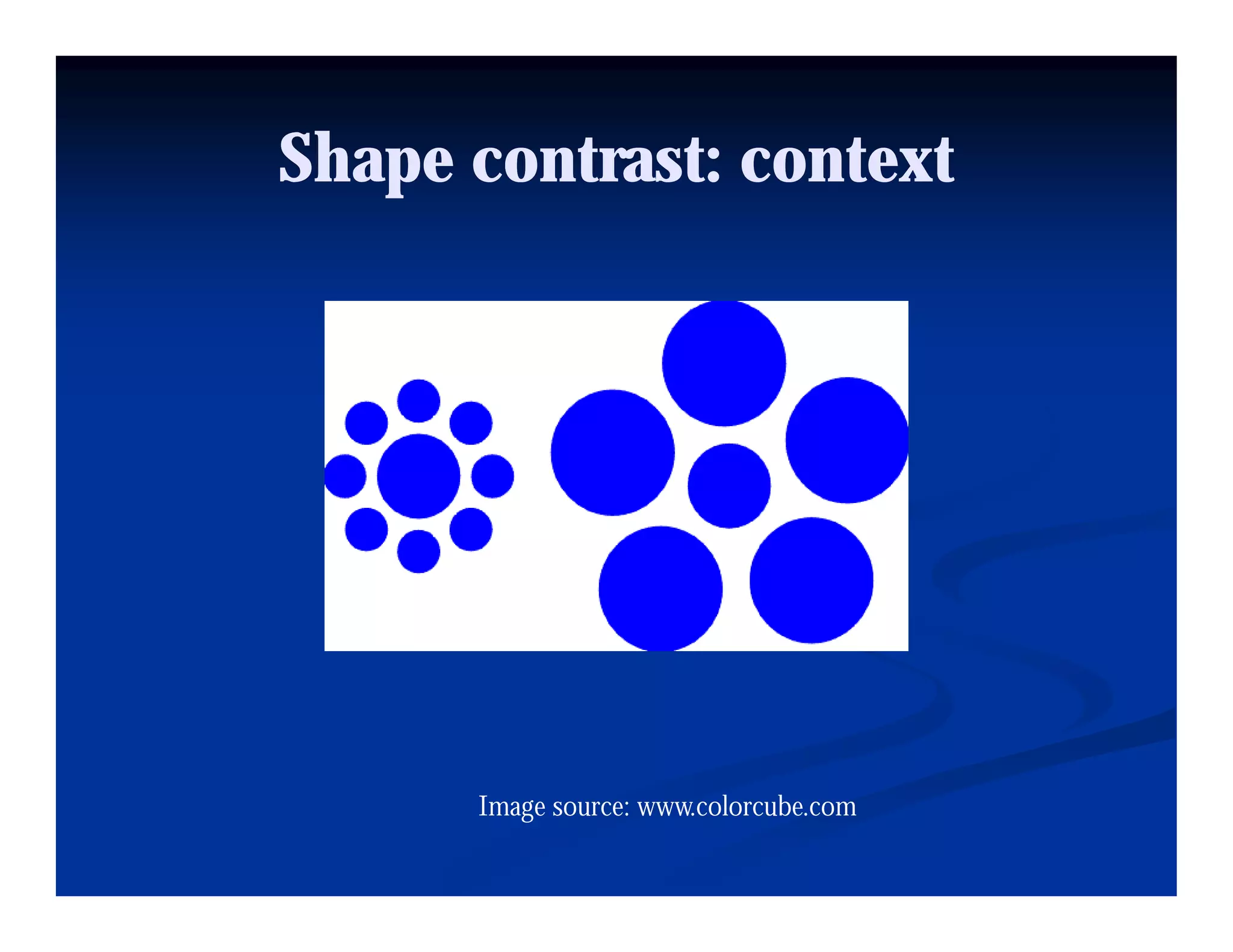
Shape contrast: context


      Image source: www.colorcube.com
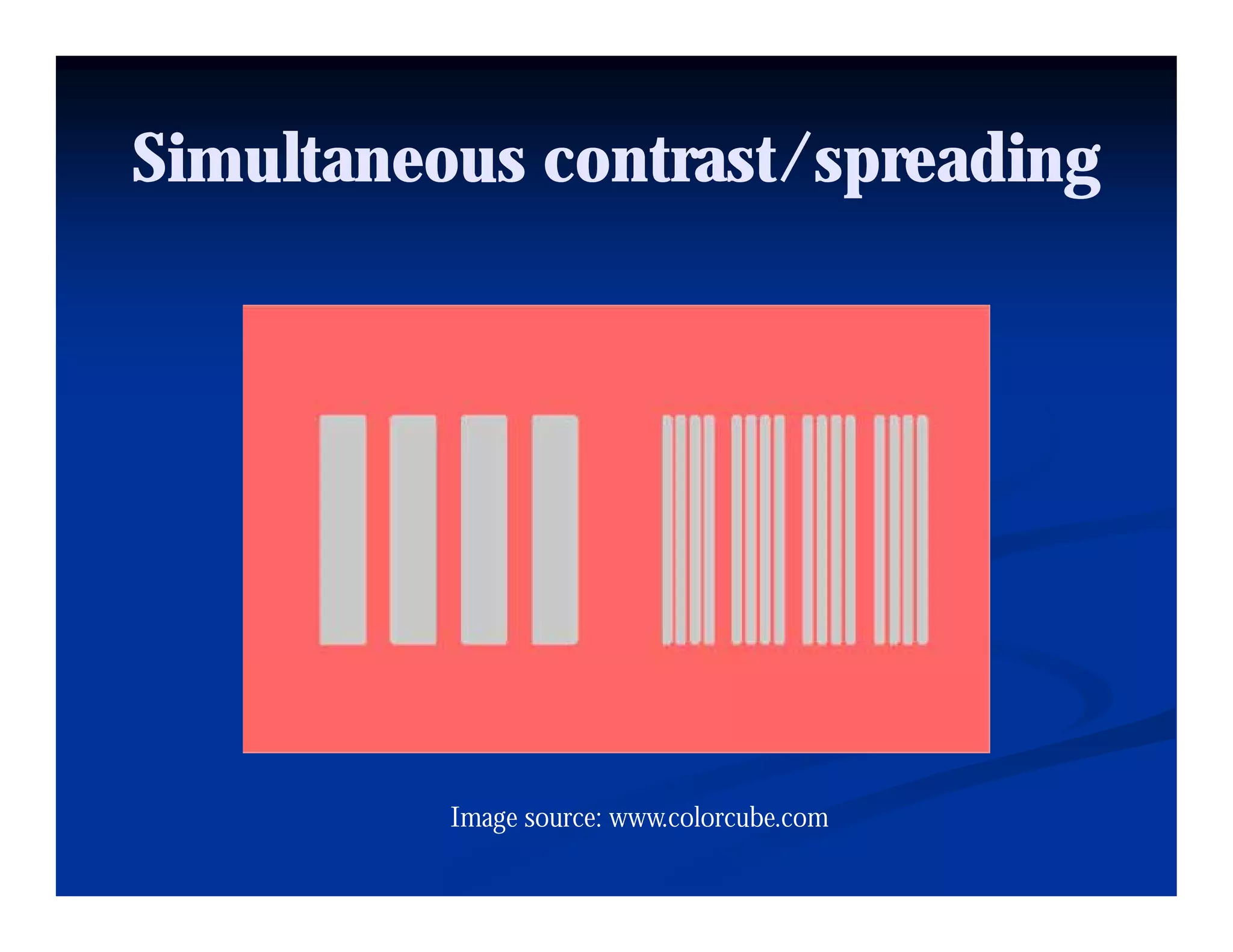
Simultaneous contrast/spreading


          Image source: www.colorcube.com
Image source: www.scientificpsychic.com
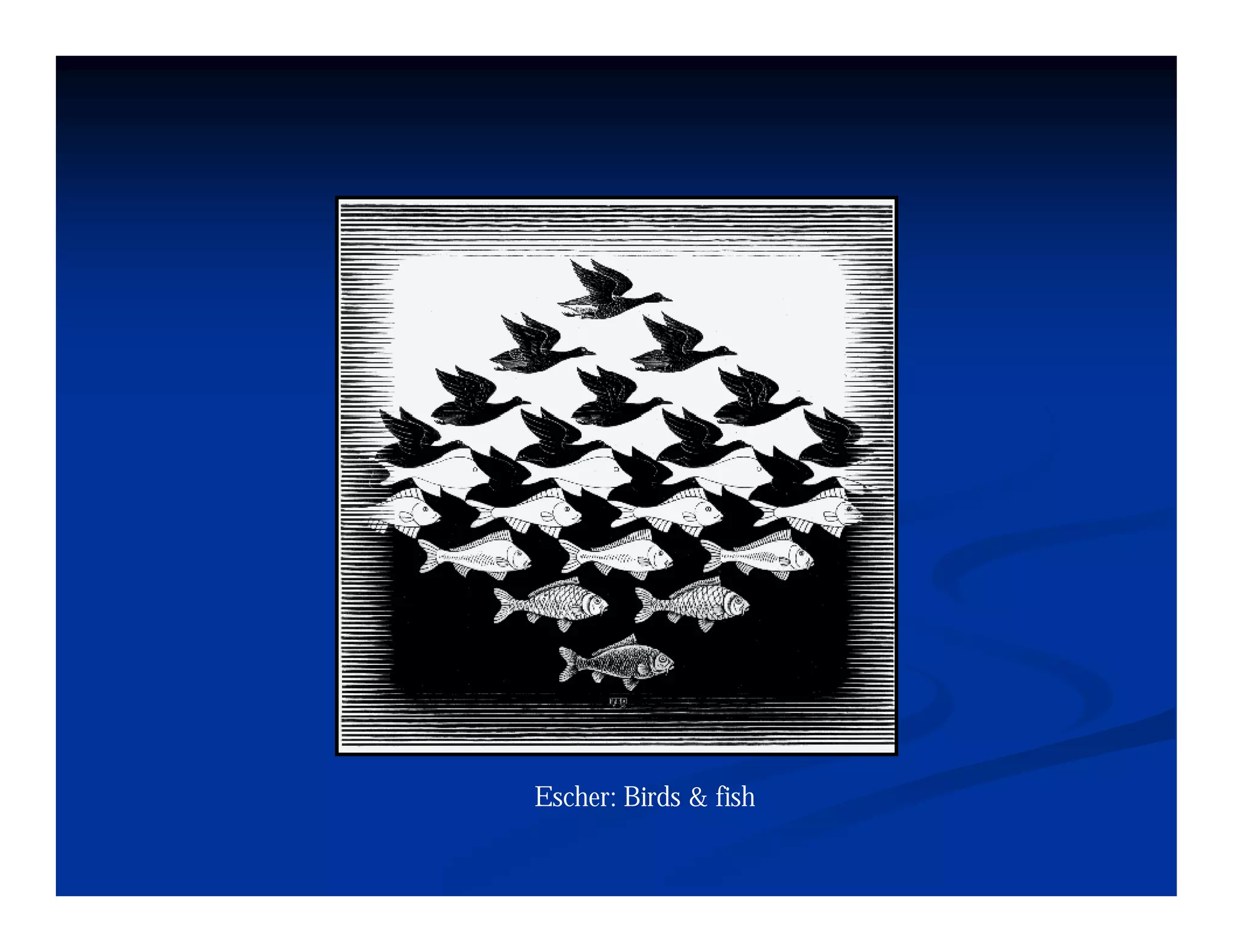
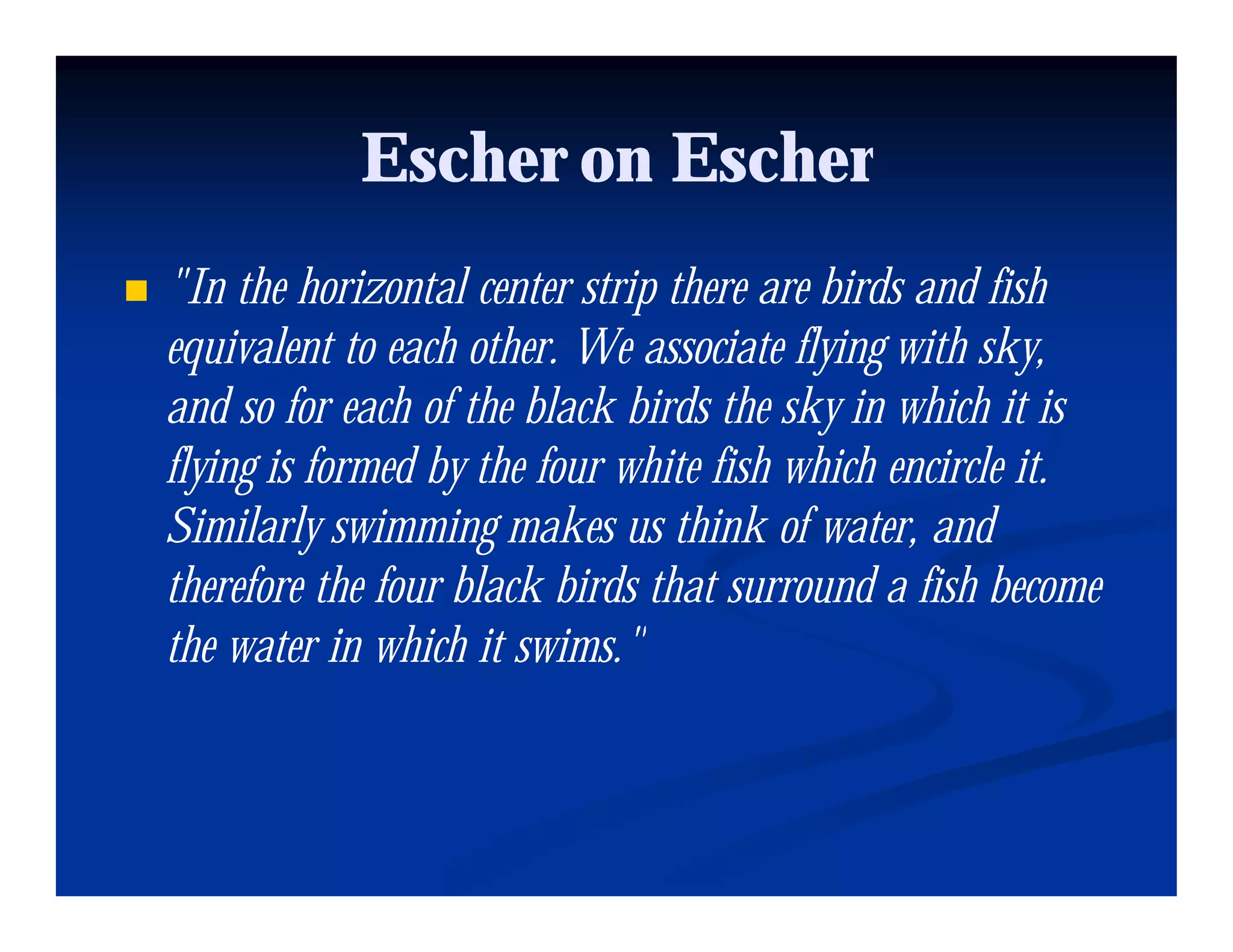
Escher: Birds & fish
Escher on Escher
"In the horizontal center strip there are birds and fish
  In
equivalent to each other. We associate flying with sky,
and so for each of the black birds the sky in which it is
flying is formed by the four white fish which encircle it.
Similarly swimming makes us think of water, and
                                          water
therefore the four black birds that surround a fish become
the water in which it swims."
                       swims
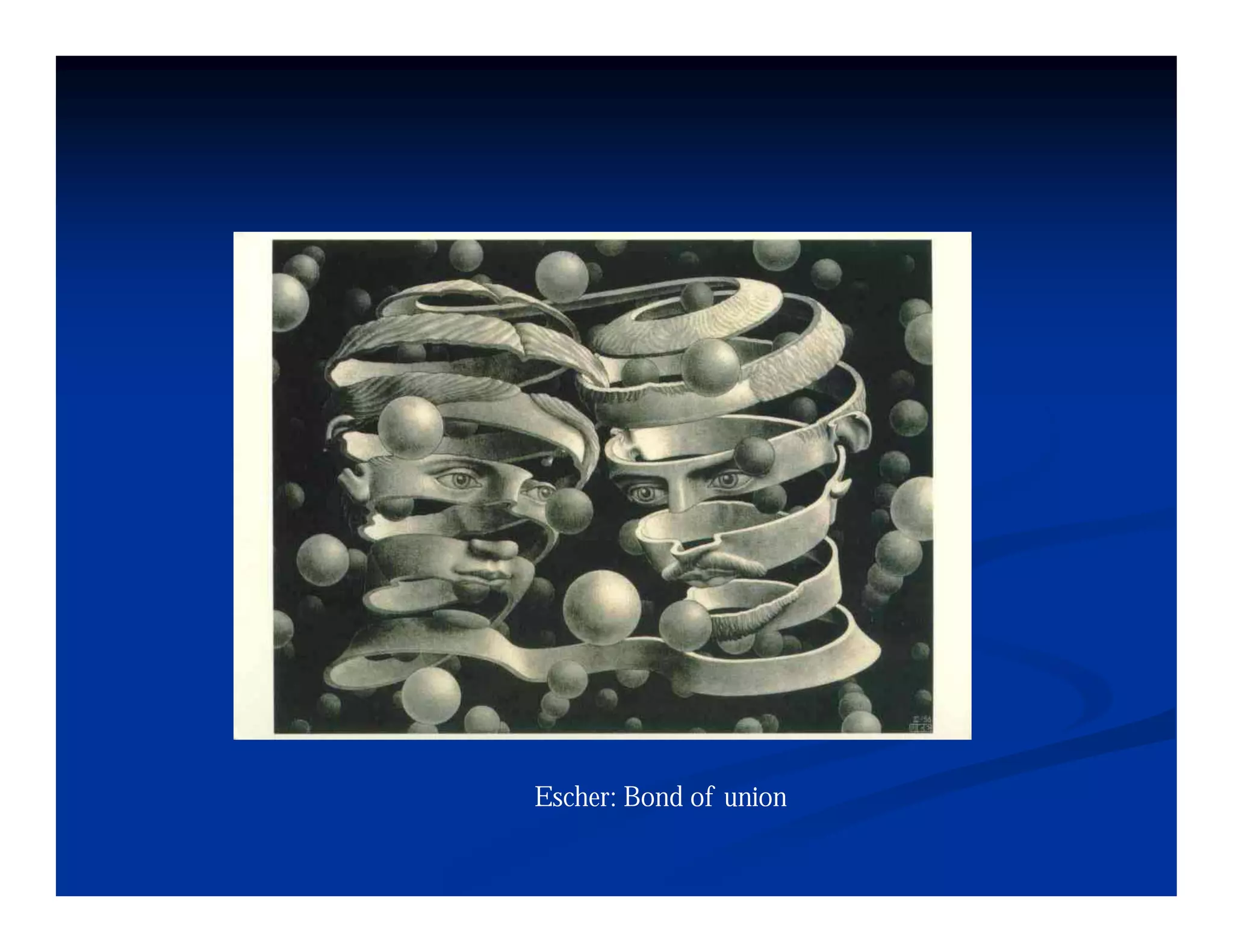
Escher: Bond of union
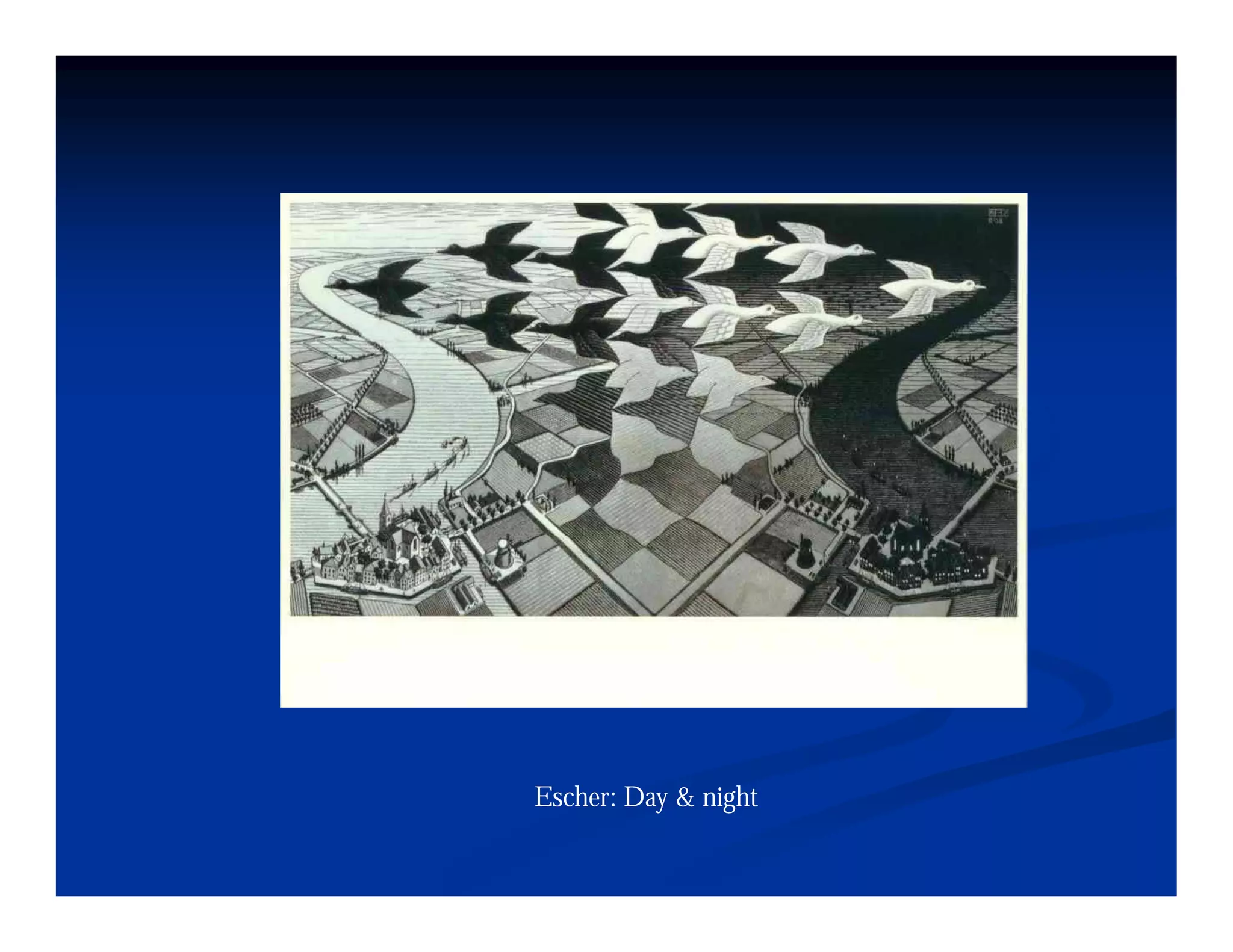
Escher: Day & night
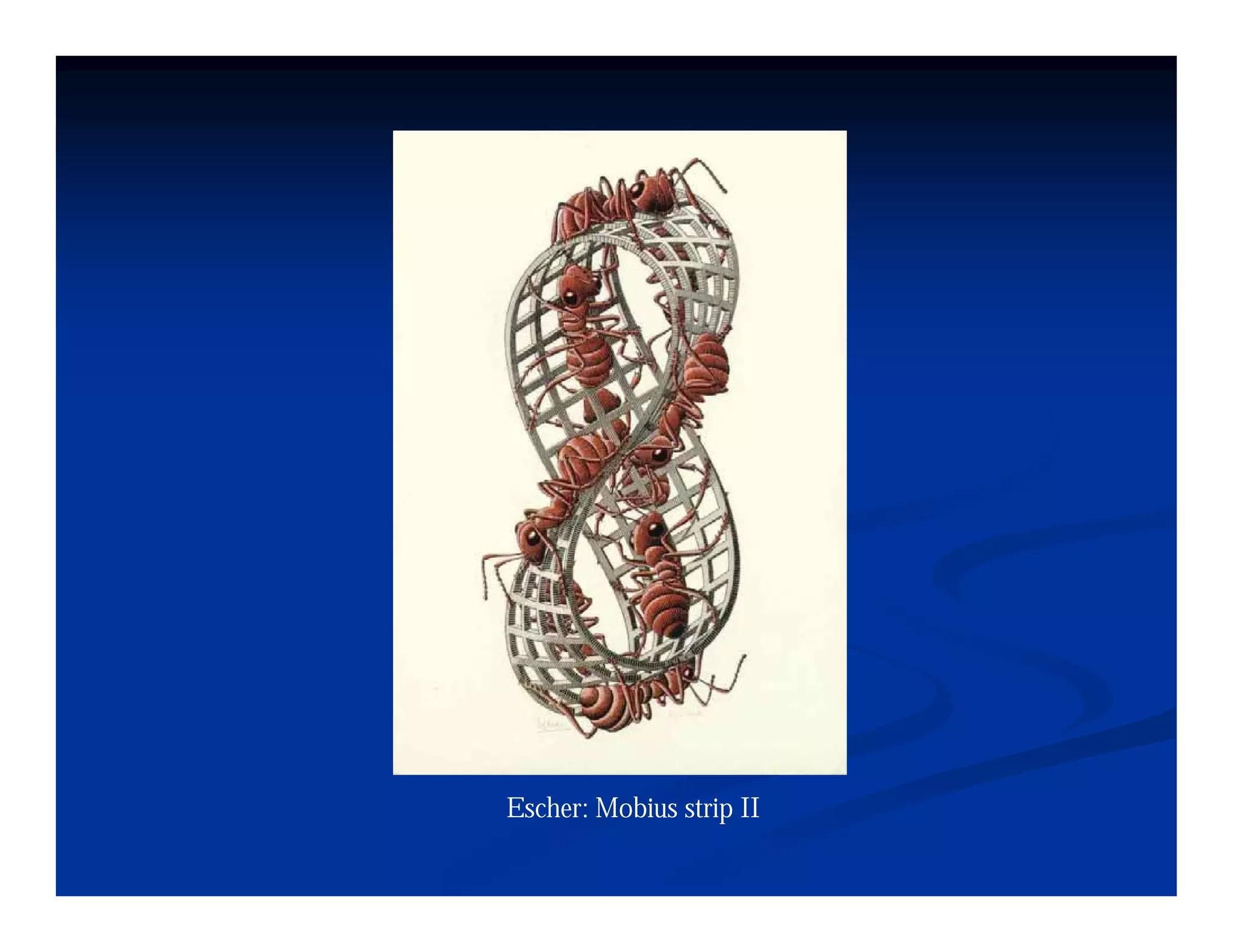
Escher: Mobius strip II
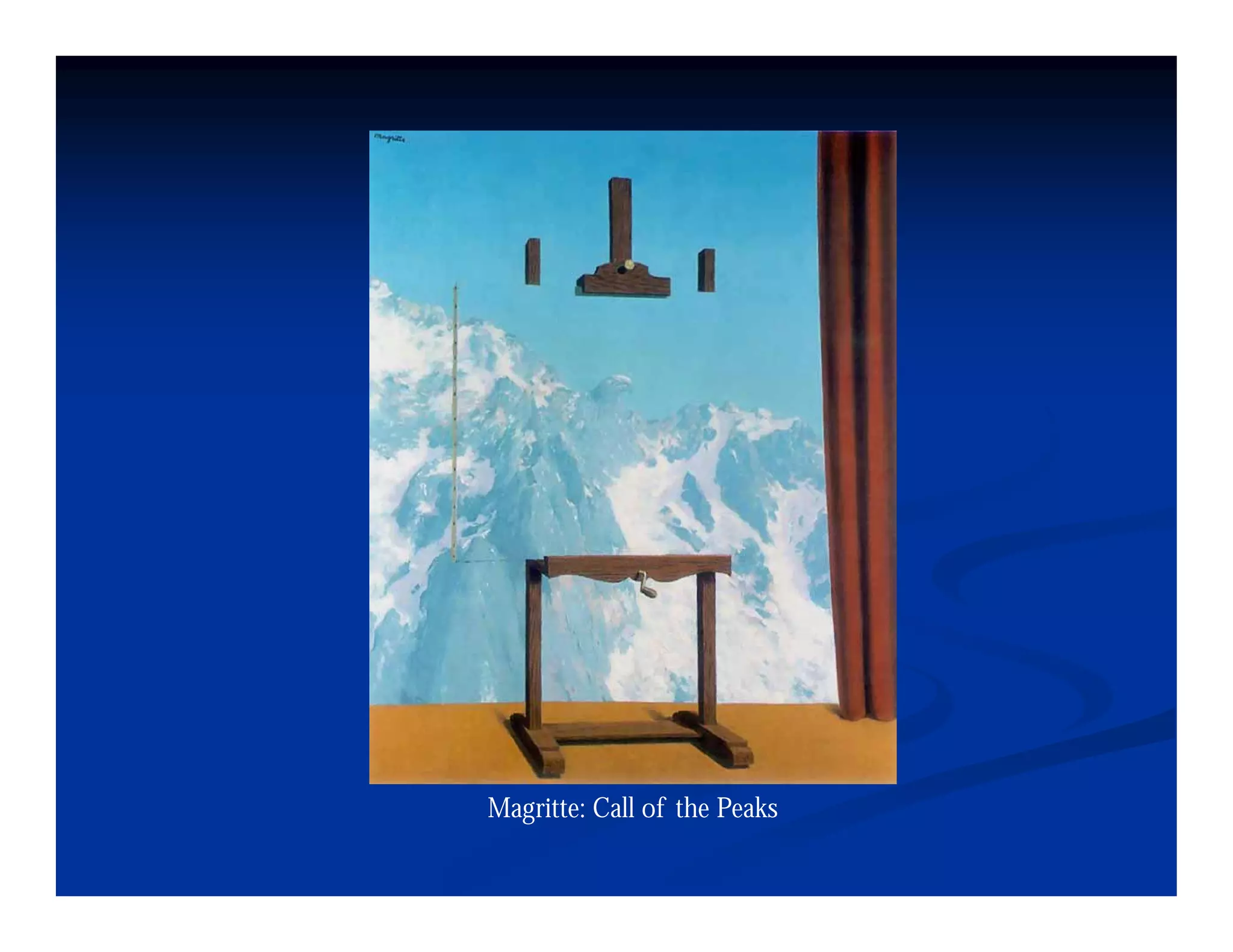
Magritte: Call of the Peaks
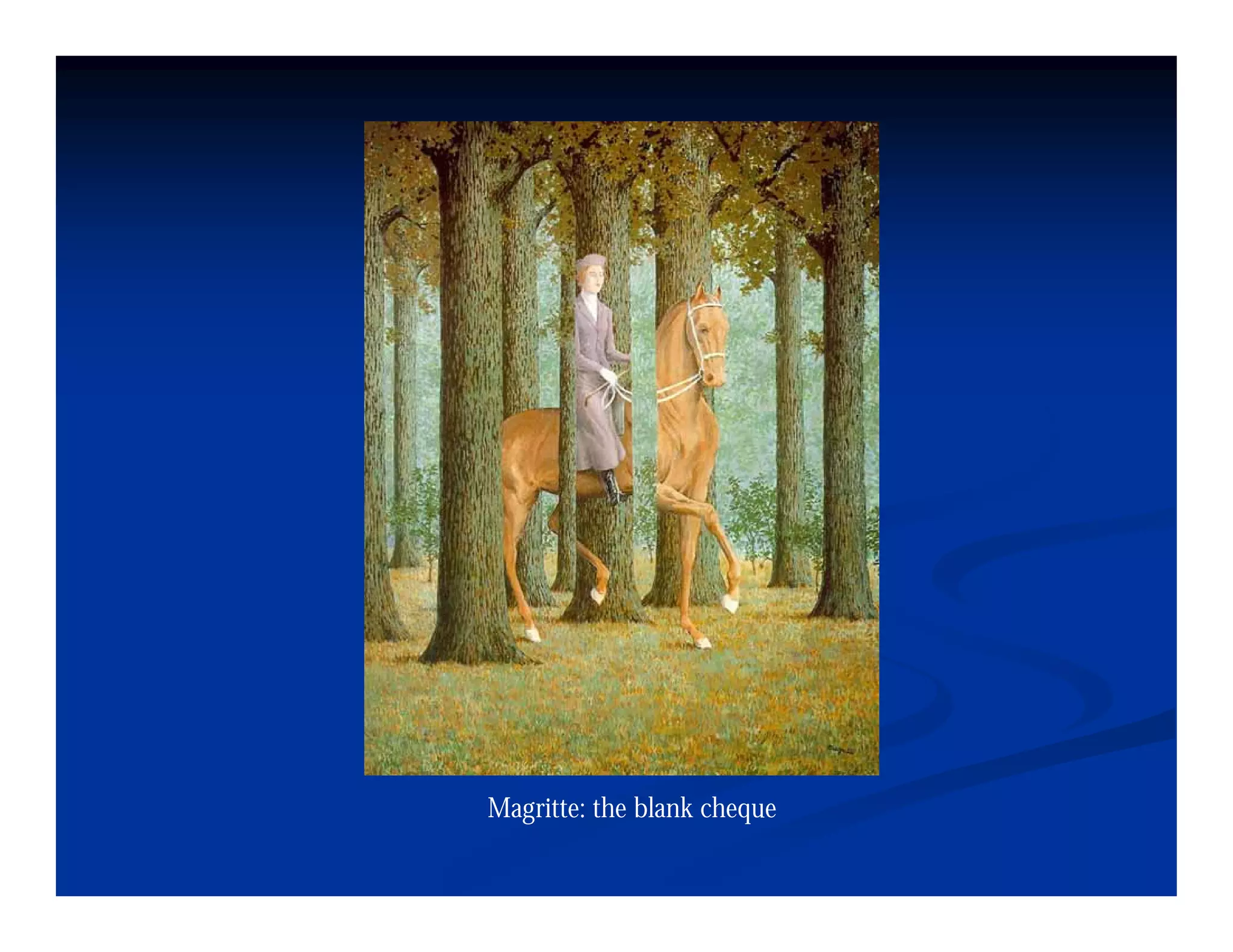
Magritte: the blank cheque
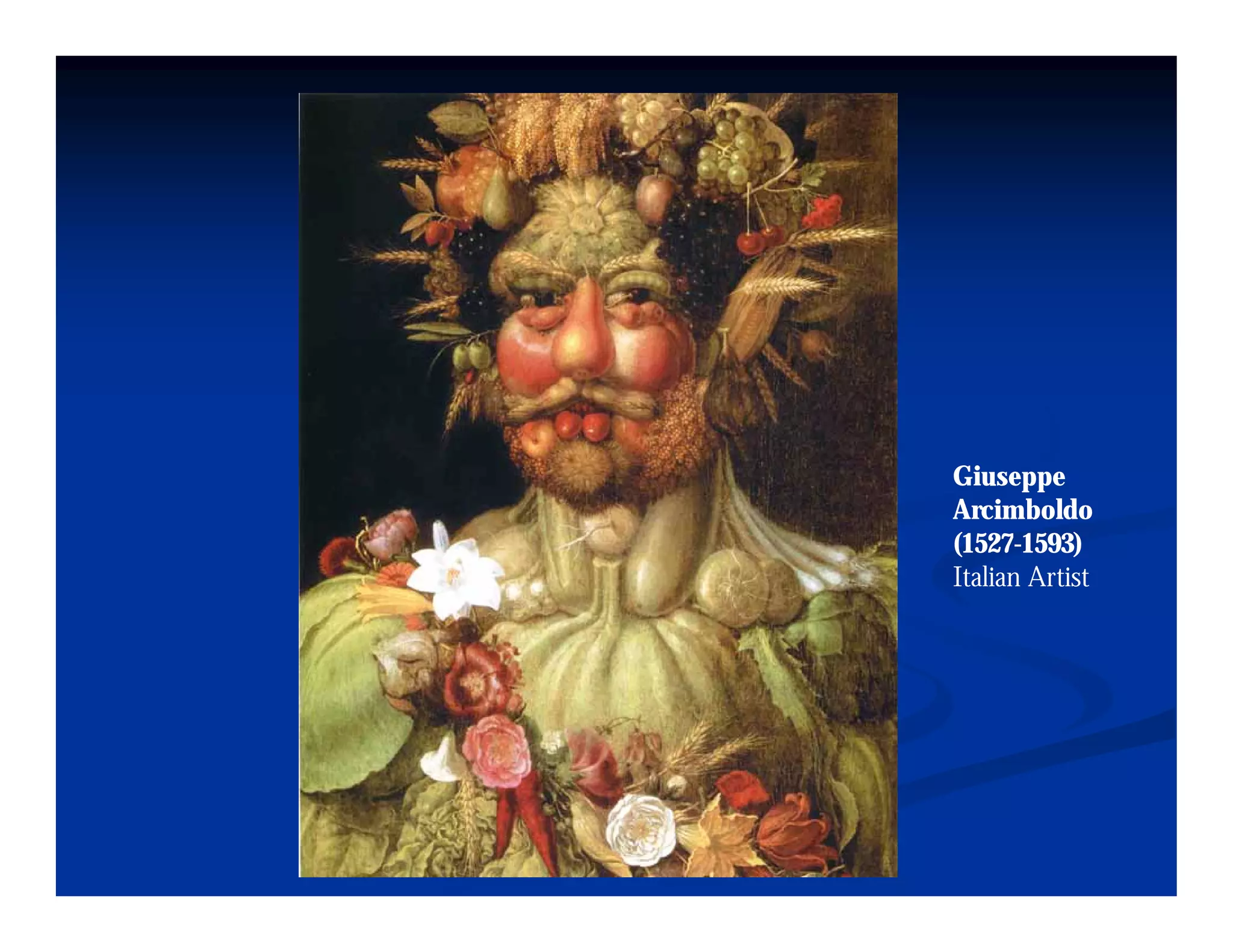
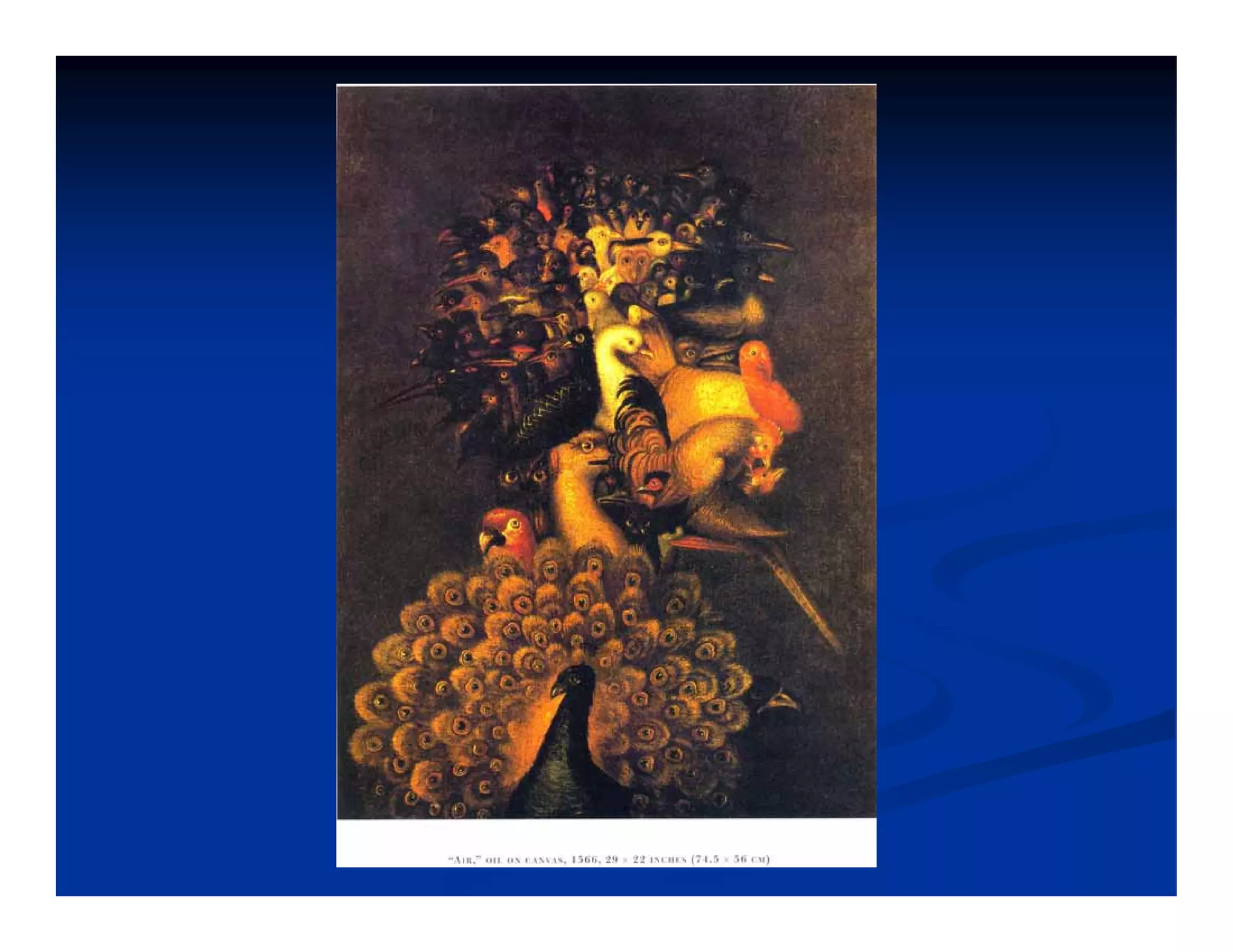
Giuseppe
Arcimboldo
(1527-1593)
(1527 1593)
Italian Artist
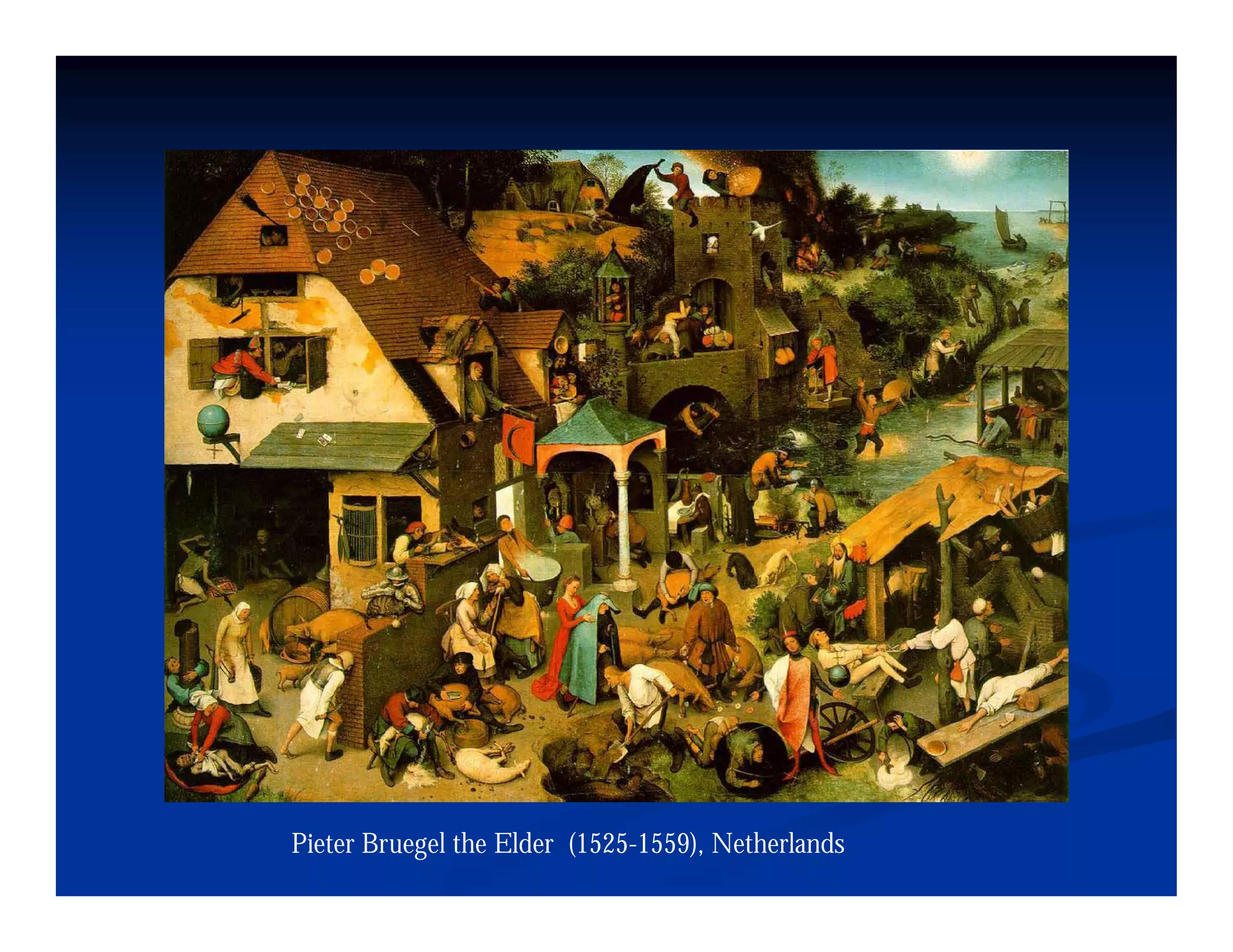
Pieter Bruegel the Elder (1525-1559), Netherlands
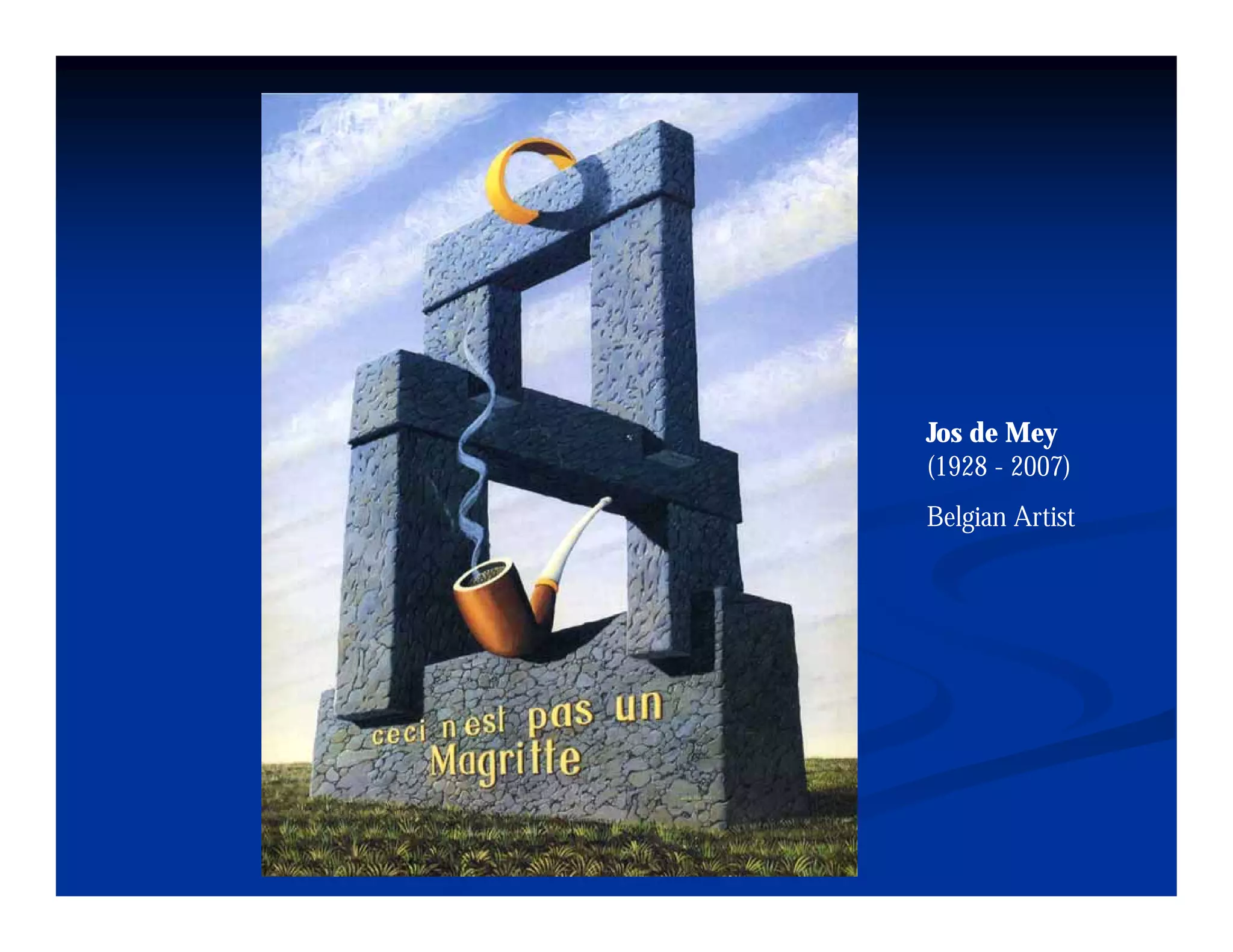
Jos de Mey
(1928 - 2007)
Belgian Artist
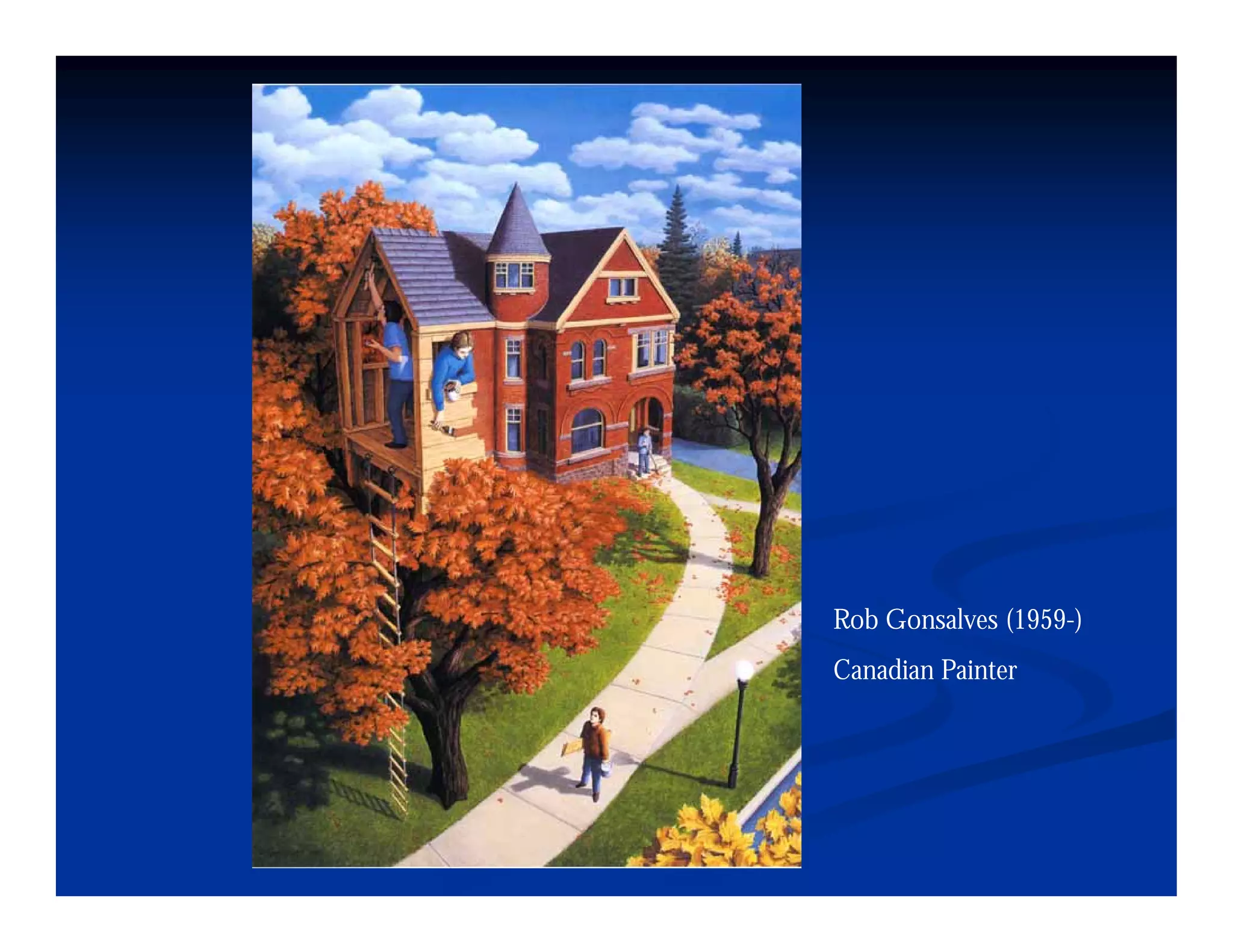
Rob Gonsalves (1959-)
Canadian Painter
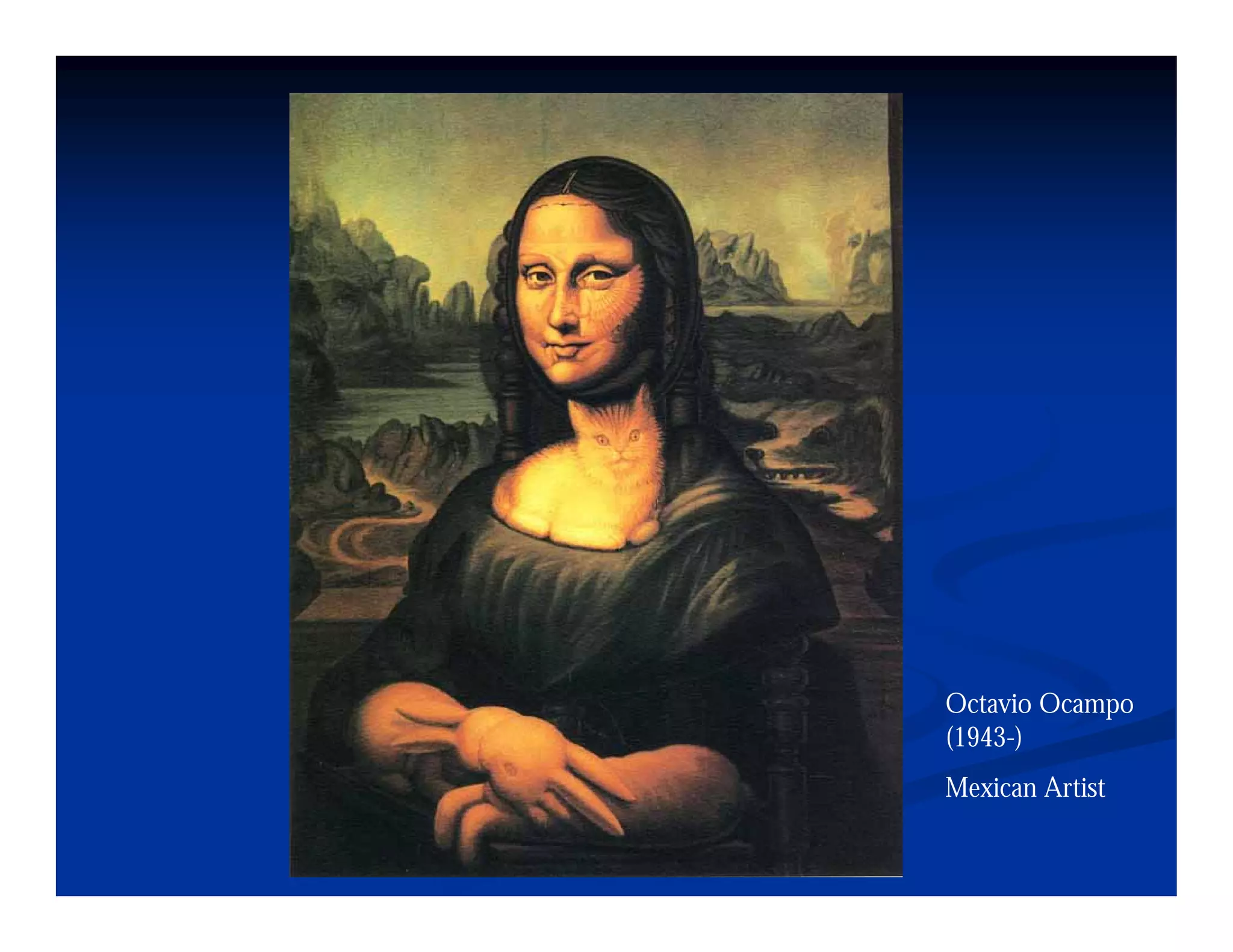
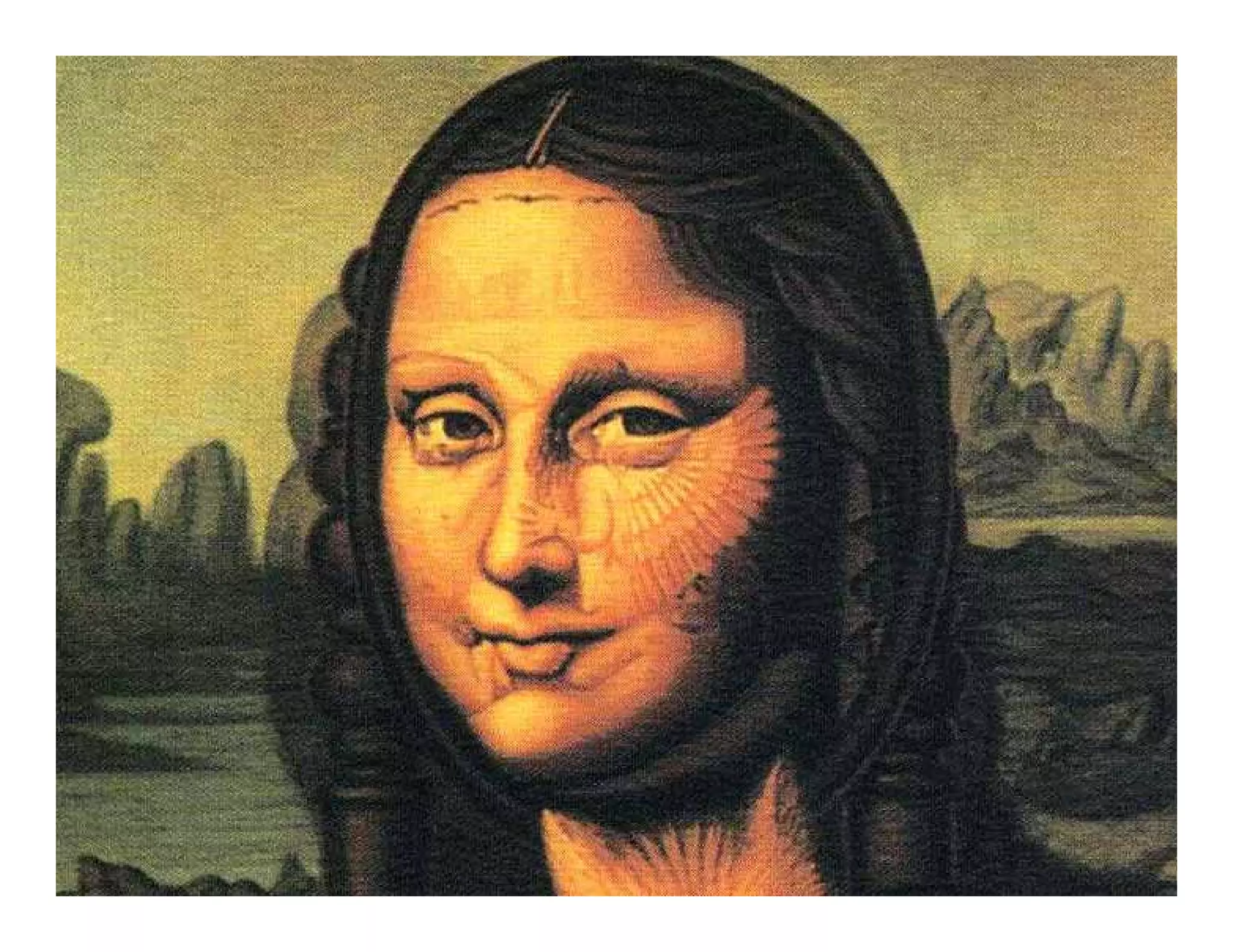
Octavio Ocampo
(1943-)
Mexican Artist
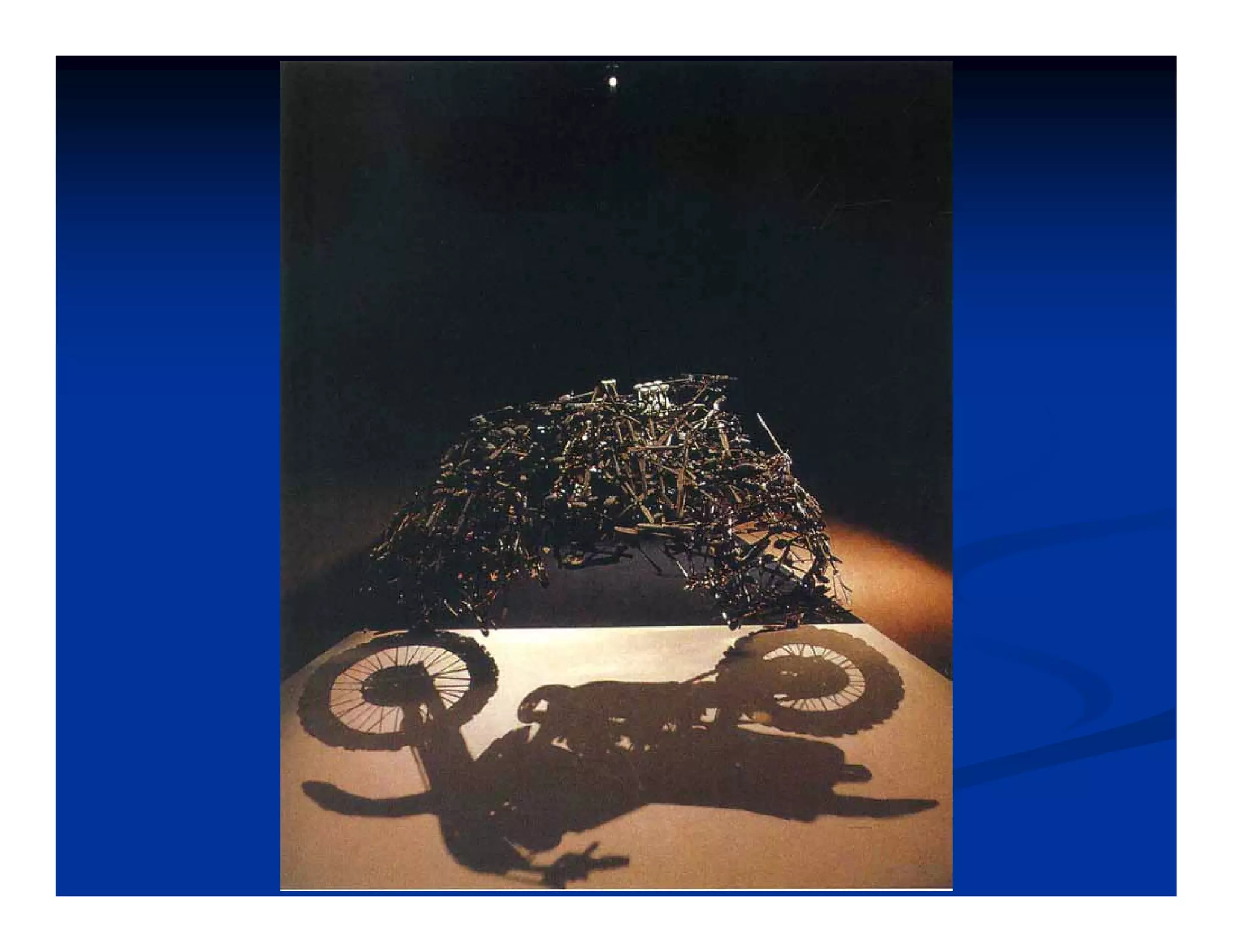
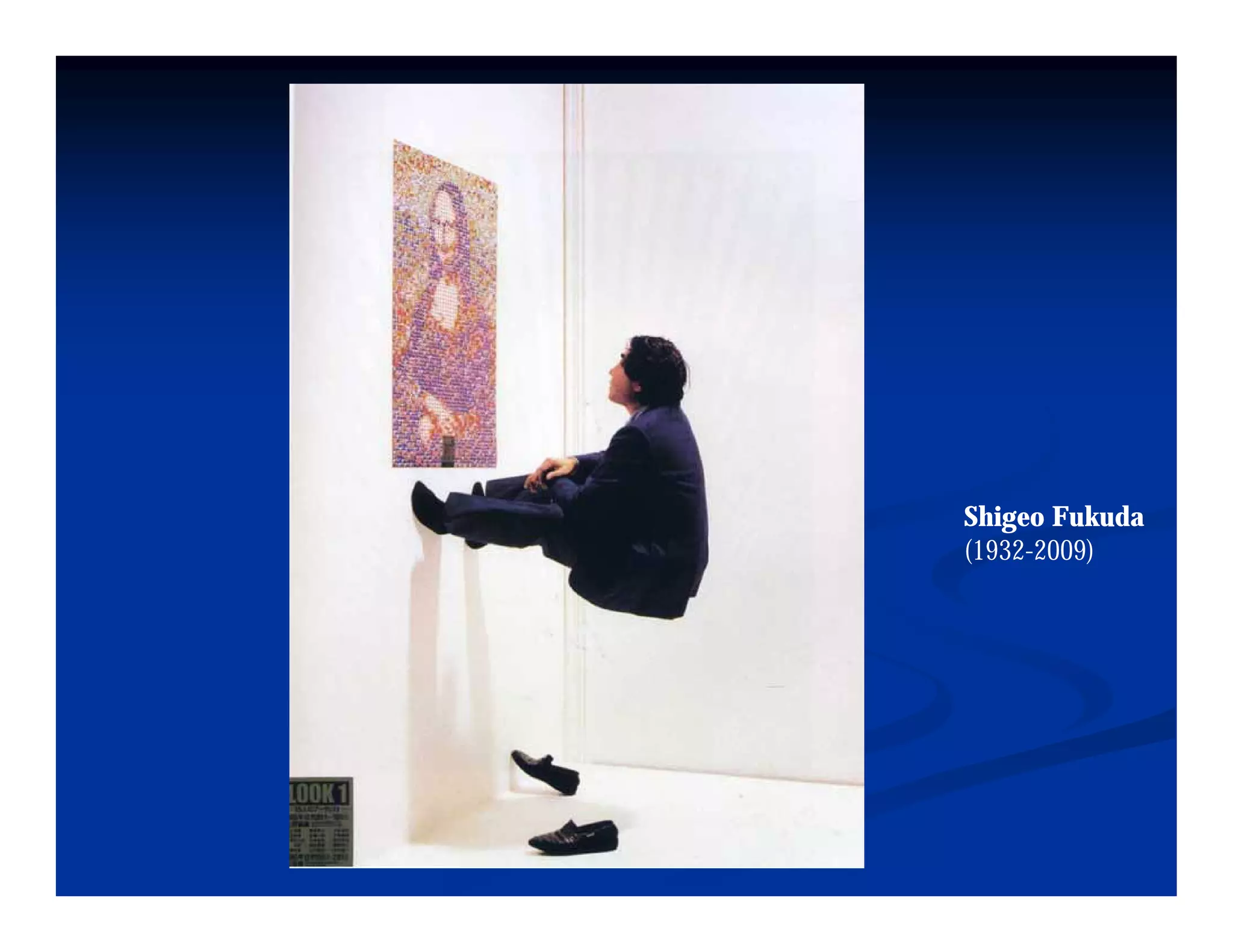
Shigeo Fukuda
(1932-2009)
References and images
   Doors of Perception
http://www.doorsofperception.com/doors
   The Joy of Perception
http://www.yorku.ca/eye
   Perception Online
http://www.pion.co.uk/perception
   “Perception.” E l p di Britannica 2007 Deluxe Edition.
   “P       ti ” Encyclopedia B it i          D l Editi
   Art and Visual Perception. Rudolf Arnheim, University of
   California Press, 1984.
   Mark Hardin’s A hi (www.artchive.com)
   M k H di ’ Artchive (www.artchive.com)
                                       hi
   Colour. Bettey Edwards, Tarcher/Penguin, 2004.
   Perception, Gestalt, Panopticon, etc (
         p                     p          (Wikipedia)
                                               p    )

Visual perception-illusions-paradoxes