Semiotic Film TheoryAn introduction
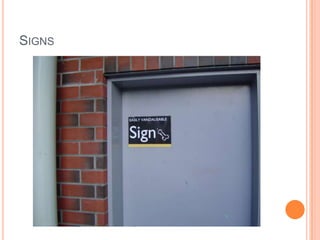
Signs
How films ‘signify’Semiotics is the study of signs; or, how films ‘signify’A way of understanding how meaning is conveyed through the various methods human beings employ to convey messages.Body languageGestureLetters WordsPicturesVisual Illustrations
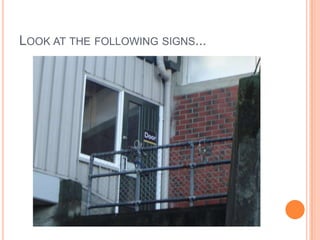
Look at the following signs...
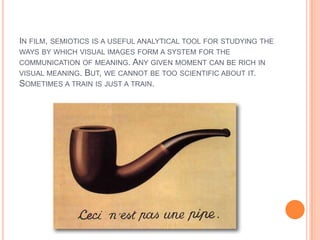
In film, semiotics is a useful analytical tool for studying the ways by which visual images form a system for the communication of meaning. Any given moment can be rich in visual meaning. But, we cannot be too scientific about it. Sometimes a train is just a train.
(closely related to) StructuralismElements within a structure do not possess meaning as individual units but gain their meaning through their relations to other elements.Structuralist film theory emphasizes how films convey meaning through the use of codes and conventions not dissimilar to the way languages are used to construct meaning in communication.
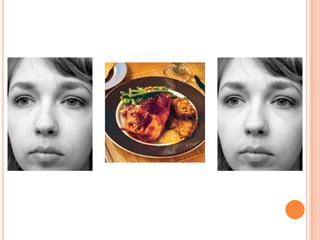
StructuralismAn example of this is understanding how the simple combination of shots can create an additional idea: the blank expression on a person's face, an appetising meal, and then back to the person's face. While nothing in this sequence literally expresses hunger—or desire—the juxtaposition of the images convey that meaning to the audience.
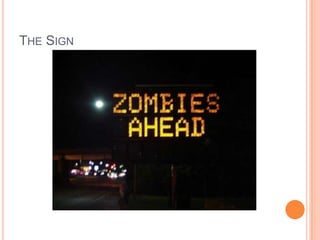
Unraveling this additional meaning can become quite complex. Lighting, angle, shot duration, juxtaposition, cultural context, and a wide array of other elements can actively reinforce or undermine a sequence's meaning.Look at the following exercise. The meaning of the last frame has been created through the questions asked in the first few shots.
The Sign
The signA sign can be anything in a film shot (visual or aural) that stands for something elseA person’s faceA propA background detail.There are three main components to remember: The (1)sign is composed of a (2)signifier -- the material form of the sign -- and (3)the signified -- the concept it represents. Sign -- The written word STOPSignifier -- The letters S-T-O-PSignified concept -- The motion category "stop"In semiotics, the sign is divided into two parts: the signifier and the signified
The signifier and the signifiedThe signifierThe aspect of the sign we perceive physicallyThe signifiedThe mental concept to which the sign refers.Meaning is conveyed by the relationship Signifier       ------------------------------- SignifiedDenotation ------------------------------- Connotation
Denotation and ConnotationIn semiotics there are different 'orders of signification' (levels of meaning). Semioticians distinguish between denotation - what a sign stands for - and connotation - its cultural associations.Connotation involves emotional overtones, objective interpretation, socio-cultural values and ideological assumptions. A car can connote virility or freedom in Western cultures, and so on.Think about Midnight Cowboy. What do the following things connote?Joe Buck’s cowboy outfitThe city streetThe greyhound bus
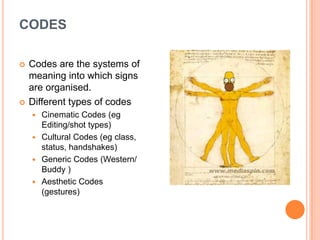
CODESCodes are the systems of meaning into which signs are organised.Different types of codesCinematic Codes (eg Editing/shot types)Cultural Codes (eg class, status, handshakes)Generic Codes (Western/ Buddy )Aesthetic Codes (gestures)
codes"The way we watch television and the way we perceive [everyday] reality are fundamentally similar, in that both are determined by conventions or codes. Reality is itself a complex system of signs interpreted by members of the culture in exactly the same way as are films and television programmes. (Fiske)
Paradigmatic and syntagmatic meaningIf a film maker has chosen to employ a particular sign at one point from a range of possibilities that is a ‘paradigmatic’ choice. (e.g. what costume to choose for a character).If a sign is related to the signs that occur around it than that is a syntagmatic relationship. (e.g. the final shootout scene in The Good, The Bad, and The Ugly we see shots of eyes, guns and graves. They work together to create meaning.)
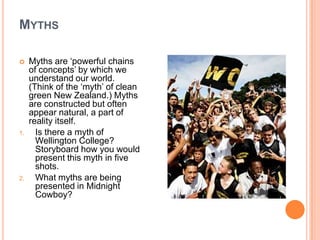
MythsMyths are ‘powerful chains of concepts’ by which we understand our world. (Think of the ‘myth’ of clean green New Zealand.) Myths are constructed but often appear natural, a part of reality itself.Is there a myth of Wellington College? Storyboard how you would present this myth in five shots.What myths are being presented in Midnight Cowboy?
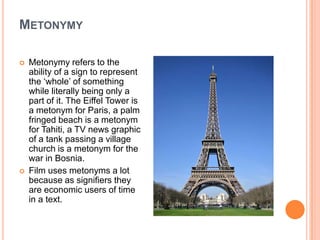
MetonymyMetonymy refers to the ability of a sign to represent the ‘whole’ of something while literally being only a part of it. The Eiffel Tower is a metonym for Paris, a palm fringed beach is a metonym for Tahiti, a TV news graphic of a tank passing a village church is a metonym for the war in Bosnia.Film uses metonyms a lot because as signifiers they are economic users of time in a text.
How to use Semiotics when reading a film – (eg Midnight Cowboy)Semioticians look closely at film shots in order to break down their messages into systems of signs and codes. What signs are prominent in Midnight Cowboy?Think about how Joe Buck’s costume is a signifier.The radio.The greyhound busLook at how the film subverts myths and codes.The American DreamThe myth of the West.Generic Codes (i.e. Western codes subverted)What syntagmatic relationships can you uncover?Let’s watch some...
Some further readinghttp://www.aber.ac.uk/media/Documents/S4B/semiotic.html- Semiotics for Beginners by Daniel Chandler. As good a place to start as any.

Semiotics

  • 1.
  • 2.
  • 3.
    How films ‘signify’Semioticsis the study of signs; or, how films ‘signify’A way of understanding how meaning is conveyed through the various methods human beings employ to convey messages.Body languageGestureLetters WordsPicturesVisual Illustrations
  • 4.
    Look at thefollowing signs...
  • 5.
    In film, semioticsis a useful analytical tool for studying the ways by which visual images form a system for the communication of meaning. Any given moment can be rich in visual meaning. But, we cannot be too scientific about it. Sometimes a train is just a train.
  • 6.
    (closely related to)StructuralismElements within a structure do not possess meaning as individual units but gain their meaning through their relations to other elements.Structuralist film theory emphasizes how films convey meaning through the use of codes and conventions not dissimilar to the way languages are used to construct meaning in communication.
  • 7.
    StructuralismAn example ofthis is understanding how the simple combination of shots can create an additional idea: the blank expression on a person's face, an appetising meal, and then back to the person's face. While nothing in this sequence literally expresses hunger—or desire—the juxtaposition of the images convey that meaning to the audience.
  • 9.
    Unraveling this additionalmeaning can become quite complex. Lighting, angle, shot duration, juxtaposition, cultural context, and a wide array of other elements can actively reinforce or undermine a sequence's meaning.Look at the following exercise. The meaning of the last frame has been created through the questions asked in the first few shots.
  • 10.
  • 11.
    The signA signcan be anything in a film shot (visual or aural) that stands for something elseA person’s faceA propA background detail.There are three main components to remember: The (1)sign is composed of a (2)signifier -- the material form of the sign -- and (3)the signified -- the concept it represents. Sign -- The written word STOPSignifier -- The letters S-T-O-PSignified concept -- The motion category "stop"In semiotics, the sign is divided into two parts: the signifier and the signified
  • 12.
    The signifier andthe signifiedThe signifierThe aspect of the sign we perceive physicallyThe signifiedThe mental concept to which the sign refers.Meaning is conveyed by the relationship Signifier ------------------------------- SignifiedDenotation ------------------------------- Connotation
  • 13.
    Denotation and ConnotationInsemiotics there are different 'orders of signification' (levels of meaning). Semioticians distinguish between denotation - what a sign stands for - and connotation - its cultural associations.Connotation involves emotional overtones, objective interpretation, socio-cultural values and ideological assumptions. A car can connote virility or freedom in Western cultures, and so on.Think about Midnight Cowboy. What do the following things connote?Joe Buck’s cowboy outfitThe city streetThe greyhound bus
  • 14.
    CODESCodes are thesystems of meaning into which signs are organised.Different types of codesCinematic Codes (eg Editing/shot types)Cultural Codes (eg class, status, handshakes)Generic Codes (Western/ Buddy )Aesthetic Codes (gestures)
  • 15.
    codes"The way wewatch television and the way we perceive [everyday] reality are fundamentally similar, in that both are determined by conventions or codes. Reality is itself a complex system of signs interpreted by members of the culture in exactly the same way as are films and television programmes. (Fiske)
  • 16.
    Paradigmatic and syntagmaticmeaningIf a film maker has chosen to employ a particular sign at one point from a range of possibilities that is a ‘paradigmatic’ choice. (e.g. what costume to choose for a character).If a sign is related to the signs that occur around it than that is a syntagmatic relationship. (e.g. the final shootout scene in The Good, The Bad, and The Ugly we see shots of eyes, guns and graves. They work together to create meaning.)
  • 17.
    MythsMyths are ‘powerfulchains of concepts’ by which we understand our world. (Think of the ‘myth’ of clean green New Zealand.) Myths are constructed but often appear natural, a part of reality itself.Is there a myth of Wellington College? Storyboard how you would present this myth in five shots.What myths are being presented in Midnight Cowboy?
  • 18.
    MetonymyMetonymy refers tothe ability of a sign to represent the ‘whole’ of something while literally being only a part of it. The Eiffel Tower is a metonym for Paris, a palm fringed beach is a metonym for Tahiti, a TV news graphic of a tank passing a village church is a metonym for the war in Bosnia.Film uses metonyms a lot because as signifiers they are economic users of time in a text.
  • 19.
    How to useSemiotics when reading a film – (eg Midnight Cowboy)Semioticians look closely at film shots in order to break down their messages into systems of signs and codes. What signs are prominent in Midnight Cowboy?Think about how Joe Buck’s costume is a signifier.The radio.The greyhound busLook at how the film subverts myths and codes.The American DreamThe myth of the West.Generic Codes (i.e. Western codes subverted)What syntagmatic relationships can you uncover?Let’s watch some...
  • 20.
    Some further readinghttp://www.aber.ac.uk/media/Documents/S4B/semiotic.html-Semiotics for Beginners by Daniel Chandler. As good a place to start as any.