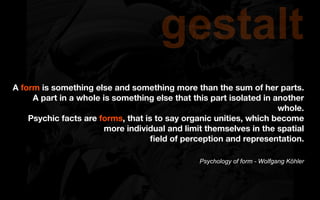
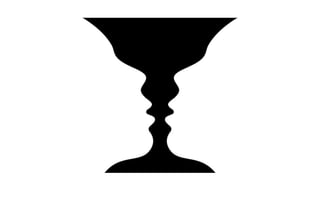
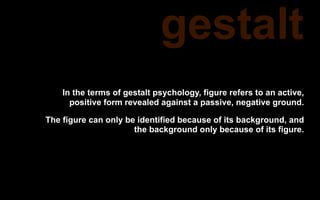
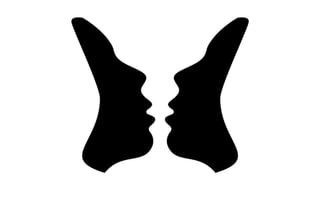
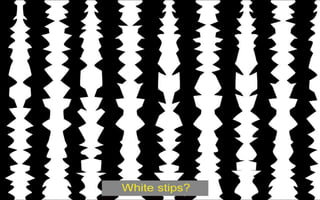
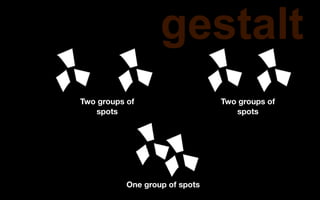
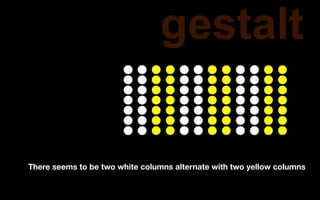
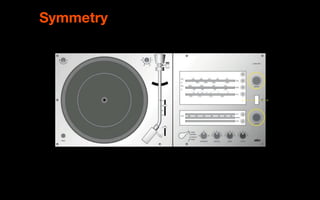
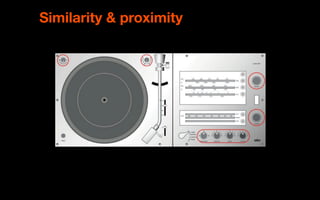
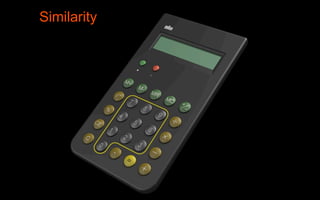
Gestalt theory proposes that the whole is greater than the sum of its parts. It describes several "laws" of perceptual organization that the human brain uses to interpret visual elements as unified wholes or patterns. The key laws include: figure/ground relationships, symmetry, proximity, similarity, good continuation, closure, and Prägnanz (the tendency for simplicity and regularity). According to Gestalt theory, these principles guide how we group separate parts into meaningful forms and shapes.