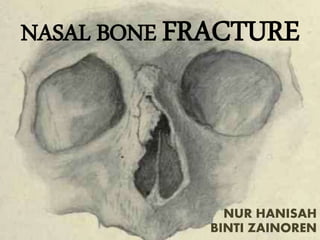
NASAL BONE FRACTURE
NUR HANISAH
BINTI ZAINOREN
TRAUMA TO THE FACE
LOWER THIRD
Mandible and
lower teeth
MIDDLE THIRD
Between the
supraorbital
ridge and the
upper teeth
UPPER THIRD
Above the level of
supraorbital ridge
TRAUMA TO THE FACE
LOWER THIRD
Mandible and
lower teeth
MIDDLE THIRD
Between the
supraorbital
ridge and the
upper teeth
UPPER THIRD
Above the level of
supraorbital ridge
TRAUMA TO THE FACE
LOWER THIRD
Mandible and
lower teeth
MIDDLE THIRD
Between the
supraorbital
ridge and the
upper teeth
UPPER THIRD
Above the level of
supraorbital ridge
Fractures of nasal bones are the most
common trauma to the face because of
the projection of nose on the face
Traumatic force
may act from the
front or side
Magnitude of force
will determine the
depth of injury
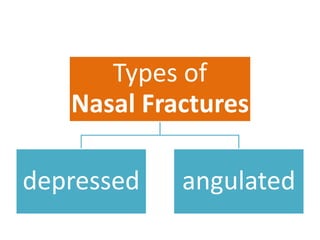
Types of
Nasal Fractures
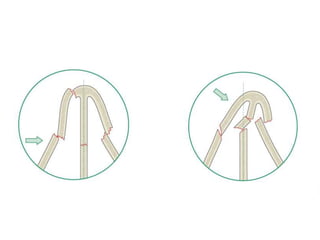
depressed angulated
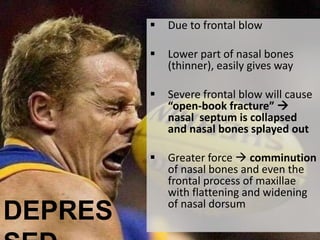
 Due to frontal blow
 Lower part of nasal bones
(thinner), easily gives way
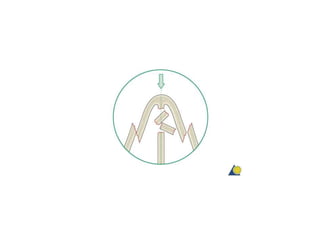
 Severe frontal blow will cause
“open-book fracture” 
nasal septum is collapsed
and nasal bones splayed out
 Greater force  comminution
of nasal bones and even the
frontal process of maxillae
with flattening and widening
of nasal dorsum
DEPRES
ANGULAT
EDDue to lateral blow
May cause:
 Unilateral depression of
nasal bone on the same
side
 Fracture both nasal bones
& septum with deviation
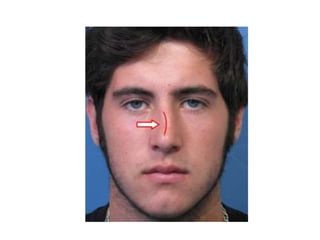
of nasal bridge
nasal fractures are often accompanied
by injuries of nasal septum
(buckled, dislocated, or comminuted)
CLINICAL
FEATURES
Swelling
of nose
Periorbital
ecchymosis
Tenderness
Nasal
deformity
Crepitus
Epistaxis
Nasal
obstruc-
tion
Lacerations
of nasal
skin
DIAGNOSIS
• Best made on physical
examination
• Xray:
– may or may not show
fracture
– Patient should not be
dismissed as having no
fracture because xrays did
not reveal it
– Should include Water’s view,
right & left lateral view and
occlusal view
TREATMENT
• Simple fracture with no displacement  NO
TREATMENT
• Closed reduction
– Interfered by presence of oedema
– Best time is before the appearance of oedema, or
after it has subsided (usually 5-7 days)
– Difficult after 2 weeks because it heals by that time
• Open reduction (rare)
REFERENCES
• Diseases of Ear, Nose and Throat & Head and
Neck Surgery, 6th Edition, PL Dhingra, Elsevier
• https://www2.aofoundation.org/wps/portal/!ut/
p/a0/04_Sj9CPykssy0xPLMnMz0vMAfGjzOKN_A0
M3D2DDbz9_UMMDRyDXQ3dw9wMDAzMjfULsh
0VAbWjLW0!/?bone=CMF&classification=92-
Nasal%2FNOE%2C%20Nasal%20bone&segment=
Midface&showPage=diagnosis&teaserTitle=&con
tentUrl=/srg/92/01-Diagnosis/nasal.jsp
THANK YOU

NASAL BONE FRACTURE

  • 1.
    NASAL BONE FRACTURE NURHANISAH BINTI ZAINOREN
  • 2.
    TRAUMA TO THEFACE LOWER THIRD Mandible and lower teeth MIDDLE THIRD Between the supraorbital ridge and the upper teeth UPPER THIRD Above the level of supraorbital ridge
  • 3.
    TRAUMA TO THEFACE LOWER THIRD Mandible and lower teeth MIDDLE THIRD Between the supraorbital ridge and the upper teeth UPPER THIRD Above the level of supraorbital ridge
  • 4.
    TRAUMA TO THEFACE LOWER THIRD Mandible and lower teeth MIDDLE THIRD Between the supraorbital ridge and the upper teeth UPPER THIRD Above the level of supraorbital ridge
  • 5.
    Fractures of nasalbones are the most common trauma to the face because of the projection of nose on the face Traumatic force may act from the front or side Magnitude of force will determine the depth of injury
  • 6.
  • 7.
     Due tofrontal blow  Lower part of nasal bones (thinner), easily gives way  Severe frontal blow will cause “open-book fracture”  nasal septum is collapsed and nasal bones splayed out  Greater force  comminution of nasal bones and even the frontal process of maxillae with flattening and widening of nasal dorsum DEPRES
  • 10.
    ANGULAT EDDue to lateralblow May cause:  Unilateral depression of nasal bone on the same side  Fracture both nasal bones & septum with deviation of nasal bridge nasal fractures are often accompanied by injuries of nasal septum (buckled, dislocated, or comminuted)
  • 13.
  • 15.
    DIAGNOSIS • Best madeon physical examination • Xray: – may or may not show fracture – Patient should not be dismissed as having no fracture because xrays did not reveal it – Should include Water’s view, right & left lateral view and occlusal view
  • 16.
    TREATMENT • Simple fracturewith no displacement  NO TREATMENT • Closed reduction – Interfered by presence of oedema – Best time is before the appearance of oedema, or after it has subsided (usually 5-7 days) – Difficult after 2 weeks because it heals by that time • Open reduction (rare)
  • 17.
    REFERENCES • Diseases ofEar, Nose and Throat & Head and Neck Surgery, 6th Edition, PL Dhingra, Elsevier • https://www2.aofoundation.org/wps/portal/!ut/ p/a0/04_Sj9CPykssy0xPLMnMz0vMAfGjzOKN_A0 M3D2DDbz9_UMMDRyDXQ3dw9wMDAzMjfULsh 0VAbWjLW0!/?bone=CMF&classification=92- Nasal%2FNOE%2C%20Nasal%20bone&segment= Midface&showPage=diagnosis&teaserTitle=&con tentUrl=/srg/92/01-Diagnosis/nasal.jsp
  • 18.