Urban Problems Related
To Energy
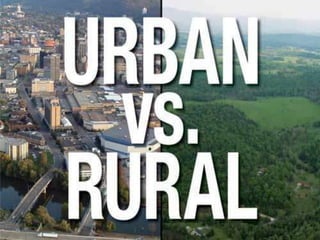
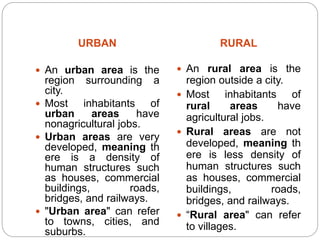
URBAN RURAL
 An urban area is the
region surrounding a
city.
 Most inhabitants of
urban areas have
nonagricultural jobs.
 Urban areas are very
developed, meaning th
ere is a density of
human structures such
as houses, commercial
buildings, roads,
bridges, and railways.
 "Urban area" can refer
to towns, cities, and
suburbs.
 An rural area is the
region outside a city.
 Most inhabitants of
rural areas have
agricultural jobs.
 Rural areas are not
developed, meaning th
ere is less density of
human structures such
as houses, commercial
buildings, roads,
bridges, and railways.
 “Rural area" can refer
to villages.
Energy
Energy is the power derived from the utilization
of physical or chemical resources, especially to
provide light and heat or to work machines.
Energy Demand
 In developed countries (besides India) the
amount of energy used is much more compared
to underdeveloped / developing countries.
 Industrialized developed countries use energy for
these purposes:
(i) residential and commercial
(ii) industrial
(iii) transportation.
 In less-developed countries ( for example India),
most of the energy is used by individuals.
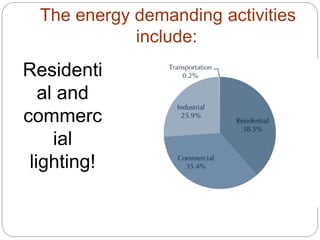
The energy demanding activities
include:
Residenti
al and
commerc
ial
lighting!
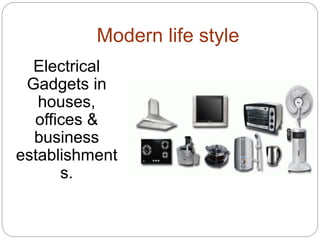
Modern life style
Electrical
Gadgets in
houses,
offices &
business
establishment
s.
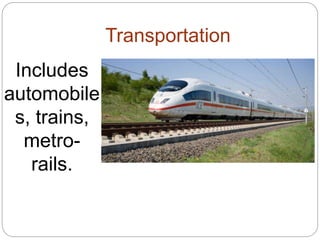
Transportation
Includes
automobile
s, trains,
metro-
rails.
Industrial Plants
These
consu
me a
big
portion
of
energy.
Manufacturing accounts for 85% of
industrial energy use. That
includes:
 Processing food and materials
like petroleum, iron ore,
bauxite, wood, and other
minerals
 Refining oil and gas
 Heat treating metal
 Assembling cars
 Industrial energy use also
includes non-
manufacturing activities, like:
 Agriculture
 Construction
 Mining
 Water and wastewater treatment
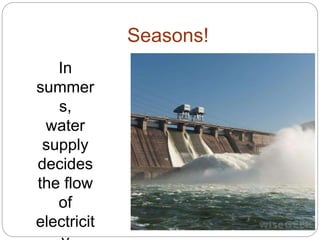
Seasons!
In
summer
s,
water
supply
decides
the flow
of
electricit
Waste Disposal
Using
energy
based
techniqu
es for the
disposal
of huge
amount
of waste.
 Incineration-Incineration is a waste
treatment process that involves the
combustion of organic substances
contained in waste
materials.Incineration of waste
materials converts the waste into ash,
flue gas, and heat.
 Gasification-Gasification is a process
that converts organic or fossil fuel
based carbonaceous materials into
carbon monoxide, hydrogen and
carbon dioxide. This is achieved by
reacting the material at high
temperatures without combustion, with
a controlled amount of oxygen and/or
Prevention & Control
Dependin
g on
energy
based
technologi
es for the
prevention
& control
of air,
water,
thermal &
nuclear
 Air Pollution:
 1. Carpool.
 2. Walk or ride a bicycle.
 3. Shop by phone or mail.
 4. Ride public transit.
 5. Telecommute.
 Thermal Pollution:
 1. Cooling towers.
 2. Cooling ponds.
 Water Pollution:
 1. No rubbish in streams.
 2. Use water wisely.
 3. Don’t throw chemicals, oils, paints, etc in water.
 4. Avoid overuse of chemicals and pesticides.
 Nuclear Pollution:
 1. Follow safety measures.
 2. Leakage be checked regularly.

Urban problems related to energy

  • 1.
  • 3.
    URBAN RURAL  Anurban area is the region surrounding a city.  Most inhabitants of urban areas have nonagricultural jobs.  Urban areas are very developed, meaning th ere is a density of human structures such as houses, commercial buildings, roads, bridges, and railways.  "Urban area" can refer to towns, cities, and suburbs.  An rural area is the region outside a city.  Most inhabitants of rural areas have agricultural jobs.  Rural areas are not developed, meaning th ere is less density of human structures such as houses, commercial buildings, roads, bridges, and railways.  “Rural area" can refer to villages.
  • 4.
    Energy Energy is thepower derived from the utilization of physical or chemical resources, especially to provide light and heat or to work machines.
  • 6.
    Energy Demand  Indeveloped countries (besides India) the amount of energy used is much more compared to underdeveloped / developing countries.  Industrialized developed countries use energy for these purposes: (i) residential and commercial (ii) industrial (iii) transportation.  In less-developed countries ( for example India), most of the energy is used by individuals.
  • 7.
    The energy demandingactivities include: Residenti al and commerc ial lighting!
  • 8.
    Modern life style Electrical Gadgetsin houses, offices & business establishment s.
  • 9.
  • 10.
    Industrial Plants These consu me a big portion of energy. Manufacturingaccounts for 85% of industrial energy use. That includes:  Processing food and materials like petroleum, iron ore, bauxite, wood, and other minerals  Refining oil and gas  Heat treating metal  Assembling cars
  • 11.
     Industrial energyuse also includes non- manufacturing activities, like:  Agriculture  Construction  Mining  Water and wastewater treatment
  • 12.
  • 13.
    Waste Disposal Using energy based techniqu es forthe disposal of huge amount of waste.  Incineration-Incineration is a waste treatment process that involves the combustion of organic substances contained in waste materials.Incineration of waste materials converts the waste into ash, flue gas, and heat.  Gasification-Gasification is a process that converts organic or fossil fuel based carbonaceous materials into carbon monoxide, hydrogen and carbon dioxide. This is achieved by reacting the material at high temperatures without combustion, with a controlled amount of oxygen and/or
  • 14.
    Prevention & Control Dependin gon energy based technologi es for the prevention & control of air, water, thermal & nuclear  Air Pollution:  1. Carpool.  2. Walk or ride a bicycle.  3. Shop by phone or mail.  4. Ride public transit.  5. Telecommute.  Thermal Pollution:  1. Cooling towers.  2. Cooling ponds.
  • 15.
     Water Pollution: 1. No rubbish in streams.  2. Use water wisely.  3. Don’t throw chemicals, oils, paints, etc in water.  4. Avoid overuse of chemicals and pesticides.  Nuclear Pollution:  1. Follow safety measures.  2. Leakage be checked regularly.