BY
P.RAMESH
RESEARCH SCHOLAR
DEPT. OF ENVIRONMENTAL
SCIENCE
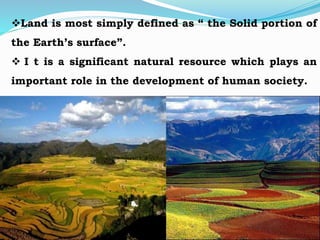
Land is most simply defined as “ the Solid portion of
the Earth’s surface”.
 I t is a significant natural resource which plays an
important role in the development of human society.
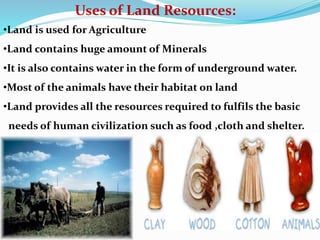
Uses of Land Resources:
•Land is used for Agriculture
•Land contains huge amount of Minerals
•It is also contains water in the form of underground water.
•Most of the animals have their habitat on land
•Land provides all the resources required to fulfils the basic
needs of human civilization such as food ,cloth and shelter.
Land Degradation
Land degradation is the temporary or permanent
lowering of the productive capacity of land (UNEP, 1992
Causes of Land Degradation:
Natural Causes:
•Heavy rains lead to the removal of topsoil making soil
infertile and hence unsuitable for agriculture
•Natural disasters: Earthquake and floods can have
considerable impact on land resources.
•High –speed winds: Winds of high intensity and storms
are responsible for land degradation
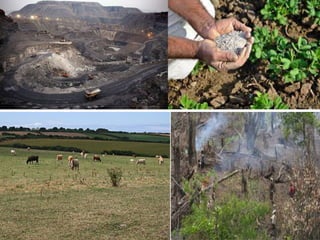
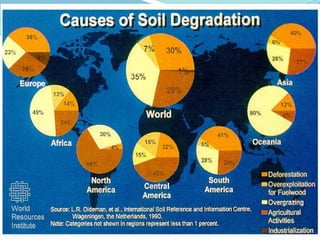
Anthropogenic Causes:
Mining: generates a lot of waste that destroys vegetation and
disrupts water circulation over large tracts, causes land degradation
Urbanization: The growing urbanization all over the world is
major cause of concern
Deforestation: The indiscriminate and uncontrolled removal of
trees have led to the destruction of forests.
Overgrazing: lowers soil quality and leads to land degradation
Dams and Canals: Construction of large dams and canals are also
responsible for loss of vegetation leading to land degradation.
Fertilizers: Most of the chemical fertilizers used in modern
Agriculture affect the productivity of soil and leads to land degradatio
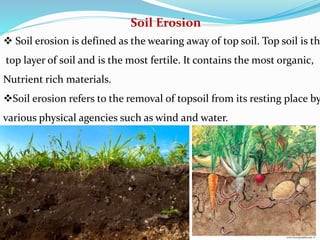
Soil Erosion
 Soil erosion is defined as the wearing away of top soil. Top soil is th
top layer of soil and is the most fertile. It contains the most organic,
Nutrient rich materials.
Soil erosion refers to the removal of topsoil from its resting place by
various physical agencies such as wind and water.
Causes of Soil erosion;
Water induced soil erosion:
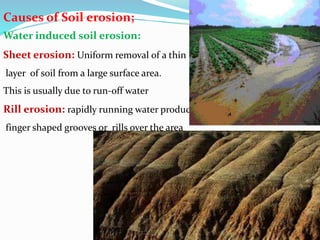
Sheet erosion: Uniform removal of a thin
layer of soil from a large surface area.
This is usually due to run-off water
Rill erosion: rapidly running water produces
finger shaped grooves or rills over the area
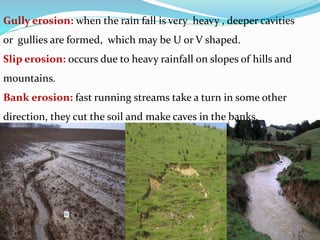
Gully erosion: when the rain fall is very heavy , deeper cavities
or gullies are formed, which may be U or V shaped.
Slip erosion: occurs due to heavy rainfall on slopes of hills and
mountains.
Bank erosion: fast running streams take a turn in some other
direction, they cut the soil and make caves in the banks.
.
Soil Conservation: It is extremely difficult for humans to control
the natural factors of soil erosion.
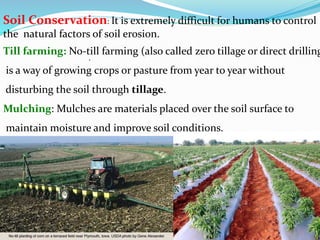
Till farming: No-till farming (also called zero tillage or direct drilling
is a way of growing crops or pasture from year to year without
disturbing the soil through tillage.
Mulching: Mulches are materials placed over the soil surface to
maintain moisture and improve soil conditions.
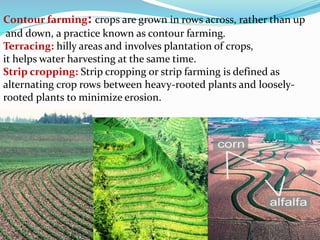
Contour farming: crops are grown in rows across, rather than up
and down, a practice known as contour farming.
Terracing: hilly areas and involves plantation of crops,
it helps water harvesting at the same time.
Strip cropping: Strip cropping or strip farming is defined as
alternating crop rows between heavy-rooted plants and loosely-
rooted plants to minimize erosion.
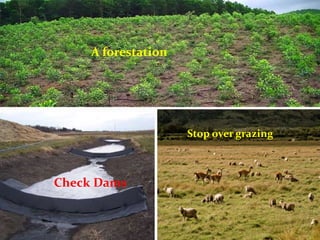
A forestation
Check Dams
Stop over grazing
Land resources(1)

Land resources(1)

  • 1.
  • 2.
    Land is mostsimply defined as “ the Solid portion of the Earth’s surface”.  I t is a significant natural resource which plays an important role in the development of human society.
  • 3.
    Uses of LandResources: •Land is used for Agriculture •Land contains huge amount of Minerals •It is also contains water in the form of underground water. •Most of the animals have their habitat on land •Land provides all the resources required to fulfils the basic needs of human civilization such as food ,cloth and shelter.
  • 4.
    Land Degradation Land degradationis the temporary or permanent lowering of the productive capacity of land (UNEP, 1992 Causes of Land Degradation: Natural Causes: •Heavy rains lead to the removal of topsoil making soil infertile and hence unsuitable for agriculture •Natural disasters: Earthquake and floods can have considerable impact on land resources. •High –speed winds: Winds of high intensity and storms are responsible for land degradation
  • 6.
    Anthropogenic Causes: Mining: generatesa lot of waste that destroys vegetation and disrupts water circulation over large tracts, causes land degradation Urbanization: The growing urbanization all over the world is major cause of concern Deforestation: The indiscriminate and uncontrolled removal of trees have led to the destruction of forests. Overgrazing: lowers soil quality and leads to land degradation Dams and Canals: Construction of large dams and canals are also responsible for loss of vegetation leading to land degradation. Fertilizers: Most of the chemical fertilizers used in modern Agriculture affect the productivity of soil and leads to land degradatio
  • 9.
    Soil Erosion  Soilerosion is defined as the wearing away of top soil. Top soil is th top layer of soil and is the most fertile. It contains the most organic, Nutrient rich materials. Soil erosion refers to the removal of topsoil from its resting place by various physical agencies such as wind and water.
  • 10.
    Causes of Soilerosion; Water induced soil erosion: Sheet erosion: Uniform removal of a thin layer of soil from a large surface area. This is usually due to run-off water Rill erosion: rapidly running water produces finger shaped grooves or rills over the area
  • 11.
    Gully erosion: whenthe rain fall is very heavy , deeper cavities or gullies are formed, which may be U or V shaped. Slip erosion: occurs due to heavy rainfall on slopes of hills and mountains. Bank erosion: fast running streams take a turn in some other direction, they cut the soil and make caves in the banks.
  • 12.
    . Soil Conservation: Itis extremely difficult for humans to control the natural factors of soil erosion. Till farming: No-till farming (also called zero tillage or direct drilling is a way of growing crops or pasture from year to year without disturbing the soil through tillage. Mulching: Mulches are materials placed over the soil surface to maintain moisture and improve soil conditions.
  • 13.
    Contour farming: cropsare grown in rows across, rather than up and down, a practice known as contour farming. Terracing: hilly areas and involves plantation of crops, it helps water harvesting at the same time. Strip cropping: Strip cropping or strip farming is defined as alternating crop rows between heavy-rooted plants and loosely- rooted plants to minimize erosion.
  • 14.