•To reduce of run-off loss & to avoid flooding.
•To meet the increasing demand of water.
•To raise water table by recharging ground water.
•To reduce ground water contamination.
•To supplement ground water supplies during lean
season.
•To prevent salinity.
1.Roof top Rain water harvesting
2. Artificial ground water recharching
3. Check Dams
4. Embankment type water
5. Underground tanks and Khadins(embankments)
1. In Amritsar (Punjab) - Golden Temple
2. In JNU, Delhi campusthe water table has risen from
0.8to 1.0 m after recharged through four check
dams
3. In IIT, Delhi, water table raised by 3 to 4 m through
roof for harvesting & recharge through two
injection wells.
4. In Maharashtra, more than 7000 percolation tanks
built after severe drought hit areas into green
lands
5. In M.P more than 1000 check dams & 1050 tanks
constructed in jhabua district.(It inc food production
by 38% in last 5 years.
6. In Jodhpur district (Rajasthan), Gramin vikas
Samity motivated residents of 25 villages & built
2000 storage tanks. (Tanks are lined with alum &
Lime, which keep stored water fresh for 4 months)
1. Rise in water table by recharging the aquifers.
2. Improves ground water quality by dilution.
3. Reduces soil erosion by minimizing run-off water.
4. Mitigating the effects of drought &flood hazards.
5. Reduction in use of energy for pumping water &
consequently the costs
6. Assures sustainability of ground water
abstraction sources.
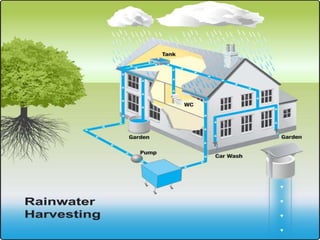
Rain water harvesting

Rain water harvesting

  • 5.
    •To reduce ofrun-off loss & to avoid flooding. •To meet the increasing demand of water. •To raise water table by recharging ground water. •To reduce ground water contamination. •To supplement ground water supplies during lean season. •To prevent salinity.
  • 6.
    1.Roof top Rainwater harvesting 2. Artificial ground water recharching 3. Check Dams 4. Embankment type water 5. Underground tanks and Khadins(embankments)
  • 7.
    1. In Amritsar(Punjab) - Golden Temple 2. In JNU, Delhi campusthe water table has risen from 0.8to 1.0 m after recharged through four check dams 3. In IIT, Delhi, water table raised by 3 to 4 m through roof for harvesting & recharge through two injection wells. 4. In Maharashtra, more than 7000 percolation tanks built after severe drought hit areas into green lands
  • 8.
    5. In M.Pmore than 1000 check dams & 1050 tanks constructed in jhabua district.(It inc food production by 38% in last 5 years. 6. In Jodhpur district (Rajasthan), Gramin vikas Samity motivated residents of 25 villages & built 2000 storage tanks. (Tanks are lined with alum & Lime, which keep stored water fresh for 4 months)
  • 9.
    1. Rise inwater table by recharging the aquifers. 2. Improves ground water quality by dilution. 3. Reduces soil erosion by minimizing run-off water. 4. Mitigating the effects of drought &flood hazards. 5. Reduction in use of energy for pumping water & consequently the costs 6. Assures sustainability of ground water abstraction sources.