PRESENTED BY,
 PRIYANKA CHOWKSEY
CONTENTS
• Human development.
• Need of sustainable development.
• Environmental ethical issues.
• Resource consumption pattern.
• Need of equitable utilization.
• Equity disparity.
    a) Western and Eastern countries.
    b) Urban and Rural equity issues.
    c) Gender equity.
• Suggestions.
Human Development
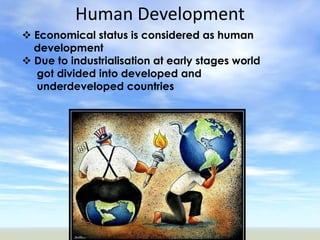
 Economical status is considered as human
  development
 Due to industrialisation at early stages world
  got divided into developed and
  underdeveloped countries
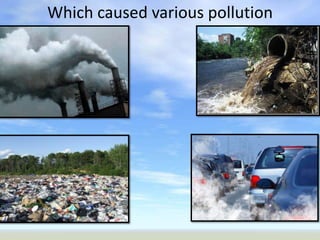
Which caused various pollution
Sustainable development

Sustainable development is defined as
development that meets the needs of the
present without compromising the ability of
future generations to meet their own Needs.
Environmental ethics

• Environmental ethics deals with issues related to
  the rights of individuals that are fundamental to
  life and well being. This concerns not only the
  needs of each person today, but also those who
  will come after us. It also deals with the rights of
  other living creatures that inhabit on earth.
Resource consumption pattern
• Environmental destruction is largely caused by
  the consumption of the rich.
• The worst sufferers of environmental
  destruction are the poor
• Even where nature is being ‘used’ it is being
  taken away from the needs of the poor and
  towards those of the rich.
• Even among the poor, the worst sufferers are
  the backward cultures and occupations, and
  most of all, women.
Cont…
• If we care for the poor, we cannot allow the
  Gross Nature Product to be destroyed any
  further. Conserving and recreating nature has
  become our highest priority
• The well educated urban dweller consumes
  much larger quantities of resources and
  energy


                    Source: Annual Environment Report of India, 2009
WORLD’S ENERGY CONSUMPTION
PATTERN
  COUNTRY    POPULATION* ENERGY USE*

  USA                            305                          26.6

  EU-27                          499                          20.2

  CHINA                          1333                         24.8

  MIDDLE EAST                    199                          6.9

  LATIN AMERICA                  462                          6.7

  AFRICA                         194                          7.7

  INDIA                          1140                         7.2

  OTHERS*                        1766                         42.2

   Population- In millions
   Energy Use- 1000 THW (Thw=3.6 megajoules)
   Others-remaining countries in asia n australia like
   japan, butan, bangladesh,pakistan,etc
                                        Source: IEA/OECD, Population OECD/World Bank
Between Western and Eastern
    Countries


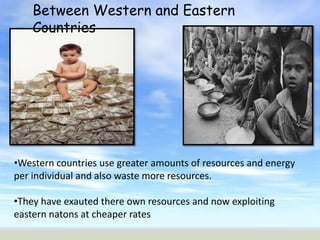
•Western countries use greater amounts of resources and energy
per individual and also waste more resources.

•They have exauted there own resources and now exploiting
eastern natons at cheaper rates
Urban and Rural
• Rural communities supplying
  the needs of the urban sector.
• Land of villages is being taken
  over by the urban and industrial
  sectors to expand.
• Thus while the cities get
  richer, the rural
  sector, especially the
  landless, get poorer.
• The urban rich must appreciate
  where their resources are
  derived from and be willing to
  pay a fair price for using them.
Gender discrimination
• The ratio of energy consumption of
 men and women in world is 9:7
 And population wise it is 1.1:1

• The conditions are worst in poor and
  undeveloped societies.

• In India the average time of hard work
  done by a Woman is 1.75 times
  greater than Man.
some suggestions

• While conserving resources these ethic issues
  must be considered.
• There must be equitable use of resources over
  the Globe.
• Conservation of nature should start at
  individual level.
Some Do’s and Dont’s
• Choose products with limited packaging.
• Donate used books and magazines to
  schools, hospitals, or libraries.
• Participate in the events that highlight the need for
  creating Sanctuaries and National Parks.
• Do not present flower bouquets instead give a
  potted plant.
• Do not disturb, tease, hurt or throw stones
• at animals in a Protected Area and stop others
• from doing so.
Cont..
• No wildlife products should be used.
• Use a pressure cooker as much as possible to save
  energy
• Get your family to eat together, it will save re-
  heating fuel.
• Try using public transport systems like trains and
  buses as far as possible
• Do not use unnecessary outdoor decorative lights.
• Do not put food in the refrigerator when they are
  still hot.
• Each one teach one about conservation of
  environment
ENVIRONMENTAL ETHICS

ENVIRONMENTAL ETHICS

  • 1.
  • 2.
    CONTENTS • Human development. •Need of sustainable development. • Environmental ethical issues. • Resource consumption pattern. • Need of equitable utilization. • Equity disparity. a) Western and Eastern countries. b) Urban and Rural equity issues. c) Gender equity. • Suggestions.
  • 3.
    Human Development  Economicalstatus is considered as human development  Due to industrialisation at early stages world got divided into developed and underdeveloped countries
  • 4.
  • 5.
    Sustainable development Sustainable developmentis defined as development that meets the needs of the present without compromising the ability of future generations to meet their own Needs.
  • 6.
    Environmental ethics • Environmentalethics deals with issues related to the rights of individuals that are fundamental to life and well being. This concerns not only the needs of each person today, but also those who will come after us. It also deals with the rights of other living creatures that inhabit on earth.
  • 7.
    Resource consumption pattern •Environmental destruction is largely caused by the consumption of the rich. • The worst sufferers of environmental destruction are the poor • Even where nature is being ‘used’ it is being taken away from the needs of the poor and towards those of the rich. • Even among the poor, the worst sufferers are the backward cultures and occupations, and most of all, women.
  • 8.
    Cont… • If wecare for the poor, we cannot allow the Gross Nature Product to be destroyed any further. Conserving and recreating nature has become our highest priority • The well educated urban dweller consumes much larger quantities of resources and energy Source: Annual Environment Report of India, 2009
  • 9.
    WORLD’S ENERGY CONSUMPTION PATTERN COUNTRY POPULATION* ENERGY USE* USA 305 26.6 EU-27 499 20.2 CHINA 1333 24.8 MIDDLE EAST 199 6.9 LATIN AMERICA 462 6.7 AFRICA 194 7.7 INDIA 1140 7.2 OTHERS* 1766 42.2 Population- In millions Energy Use- 1000 THW (Thw=3.6 megajoules) Others-remaining countries in asia n australia like japan, butan, bangladesh,pakistan,etc Source: IEA/OECD, Population OECD/World Bank
  • 10.
    Between Western andEastern Countries •Western countries use greater amounts of resources and energy per individual and also waste more resources. •They have exauted there own resources and now exploiting eastern natons at cheaper rates
  • 11.
    Urban and Rural •Rural communities supplying the needs of the urban sector. • Land of villages is being taken over by the urban and industrial sectors to expand. • Thus while the cities get richer, the rural sector, especially the landless, get poorer. • The urban rich must appreciate where their resources are derived from and be willing to pay a fair price for using them.
  • 12.
    Gender discrimination • Theratio of energy consumption of men and women in world is 9:7 And population wise it is 1.1:1 • The conditions are worst in poor and undeveloped societies. • In India the average time of hard work done by a Woman is 1.75 times greater than Man.
  • 13.
    some suggestions • Whileconserving resources these ethic issues must be considered. • There must be equitable use of resources over the Globe. • Conservation of nature should start at individual level.
  • 14.
    Some Do’s andDont’s • Choose products with limited packaging. • Donate used books and magazines to schools, hospitals, or libraries. • Participate in the events that highlight the need for creating Sanctuaries and National Parks. • Do not present flower bouquets instead give a potted plant. • Do not disturb, tease, hurt or throw stones • at animals in a Protected Area and stop others • from doing so.
  • 15.
    Cont.. • No wildlifeproducts should be used. • Use a pressure cooker as much as possible to save energy • Get your family to eat together, it will save re- heating fuel. • Try using public transport systems like trains and buses as far as possible • Do not use unnecessary outdoor decorative lights. • Do not put food in the refrigerator when they are still hot. • Each one teach one about conservation of environment