
Downloaded 32 times
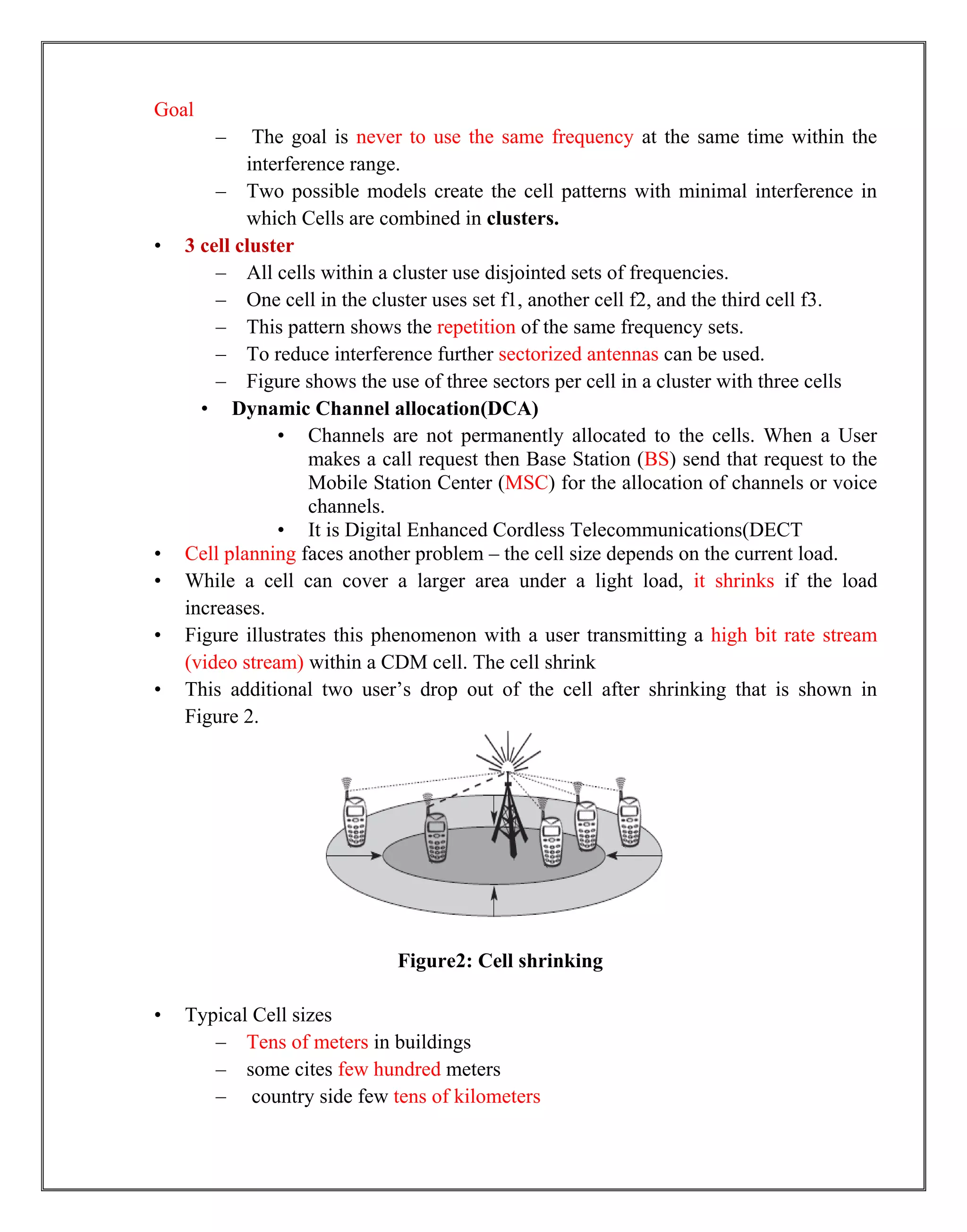
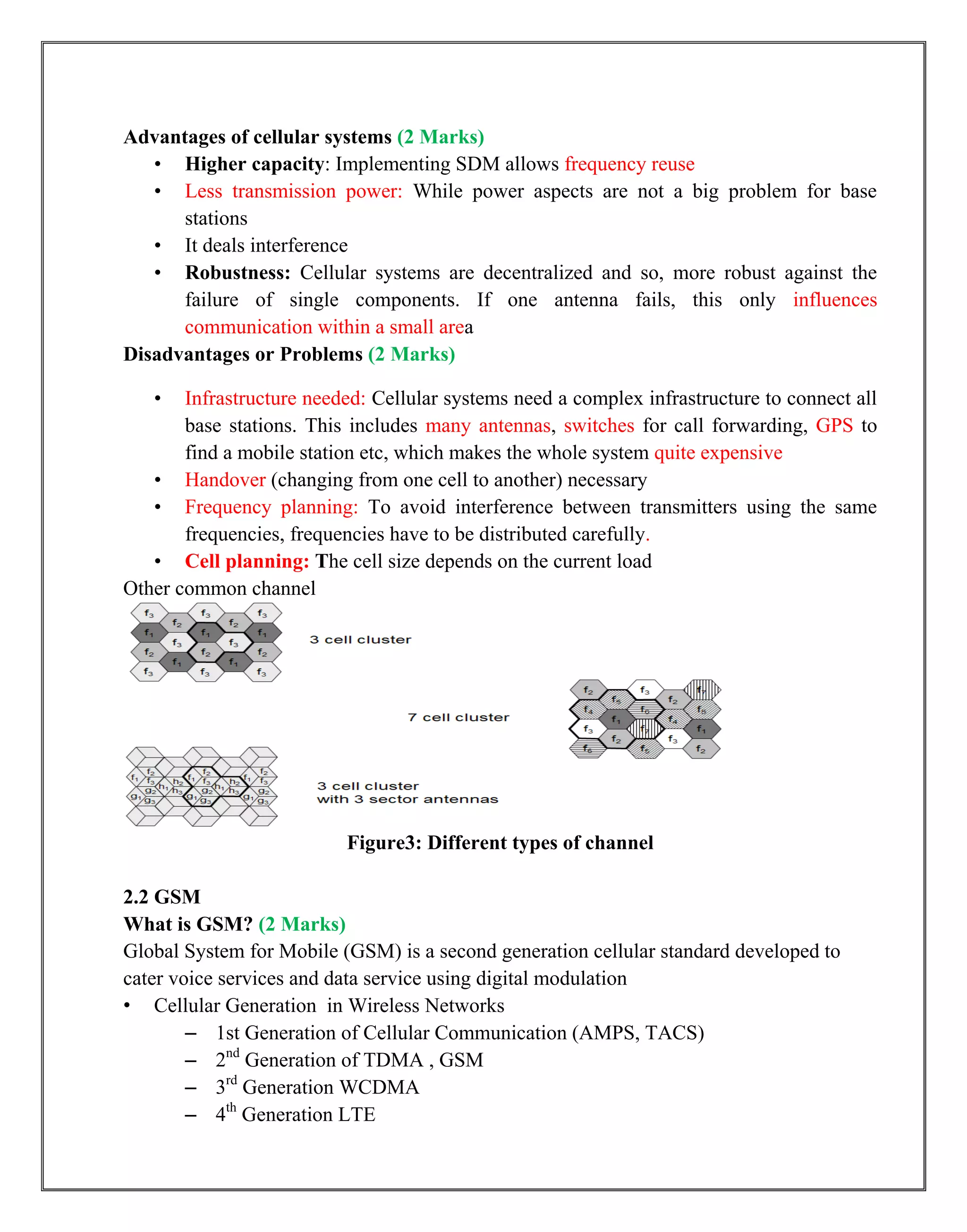
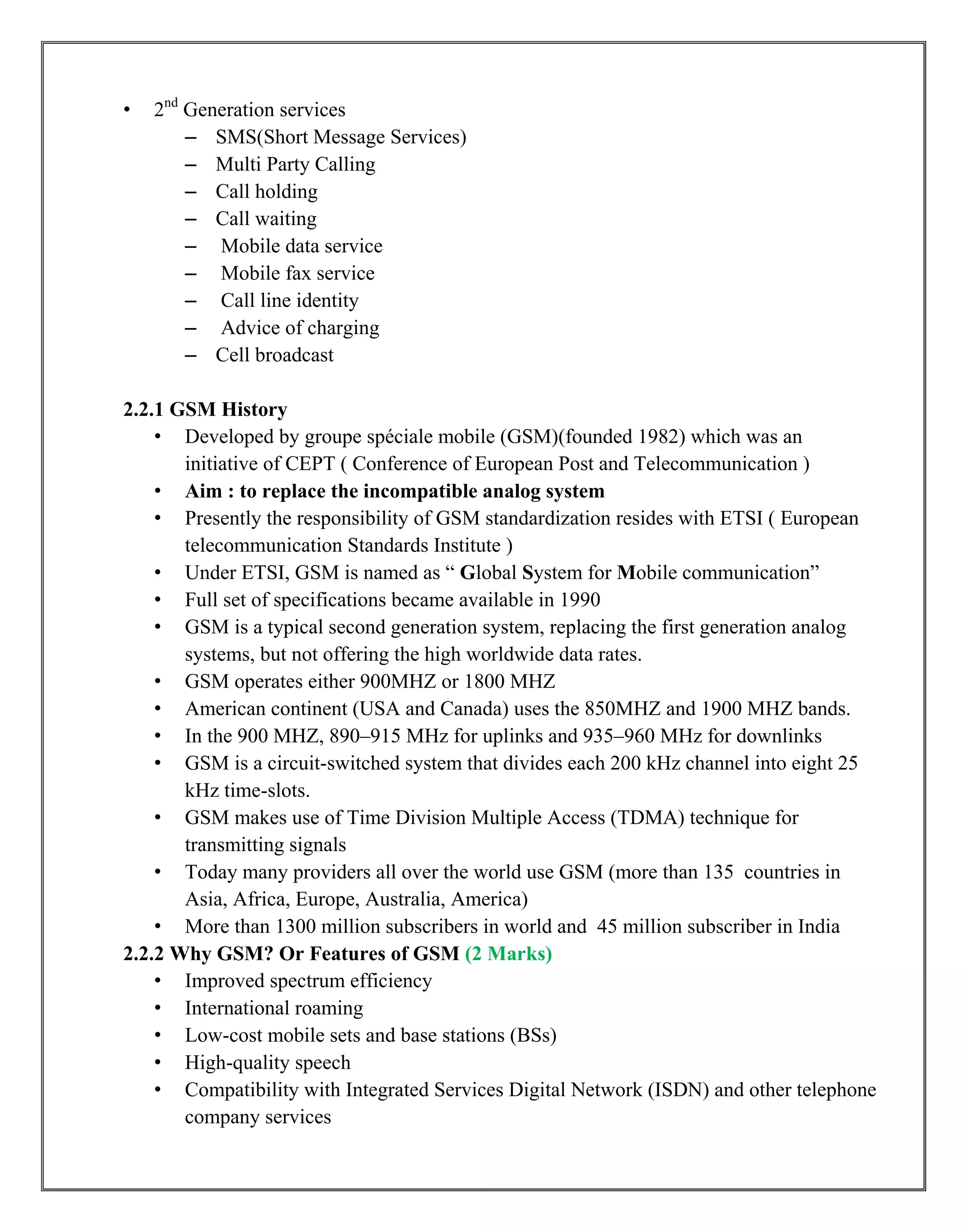
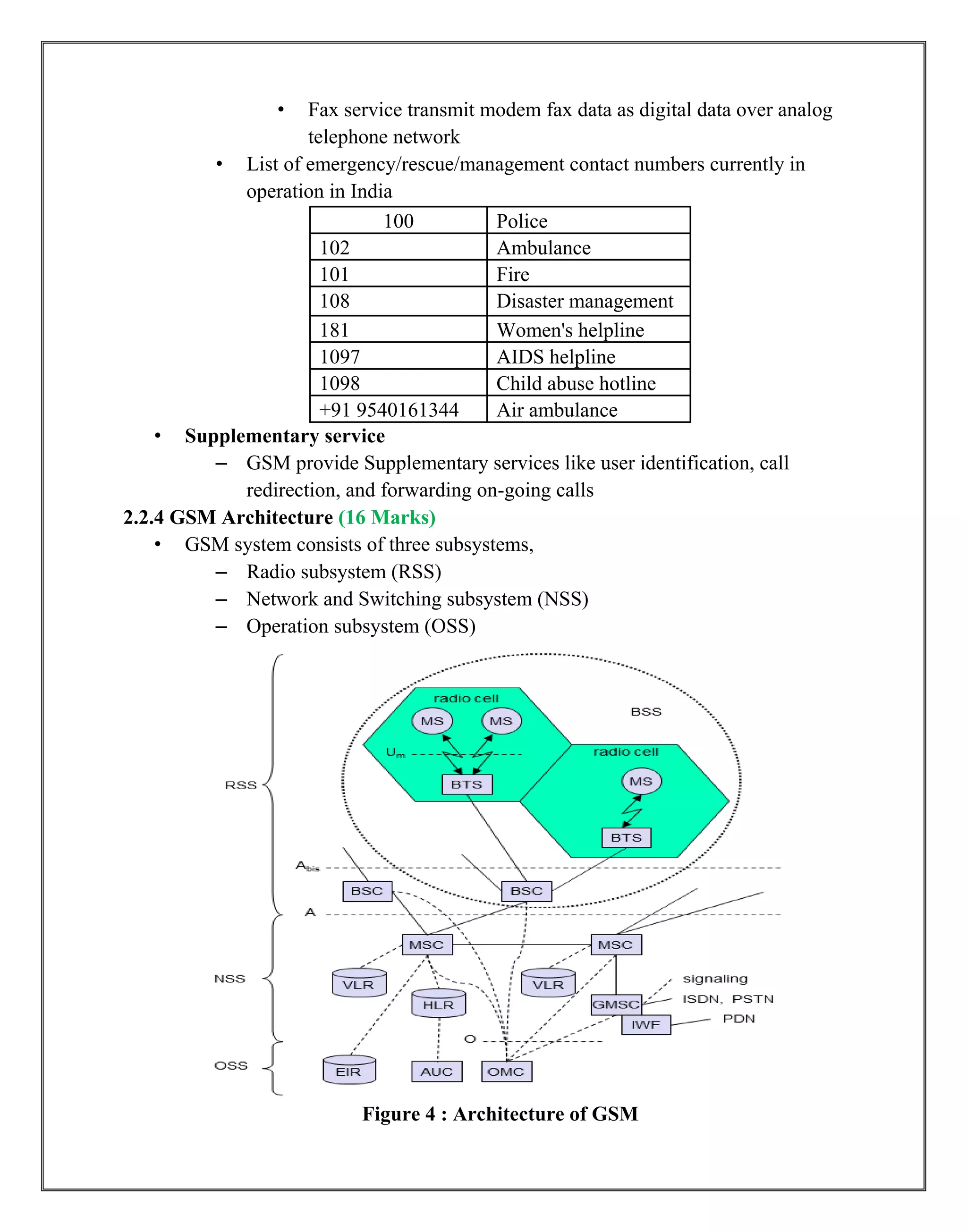
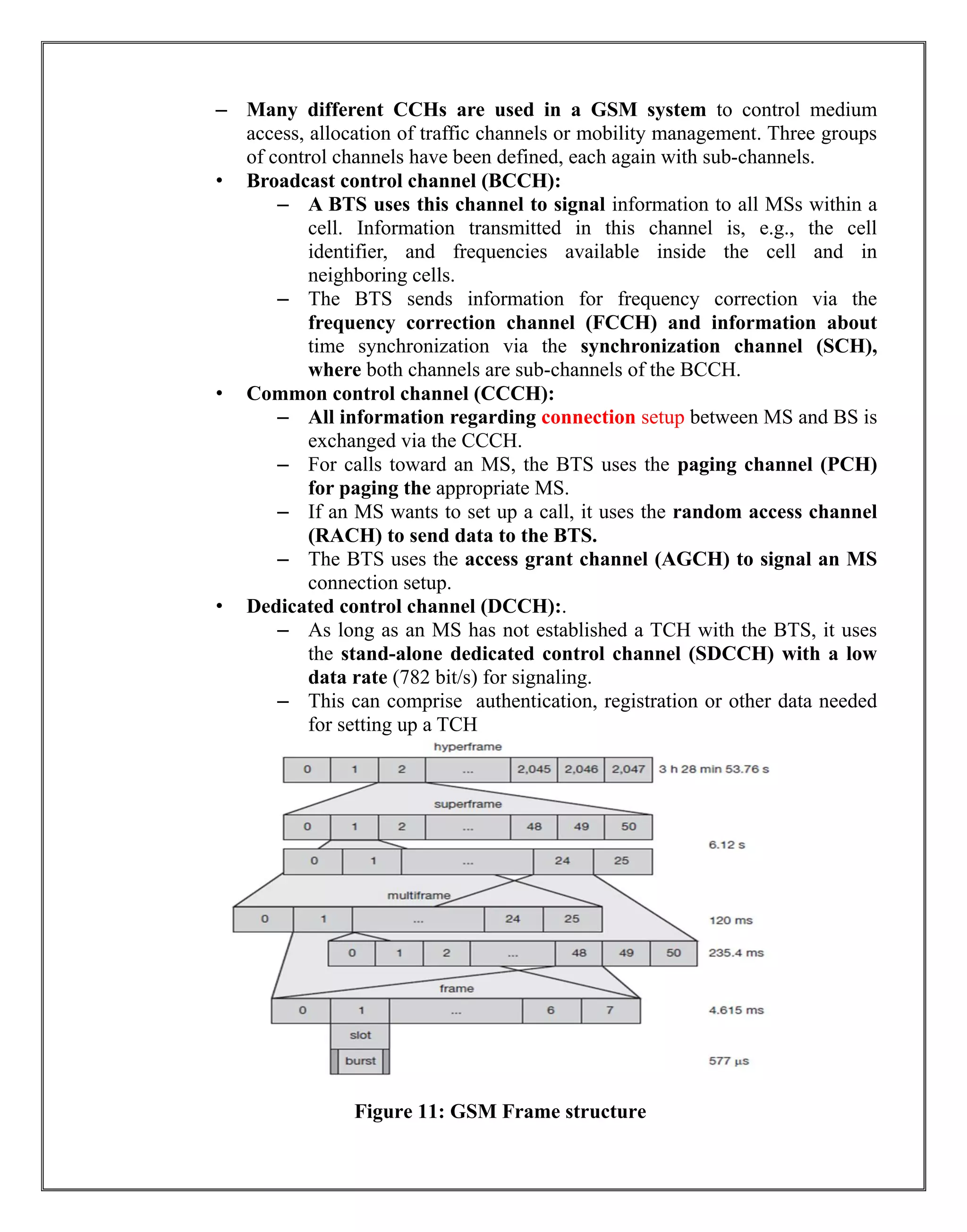
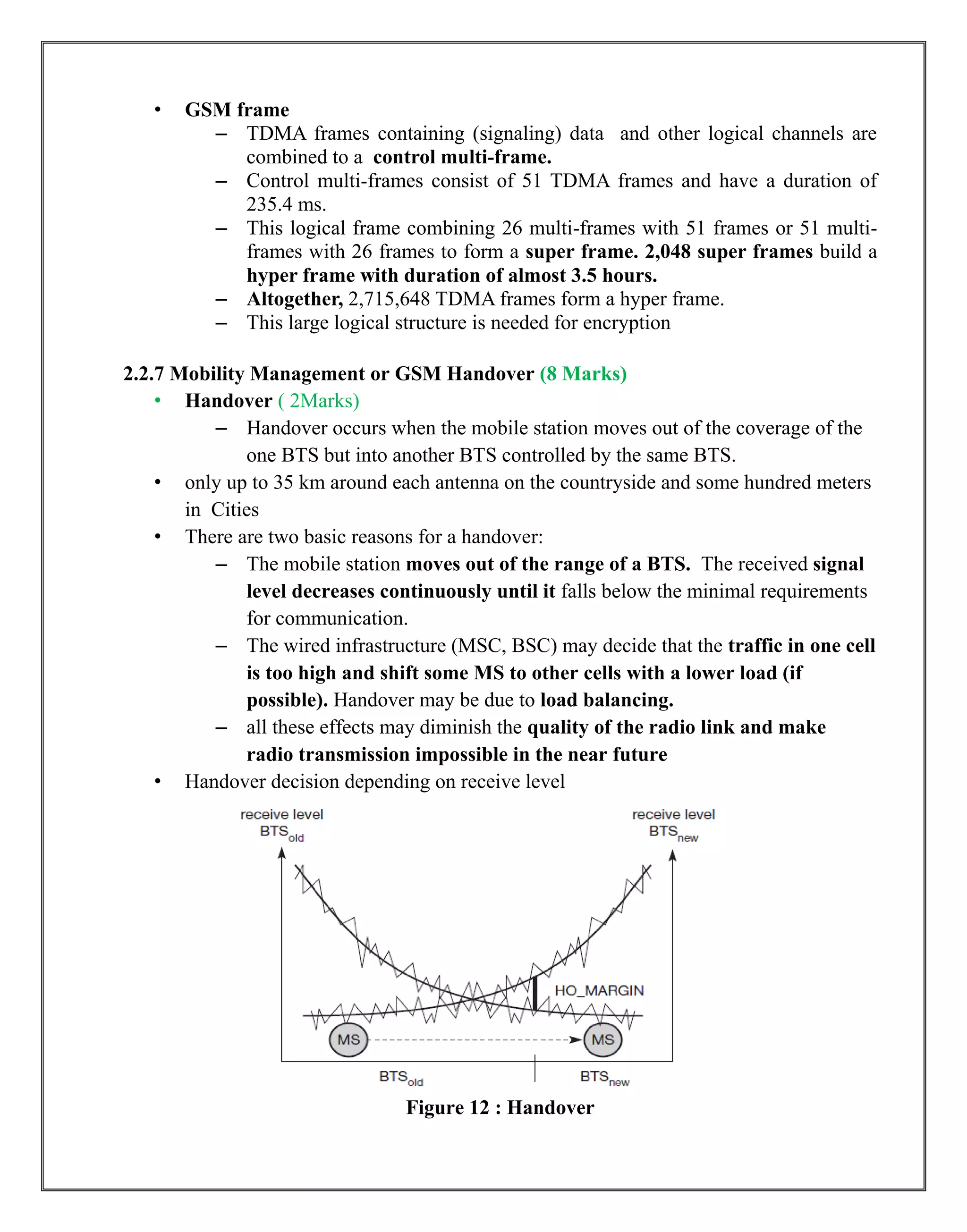

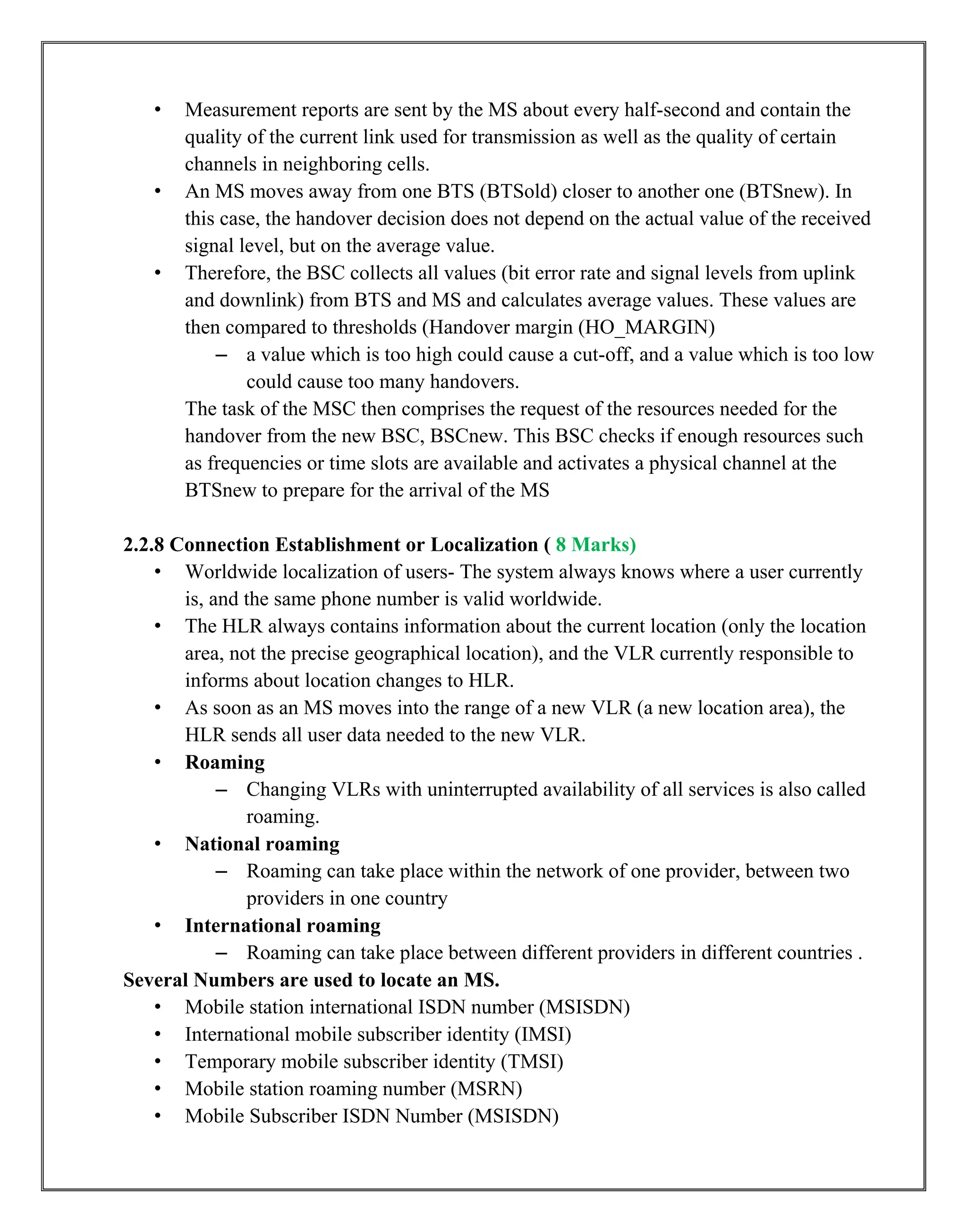
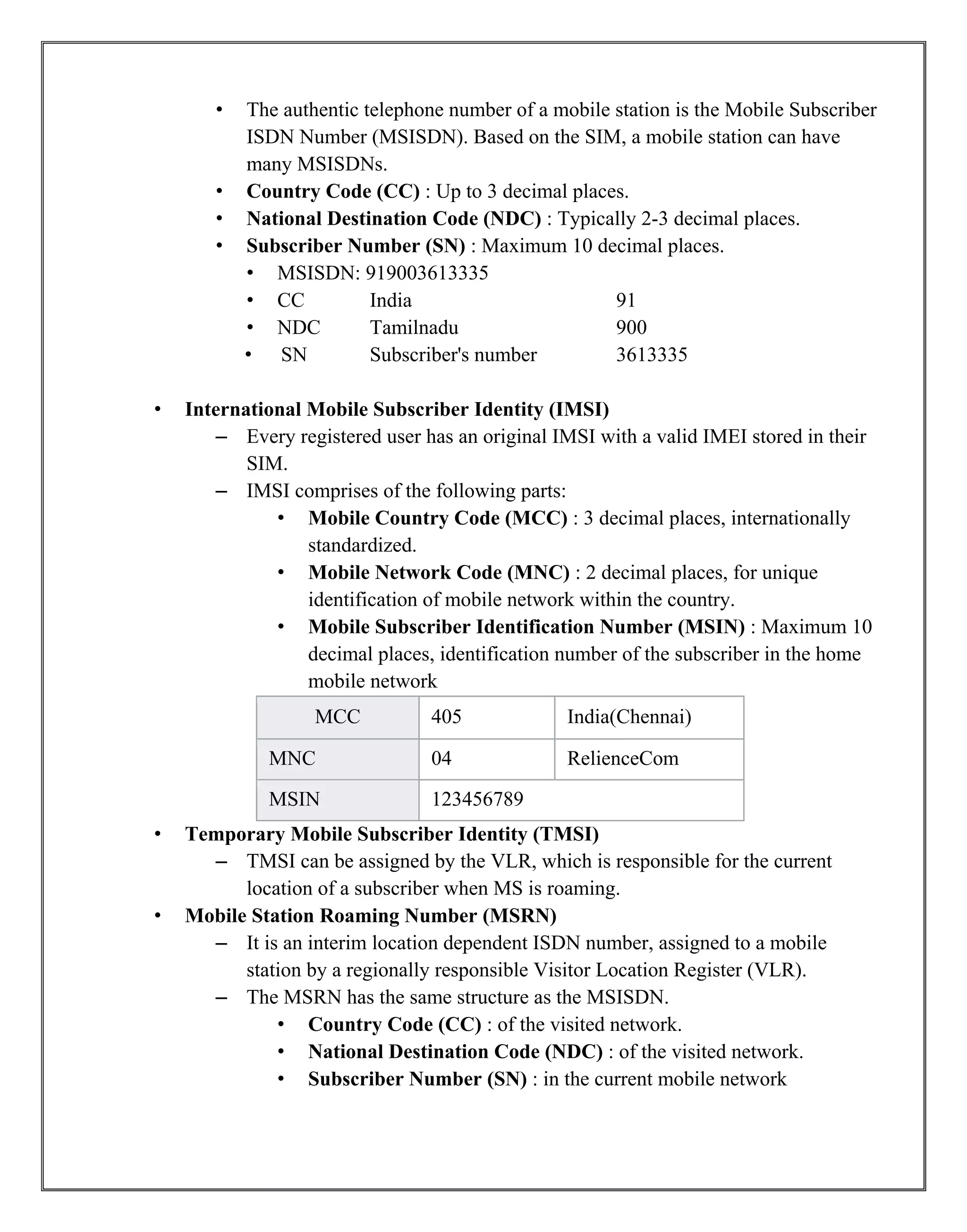
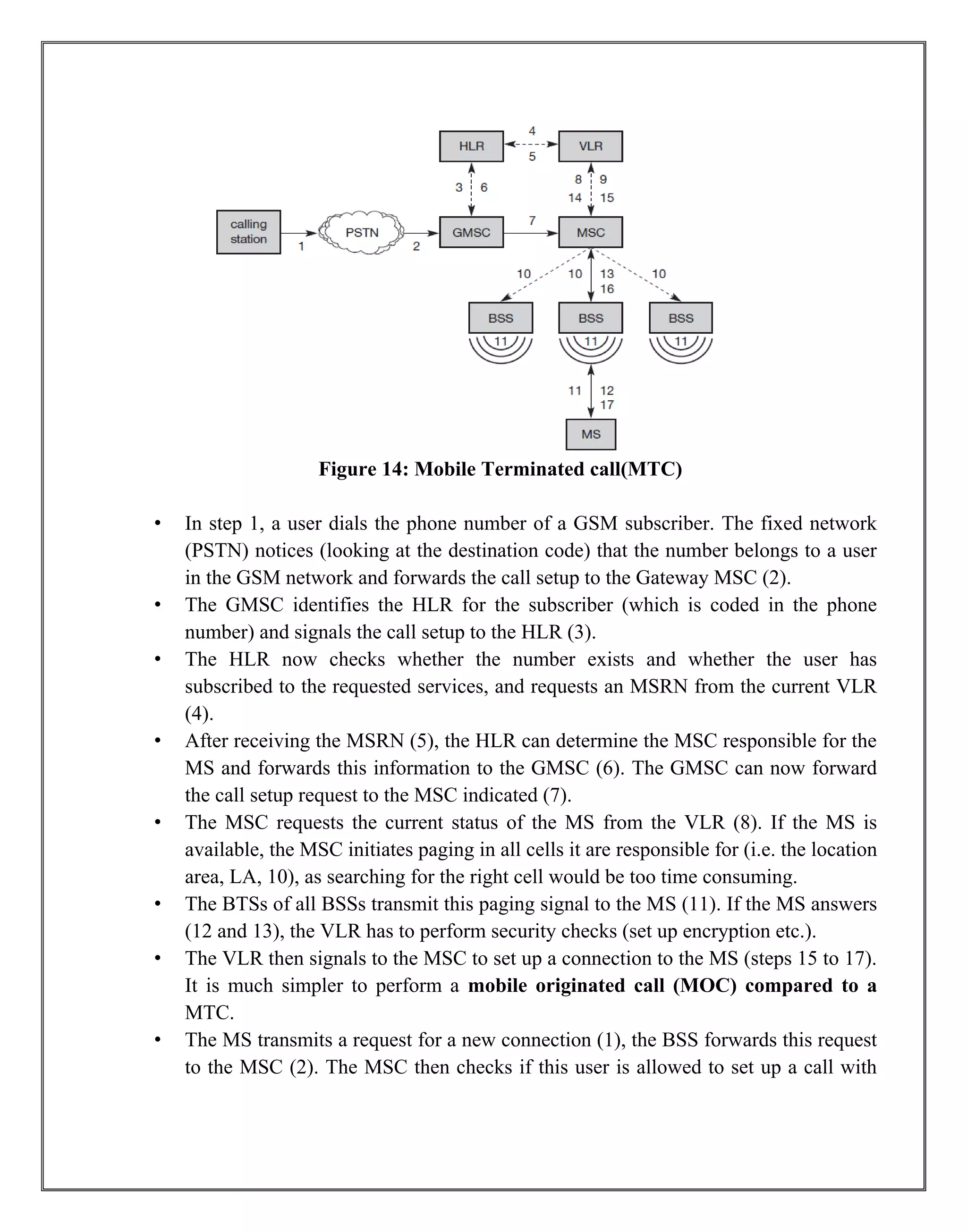
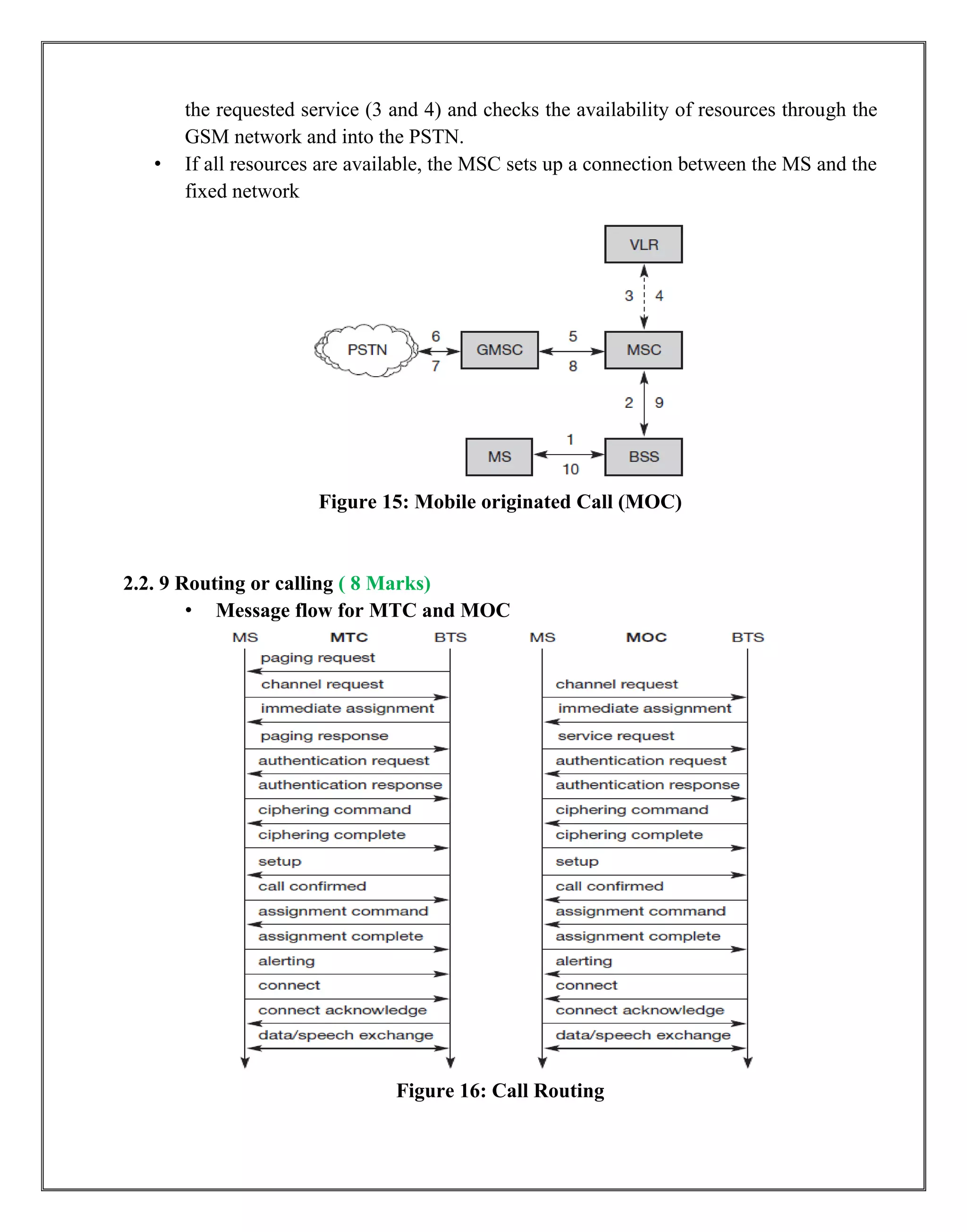
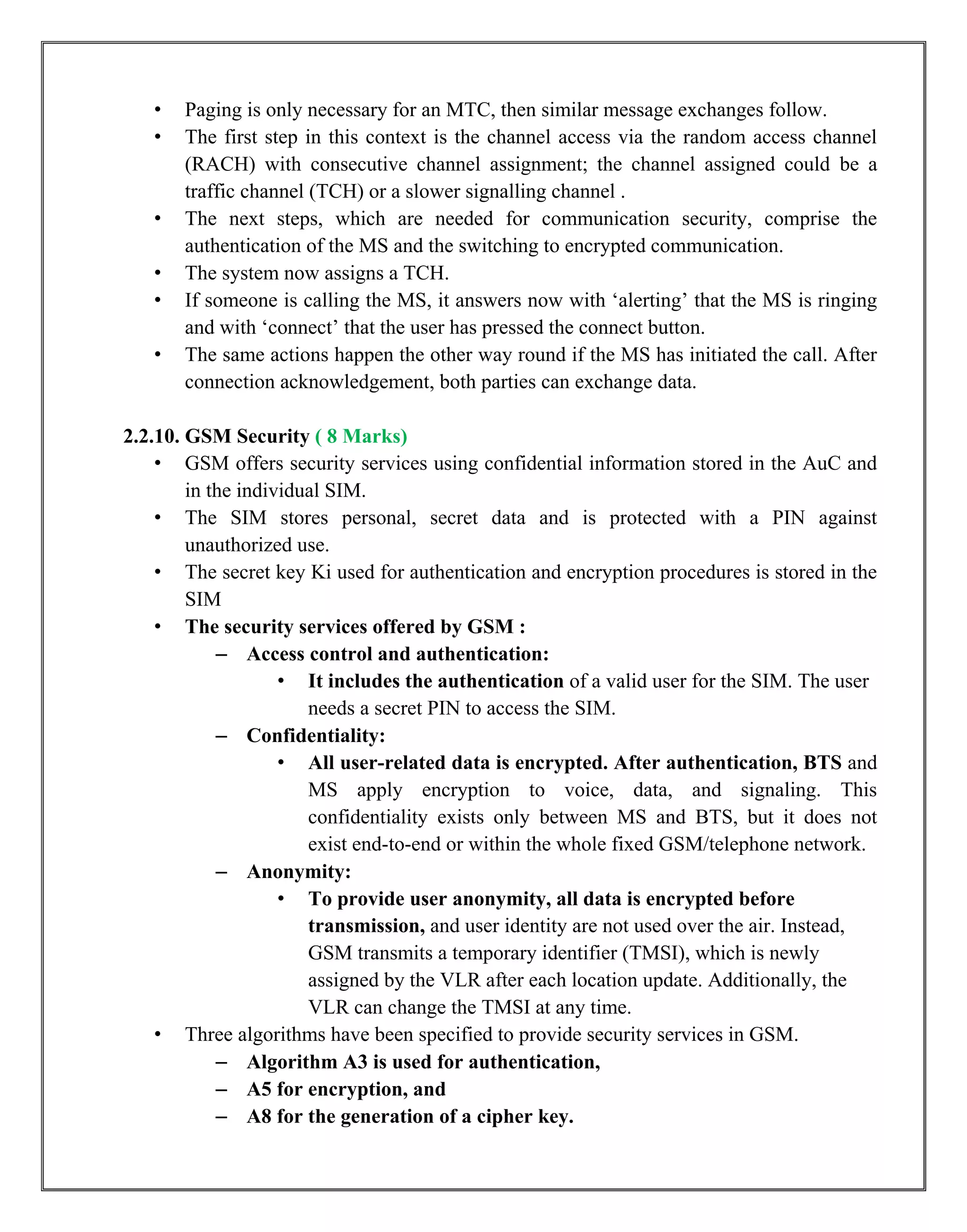
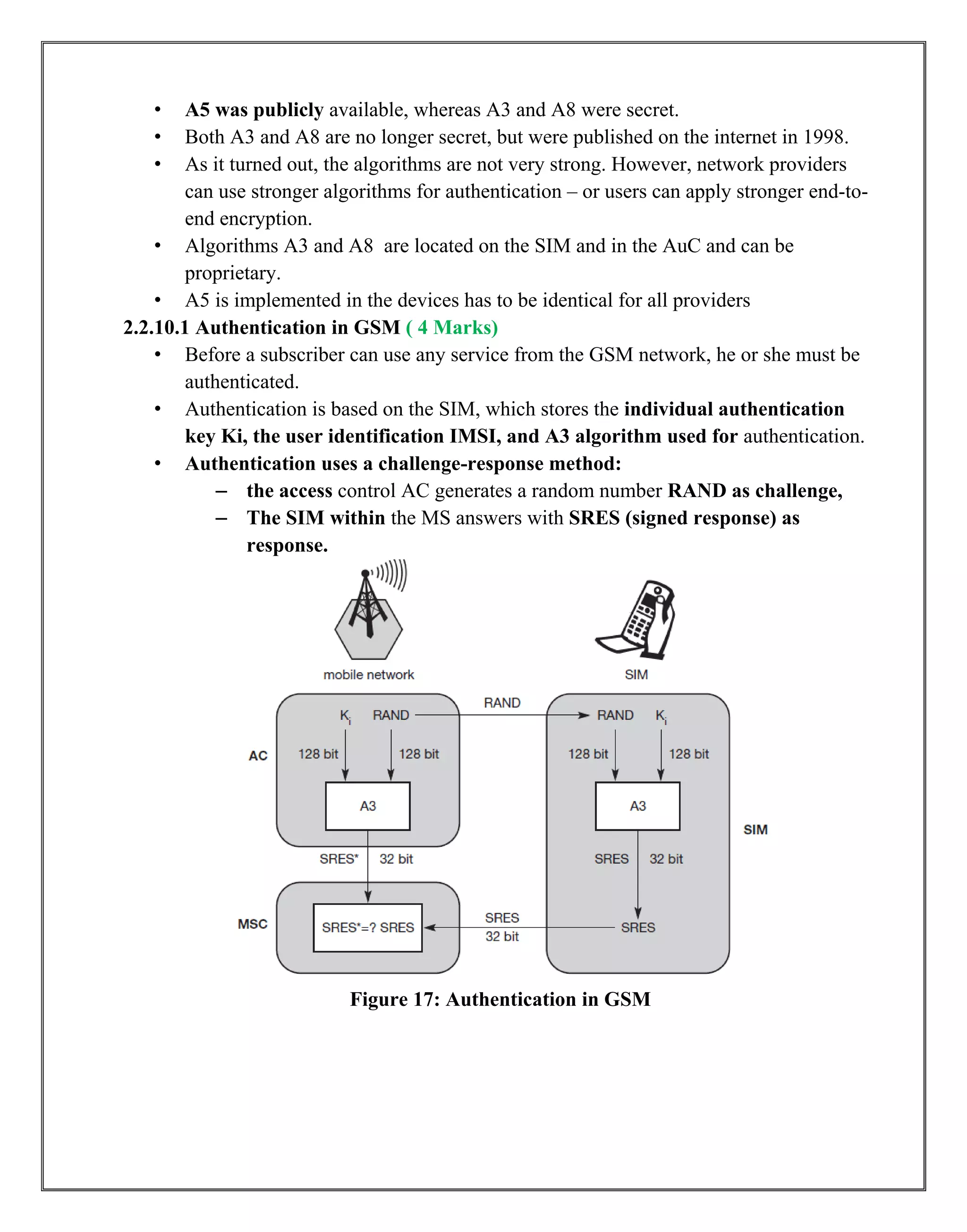
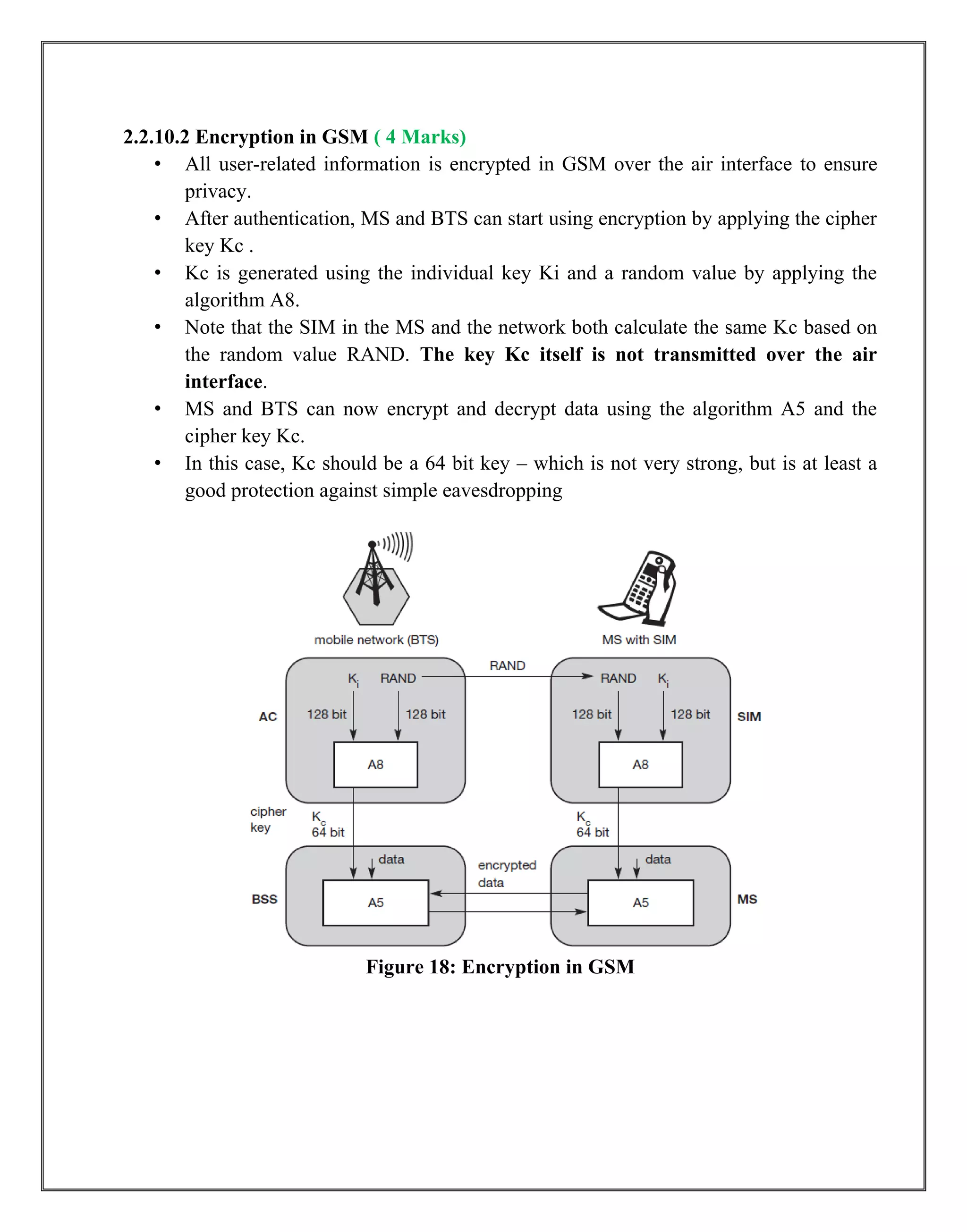
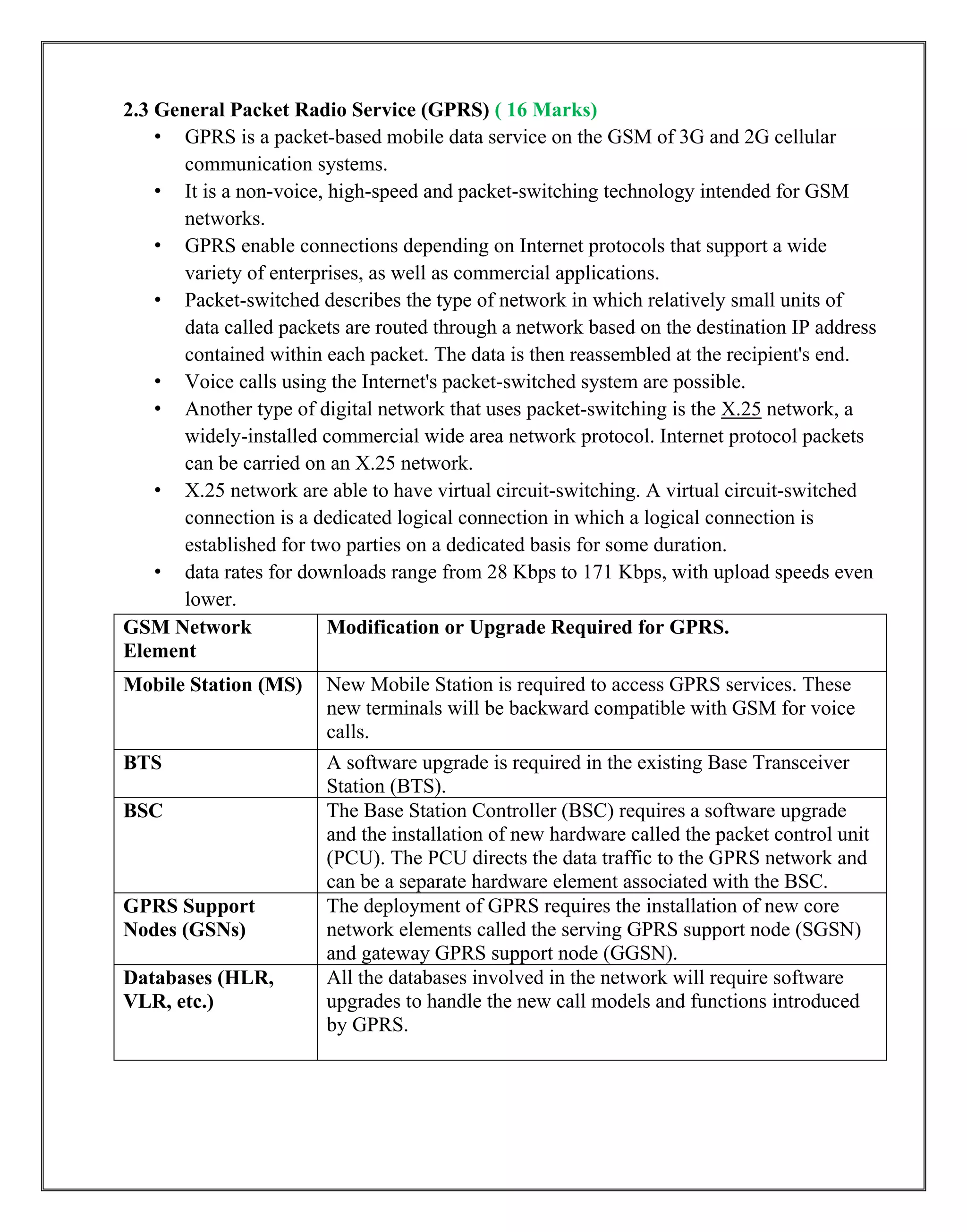
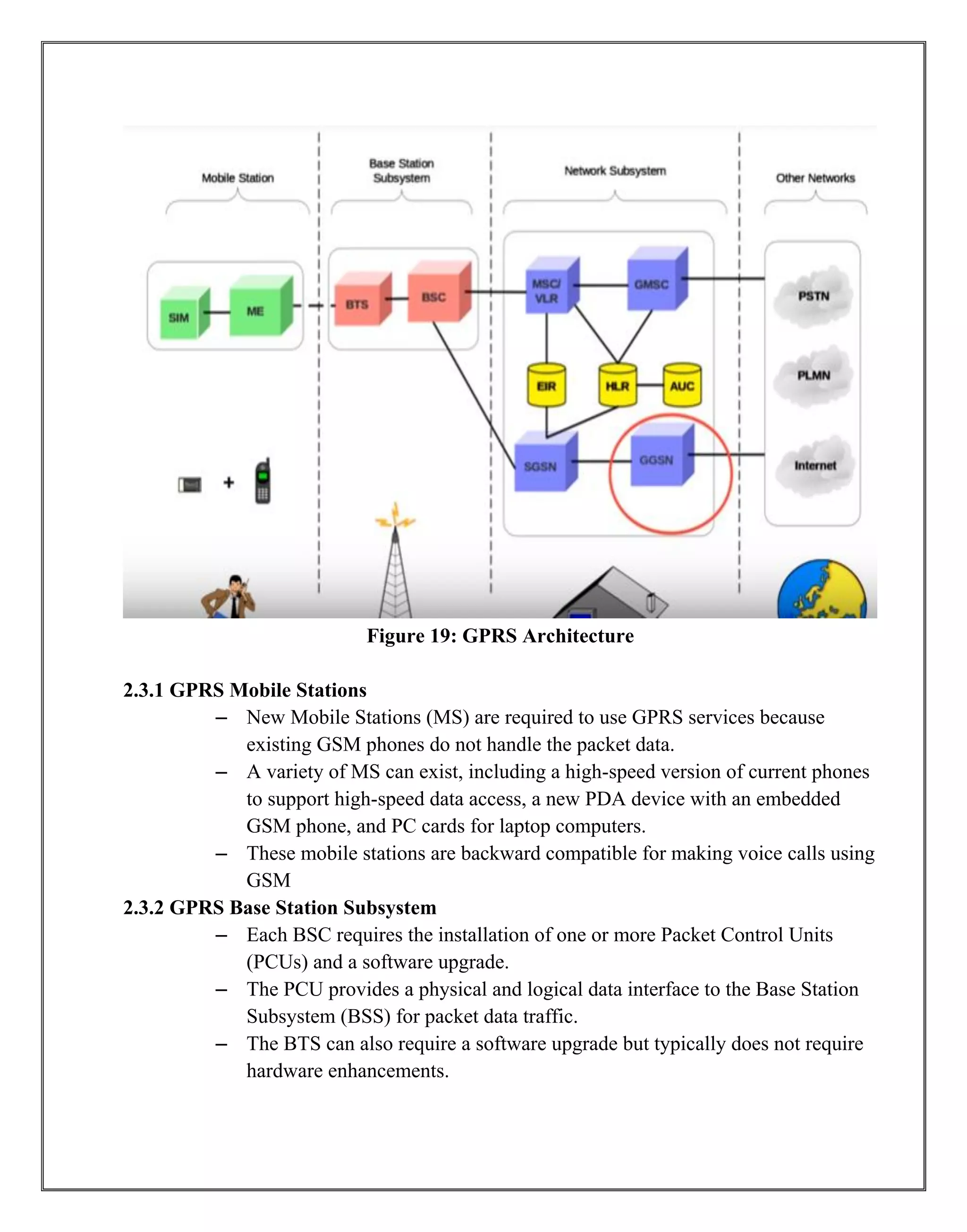
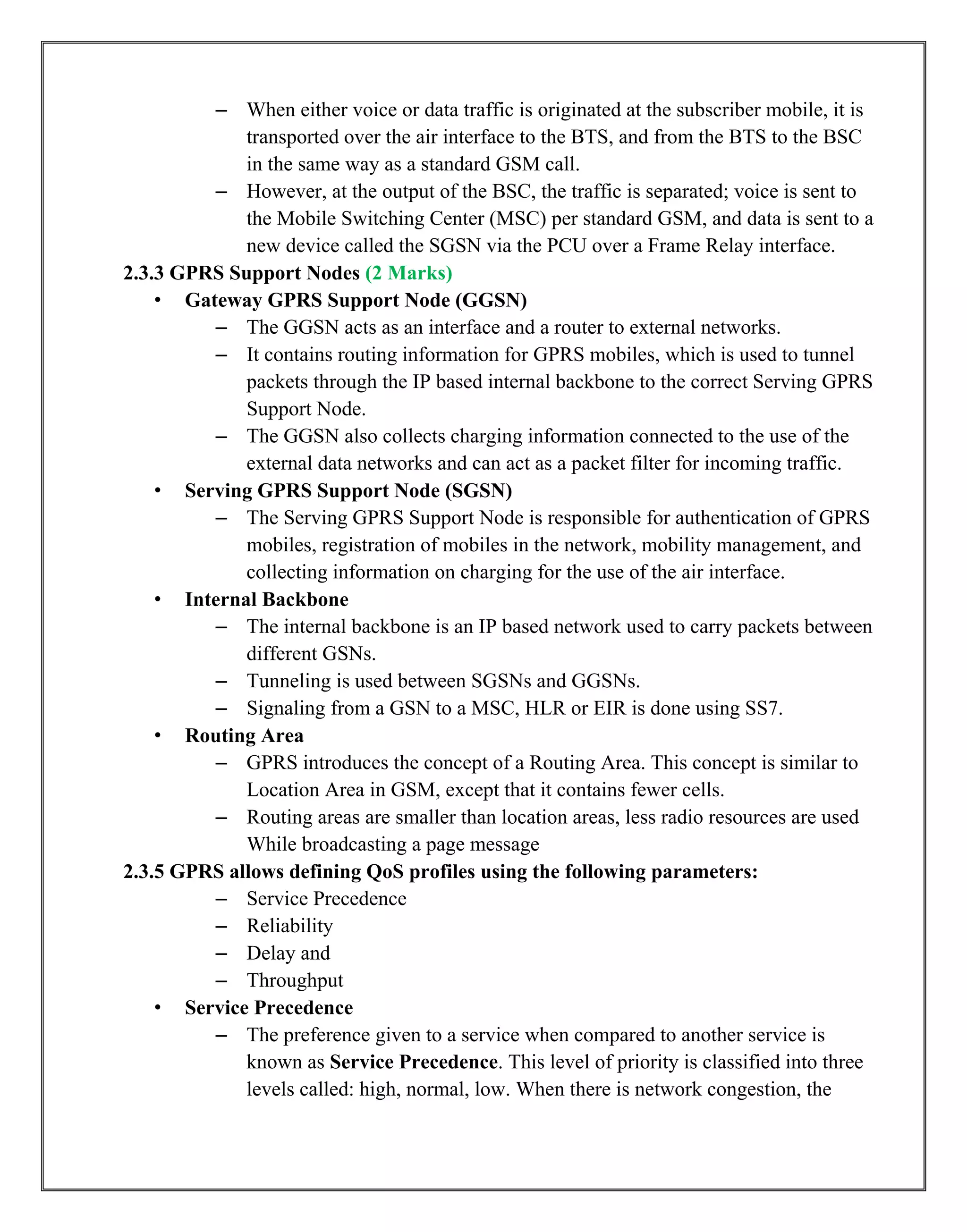
The document provides information about mobile telecommunication systems and GSM architecture. It discusses: 1) Cellular systems divide geographic areas into smaller regions called cells served by base stations to allow frequency reuse and increase capacity. 2) GSM is a second generation cellular standard developed for digital voice and data services using TDMA. It has global roaming capabilities and supports SMS, voice calls, and data services. 3) The GSM architecture consists of a radio subsystem with mobile stations and base stations, a network and switching subsystem, and an operation subsystem. The radio subsystem handles wireless transmission using TDMA while the network subsystem contains MSCs, HLRs, and switches.


