Presentation on
LTE Architecture
Prepared By: Manje Gowda K.R.
MYMO Wireless Technology Pvt Ltd
CONTENTS
• Introduction
• LTE Basic Parameters
• Data Rates
• Duplexing & Accessing
• Modulation, Coding & MIMO
• LTE Architecture Overview
• UE
• E-UTRAN
• EPC
• Advantages & Disadvantages
INTRODUCTION
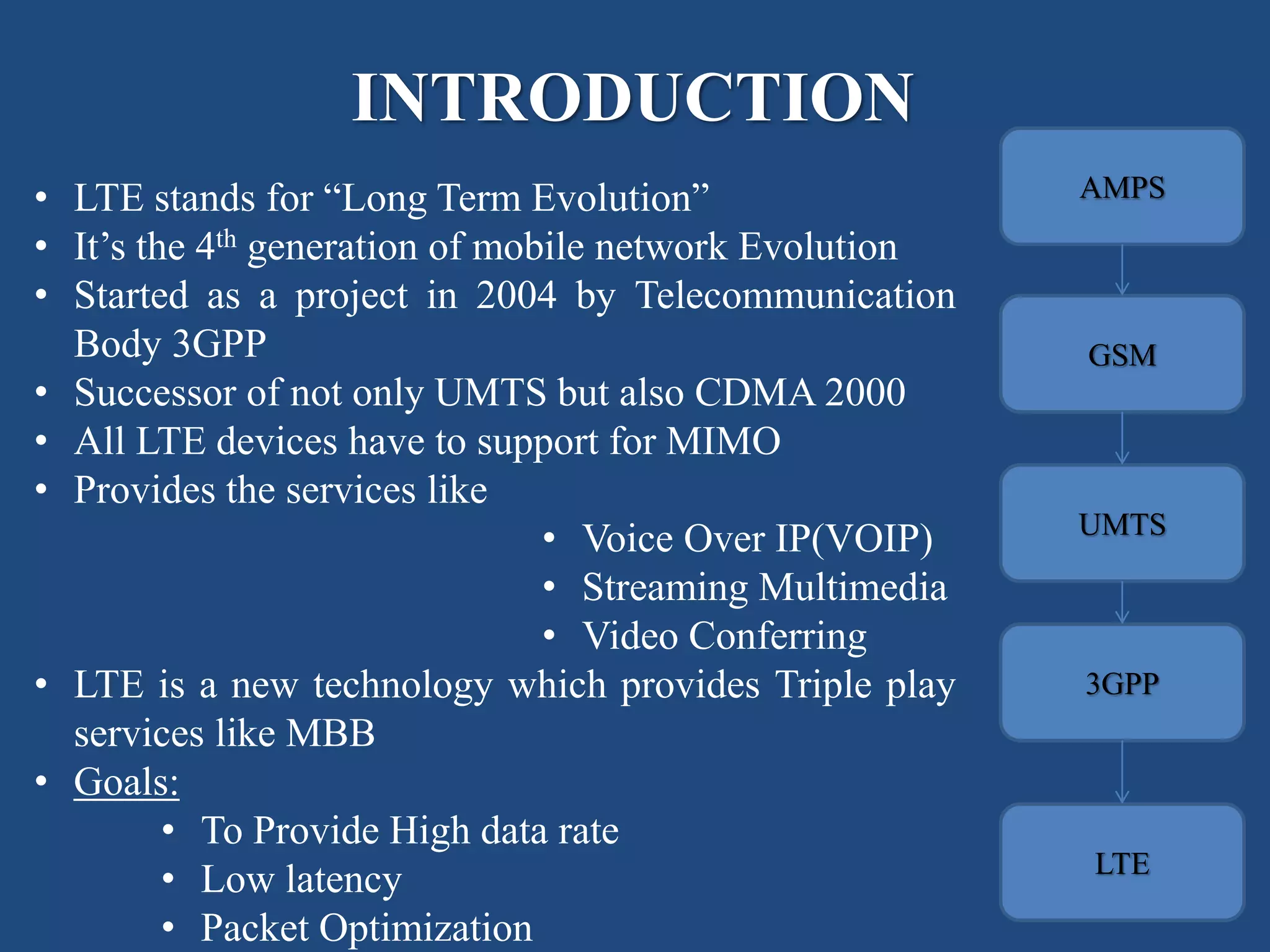
• LTE stands for “Long Term Evolution”
• It’s the 4th generation of mobile network Evolution
• Started as a project in 2004 by Telecommunication
Body 3GPP
• Successor of not only UMTS but also CDMA 2000
• All LTE devices have to support for MIMO
• Provides the services like
• Voice Over IP(VOIP)
• Streaming Multimedia
• Video Conferring
• LTE is a new technology which provides Triple play
services like MBB
• Goals:
• To Provide High data rate
• Low latency
• Packet Optimization
AMPS
GSM
UMTS
3GPP
LTE
LTE Basic Parameters
• Frequency Range: 1.4MHz to 20MHz
• Mobility: 350km/Hr
• Coverage: 5 to 100Km with the slight degradation after 30Km
• Latency: End user latency < 10ms
• Data Rates
• Duplexing
• Accessing Techniques
• Modulation
• Coding
• MIMO
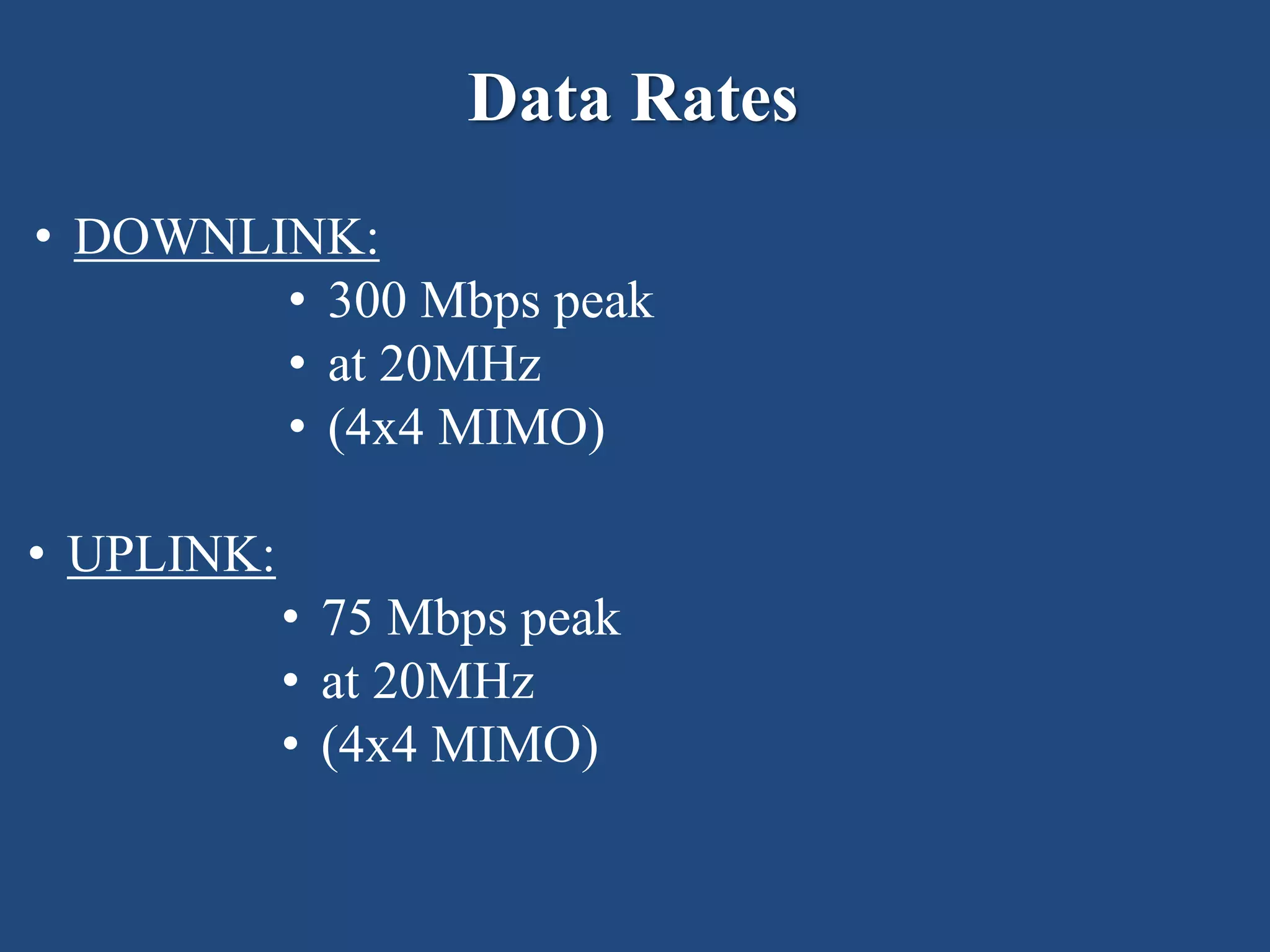
Data Rates
• DOWNLINK:
• 300 Mbps peak
• at 20MHz
• (4x4 MIMO)
• UPLINK:
• 75 Mbps peak
• at 20MHz
• (4x4 MIMO)
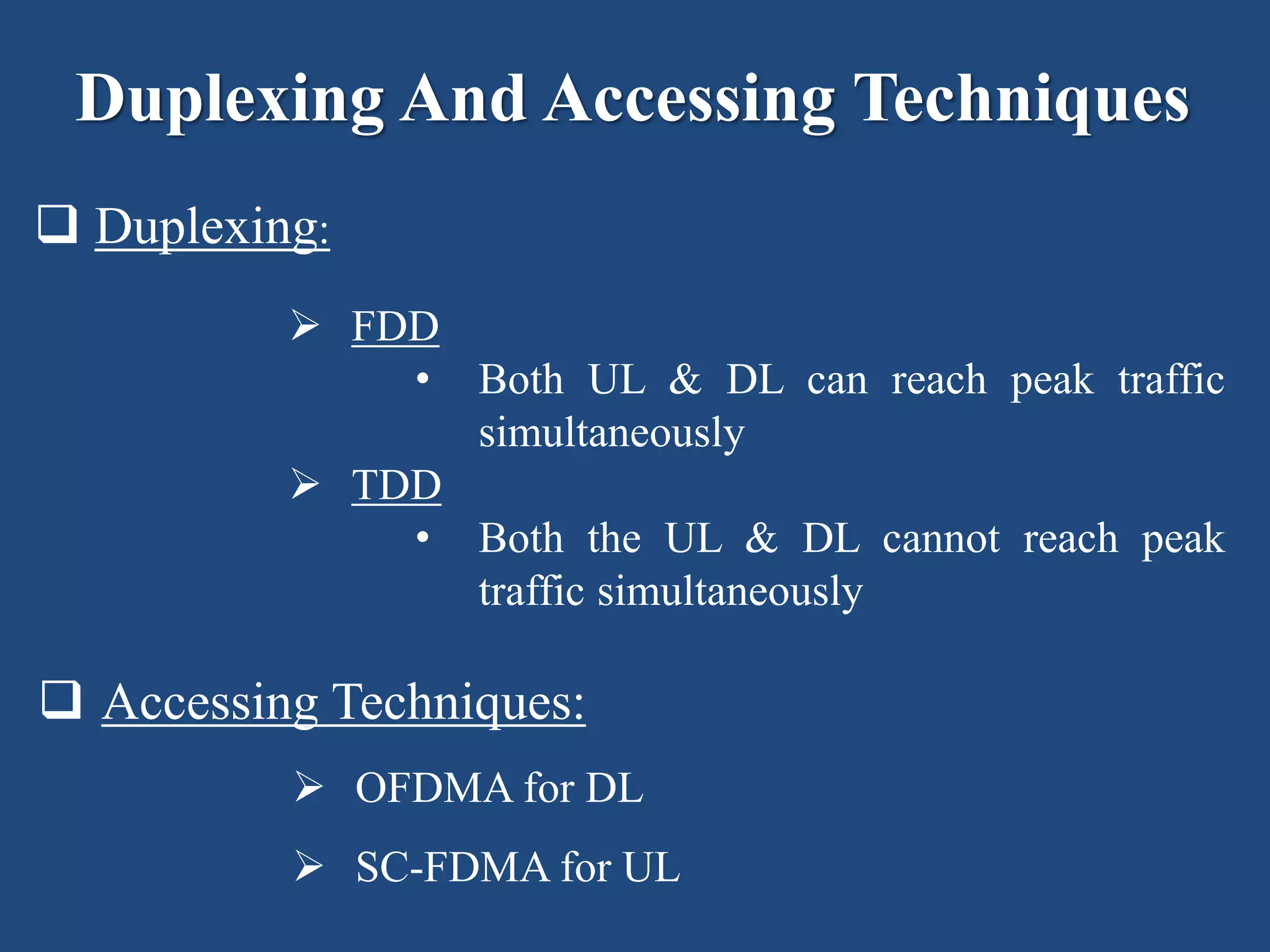
Duplexing And Accessing Techniques
 Duplexing:
 FDD
• Both UL & DL can reach peak traffic
simultaneously
 TDD
• Both the UL & DL cannot reach peak
traffic simultaneously
 Accessing Techniques:
 OFDMA for DL
 SC-FDMA for UL
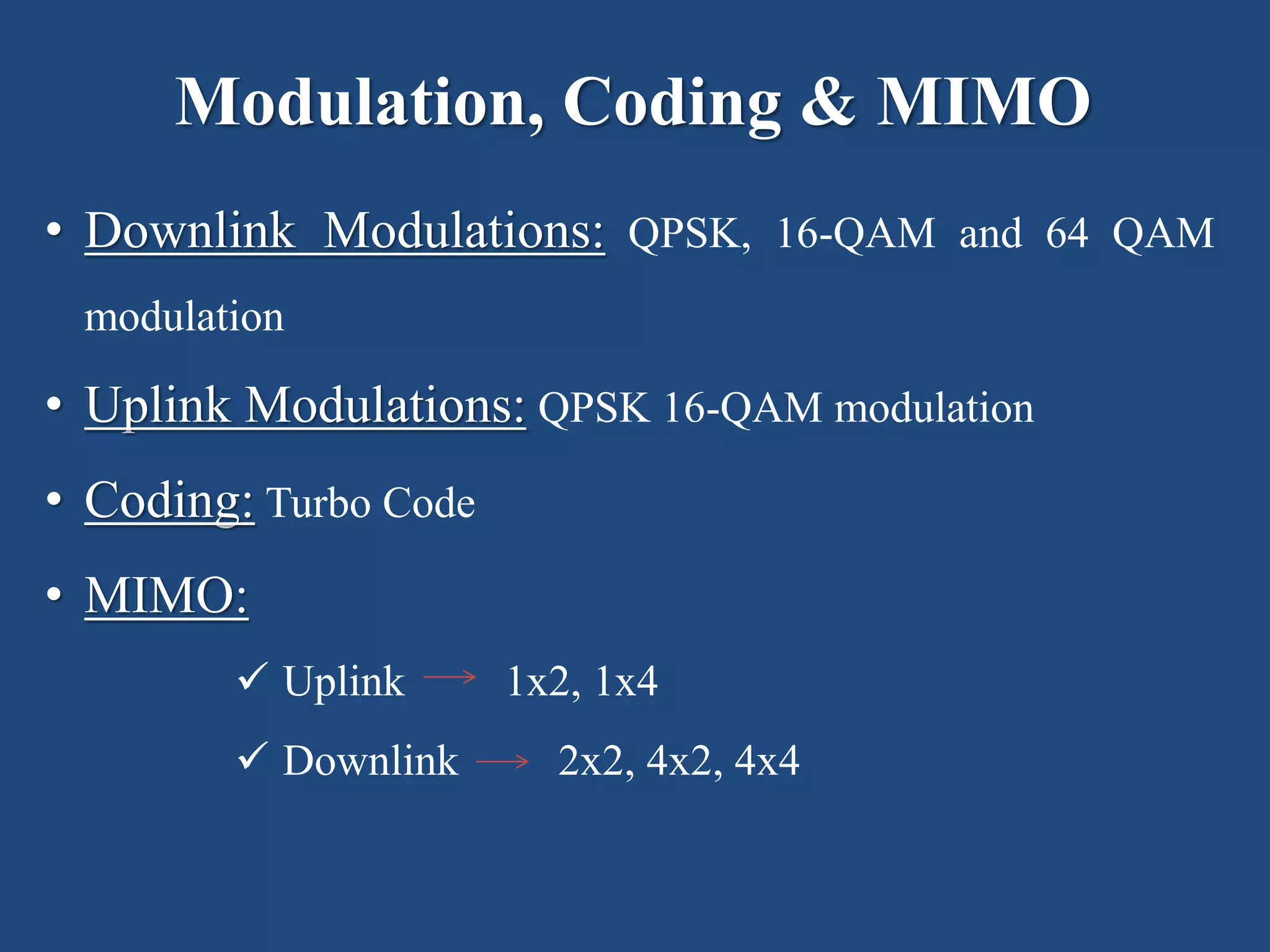
Modulation, Coding & MIMO
• Downlink Modulations: QPSK, 16-QAM and 64 QAM
modulation
• Uplink Modulations: QPSK 16-QAM modulation
• Coding: Turbo Code
• MIMO:
 Uplink 1x2, 1x4
 Downlink 2x2, 4x2, 4x4
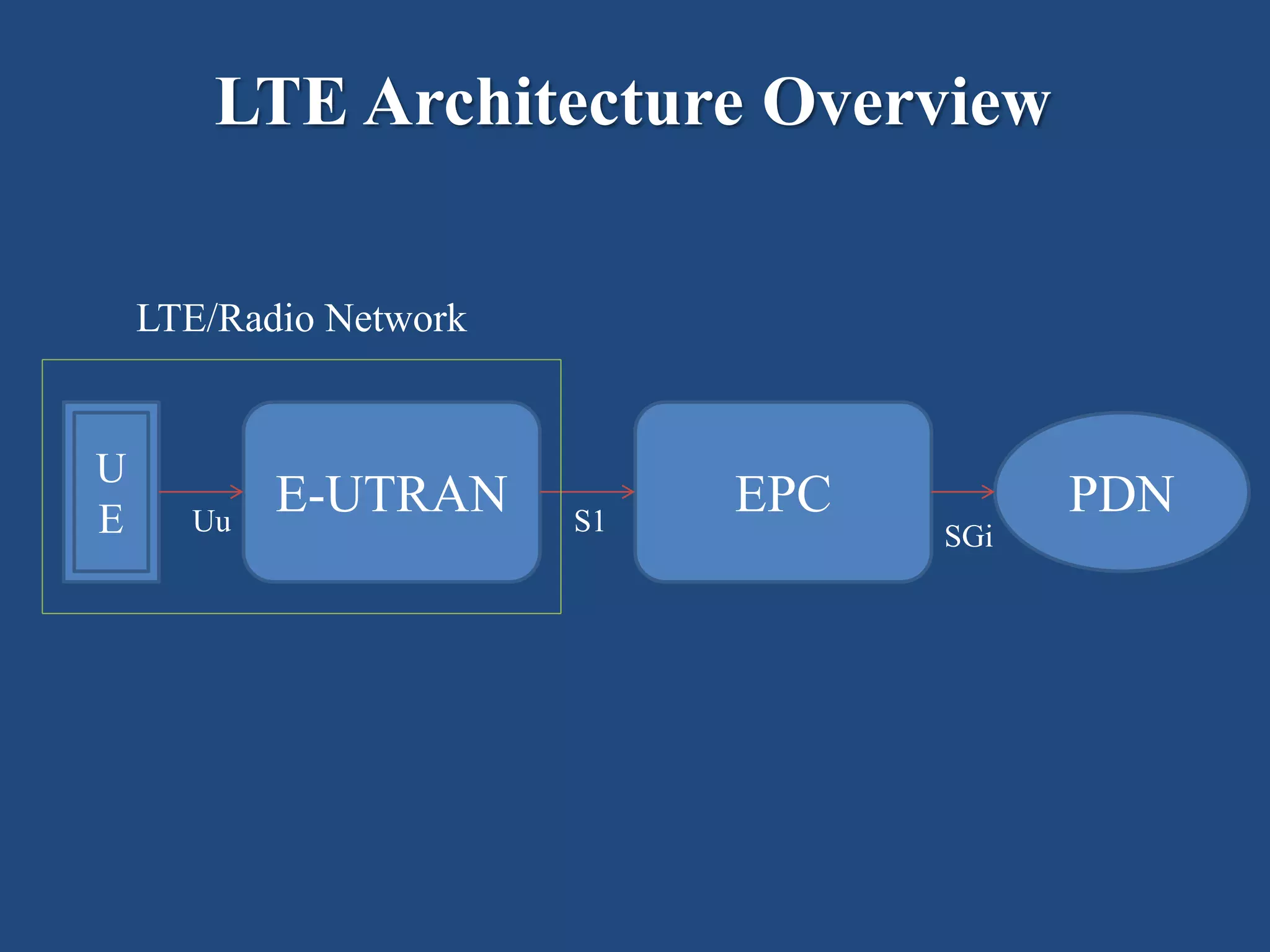
LTE Architecture Overview
E-UTRAN EPC PDN
U
E
LTE/Radio Network
Uu S1 SGi
User Equipment(UE):
It Consists of the following important modules
1. Mobile Termination(MT)
2. Terminal Equipment(TE)
3. SIM
• User Ph. No.
• Home Network Identity
• Security Keys
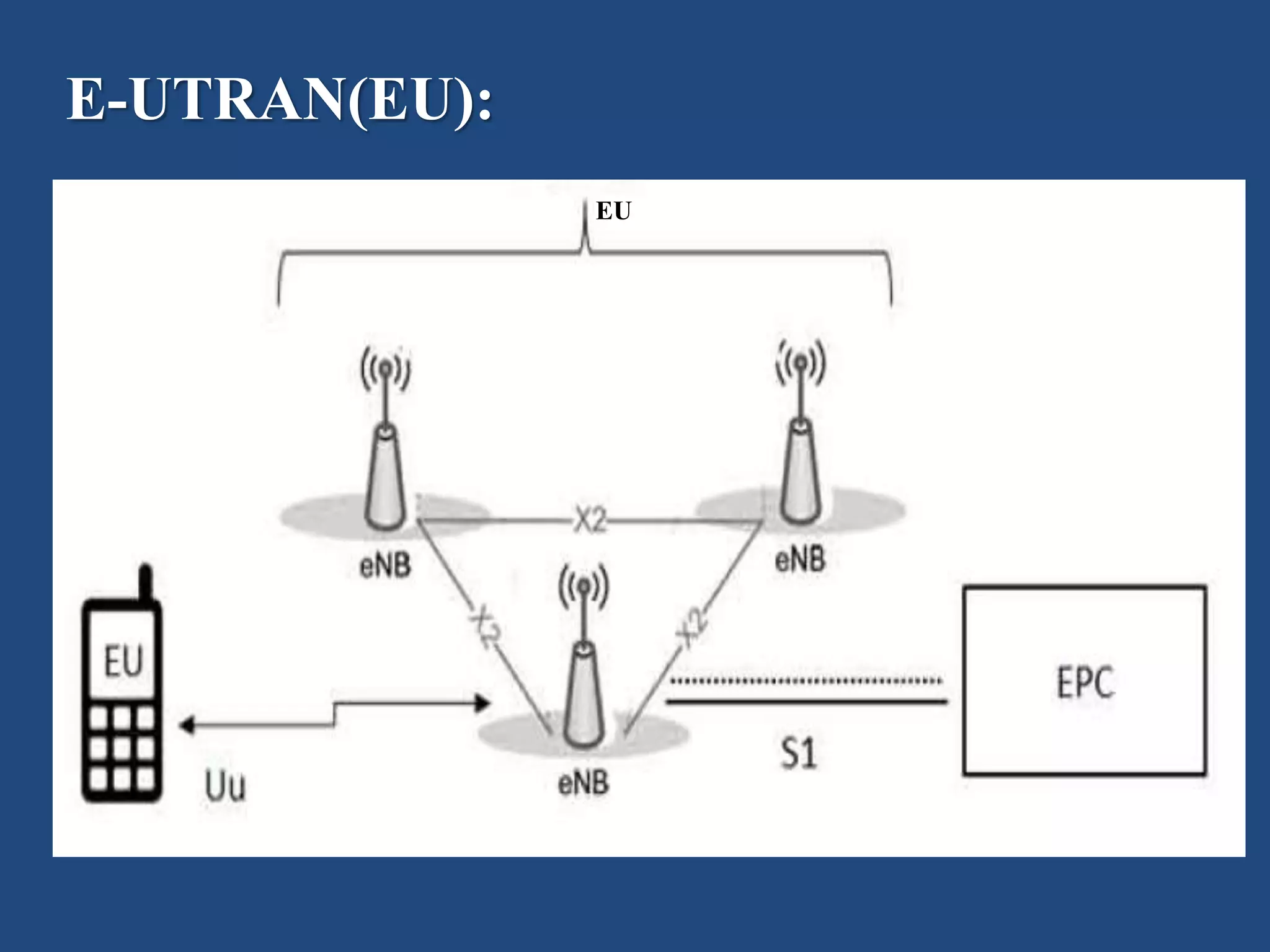
E-UTRAN(EU):
EU
eNodeB(eNB):
Scheduling and Dynamic allocation of resources to UE
(After every 1ms)
State transition from IDLE mode to Connected mode and
vice versa
Controlling the mobility of the UE in connected mode
Buffering of data at handover
Admission and Congestion control
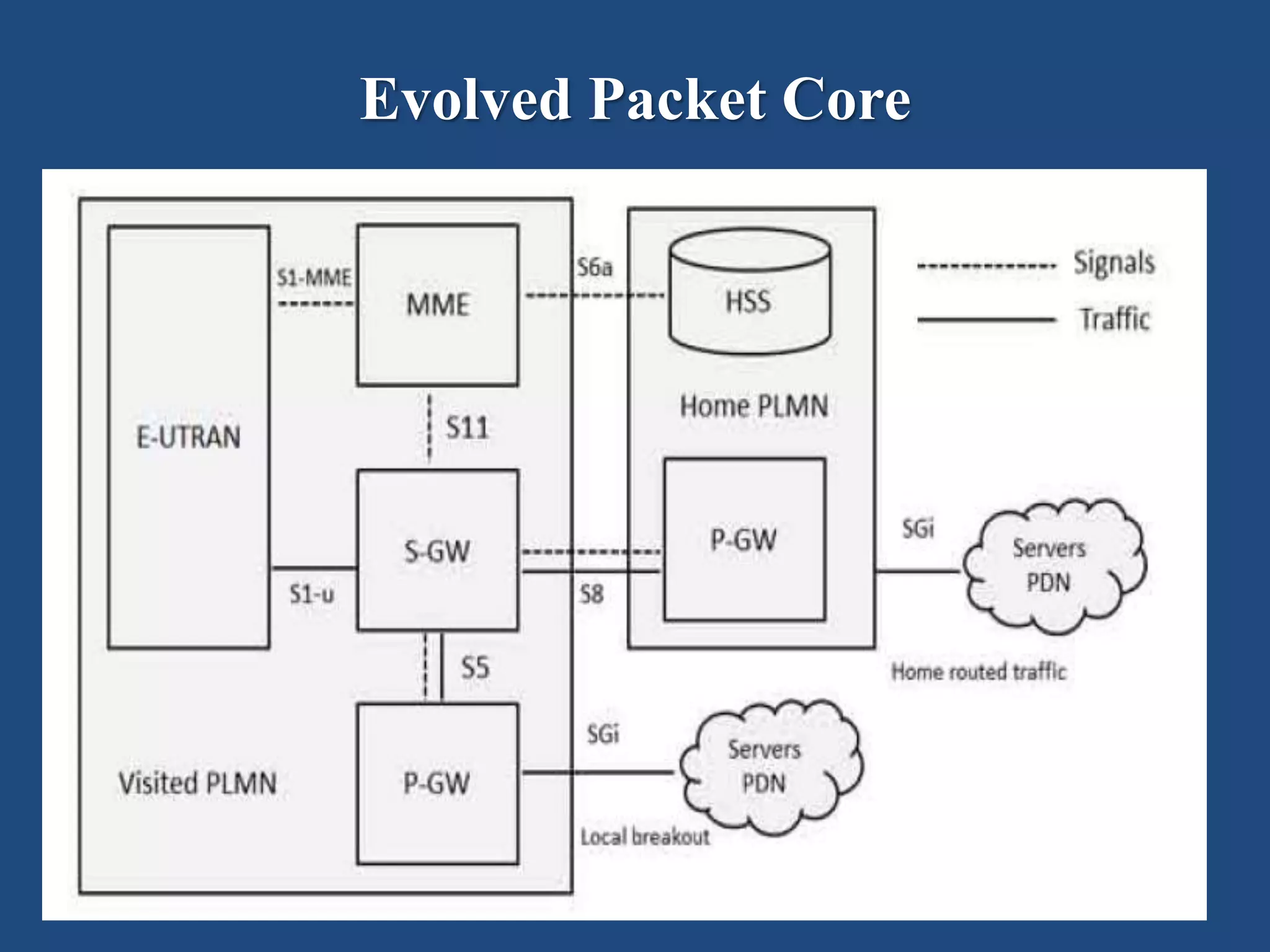
Evolved Packet Core
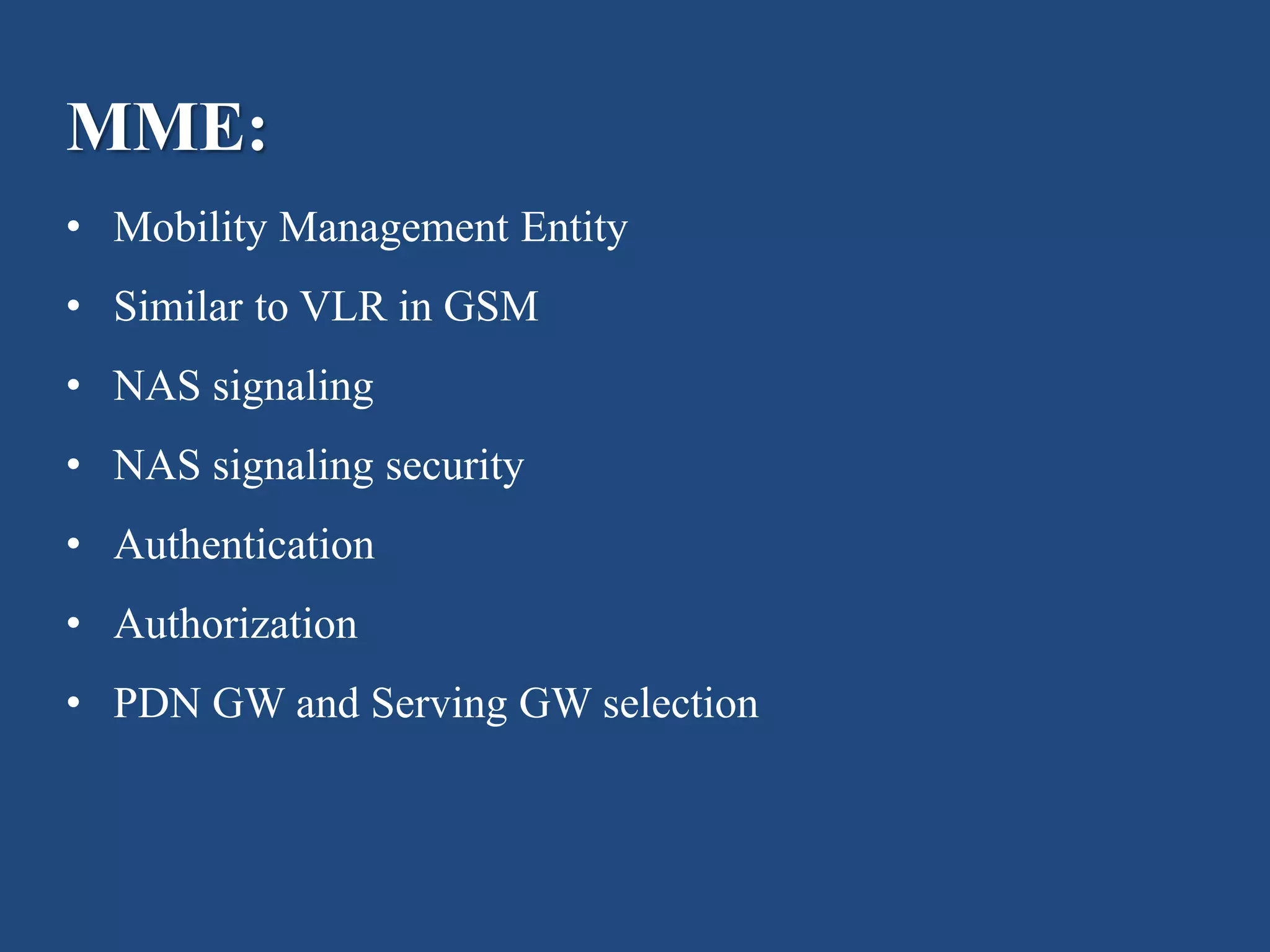
MME:
• Mobility Management Entity
• Similar to VLR in GSM
• NAS signaling
• NAS signaling security
• Authentication
• Authorization
• PDN GW and Serving GW selection
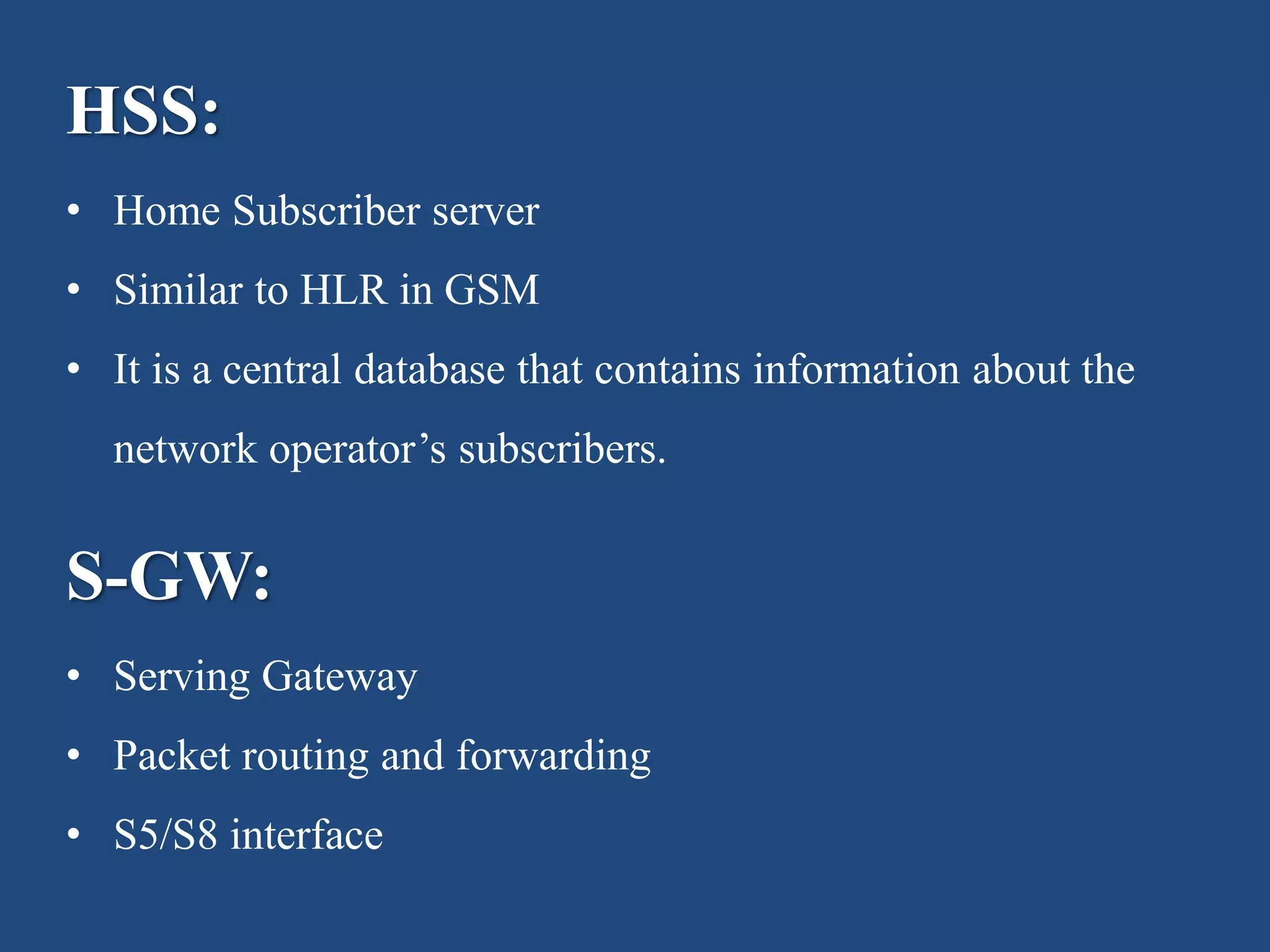
HSS:
• Home Subscriber server
• Similar to HLR in GSM
• It is a central database that contains information about the
network operator’s subscribers.
S-GW:
• Serving Gateway
• Packet routing and forwarding
• S5/S8 interface
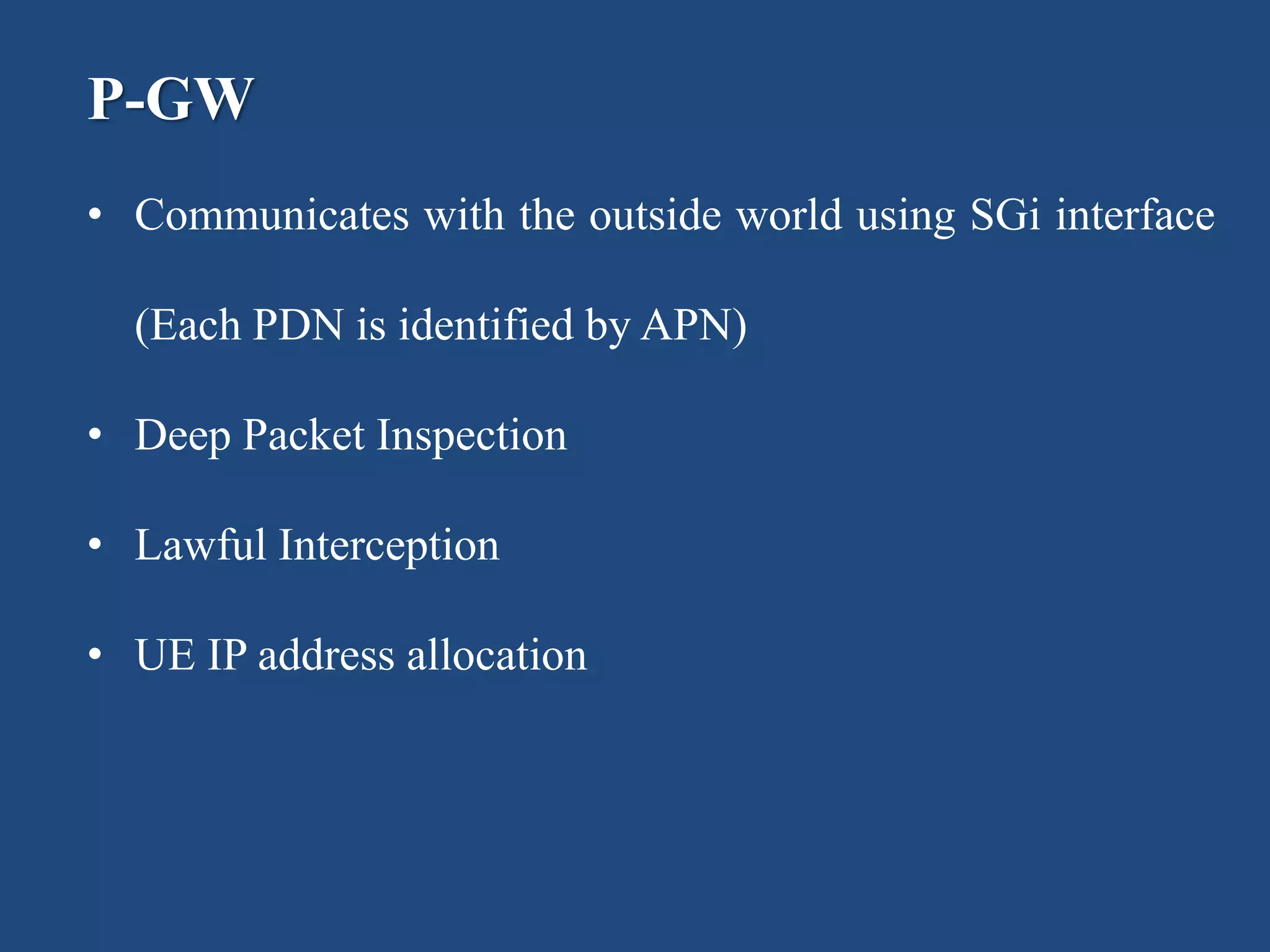
• Communicates with the outside world using SGi interface
(Each PDN is identified by APN)
• Deep Packet Inspection
• Lawful Interception
• UE IP address allocation
P-GW
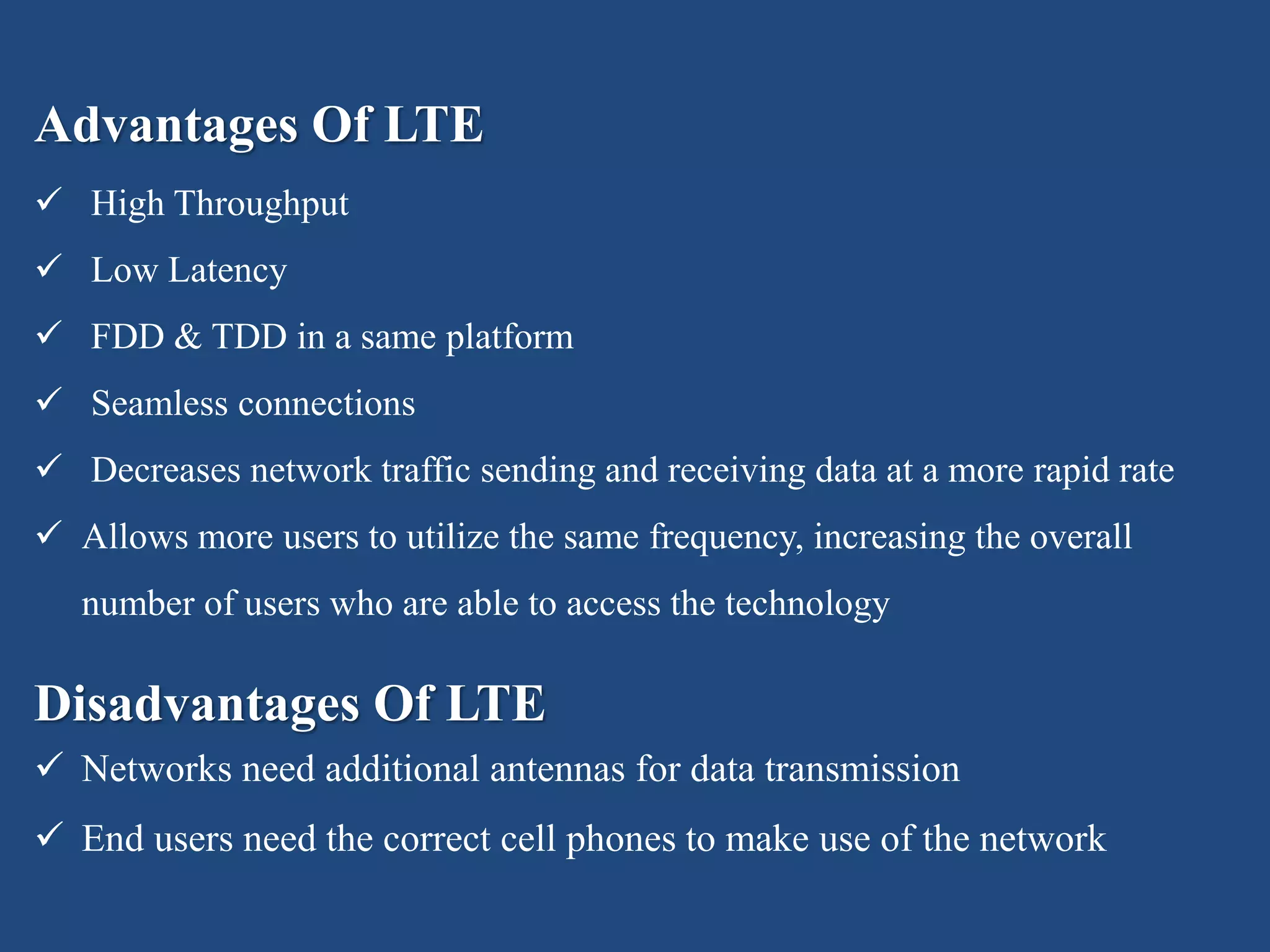
Advantages Of LTE
 High Throughput
 Low Latency
 FDD & TDD in a same platform
 Seamless connections
 Decreases network traffic sending and receiving data at a more rapid rate
 Allows more users to utilize the same frequency, increasing the overall
number of users who are able to access the technology
Disadvantages Of LTE
 Networks need additional antennas for data transmission
 End users need the correct cell phones to make use of the network
LTE Architecture

LTE Architecture

  • 1.
    Presentation on LTE Architecture PreparedBy: Manje Gowda K.R. MYMO Wireless Technology Pvt Ltd
  • 2.
    CONTENTS • Introduction • LTEBasic Parameters • Data Rates • Duplexing & Accessing • Modulation, Coding & MIMO • LTE Architecture Overview • UE • E-UTRAN • EPC • Advantages & Disadvantages
  • 3.
    INTRODUCTION • LTE standsfor “Long Term Evolution” • It’s the 4th generation of mobile network Evolution • Started as a project in 2004 by Telecommunication Body 3GPP • Successor of not only UMTS but also CDMA 2000 • All LTE devices have to support for MIMO • Provides the services like • Voice Over IP(VOIP) • Streaming Multimedia • Video Conferring • LTE is a new technology which provides Triple play services like MBB • Goals: • To Provide High data rate • Low latency • Packet Optimization AMPS GSM UMTS 3GPP LTE
  • 4.
    LTE Basic Parameters •Frequency Range: 1.4MHz to 20MHz • Mobility: 350km/Hr • Coverage: 5 to 100Km with the slight degradation after 30Km • Latency: End user latency < 10ms • Data Rates • Duplexing • Accessing Techniques • Modulation • Coding • MIMO
  • 5.
    Data Rates • DOWNLINK: •300 Mbps peak • at 20MHz • (4x4 MIMO) • UPLINK: • 75 Mbps peak • at 20MHz • (4x4 MIMO)
  • 6.
    Duplexing And AccessingTechniques  Duplexing:  FDD • Both UL & DL can reach peak traffic simultaneously  TDD • Both the UL & DL cannot reach peak traffic simultaneously  Accessing Techniques:  OFDMA for DL  SC-FDMA for UL
  • 7.
    Modulation, Coding &MIMO • Downlink Modulations: QPSK, 16-QAM and 64 QAM modulation • Uplink Modulations: QPSK 16-QAM modulation • Coding: Turbo Code • MIMO:  Uplink 1x2, 1x4  Downlink 2x2, 4x2, 4x4
  • 8.
    LTE Architecture Overview E-UTRANEPC PDN U E LTE/Radio Network Uu S1 SGi
  • 9.
    User Equipment(UE): It Consistsof the following important modules 1. Mobile Termination(MT) 2. Terminal Equipment(TE) 3. SIM • User Ph. No. • Home Network Identity • Security Keys
  • 10.
  • 11.
    eNodeB(eNB): Scheduling and Dynamicallocation of resources to UE (After every 1ms) State transition from IDLE mode to Connected mode and vice versa Controlling the mobility of the UE in connected mode Buffering of data at handover Admission and Congestion control
  • 12.
  • 13.
    MME: • Mobility ManagementEntity • Similar to VLR in GSM • NAS signaling • NAS signaling security • Authentication • Authorization • PDN GW and Serving GW selection
  • 14.
    HSS: • Home Subscriberserver • Similar to HLR in GSM • It is a central database that contains information about the network operator’s subscribers. S-GW: • Serving Gateway • Packet routing and forwarding • S5/S8 interface
  • 15.
    • Communicates withthe outside world using SGi interface (Each PDN is identified by APN) • Deep Packet Inspection • Lawful Interception • UE IP address allocation P-GW
  • 16.
    Advantages Of LTE High Throughput  Low Latency  FDD & TDD in a same platform  Seamless connections  Decreases network traffic sending and receiving data at a more rapid rate  Allows more users to utilize the same frequency, increasing the overall number of users who are able to access the technology Disadvantages Of LTE  Networks need additional antennas for data transmission  End users need the correct cell phones to make use of the network