A.S.PrabaharanAP/CSE
UNIT I MIPS Addressing
Addressing in Branches and Jumps
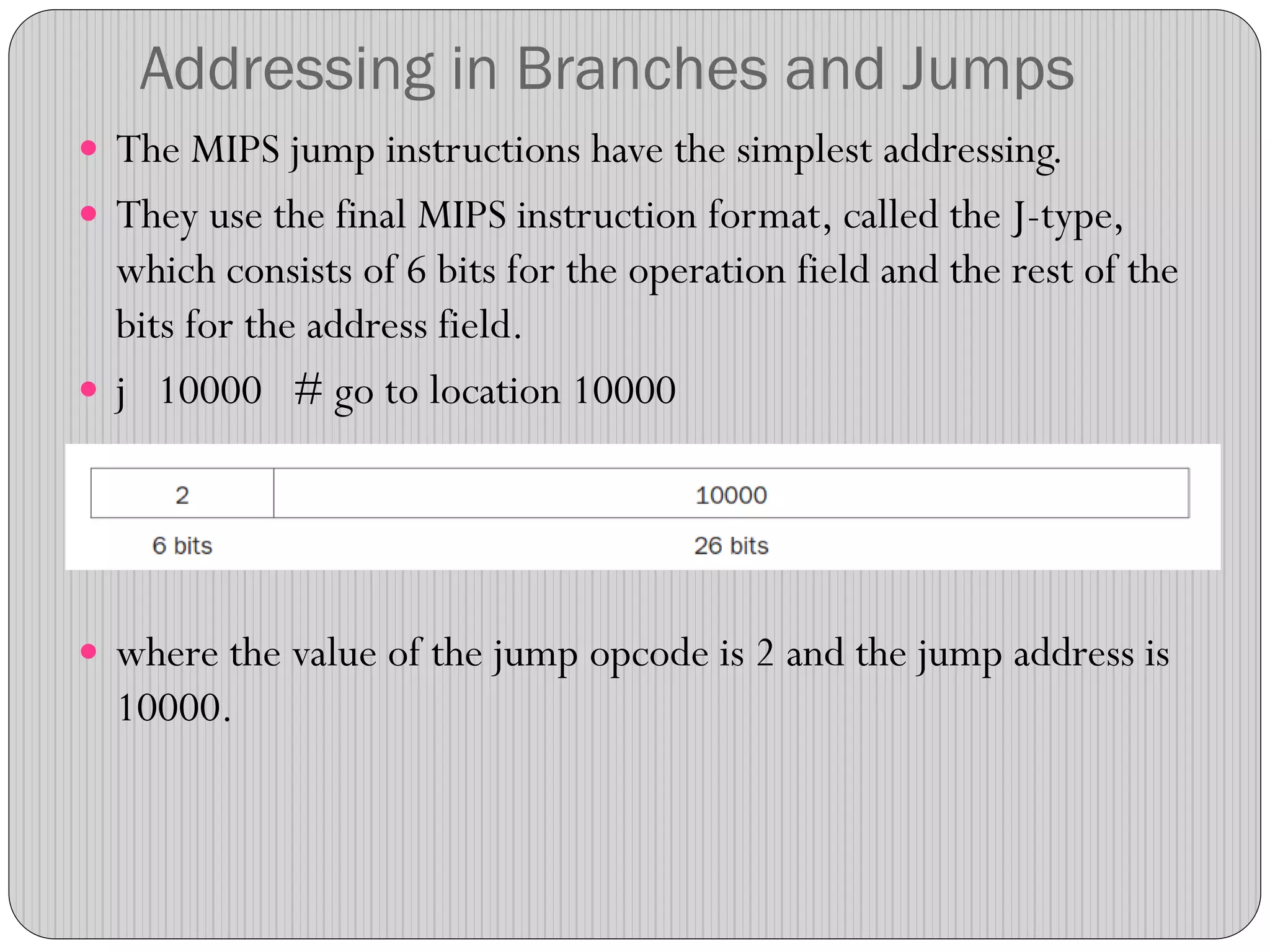
 The MIPS jump instructions have the simplest addressing.
 They use the final MIPS instruction format, called the J-type,
which consists of 6 bits for the operation field and the rest of the
bits for the address field.
 j 10000 # go to location 10000
 where the value of the jump opcode is 2 and the jump address is
10000.
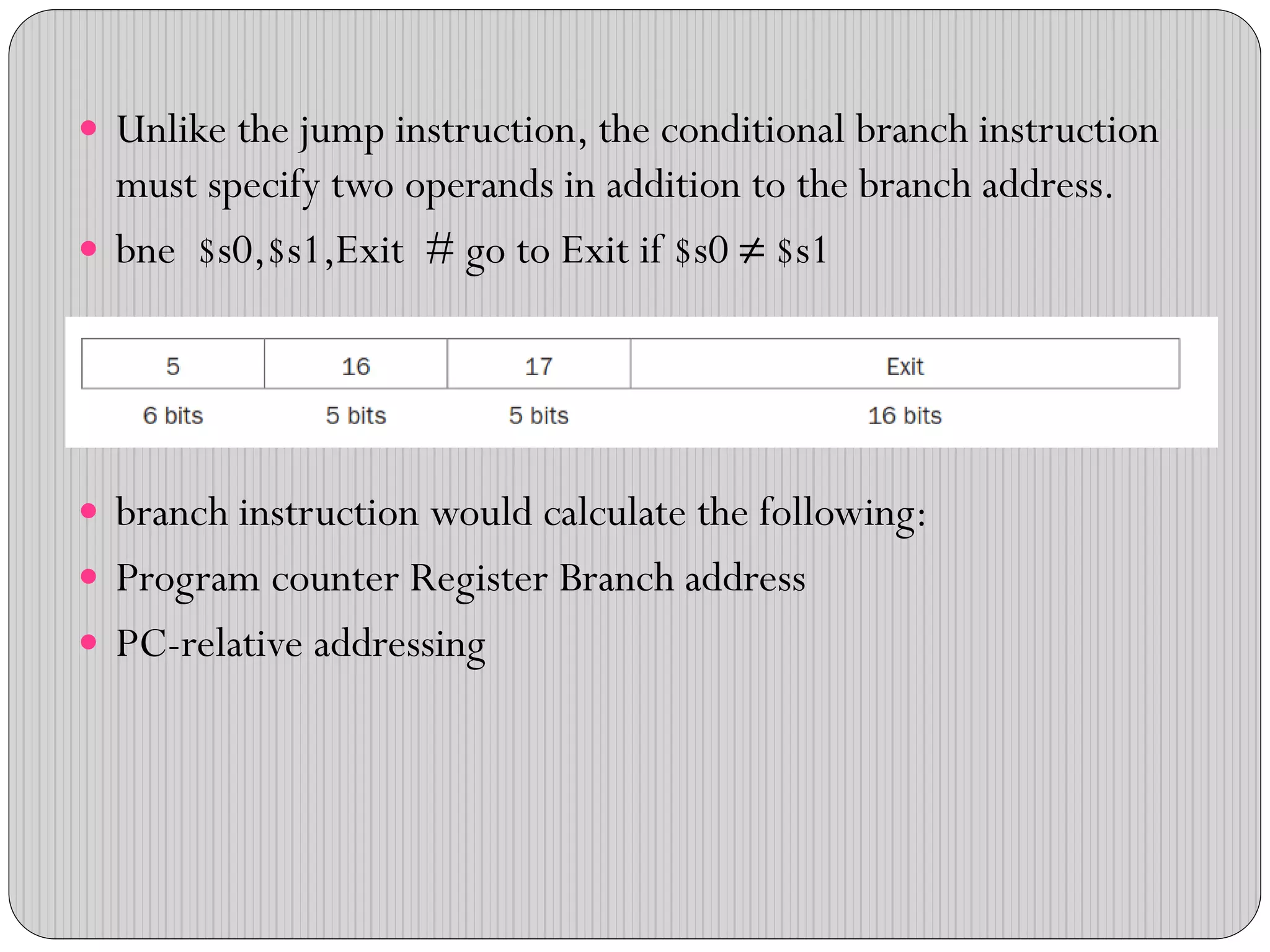
 Unlike the jump instruction, the conditional branch instruction
must specify two operands in addition to the branch address.
 bne $s0,$s1,Exit # go to Exit if $s0 ≠ $s1
 branch instruction would calculate the following:
 Program counter Register Branch address
 PC-relative addressing
 Showing Branch Offset in Machine Language
 The while loop as compiled into this MIPS assembler code:
 Loop:sll $t1,$s3,2 #Temp reg $t1 = 4 * i
 add $t1,$t1,$s6 # $t1 = address of save[i]
 lw $t0,0($t1) #Temp reg $t0 = save[i]
 bne $t0,$s5, Exit # go to Exit if save[i] ≠ k
 addi $s3,$s3,1 # i = i + 1
 j Loop # go to Loop
 Exit:
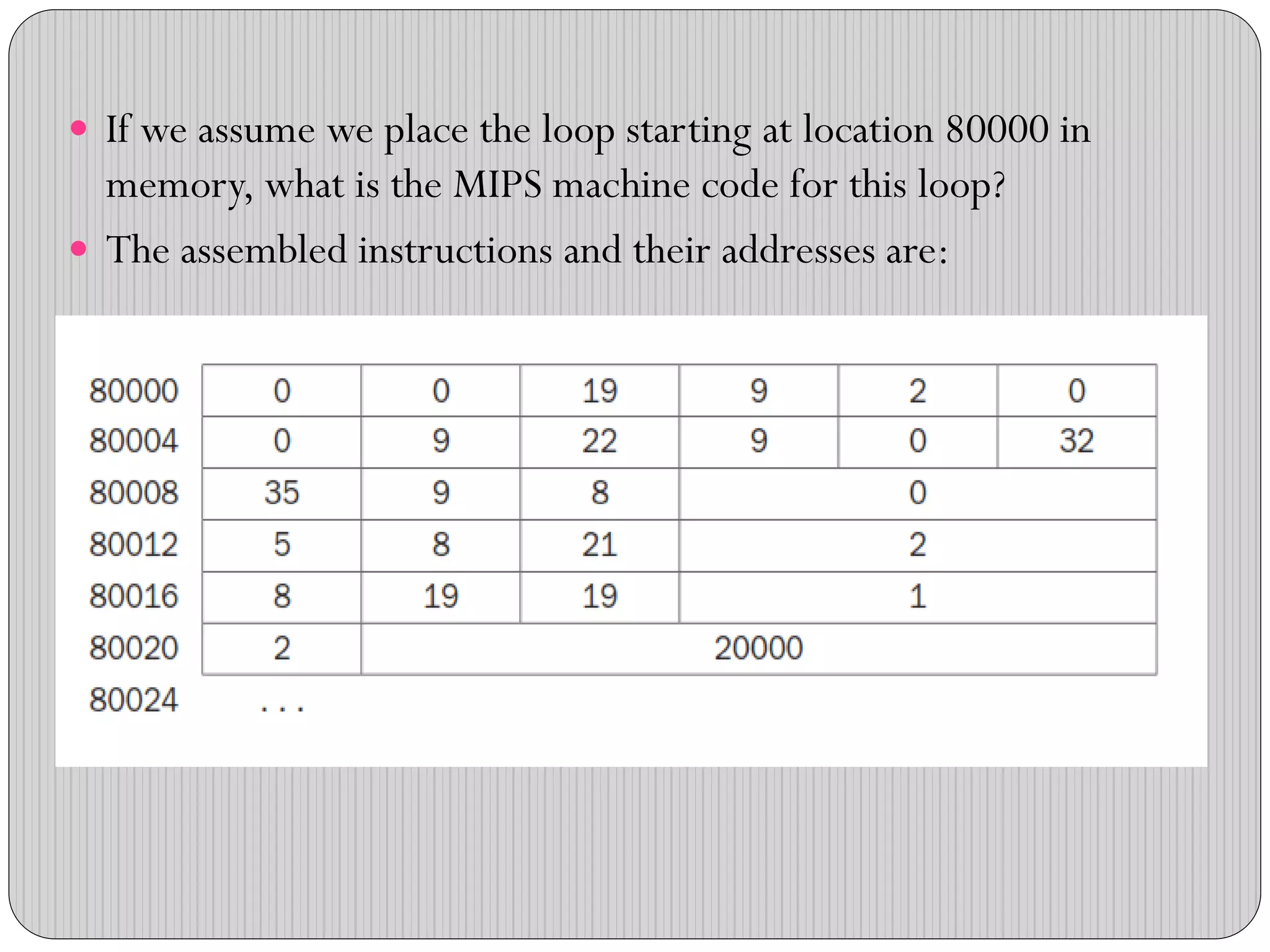
 If we assume we place the loop starting at location 80000 in
memory, what is the MIPS machine code for this loop?
 The assembled instructions and their addresses are:
MIPS Addressing Mode
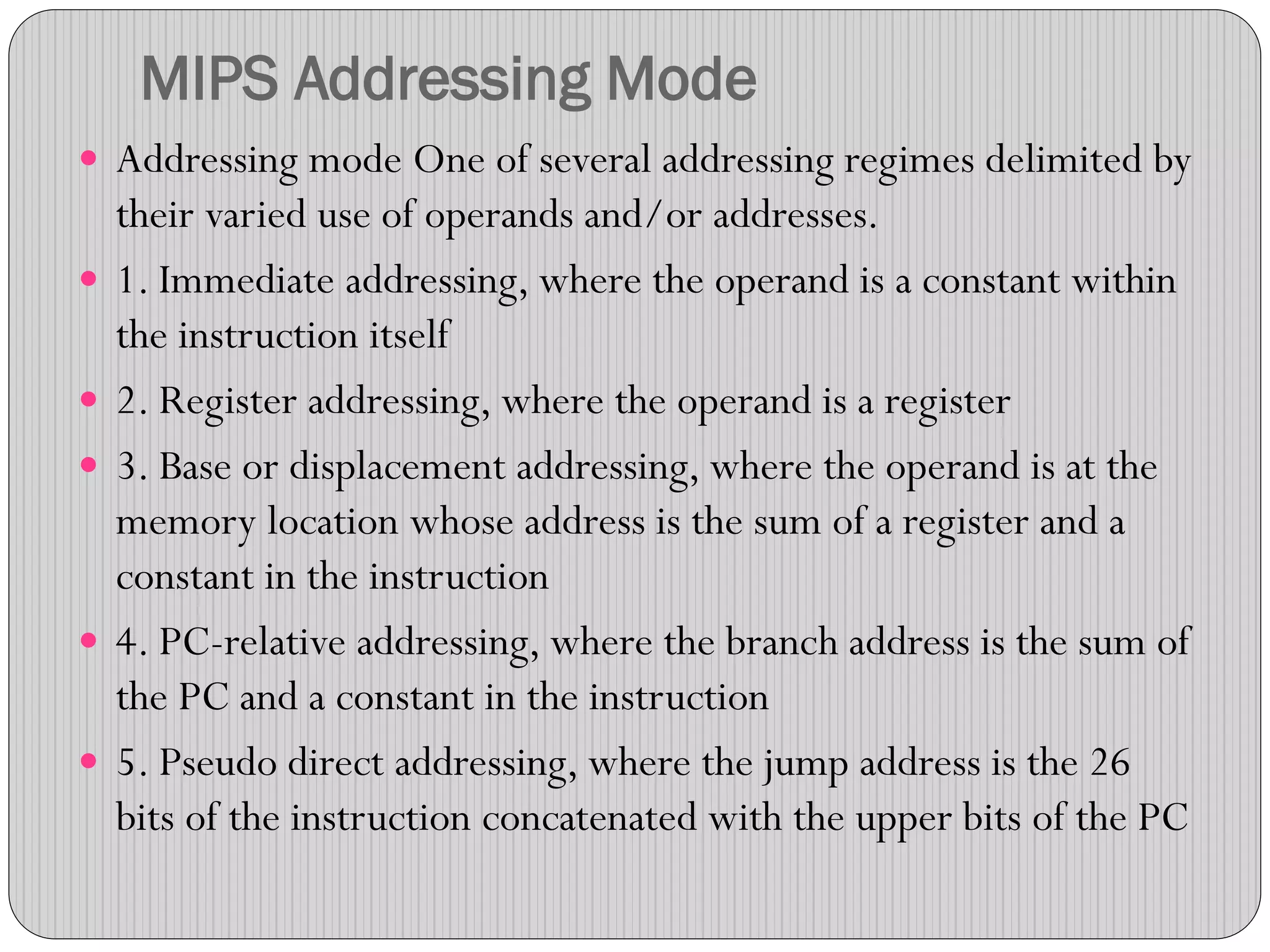
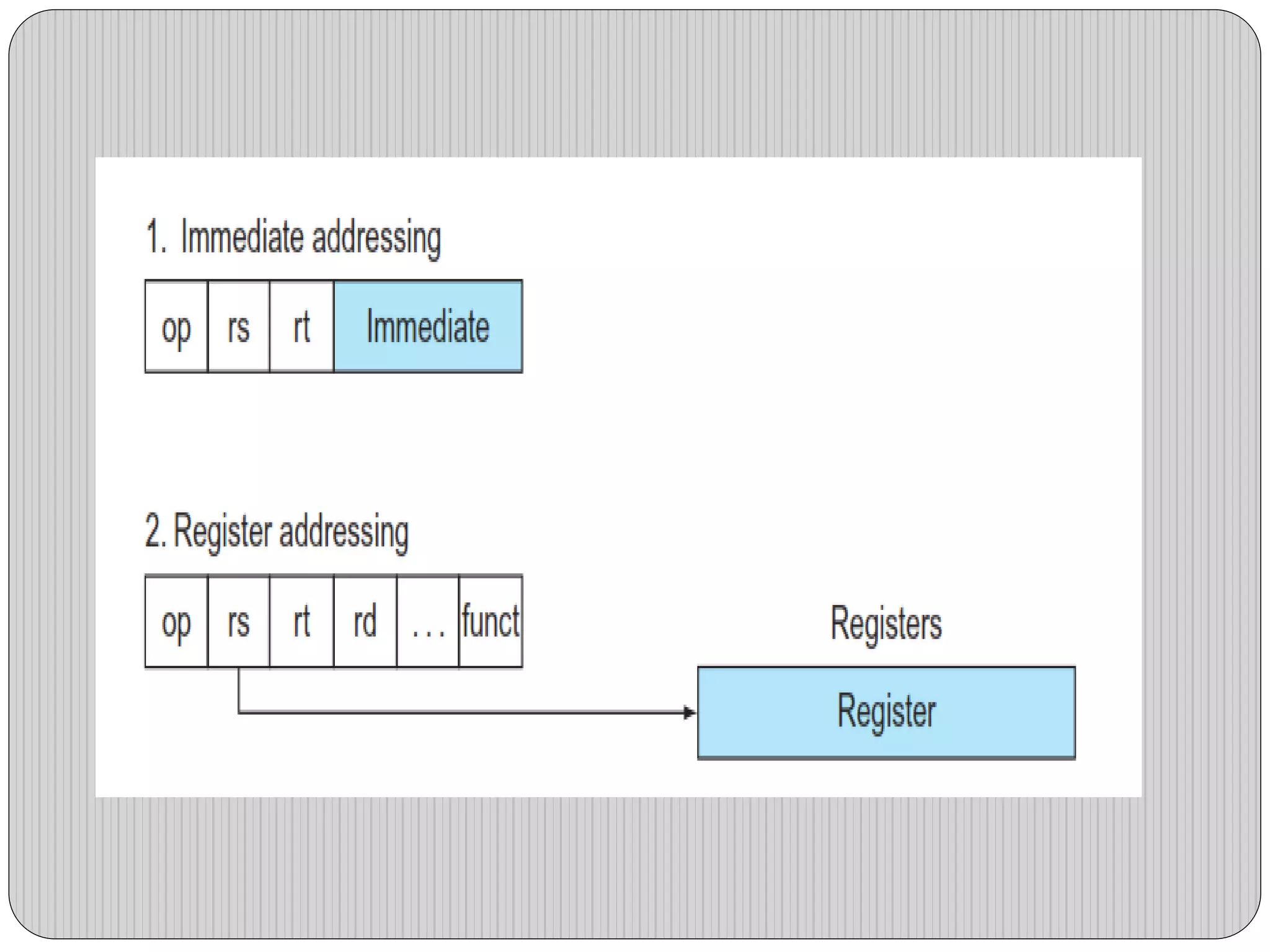
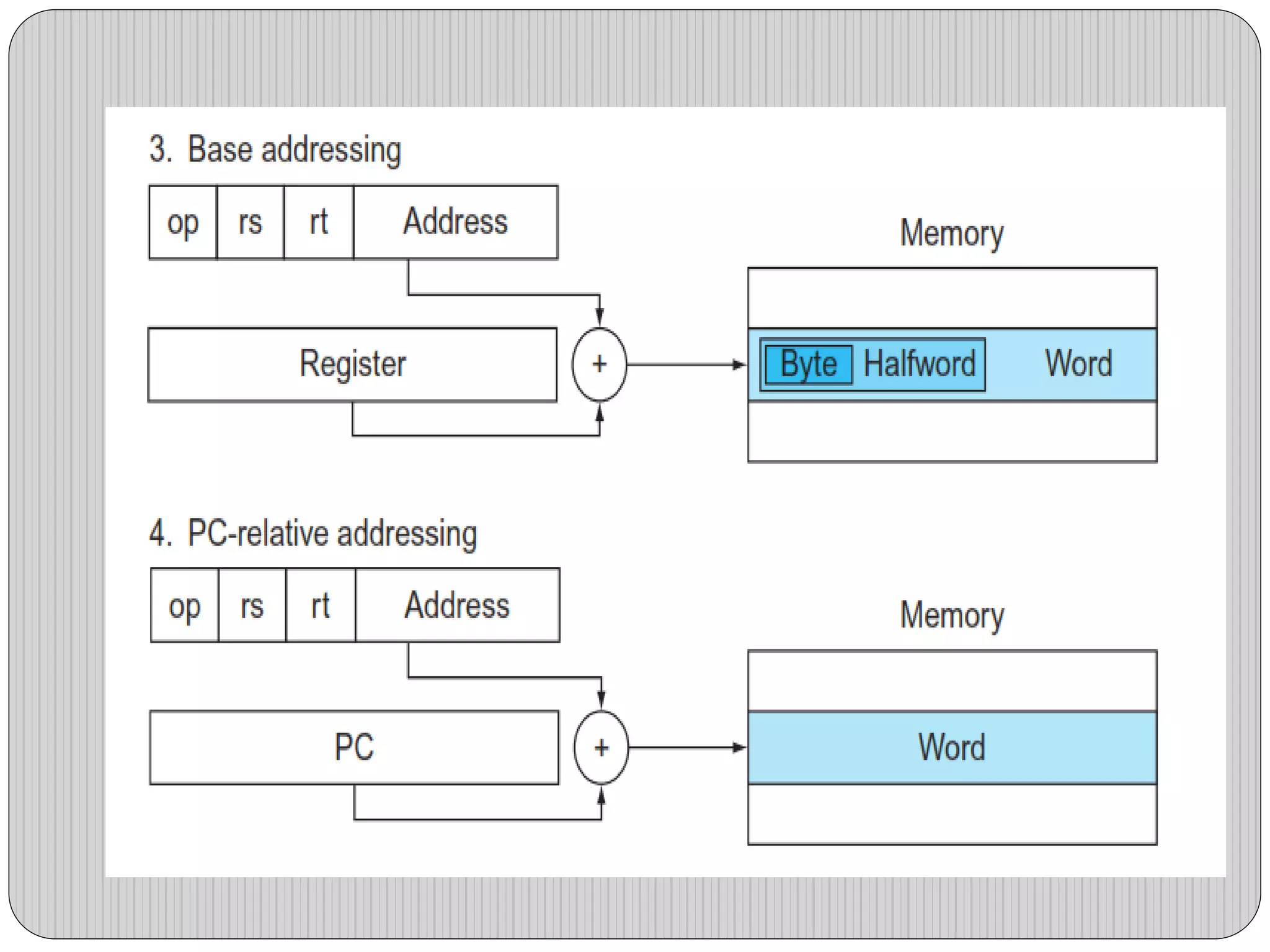
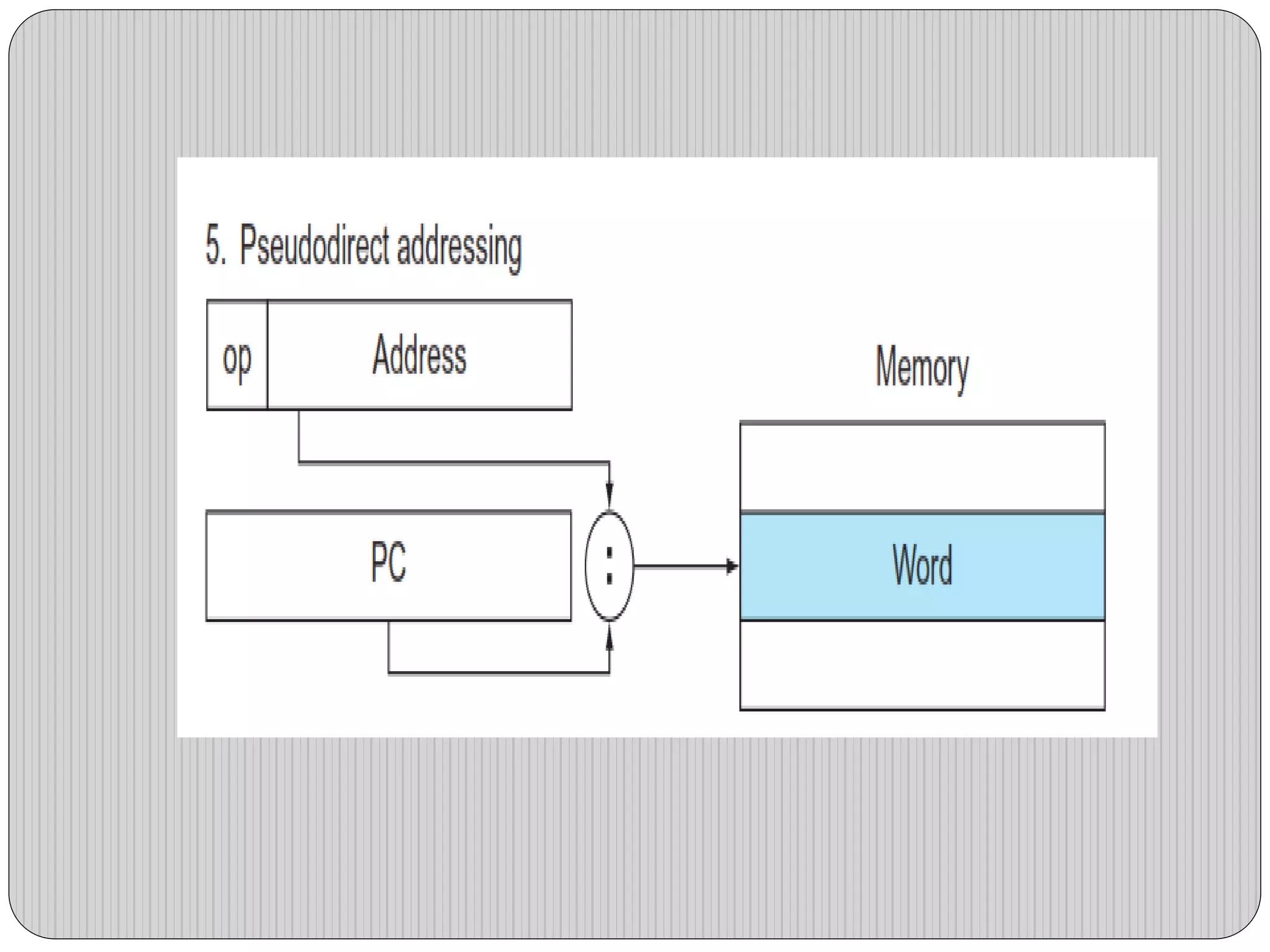
 Addressing mode One of several addressing regimes delimited by
their varied use of operands and/or addresses.
 1. Immediate addressing, where the operand is a constant within
the instruction itself
 2. Register addressing, where the operand is a register
 3. Base or displacement addressing, where the operand is at the
memory location whose address is the sum of a register and a
constant in the instruction
 4. PC-relative addressing, where the branch address is the sum of
the PC and a constant in the instruction
 5. Pseudo direct addressing, where the jump address is the 26
bits of the instruction concatenated with the upper bits of the PC
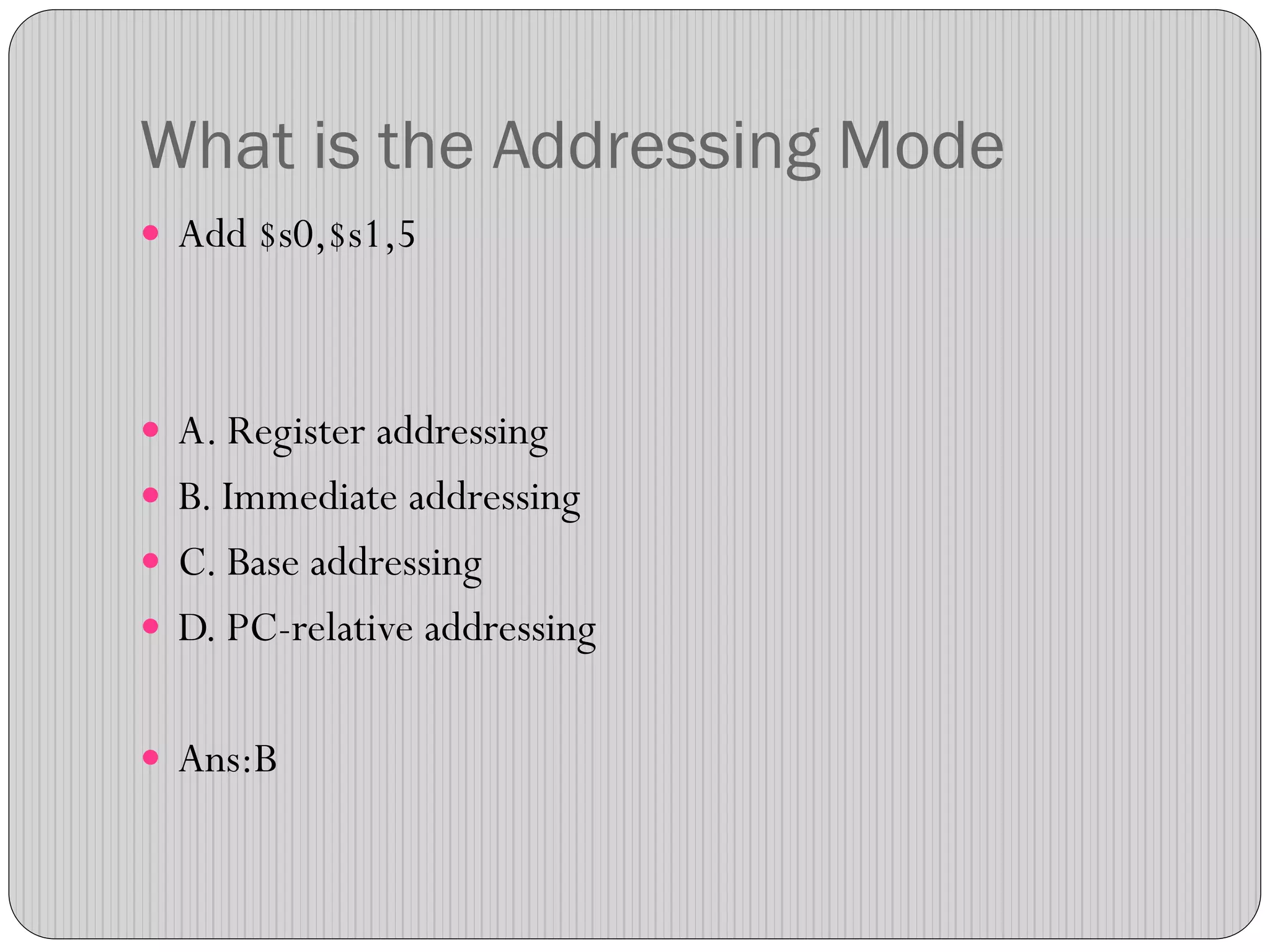
What is the Addressing Mode
 Add $s0,$s1,5
 A. Register addressing
 B. Immediate addressing
 C. Base addressing
 D. PC-relative addressing
 Ans:B
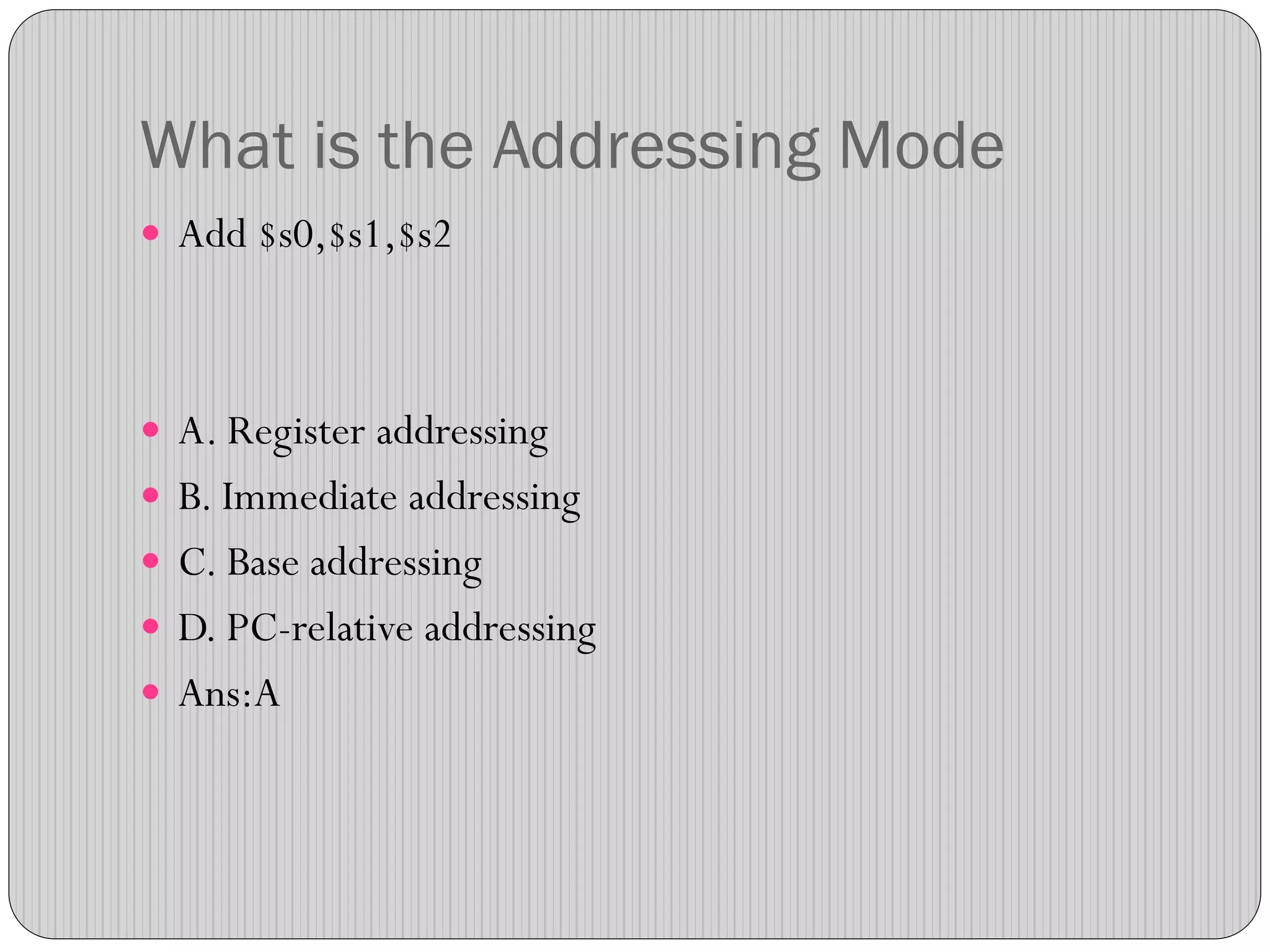
What is the Addressing Mode
 Add $s0,$s1,$s2
 A. Register addressing
 B. Immediate addressing
 C. Base addressing
 D. PC-relative addressing
 Ans:A
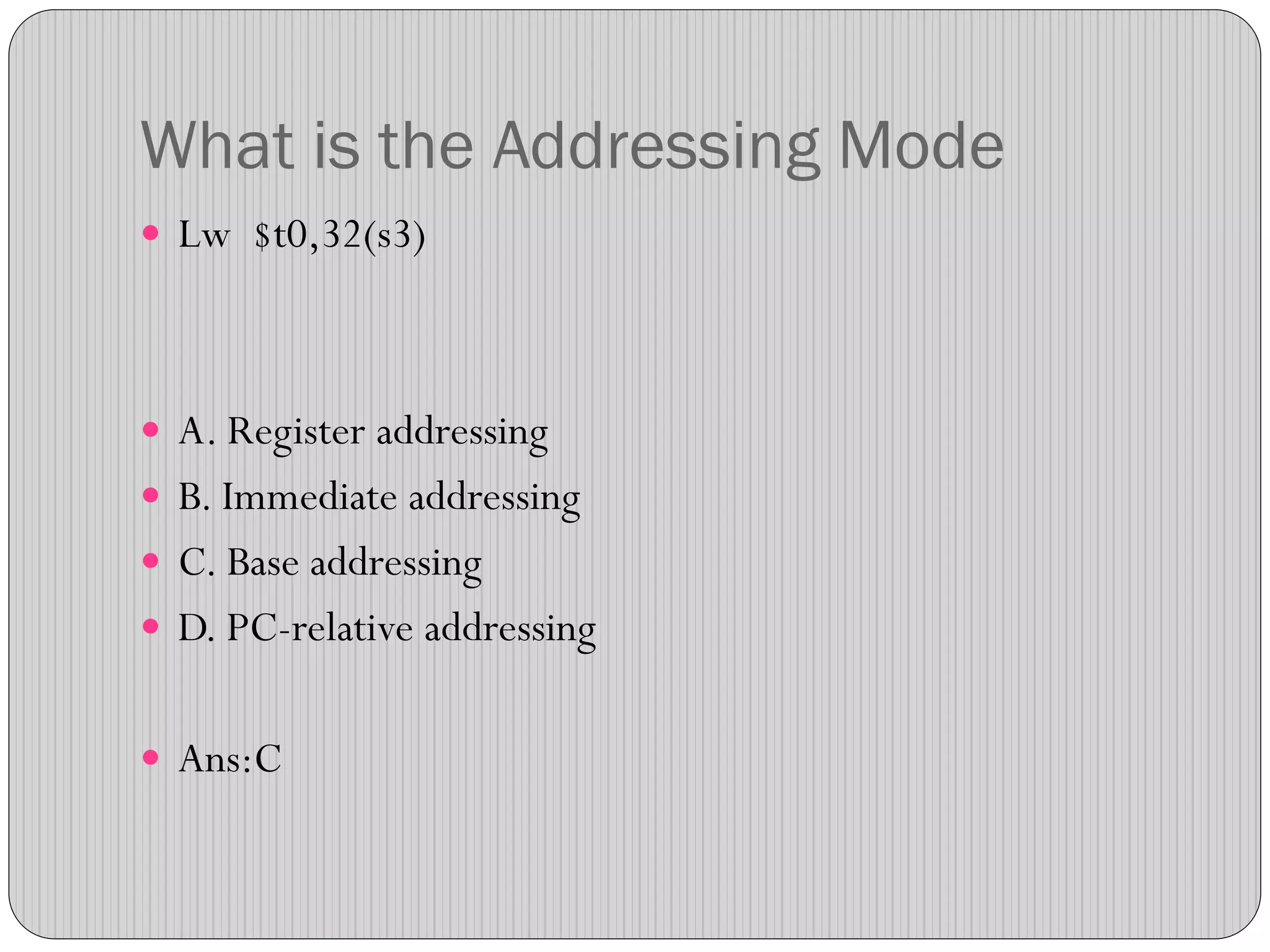
What is the Addressing Mode
 Lw $t0,32(s3)
 A. Register addressing
 B. Immediate addressing
 C. Base addressing
 D. PC-relative addressing
 Ans:C
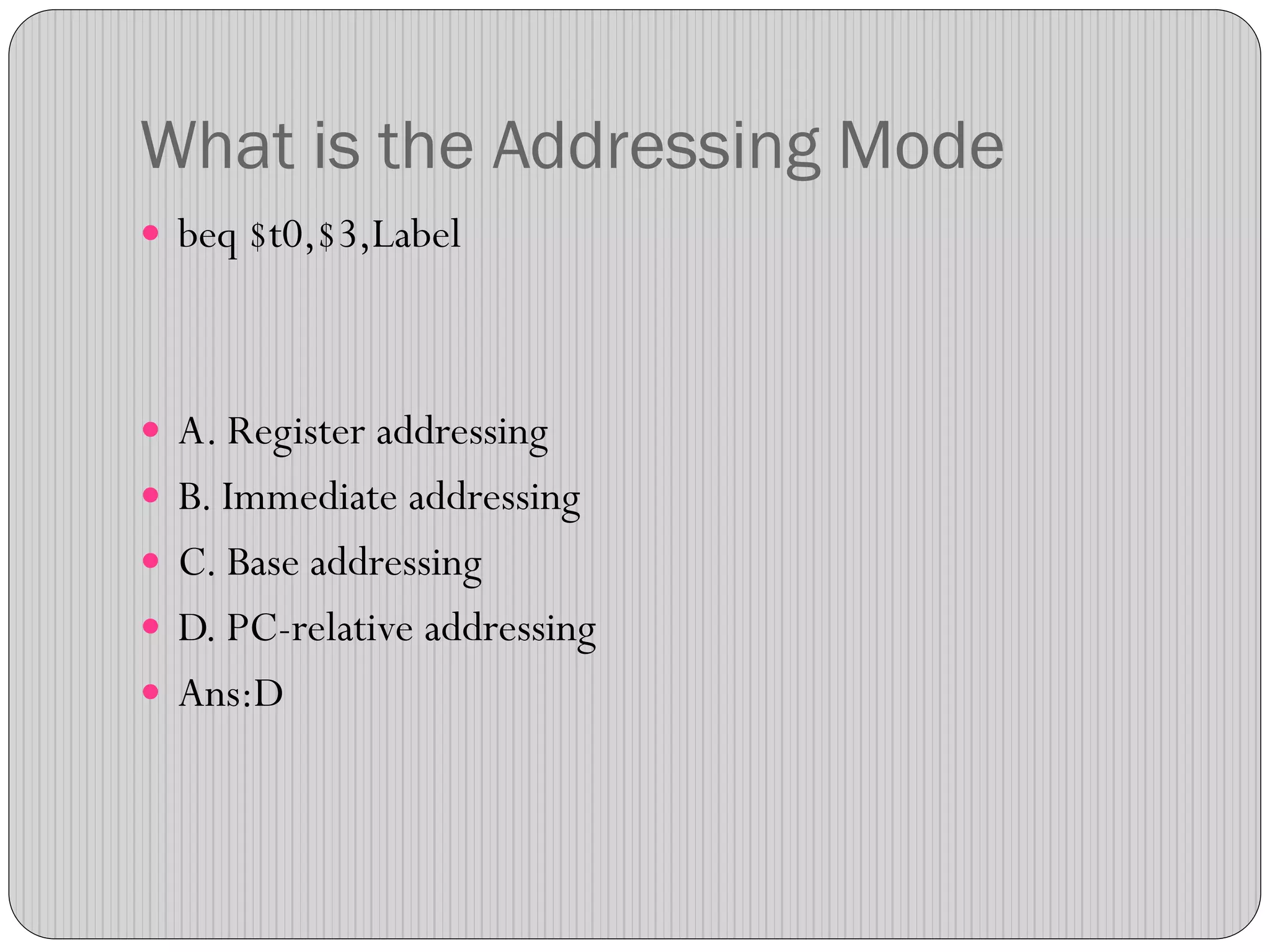
What is the Addressing Mode
 beq $t0,$3,Label
 A. Register addressing
 B. Immediate addressing
 C. Base addressing
 D. PC-relative addressing
 Ans:D
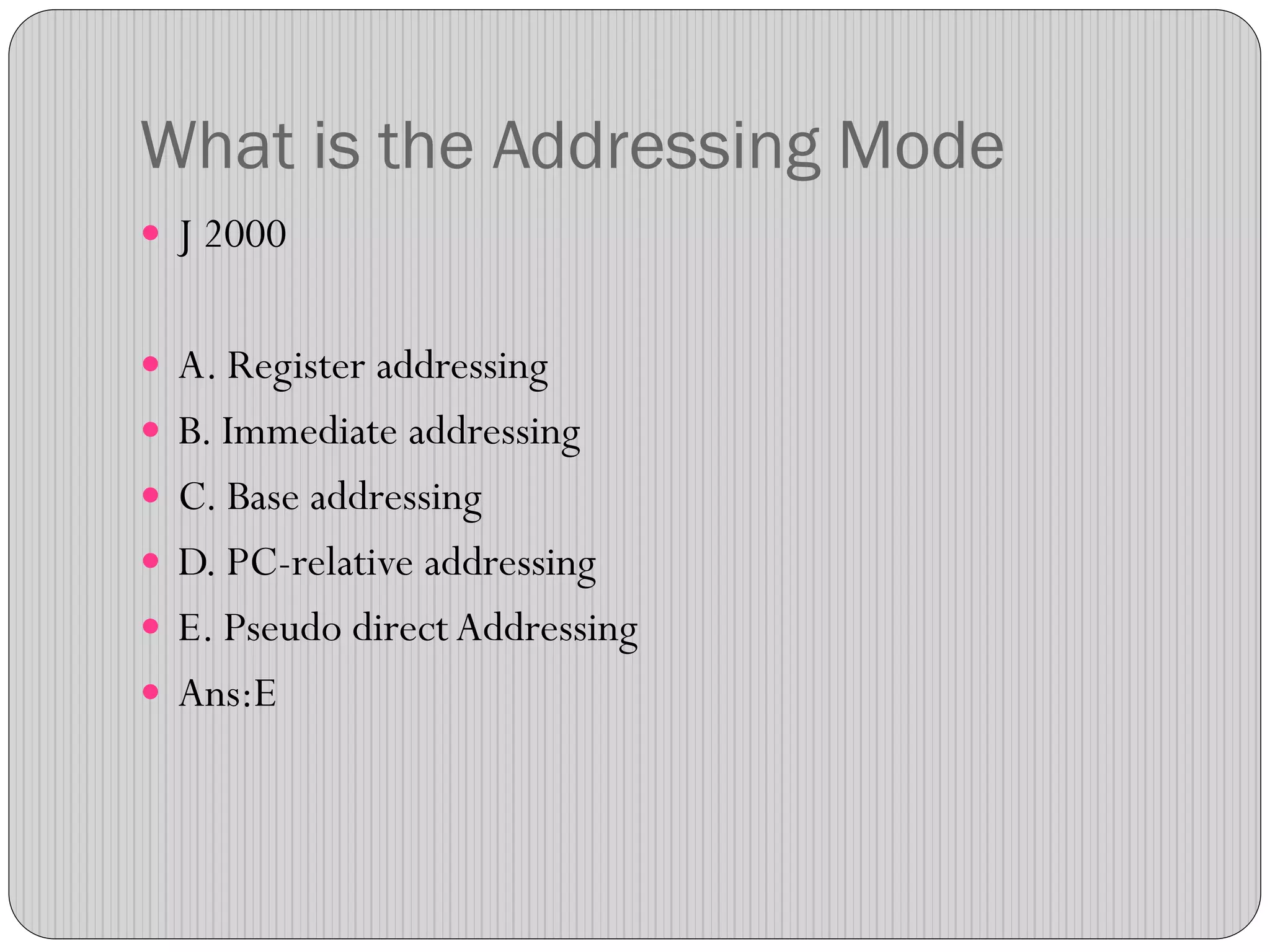
What is the Addressing Mode
 J 2000
 A. Register addressing
 B. Immediate addressing
 C. Base addressing
 D. PC-relative addressing
 E. Pseudo direct Addressing
 Ans:E

Unit i ca- mips addressing

  • 1.
  • 2.
    Addressing in Branchesand Jumps  The MIPS jump instructions have the simplest addressing.  They use the final MIPS instruction format, called the J-type, which consists of 6 bits for the operation field and the rest of the bits for the address field.  j 10000 # go to location 10000  where the value of the jump opcode is 2 and the jump address is 10000.
  • 3.
     Unlike thejump instruction, the conditional branch instruction must specify two operands in addition to the branch address.  bne $s0,$s1,Exit # go to Exit if $s0 ≠ $s1  branch instruction would calculate the following:  Program counter Register Branch address  PC-relative addressing
  • 4.
     Showing BranchOffset in Machine Language  The while loop as compiled into this MIPS assembler code:  Loop:sll $t1,$s3,2 #Temp reg $t1 = 4 * i  add $t1,$t1,$s6 # $t1 = address of save[i]  lw $t0,0($t1) #Temp reg $t0 = save[i]  bne $t0,$s5, Exit # go to Exit if save[i] ≠ k  addi $s3,$s3,1 # i = i + 1  j Loop # go to Loop  Exit:
  • 5.
     If weassume we place the loop starting at location 80000 in memory, what is the MIPS machine code for this loop?  The assembled instructions and their addresses are:
  • 6.
    MIPS Addressing Mode Addressing mode One of several addressing regimes delimited by their varied use of operands and/or addresses.  1. Immediate addressing, where the operand is a constant within the instruction itself  2. Register addressing, where the operand is a register  3. Base or displacement addressing, where the operand is at the memory location whose address is the sum of a register and a constant in the instruction  4. PC-relative addressing, where the branch address is the sum of the PC and a constant in the instruction  5. Pseudo direct addressing, where the jump address is the 26 bits of the instruction concatenated with the upper bits of the PC
  • 10.
    What is theAddressing Mode  Add $s0,$s1,5  A. Register addressing  B. Immediate addressing  C. Base addressing  D. PC-relative addressing  Ans:B
  • 11.
    What is theAddressing Mode  Add $s0,$s1,$s2  A. Register addressing  B. Immediate addressing  C. Base addressing  D. PC-relative addressing  Ans:A
  • 12.
    What is theAddressing Mode  Lw $t0,32(s3)  A. Register addressing  B. Immediate addressing  C. Base addressing  D. PC-relative addressing  Ans:C
  • 13.
    What is theAddressing Mode  beq $t0,$3,Label  A. Register addressing  B. Immediate addressing  C. Base addressing  D. PC-relative addressing  Ans:D
  • 14.
    What is theAddressing Mode  J 2000  A. Register addressing  B. Immediate addressing  C. Base addressing  D. PC-relative addressing  E. Pseudo direct Addressing  Ans:E