DNA
TRANSLATION
DNA
RNA
Protein
Transcription
Translation
CENTRAL DOGMA
Key molecules of translation
mRNA
Ribosomes
tRNA
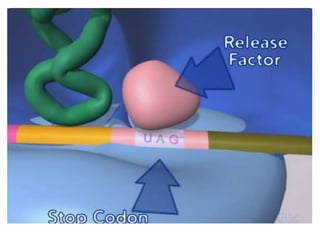
Release factor
Key molecules of translation
mRNA
(messenger RNA)
Product of transcription
• Convey genetic information from DNA
to ribosome.
• Genetic information in the form of
nucleotide.
• Three bases for each codon :- amino
acids.
• It contain codon to which anticodon of
tRNA get attached during translation.
Pre-mRNA Matured mRNA
Nucleus
Transport to
cytoplasm for
protein synthesis
(Translation)
Key molecules of translation
tRNA
(Transfer RNA)
Attachment
between
Anticodon of
tRNA and
codon of target
gene :-necessary
step in
translation
Key molecules of translation
Ribosomes
Baterial : 30s + 50s
Mammalian : 40s +60s
 Composed of
rRNA and
ribosomal
protein
 Present in both
eukaryotes and
prokaryotes
Model showing binding sites on ribosome assembly
Key molecules of translation
Release
factor(eRF)  Recognize all the 3 stop codons.
 Bind to ribosome at site A.
 Stops protein biosynthesis and
release of the nascent polypeptide
chain.
 Same process in prokaryotes and
eukaryotes
 3 separate release factors exist,
RF1, RF and RF3.
• Ribosomal assembly around target mRNA
• First tRNA recognize and attach at start codonInitiation
• Attachment of second tRNA to target mRNA
• Transfer of a.a. from first to second tRNAElongation
• Translocation of ribosome to next mRNA codon.
• Formation of Amino acid chain.
Translocation
• Attachment of release factor at stop codon.
• Release of polypeptide from ribosomeTermination
Phases of Translation
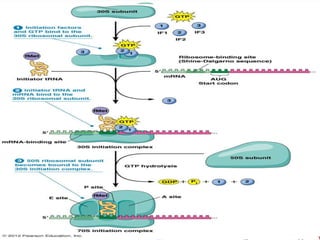
Initiation
includes
GTP
(guanosine
Triphosphate
).
Initiation
factors (IF)
Specific
initiator
tRNA
mRNA
Ribosome
INITIATION
Step for Initiation of
Translation.
 Interaction b/w small
ribosomal subunit and IF-1
& IF-3.
 Recognition of AUG(start)
codon on mRNA.
 Binding of mRNA on small
subunit.
 Recognition of RBS,
upstream to AUG & IF-3
binding.
 IF-3 prevents attachment of
large subunit
ribosome-
binding
site
(RBS)
Binding of a special
initiator tRNA to the
AUG start codon.
1st tRNA (tRNA.fMet)
binding to small subunit.
methionyl–tRNA
synthetase catalyzes the
addition of methionine to
the tRNA.
Enzyme transformylase
adds the formyl group to
the methionine.
Dissociation of all the three IF factors.
Binding of large subunit by using energy.
Energy : GTP hydrolysis to GDP
Russell igenetics molrcular approach
Binding of
Aminoacyl–tRNA
(charged tRNA)
Formation of
peptide
bonds
Translocation
ELONGATION AND
TRANSLOCATION
Step for Elongation of
Translation.
Binding of Aminoacyl–tRNA
(charged tRNA) to A site of
ribosome.
Formation of peptide bonds
Russell igenetics molrcular approach
Translocation ribosome and
release of tRNA for next cycle.
Charging
of tRNA
TERMINATION
Stop codon (UAG, UAA, and UGA) gives
signals for termination of translation
Release factor recognize stop codon &
bind to ribosomes.
Terminates translation with release of
polypeptide chain .
Russell igenetics molrcular approach
TERMINATION
Includes 7 steps
Russell igenetics molrcular approach
THANKYOU -Anjali shah

Dna translation

  • 1.
  • 2.
  • 3.
    Key molecules oftranslation mRNA Ribosomes tRNA Release factor
  • 4.
    Key molecules oftranslation mRNA (messenger RNA) Product of transcription • Convey genetic information from DNA to ribosome. • Genetic information in the form of nucleotide. • Three bases for each codon :- amino acids. • It contain codon to which anticodon of tRNA get attached during translation. Pre-mRNA Matured mRNA Nucleus Transport to cytoplasm for protein synthesis (Translation)
  • 5.
    Key molecules oftranslation tRNA (Transfer RNA) Attachment between Anticodon of tRNA and codon of target gene :-necessary step in translation
  • 6.
    Key molecules oftranslation Ribosomes Baterial : 30s + 50s Mammalian : 40s +60s  Composed of rRNA and ribosomal protein  Present in both eukaryotes and prokaryotes Model showing binding sites on ribosome assembly
  • 7.
    Key molecules oftranslation Release factor(eRF)  Recognize all the 3 stop codons.  Bind to ribosome at site A.  Stops protein biosynthesis and release of the nascent polypeptide chain.  Same process in prokaryotes and eukaryotes  3 separate release factors exist, RF1, RF and RF3.
  • 8.
    • Ribosomal assemblyaround target mRNA • First tRNA recognize and attach at start codonInitiation • Attachment of second tRNA to target mRNA • Transfer of a.a. from first to second tRNAElongation • Translocation of ribosome to next mRNA codon. • Formation of Amino acid chain. Translocation • Attachment of release factor at stop codon. • Release of polypeptide from ribosomeTermination Phases of Translation
  • 9.
  • 10.
    Step for Initiationof Translation.  Interaction b/w small ribosomal subunit and IF-1 & IF-3.  Recognition of AUG(start) codon on mRNA.  Binding of mRNA on small subunit.  Recognition of RBS, upstream to AUG & IF-3 binding.  IF-3 prevents attachment of large subunit ribosome- binding site (RBS) Binding of a special initiator tRNA to the AUG start codon. 1st tRNA (tRNA.fMet) binding to small subunit. methionyl–tRNA synthetase catalyzes the addition of methionine to the tRNA. Enzyme transformylase adds the formyl group to the methionine. Dissociation of all the three IF factors. Binding of large subunit by using energy. Energy : GTP hydrolysis to GDP Russell igenetics molrcular approach
  • 11.
    Binding of Aminoacyl–tRNA (charged tRNA) Formationof peptide bonds Translocation ELONGATION AND TRANSLOCATION
  • 12.
    Step for Elongationof Translation. Binding of Aminoacyl–tRNA (charged tRNA) to A site of ribosome. Formation of peptide bonds Russell igenetics molrcular approach Translocation ribosome and release of tRNA for next cycle. Charging of tRNA
  • 13.
    TERMINATION Stop codon (UAG,UAA, and UGA) gives signals for termination of translation Release factor recognize stop codon & bind to ribosomes. Terminates translation with release of polypeptide chain . Russell igenetics molrcular approach
  • 14.
    TERMINATION Includes 7 steps Russelligenetics molrcular approach
  • 15.

Editor's Notes

  • #6 75-90 nucleotide long. (cloverleaf str.) each type with different sequence. CCA tail at 3’ end, T arm (4-5 bp pseudouridine), D arm (4-6 bp dihydrouridine) , anticodon arm