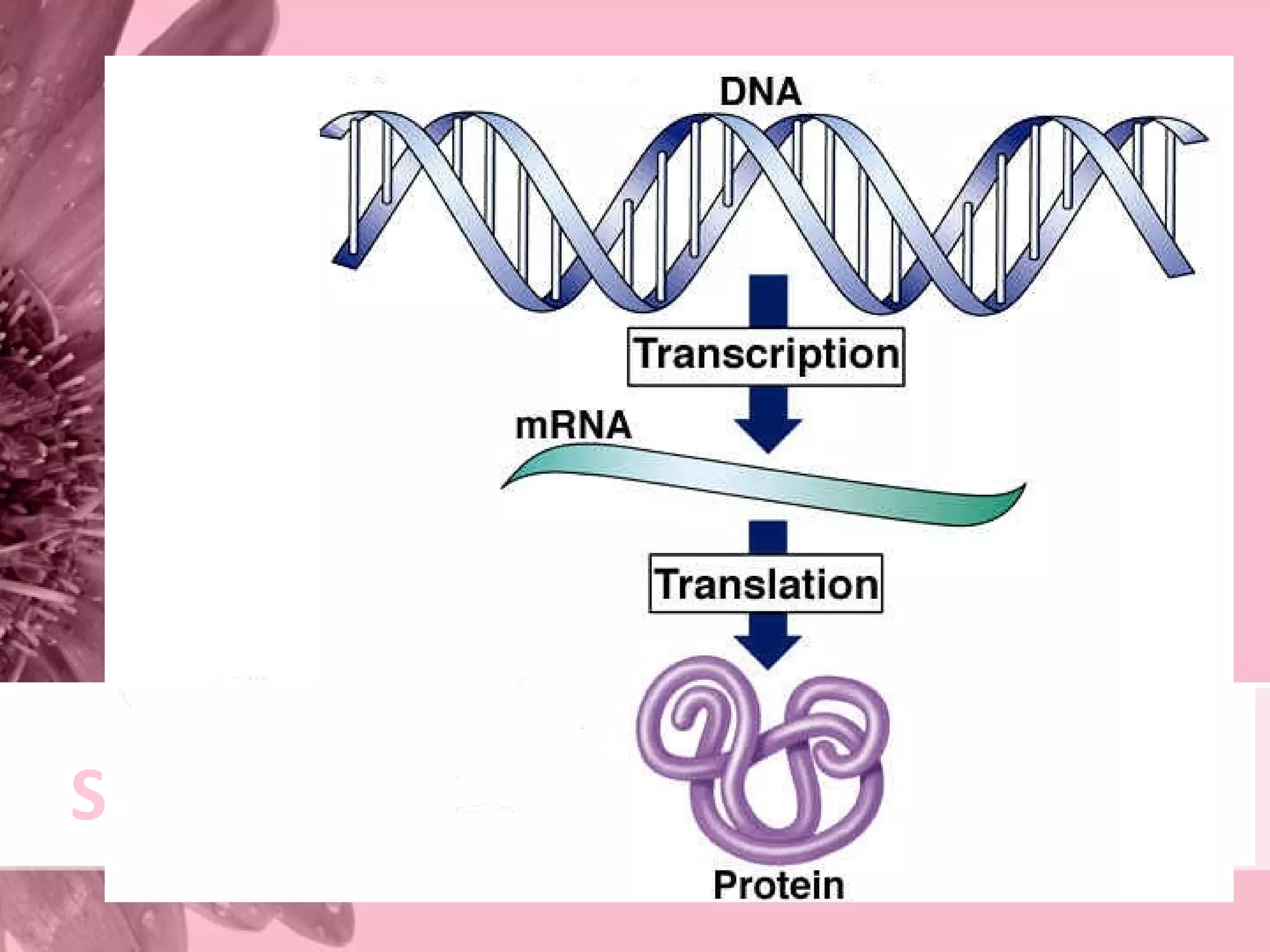
Second Step Of Protein Synthesis
Translation:
2
What is Translation ?
Translation is a process through which
cellular ribosomes manufacture proteins
by decoding messenger RNA (mRNA)
produced by transcripition to produce a
specific amino acid chain, or a
polypeptide, that will later fold into an
active protein.
3
-Where does translation of nucleotids
messages into protein takes place?
-What are the tools of translation ?
-What are the steps of translation ?
-What are the difference between tRNA,
rRNA and mRNA ?
04/27/15
Translation of nucloetides takes place at
the level of the ribosome in the
cytoplasam of the cell.
5
1-Ribosome:
Tools of Translation:
The ribosome is a large and complex molecular machine, found
within all living cells, that serves as the primary site of
translation. Ribosomes link amino acids together in the order
specified by messenger RNA (mRNA) molecules.
6
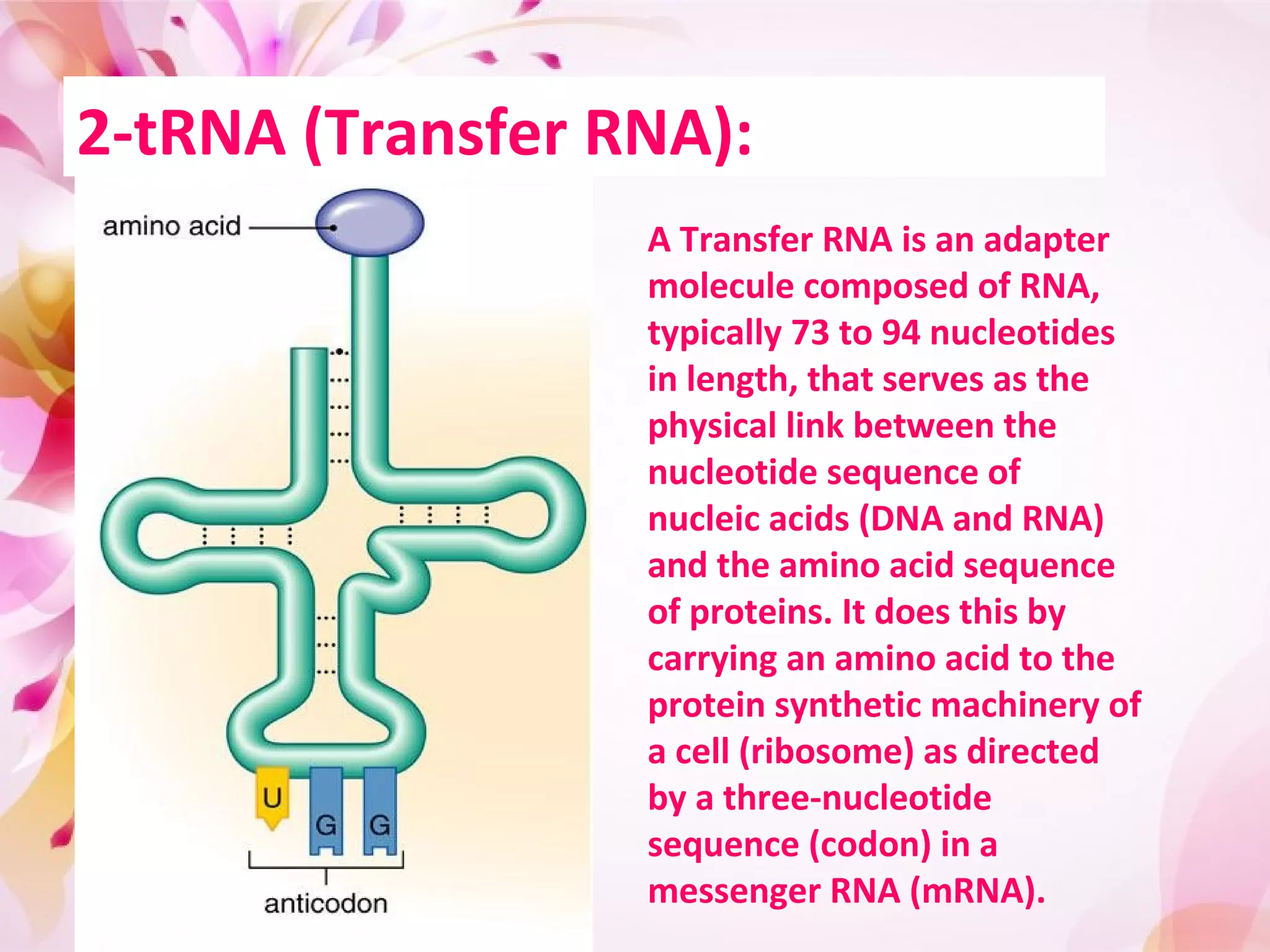
2-tRNA (Transfer RNA):
A Transfer RNA is an adapter
molecule composed of RNA,
typically 73 to 94 nucleotides
in length, that serves as the
physical link between the
nucleotide sequence of
nucleic acids (DNA and RNA)
and the amino acid sequence
of proteins. It does this by
carrying an amino acid to the
protein synthetic machinery of
a cell (ribosome) as directed
by a three-nucleotide
sequence (codon) in a
messenger RNA (mRNA).
7
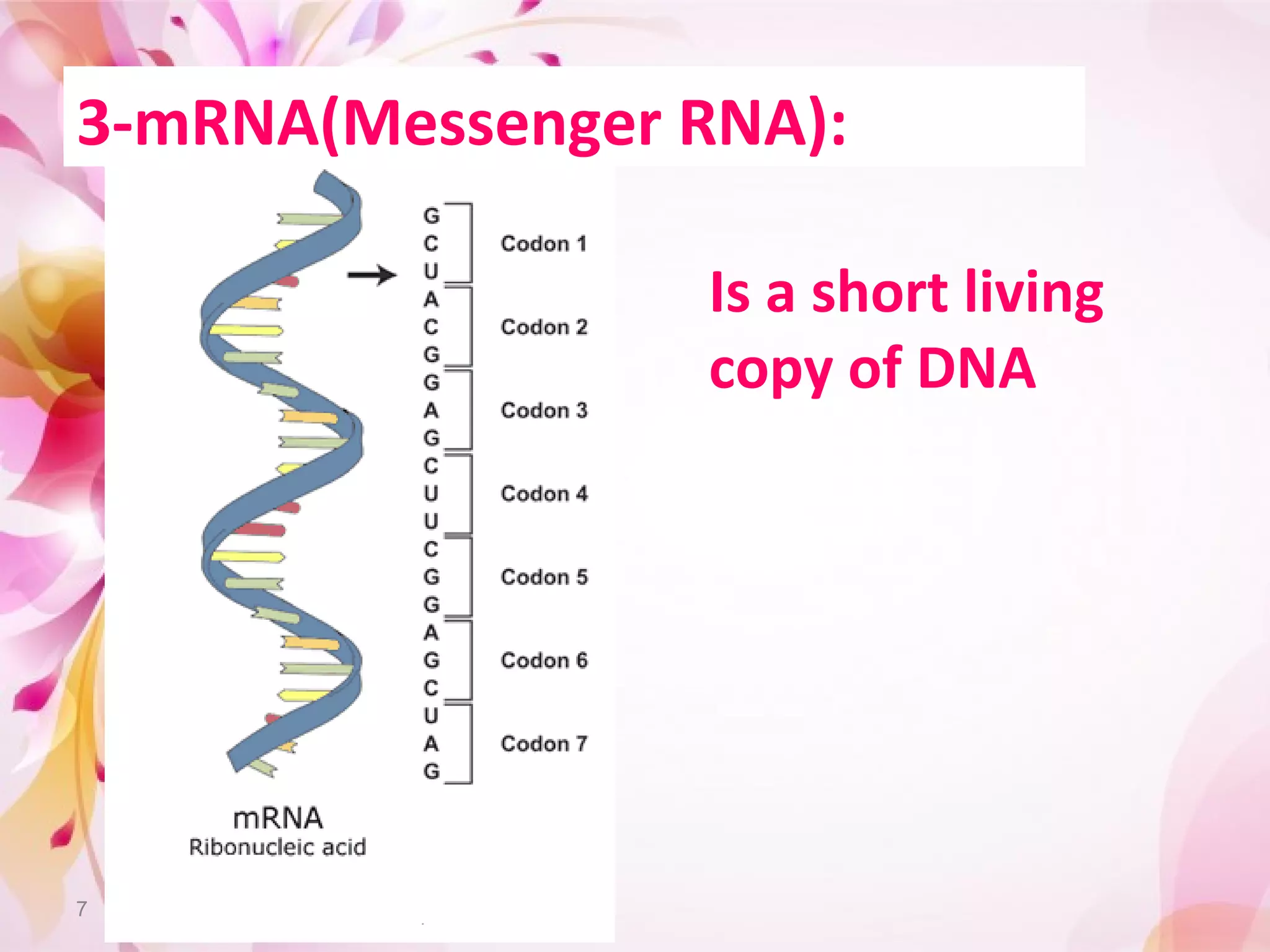
3-mRNA(Messenger RNA):
Is a short living
copy of DNA
04/27/15
4-Energy in the form of ATP
• ATP is the energy made by the body
through converting sugars, also it is
the currency for cells ,they use it for
energy to carry out all functions.
04/27/15
Some definitions :
- Codon: is a triplet of nucleotides in
mRNA.
- Anti-codon: is a triplet of nucleotides
in tRNA which is complementary to
the codon on mRNA.
-
04/27/15
What are the difference between tRNA,
rRNA and mRNA ?
• The difference is the jobs they have. mRNA
stands for messenger RNA, it takes the
information of the DNA from the nucleus to
the ribosomes. tRNA stands for transfer RNA,
it adds one link to a growing polypeptide
chain during translation. rRNA stands for
ribosomal RNA, it is the main component of
ribosomes, and plays a large part in the
creation of new proteins.
04/27/15
Steps of Translation:
1- Intiation
2-Elongation
3-Termination
12
First: Intiation
1st
Ribosome randomely attaches to mRNA.
2nd
When it reaches the start codon(AUG), a
specific tRNA carrying anticodon (UAG) on one
side and Methionine on the other, enters site P
in order to start translation.
04/27/15
Second: Elongation
1st
Another tRNA with a sepcific amino acid comes
and occupies site A.
2nd
The amino acid in site A is connected to that in
site P with a peptide bond.
3rd
The ribosome advance one codon, thus moving
the tRNA in site A to site P, and the tRNA in site P to
the cytoplasm through site E, separating it from its
aminoacid..
04/27/15
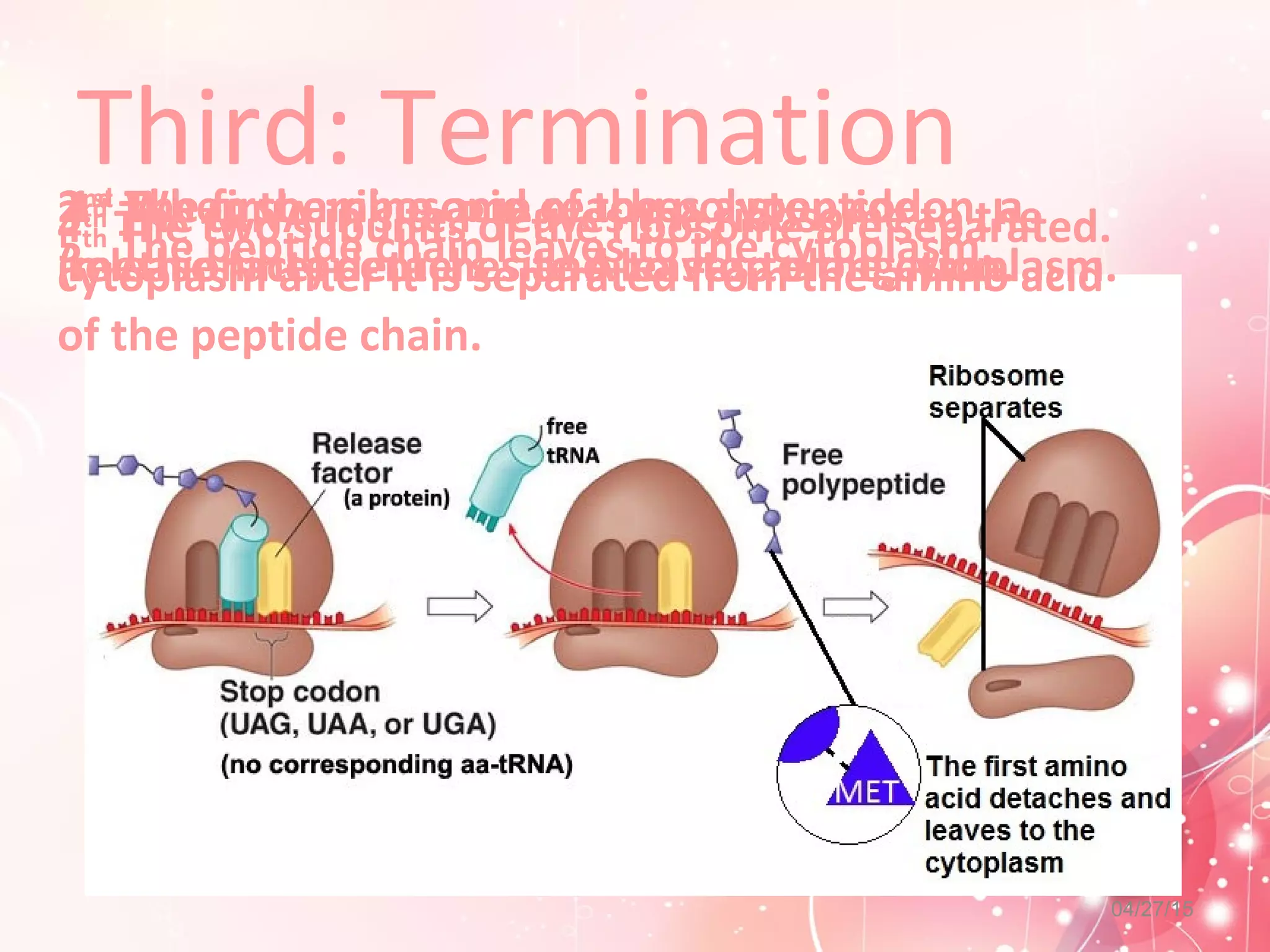
Third: Termination2nd
The first amino acid of the polypeptide
(methionine) detaches and leaves to the cytoplasm.
1st
When the ribosome reaches a stop codon, a
release factor enters site A to stop elongation.
3rd
The tRNA in site P leaves the ribosome to the
cytoplasm after it is separated from the amino acid
of the peptide chain.
4th
The two subunits of the ribosome are separated.5th
The peptide chain leaves to the cytoplasm.
04/27/15
Done By :
• Kinanah Hajar
• Sahar Shouman
• Alaa Mansour
• Malak El-laden

Translation of dna

  • 1.
    Second Step OfProtein Synthesis Translation:
  • 2.
    2 What is Translation? Translation is a process through which cellular ribosomes manufacture proteins by decoding messenger RNA (mRNA) produced by transcripition to produce a specific amino acid chain, or a polypeptide, that will later fold into an active protein.
  • 3.
    3 -Where does translationof nucleotids messages into protein takes place? -What are the tools of translation ? -What are the steps of translation ? -What are the difference between tRNA, rRNA and mRNA ?
  • 4.
    04/27/15 Translation of nucloetidestakes place at the level of the ribosome in the cytoplasam of the cell.
  • 5.
    5 1-Ribosome: Tools of Translation: Theribosome is a large and complex molecular machine, found within all living cells, that serves as the primary site of translation. Ribosomes link amino acids together in the order specified by messenger RNA (mRNA) molecules.
  • 6.
    6 2-tRNA (Transfer RNA): ATransfer RNA is an adapter molecule composed of RNA, typically 73 to 94 nucleotides in length, that serves as the physical link between the nucleotide sequence of nucleic acids (DNA and RNA) and the amino acid sequence of proteins. It does this by carrying an amino acid to the protein synthetic machinery of a cell (ribosome) as directed by a three-nucleotide sequence (codon) in a messenger RNA (mRNA).
  • 7.
    7 3-mRNA(Messenger RNA): Is ashort living copy of DNA
  • 8.
    04/27/15 4-Energy in theform of ATP • ATP is the energy made by the body through converting sugars, also it is the currency for cells ,they use it for energy to carry out all functions.
  • 9.
    04/27/15 Some definitions : -Codon: is a triplet of nucleotides in mRNA. - Anti-codon: is a triplet of nucleotides in tRNA which is complementary to the codon on mRNA. -
  • 10.
    04/27/15 What are thedifference between tRNA, rRNA and mRNA ? • The difference is the jobs they have. mRNA stands for messenger RNA, it takes the information of the DNA from the nucleus to the ribosomes. tRNA stands for transfer RNA, it adds one link to a growing polypeptide chain during translation. rRNA stands for ribosomal RNA, it is the main component of ribosomes, and plays a large part in the creation of new proteins.
  • 11.
    04/27/15 Steps of Translation: 1-Intiation 2-Elongation 3-Termination
  • 12.
    12 First: Intiation 1st Ribosome randomelyattaches to mRNA. 2nd When it reaches the start codon(AUG), a specific tRNA carrying anticodon (UAG) on one side and Methionine on the other, enters site P in order to start translation.
  • 13.
    04/27/15 Second: Elongation 1st Another tRNAwith a sepcific amino acid comes and occupies site A. 2nd The amino acid in site A is connected to that in site P with a peptide bond. 3rd The ribosome advance one codon, thus moving the tRNA in site A to site P, and the tRNA in site P to the cytoplasm through site E, separating it from its aminoacid..
  • 14.
    04/27/15 Third: Termination2nd The firstamino acid of the polypeptide (methionine) detaches and leaves to the cytoplasm. 1st When the ribosome reaches a stop codon, a release factor enters site A to stop elongation. 3rd The tRNA in site P leaves the ribosome to the cytoplasm after it is separated from the amino acid of the peptide chain. 4th The two subunits of the ribosome are separated.5th The peptide chain leaves to the cytoplasm.
  • 15.
    04/27/15 Done By : •Kinanah Hajar • Sahar Shouman • Alaa Mansour • Malak El-laden