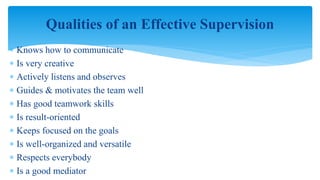
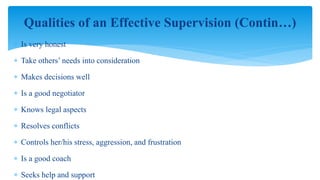
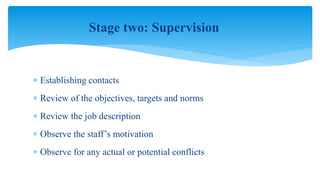
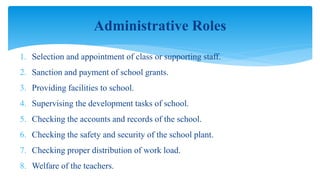
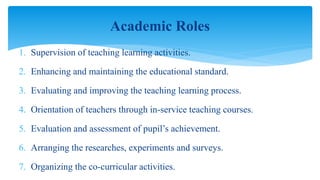
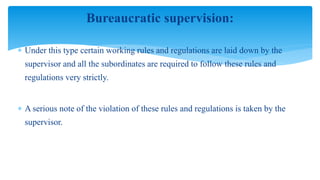
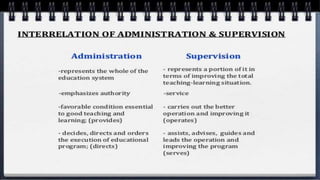
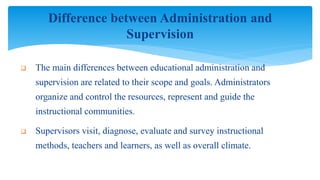
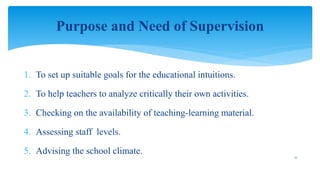
This document discusses the key concepts of educational supervision. It begins by defining supervision as overseeing the activities of others to ensure plans are followed. It describes four types of supervision: autocratic, laissez-faire, democratic, and bureaucratic. The nature and characteristics of effective supervision are provided, including that it is adaptive, cooperative, and motivating. The purpose of supervision is outlined as setting goals, evaluating teaching methods, and advising staff. Qualities of effective supervisors include communication skills, creativity, and being results-oriented. The roles of supervisors are divided into administrative roles like staff appointments, and academic roles such as evaluating teaching quality.

 Most read
 Most read




 Most read