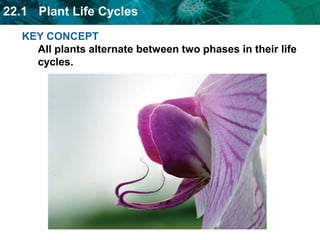
KEY CONCEPTAll plants alternate between two phases in their life cycles.
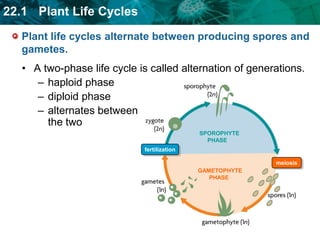
SPOROPHYTE     PHASEfertilizationmeiosisGAMETOPHYTE       PHASEPlant life cycles alternate between producing spores and gametes.A two-phase life cycle is called alternation of generations. haploid phase diploid phase alternates betweenthe two
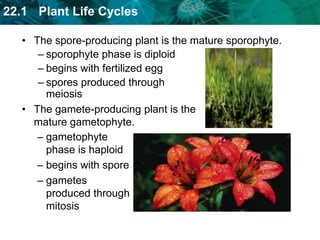
The spore-producing plant is the mature sporophyte.sporophyte phase is diploid begins with fertilized egg spores produced through meiosis  The gamete-producing plant is the mature gametophyte. gametophyte    phase is haploid
 begins with spore
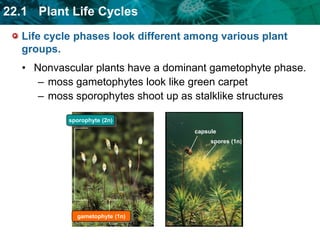
 gametes    produced through    mitosissporophyte (2n)capsulespores (1n)gametophyte (1n)Life cycle phases look different among various plant groups.Nonvascular plants have a dominant gametophyte phase. moss gametophytes look like green carpet moss sporophytes shoot up as stalklike structures
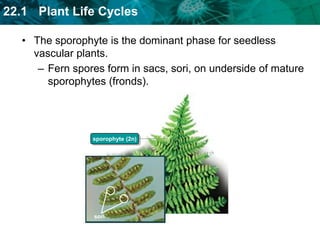
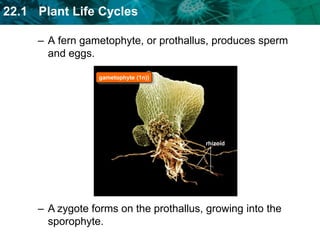
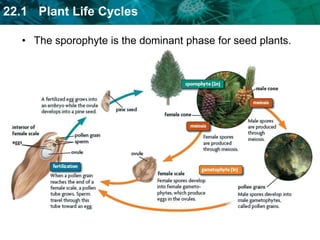
sporophyte (2n)soriThe sporophyte is the dominant phase for seedless vascular plants. Fern spores form in sacs, sori, on underside of mature sporophytes (fronds).A fern gametophyte, or prothallus, produces sperm and eggs.gametophyte (1n))rhizoidA zygote forms on the prothallus, growing into the sporophyte. The sporophyte is the dominant phase for seed plants. pine trees are typical seed plant sporophytesfemale spores produced in female cones male spores produced in male cones male spores develop into pollen grains, the male gametophytes female spores develop into female gametophytes that produce eggs sperm from pollen travel down pollen tube toward egg fertilized egg develops into embryo ovule develops into protective pine seed
The sporophyte is the dominant phase for seed plants.
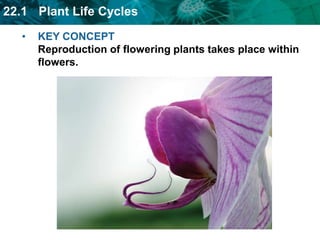
KEY CONCEPTReproduction of flowering plants takes place within flowers.
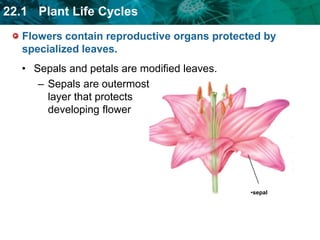
sepalFlowers contain reproductive organs protected by specialized leaves.Sepals and petals are modified leaves.Sepals are outermostlayer that protectsdeveloping flower
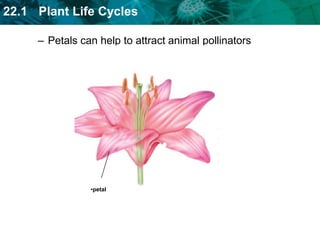
petalPetals can help to attract animal pollinators
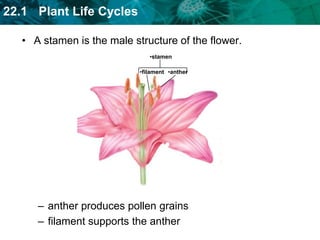
stamenfilamentantherA stamen is the male structure of the flower.anther produces pollen grains
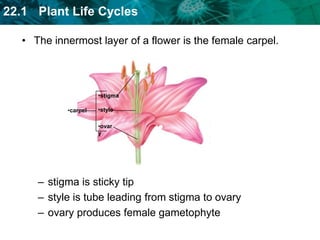
filament supports the anther stigmastylecarpelovaryThe innermost layer of a flower is the female carpel. stigma is sticky tip
style is tube leading from stigma to ovary
ovary produces female gametophyte Flowering plants can be pollinated by wind or animals.Flowering plants pollinated when pollen grains land on stigma.Wind pollinated flowers have small flowers and large amounts of pollen.
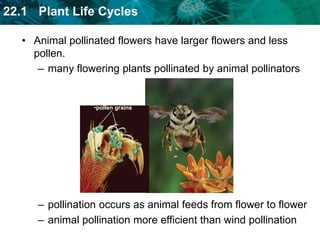
Animal pollinated flowers have larger flowers and less pollen. many flowering plants pollinated by animal pollinatorspollen grainspollination occurs as animal feeds from flower to flower
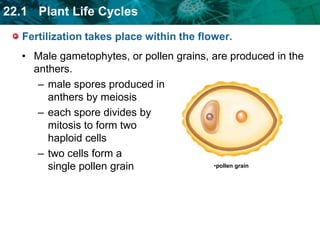
animal pollination more efficient than wind pollinationFertilization takes place within the flower.Male gametophytes, or pollen grains, are produced in the anthers. male spores produced inanthers by meiosis
each spore divides bymitosis to form twohaploid cells
two cells form asingle pollen grainpollen grain
One female gametophyte can form in each ovule of a flower’s ovary.four female spores produced in ovule by meiosis one spore develops into female gametophyte female gametophyte contains seven cells one cell has two nuclei, or polar nuclei one cell will develop into an egg
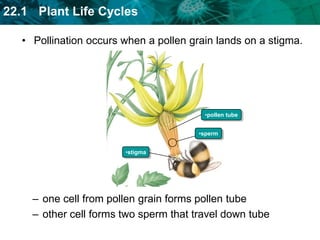
pollen tubespermstigmaPollination occurs when a pollen grain lands on a stigma. one cell from pollen grain forms pollen tube
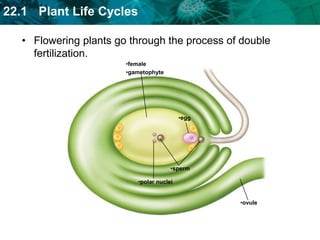
other cell forms two sperm that travel down tube  femalegametophyteeggspermpolar nucleiovuleFlowering plants go through the process of double fertilization.
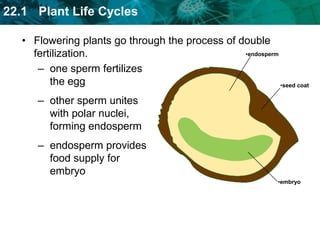
endospermseed coatembryoFlowering plants go through the process of double fertilization.one sperm fertilizes the egg
other sperm unites with polar nuclei, forming endosperm
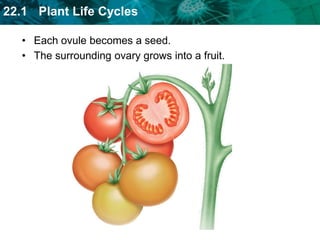
endosperm provides food supply for embryoEach ovule becomes a seed.The surrounding ovary grows into a fruit.
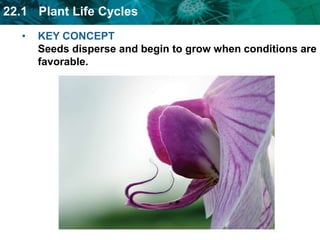
KEY CONCEPTSeeds disperse and begin to grow when conditions are favorable.
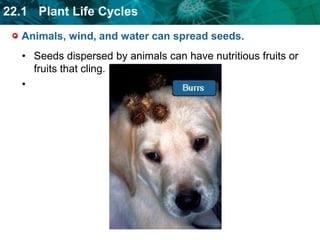
Animals, wind, and water can spread seeds.Seeds dispersed by animals can have nutritious fruits or fruits that cling.
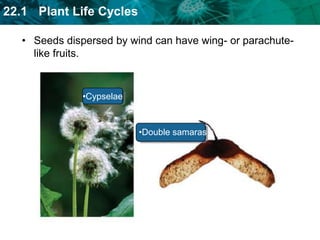
CypselaeDouble samarasSeeds dispersed by wind can have wing- or parachute-like fruits.
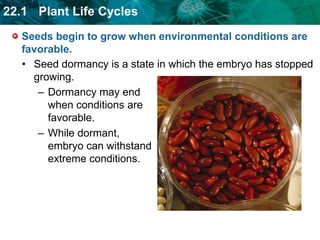
Seeds begin to grow when environmental conditions are favorable.Seed dormancy is a state in which the embryo has stopped growing. Dormancy may end when conditions are favorable.
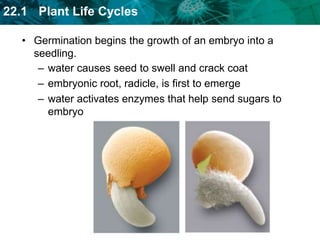
While dormant, embryo can withstand extreme conditions.Germination begins the growth of an embryo into a seedling. water causes seed to swell and crack coat
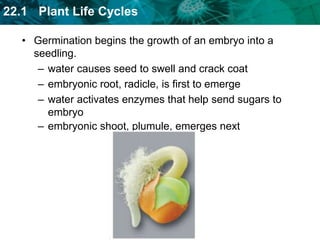
embryonic root, radicle, is first to emerge
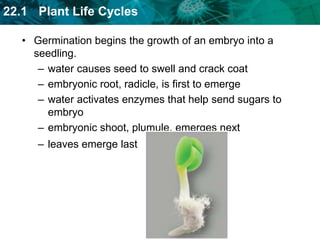
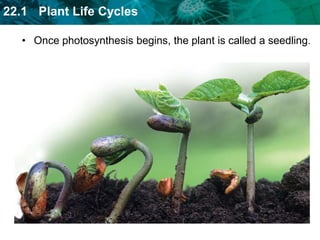
water activates enzymes that help send sugars to embryoGermination begins the growth of an embryo into a seedling. water causes seed to swell and crack coatembryonic root, radicle, is first to emerge water activates enzymes that help send sugars to embryoembryonic shoot, plumule, emerges next Germination begins the growth of an embryo into a seedling. water causes seed to swell and crack coatembryonic root, radicle, is first to emerge water activates enzymes that help send sugars to embryoembryonic shoot, plumule, emerges next leaves emerge last Once photosynthesis begins, the plant is called a seedling.
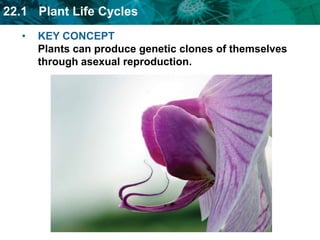
KEY CONCEPTPlants can produce genetic clones of themselves through asexual reproduction.
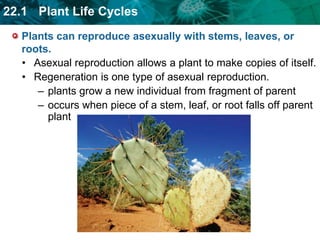
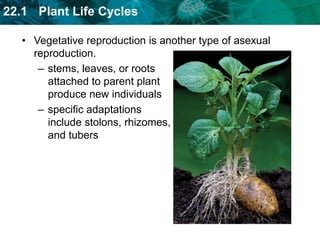
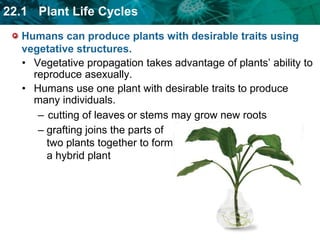
Plants can reproduce asexually with stems, leaves, or roots.Asexual reproduction allows a plant to make copies of itself.Regeneration is one type of asexual reproduction.plants grow a new individual from fragment of parent occurs when piece of a stem, leaf, or root falls off parent plant

Unit 23 Plant Reproduction

  • 1.
    KEY CONCEPTAll plantsalternate between two phases in their life cycles.
  • 2.
    SPOROPHYTE PHASEfertilizationmeiosisGAMETOPHYTE PHASEPlant life cycles alternate between producing spores and gametes.A two-phase life cycle is called alternation of generations. haploid phase diploid phase alternates betweenthe two
  • 3.
    The spore-producing plantis the mature sporophyte.sporophyte phase is diploid begins with fertilized egg spores produced through meiosis The gamete-producing plant is the mature gametophyte. gametophyte phase is haploid
  • 4.
  • 5.
    gametes produced through mitosissporophyte (2n)capsulespores (1n)gametophyte (1n)Life cycle phases look different among various plant groups.Nonvascular plants have a dominant gametophyte phase. moss gametophytes look like green carpet moss sporophytes shoot up as stalklike structures
  • 6.
    sporophyte (2n)soriThe sporophyteis the dominant phase for seedless vascular plants. Fern spores form in sacs, sori, on underside of mature sporophytes (fronds).A fern gametophyte, or prothallus, produces sperm and eggs.gametophyte (1n))rhizoidA zygote forms on the prothallus, growing into the sporophyte. The sporophyte is the dominant phase for seed plants. pine trees are typical seed plant sporophytesfemale spores produced in female cones male spores produced in male cones male spores develop into pollen grains, the male gametophytes female spores develop into female gametophytes that produce eggs sperm from pollen travel down pollen tube toward egg fertilized egg develops into embryo ovule develops into protective pine seed
  • 7.
    The sporophyte isthe dominant phase for seed plants.
  • 8.
    KEY CONCEPTReproduction offlowering plants takes place within flowers.
  • 9.
    sepalFlowers contain reproductiveorgans protected by specialized leaves.Sepals and petals are modified leaves.Sepals are outermostlayer that protectsdeveloping flower
  • 10.
    petalPetals can helpto attract animal pollinators
  • 11.
    stamenfilamentantherA stamen isthe male structure of the flower.anther produces pollen grains
  • 12.
    filament supports theanther stigmastylecarpelovaryThe innermost layer of a flower is the female carpel. stigma is sticky tip
  • 13.
    style is tubeleading from stigma to ovary
  • 14.
    ovary produces femalegametophyte Flowering plants can be pollinated by wind or animals.Flowering plants pollinated when pollen grains land on stigma.Wind pollinated flowers have small flowers and large amounts of pollen.
  • 15.
    Animal pollinated flowershave larger flowers and less pollen. many flowering plants pollinated by animal pollinatorspollen grainspollination occurs as animal feeds from flower to flower
  • 16.
    animal pollination moreefficient than wind pollinationFertilization takes place within the flower.Male gametophytes, or pollen grains, are produced in the anthers. male spores produced inanthers by meiosis
  • 17.
    each spore dividesbymitosis to form twohaploid cells
  • 18.
    two cells formasingle pollen grainpollen grain
  • 19.
    One female gametophytecan form in each ovule of a flower’s ovary.four female spores produced in ovule by meiosis one spore develops into female gametophyte female gametophyte contains seven cells one cell has two nuclei, or polar nuclei one cell will develop into an egg
  • 20.
    pollen tubespermstigmaPollination occurswhen a pollen grain lands on a stigma. one cell from pollen grain forms pollen tube
  • 21.
    other cell formstwo sperm that travel down tube femalegametophyteeggspermpolar nucleiovuleFlowering plants go through the process of double fertilization.
  • 22.
    endospermseed coatembryoFlowering plantsgo through the process of double fertilization.one sperm fertilizes the egg
  • 23.
    other sperm uniteswith polar nuclei, forming endosperm
  • 24.
    endosperm provides foodsupply for embryoEach ovule becomes a seed.The surrounding ovary grows into a fruit.
  • 25.
    KEY CONCEPTSeeds disperseand begin to grow when conditions are favorable.
  • 26.
    Animals, wind, andwater can spread seeds.Seeds dispersed by animals can have nutritious fruits or fruits that cling.
  • 27.
    CypselaeDouble samarasSeeds dispersedby wind can have wing- or parachute-like fruits.
  • 28.
    Seeds begin togrow when environmental conditions are favorable.Seed dormancy is a state in which the embryo has stopped growing. Dormancy may end when conditions are favorable.
  • 29.
    While dormant, embryocan withstand extreme conditions.Germination begins the growth of an embryo into a seedling. water causes seed to swell and crack coat
  • 30.
    embryonic root, radicle,is first to emerge
  • 31.
    water activates enzymesthat help send sugars to embryoGermination begins the growth of an embryo into a seedling. water causes seed to swell and crack coatembryonic root, radicle, is first to emerge water activates enzymes that help send sugars to embryoembryonic shoot, plumule, emerges next Germination begins the growth of an embryo into a seedling. water causes seed to swell and crack coatembryonic root, radicle, is first to emerge water activates enzymes that help send sugars to embryoembryonic shoot, plumule, emerges next leaves emerge last Once photosynthesis begins, the plant is called a seedling.
  • 32.
    KEY CONCEPTPlants canproduce genetic clones of themselves through asexual reproduction.
  • 33.
    Plants can reproduceasexually with stems, leaves, or roots.Asexual reproduction allows a plant to make copies of itself.Regeneration is one type of asexual reproduction.plants grow a new individual from fragment of parent occurs when piece of a stem, leaf, or root falls off parent plant