5th GRADE
SCIENCE
Sounds and sign language
The function of sensitivity
Internal coordination
Senses and organ senses
The nervous system
ENGLISH CATALÀ ENGLISH CATALÀ
Nervous system Taste buds
Brain Touch
Nerves Sense ogans
Neurons Stimuli
Spinal cord Sign language
Send Visibility
Receive Deaf
Hearing Coordinated
Sight Interpret
Sweat gland Disability
Taste Distinguish
 Through the sensitivity, we respond to changes in the external
environment. These changes are called stimuli.
 Stimulus is anything that causes a reaction in an organism.
• An animal is cold so it moves into the sun
• If we walk into a room and there is a bad smell, we respond leaving the room.
SENSE ORGANS
BRAIN
THE LOCOMOTOR
SYSTEM
Capture information
from the environment
Receives and interprets the
information and decides how
we should respond
Muscles receives orders from the
brain and work with bones to
make the body move.
SENSES
ORGANS
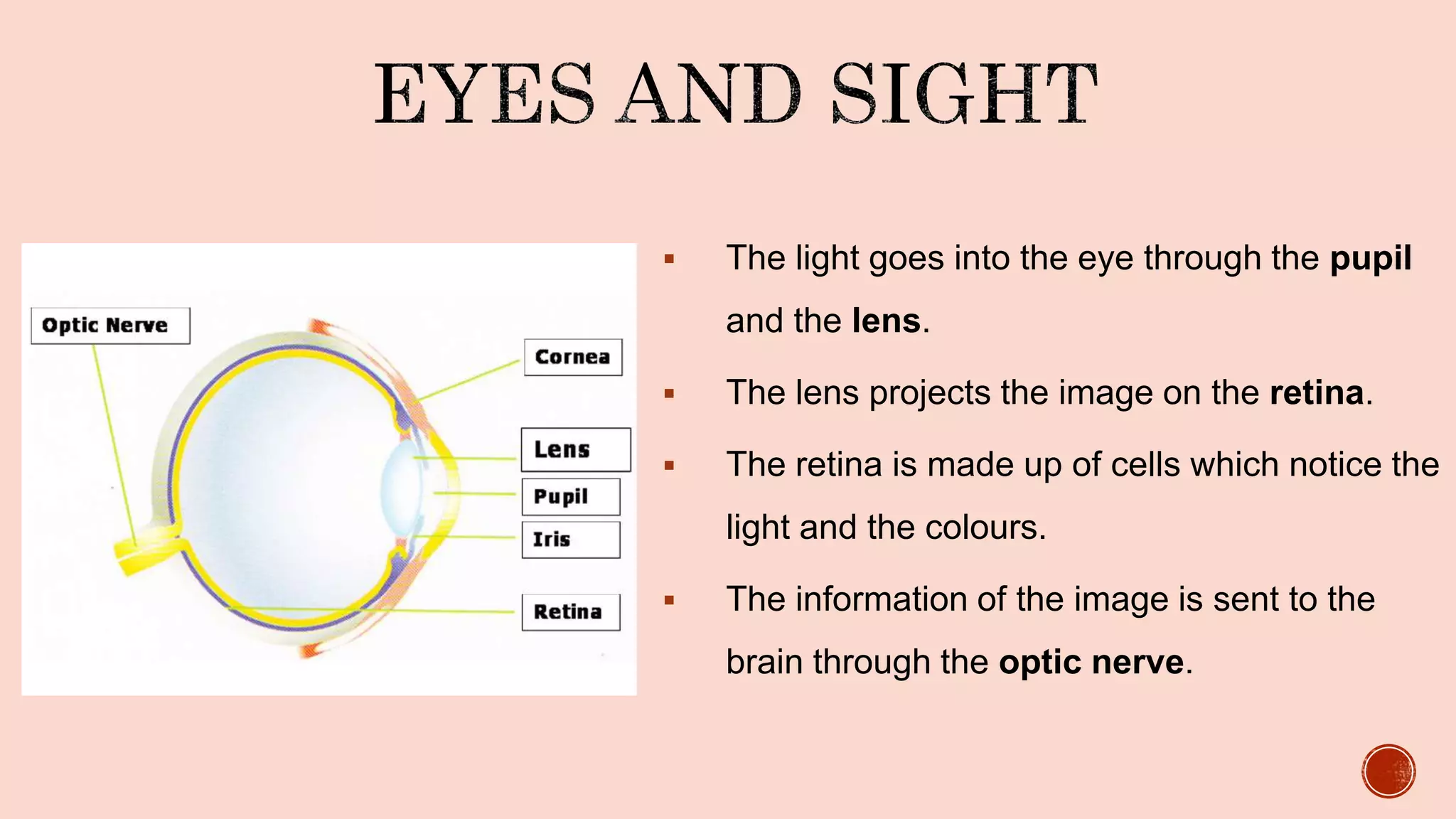
 The light goes into the eye through the pupil
and the lens.
 The lens projects the image on the retina.
 The retina is made up of cells which notice the
light and the colours.
 The information of the image is sent to the
brain through the optic nerve.
 The sound goes in through the outer ear
and hits the eardrum.
 It passes to the middle ear and the tiny
bones transmit the vibrations to the
inner ear.
 The cochlea sends the information to the
brain through the auditory nerve.
 The information captured by
receptors in the taste buds travels
to the brain through the taste
nerves.
 The brain receives and interprets
this information.
 The taste buds are on the tongue.
 They notice four taste sensations:
- Sour.
- Sweet.
- Salty.
- Bitter.
 The taste buds send the information to
the brain through the gustative nerve.
TASTE
BUDS
 The nose is made up of the
nostrils and the nasal cavity.
 On the top of the nasal cavity there
is the pituitary. It is a membrane
which notice the smells.
 The pituitary sends the information
to the brain through the olfactory
nerve.
THE NERVOUS SYSTEM
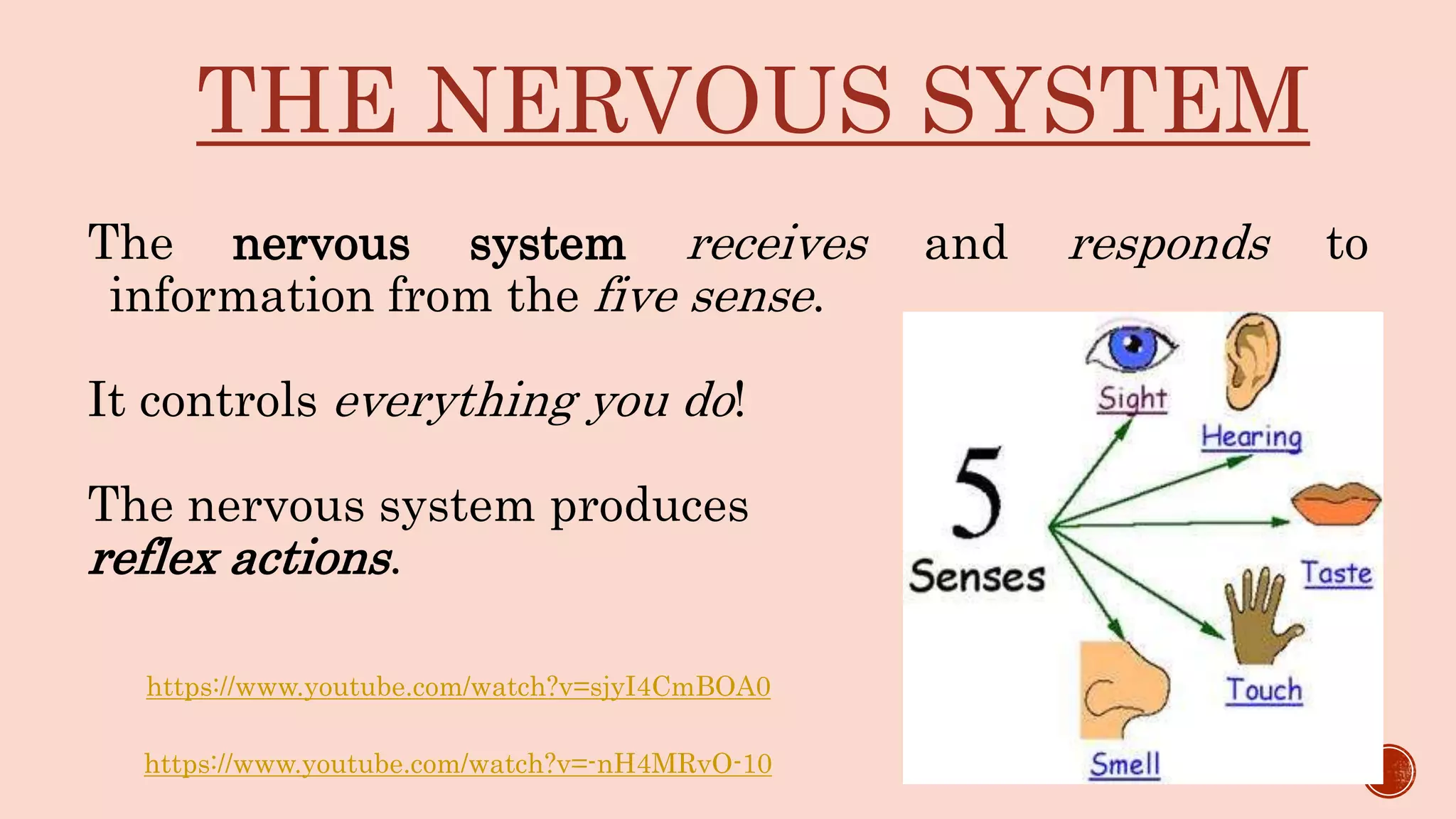
The nervous system receives and responds to
information from the five sense.
It controls everything you do!
The nervous system produces
reflex actions.
https://www.youtube.com/watch?v=-nH4MRvO-10
https://www.youtube.com/watch?v=sjyI4CmBOA0
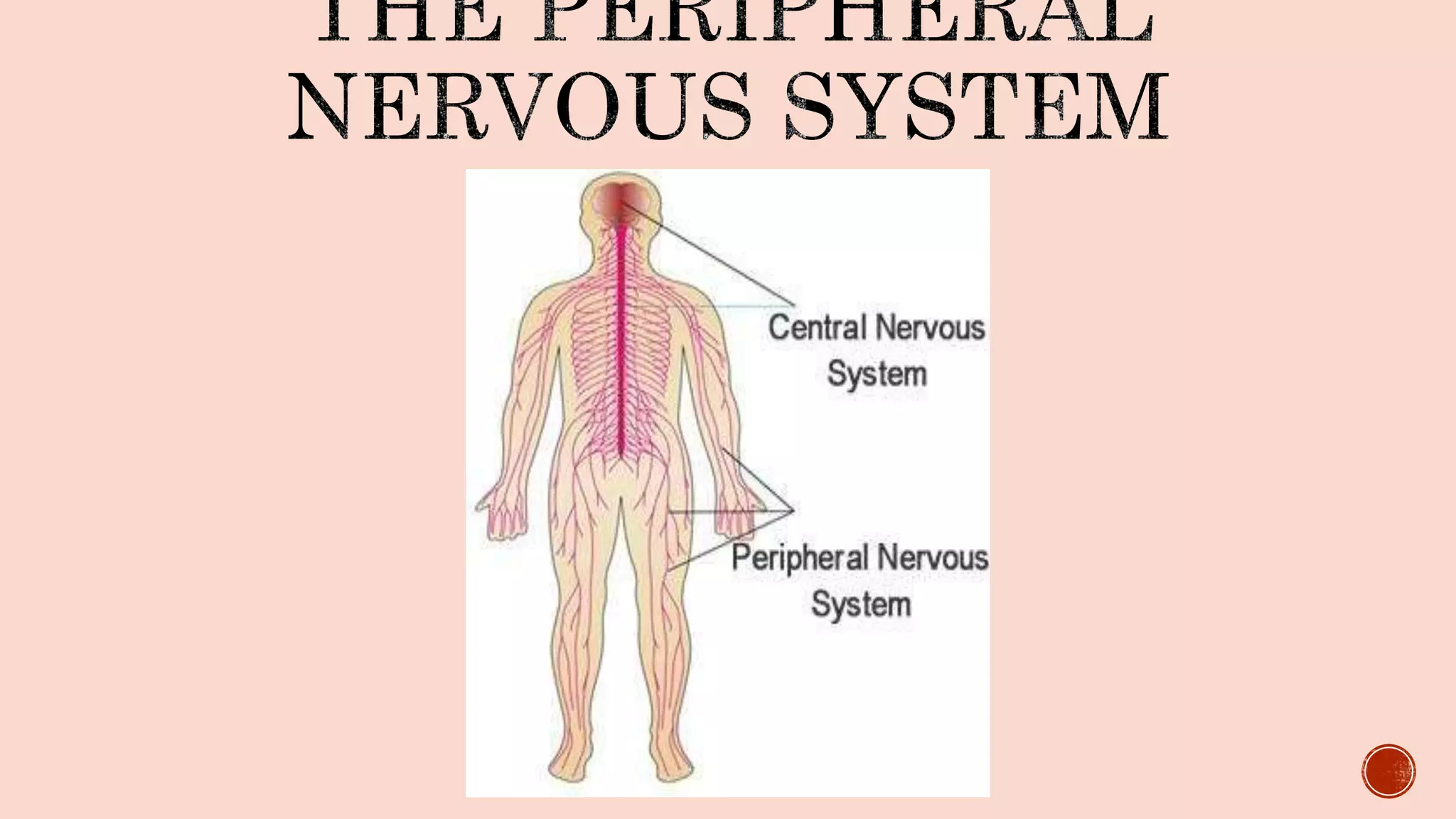
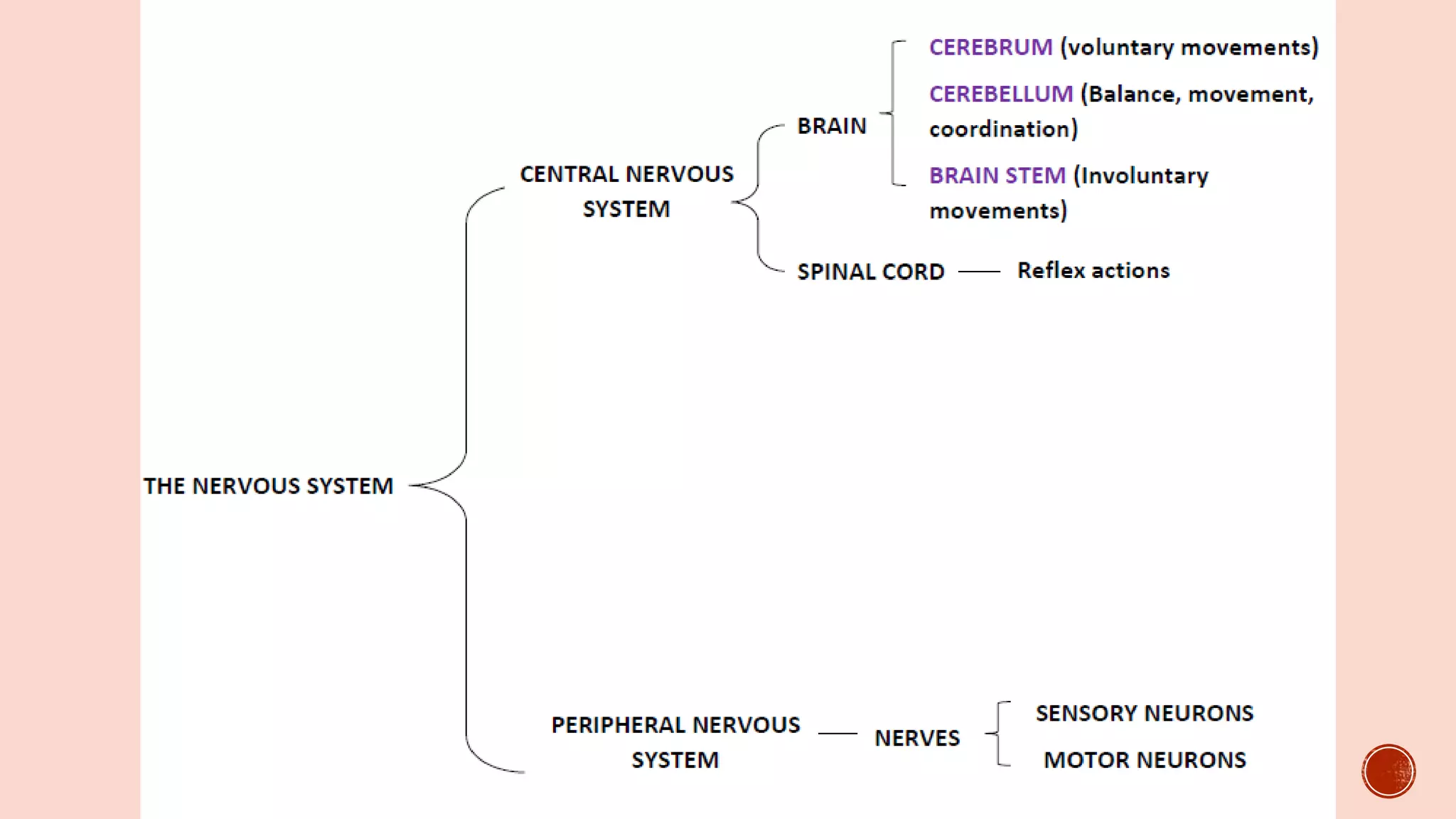
The nervous system is made up of two parts:
The central nervous system
(brain and spinal cord)
The peripheral nervous system
(all the nerves in our body)
It is formed by nervous tissue (neurons).
 Neurons are grouped together to form nerves.
They have three parts:
Body. The widest part of the neuron.
Dendrites, which receive messages from the sense organs
or other neurons.
Axon, which transmit messages to
other neurons.
https://www.youtube.com/watch?v=JBKKzfRNkAQ
https://www.youtube.com/watch?v=Ta_vWUsrjho
The brain is the control centre of the whole
nervous system.
The brain is made up of three parts:
Cerebrum
Cerebellum
Brain stem
It is the biggest part of our brain.
It controls our thoughts, emotions,
language, behaviour and voluntary
movements.
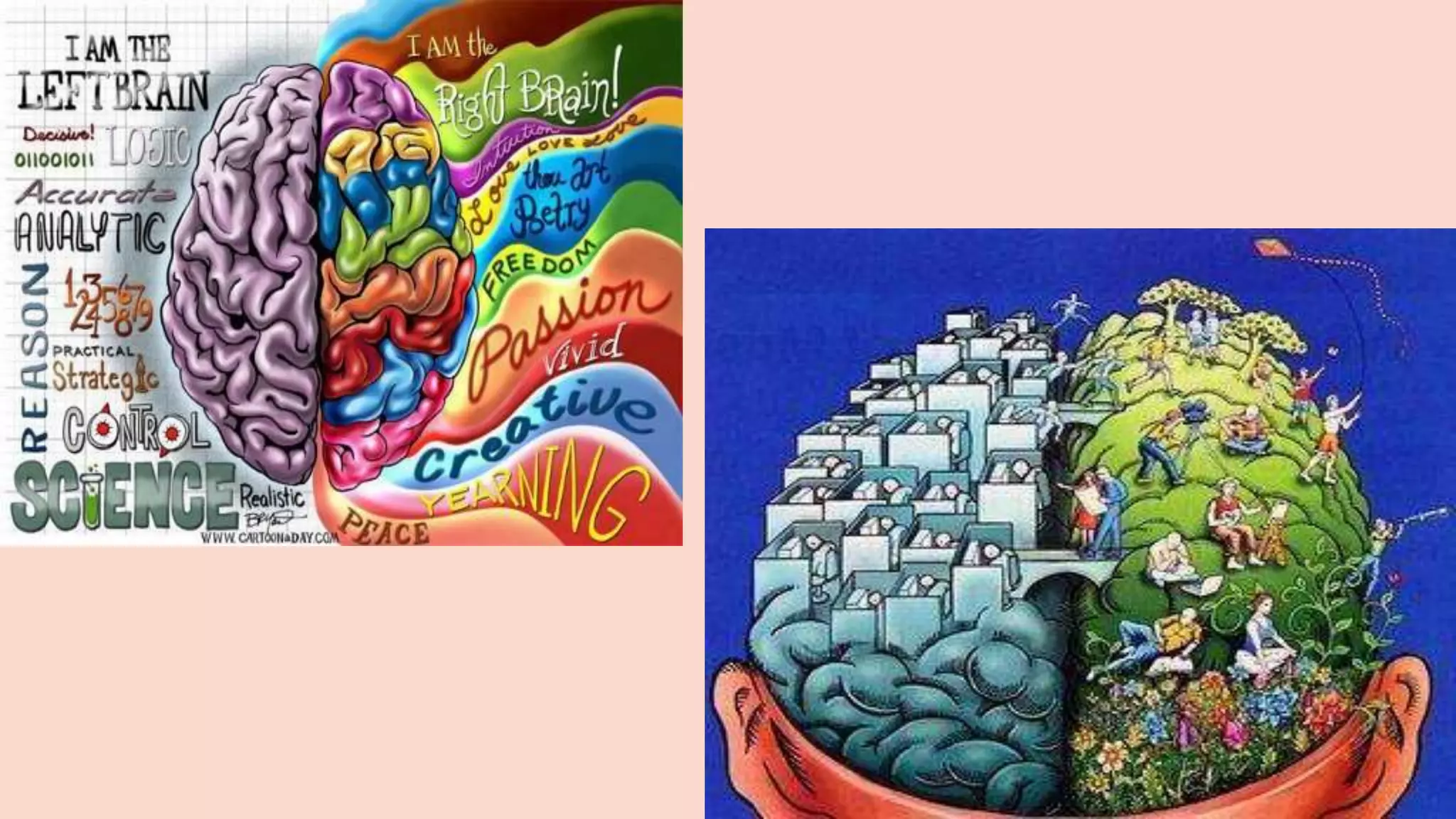
It is divided into left and right
hemispheres.
The cerebellum controls balance, movement and
coordination.
The brain stem controls
involuntary movements
(breathing, digestion...)
It connects the brain to
the
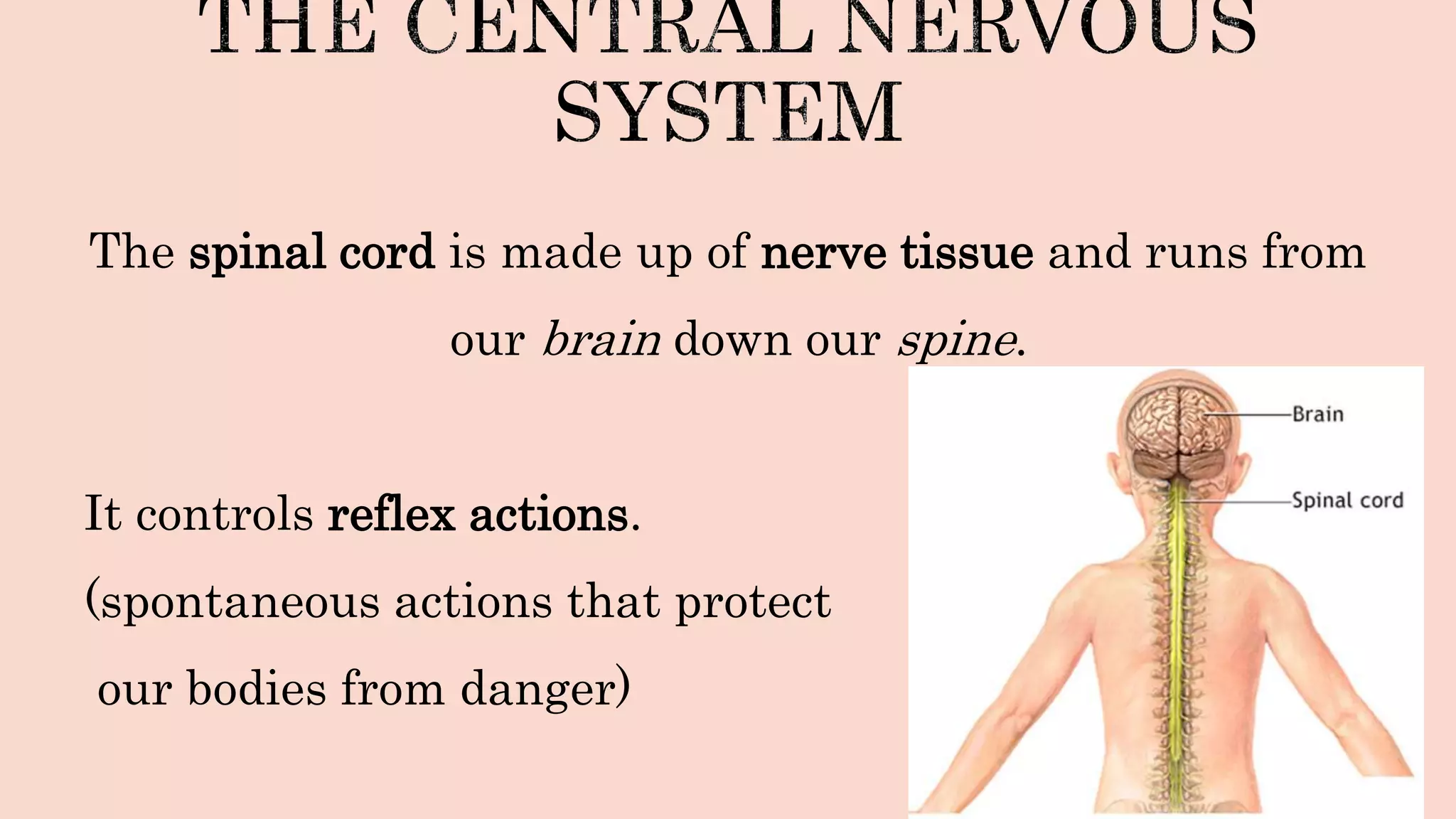
The spinal cord is made up of nerve tissue and runs from
our brain down our spine.
It controls reflex actions.
(spontaneous actions that protect
our bodies from danger)
The peripheral nervous system is made up of
nerves.
It connects the central nervous system to our
sense organs, muscles, internal organs, etc.
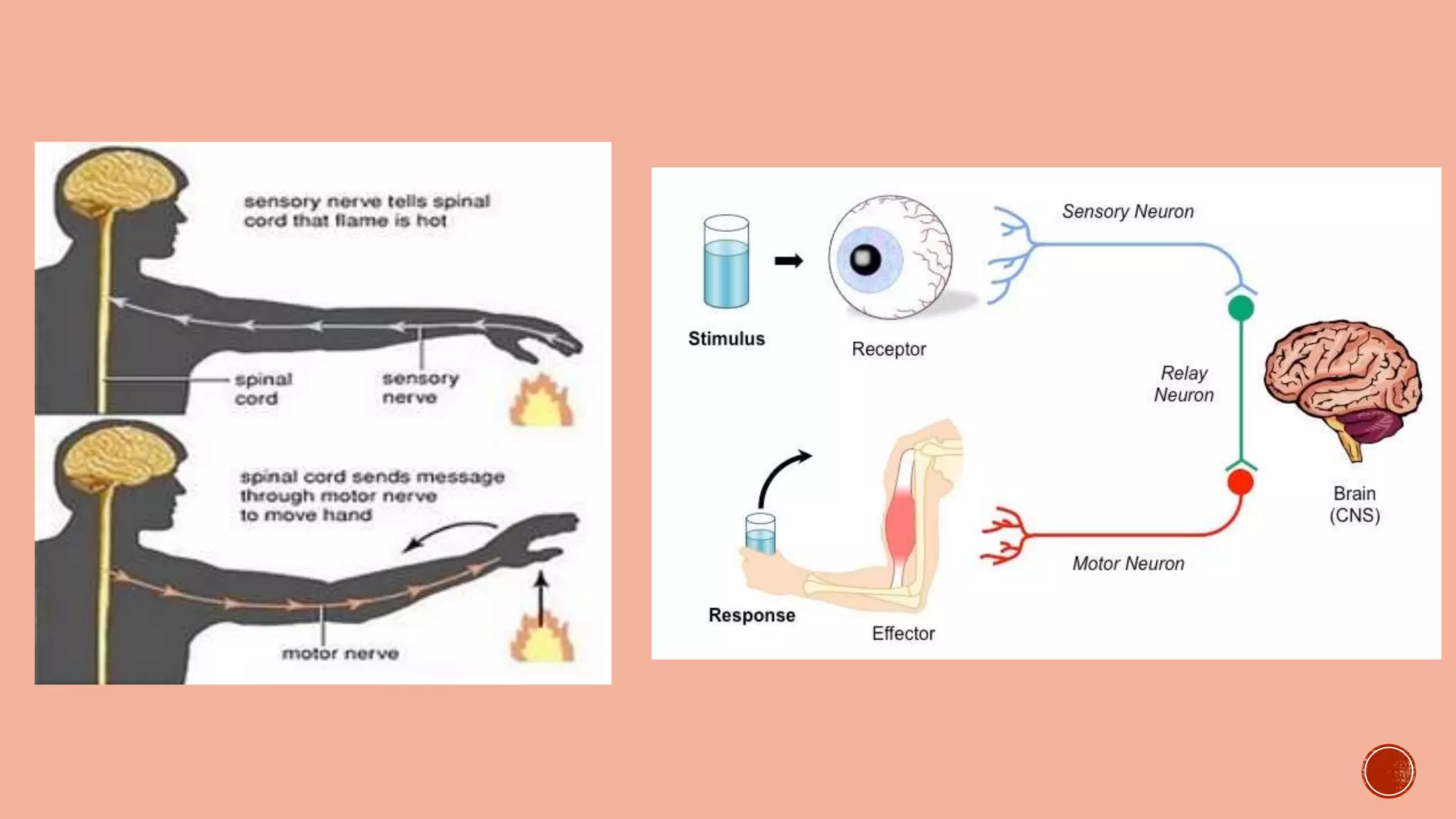
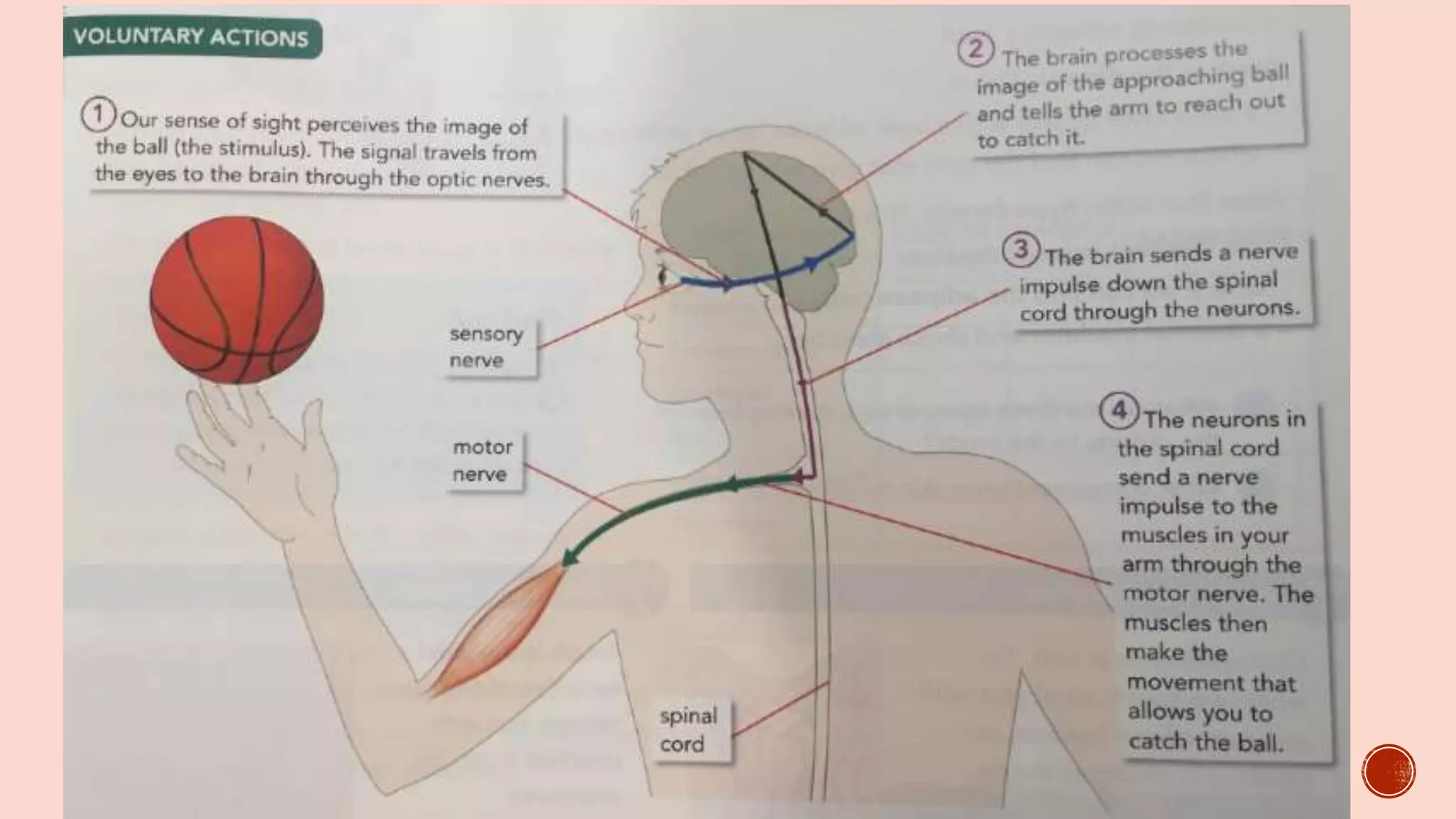
1.Sensory neurons transport information from
the sensors (eyes, ears, nose, tongue and skin)
to the brain (central nervous system).
2.The brain interprets the information and
decides how to respond.
3.Motor neurons carry messages away from the
brain to the rest of our body and muscles.
TEACHER LETICIA

UNIT 2 Sensitivity

  • 1.
  • 2.
    Sounds and signlanguage The function of sensitivity Internal coordination Senses and organ senses The nervous system
  • 3.
    ENGLISH CATALÀ ENGLISHCATALÀ Nervous system Taste buds Brain Touch Nerves Sense ogans Neurons Stimuli Spinal cord Sign language Send Visibility Receive Deaf Hearing Coordinated Sight Interpret Sweat gland Disability Taste Distinguish
  • 4.
     Through thesensitivity, we respond to changes in the external environment. These changes are called stimuli.  Stimulus is anything that causes a reaction in an organism. • An animal is cold so it moves into the sun • If we walk into a room and there is a bad smell, we respond leaving the room.
  • 5.
    SENSE ORGANS BRAIN THE LOCOMOTOR SYSTEM Captureinformation from the environment Receives and interprets the information and decides how we should respond Muscles receives orders from the brain and work with bones to make the body move.
  • 7.
  • 9.
     The lightgoes into the eye through the pupil and the lens.  The lens projects the image on the retina.  The retina is made up of cells which notice the light and the colours.  The information of the image is sent to the brain through the optic nerve.
  • 10.
     The soundgoes in through the outer ear and hits the eardrum.  It passes to the middle ear and the tiny bones transmit the vibrations to the inner ear.  The cochlea sends the information to the brain through the auditory nerve.
  • 11.
     The informationcaptured by receptors in the taste buds travels to the brain through the taste nerves.  The brain receives and interprets this information.
  • 12.
     The tastebuds are on the tongue.  They notice four taste sensations: - Sour. - Sweet. - Salty. - Bitter.  The taste buds send the information to the brain through the gustative nerve. TASTE BUDS
  • 13.
     The noseis made up of the nostrils and the nasal cavity.  On the top of the nasal cavity there is the pituitary. It is a membrane which notice the smells.  The pituitary sends the information to the brain through the olfactory nerve.
  • 15.
    THE NERVOUS SYSTEM Thenervous system receives and responds to information from the five sense. It controls everything you do! The nervous system produces reflex actions. https://www.youtube.com/watch?v=-nH4MRvO-10 https://www.youtube.com/watch?v=sjyI4CmBOA0
  • 17.
    The nervous systemis made up of two parts: The central nervous system (brain and spinal cord) The peripheral nervous system (all the nerves in our body) It is formed by nervous tissue (neurons).
  • 18.
     Neurons aregrouped together to form nerves. They have three parts: Body. The widest part of the neuron. Dendrites, which receive messages from the sense organs or other neurons. Axon, which transmit messages to other neurons. https://www.youtube.com/watch?v=JBKKzfRNkAQ https://www.youtube.com/watch?v=Ta_vWUsrjho
  • 20.
    The brain isthe control centre of the whole nervous system. The brain is made up of three parts: Cerebrum Cerebellum Brain stem
  • 21.
    It is thebiggest part of our brain. It controls our thoughts, emotions, language, behaviour and voluntary movements. It is divided into left and right hemispheres.
  • 23.
    The cerebellum controlsbalance, movement and coordination.
  • 24.
    The brain stemcontrols involuntary movements (breathing, digestion...) It connects the brain to the
  • 25.
    The spinal cordis made up of nerve tissue and runs from our brain down our spine. It controls reflex actions. (spontaneous actions that protect our bodies from danger)
  • 27.
    The peripheral nervoussystem is made up of nerves. It connects the central nervous system to our sense organs, muscles, internal organs, etc.
  • 28.
    1.Sensory neurons transportinformation from the sensors (eyes, ears, nose, tongue and skin) to the brain (central nervous system). 2.The brain interprets the information and decides how to respond. 3.Motor neurons carry messages away from the brain to the rest of our body and muscles.
  • 33.