NERVOUS
SYSTEM
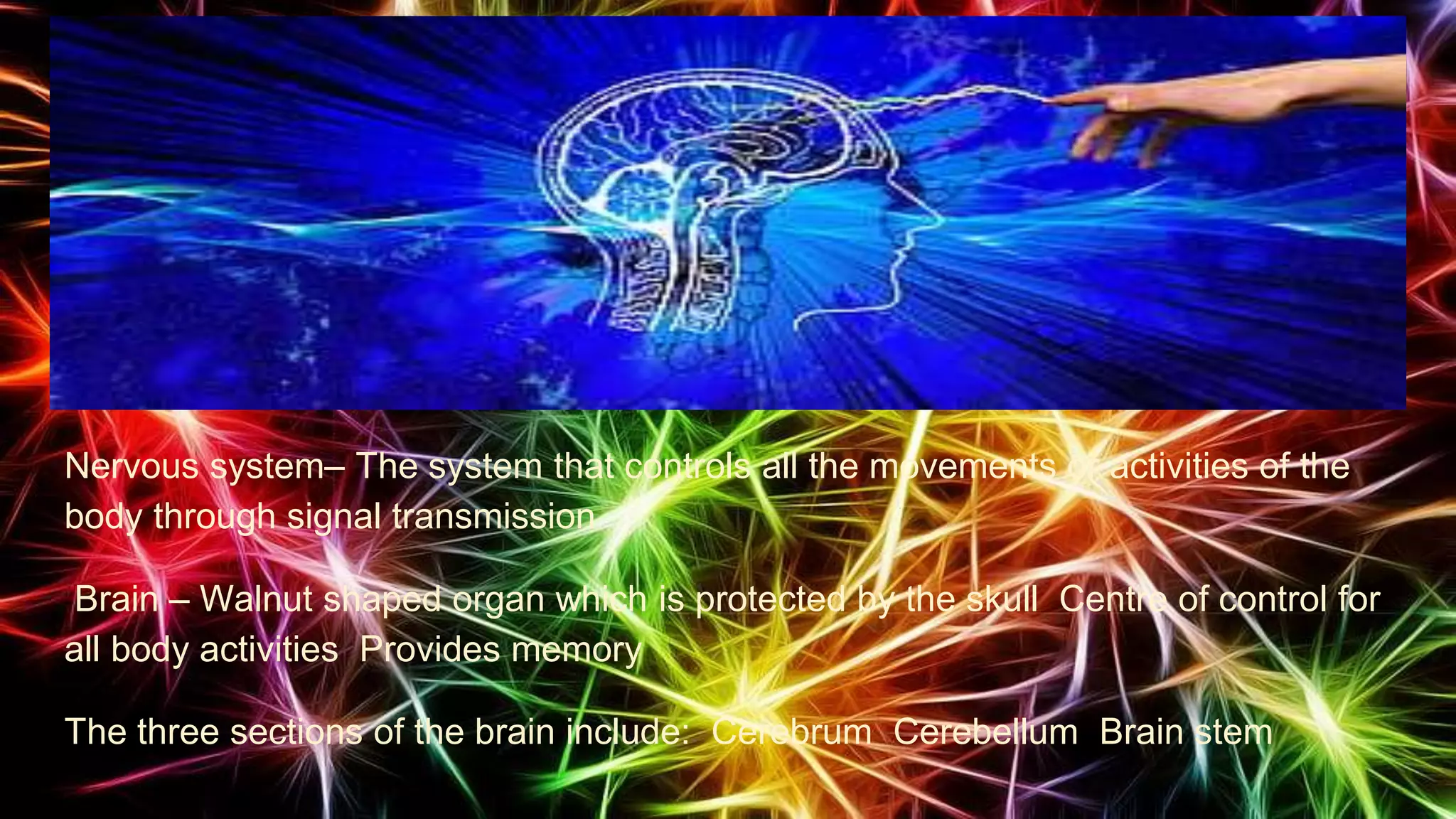
Nervous system– The system that controls all the movements or activities of the
body through signal transmission
Brain – Walnut shaped organ which is protected by the skull Centre of control for
all body activities Provides memory
The three sections of the brain include: Cerebrum Cerebellum Brain stem
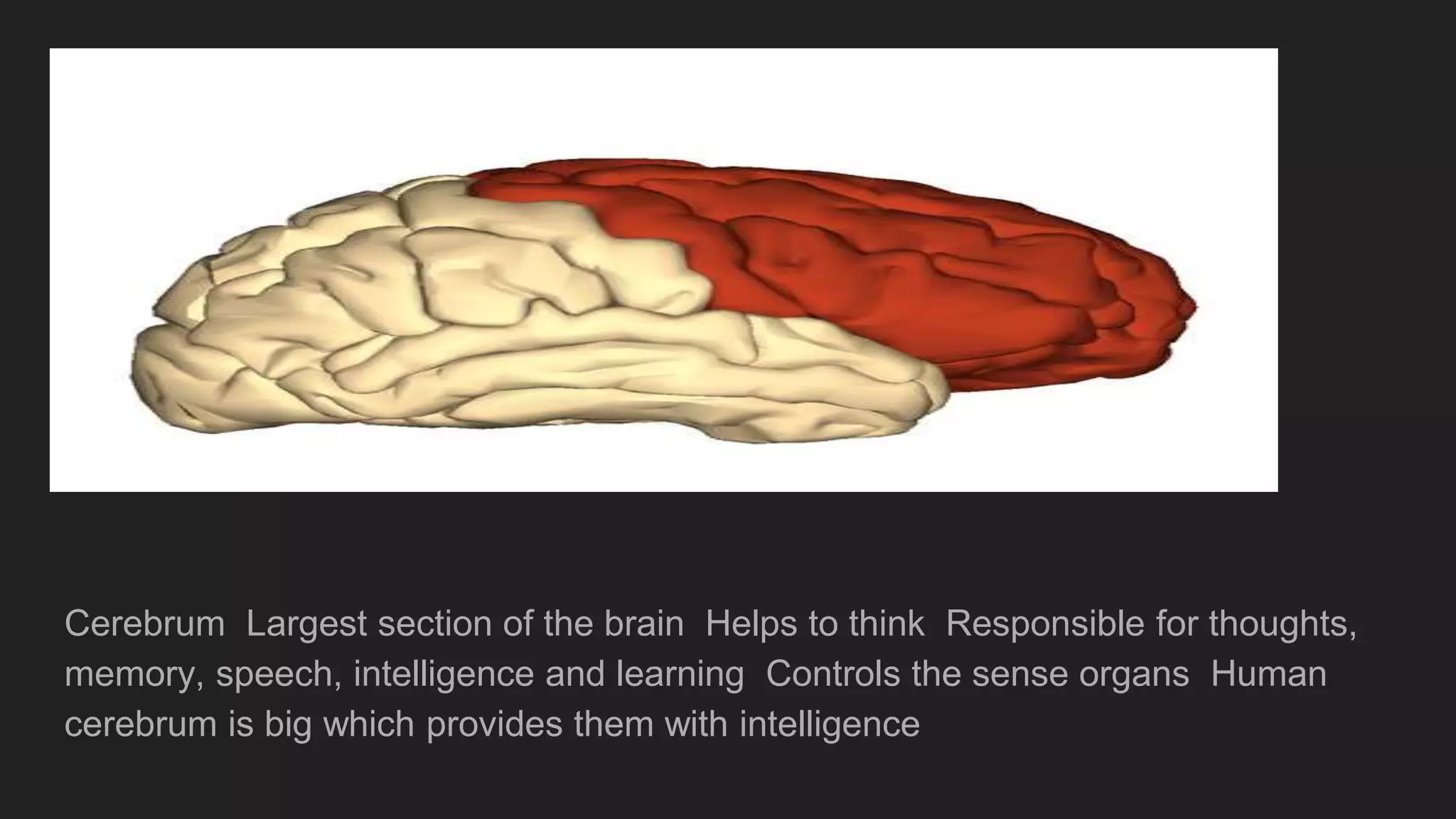
Cerebrum Largest section of the brain Helps to think Responsible for thoughts,
memory, speech, intelligence and learning Controls the sense organs Human
cerebrum is big which provides them with intelligence
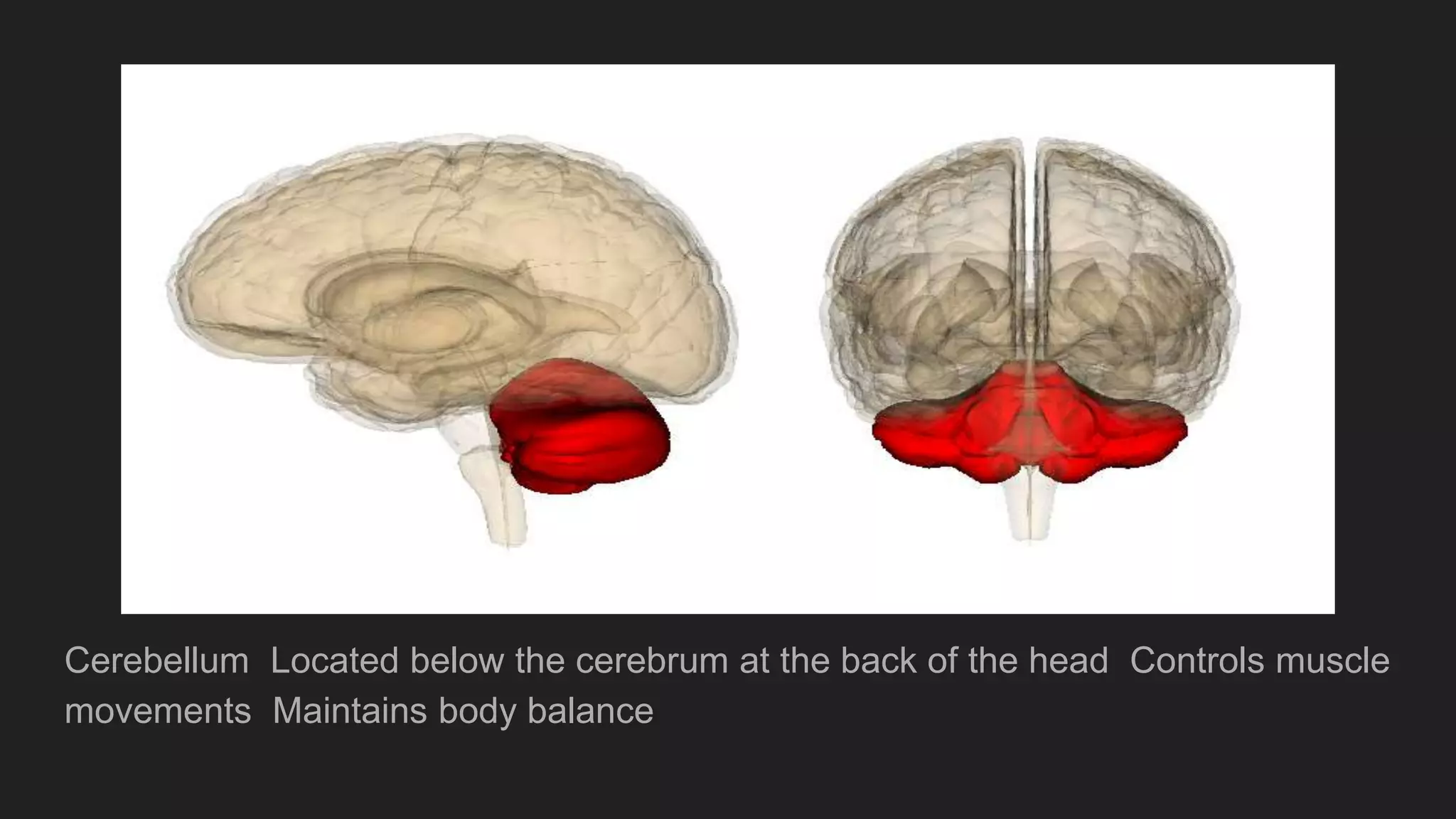
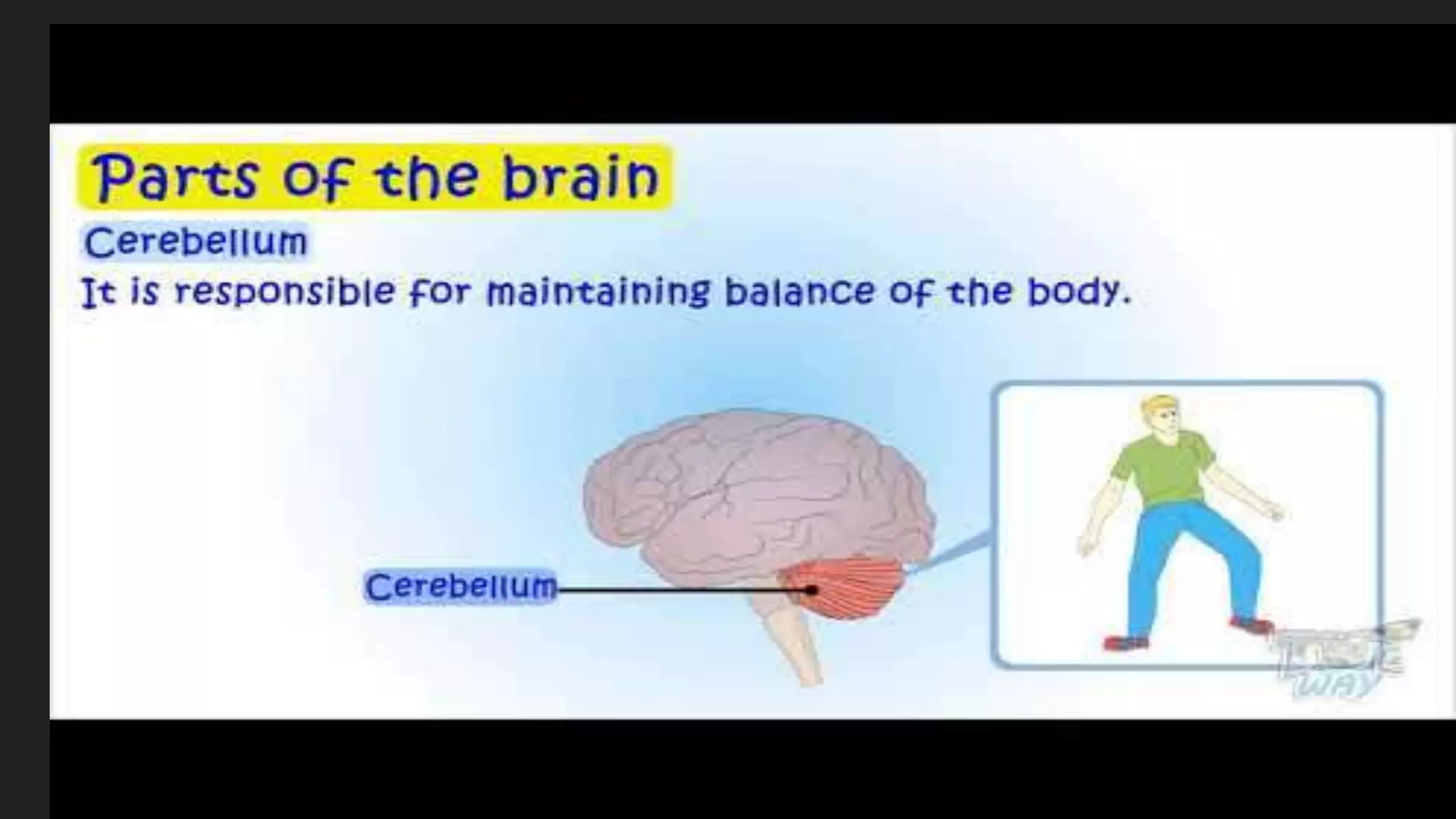
Cerebellum Located below the cerebrum at the back of the head Controls muscle
movements Maintains body balance
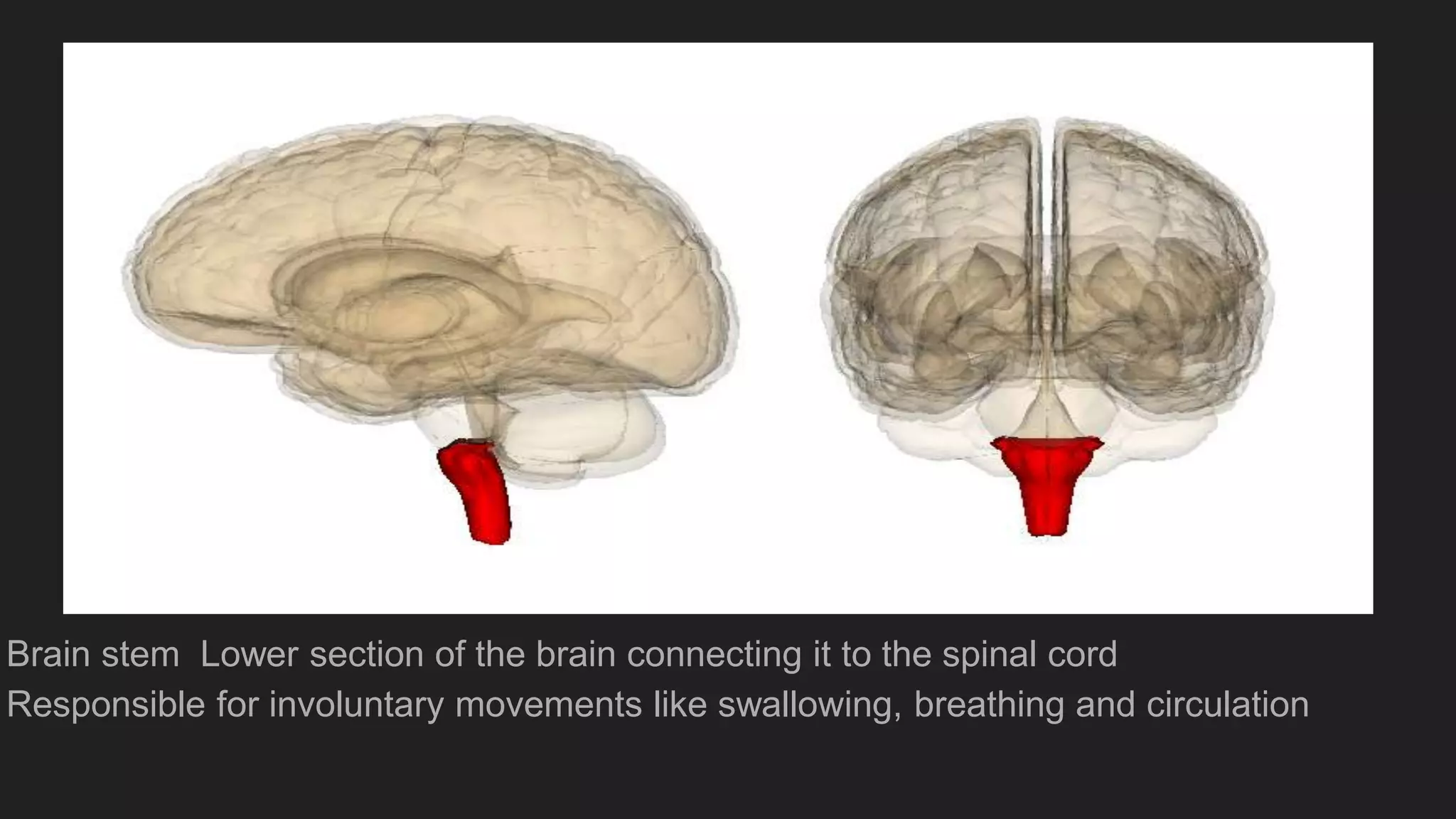
Brain stem Lower section of the brain connecting it to the spinal cord
Responsible for involuntary movements like swallowing, breathing and circulation
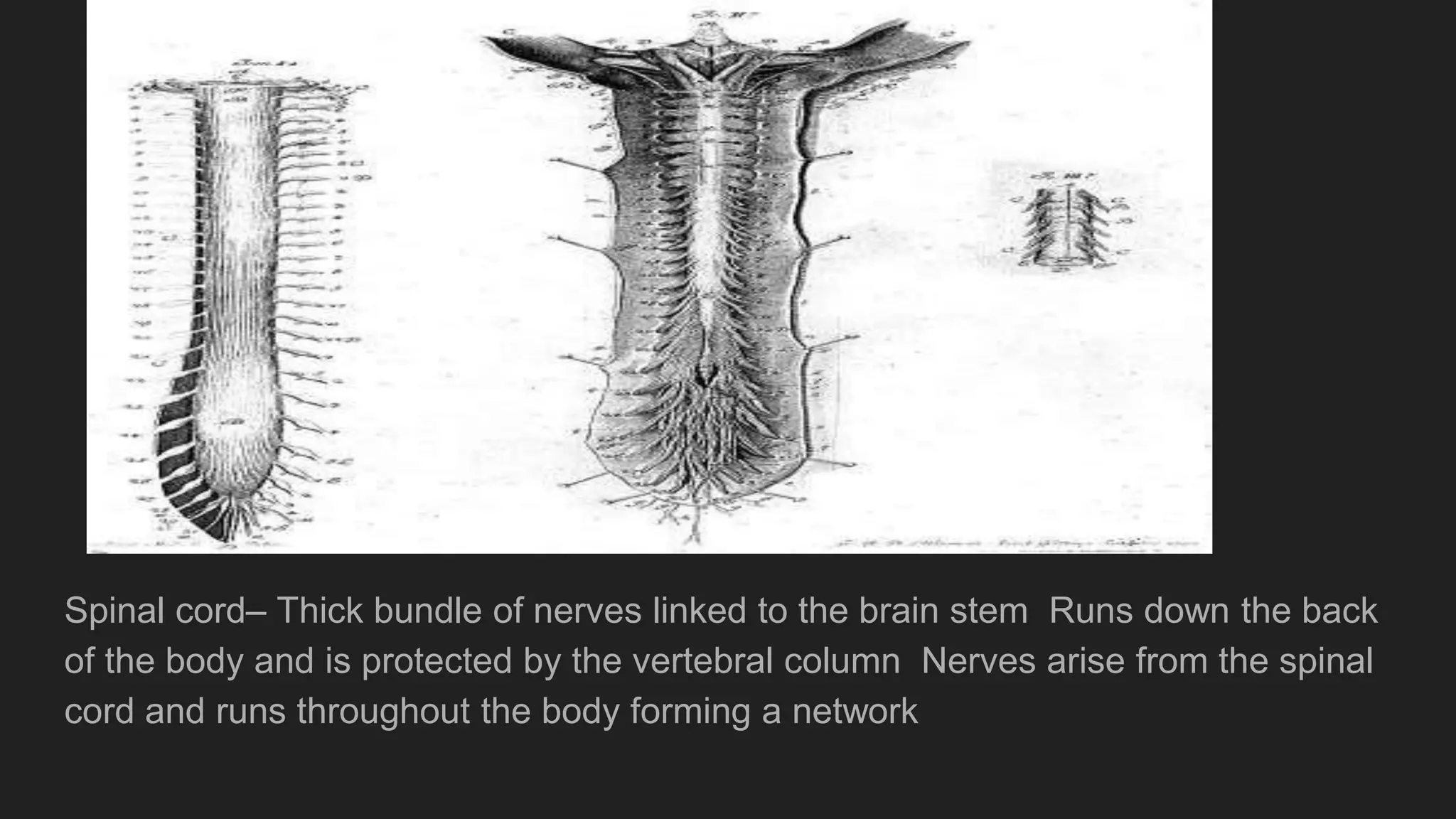
Spinal cord– Thick bundle of nerves linked to the brain stem Runs down the back
of the body and is protected by the vertebral column Nerves arise from the spinal
cord and runs throughout the body forming a network
Nerves – Bundle of fibres carrying signals from the organs to the brain and spinal
cord, and again taking back signals to the organs
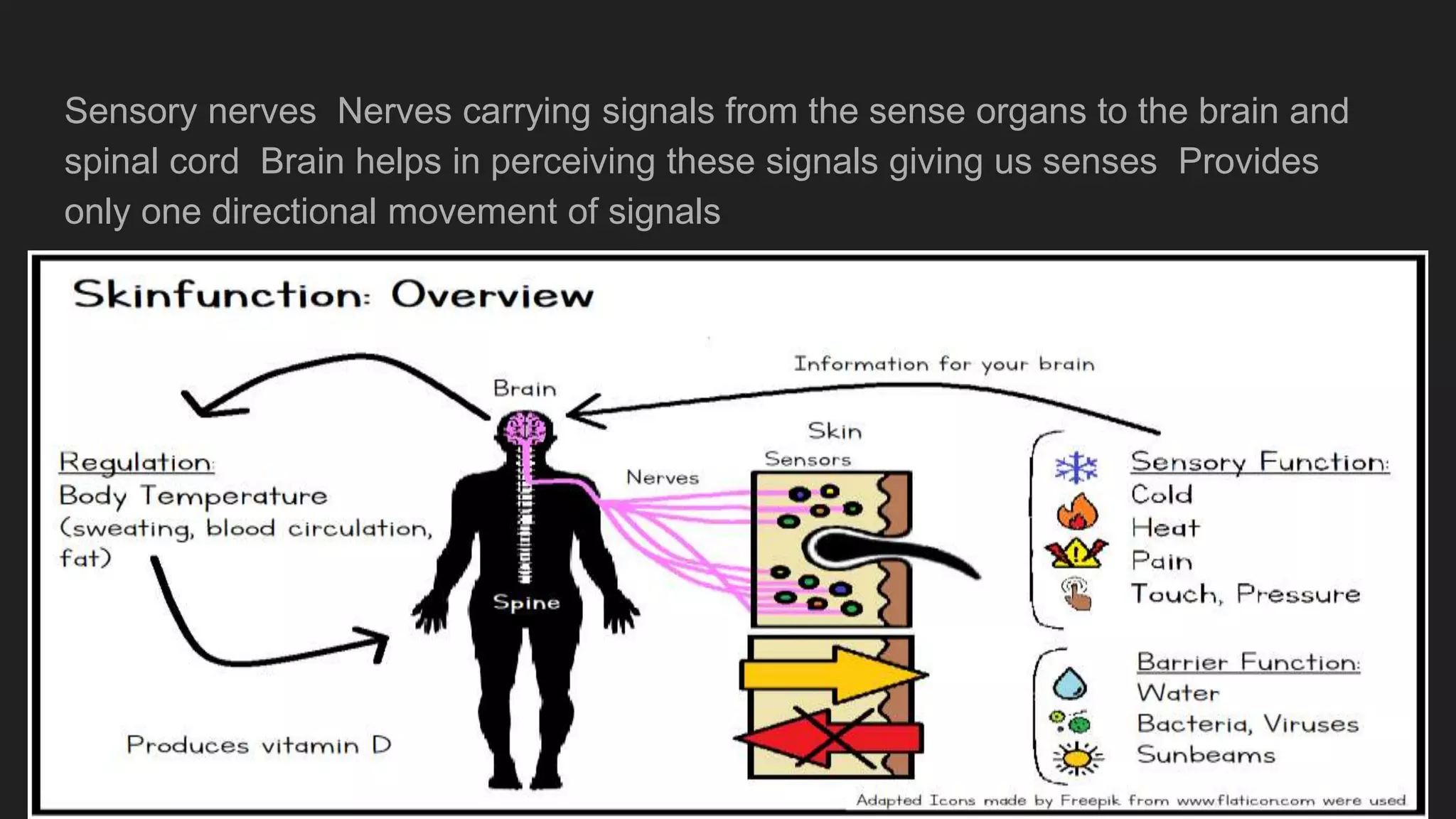
Sensory nerves Nerves carrying signals from the sense organs to the brain and
spinal cord Brain helps in perceiving these signals giving us senses Provides
only one directional movement of signals
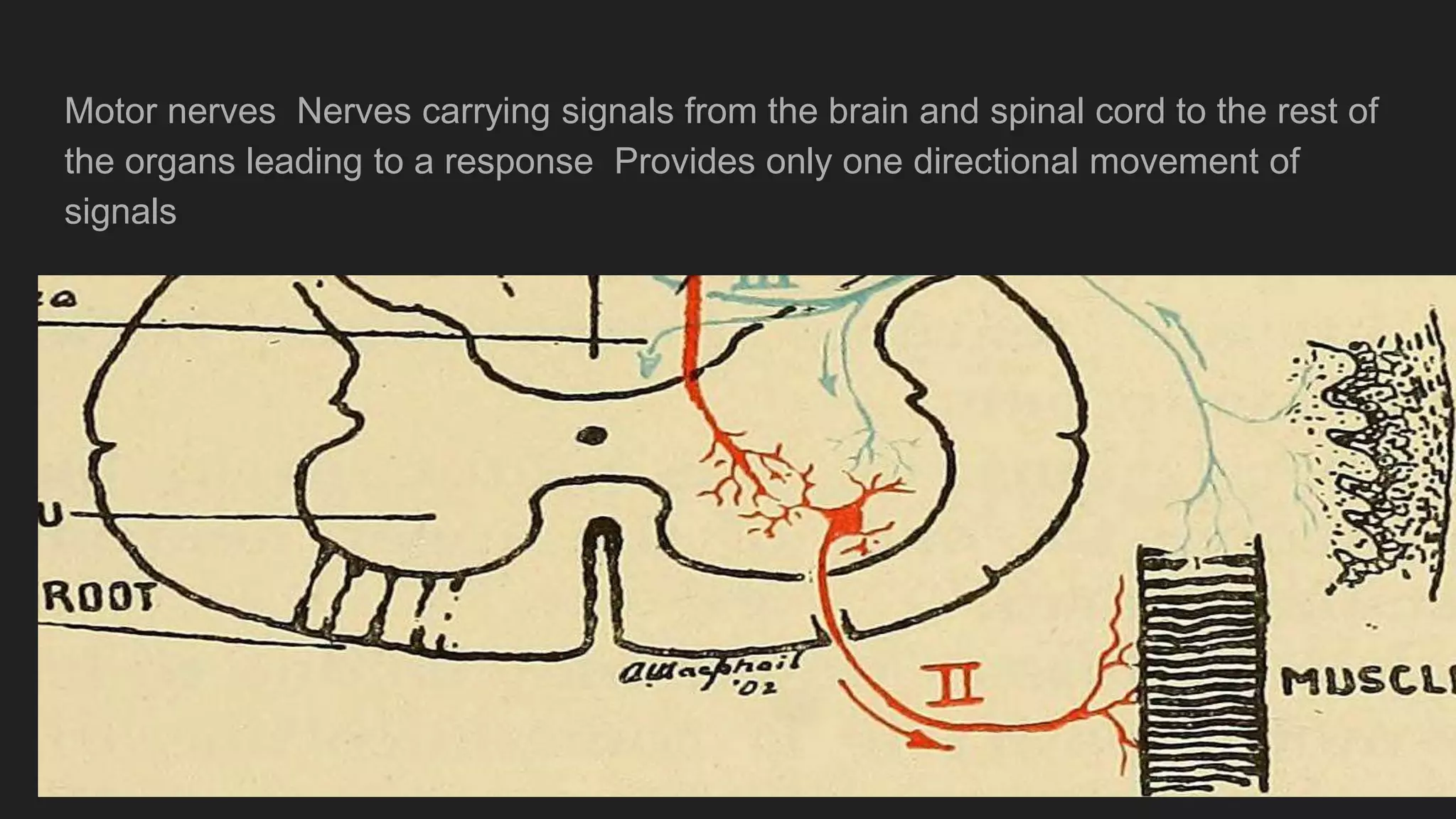
Motor nerves Nerves carrying signals from the brain and spinal cord to the rest of
the organs leading to a response Provides only one directional movement of
signals
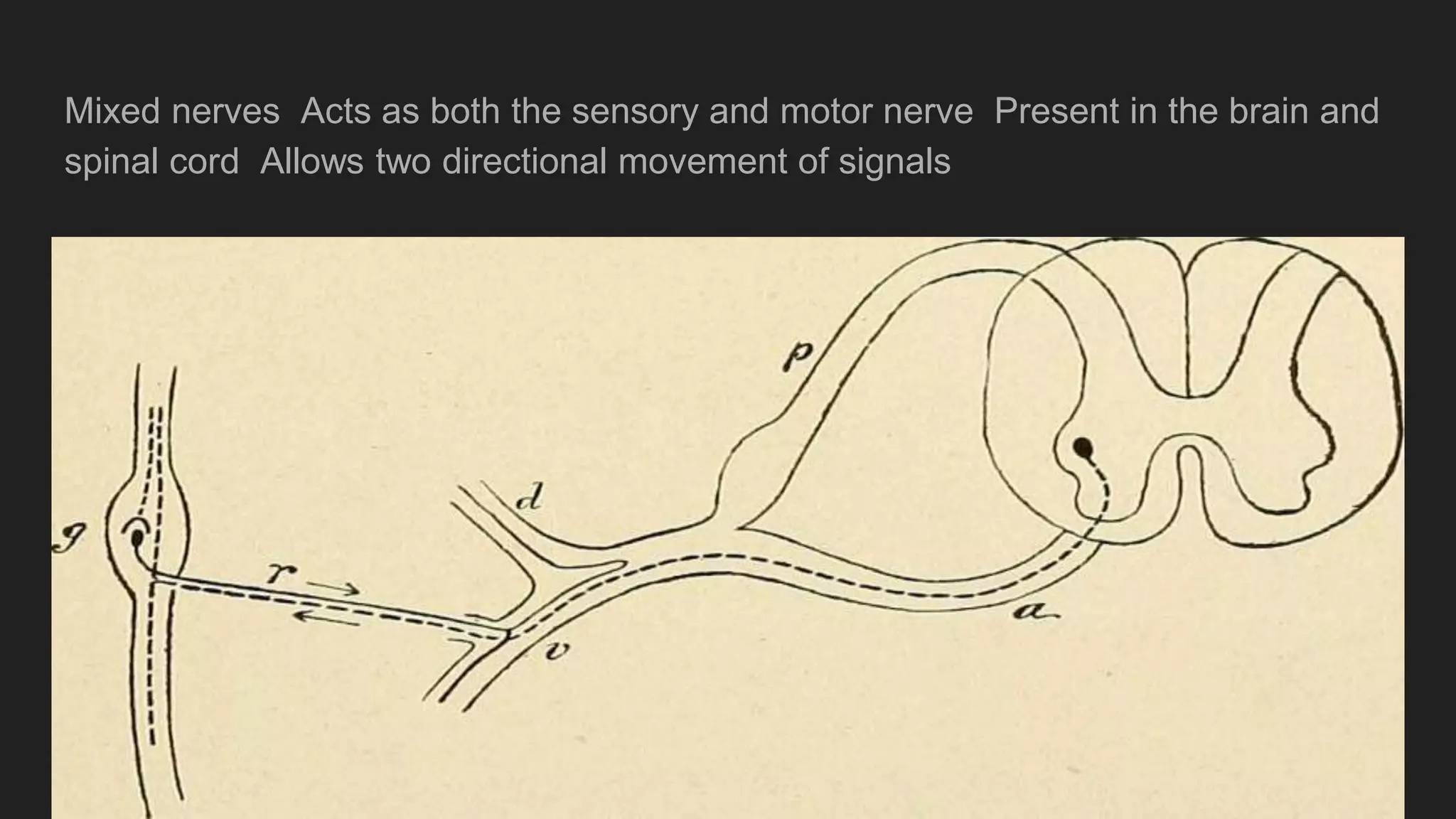
Mixed nerves Acts as both the sensory and motor nerve Present in the brain and
spinal cord Allows two directional movement of signals
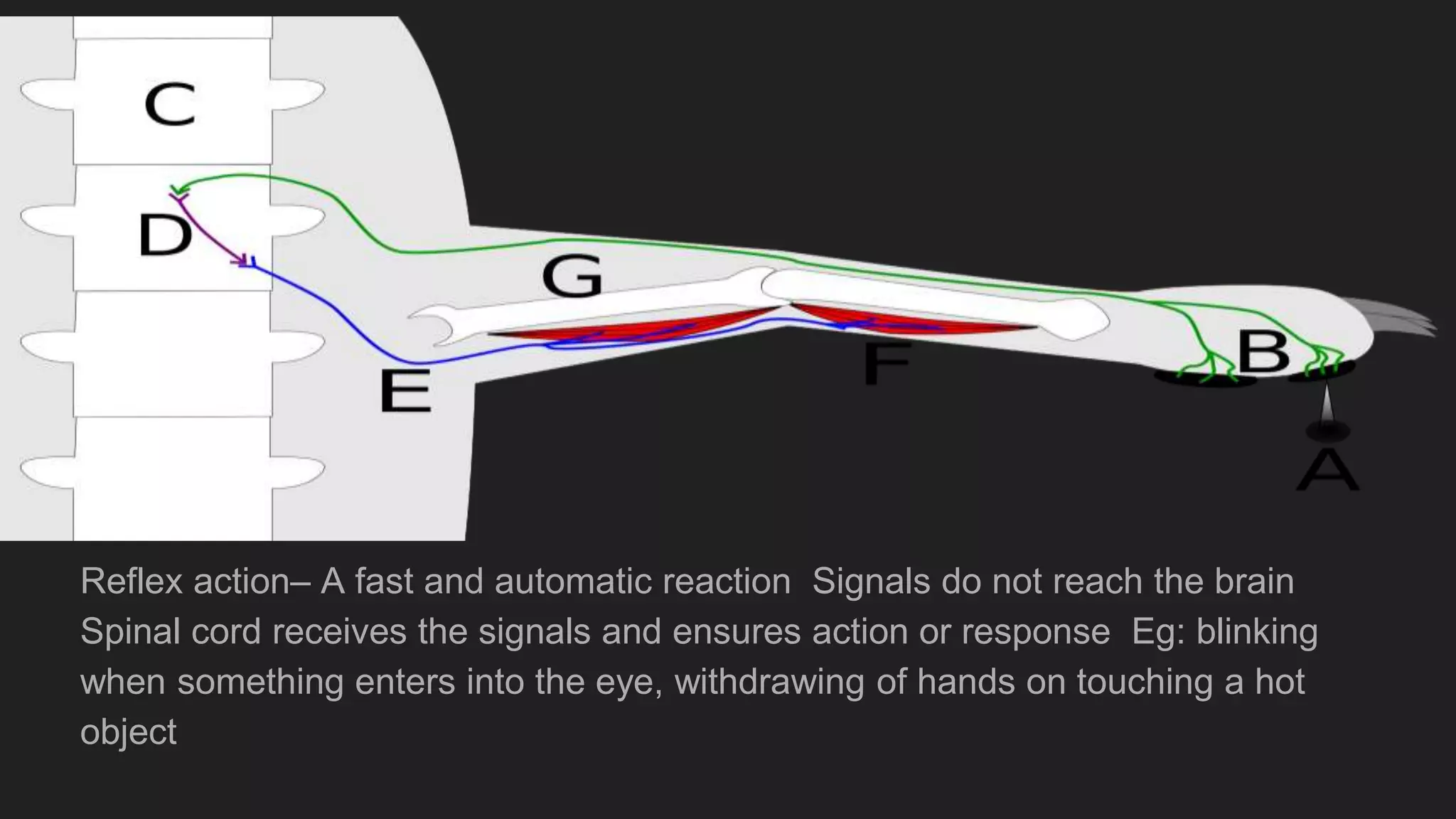
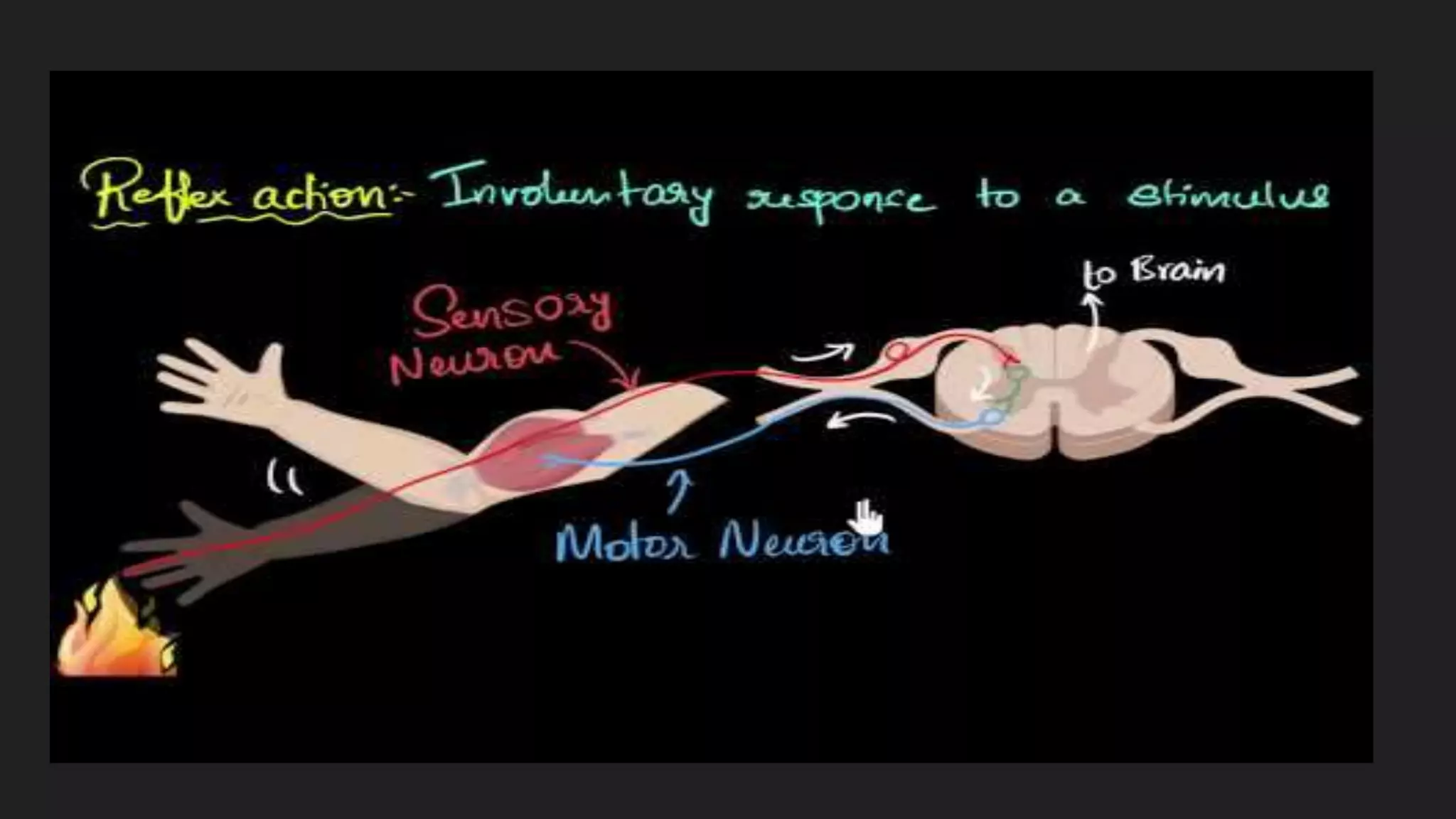
Reflex action– A fast and automatic reaction Signals do not reach the brain
Spinal cord receives the signals and ensures action or response Eg: blinking
when something enters into the eye, withdrawing of hands on touching a hot
object
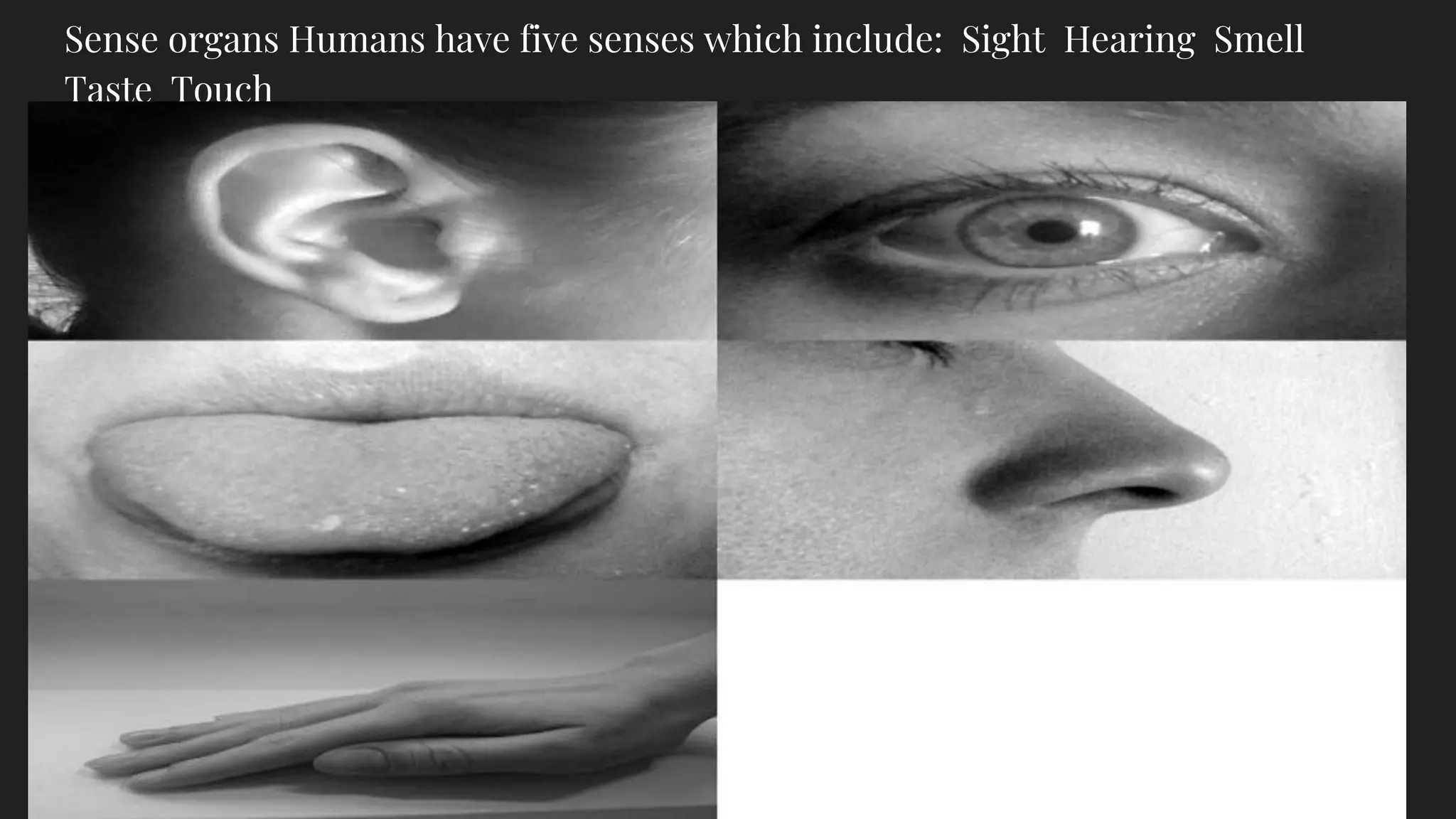
Sense organs Humans have five senses which include: Sight Hearing Smell
Taste Touch
EYE
Eyes – The sensitive ball-like organ which gives us the ability to see things
Coordination of the brain and eyes provide sight
Fitted in the socket of the skull and is protected by the eyelids from dust and
bright light Able to recognise and differentiate colours, shapes, size, distance of
things
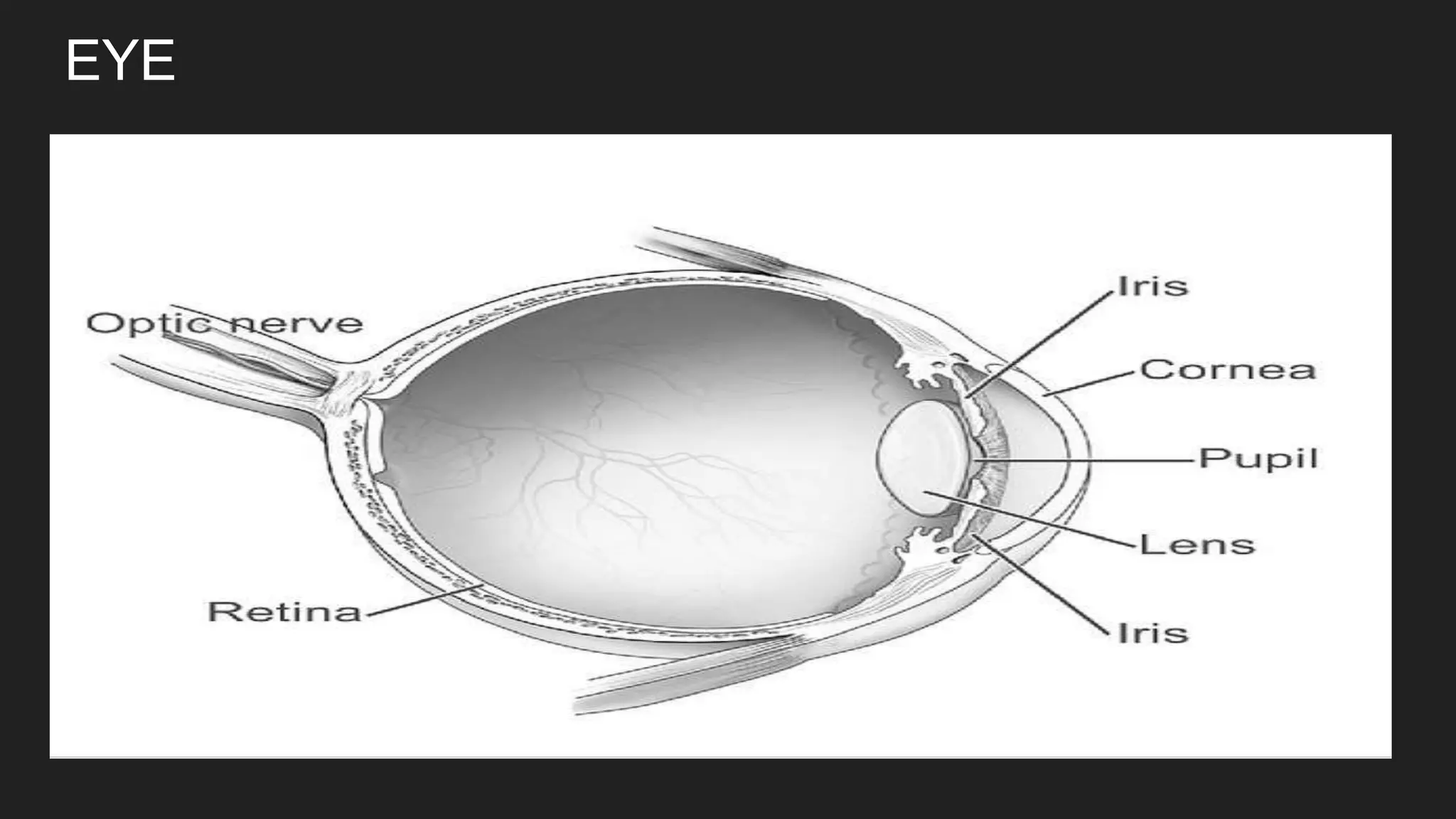
Iris is the coloured part of the eye
Pupil at the centre of iris allows the passage of light
Lens at the back of the pupil focuses the light on to the retina
Images of objects are formed on the retina Retina can recognise light and colour
due to the sensitive cells present in it
Optic nerve carries the information about the object to the brain
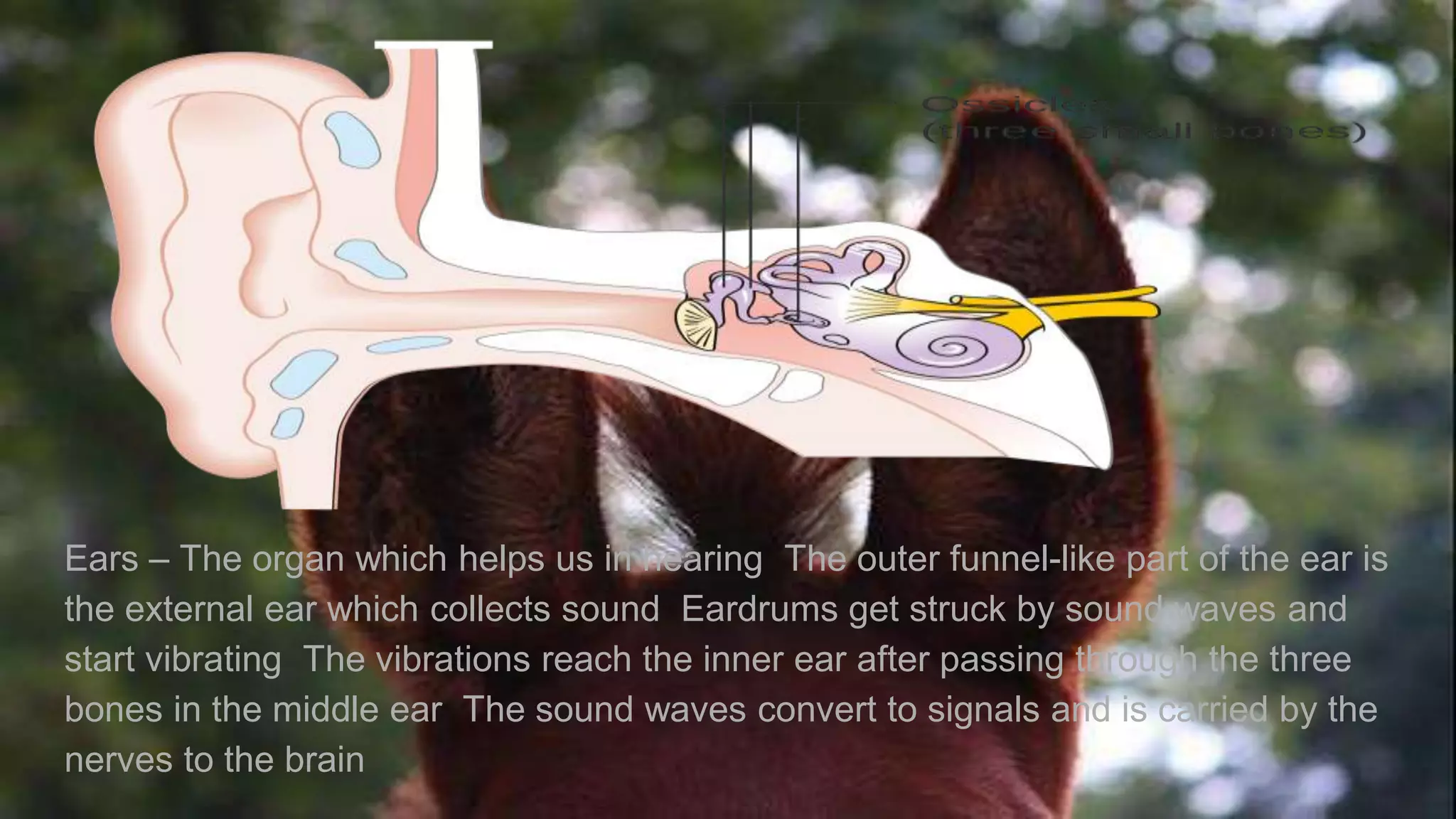
Ears – The organ which helps us in hearing The outer funnel-like part of the ear is
the external ear which collects sound Eardrums get struck by sound waves and
start vibrating The vibrations reach the inner ear after passing through the three
bones in the middle ear The sound waves convert to signals and is carried by the
nerves to the brain
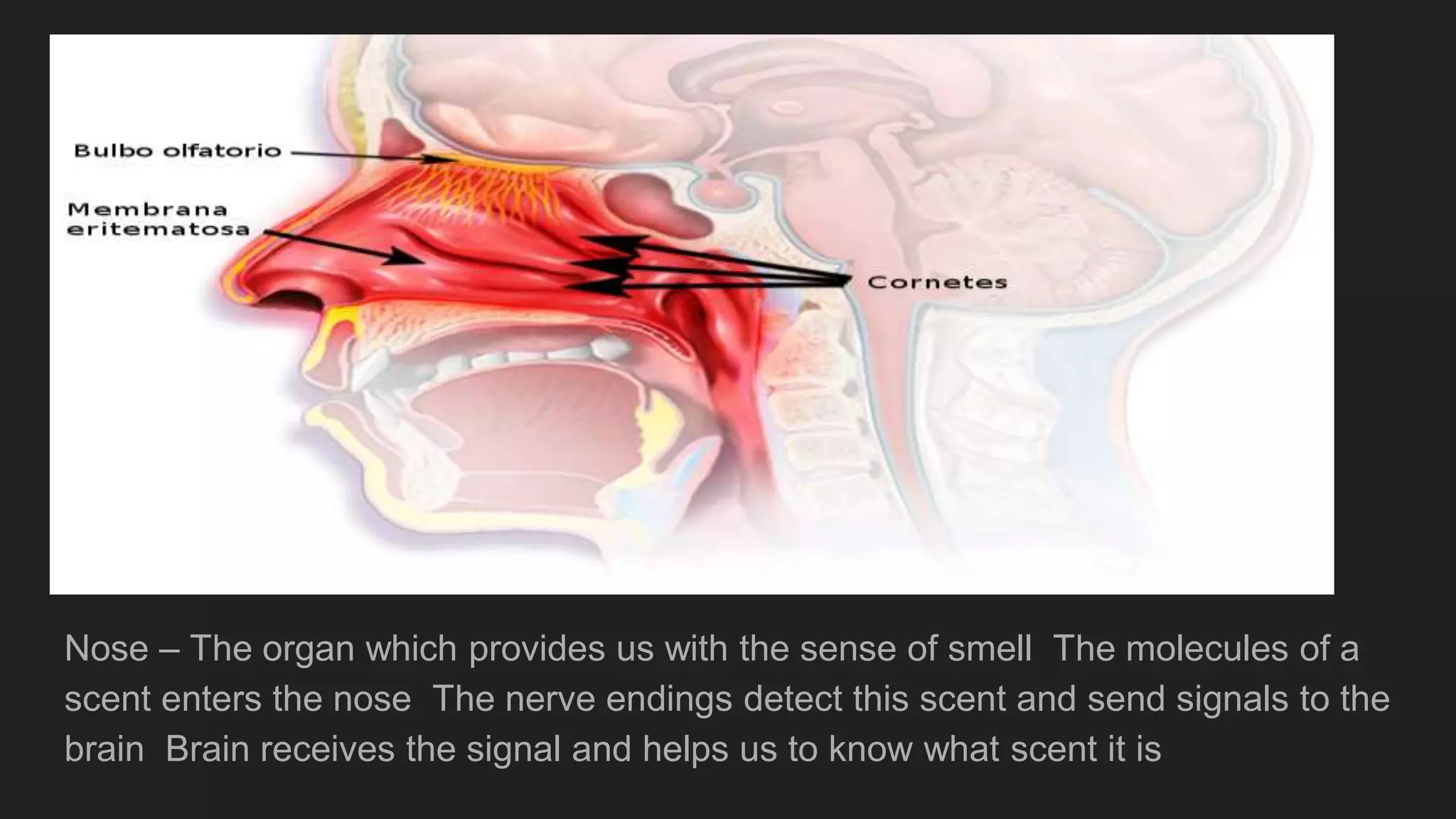
Nose – The organ which provides us with the sense of smell The molecules of a
scent enters the nose The nerve endings detect this scent and send signals to the
brain Brain receives the signal and helps us to know what scent it is
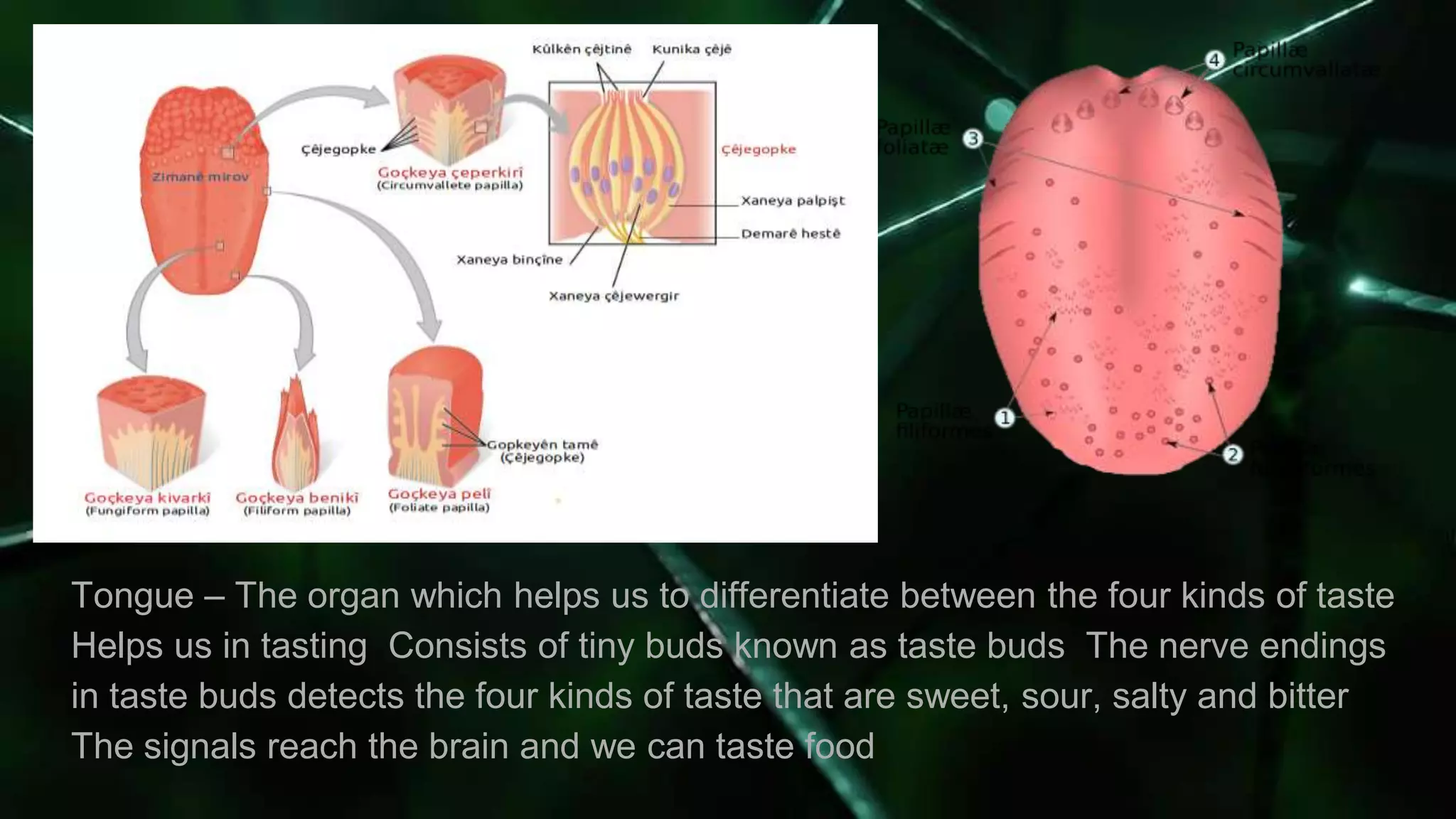
Tongue – The organ which helps us to differentiate between the four kinds of taste
Helps us in tasting Consists of tiny buds known as taste buds The nerve endings
in taste buds detects the four kinds of taste that are sweet, sour, salty and bitter
The signals reach the brain and we can taste food
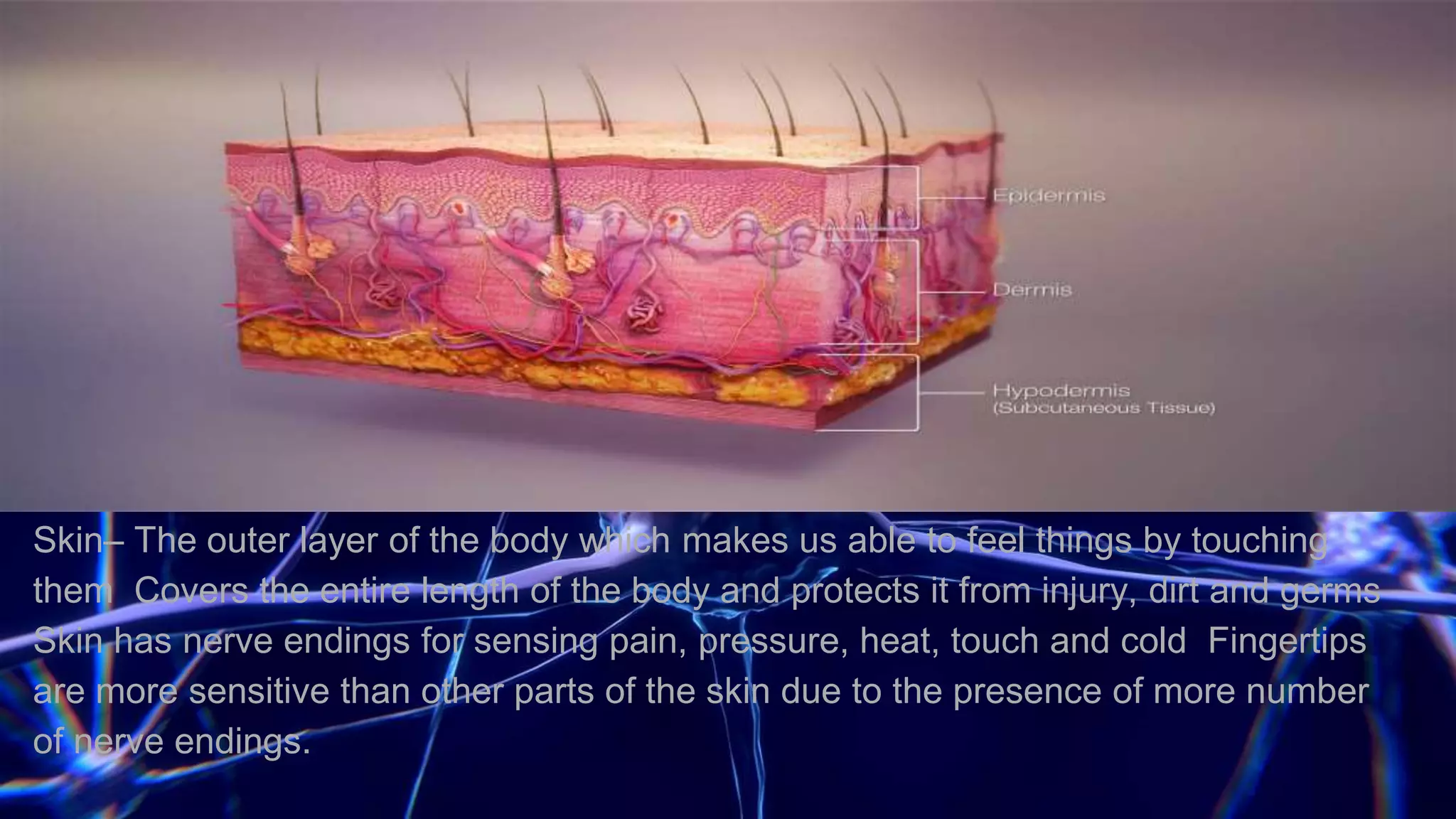
Skin– The outer layer of the body which makes us able to feel things by touching
them Covers the entire length of the body and protects it from injury, dirt and germs
Skin has nerve endings for sensing pain, pressure, heat, touch and cold Fingertips
are more sensitive than other parts of the skin due to the presence of more number
of nerve endings.
A PRESENTATION BY DIVYA KUMAR

Nervous system class 5

  • 1.
  • 2.
    Nervous system– Thesystem that controls all the movements or activities of the body through signal transmission Brain – Walnut shaped organ which is protected by the skull Centre of control for all body activities Provides memory The three sections of the brain include: Cerebrum Cerebellum Brain stem
  • 3.
    Cerebrum Largest sectionof the brain Helps to think Responsible for thoughts, memory, speech, intelligence and learning Controls the sense organs Human cerebrum is big which provides them with intelligence
  • 4.
    Cerebellum Located belowthe cerebrum at the back of the head Controls muscle movements Maintains body balance
  • 5.
    Brain stem Lowersection of the brain connecting it to the spinal cord Responsible for involuntary movements like swallowing, breathing and circulation
  • 7.
    Spinal cord– Thickbundle of nerves linked to the brain stem Runs down the back of the body and is protected by the vertebral column Nerves arise from the spinal cord and runs throughout the body forming a network
  • 8.
    Nerves – Bundleof fibres carrying signals from the organs to the brain and spinal cord, and again taking back signals to the organs
  • 9.
    Sensory nerves Nervescarrying signals from the sense organs to the brain and spinal cord Brain helps in perceiving these signals giving us senses Provides only one directional movement of signals
  • 10.
    Motor nerves Nervescarrying signals from the brain and spinal cord to the rest of the organs leading to a response Provides only one directional movement of signals
  • 11.
    Mixed nerves Actsas both the sensory and motor nerve Present in the brain and spinal cord Allows two directional movement of signals
  • 12.
    Reflex action– Afast and automatic reaction Signals do not reach the brain Spinal cord receives the signals and ensures action or response Eg: blinking when something enters into the eye, withdrawing of hands on touching a hot object
  • 14.
    Sense organs Humanshave five senses which include: Sight Hearing Smell Taste Touch
  • 15.
  • 16.
    Eyes – Thesensitive ball-like organ which gives us the ability to see things Coordination of the brain and eyes provide sight Fitted in the socket of the skull and is protected by the eyelids from dust and bright light Able to recognise and differentiate colours, shapes, size, distance of things Iris is the coloured part of the eye Pupil at the centre of iris allows the passage of light Lens at the back of the pupil focuses the light on to the retina Images of objects are formed on the retina Retina can recognise light and colour due to the sensitive cells present in it Optic nerve carries the information about the object to the brain
  • 17.
    Ears – Theorgan which helps us in hearing The outer funnel-like part of the ear is the external ear which collects sound Eardrums get struck by sound waves and start vibrating The vibrations reach the inner ear after passing through the three bones in the middle ear The sound waves convert to signals and is carried by the nerves to the brain
  • 18.
    Nose – Theorgan which provides us with the sense of smell The molecules of a scent enters the nose The nerve endings detect this scent and send signals to the brain Brain receives the signal and helps us to know what scent it is
  • 19.
    Tongue – Theorgan which helps us to differentiate between the four kinds of taste Helps us in tasting Consists of tiny buds known as taste buds The nerve endings in taste buds detects the four kinds of taste that are sweet, sour, salty and bitter The signals reach the brain and we can taste food
  • 20.
    Skin– The outerlayer of the body which makes us able to feel things by touching them Covers the entire length of the body and protects it from injury, dirt and germs Skin has nerve endings for sensing pain, pressure, heat, touch and cold Fingertips are more sensitive than other parts of the skin due to the presence of more number of nerve endings.
  • 21.
    A PRESENTATION BYDIVYA KUMAR