A system that controls all of the
activities of the body.
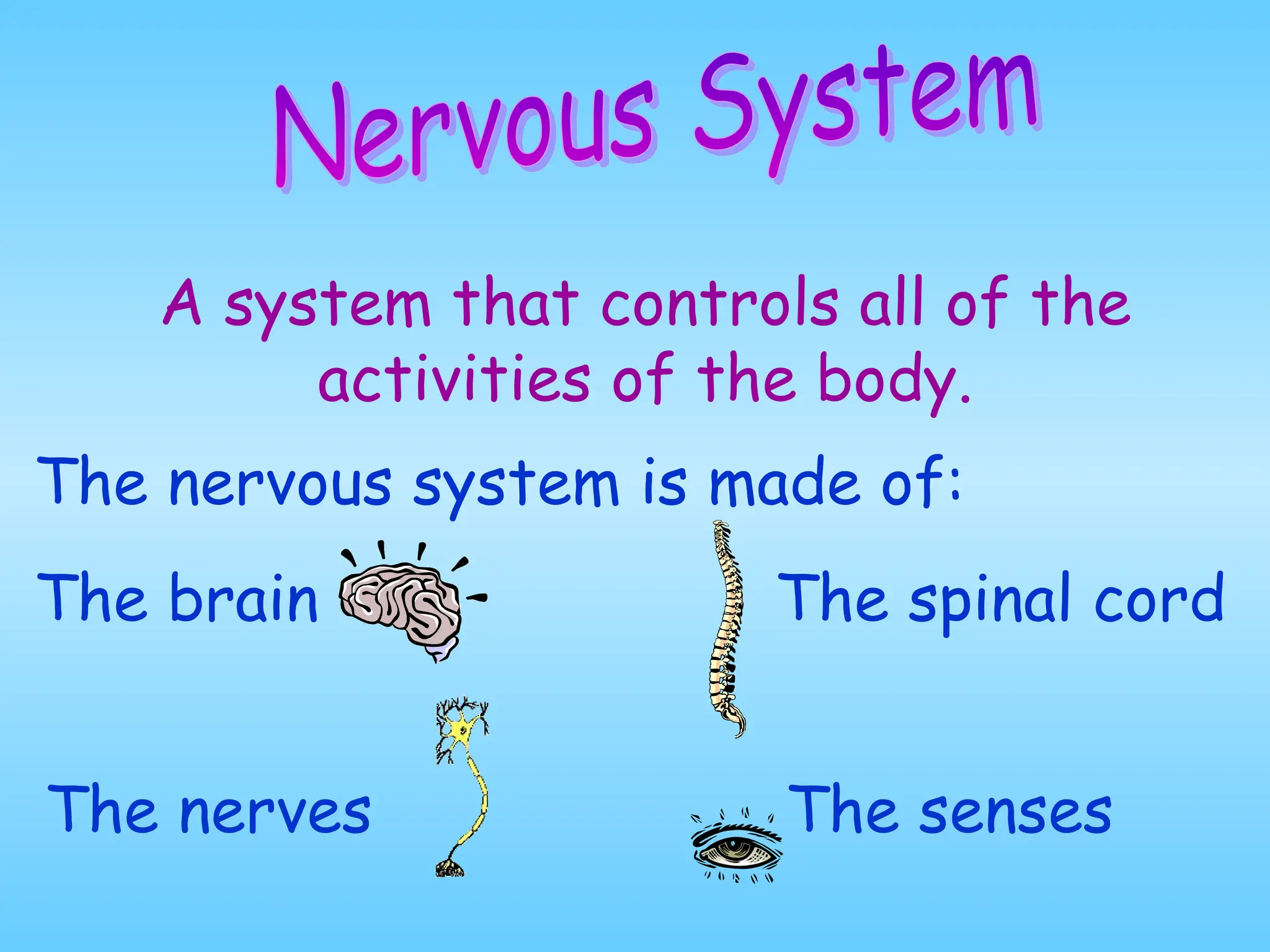
The nervous system is made of:
The brain The spinal cord
The nerves The senses
The nervous system also allows you to
react to a stimulus.
A stimulus is a change in the environment.
Example: A hot stove
Or… tripping over a rock
Your reactions are automatic.
Automatic means that you do not
have to think about your reactions.
Example: If a bug flies by your eye,
you will blink.
An organ that controls your
emotions, your thoughts, and every
movement you make.
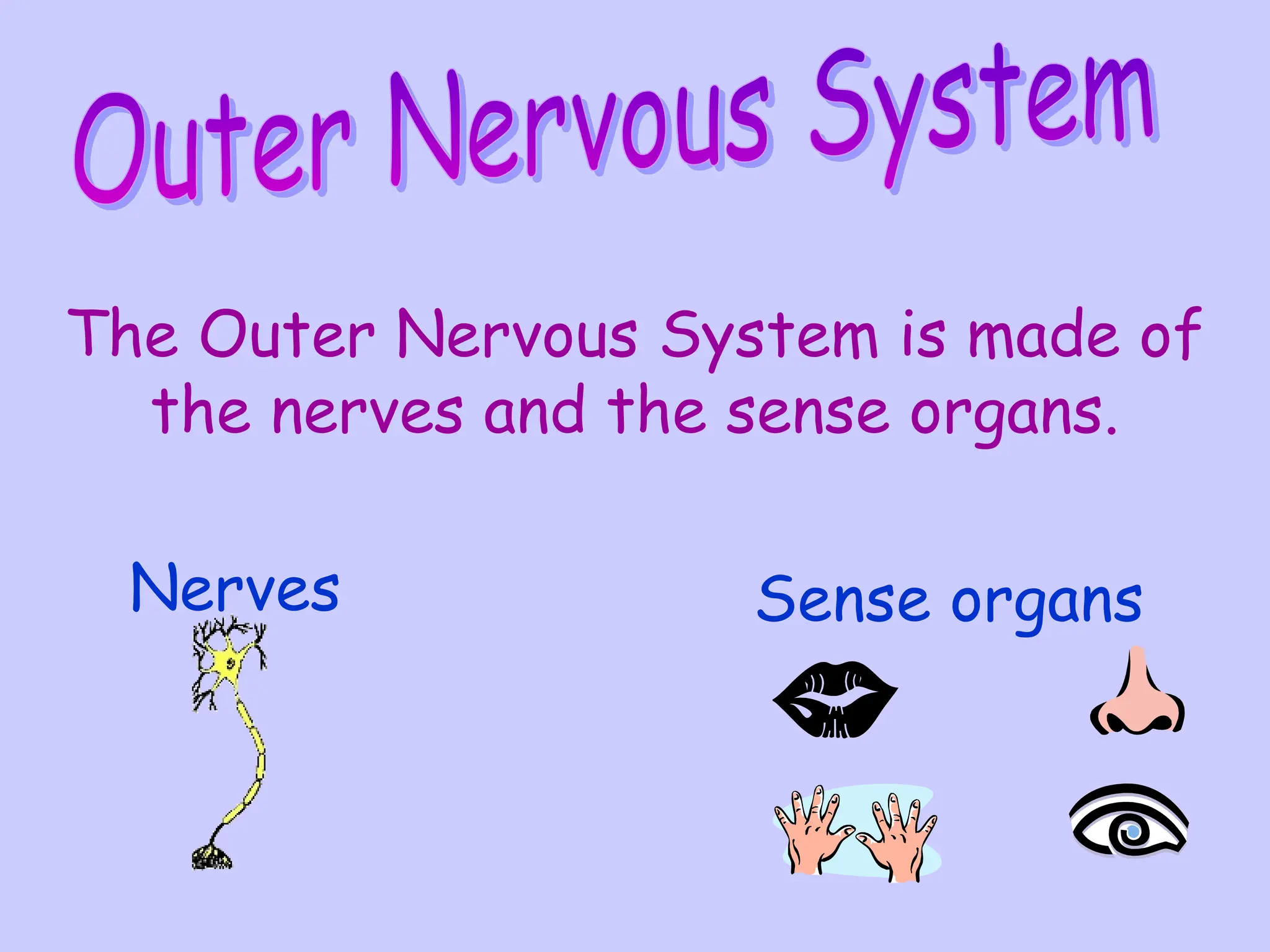
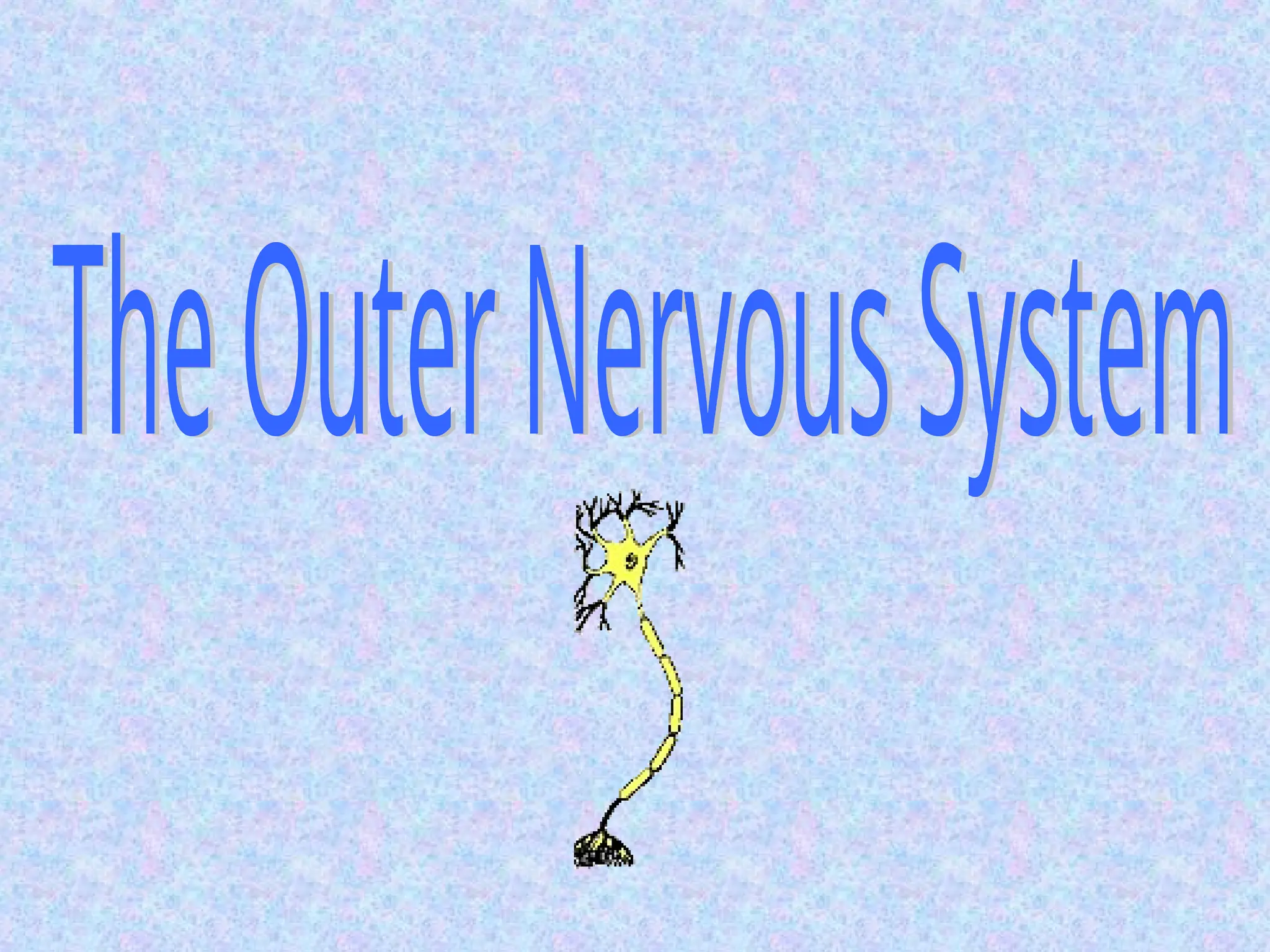
The Outer Nervous System is made of
the nerves and the sense organs.
Nerves Sense organs
Messages carried throughout the body
by nerves.
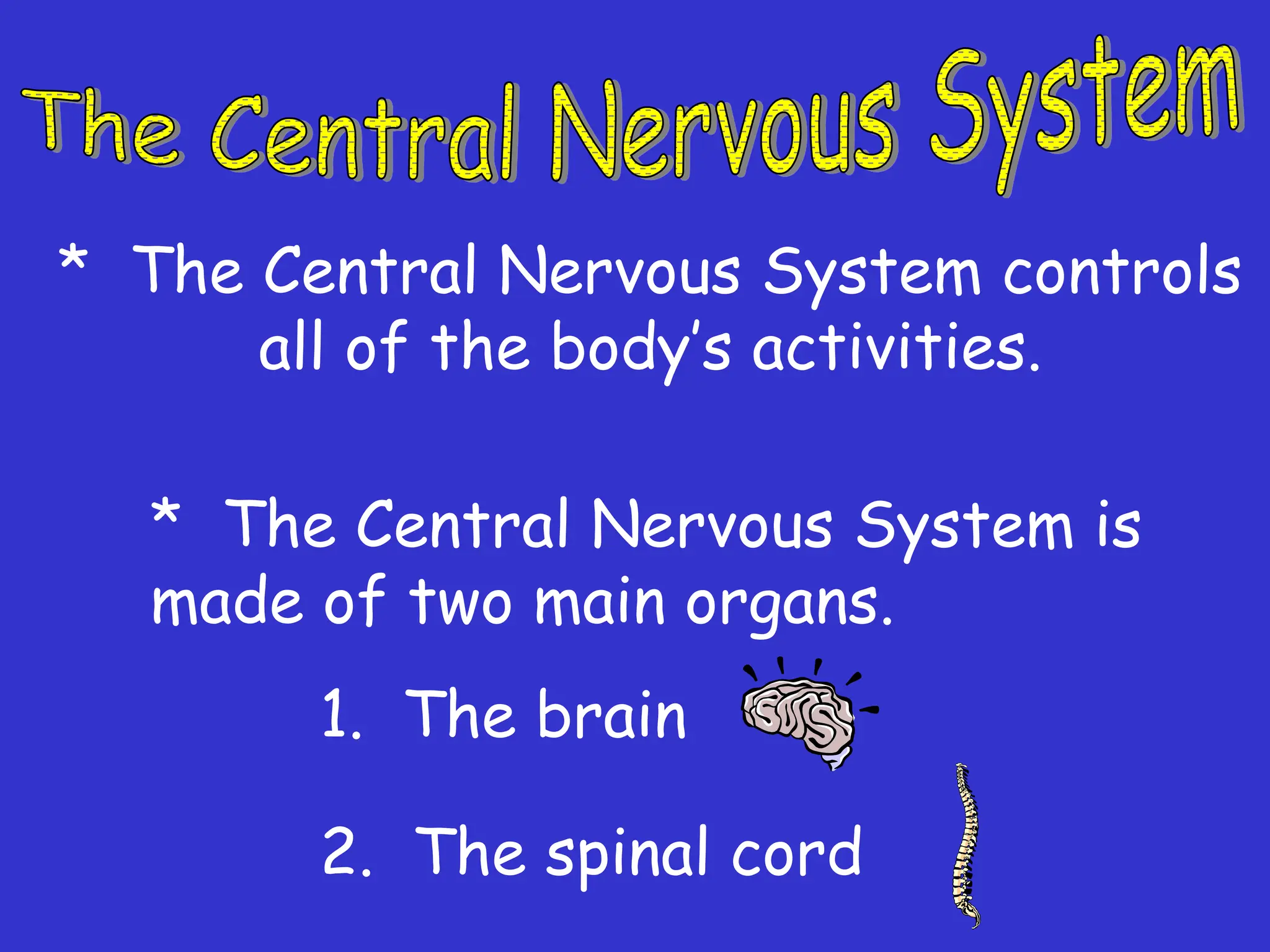
* The Central Nervous System controls
all of the body’s activities.
* The Central Nervous System is
made of two main organs.
1. The brain
2. The spinal cord
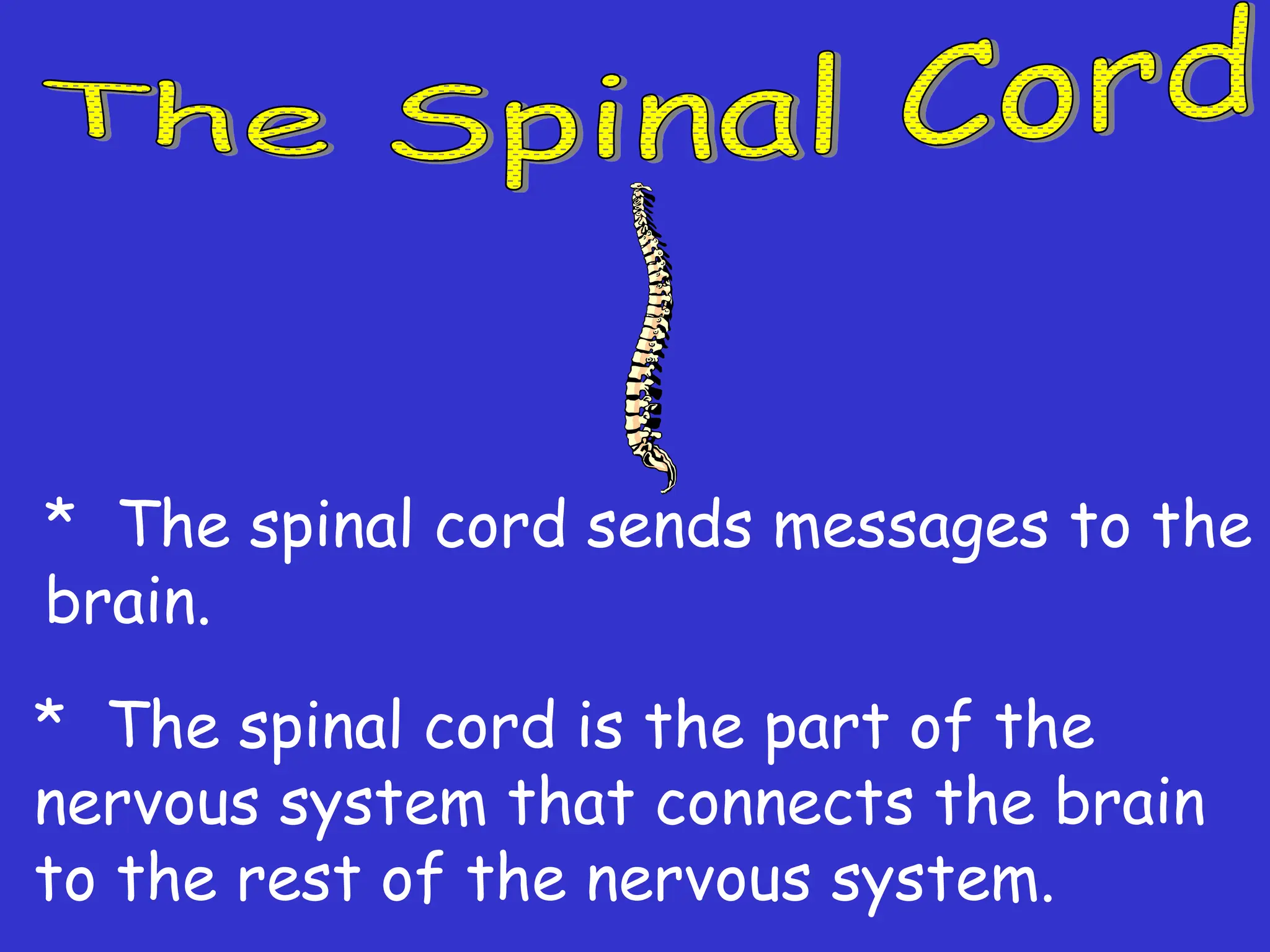
* The spinal cord sends messages to the
brain.
* The spinal cord is the part of the
nervous system that connects the brain
to the rest of the nervous system.
* The brain controls everything in the
body.
* The brain is made of more than 10
billion nerves!
* The brain is divided into three
parts and is protected by the skull.
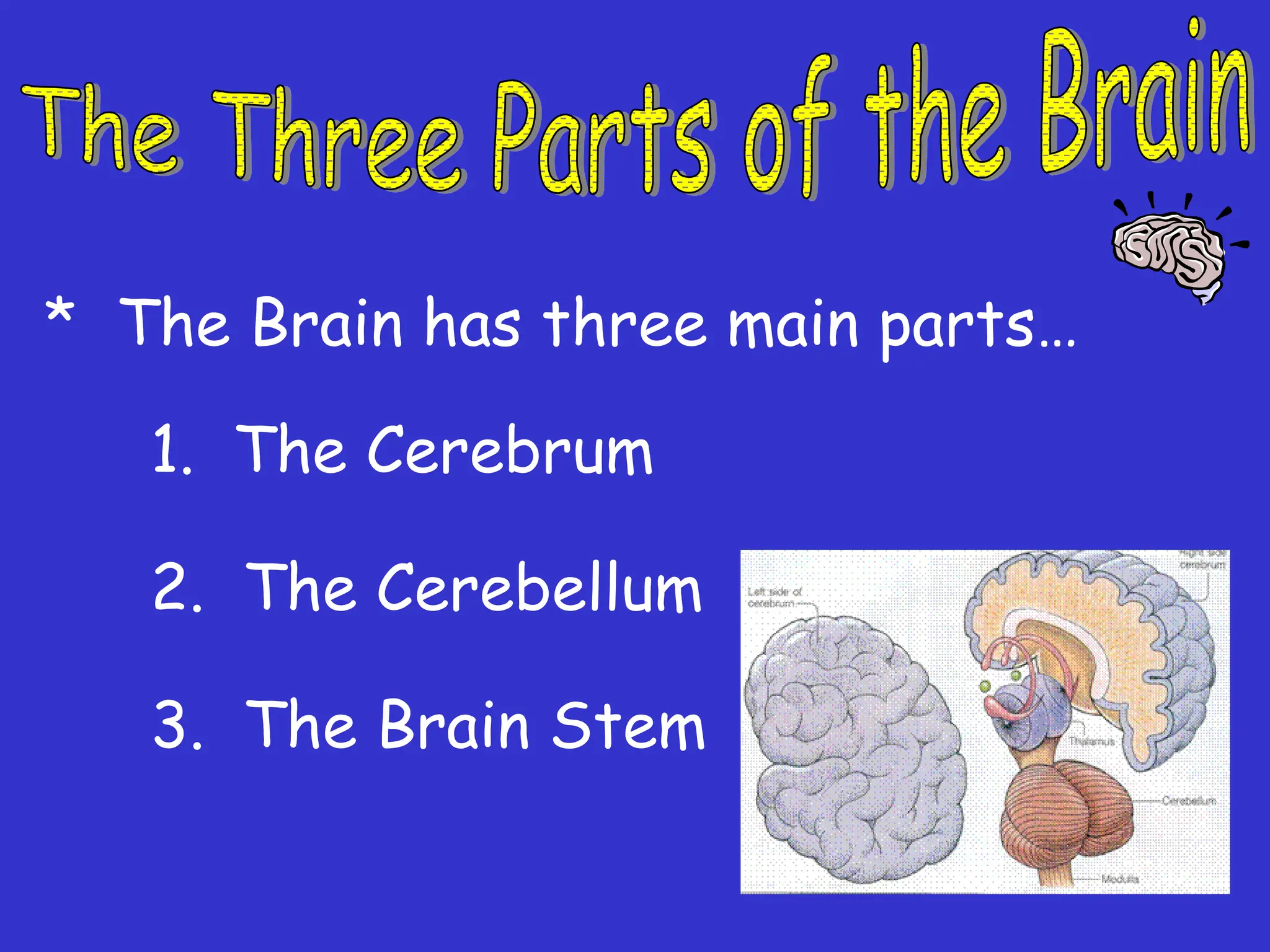
* The Brain has three main parts…
1. The Cerebrum
2. The Cerebellum
3. The Brain Stem
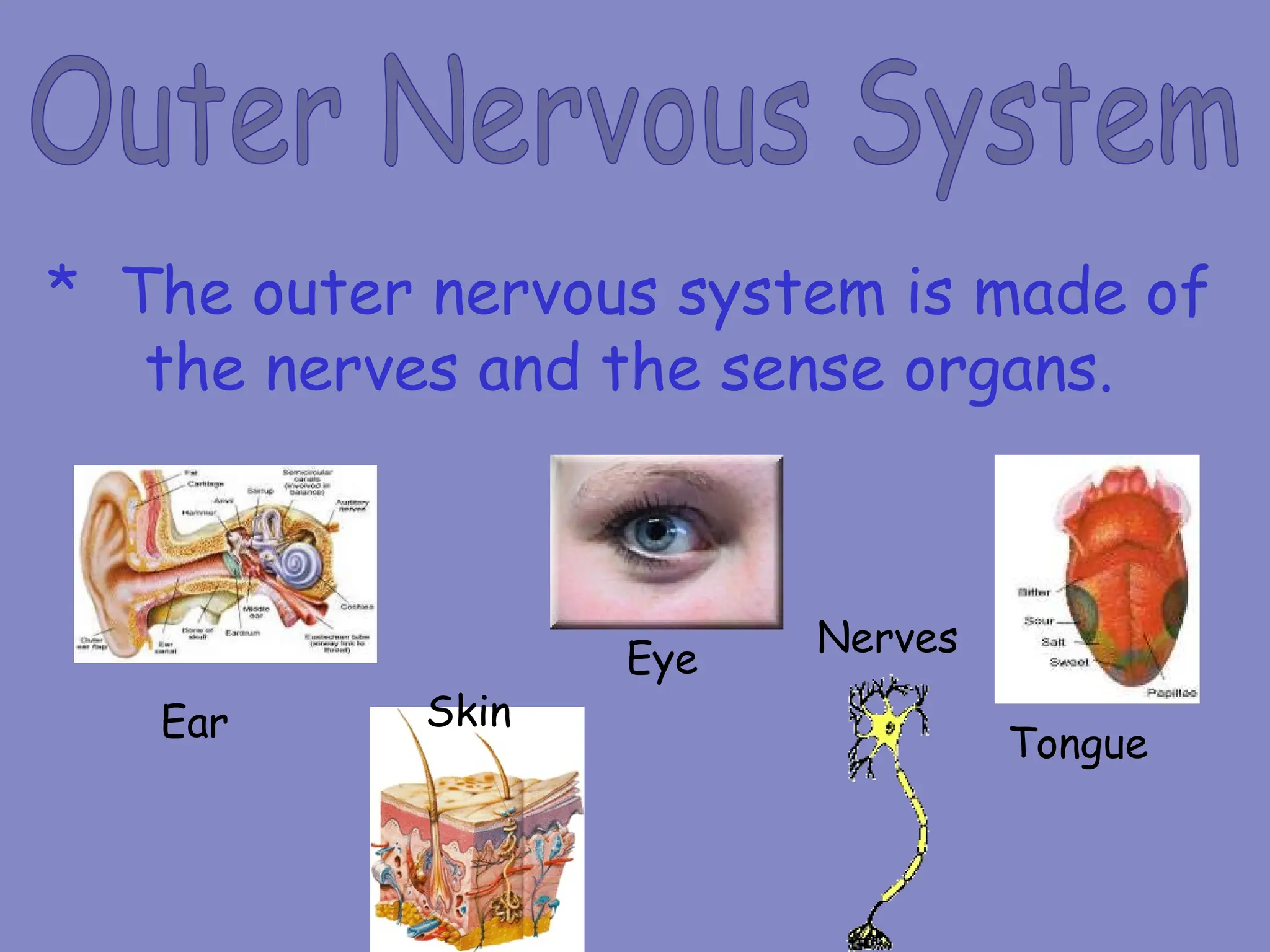
* The outer nervous system is made of
the nerves and the sense organs.
Ear
Eye
Skin
Nerves
Tongue
* An automatic reaction that
happens without thinking about it.
* A reflex happens quickly in
less than a second.
* The outer nervous system
controls the body’s activities
automatically.
* Small intestine, your breathing, and
your heartbeat.
controls
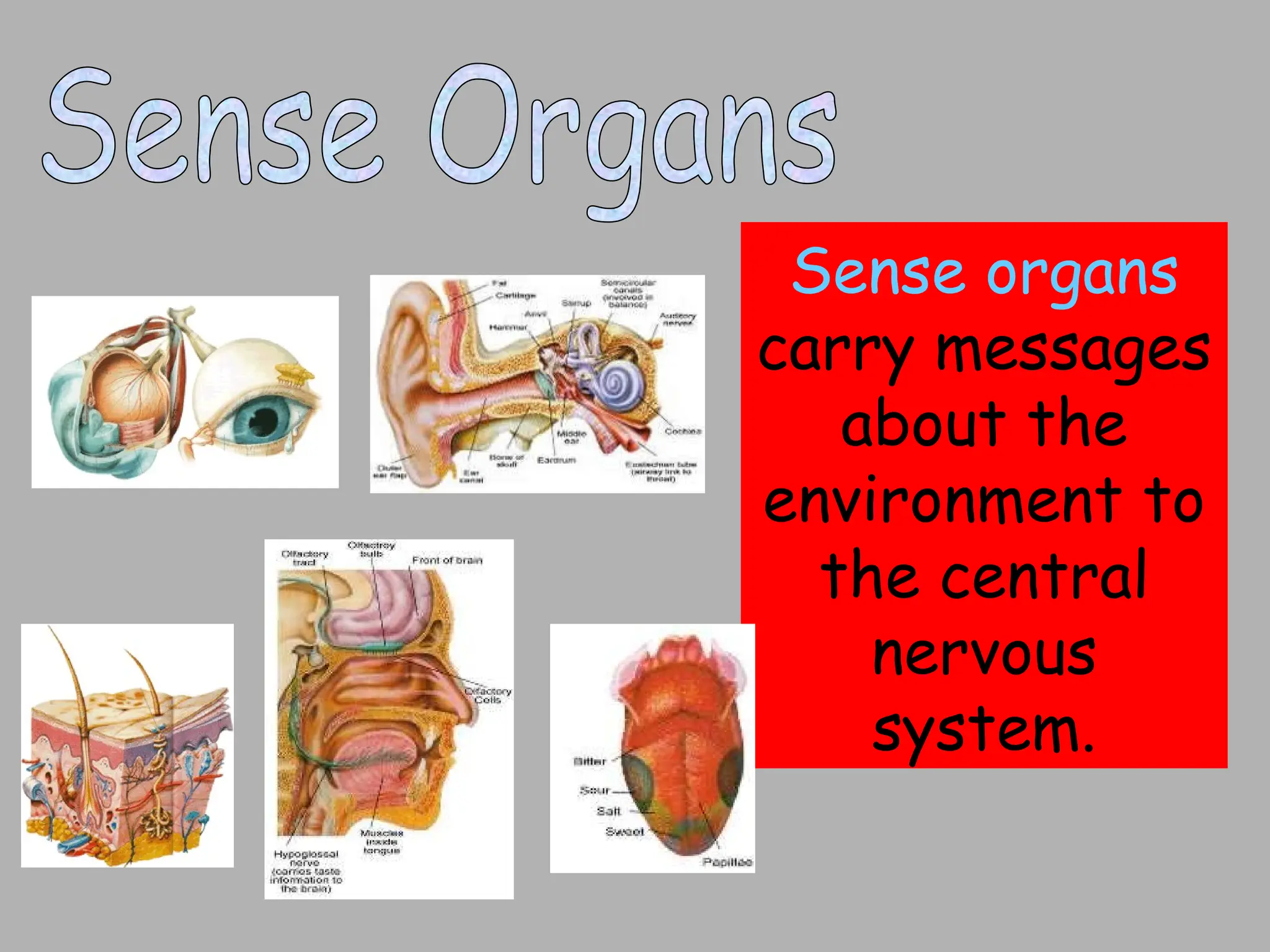
Sense organs
carry messages
about the
environment to
the central
nervous
system.
The eyes, ears, nose, tongue, and
skin are examples of sense organs.
The sense organs gather
information (light, sound, heat,
and pressure) from the
environment.
The environment is everything
outside the body.
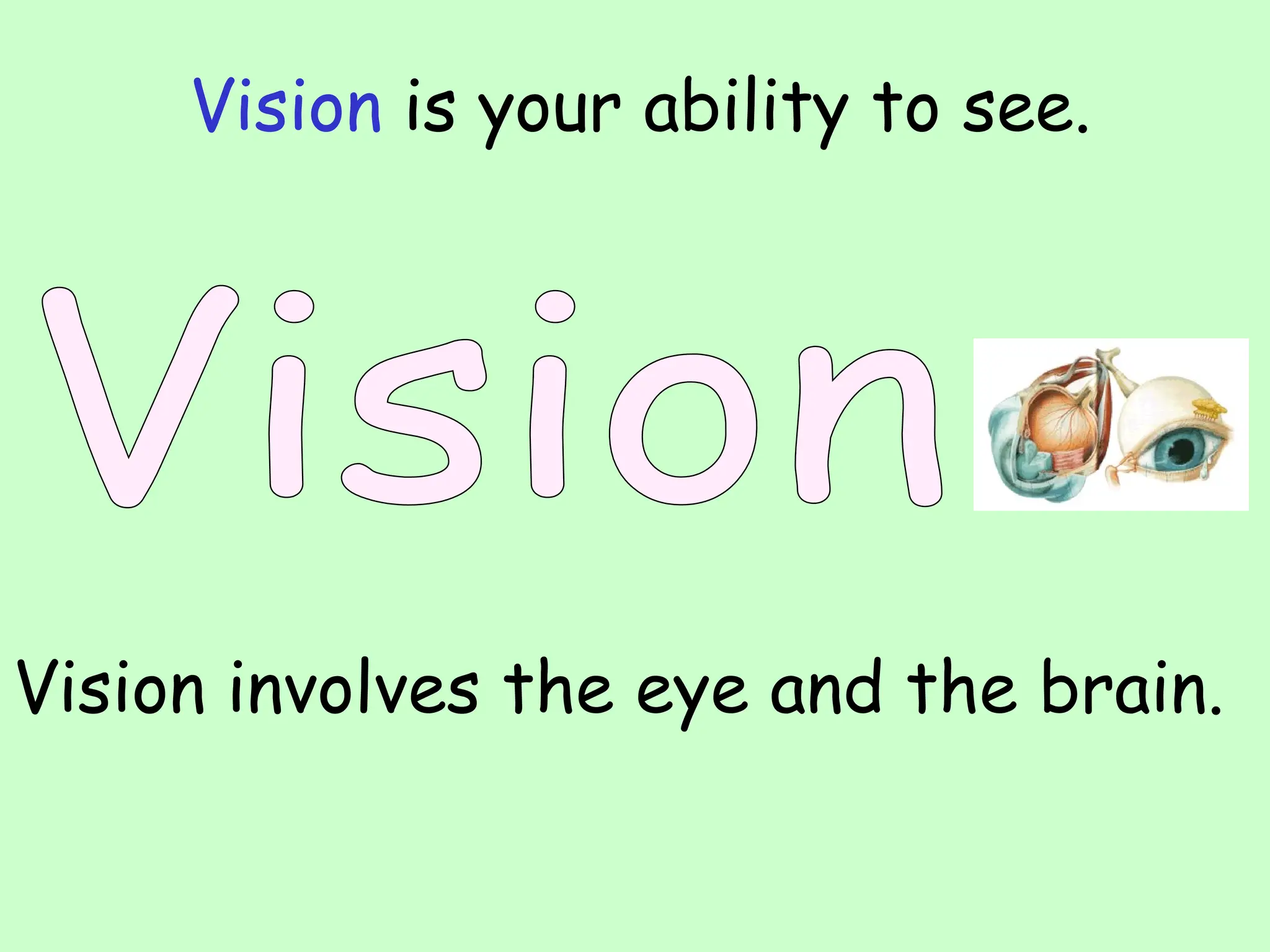
Vision is your ability to see.
Vision involves the eye and the brain.
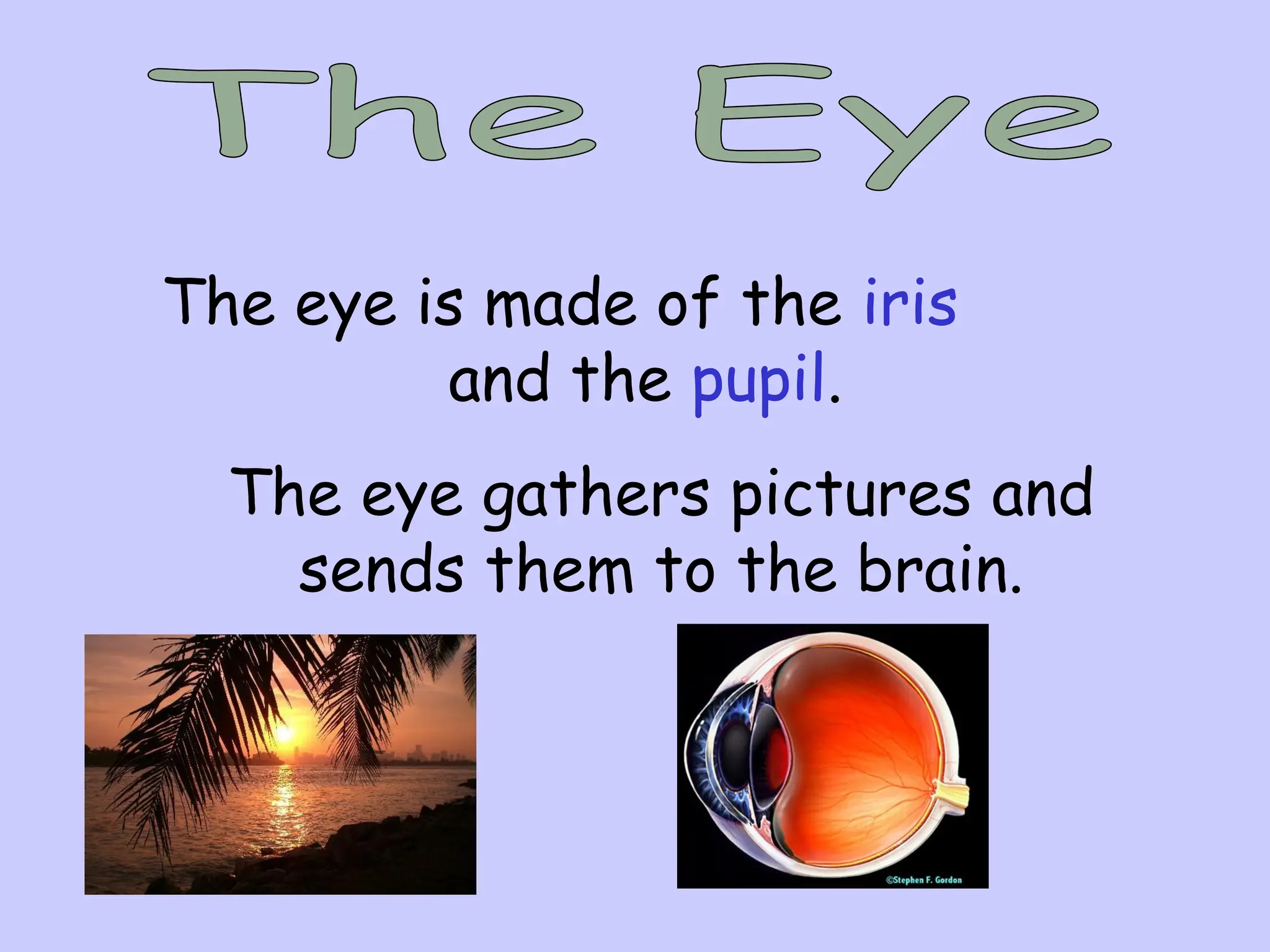
The eye is made of the iris
and the pupil.
The eye gathers pictures and
sends them to the brain.
The colored part of the
eye is the iris.
The black part of the
eye is the pupil.
The pupil becomes
larger and smaller as
it controls the light
coming into the eye.
Iris
Pupil
When a sound is made, the air
around the sound vibrates.
Hearing starts when some of the
sound waves go into the ear.
The ear works with the brain to
control your balance.
All of your movements are controlled
by balance and muscles.
The liquid in your inner ear is responsible
for your balance.
The liquid in your ear moves when we move.
The liquid movement sends information to the
brain to tell it how we are moving.
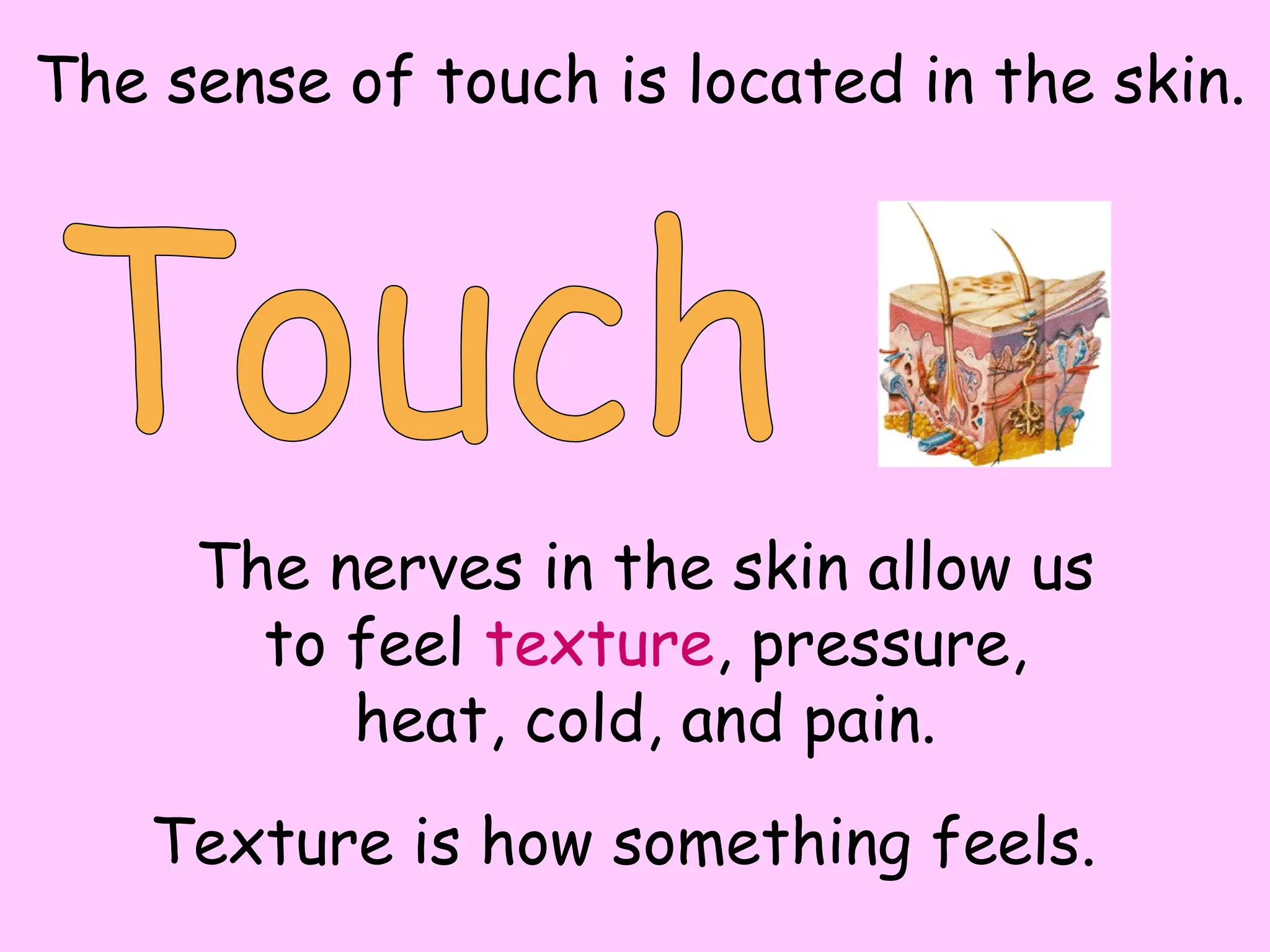
The sense of touch is located in the skin.
The nerves in the skin allow us
to feel texture, pressure,
heat, cold, and pain.
Texture is how something feels.
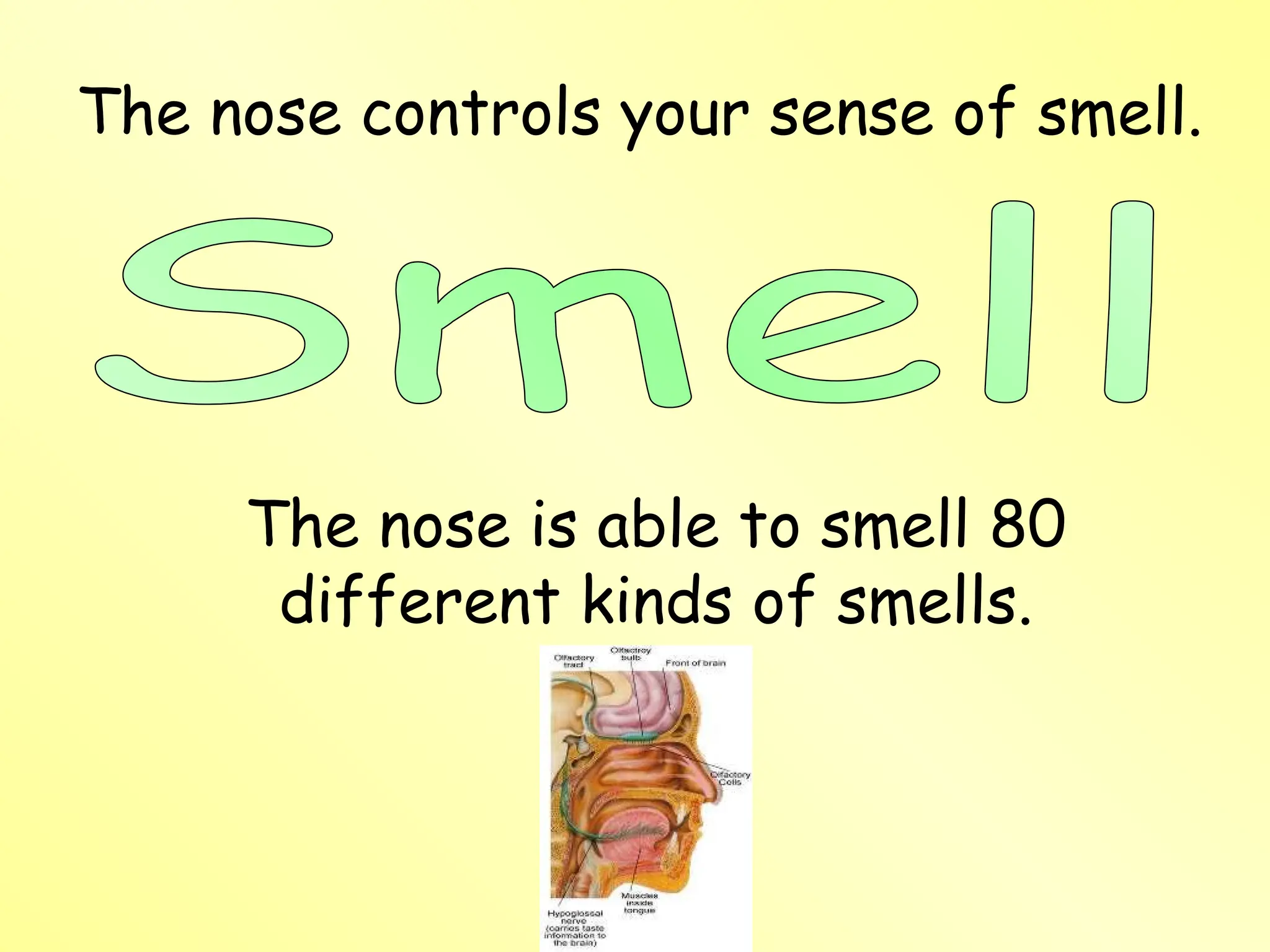
The nose controls your sense of smell.
The nose is able to smell 80
different kinds of smells.
Your sense of taste comes from the
taste buds in the tongue.
Taste buds are the parts on the tongue
that allow us to taste.
The five kinds of taste buds are
sweet, sour, bitter, umami, and salty.

THE DIFFERENT PARTS OF THE CENTRAL NERVOUS SYSTEM

  • 3.
    A system thatcontrols all of the activities of the body. The nervous system is made of: The brain The spinal cord The nerves The senses
  • 4.
    The nervous systemalso allows you to react to a stimulus. A stimulus is a change in the environment. Example: A hot stove Or… tripping over a rock
  • 5.
    Your reactions areautomatic. Automatic means that you do not have to think about your reactions. Example: If a bug flies by your eye, you will blink.
  • 6.
    An organ thatcontrols your emotions, your thoughts, and every movement you make.
  • 7.
    The Outer NervousSystem is made of the nerves and the sense organs. Nerves Sense organs
  • 8.
    Messages carried throughoutthe body by nerves.
  • 9.
    * The CentralNervous System controls all of the body’s activities. * The Central Nervous System is made of two main organs. 1. The brain 2. The spinal cord
  • 10.
    * The spinalcord sends messages to the brain. * The spinal cord is the part of the nervous system that connects the brain to the rest of the nervous system.
  • 11.
    * The braincontrols everything in the body. * The brain is made of more than 10 billion nerves! * The brain is divided into three parts and is protected by the skull.
  • 12.
    * The Brainhas three main parts… 1. The Cerebrum 2. The Cerebellum 3. The Brain Stem
  • 14.
    * The outernervous system is made of the nerves and the sense organs. Ear Eye Skin Nerves Tongue
  • 15.
    * An automaticreaction that happens without thinking about it. * A reflex happens quickly in less than a second.
  • 16.
    * The outernervous system controls the body’s activities automatically. * Small intestine, your breathing, and your heartbeat. controls
  • 17.
    Sense organs carry messages aboutthe environment to the central nervous system.
  • 18.
    The eyes, ears,nose, tongue, and skin are examples of sense organs. The sense organs gather information (light, sound, heat, and pressure) from the environment.
  • 19.
    The environment iseverything outside the body.
  • 20.
    Vision is yourability to see. Vision involves the eye and the brain.
  • 21.
    The eye ismade of the iris and the pupil. The eye gathers pictures and sends them to the brain.
  • 22.
    The colored partof the eye is the iris. The black part of the eye is the pupil. The pupil becomes larger and smaller as it controls the light coming into the eye. Iris Pupil
  • 23.
    When a soundis made, the air around the sound vibrates. Hearing starts when some of the sound waves go into the ear.
  • 24.
    The ear workswith the brain to control your balance. All of your movements are controlled by balance and muscles. The liquid in your inner ear is responsible for your balance. The liquid in your ear moves when we move. The liquid movement sends information to the brain to tell it how we are moving.
  • 25.
    The sense oftouch is located in the skin. The nerves in the skin allow us to feel texture, pressure, heat, cold, and pain. Texture is how something feels.
  • 26.
    The nose controlsyour sense of smell. The nose is able to smell 80 different kinds of smells.
  • 27.
    Your sense oftaste comes from the taste buds in the tongue. Taste buds are the parts on the tongue that allow us to taste. The five kinds of taste buds are sweet, sour, bitter, umami, and salty.