PLANT GROWTH AND
NUTRITION
5th GRADE
SCIENCE
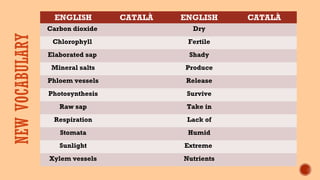
ENGLISH CATALÀ ENGLISH CATALÀ
Carbon dioxide Dry
Chlorophyll Fertile
Elaborated sap Shady
Mineral salts Produce
Phloem vessels Release
Photosynthesis Survive
Raw sap Take in
Respiration Lack of
Stomata Humid
Sunlight Extreme
Xylem vessels Nutrients
NEWVOCABULARY
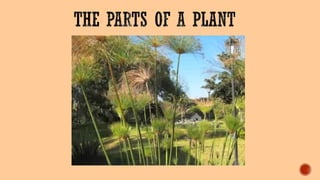
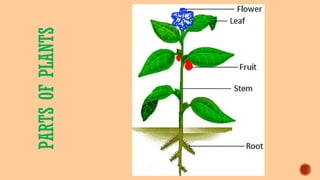
PARTSOFPLANTS
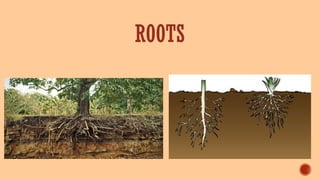
ROOTS
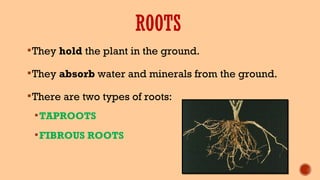
They hold the plant in the ground.
They absorb water and minerals from the ground.
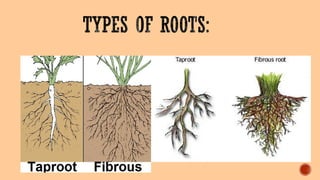
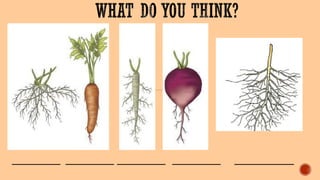
There are two types of roots:
TAPROOTS
FIBROUS ROOTS
ROOTS
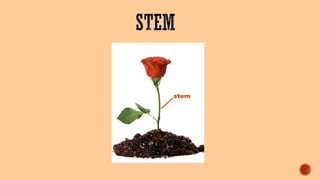
STEM
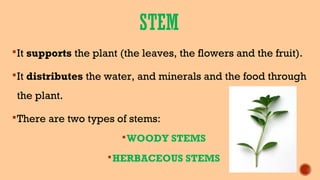
It supports the plant (the leaves, the flowers and the fruit).
It distributes the water, and minerals and the food through
the plant.
There are two types of stems:
WOODY STEMS
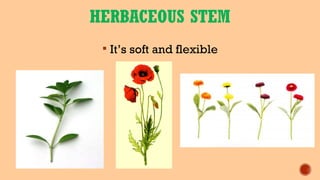
HERBACEOUS STEMS
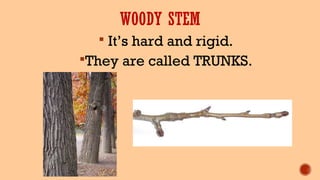
WOODY STEM
 It’s hard and rigid.
They are called TRUNKS.
 It’s soft and flexible
LEAVES
LEAVES
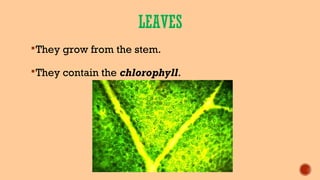
They grow from the stem.
They contain the chlorophyll.
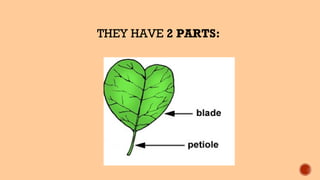
THEY HAVE 2 PARTS:
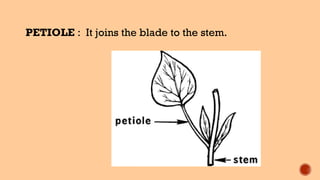
PETIOLE : It joins the blade to the stem.
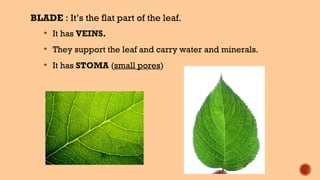
BLADE : It’s the flat part of the leaf.
 It has VEINS.
 They support the leaf and carry water and minerals.
 It has STOMA (small pores)
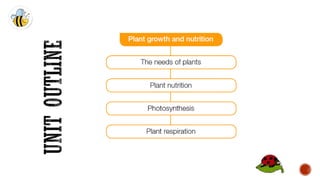
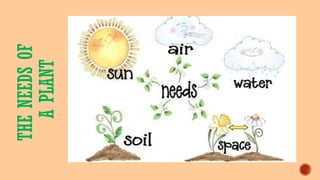
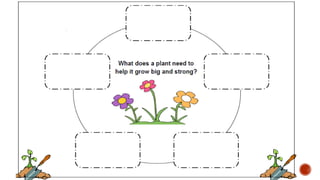
THENEEDSOF
APLANT
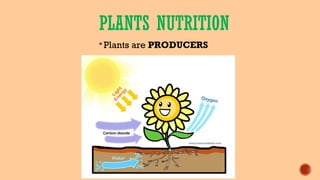
PLANTS NUTRITION
Plants are PRODUCERS
PHOTOSYNTHESIS
PHOTOSYNTHESIS
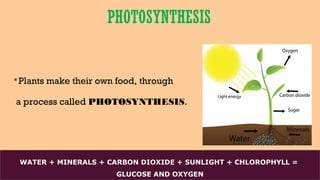
Plants make their own food, through
a process called PHOTOSYNTHESIS.
WATER + MINERALS + CARBON DIOXIDE + SUNLIGHT + CHLOROPHYLL =
GLUCOSE AND OXYGEN
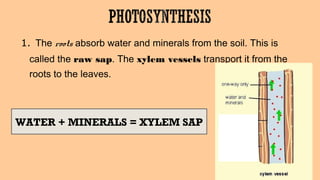
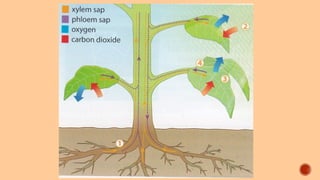
1. The roots absorb water and minerals from the soil. This is
called the raw sap. The xylem vessels transport it from the
roots to the leaves.
WATER + MINERALS = XYLEM SAP
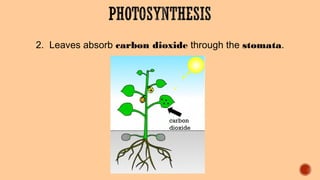
2. Leaves absorb carbon dioxide through the stomata.
carbon
dioxide
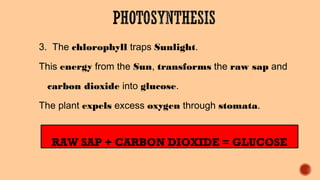
3. The chlorophyll traps Sunlight.
This energy from the Sun, transforms the raw sap and
carbon dioxide into glucose.
The plant expels excess oxygen through stomata.
RAW SAP + CARBON DIOXIDE = GLUCOSE
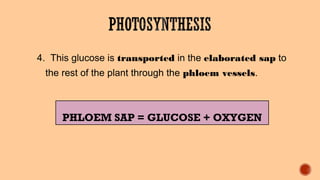
4. This glucose is transported in the elaborated sap to
the rest of the plant through the phloem vessels.
PHLOEM SAP = GLUCOSE + OXYGEN
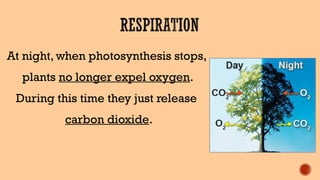
At night, when photosynthesis stops,
plants no longer expel oxygen.
During this time they just release
carbon dioxide.
TEACHER LETICIA

PLANTS 5TH

  • 1.
  • 3.
    ENGLISH CATALÀ ENGLISHCATALÀ Carbon dioxide Dry Chlorophyll Fertile Elaborated sap Shady Mineral salts Produce Phloem vessels Release Photosynthesis Survive Raw sap Take in Respiration Lack of Stomata Humid Sunlight Extreme Xylem vessels Nutrients NEWVOCABULARY
  • 5.
  • 6.
  • 7.
    They hold theplant in the ground. They absorb water and minerals from the ground. There are two types of roots: TAPROOTS FIBROUS ROOTS ROOTS
  • 11.
    STEM It supports theplant (the leaves, the flowers and the fruit). It distributes the water, and minerals and the food through the plant. There are two types of stems: WOODY STEMS HERBACEOUS STEMS
  • 12.
    WOODY STEM  It’shard and rigid. They are called TRUNKS.
  • 13.
     It’s softand flexible
  • 14.
  • 15.
    LEAVES They grow fromthe stem. They contain the chlorophyll.
  • 16.
  • 17.
    PETIOLE : Itjoins the blade to the stem.
  • 18.
    BLADE : It’sthe flat part of the leaf.  It has VEINS.  They support the leaf and carry water and minerals.  It has STOMA (small pores)
  • 21.
  • 23.
  • 24.
  • 25.
    PHOTOSYNTHESIS Plants make theirown food, through a process called PHOTOSYNTHESIS. WATER + MINERALS + CARBON DIOXIDE + SUNLIGHT + CHLOROPHYLL = GLUCOSE AND OXYGEN
  • 26.
    1. The rootsabsorb water and minerals from the soil. This is called the raw sap. The xylem vessels transport it from the roots to the leaves. WATER + MINERALS = XYLEM SAP
  • 27.
    2. Leaves absorbcarbon dioxide through the stomata. carbon dioxide
  • 28.
    3. The chlorophylltraps Sunlight. This energy from the Sun, transforms the raw sap and carbon dioxide into glucose. The plant expels excess oxygen through stomata. RAW SAP + CARBON DIOXIDE = GLUCOSE
  • 29.
    4. This glucoseis transported in the elaborated sap to the rest of the plant through the phloem vessels. PHLOEM SAP = GLUCOSE + OXYGEN
  • 31.
    At night, whenphotosynthesis stops, plants no longer expel oxygen. During this time they just release carbon dioxide.
  • 32.