Sensitivity and
Coordination

      By Paula Crespo González
   A stimulus is anything that affects any of the
    body’s activities. There are two types of
    stimuli:
         Internal
         External
   A response is the body’s answer to a stimulus.
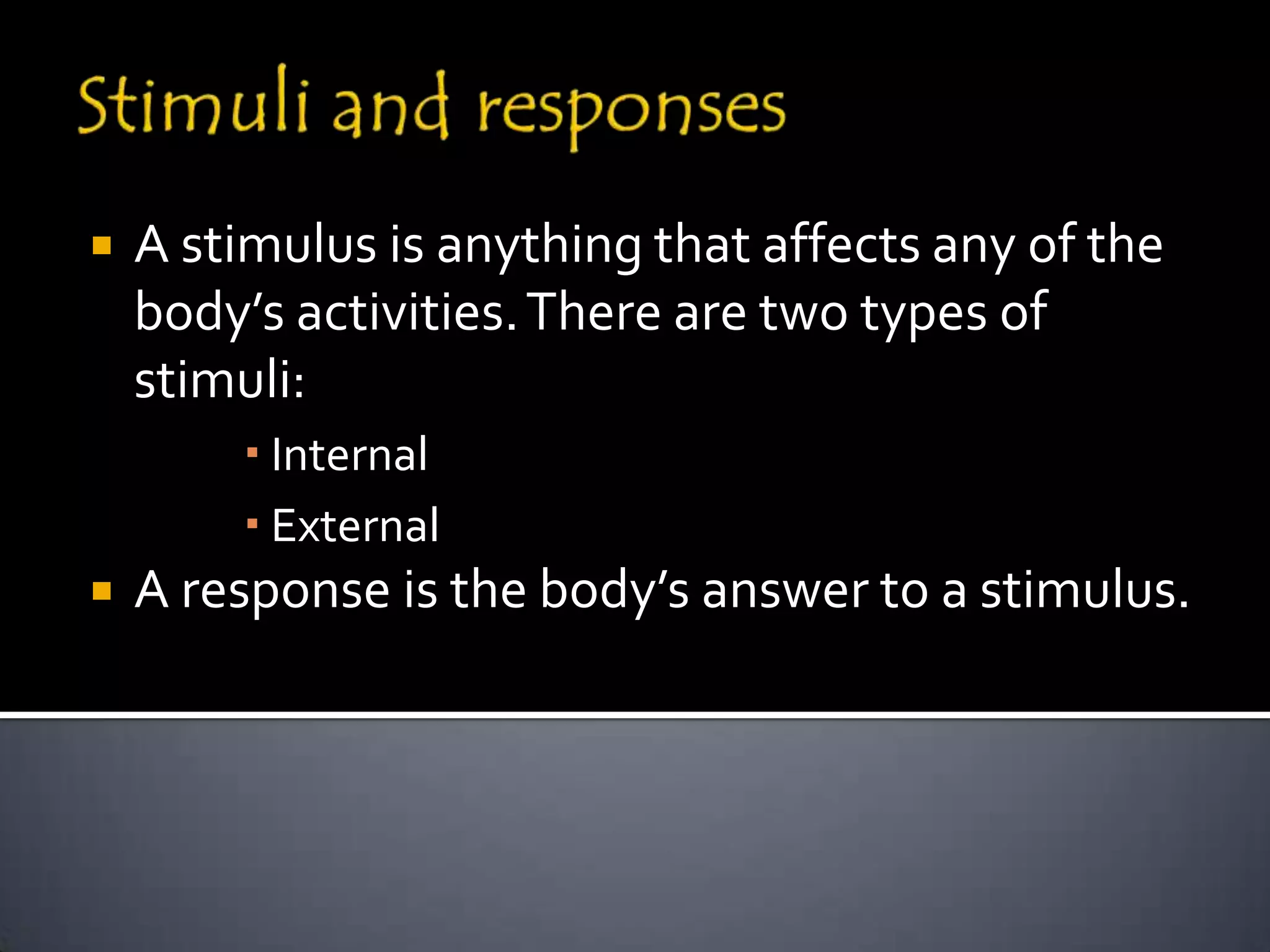
   The body has different receptors to receive different
    types of stimuli:
        ▪ Internal Receptors
        ▪ External Receptors
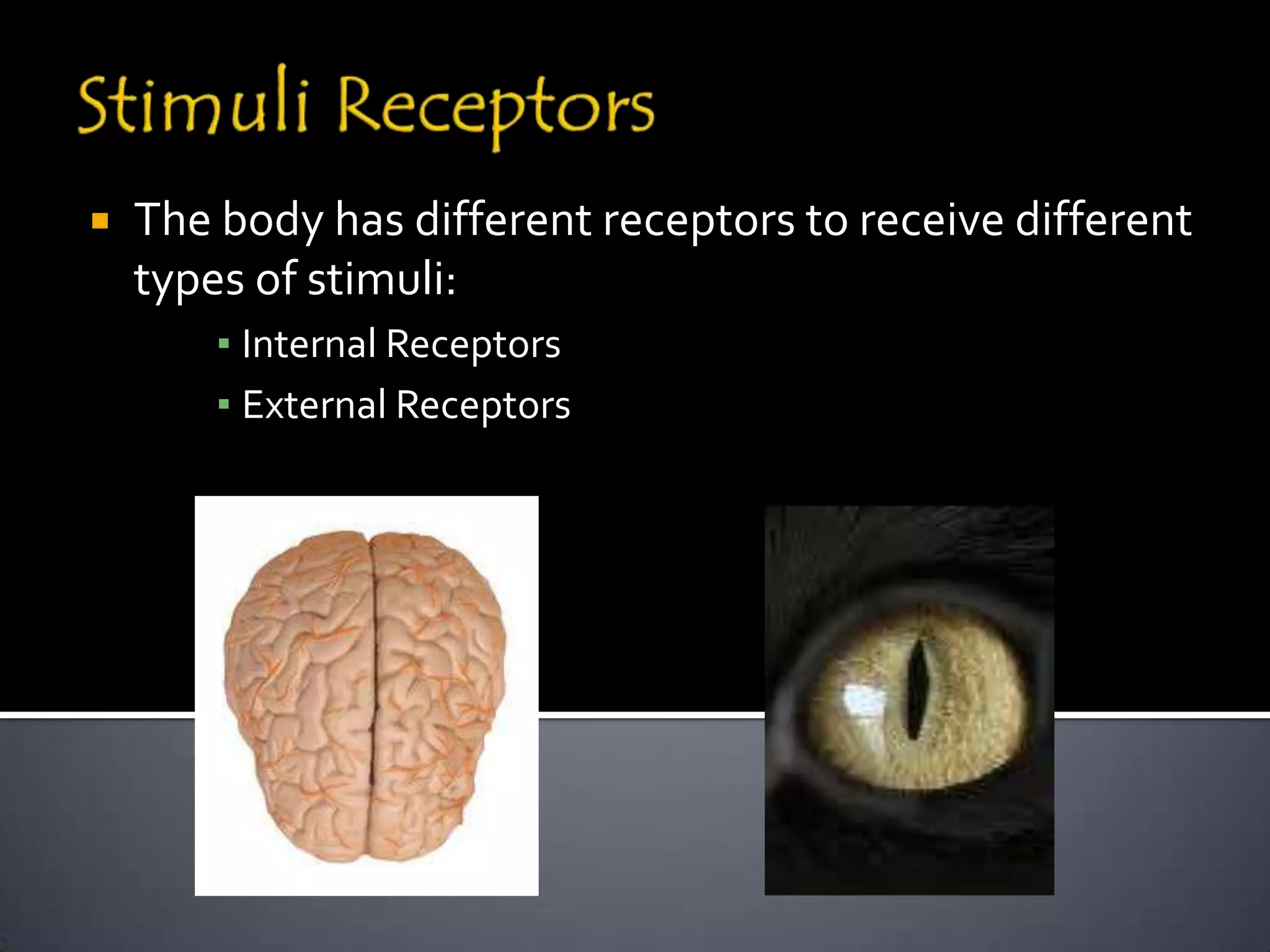
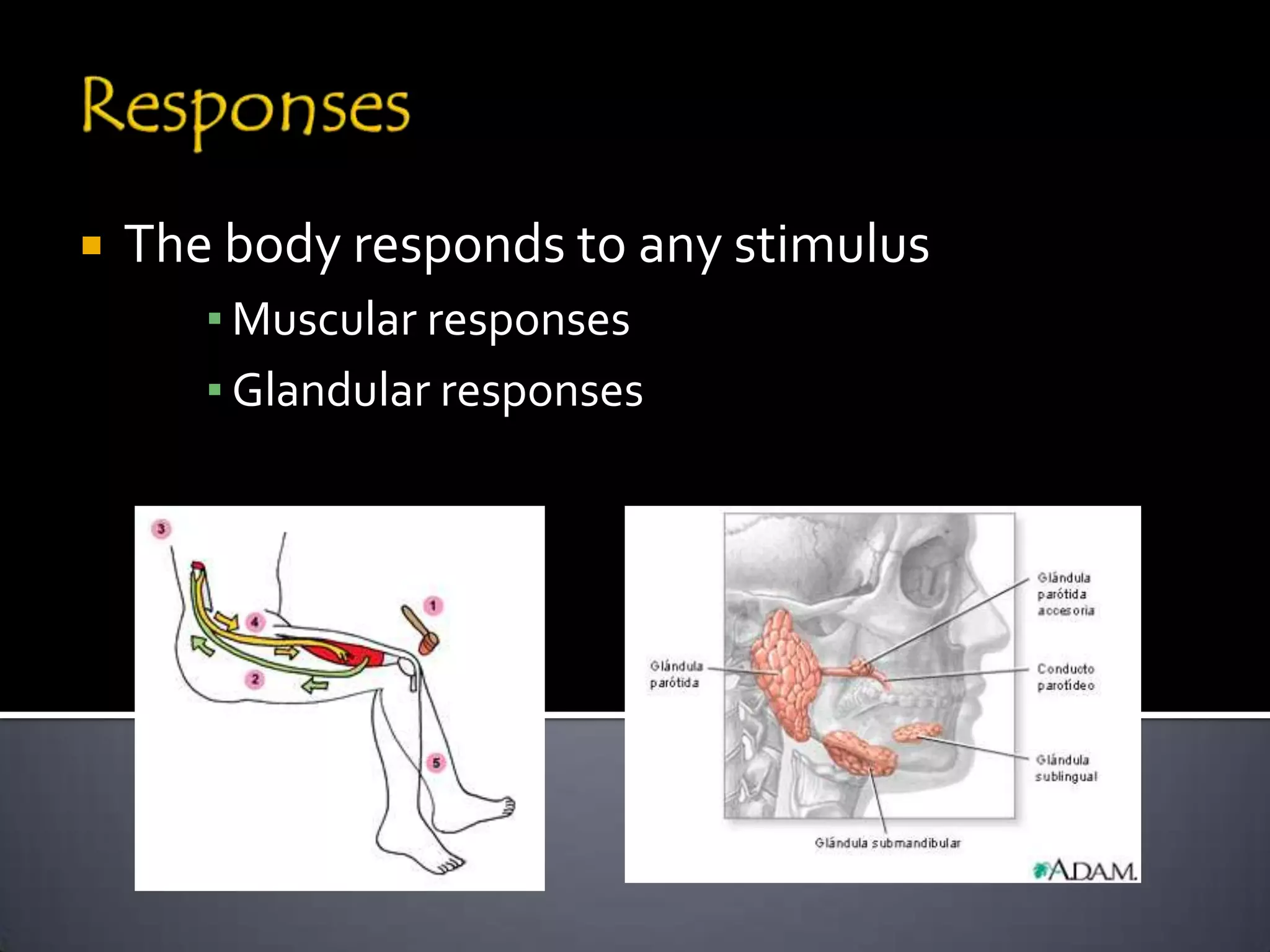
   The body responds to any stimulus
       ▪ Muscular responses
       ▪ Glandular responses
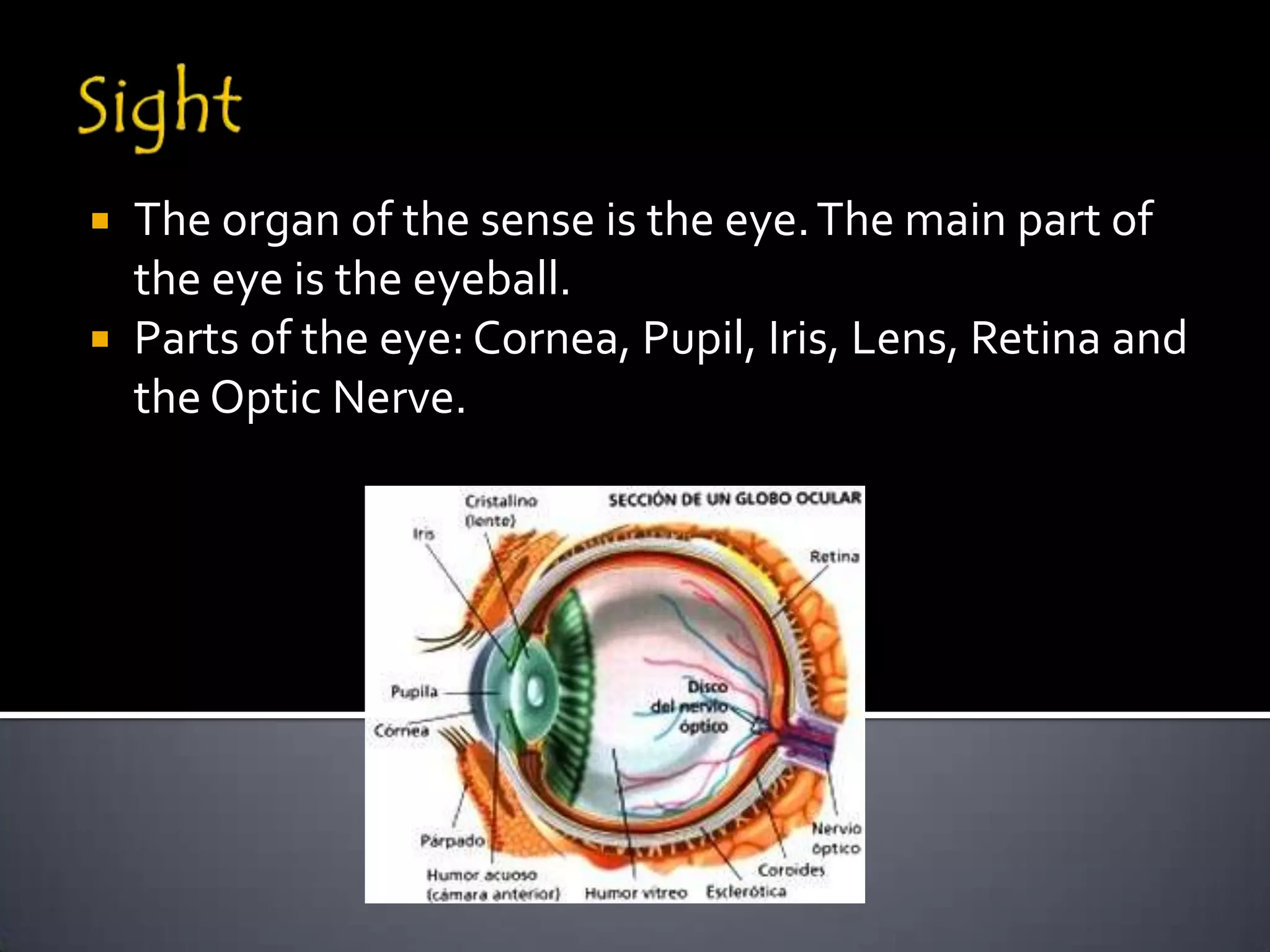
 The organ of the sense is the eye. The main part of
  the eye is the eyeball.
 Parts of the eye: Cornea, Pupil, Iris, Lens, Retina and
  the Optic Nerve.
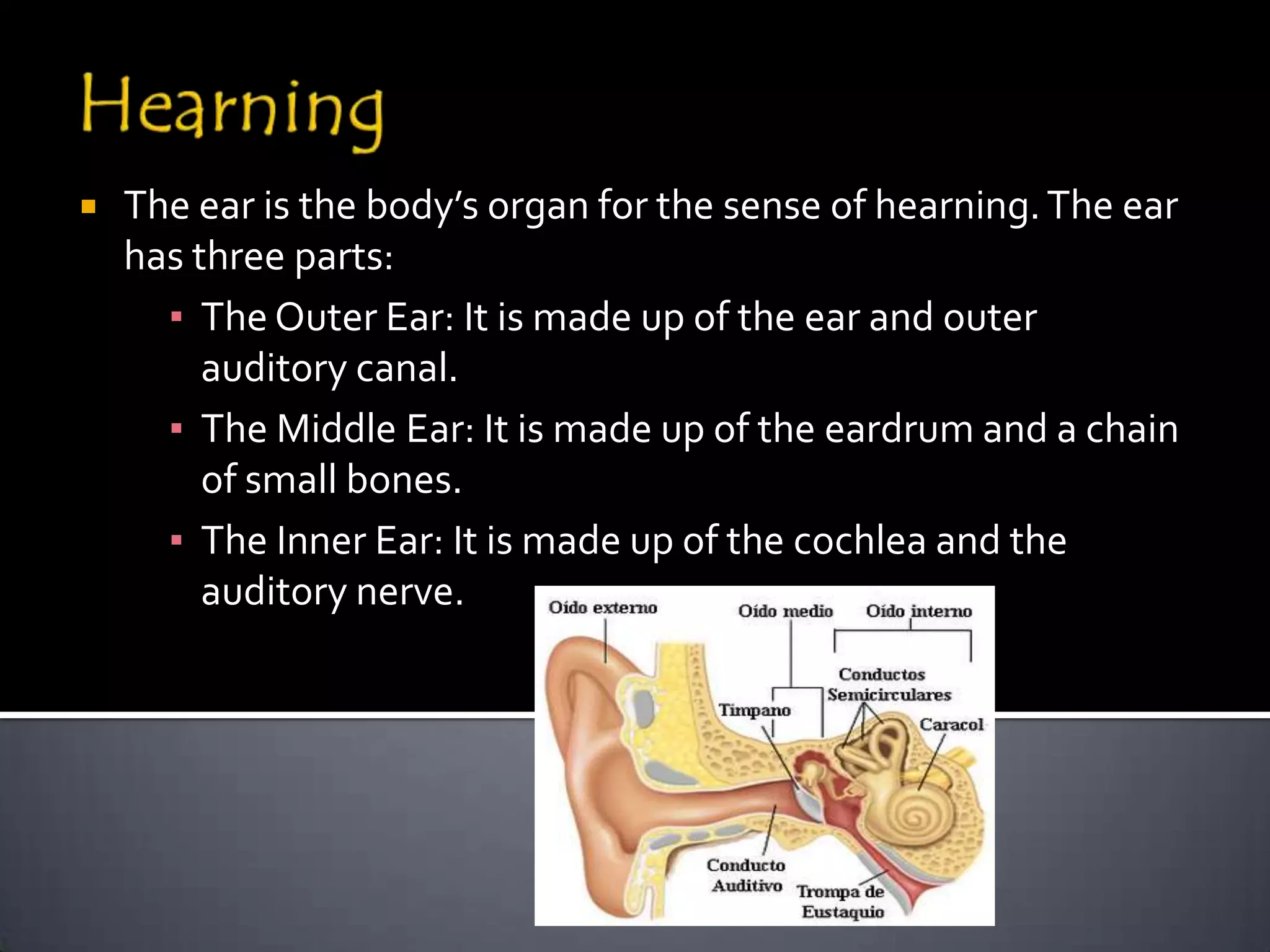
   The ear is the body’s organ for the sense of hearning. The ear
    has three parts:
      ▪ The Outer Ear: It is made up of the ear and outer
         auditory canal.
      ▪ The Middle Ear: It is made up of the eardrum and a chain
         of small bones.
      ▪ The Inner Ear: It is made up of the cochlea and the
         auditory nerve.
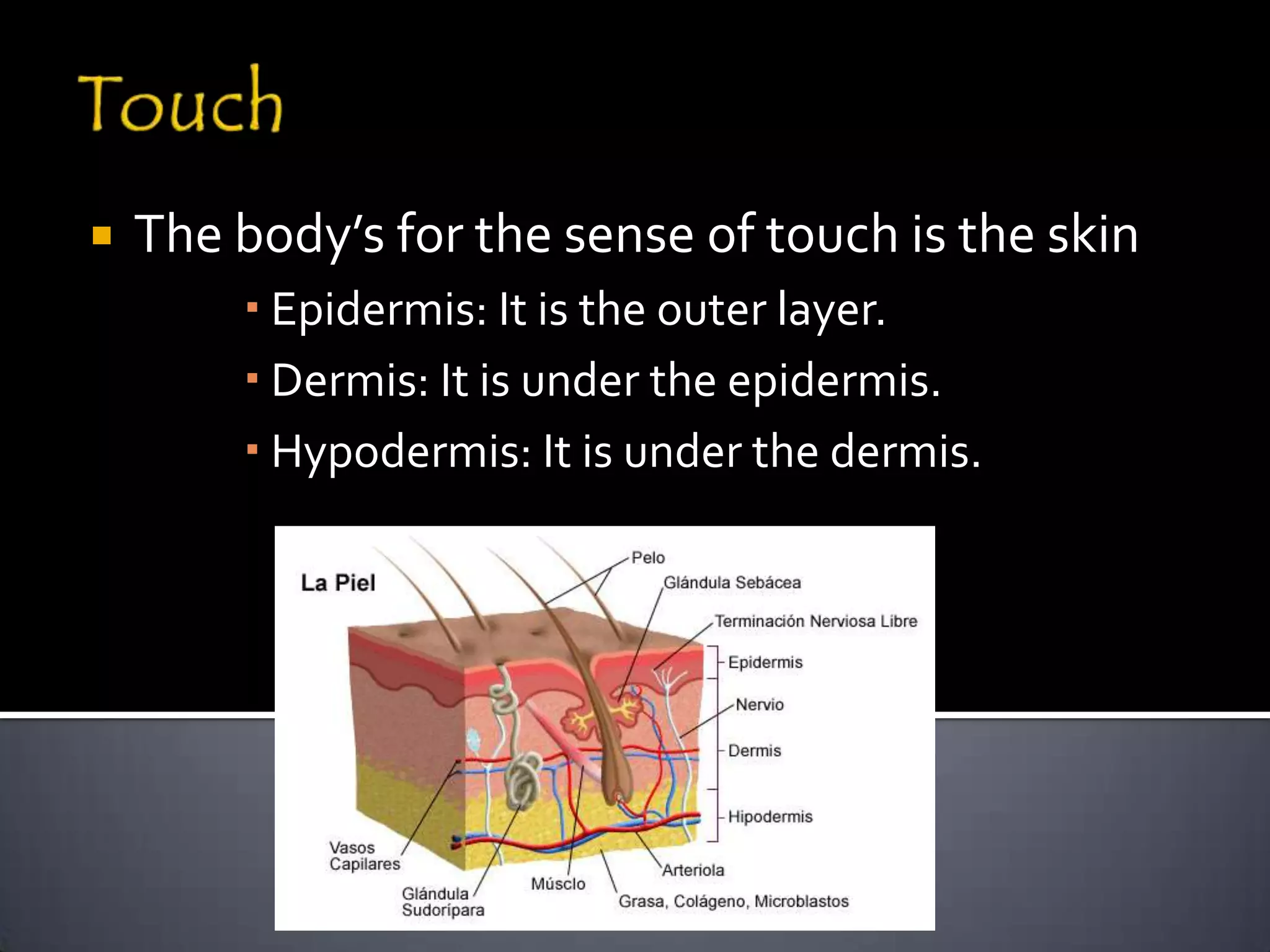
   The body’s for the sense of touch is the skin
         Epidermis: It is the outer layer.
         Dermis: It is under the epidermis.
         Hypodermis: It is under the dermis.
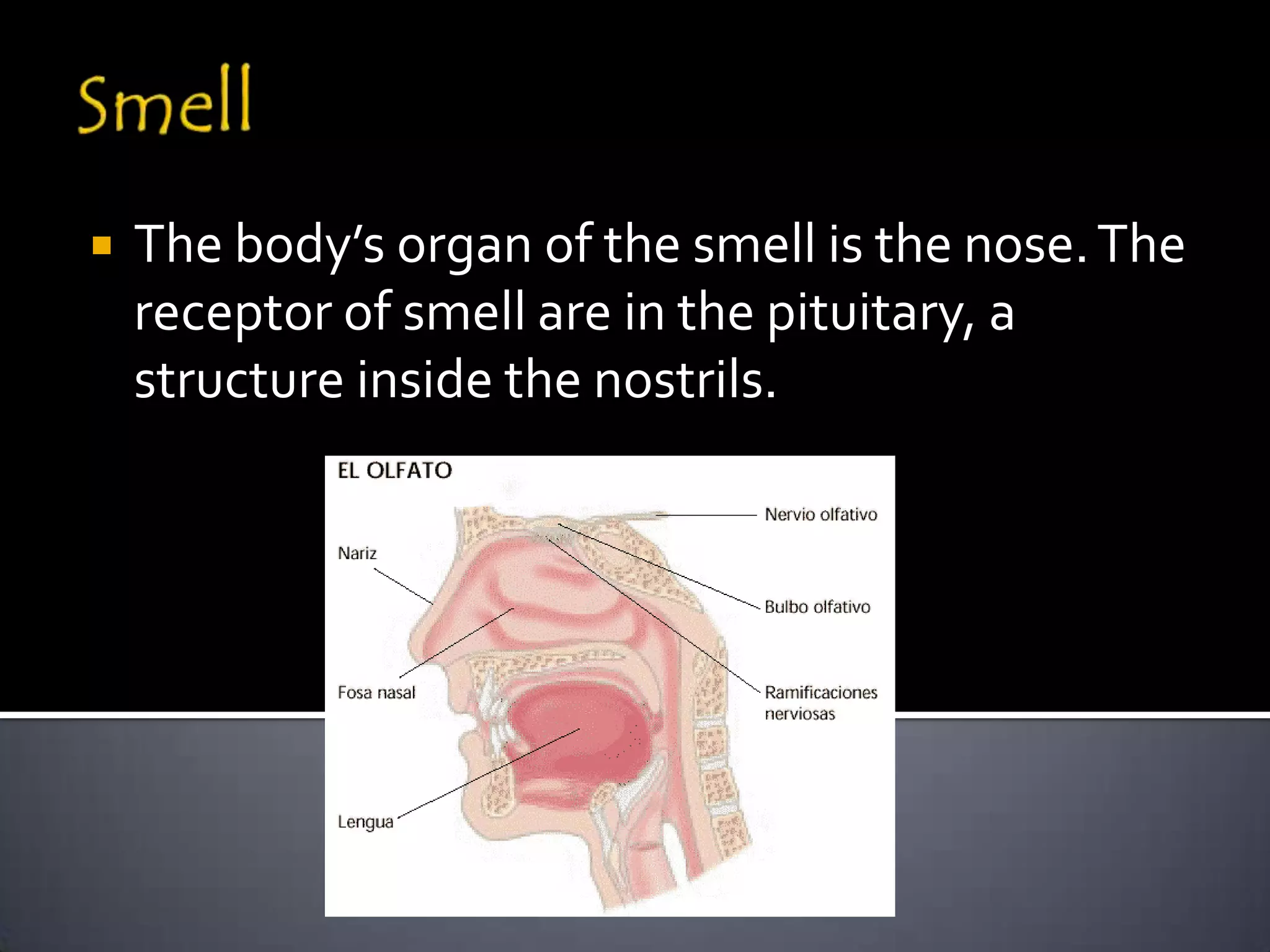
   The body’s organ of the smell is the nose. The
    receptor of smell are in the pituitary, a
    structure inside the nostrils.
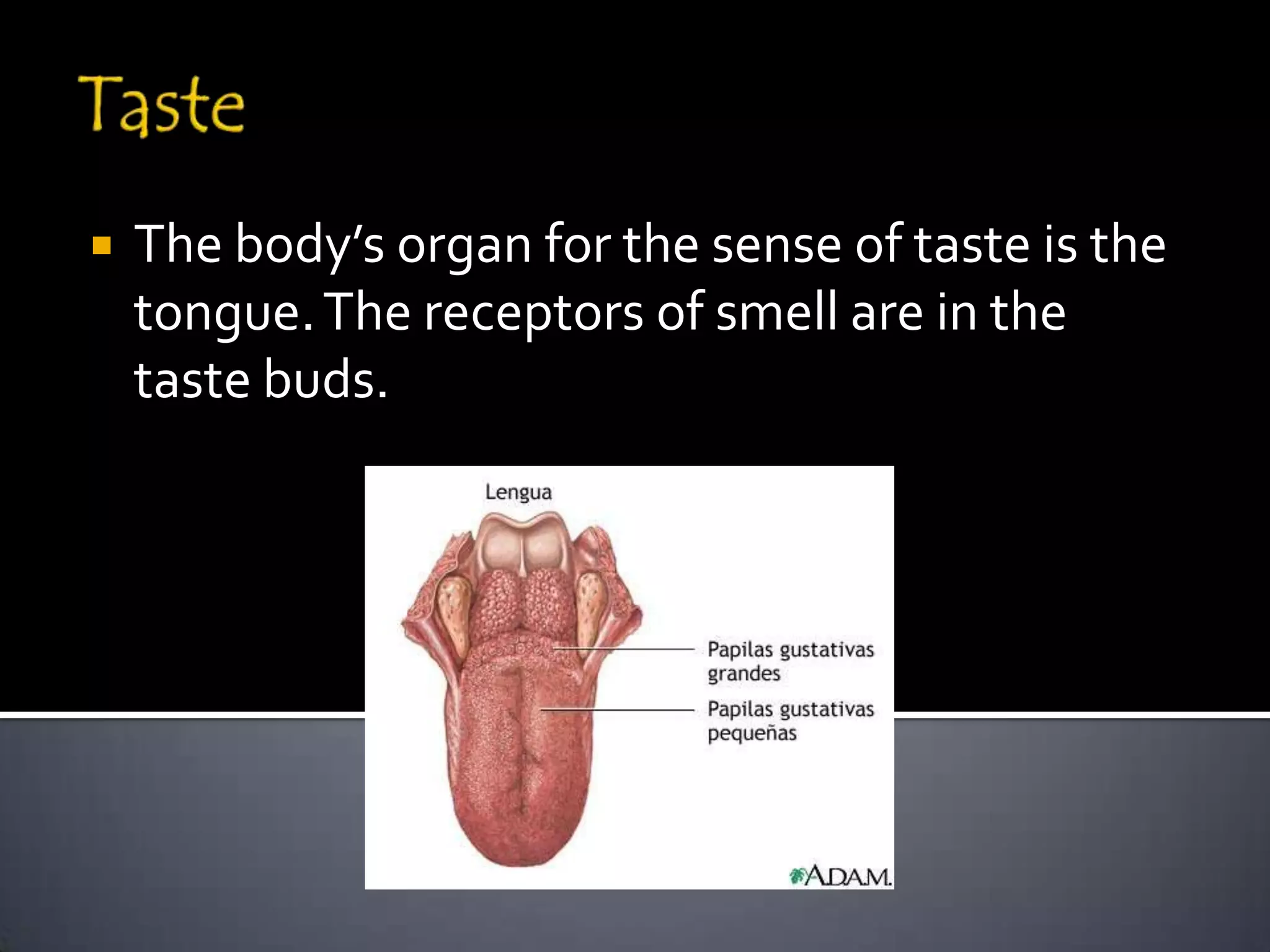
   The body’s organ for the sense of taste is the
    tongue. The receptors of smell are in the
    taste buds.
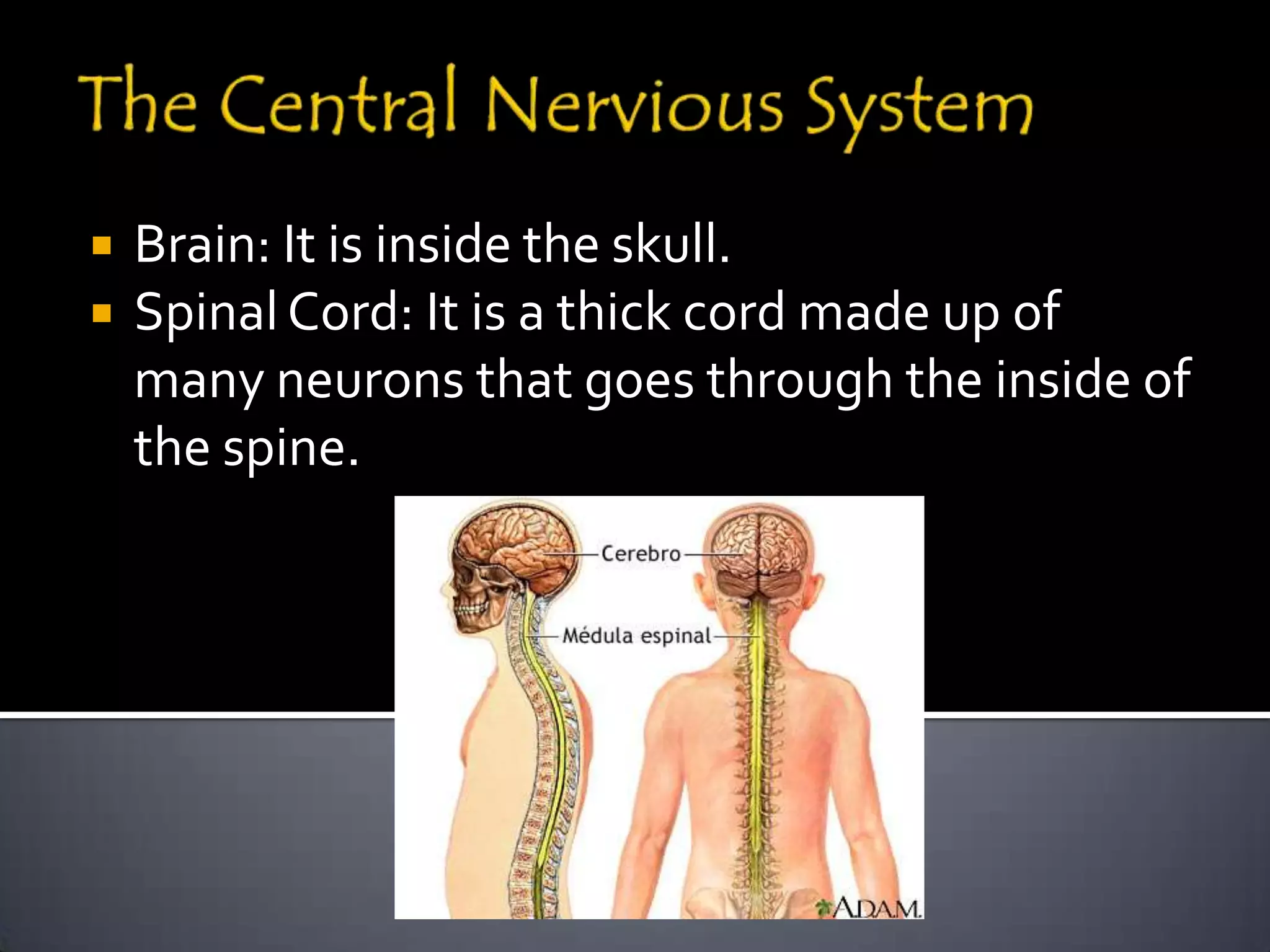
   Brain: It is inside the skull.
   Spinal Cord: It is a thick cord made up of
    many neurons that goes through the inside of
    the spine.
 Sensory nerves: They transmit information from the
  sensory organs and internal organs to the central
  nervous system.
 Motor nerves: They transmit responses from the
  central nervous system to the muscles and glands of
  our bodies.
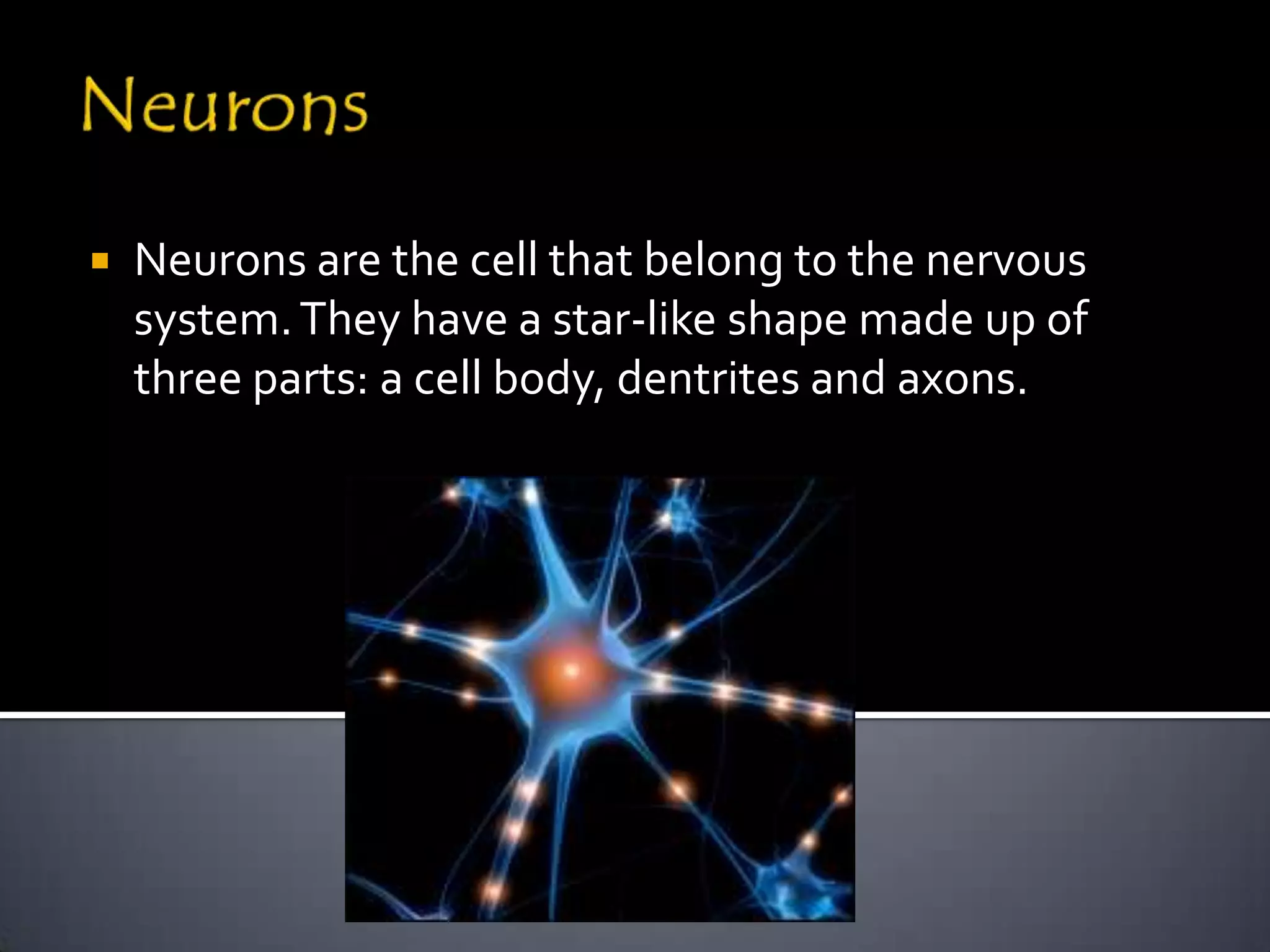
   Neurons are the cell that belong to the nervous
    system. They have a star-like shape made up of
    three parts: a cell body, dentrites and axons.
Sensitivity and Coordination

Sensitivity and Coordination

  • 1.
    Sensitivity and Coordination By Paula Crespo González
  • 2.
    A stimulus is anything that affects any of the body’s activities. There are two types of stimuli:  Internal  External  A response is the body’s answer to a stimulus.
  • 3.
    The body has different receptors to receive different types of stimuli: ▪ Internal Receptors ▪ External Receptors
  • 4.
    The body responds to any stimulus ▪ Muscular responses ▪ Glandular responses
  • 6.
     The organof the sense is the eye. The main part of the eye is the eyeball.  Parts of the eye: Cornea, Pupil, Iris, Lens, Retina and the Optic Nerve.
  • 7.
    The ear is the body’s organ for the sense of hearning. The ear has three parts: ▪ The Outer Ear: It is made up of the ear and outer auditory canal. ▪ The Middle Ear: It is made up of the eardrum and a chain of small bones. ▪ The Inner Ear: It is made up of the cochlea and the auditory nerve.
  • 8.
    The body’s for the sense of touch is the skin  Epidermis: It is the outer layer.  Dermis: It is under the epidermis.  Hypodermis: It is under the dermis.
  • 9.
    The body’s organ of the smell is the nose. The receptor of smell are in the pituitary, a structure inside the nostrils.
  • 10.
    The body’s organ for the sense of taste is the tongue. The receptors of smell are in the taste buds.
  • 12.
    Brain: It is inside the skull.  Spinal Cord: It is a thick cord made up of many neurons that goes through the inside of the spine.
  • 13.
     Sensory nerves:They transmit information from the sensory organs and internal organs to the central nervous system.  Motor nerves: They transmit responses from the central nervous system to the muscles and glands of our bodies.
  • 14.
    Neurons are the cell that belong to the nervous system. They have a star-like shape made up of three parts: a cell body, dentrites and axons.