NATURAL SCIENCE UNIT 1
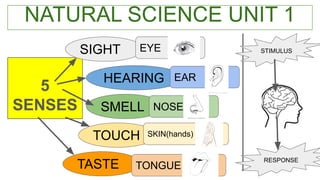
5
SENSES
SIGHT
HEARING
SMELL
TOUCH
TASTE
EYE
SKIN(hands)
TONGUE
NOSE
EAR
STIMULUS
RESPONSE
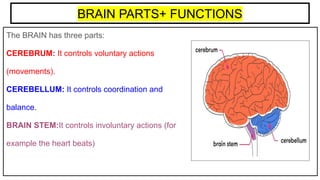
BRAIN PARTS+ FUNCTIONS
The BRAIN has three parts:
CEREBRUM: It controls voluntary actions
(movements).
CEREBELLUM: It controls coordination and
balance.
BRAIN STEM:It controls involuntary actions (for
example the heart beats)
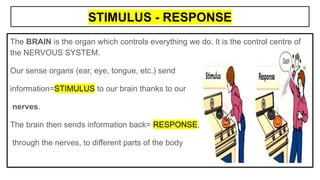
STIMULUS - RESPONSE
The BRAIN is the organ which controls everything we do. It is the control centre of
the NERVOUS SYSTEM.
Our sense organs (ear, eye, tongue, etc.) send
information=STIMULUS to our brain thanks to our
nerves.
The brain then sends information back= RESPONSE,
through the nerves, to different parts of the body
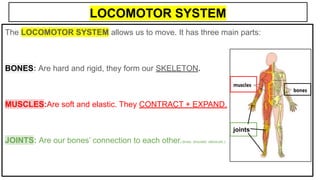
LOCOMOTOR SYSTEM
The LOCOMOTOR SYSTEM allows us to move. It has three main parts:
BONES: Are hard and rigid, they form our SKELETON.
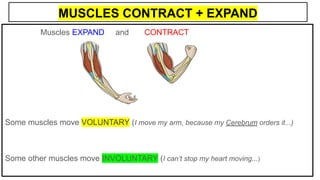
MUSCLES:Are soft and elastic. They CONTRACT + EXPAND.
JOINTS: Are our bones’ connection to each other.(knee, shoulder, elbow,etc.)
joints
MUSCLES CONTRACT + EXPAND
Muscles EXPAND and CONTRACT
Some muscles move VOLUNTARY (I move my arm, because my Cerebrum orders it...)
Some other muscles move INVOLUNTARY (I can’t stop my heart moving...)
HEARING- EAR PARTS+FUNCTIONS
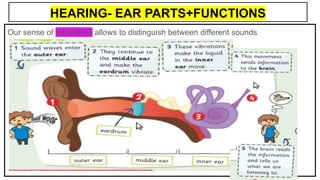
Our sense of HEARING allows to distinguish between different sounds
SENSE OF SIGHT-EYE PARTS
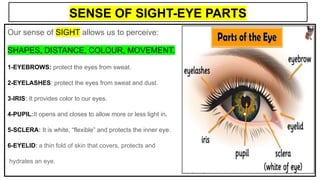
Our sense of SIGHT allows us to perceive:
SHAPES, DISTANCE, COLOUR, MOVEMENT.
1-EYEBROWS: protect the eyes from sweat.
2-EYELASHES: protect the eyes from sweat and dust.
3-IRIS: It provides color to our eyes.
4-PUPIL:It opens and closes to allow more or less light in.
5-SCLERA: It is white, “flexible” and protects the inner eye.
6-EYELID: a thin fold of skin that covers, protects and
hydrates an eye.
SENSE OF SIGHT
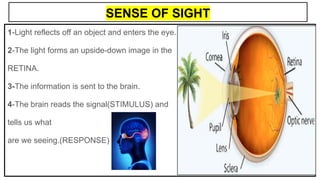
1-Light reflects off an object and enters the eye.
2-The light forms an upside-down image in the
RETINA.
3-The information is sent to the brain.
4-The brain reads the signal(STIMULUS) and
tells us what
are we seeing.(RESPONSE)
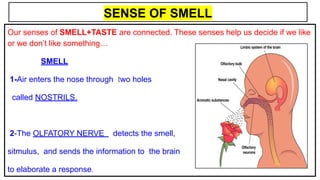
SENSE OF SMELL
Our senses of SMELL+TASTE are connected. These senses help us decide if we like
or we don’t like something…
SMELL
1-Air enters the nose through two holes
called NOSTRILS.
2-The OLFATORY NERVE detects the smell,
sitmulus, and sends the information to the brain
to elaborate a response.
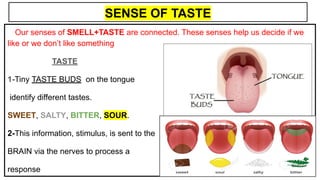
SENSE OF TASTE
Our senses of SMELL+TASTE are connected. These senses help us decide if we
like or we don’t like something
TASTE
1-Tiny TASTE BUDS on the tongue
identify different tastes.
SWEET, SALTY, BITTER, SOUR.
2-This information, stimulus, is sent to the
BRAIN via the nerves to process a
response
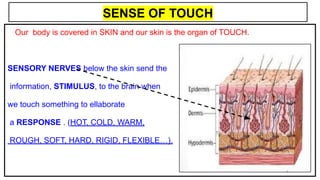
SENSE OF TOUCH
Our body is covered in SKIN and our skin is the organ of TOUCH.
SENSORY NERVES below the skin send the
information, STIMULUS, to the brain when
we touch something to ellaborate
a RESPONSE . (HOT, COLD, WARM,
ROUGH, SOFT, HARD, RIGID, FLEXIBLE…).

Natural science unit 1 (3)

  • 1.
    NATURAL SCIENCE UNIT1 5 SENSES SIGHT HEARING SMELL TOUCH TASTE EYE SKIN(hands) TONGUE NOSE EAR STIMULUS RESPONSE
  • 2.
    BRAIN PARTS+ FUNCTIONS TheBRAIN has three parts: CEREBRUM: It controls voluntary actions (movements). CEREBELLUM: It controls coordination and balance. BRAIN STEM:It controls involuntary actions (for example the heart beats)
  • 3.
    STIMULUS - RESPONSE TheBRAIN is the organ which controls everything we do. It is the control centre of the NERVOUS SYSTEM. Our sense organs (ear, eye, tongue, etc.) send information=STIMULUS to our brain thanks to our nerves. The brain then sends information back= RESPONSE, through the nerves, to different parts of the body
  • 4.
    LOCOMOTOR SYSTEM The LOCOMOTORSYSTEM allows us to move. It has three main parts: BONES: Are hard and rigid, they form our SKELETON. MUSCLES:Are soft and elastic. They CONTRACT + EXPAND. JOINTS: Are our bones’ connection to each other.(knee, shoulder, elbow,etc.) joints
  • 5.
    MUSCLES CONTRACT +EXPAND Muscles EXPAND and CONTRACT Some muscles move VOLUNTARY (I move my arm, because my Cerebrum orders it...) Some other muscles move INVOLUNTARY (I can’t stop my heart moving...)
  • 6.
    HEARING- EAR PARTS+FUNCTIONS Oursense of HEARING allows to distinguish between different sounds
  • 7.
    SENSE OF SIGHT-EYEPARTS Our sense of SIGHT allows us to perceive: SHAPES, DISTANCE, COLOUR, MOVEMENT. 1-EYEBROWS: protect the eyes from sweat. 2-EYELASHES: protect the eyes from sweat and dust. 3-IRIS: It provides color to our eyes. 4-PUPIL:It opens and closes to allow more or less light in. 5-SCLERA: It is white, “flexible” and protects the inner eye. 6-EYELID: a thin fold of skin that covers, protects and hydrates an eye.
  • 8.
    SENSE OF SIGHT 1-Lightreflects off an object and enters the eye. 2-The light forms an upside-down image in the RETINA. 3-The information is sent to the brain. 4-The brain reads the signal(STIMULUS) and tells us what are we seeing.(RESPONSE)
  • 9.
    SENSE OF SMELL Oursenses of SMELL+TASTE are connected. These senses help us decide if we like or we don’t like something… SMELL 1-Air enters the nose through two holes called NOSTRILS. 2-The OLFATORY NERVE detects the smell, sitmulus, and sends the information to the brain to elaborate a response.
  • 10.
    SENSE OF TASTE Oursenses of SMELL+TASTE are connected. These senses help us decide if we like or we don’t like something TASTE 1-Tiny TASTE BUDS on the tongue identify different tastes. SWEET, SALTY, BITTER, SOUR. 2-This information, stimulus, is sent to the BRAIN via the nerves to process a response
  • 11.
    SENSE OF TOUCH Ourbody is covered in SKIN and our skin is the organ of TOUCH. SENSORY NERVES below the skin send the information, STIMULUS, to the brain when we touch something to ellaborate a RESPONSE . (HOT, COLD, WARM, ROUGH, SOFT, HARD, RIGID, FLEXIBLE…).