INTERACTION AND THE BODY
Alberto Serna Ramírez
5º de Primaria
Tema 2
THE FIVE SENSES
SIGHT:
Light enters through the cornea and the pupil. The iris is a muscle that makes pupil
bigger or smaller. The lens focuses the light allows images to be projected. Nerve
receptors in the retina sent the information along the optic nerve to our brain. Blind
spot doesn `t respond to light.
HEARING:
Sound enter through the auditory canal and eardrum vibrate. The three small bones are
in the middle ear to vibrate. The cochlea transformed vibrations to electrical signals.
The auditory nerve sends these signals to our brain. Semicircular is to keep our
balance and equilibrium.
SMELL:
Our sense of smell detects chemicals in the air through the nostrils, these chemical
contact with nerve receptors. Nerve receptors send the information along the
olfactory nerve to our brain.
TASTE:
Taste are on the tongue inside each taste bud. The receptors detect different tastes (
sour, salty, bitter and sweet).
TOUCH:
Dermis, contains nerves and tiny blood vessels. These nerves detect sensations,
temperature pain and texture.
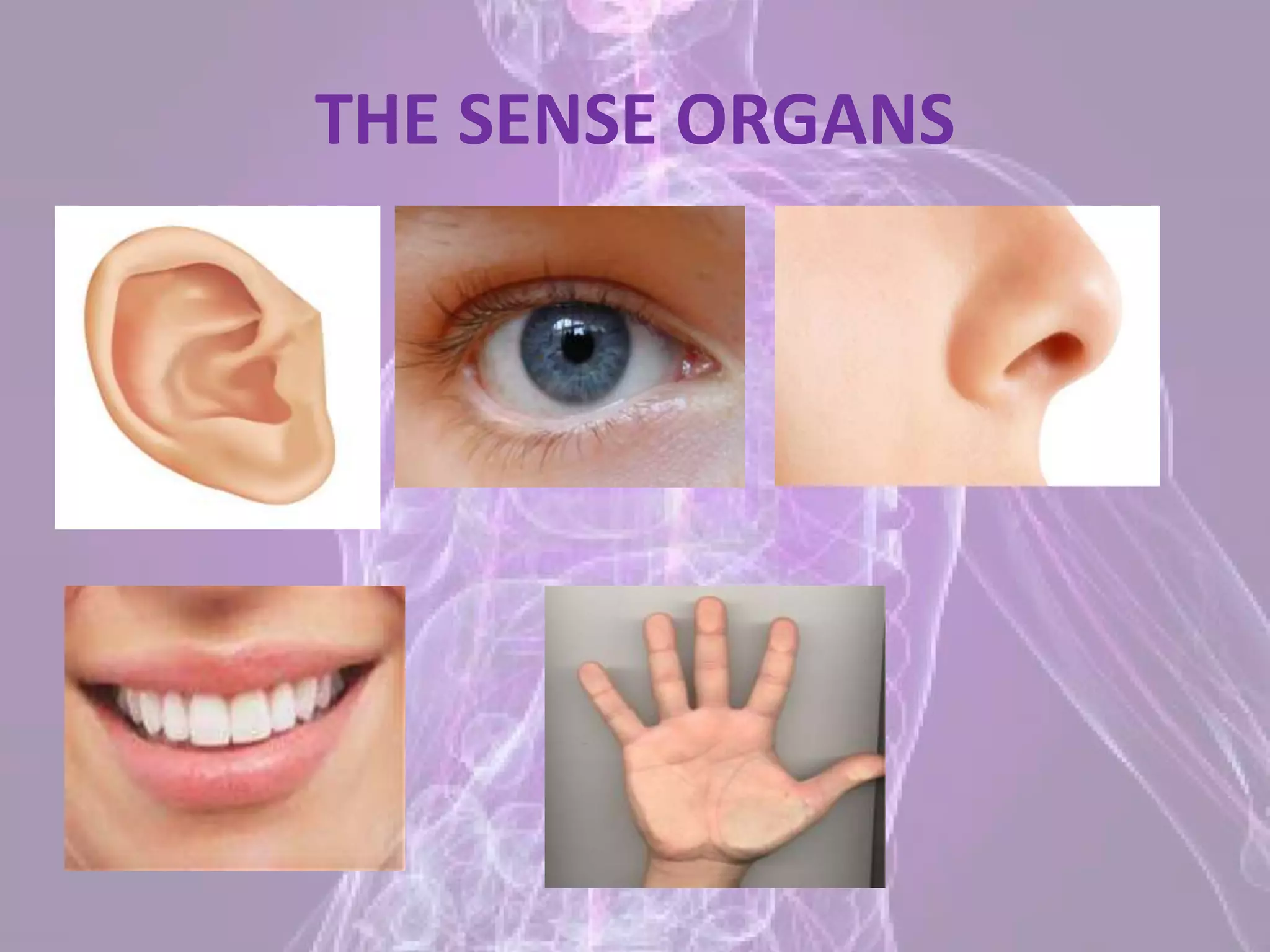
THE SENSE ORGANS
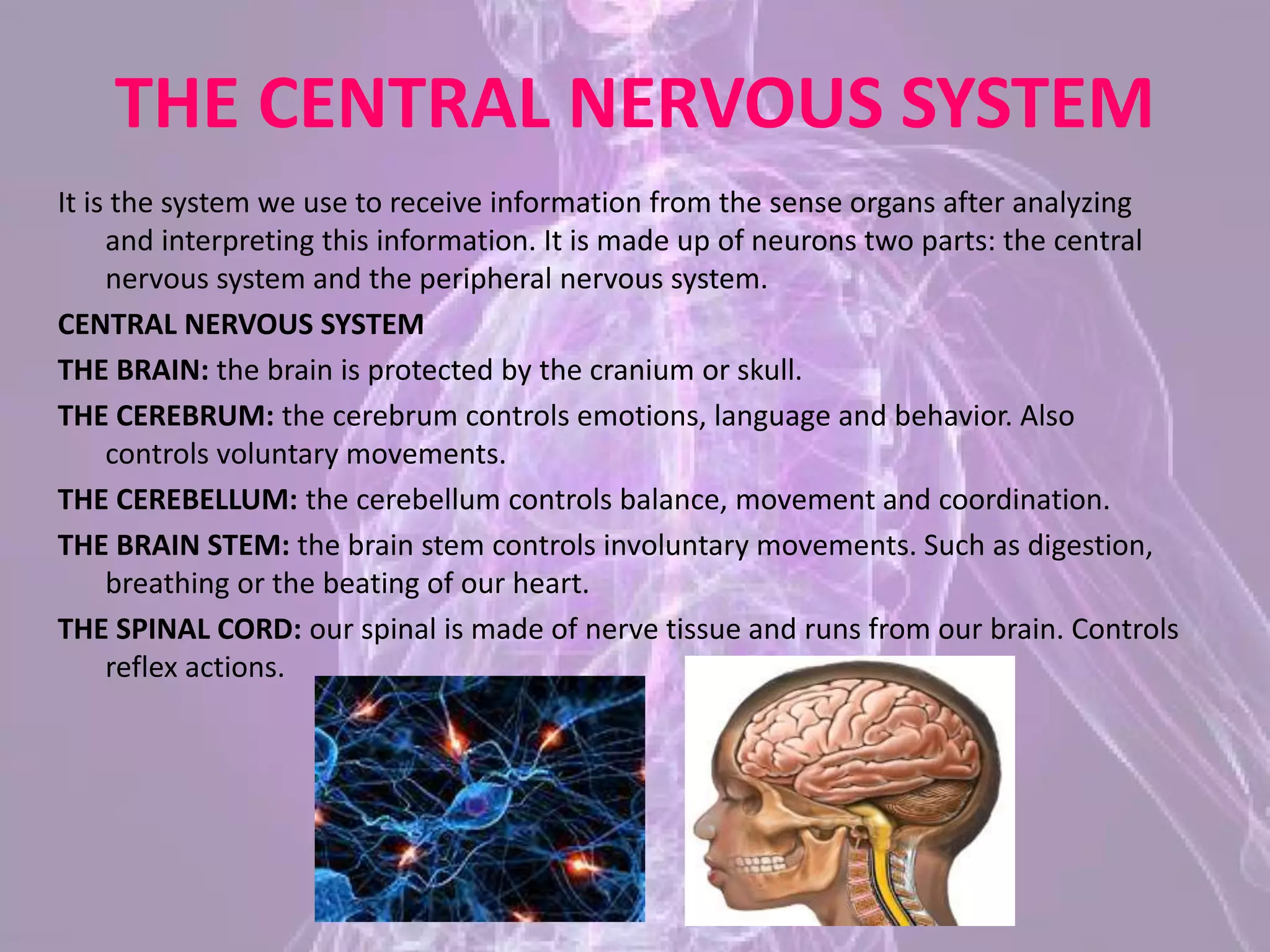
THE CENTRAL NERVOUS SYSTEM
It is the system we use to receive information from the sense organs after analyzing
and interpreting this information. It is made up of neurons two parts: the central
nervous system and the peripheral nervous system.
CENTRAL NERVOUS SYSTEM
THE BRAIN: the brain is protected by the cranium or skull.
THE CEREBRUM: the cerebrum controls emotions, language and behavior. Also
controls voluntary movements.
THE CEREBELLUM: the cerebellum controls balance, movement and coordination.
THE BRAIN STEM: the brain stem controls involuntary movements. Such as digestion,
breathing or the beating of our heart.
THE SPINAL CORD: our spinal is made of nerve tissue and runs from our brain. Controls
reflex actions.
PERIPHERAL NERVOUS SYSTEM
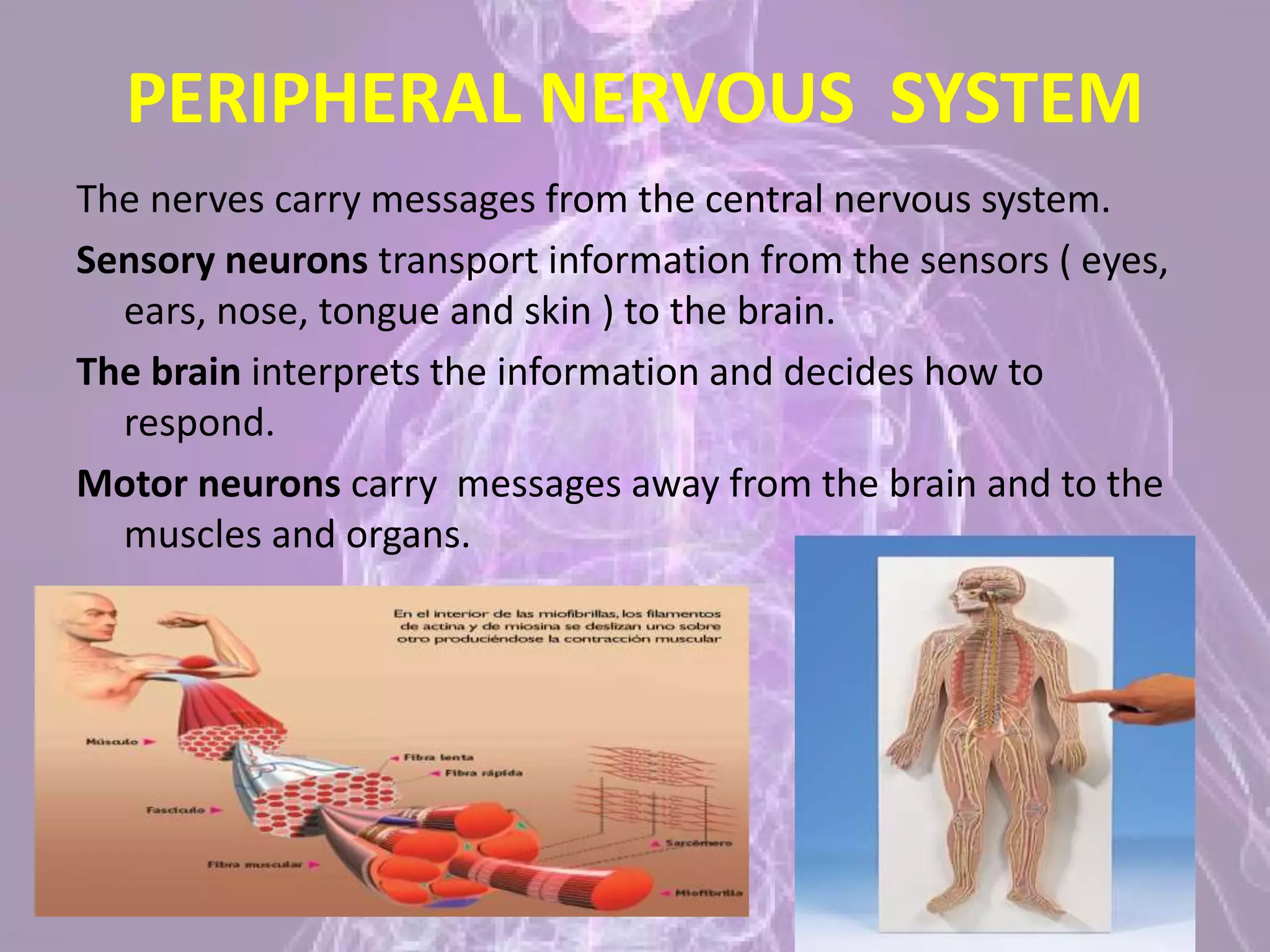
The nerves carry messages from the central nervous system.
Sensory neurons transport information from the sensors ( eyes,
ears, nose, tongue and skin ) to the brain.
The brain interprets the information and decides how to
respond.
Motor neurons carry messages away from the brain and to the
muscles and organs.
SKELETON, JOINTS AND MUSCLES
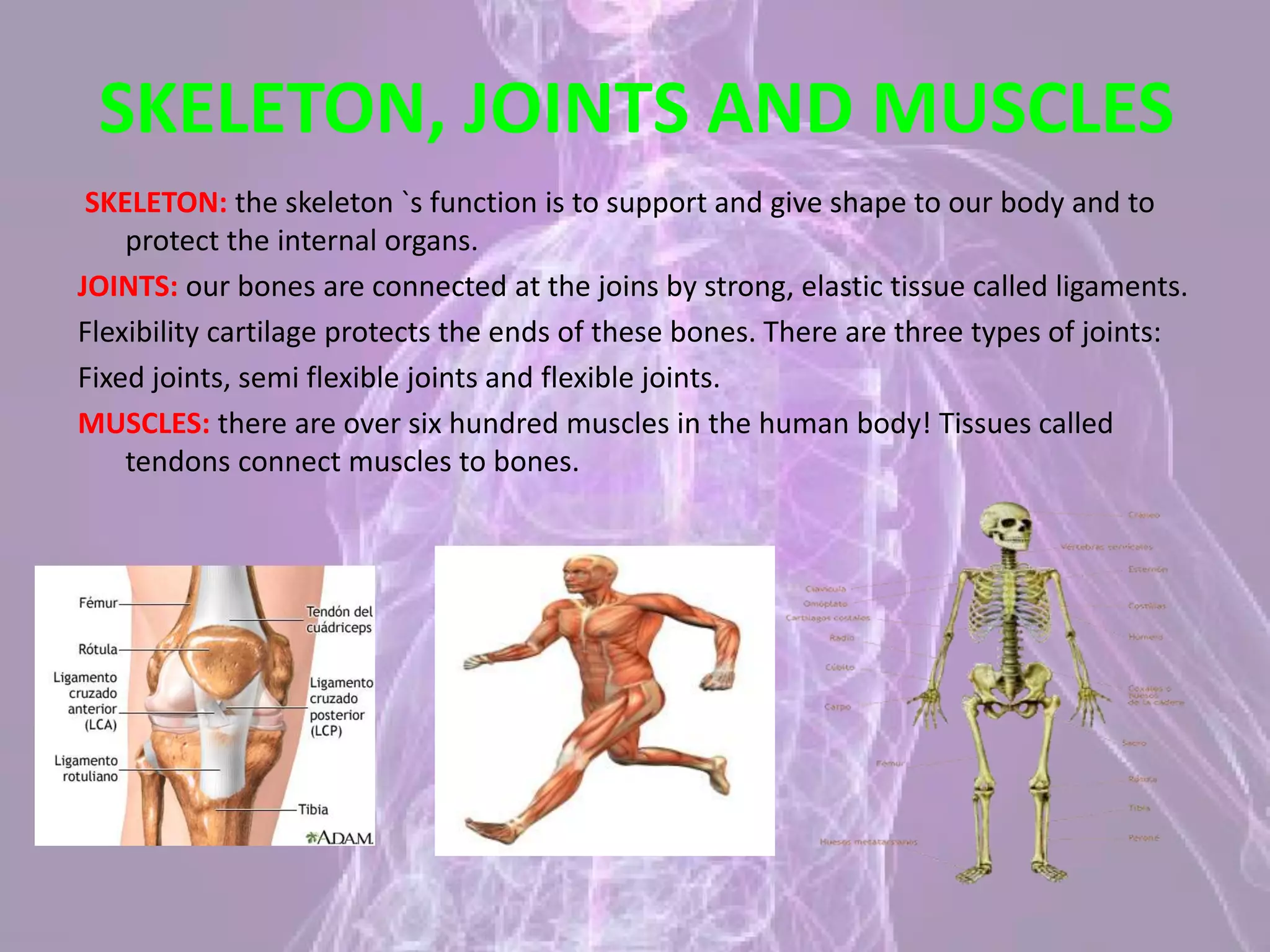
SKELETON: the skeleton `s function is to support and give shape to our body and to
protect the internal organs.
JOINTS: our bones are connected at the joins by strong, elastic tissue called ligaments.
Flexibility cartilage protects the ends of these bones. There are three types of joints:
Fixed joints, semi flexible joints and flexible joints.
MUSCLES: there are over six hundred muscles in the human body! Tissues called
tendons connect muscles to bones.

Unit 2 interaction and the body

  • 1.
    INTERACTION AND THEBODY Alberto Serna Ramírez 5º de Primaria Tema 2
  • 2.
    THE FIVE SENSES SIGHT: Lightenters through the cornea and the pupil. The iris is a muscle that makes pupil bigger or smaller. The lens focuses the light allows images to be projected. Nerve receptors in the retina sent the information along the optic nerve to our brain. Blind spot doesn `t respond to light. HEARING: Sound enter through the auditory canal and eardrum vibrate. The three small bones are in the middle ear to vibrate. The cochlea transformed vibrations to electrical signals. The auditory nerve sends these signals to our brain. Semicircular is to keep our balance and equilibrium. SMELL: Our sense of smell detects chemicals in the air through the nostrils, these chemical contact with nerve receptors. Nerve receptors send the information along the olfactory nerve to our brain. TASTE: Taste are on the tongue inside each taste bud. The receptors detect different tastes ( sour, salty, bitter and sweet). TOUCH: Dermis, contains nerves and tiny blood vessels. These nerves detect sensations, temperature pain and texture.
  • 3.
  • 4.
    THE CENTRAL NERVOUSSYSTEM It is the system we use to receive information from the sense organs after analyzing and interpreting this information. It is made up of neurons two parts: the central nervous system and the peripheral nervous system. CENTRAL NERVOUS SYSTEM THE BRAIN: the brain is protected by the cranium or skull. THE CEREBRUM: the cerebrum controls emotions, language and behavior. Also controls voluntary movements. THE CEREBELLUM: the cerebellum controls balance, movement and coordination. THE BRAIN STEM: the brain stem controls involuntary movements. Such as digestion, breathing or the beating of our heart. THE SPINAL CORD: our spinal is made of nerve tissue and runs from our brain. Controls reflex actions.
  • 5.
    PERIPHERAL NERVOUS SYSTEM Thenerves carry messages from the central nervous system. Sensory neurons transport information from the sensors ( eyes, ears, nose, tongue and skin ) to the brain. The brain interprets the information and decides how to respond. Motor neurons carry messages away from the brain and to the muscles and organs.
  • 6.
    SKELETON, JOINTS ANDMUSCLES SKELETON: the skeleton `s function is to support and give shape to our body and to protect the internal organs. JOINTS: our bones are connected at the joins by strong, elastic tissue called ligaments. Flexibility cartilage protects the ends of these bones. There are three types of joints: Fixed joints, semi flexible joints and flexible joints. MUSCLES: there are over six hundred muscles in the human body! Tissues called tendons connect muscles to bones.