* The Central Nervous System controls all of the body’s
activities.
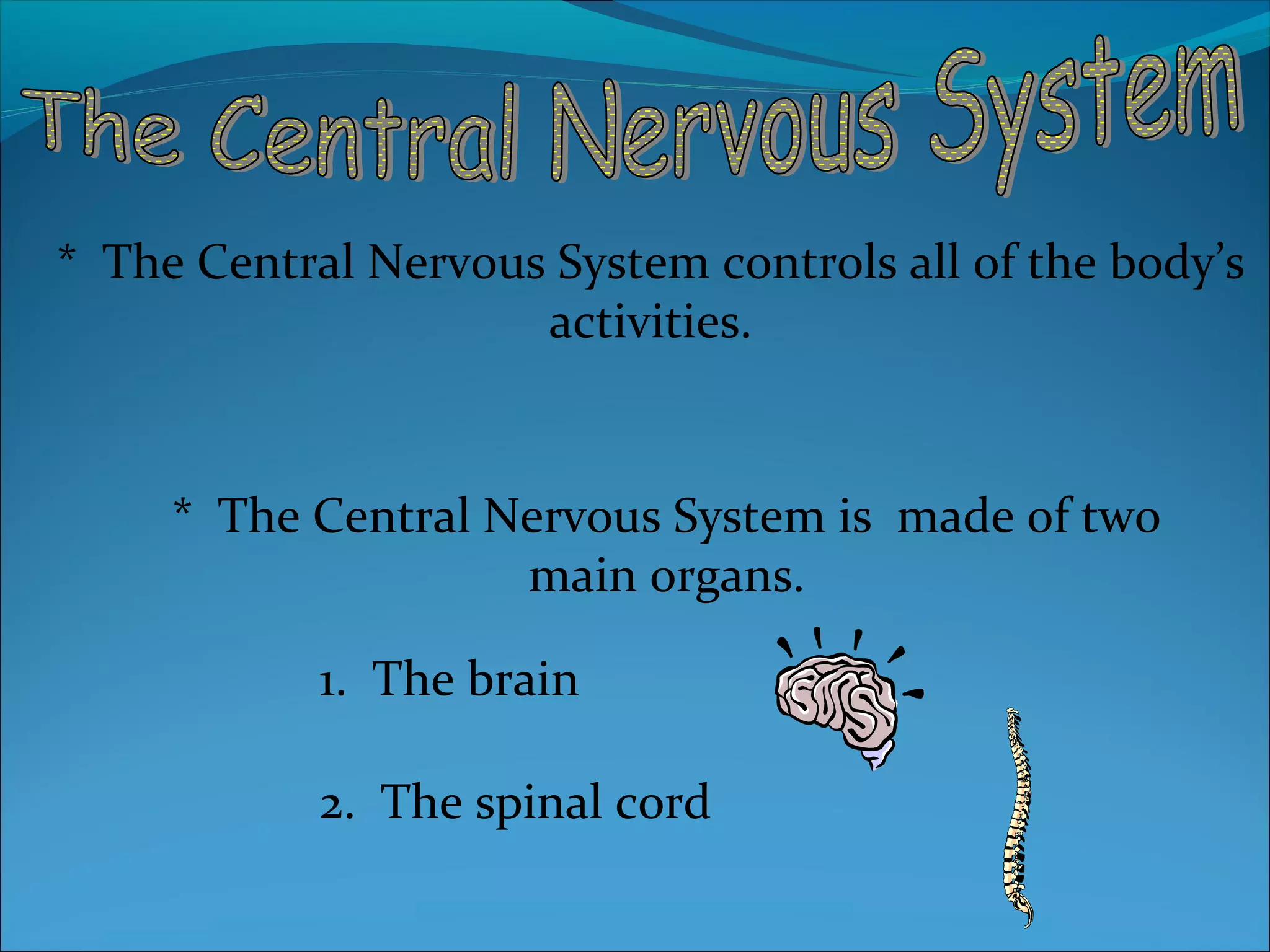
* The Central Nervous System is made of two
main organs.
1. The brain
2. The spinal cord
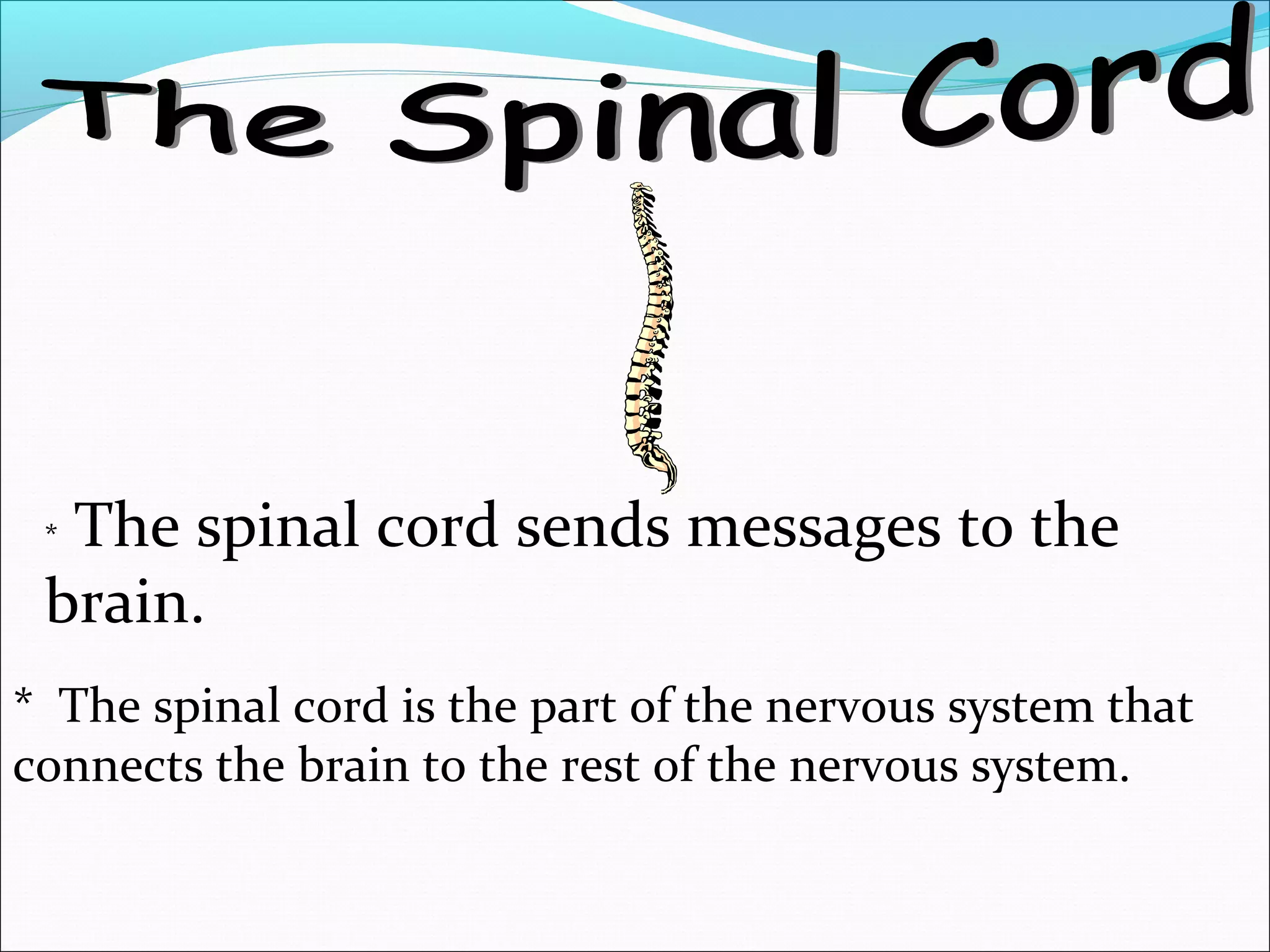
* The spinal cord sends messages to the
brain.
* The spinal cord is the part of the nervous system that
connects the brain to the rest of the nervous system.
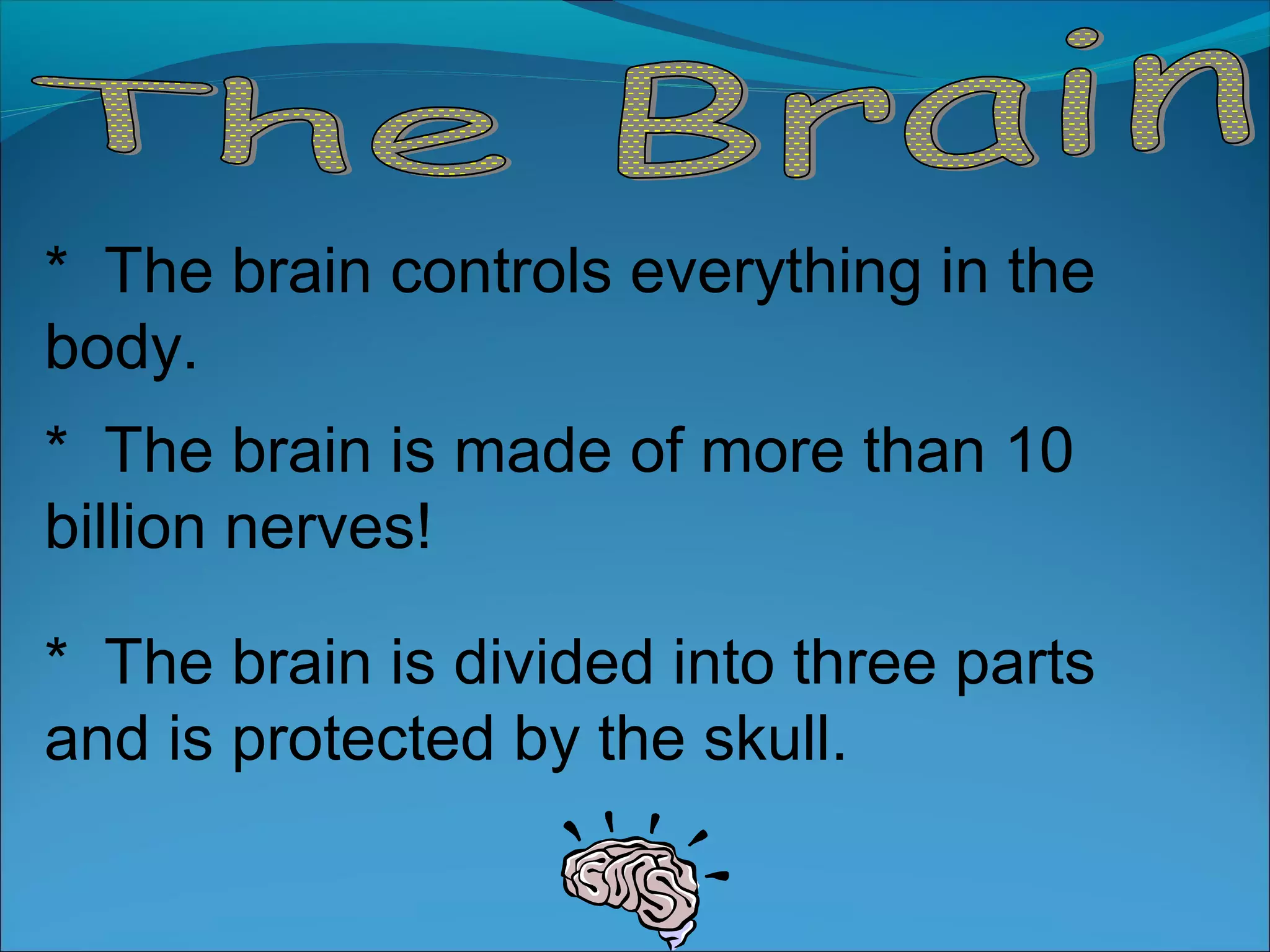
* The brain controls everything in the
body.
* The brain is made of more than 10
billion nerves!
* The brain is divided into three parts
and is protected by the skull.
Do you know how much heavy
the brain is?
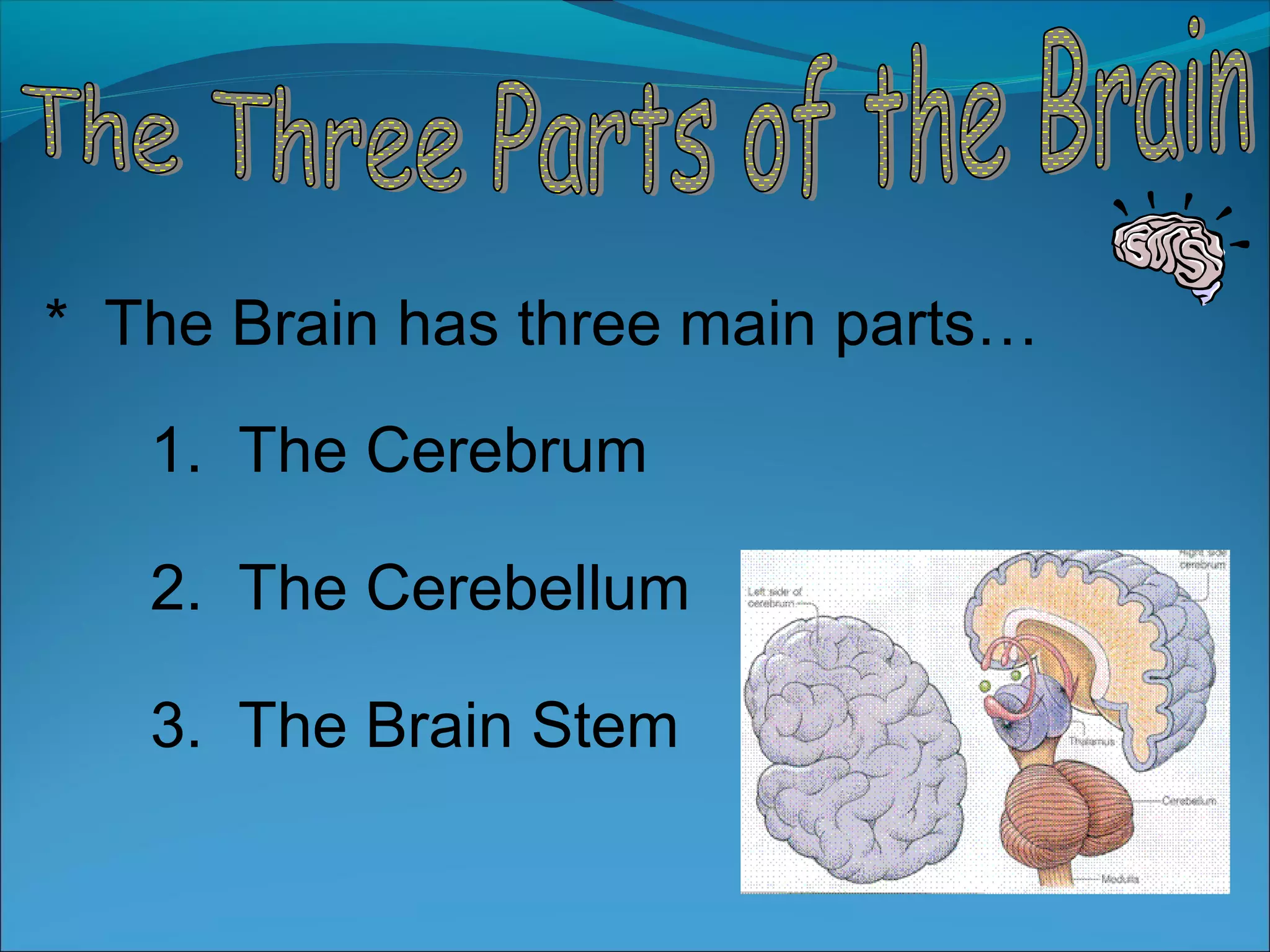
* The Brain has three main parts…
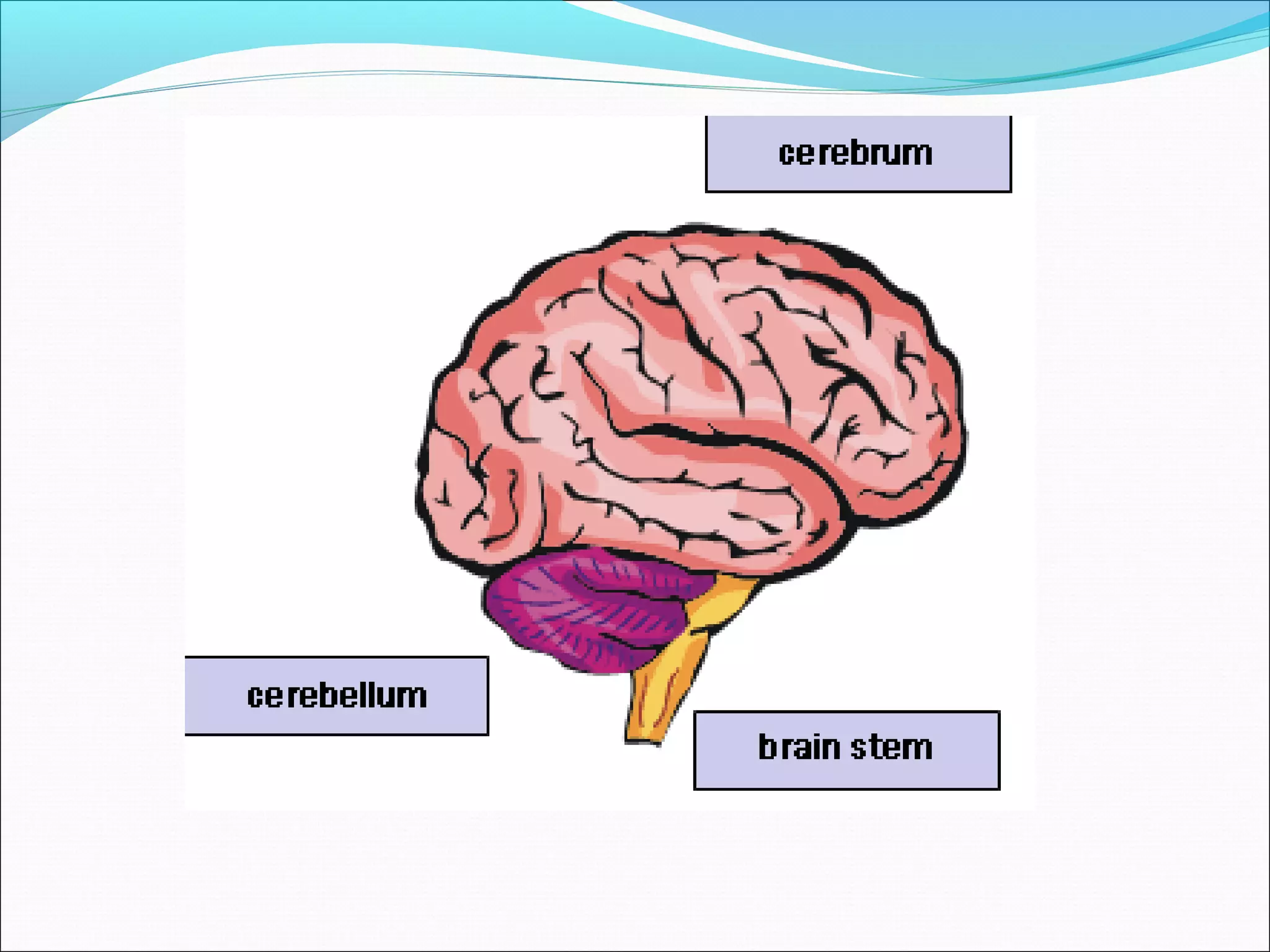
1. The Cerebrum
2. The Cerebellum
3. The Brain Stem
* The Cerebrum is the largest part of the brain.
1. The cerebrum controls your thinking.
2. The cerebrum controls your memory.
3. The cerebrum controls your speaking.
4. The cerebrum controls your movement
and identifies the information gathered by
your sense organs.
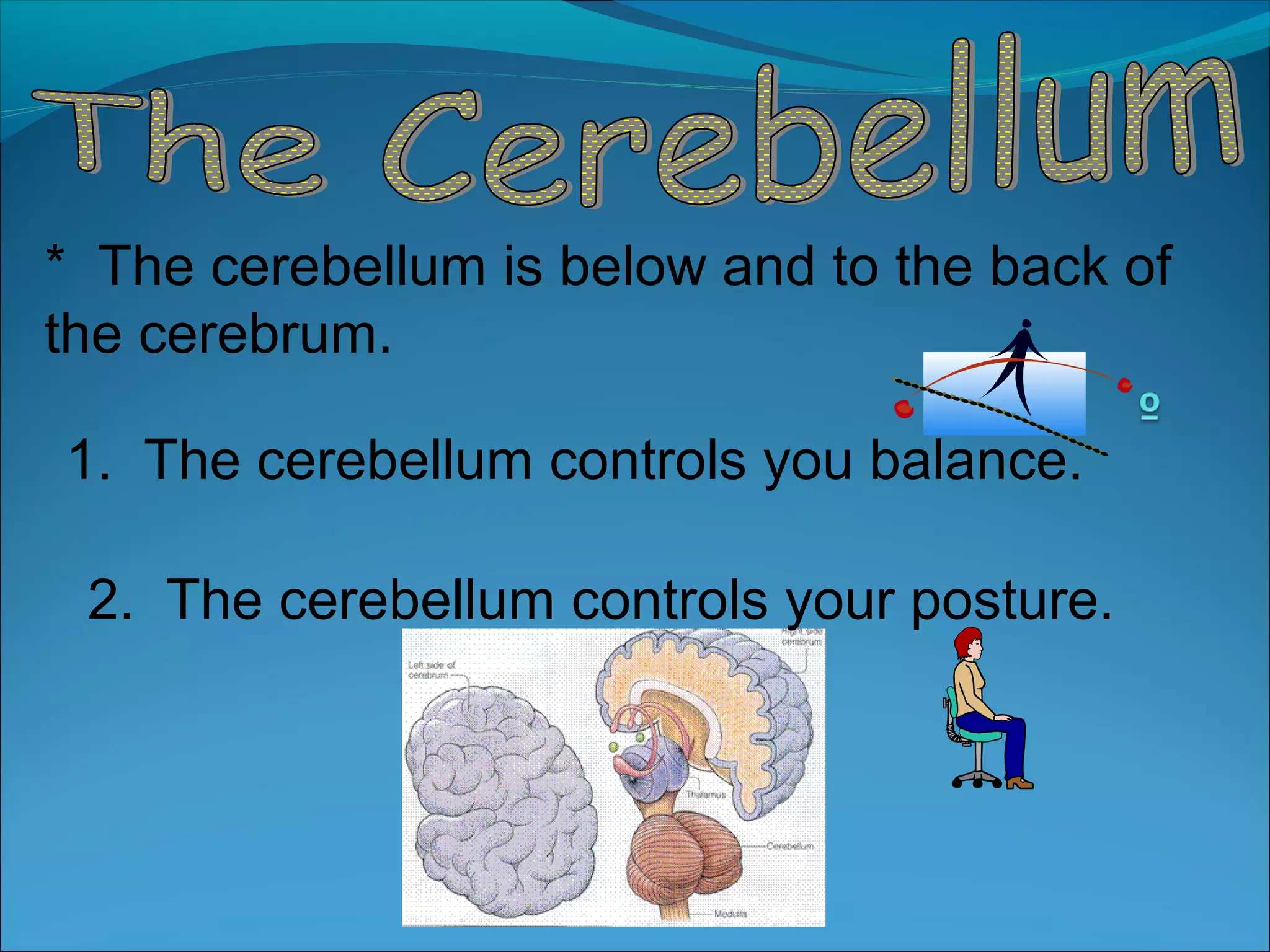
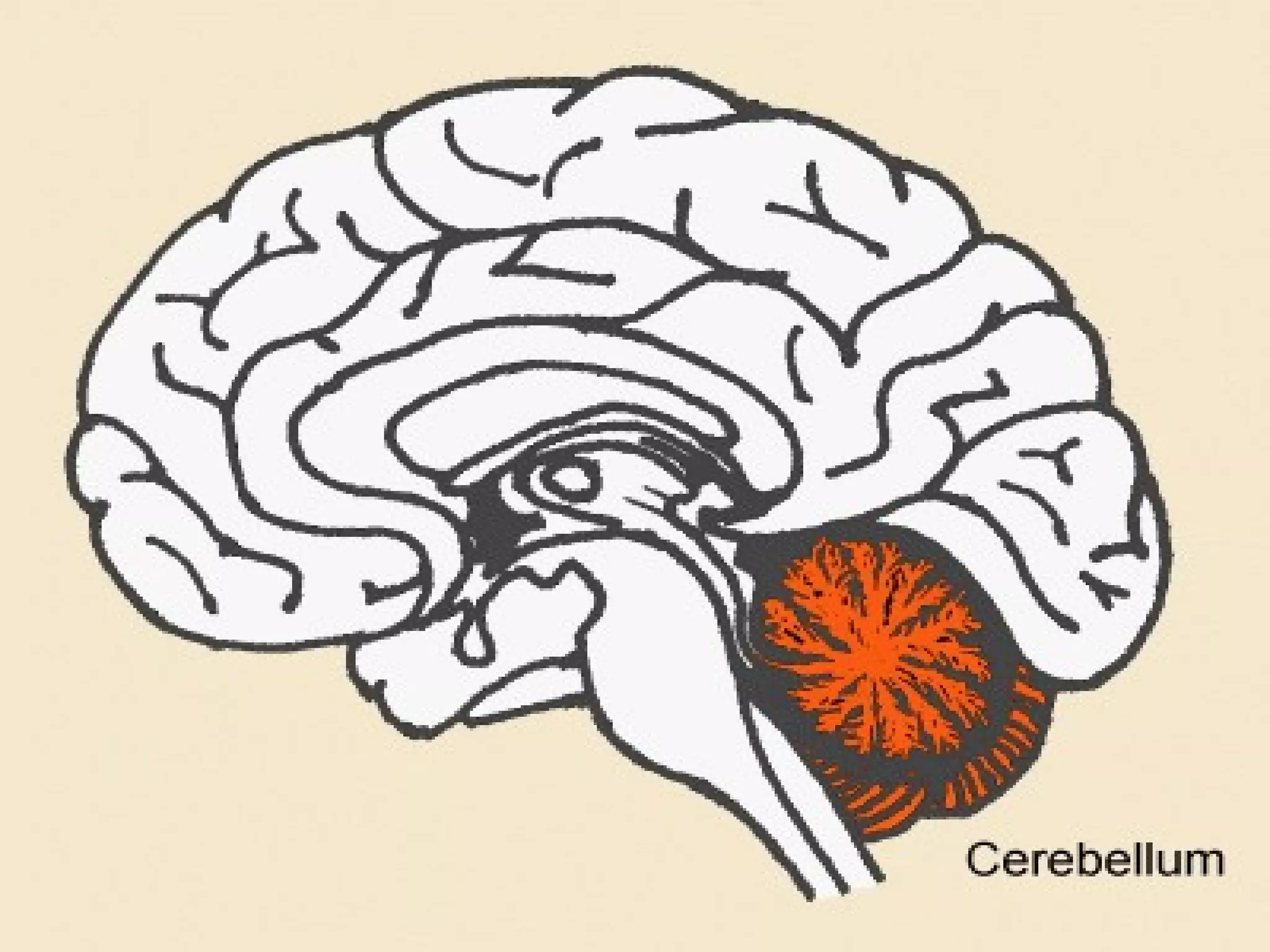
* The cerebellum is below and to the back of
the cerebrum.
1. The cerebellum controls you balance.
2. The cerebellum controls your posture.
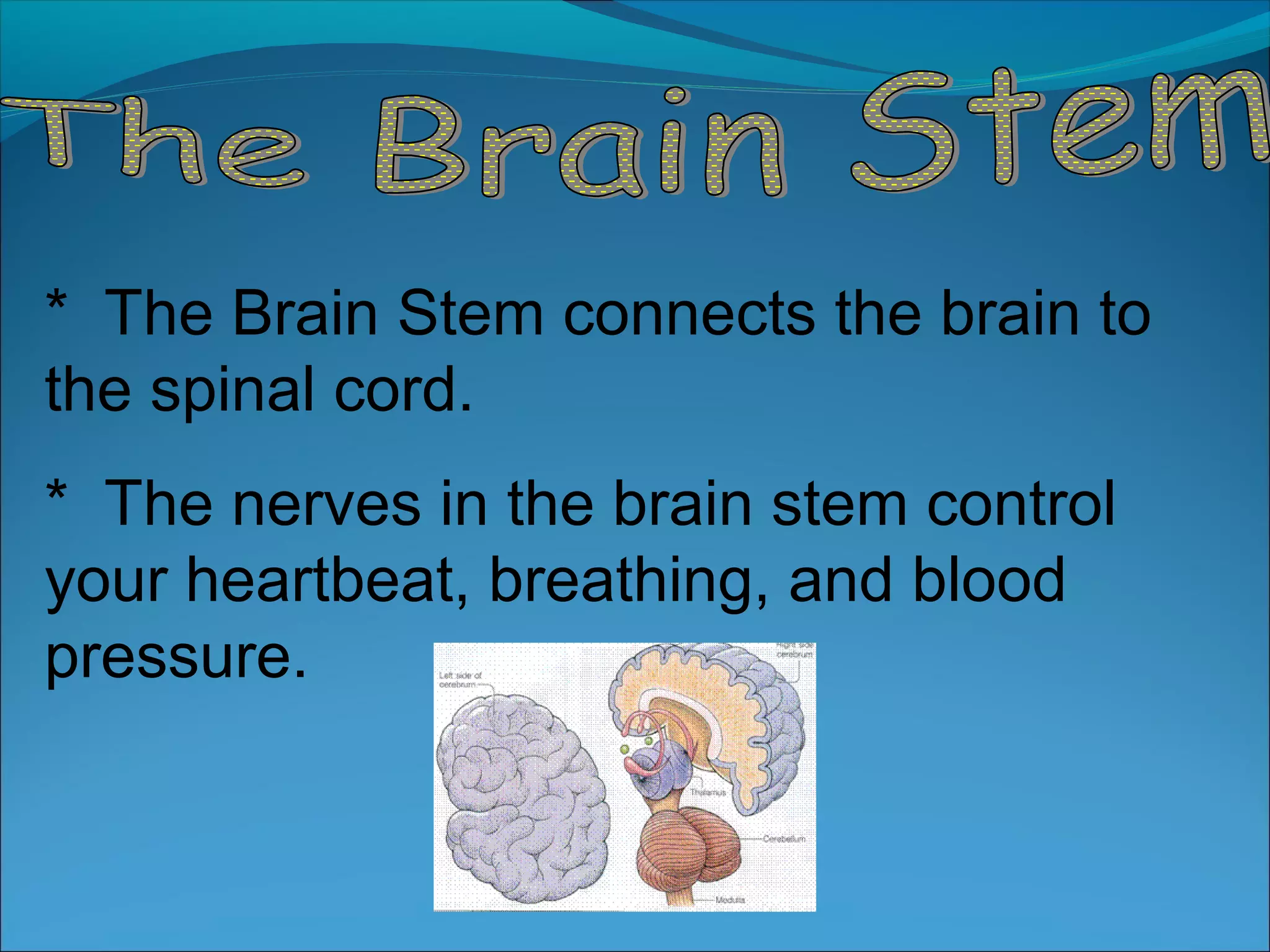
* The Brain Stem connects the brain to
the spinal cord.
* The nerves in the brain stem control
your heartbeat, breathing, and blood
pressure.
* The vertebrae are the many bones
that protect the nerves in the spinal
cord.
* The Outer Nervous System’s job is
to connect the Central Nervous
System to the rest of the body.
* The outer nervous system carries
messages between the central nervous
system and the rest of the body.
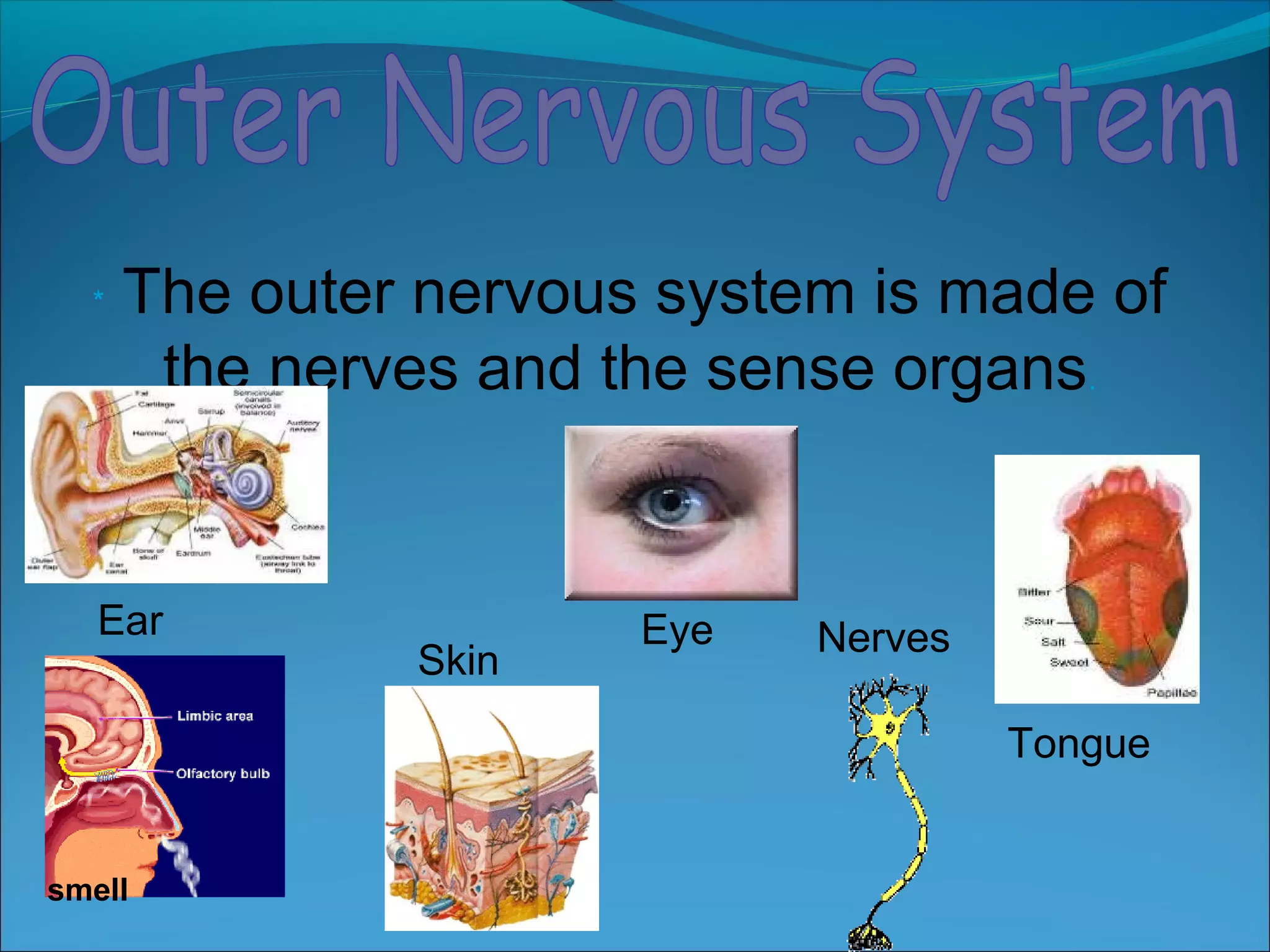
* The outer nervous system is made of
the nerves and the sense organs.
Ear Eye
Skin
Nerves
Tongue
smell
* An automatic reaction that happens
without thinking about it.
* A reflex happens quickly in
less than a second.
* The outer nervous system controls
the body’s activities that you don’t
think about.
* The outer nervous system controls
activities in your small intestine, your
breathing, and your heartbeat.
controls
Sense organs
carry messages
about the
environment to
the central
nervous system.
The environment is everything
outside the body.
The sense organs gather
information from outside the body,
then send the messages to the
brain.
How eyes work
First light enters the eye through the cornea, and
passes through the pupil.
The iris controls the amount of light.
The light goes through the lens, which the image is
sharp.
The retina receives the light, and sends the
information through the optic nerve to the brain.
The brain create the images we see.
When a sound is made, the air
around the sound vibrates.
Hearing starts when some of the
sound waves go into the ear.
How ears work
Sound enters our body through the outer ear, travels
down the ear canal to the ear drum, and makes it
vibrate.
The way the ear drum moves depends on the type of
sound that receives.
This ear drum movement is transmitied to the small
bones of the ear (the hammer, the anvil, and the
stirrup), and reaches the cochlea.
The information collected by the cochlea travels to
the brain through the auditory nerve.
The brain interprets the nerve impulses as sound.
Do you know what the ear
controls??
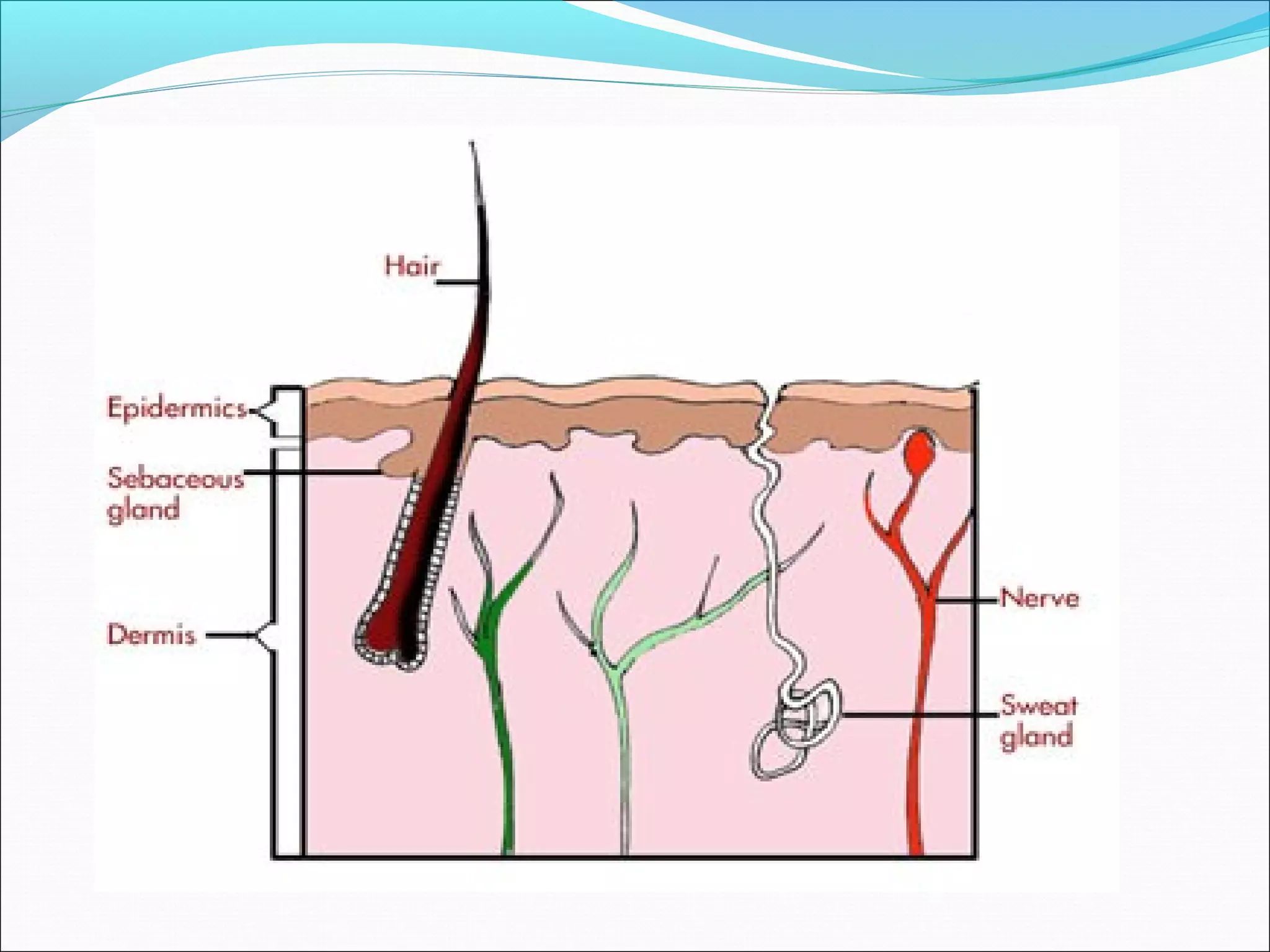
The sense of touch is located in the skin.
The nerves in the skin allow us to feel
texture, pressure, heat, cold, and pain.
Texture is how something feels.
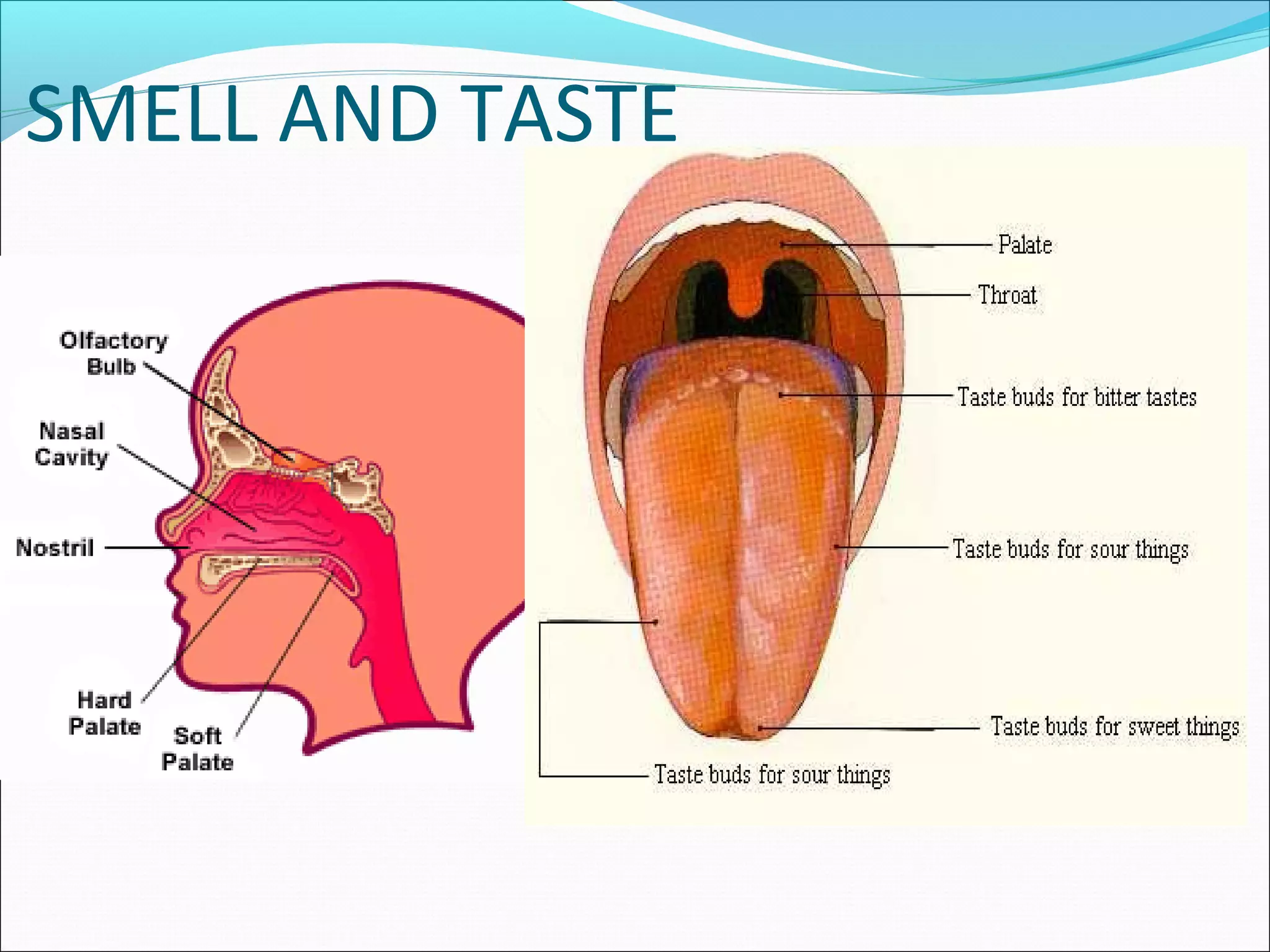
SMELL AND TASTE
HOW SMELL AND TASTE WORK.
Smell goes through nostril to nasal cavities and reach
the olfatory bulb with contains the cells that detect
semlls.
When we eat food takes contact with the taste buds
on our tongue and palate.
Do you know…?
You have a nerve along your whole arm.
The “funny bone” is the only place on the arm
where the nerve is not protected.
The “funny bone” is on the elbow.
http://kidshealth.org/kid/talk/qa/funny_bone.html
Do you know how we can keep
all our sense organs clean and
healthy?
Do you know how we can take
care our brain?
What are the main subsystems
of the nervous system?
What are the parts of the central
nervous system?
And the outer nervous system?
What are the main parts of the brain?
Cerebrum. The cerebrum is the largest part of the
brain and makes up 85% of the brain’s weight.
Water. The brain is made up of about 75% water.
No pain. There are no pain receptors in the brain, so
the brain can feel no pain.
Stopped growing. Your brain stopped growing at
age 18.
New neurons. Humans continue to make new
neurons throughout life in response to mental
activity.
Sleep. While you sleep at night may be the best time
for your brain to consolidate all your memories from
the day.

Nervous system

  • 2.
    * The CentralNervous System controls all of the body’s activities. * The Central Nervous System is made of two main organs. 1. The brain 2. The spinal cord
  • 3.
    * The spinalcord sends messages to the brain. * The spinal cord is the part of the nervous system that connects the brain to the rest of the nervous system.
  • 4.
    * The braincontrols everything in the body. * The brain is made of more than 10 billion nerves! * The brain is divided into three parts and is protected by the skull.
  • 5.
    Do you knowhow much heavy the brain is?
  • 6.
    * The Brainhas three main parts… 1. The Cerebrum 2. The Cerebellum 3. The Brain Stem
  • 8.
    * The Cerebrumis the largest part of the brain. 1. The cerebrum controls your thinking. 2. The cerebrum controls your memory. 3. The cerebrum controls your speaking. 4. The cerebrum controls your movement and identifies the information gathered by your sense organs.
  • 9.
    * The cerebellumis below and to the back of the cerebrum. 1. The cerebellum controls you balance. 2. The cerebellum controls your posture.
  • 11.
    * The BrainStem connects the brain to the spinal cord. * The nerves in the brain stem control your heartbeat, breathing, and blood pressure.
  • 12.
    * The vertebraeare the many bones that protect the nerves in the spinal cord.
  • 14.
    * The OuterNervous System’s job is to connect the Central Nervous System to the rest of the body. * The outer nervous system carries messages between the central nervous system and the rest of the body.
  • 15.
    * The outernervous system is made of the nerves and the sense organs. Ear Eye Skin Nerves Tongue smell
  • 16.
    * An automaticreaction that happens without thinking about it. * A reflex happens quickly in less than a second.
  • 17.
    * The outernervous system controls the body’s activities that you don’t think about. * The outer nervous system controls activities in your small intestine, your breathing, and your heartbeat. controls
  • 18.
    Sense organs carry messages aboutthe environment to the central nervous system.
  • 19.
    The environment iseverything outside the body. The sense organs gather information from outside the body, then send the messages to the brain.
  • 21.
    How eyes work Firstlight enters the eye through the cornea, and passes through the pupil. The iris controls the amount of light. The light goes through the lens, which the image is sharp. The retina receives the light, and sends the information through the optic nerve to the brain. The brain create the images we see.
  • 22.
    When a soundis made, the air around the sound vibrates. Hearing starts when some of the sound waves go into the ear.
  • 24.
    How ears work Soundenters our body through the outer ear, travels down the ear canal to the ear drum, and makes it vibrate. The way the ear drum moves depends on the type of sound that receives. This ear drum movement is transmitied to the small bones of the ear (the hammer, the anvil, and the stirrup), and reaches the cochlea. The information collected by the cochlea travels to the brain through the auditory nerve. The brain interprets the nerve impulses as sound.
  • 25.
    Do you knowwhat the ear controls??
  • 26.
    The sense oftouch is located in the skin. The nerves in the skin allow us to feel texture, pressure, heat, cold, and pain. Texture is how something feels.
  • 28.
  • 29.
    HOW SMELL ANDTASTE WORK. Smell goes through nostril to nasal cavities and reach the olfatory bulb with contains the cells that detect semlls. When we eat food takes contact with the taste buds on our tongue and palate.
  • 30.
    Do you know…? Youhave a nerve along your whole arm. The “funny bone” is the only place on the arm where the nerve is not protected. The “funny bone” is on the elbow. http://kidshealth.org/kid/talk/qa/funny_bone.html
  • 32.
    Do you knowhow we can keep all our sense organs clean and healthy?
  • 33.
    Do you knowhow we can take care our brain?
  • 34.
    What are themain subsystems of the nervous system?
  • 35.
    What are theparts of the central nervous system? And the outer nervous system? What are the main parts of the brain?
  • 37.
    Cerebrum. The cerebrumis the largest part of the brain and makes up 85% of the brain’s weight. Water. The brain is made up of about 75% water. No pain. There are no pain receptors in the brain, so the brain can feel no pain. Stopped growing. Your brain stopped growing at age 18. New neurons. Humans continue to make new neurons throughout life in response to mental activity. Sleep. While you sleep at night may be the best time for your brain to consolidate all your memories from the day.