Unit 18Transmutation, Fission, and Fusion
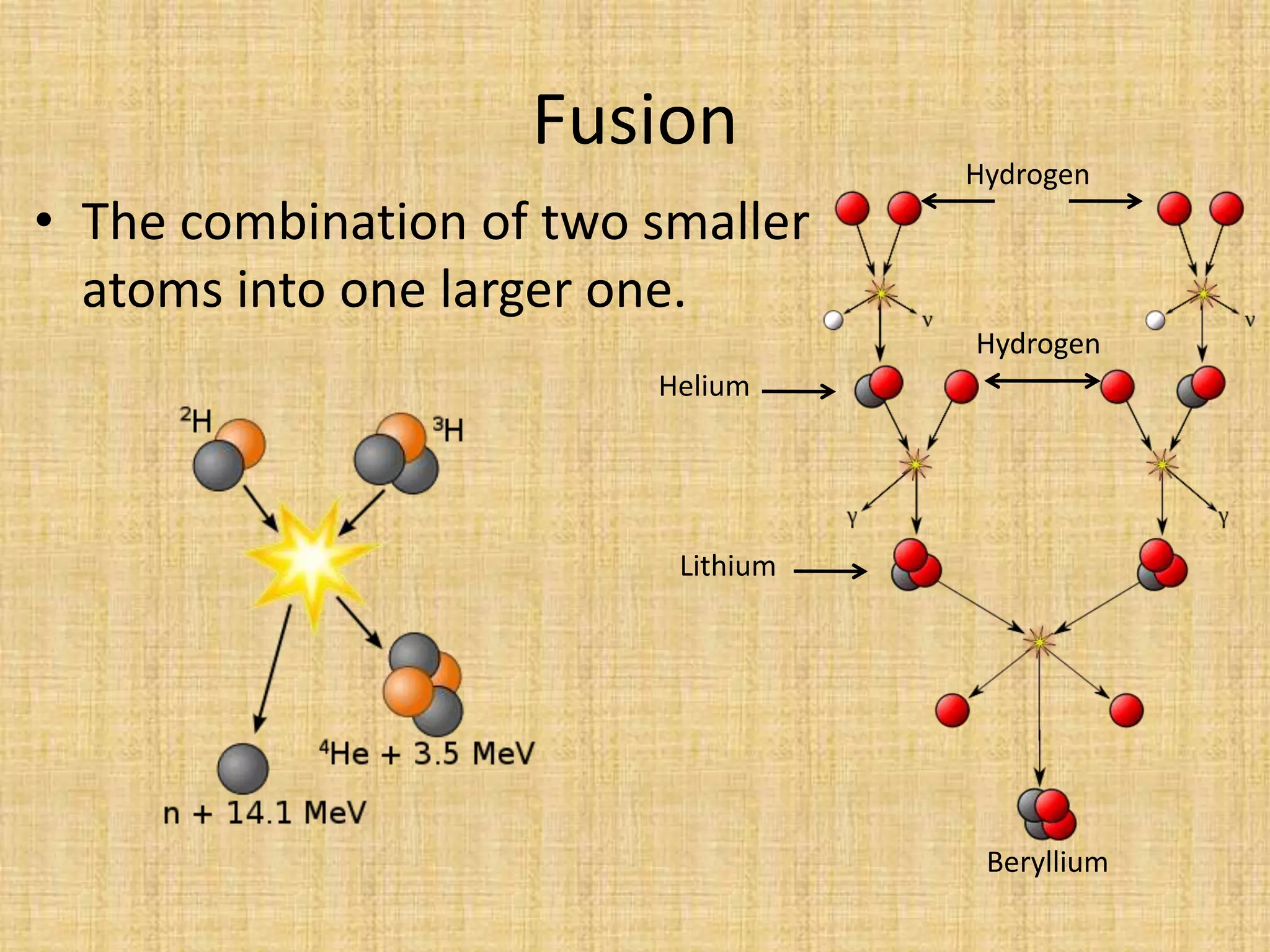
FusionHydrogenThe combination of two smaller atoms into one larger one.HydrogenHeliumLithiumBeryllium
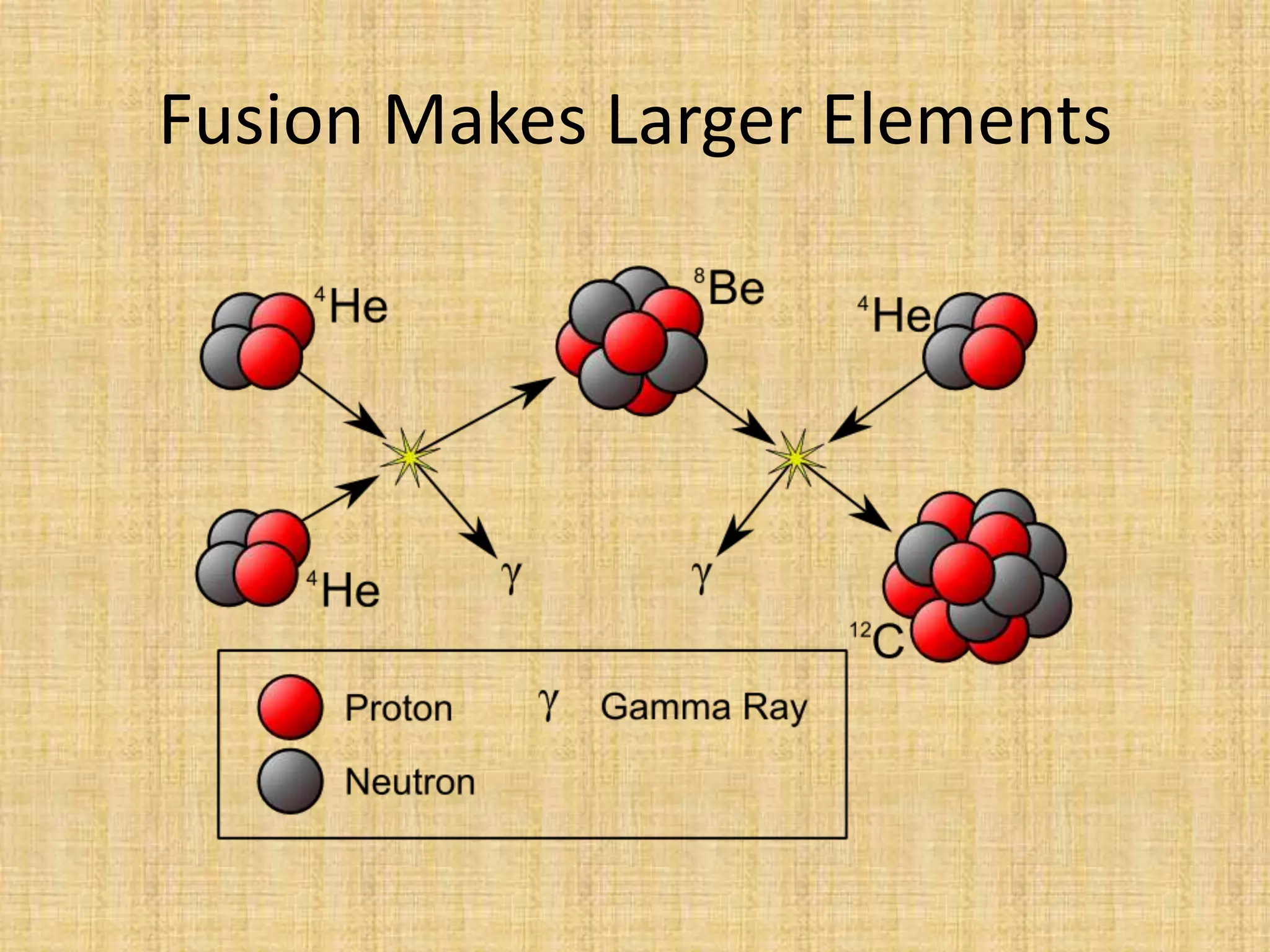
Fusion Makes Larger Elements
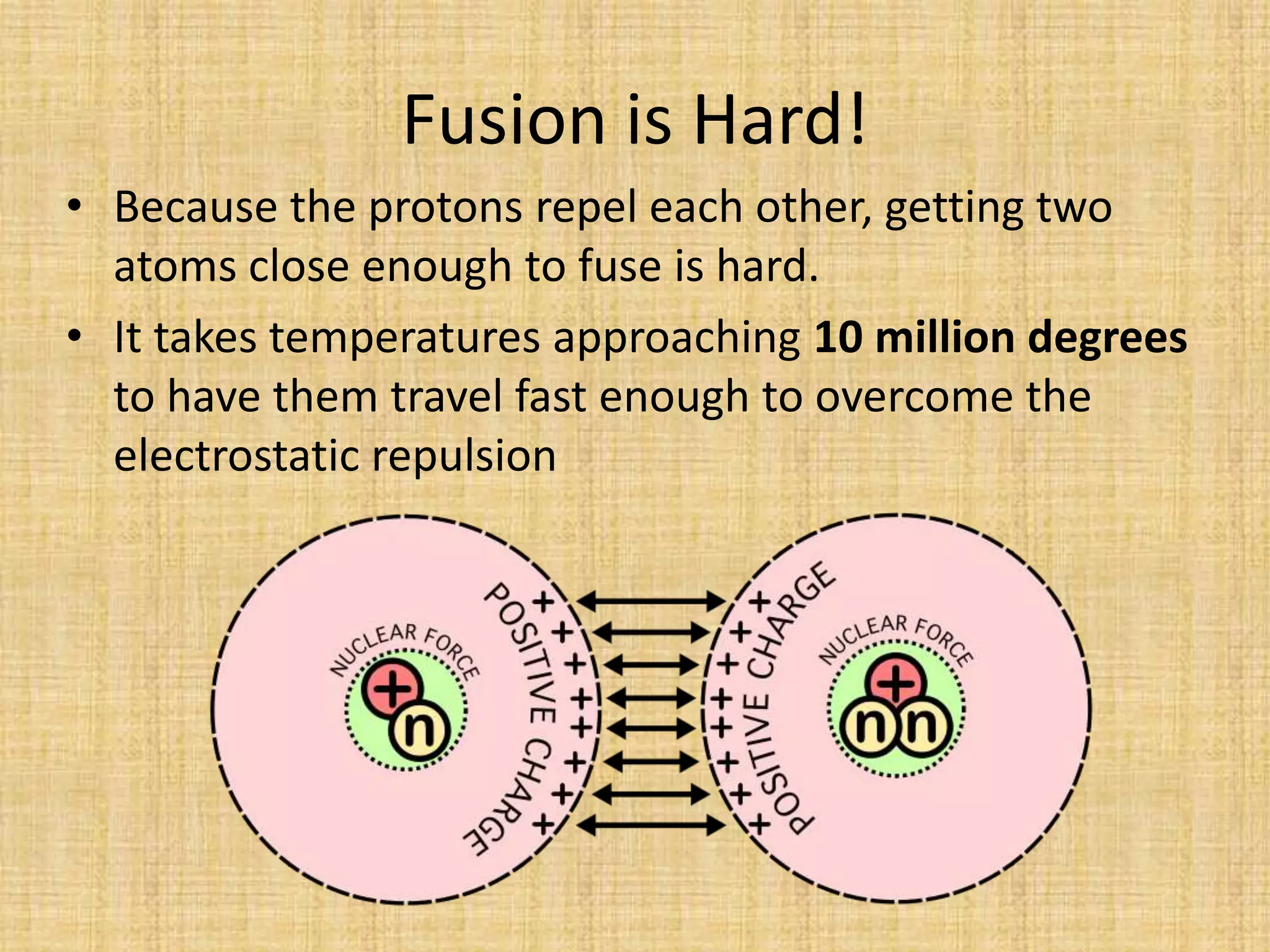
Fusion is Hard!Because the protons repel each other, getting two atoms close enough to fuse is hard.It takes temperatures approaching 10 million degrees to have them travel fast enough to overcome the electrostatic repulsion
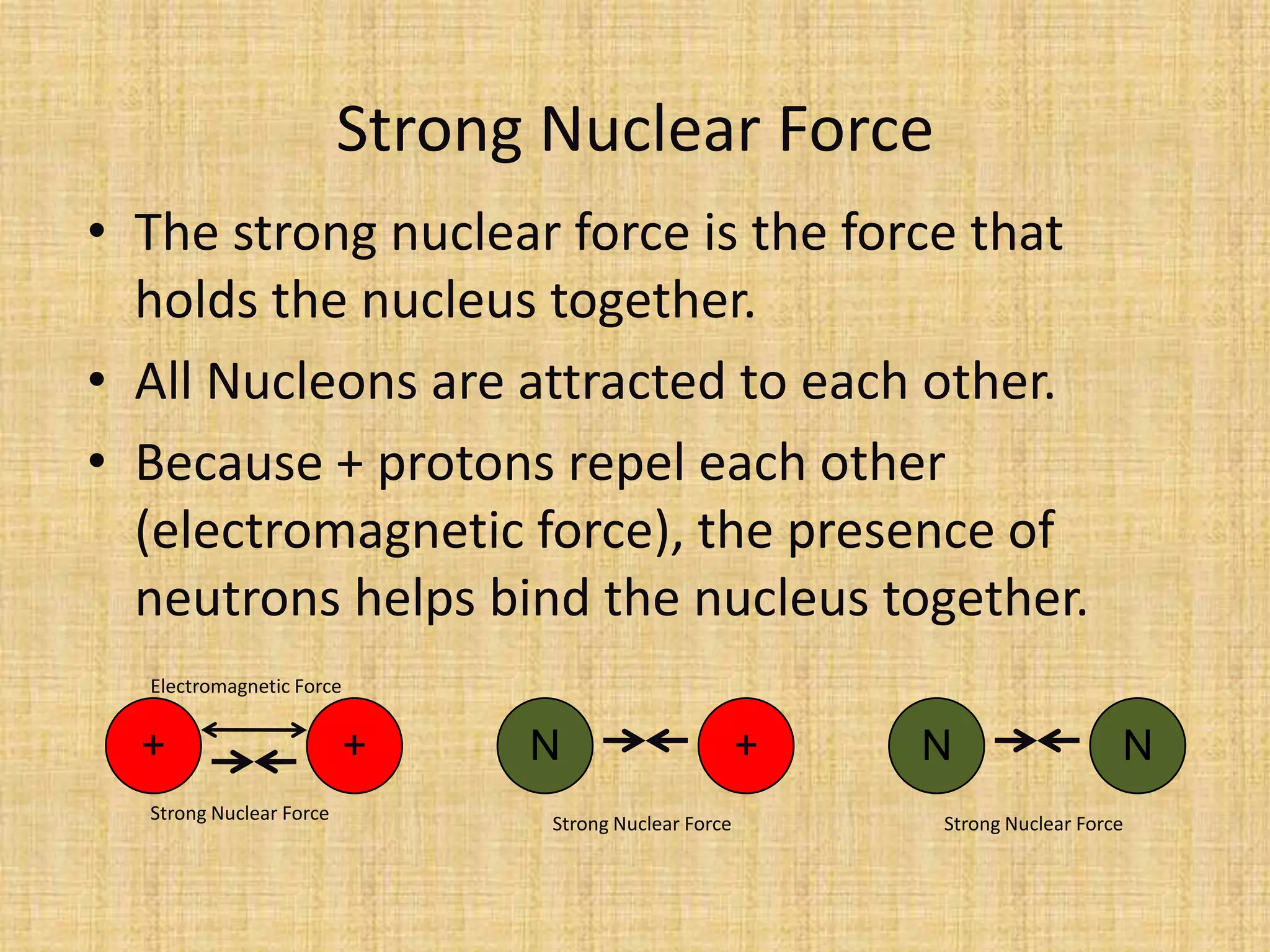
Strong Nuclear ForceThe strong nuclear force is the force that holds the nucleus together.All Nucleons are attracted to each other.Because + protons repel each other (electromagnetic force), the presence of neutrons helps bind the nucleus together.Electromagnetic Force+NNN++Strong Nuclear ForceStrong Nuclear ForceStrong Nuclear Force
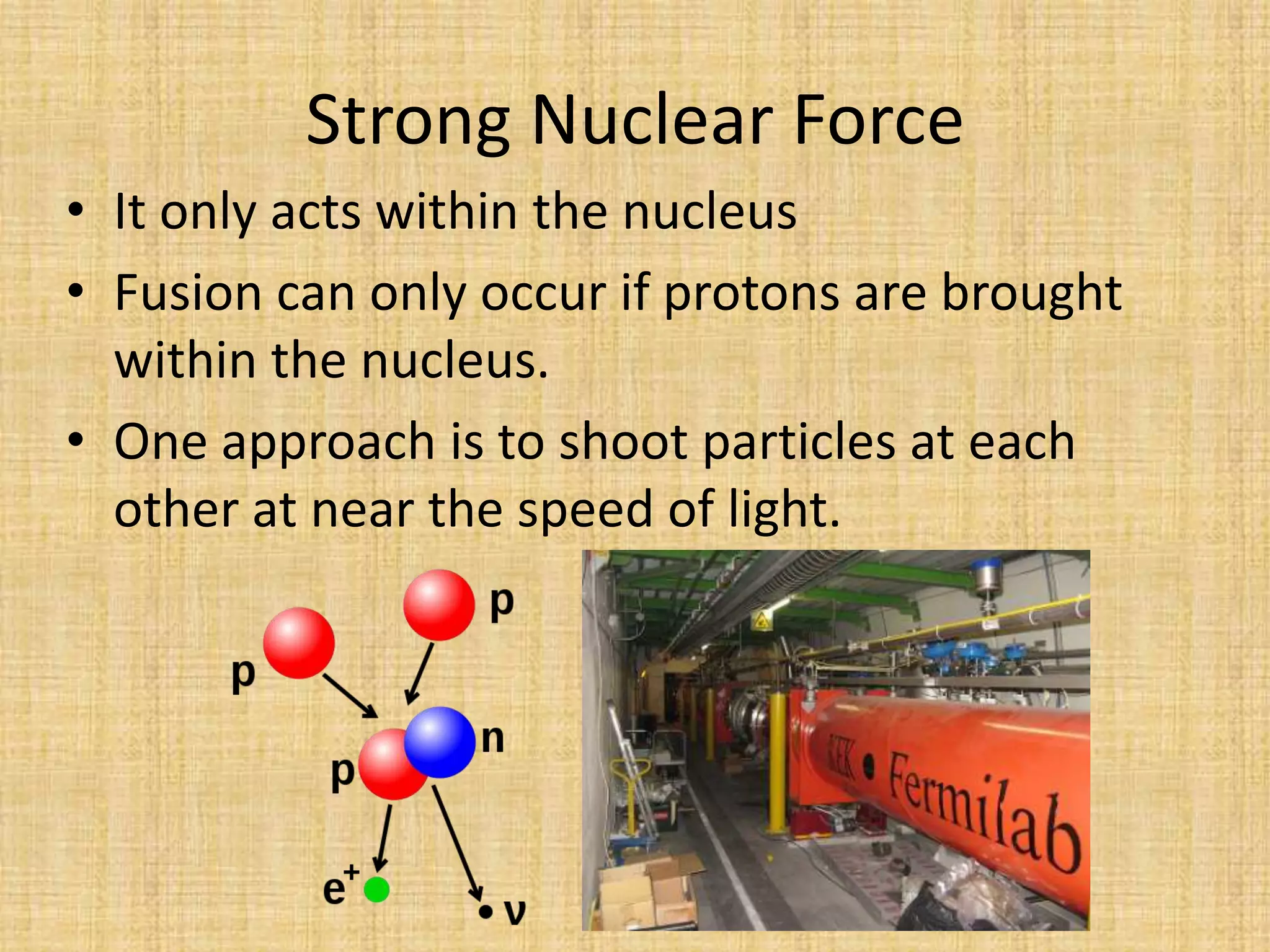
Strong Nuclear ForceIt only acts within the nucleusFusion can only occur if protons are brought within the nucleus.One approach is to shoot particles at each other at near the speed of light.
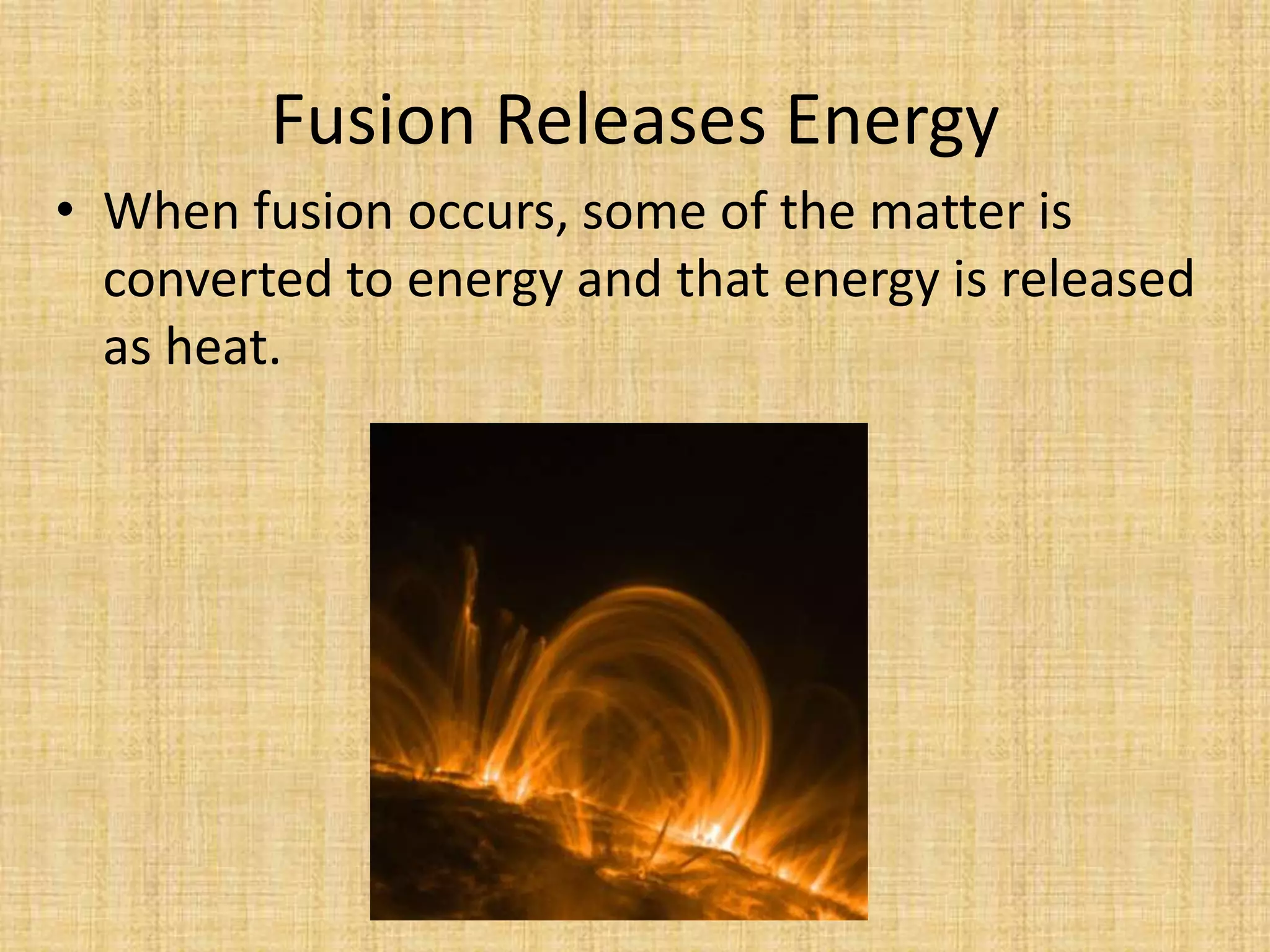
Fusion Releases EnergyWhen fusion occurs, some of the matter is converted to energy and that energy is released as heat.
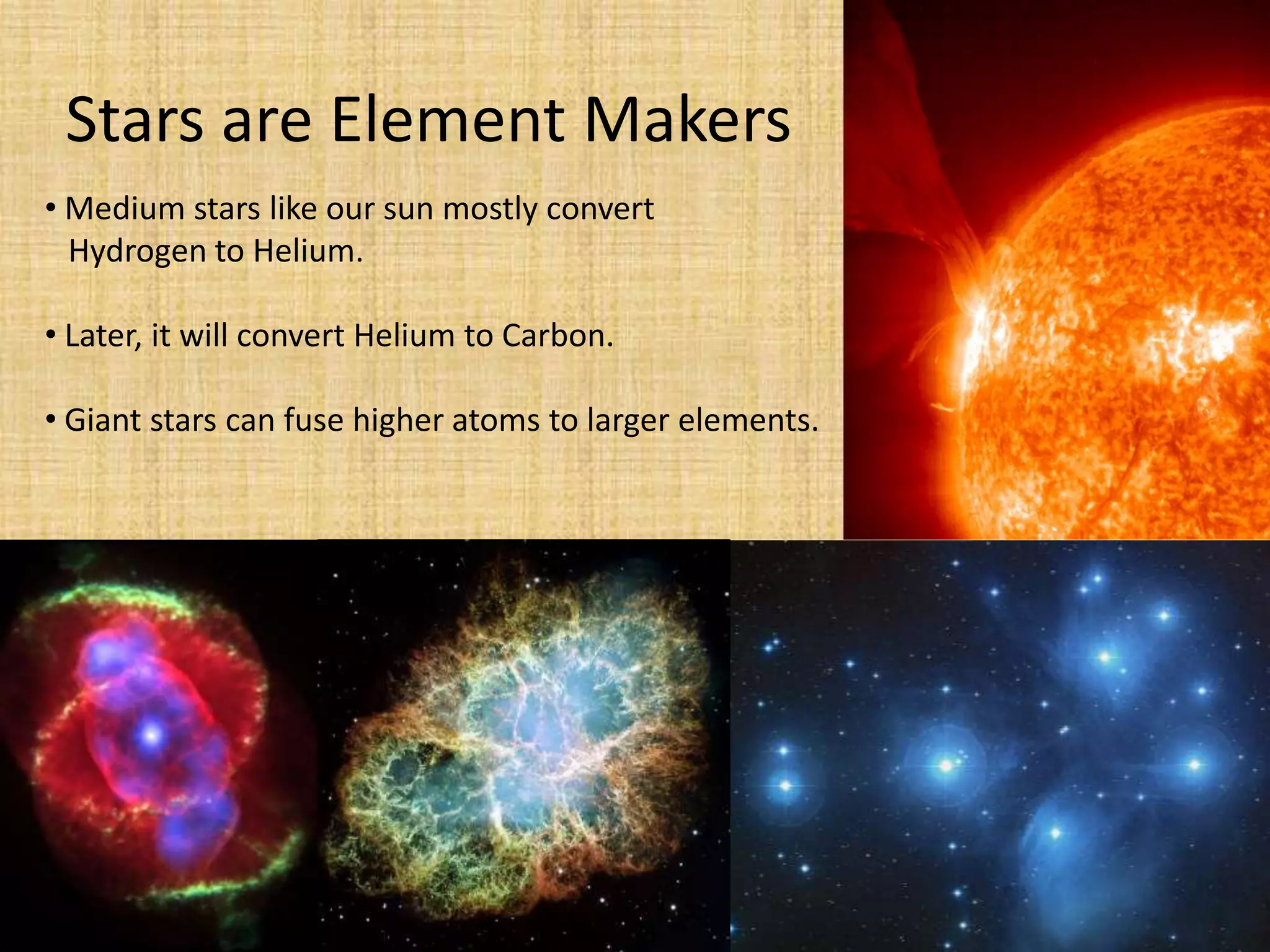
Stars are Element Makers Medium stars like our sun mostly convert   Hydrogen to Helium.  Later, it will convert Helium to Carbon.
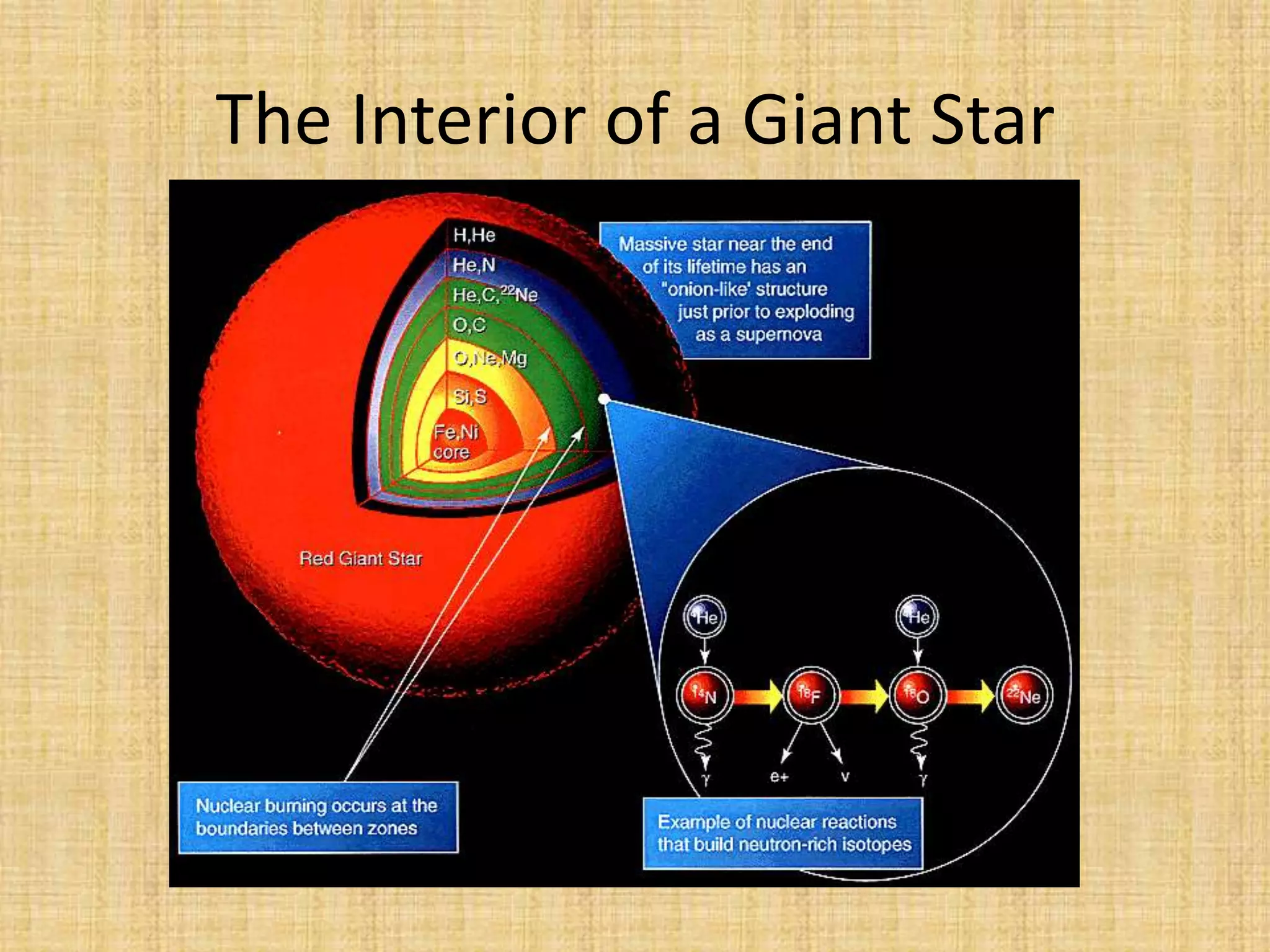
 Giant stars can fuse higher atoms to larger elements.The Interior of a Giant Star
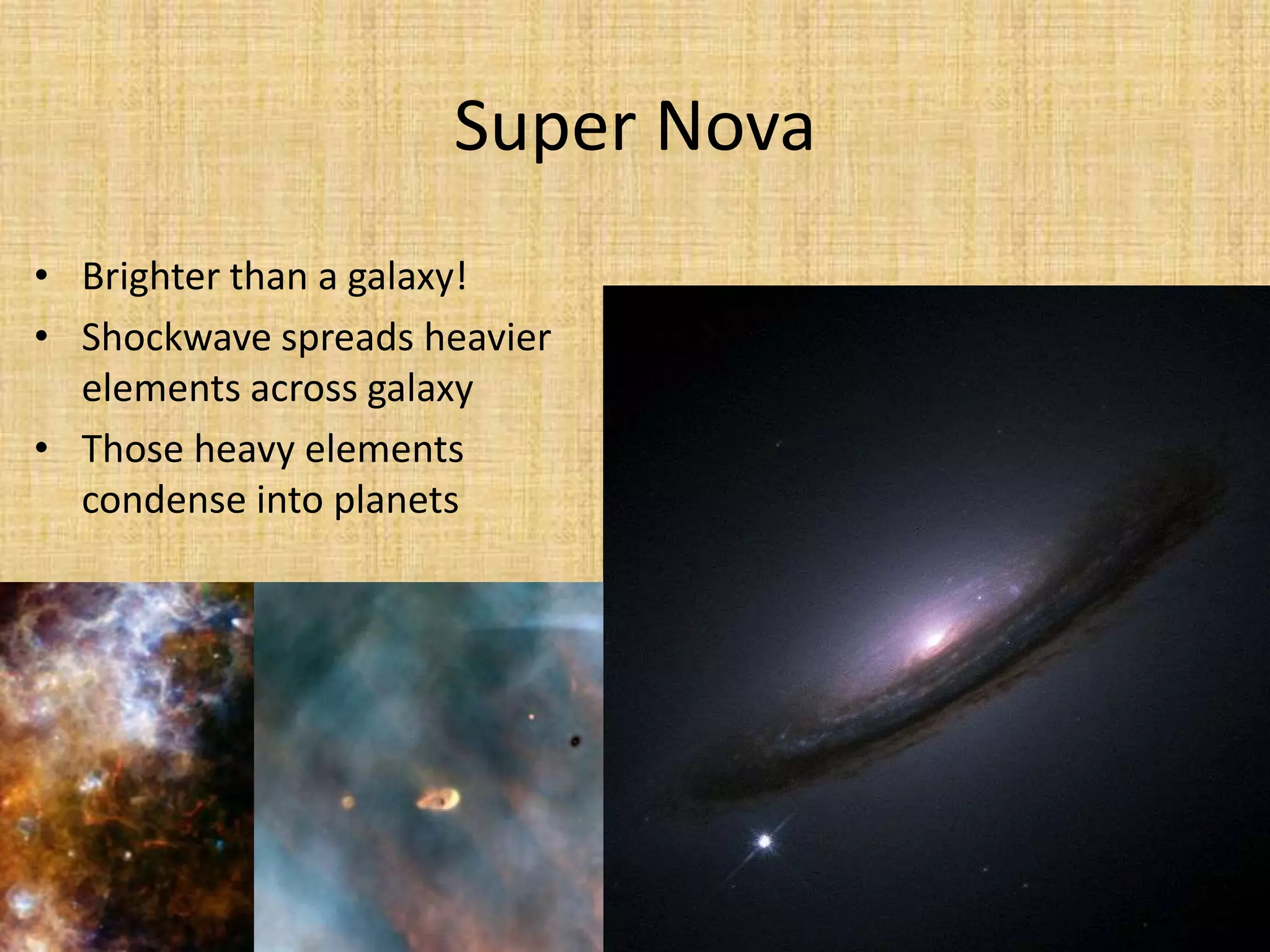
Super NovaBrighter than a galaxy!Shockwave spreads heavier elements across galaxyThose heavy elements condense into planets
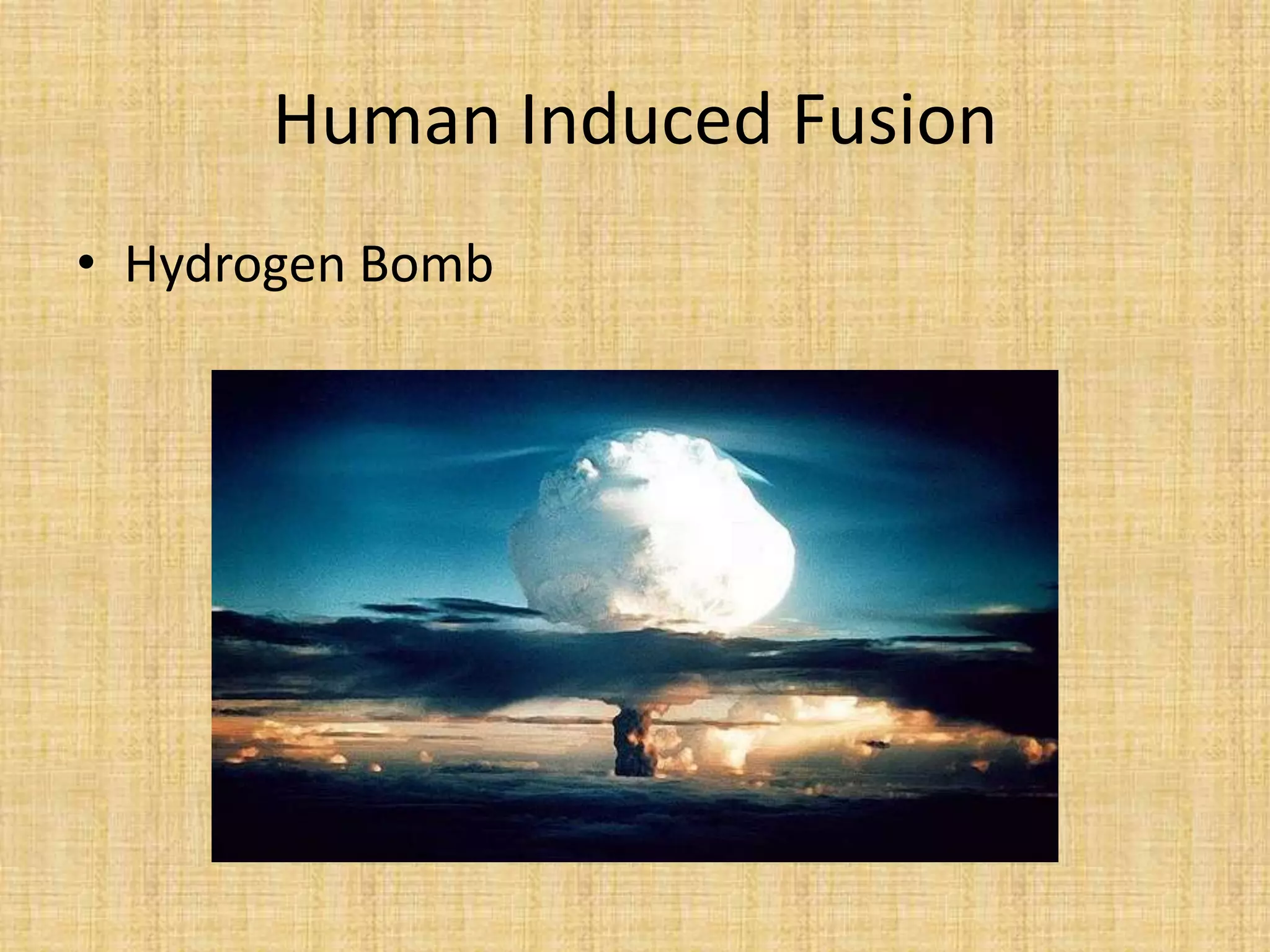
Human Induced FusionHydrogen Bomb
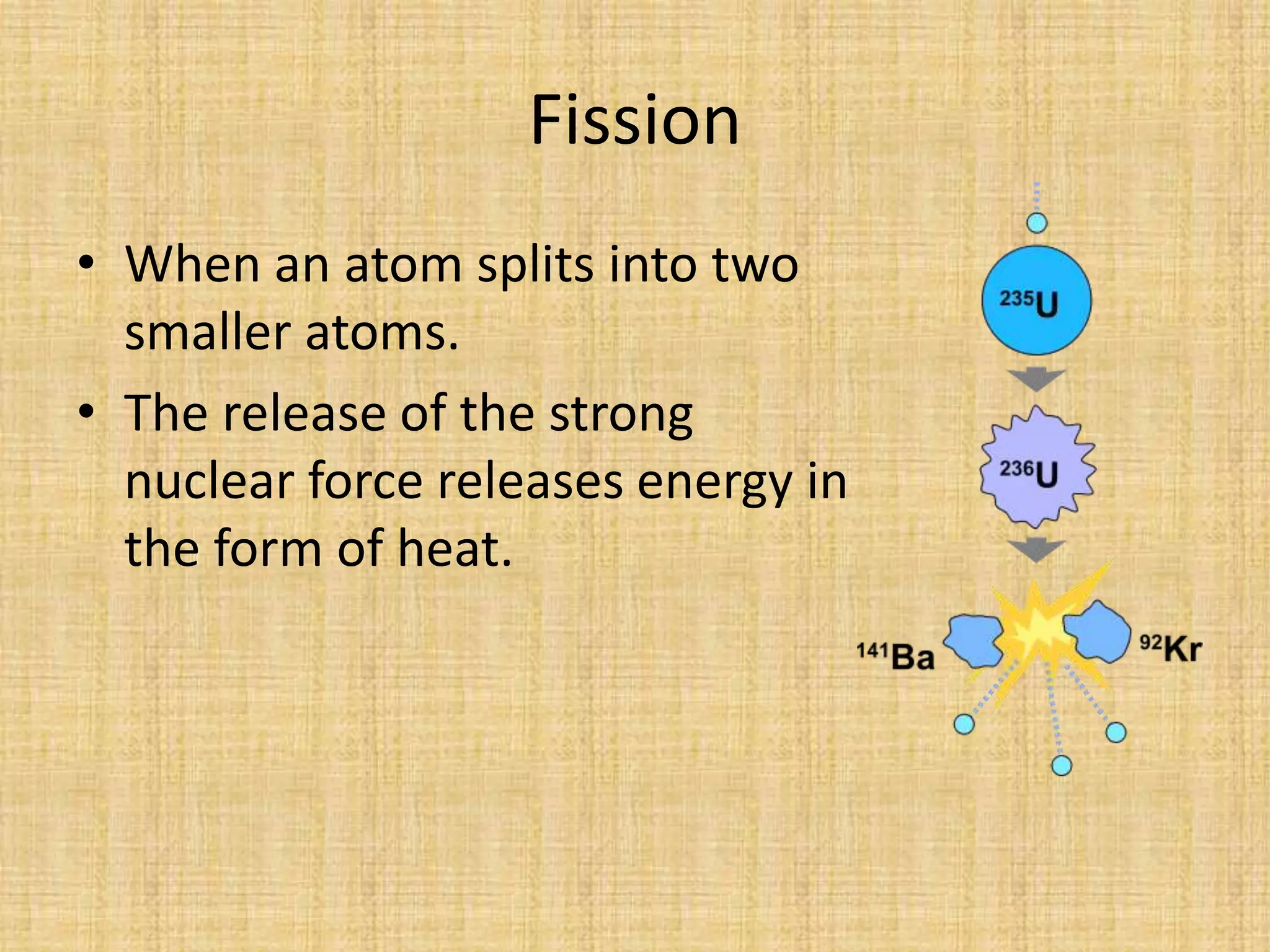
FissionWhen an atom splits into two smaller atoms.The release of the strong nuclear force releases energy in the form of heat.
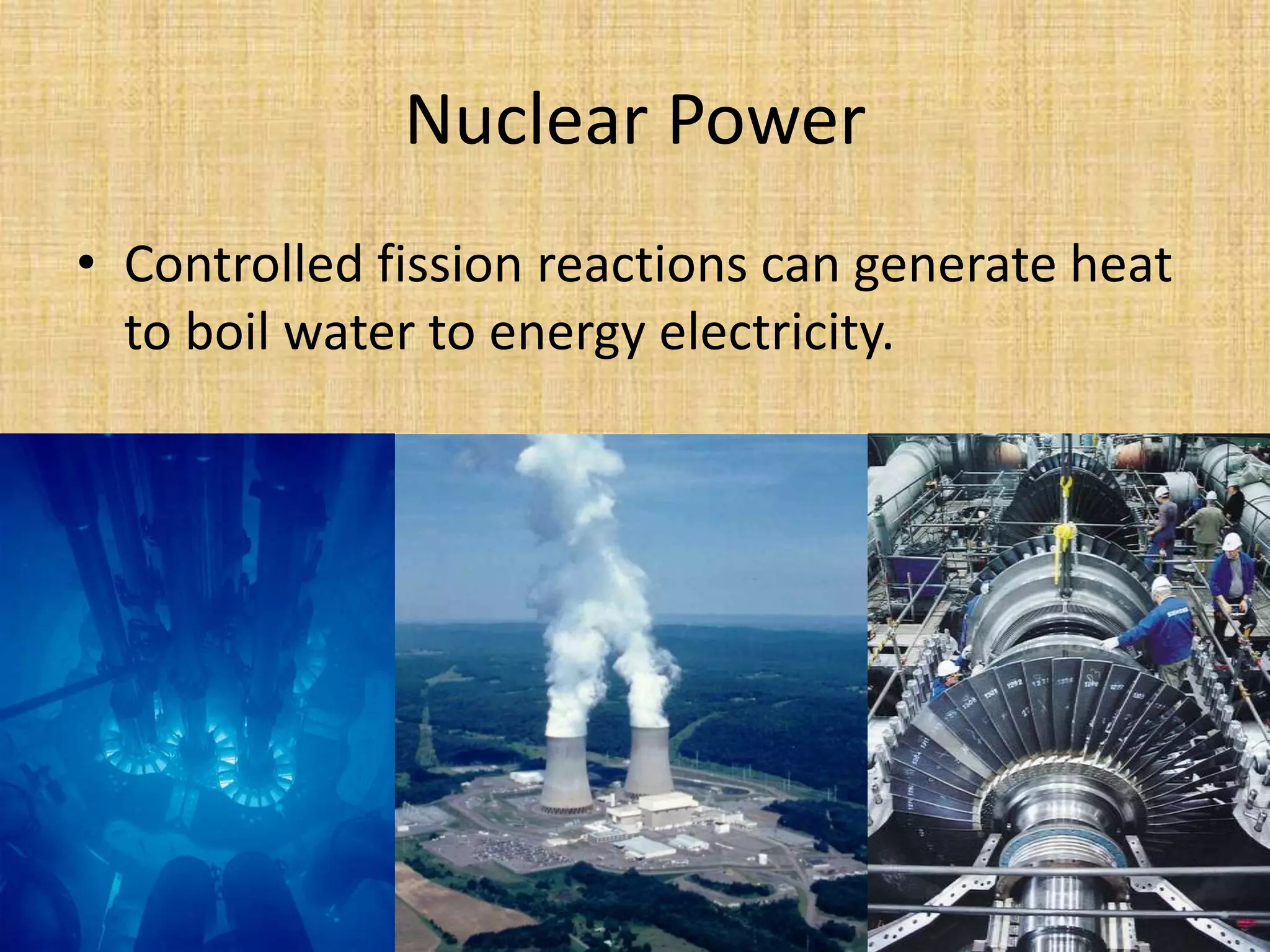
Nuclear PowerControlled fission reactions can generate heat to boil water to energy electricity.
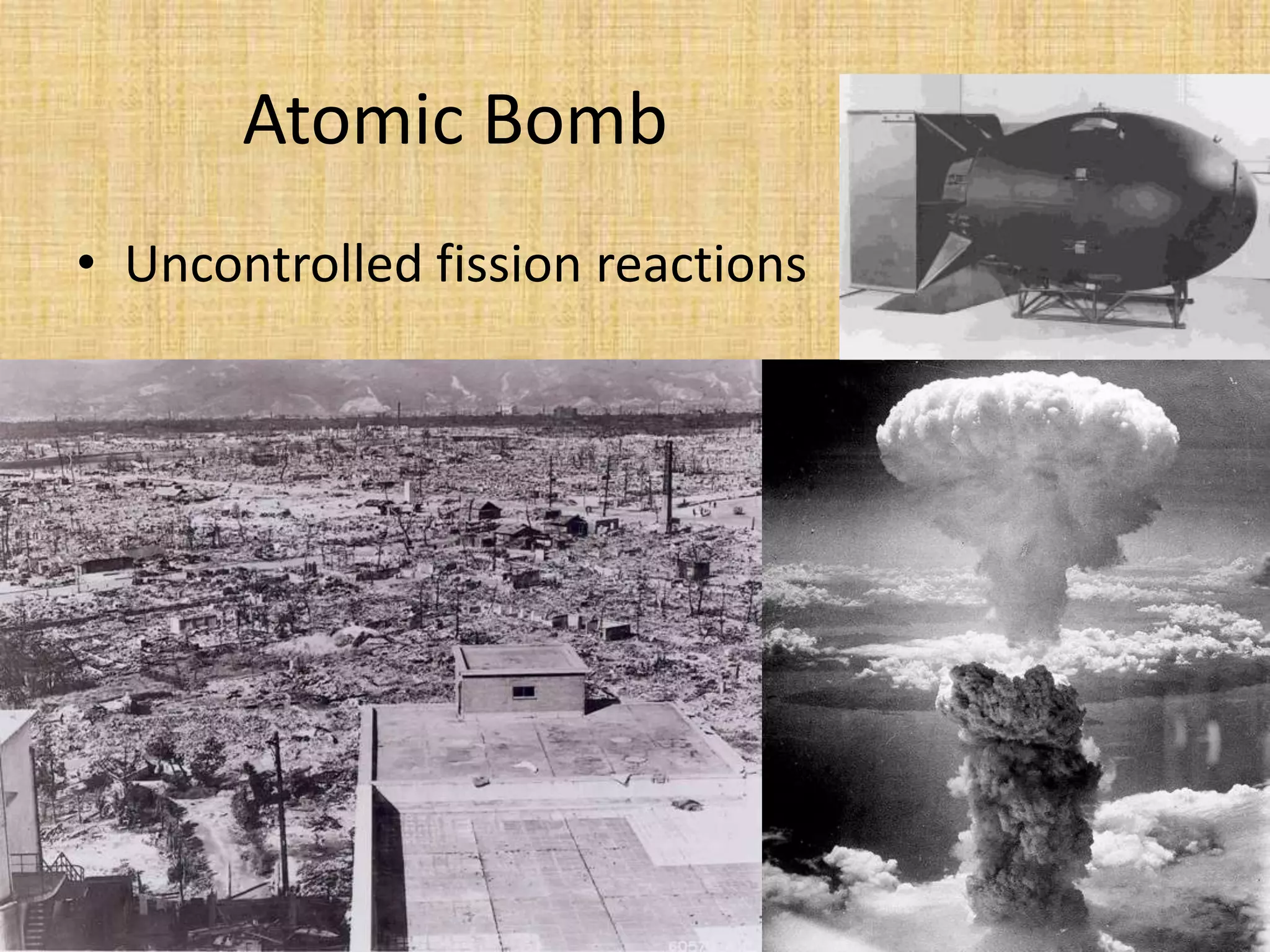
Atomic BombUncontrolled fission reactions
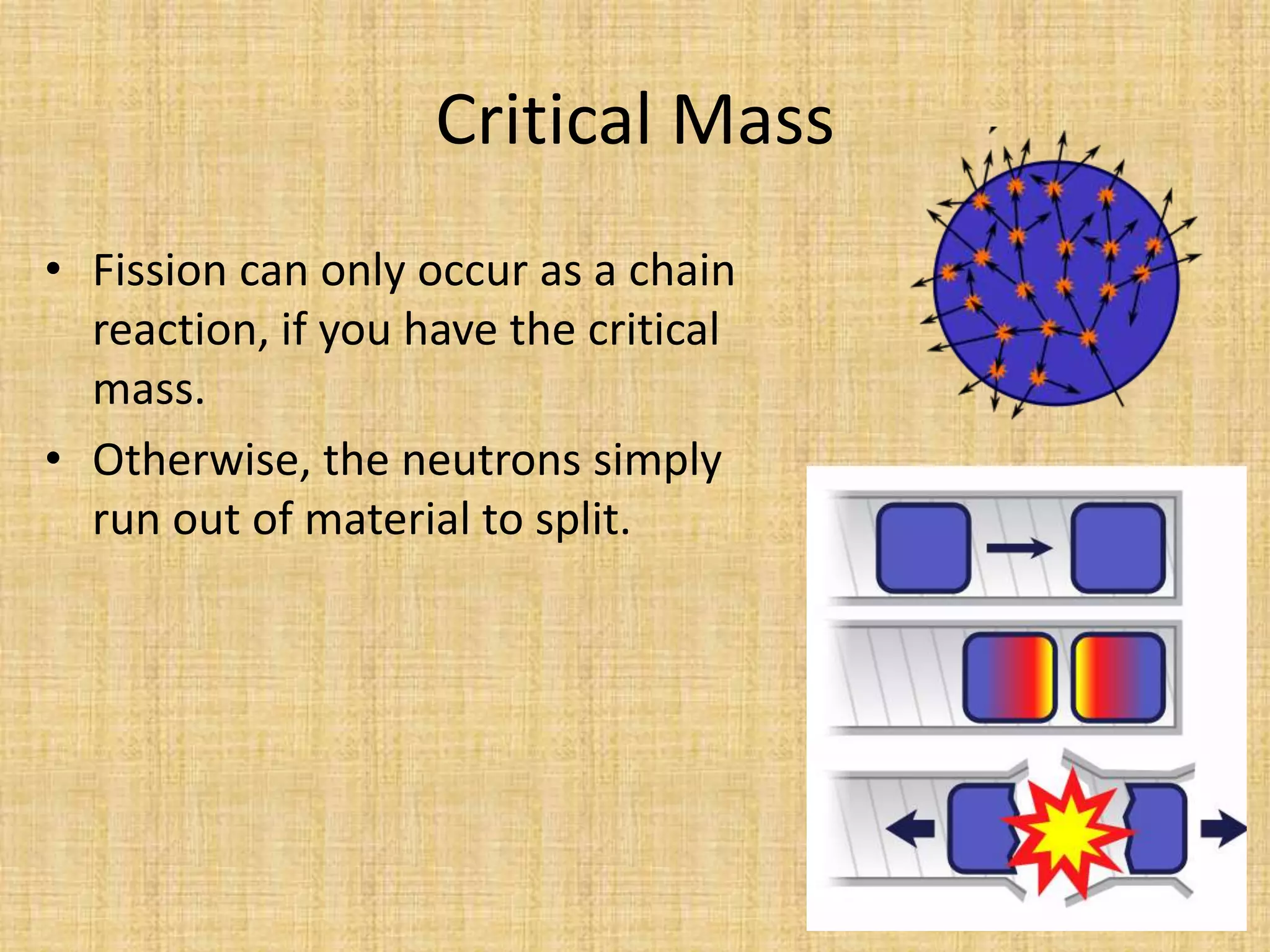
Critical MassFission can only occur as a chain reaction, if you have the critical mass.Otherwise, the neutrons simply run out of material to split.
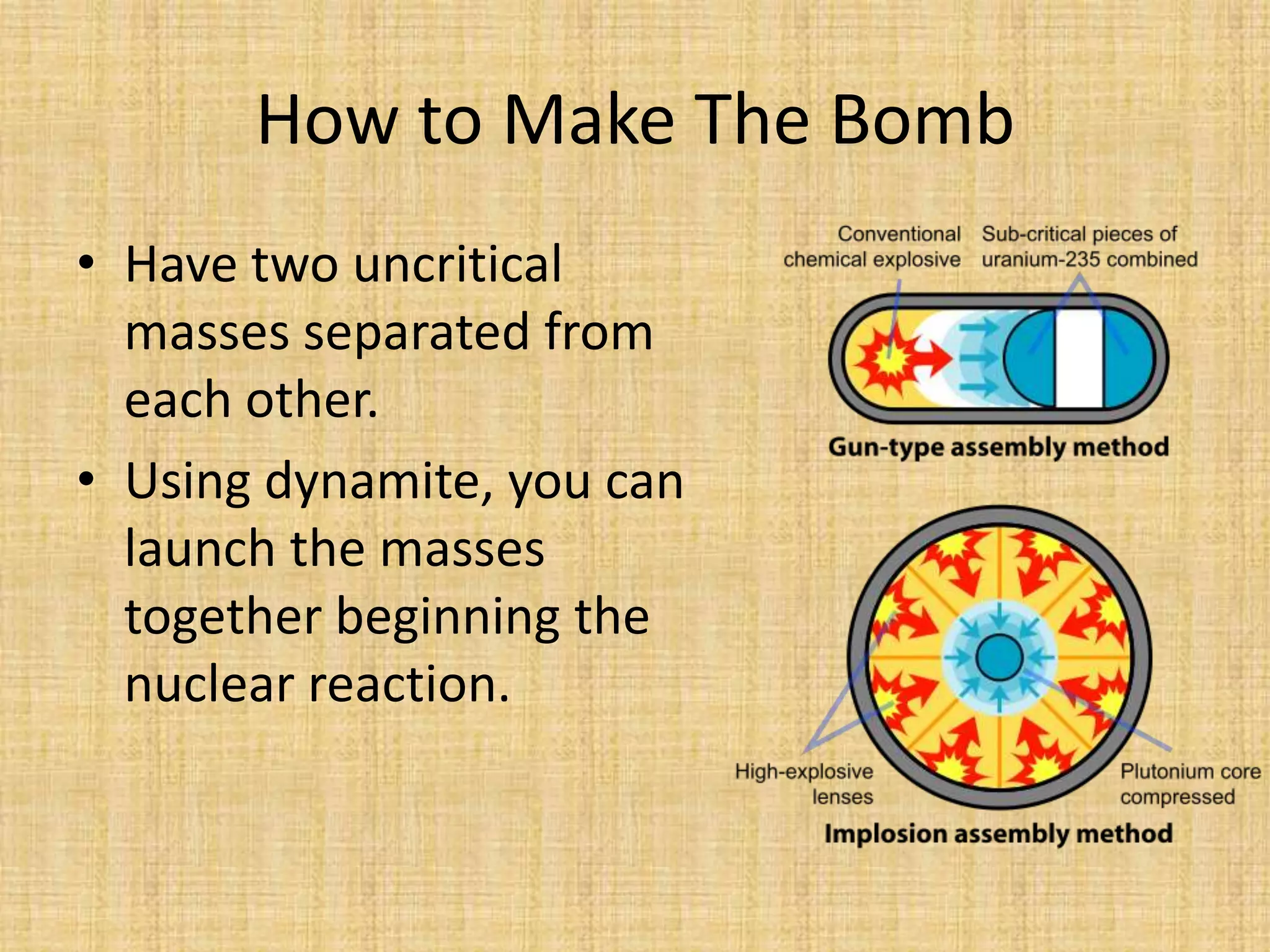
How to Make The BombHave two uncritical masses separated from each other.Using dynamite, you can launch the masses together beginning the nuclear reaction.
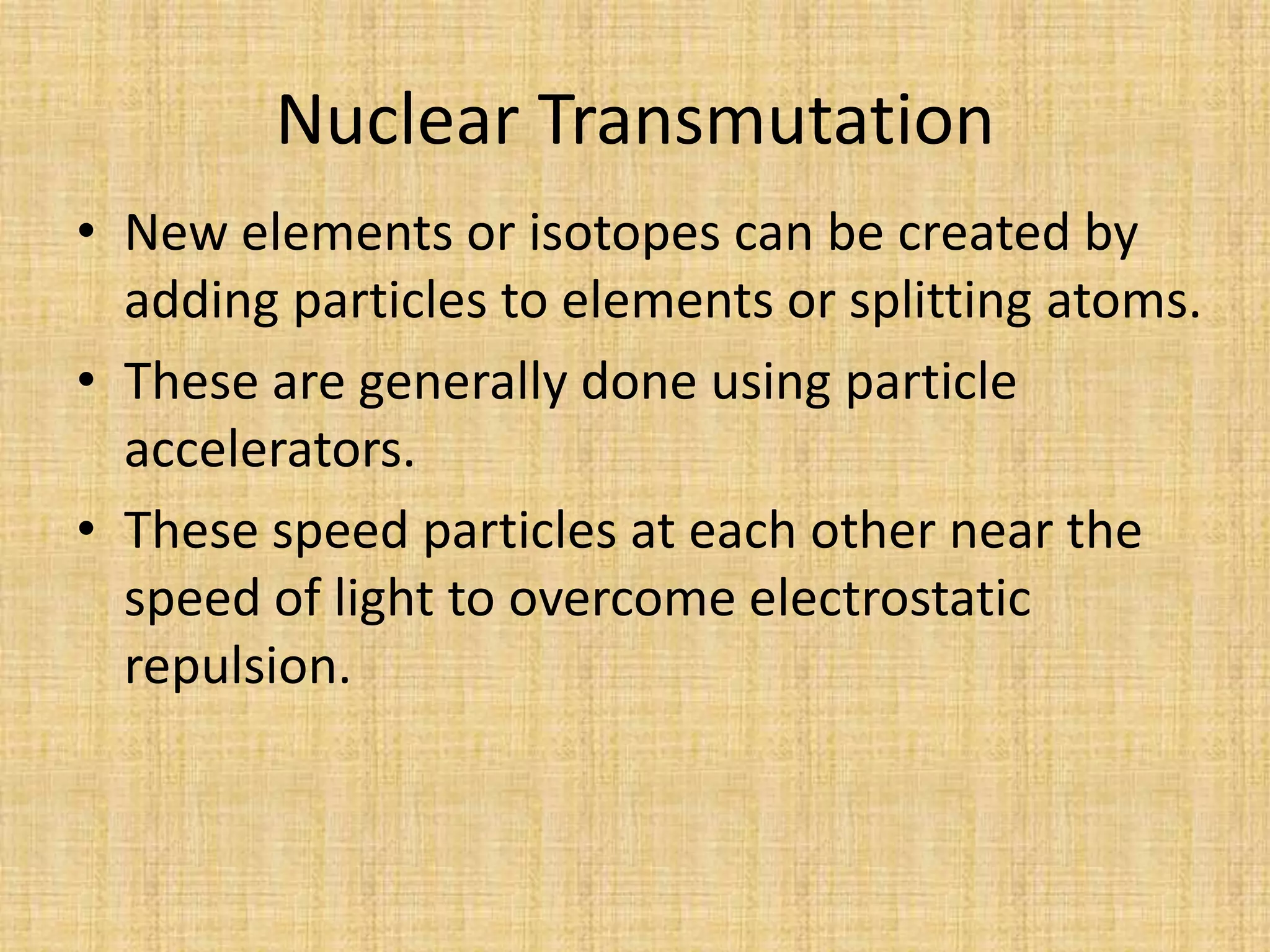
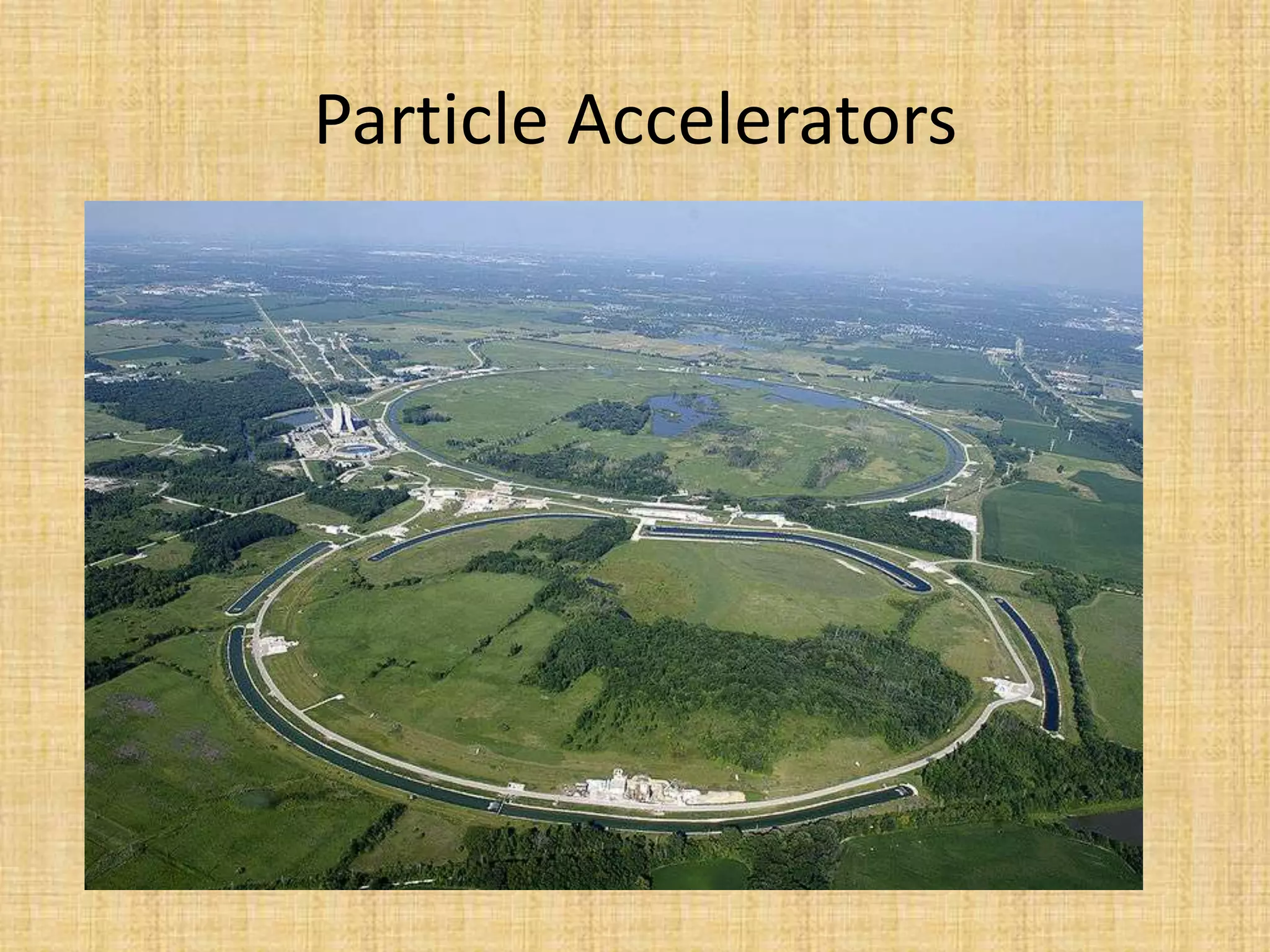
Nuclear TransmutationNew elements or isotopes can be created by adding particles to elements or splitting atoms.These are generally done using particle accelerators.These speed particles at each other near the speed of light to overcome electrostatic repulsion.
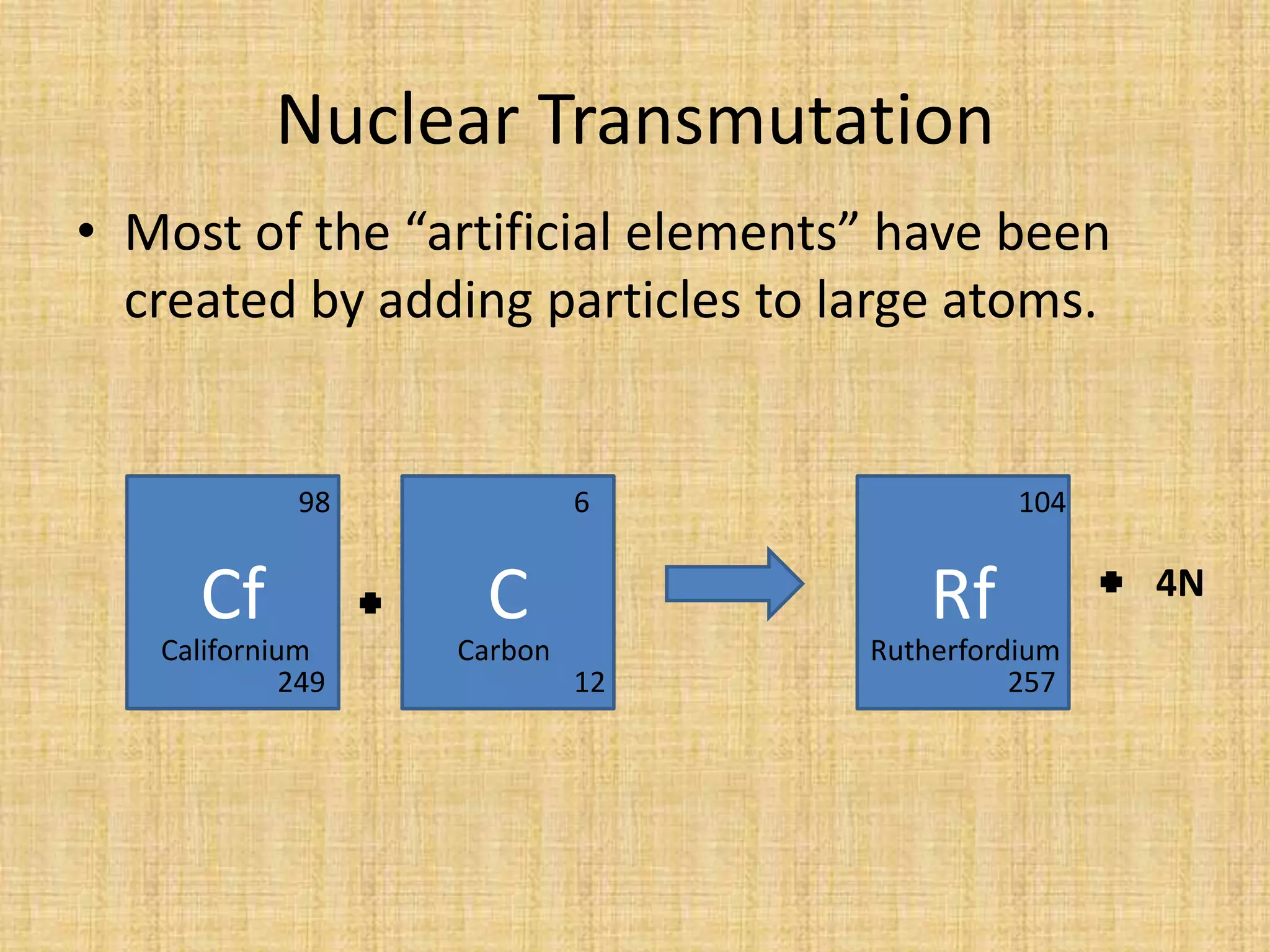
Nuclear TransmutationMost of the “artificial elements” have been created by adding particles to large atoms.Cf98C6Rf1044NCaliforniumCarbonRutherfordium24912257
Particle Accelerators
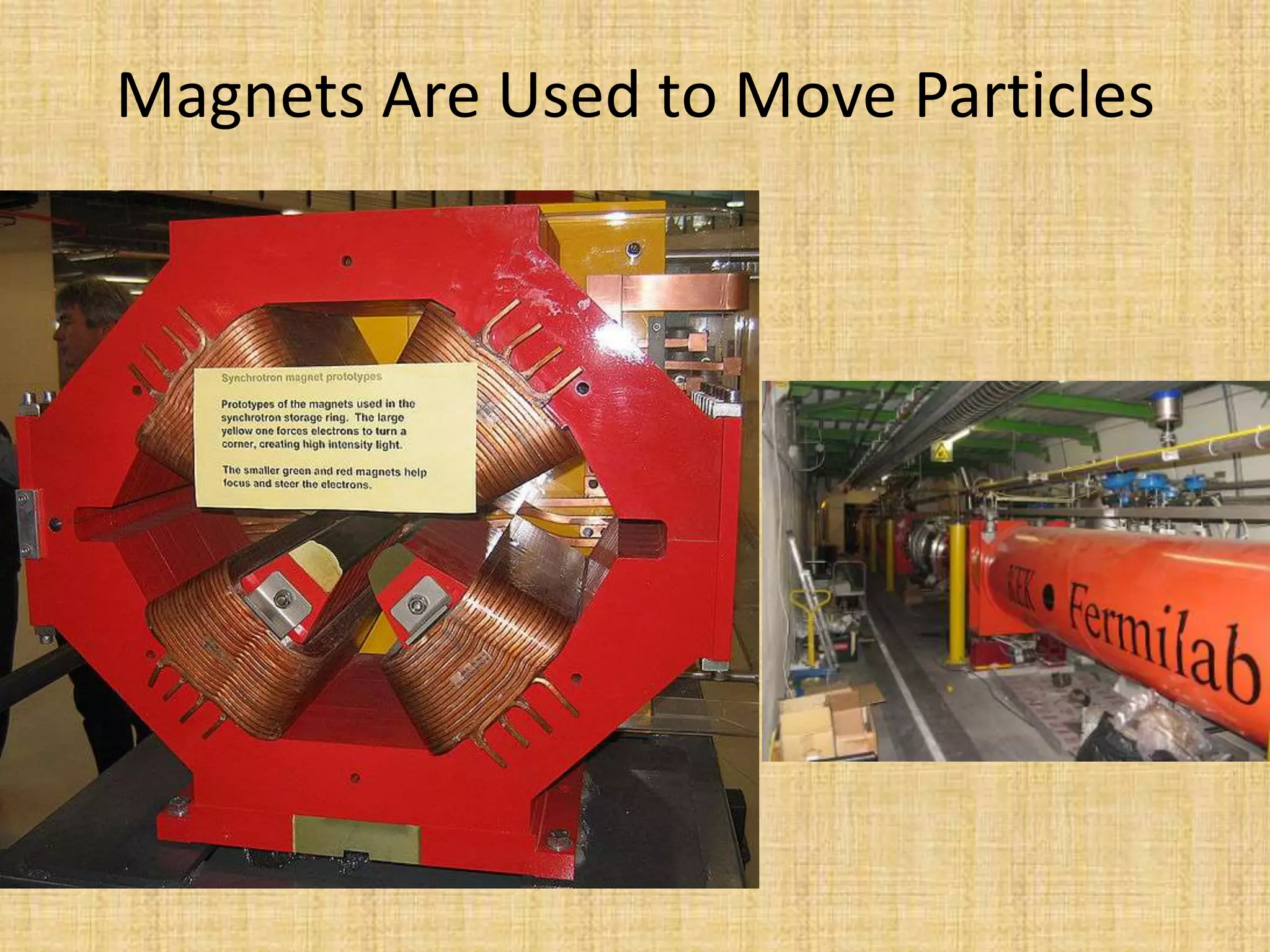
Magnets Are Used to Move Particles
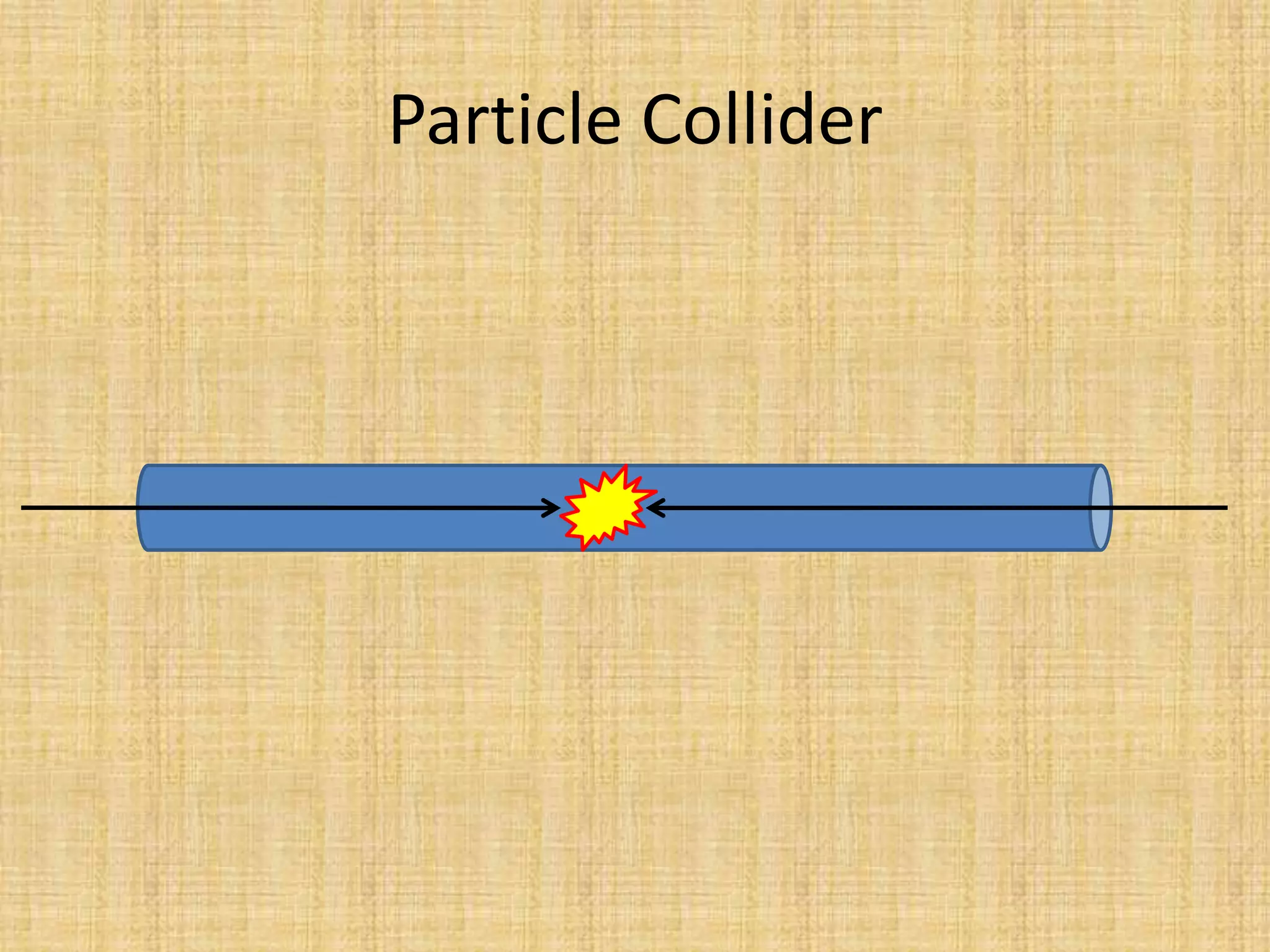
Particle Collider
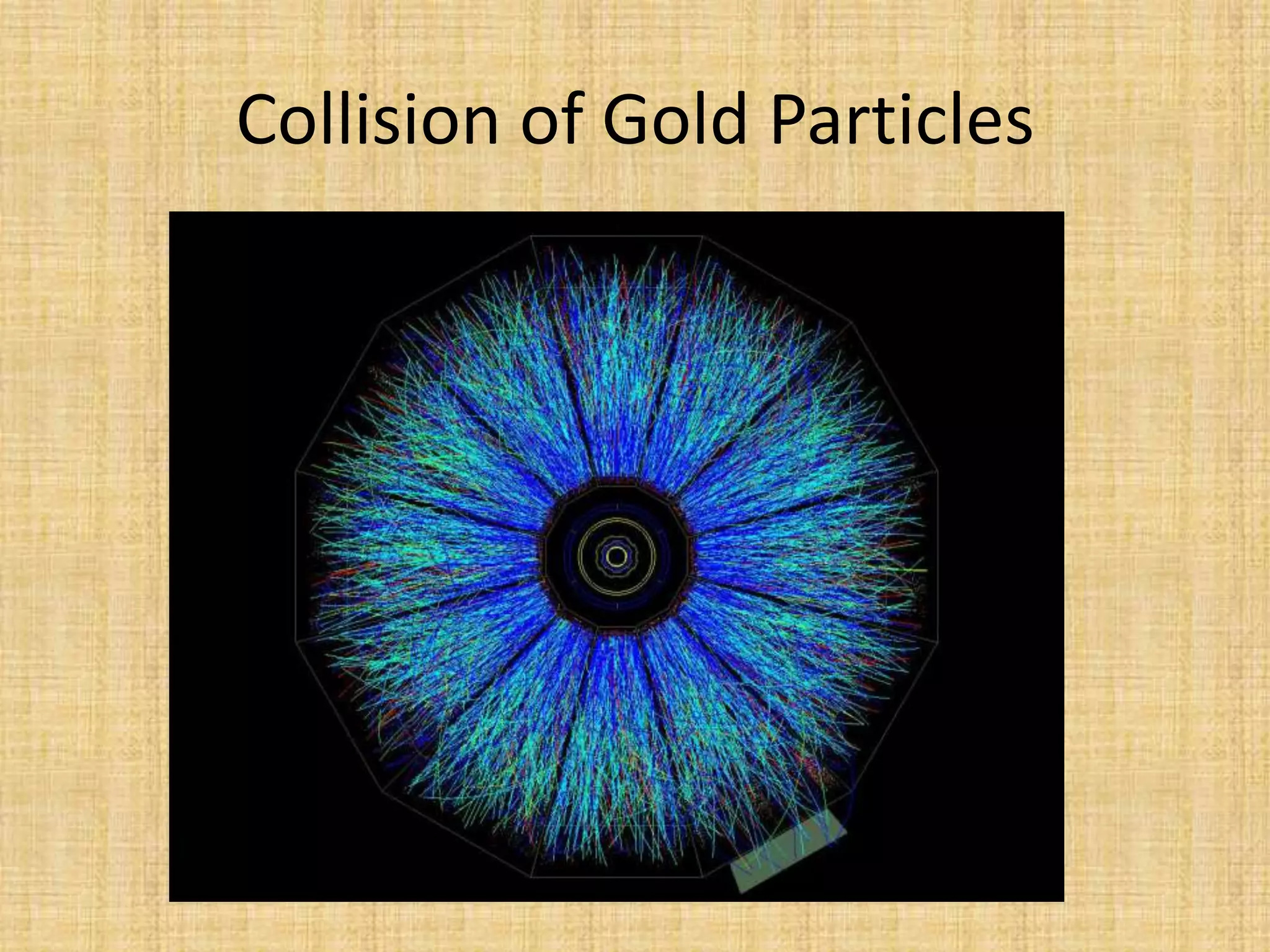
Collision of Gold Particles
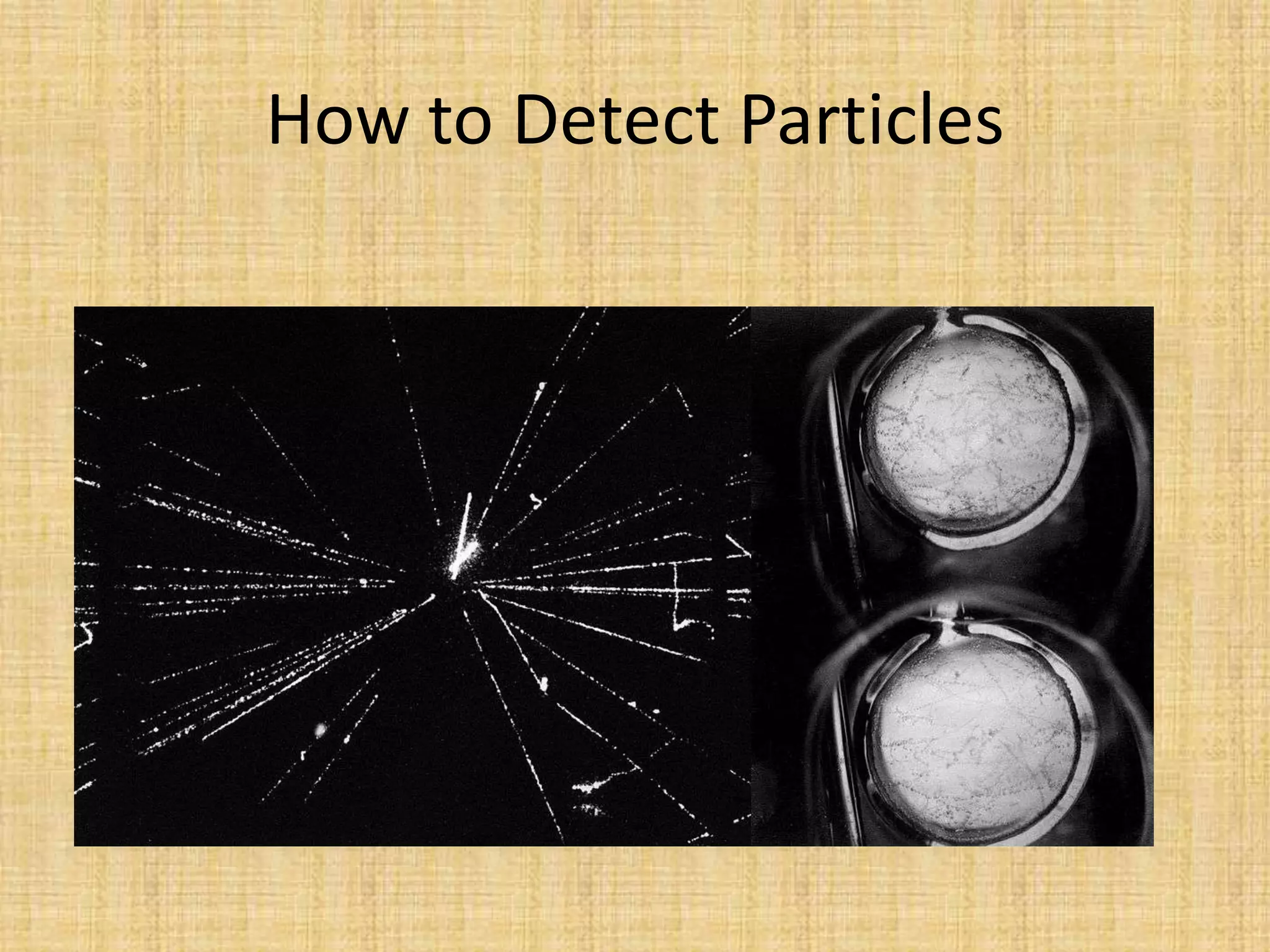
How to Detect Particles

Unit 18 Transmutations, Fission, and Fusion

  • 1.
  • 2.
    FusionHydrogenThe combination oftwo smaller atoms into one larger one.HydrogenHeliumLithiumBeryllium
  • 3.
  • 4.
    Fusion is Hard!Becausethe protons repel each other, getting two atoms close enough to fuse is hard.It takes temperatures approaching 10 million degrees to have them travel fast enough to overcome the electrostatic repulsion
  • 5.
    Strong Nuclear ForceThestrong nuclear force is the force that holds the nucleus together.All Nucleons are attracted to each other.Because + protons repel each other (electromagnetic force), the presence of neutrons helps bind the nucleus together.Electromagnetic Force+NNN++Strong Nuclear ForceStrong Nuclear ForceStrong Nuclear Force
  • 6.
    Strong Nuclear ForceItonly acts within the nucleusFusion can only occur if protons are brought within the nucleus.One approach is to shoot particles at each other at near the speed of light.
  • 7.
    Fusion Releases EnergyWhenfusion occurs, some of the matter is converted to energy and that energy is released as heat.
  • 8.
    Stars are ElementMakers Medium stars like our sun mostly convert Hydrogen to Helium. Later, it will convert Helium to Carbon.
  • 9.
    Giant starscan fuse higher atoms to larger elements.The Interior of a Giant Star
  • 10.
    Super NovaBrighter thana galaxy!Shockwave spreads heavier elements across galaxyThose heavy elements condense into planets
  • 11.
  • 12.
    FissionWhen an atomsplits into two smaller atoms.The release of the strong nuclear force releases energy in the form of heat.
  • 13.
    Nuclear PowerControlled fissionreactions can generate heat to boil water to energy electricity.
  • 14.
  • 15.
    Critical MassFission canonly occur as a chain reaction, if you have the critical mass.Otherwise, the neutrons simply run out of material to split.
  • 16.
    How to MakeThe BombHave two uncritical masses separated from each other.Using dynamite, you can launch the masses together beginning the nuclear reaction.
  • 17.
    Nuclear TransmutationNew elementsor isotopes can be created by adding particles to elements or splitting atoms.These are generally done using particle accelerators.These speed particles at each other near the speed of light to overcome electrostatic repulsion.
  • 18.
    Nuclear TransmutationMost ofthe “artificial elements” have been created by adding particles to large atoms.Cf98C6Rf1044NCaliforniumCarbonRutherfordium24912257
  • 19.
  • 20.
    Magnets Are Usedto Move Particles
  • 21.
  • 22.
  • 23.
    How to DetectParticles