Ecology - C. 18
The study of the interactions between
    organisms and the living and
   nonliving components of their
           environment.
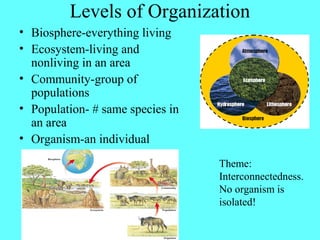
Levels of Organization
• Biosphere-everything living
• Ecosystem-living and
  nonliving in an area
• Community-group of
  populations
• Population- # same species in
  an area
• Organism-an individual
                                  Theme:
                                  Interconnectedness.
                                  No organism is
                                  isolated!
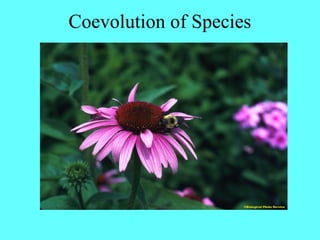
Coevolution of Species
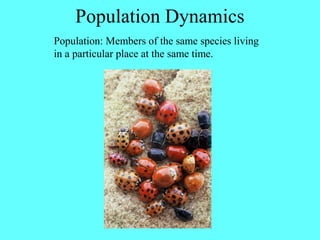
Population Dynamics
Population: Members of the same species living
in a particular place at the same time.
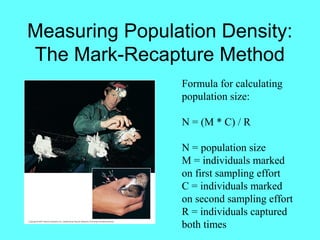
Measuring Population Density:
The Mark-Recapture Method
                Formula for calculating
                population size:

                N = (M * C) / R

                N = population size
                M = individuals marked
                on first sampling effort
                C = individuals marked
                on second sampling effort
                R = individuals captured
                both times
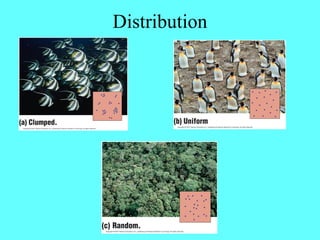
Distribution
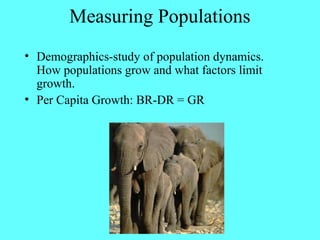
Measuring Populations
• Demographics-study of population dynamics.
  How populations grow and what factors limit
  growth.
• Per Capita Growth: BR-DR = GR
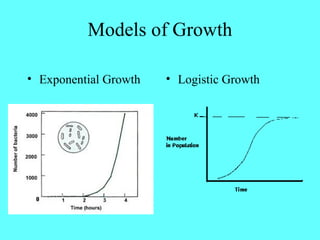
Models of Growth

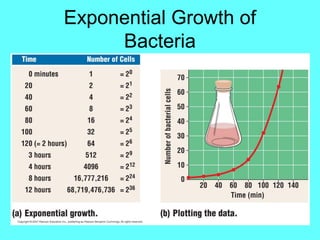
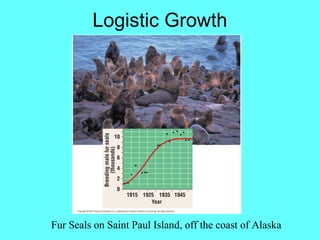
• Exponential Growth   • Logistic Growth
Exponential Growth of
     Bacteria
Logistic Growth


Fur Seals on Saint Paul Island, off the coast of Alaska
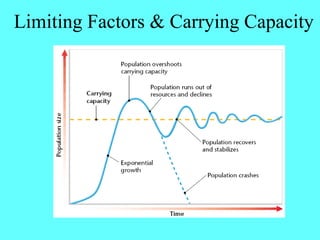
Limiting Factors & Carrying Capacity
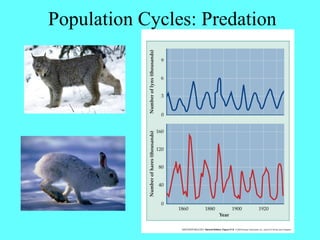
Population Cycles: Predation
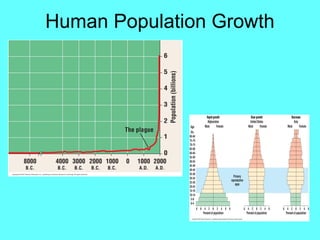
Human Population Growth
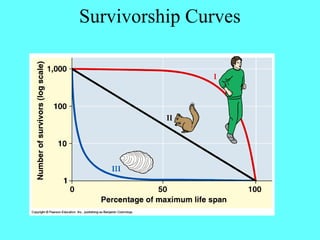
Survivorship Curves
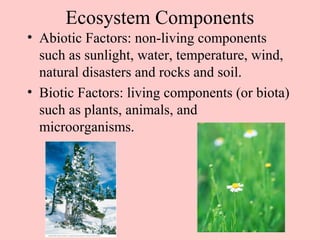
Ecosystem Components
• Abiotic Factors: non-living components
  such as sunlight, water, temperature, wind,
  natural disasters and rocks and soil.
• Biotic Factors: living components (or biota)
  such as plants, animals, and
  microorganisms.
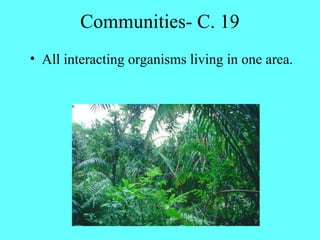
Communities- C. 19
• All interacting organisms living in one area.
Biodiversity
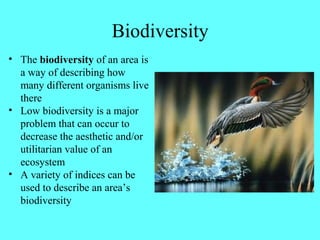
• The biodiversity of an area is
  a way of describing how
  many different organisms live
  there
• Low biodiversity is a major
  problem that can occur to
  decrease the aesthetic and/or
  utilitarian value of an
  ecosystem
• A variety of indices can be
  used to describe an area’s
  biodiversity
Invasive Species
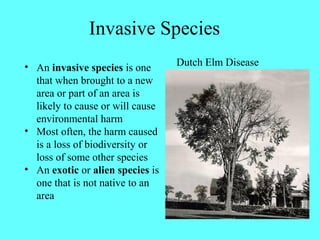
• An invasive species is one      Dutch Elm Disease
  that when brought to a new
  area or part of an area is
  likely to cause or will cause
  environmental harm
• Most often, the harm caused
  is a loss of biodiversity or
  loss of some other species
• An exotic or alien species is
  one that is not native to an
  area
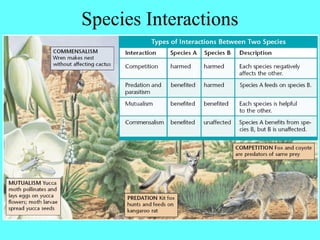
Species Interactions
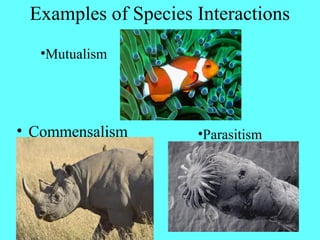
Examples of Species Interactions
   •Mutualism


• Commensalism       •Parasitism
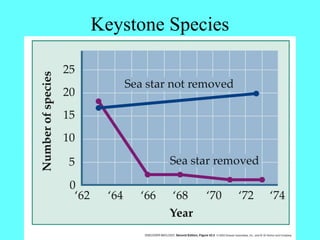
Keystone Species
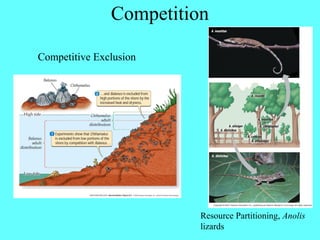
Competition

Competitive Exclusion


                         Resource Partitioning, Anolis
                         lizards
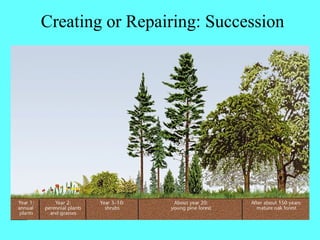
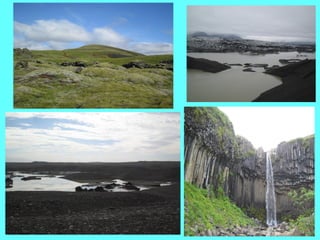
Creating or Repairing: Succession
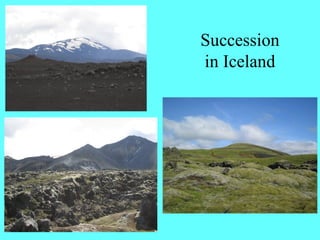
Succession
in Iceland
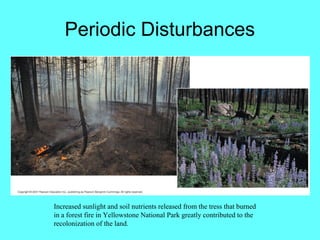
Periodic Disturbances


Increased sunlight and soil nutrients released from the tress that burned
in a forest fire in Yellowstone National Park greatly contributed to the
recolonization of the land.
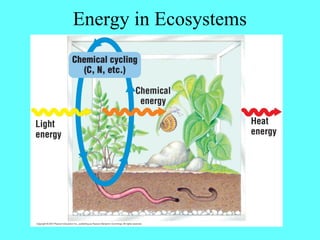
Energy in Ecosystems
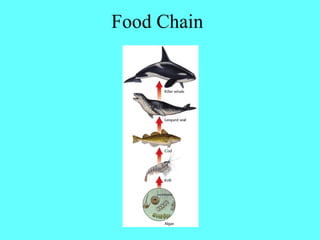
Food Chain
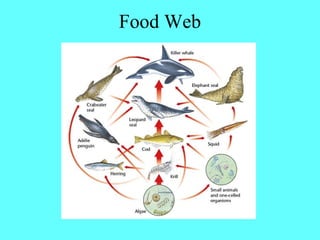
Food Web
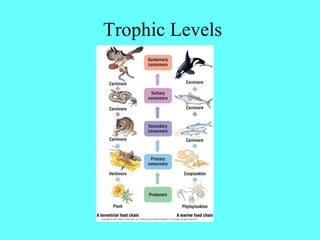
Trophic Levels
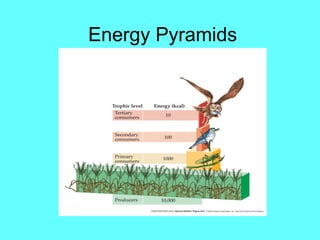
Energy Pyramids
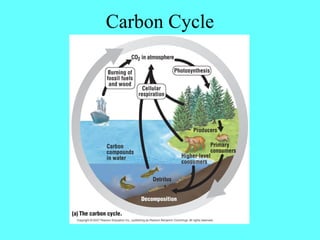
Carbon Cycle
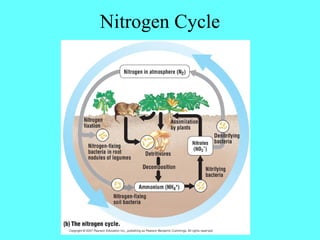
Nitrogen Cycle
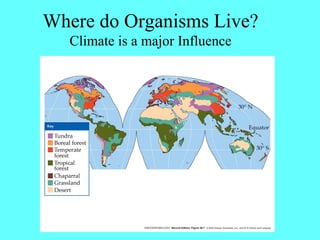
Where do Organisms Live?
  Climate is a major Influence
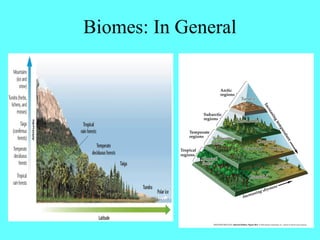
Biomes: In General
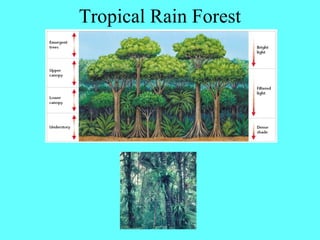
Tropical Rain Forest
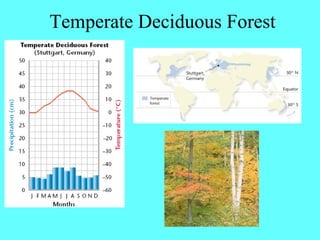
Temperate Deciduous Forest
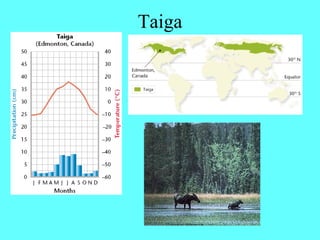
Taiga
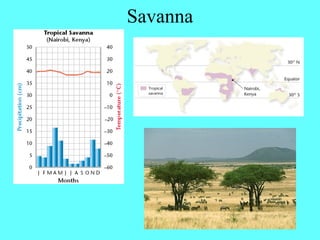
Savanna
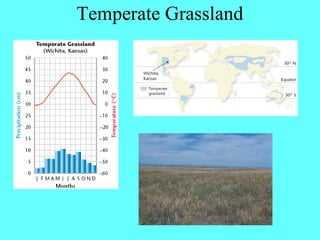
Temperate Grassland
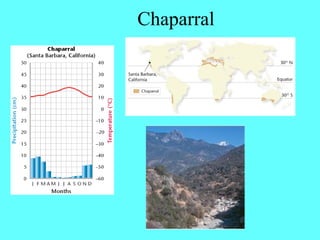
Chaparral
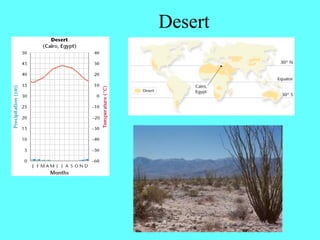
Desert
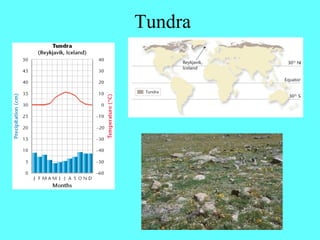
Tundra
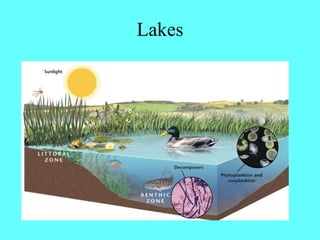
Lakes
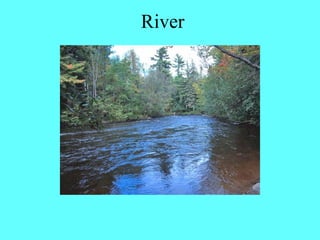
River
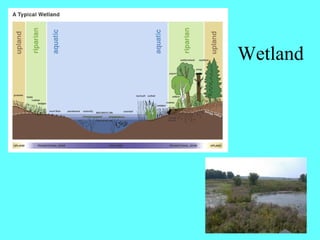
Wetland
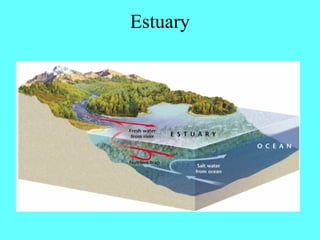
Estuary
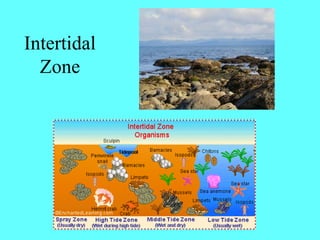
Intertidal
  Zone
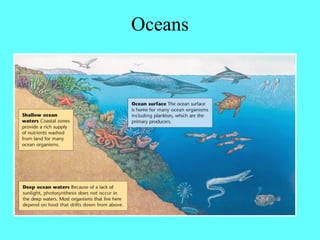
Oceans
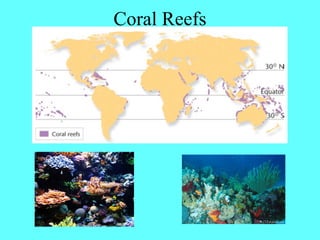
Coral Reefs
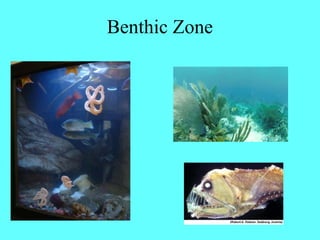
Benthic Zone

Ecology jt2012