Types
of
Saw
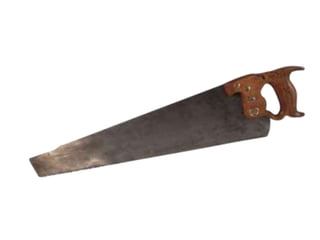
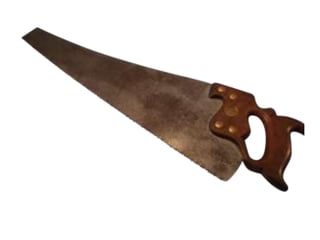
CROSS CUT SAW
Thwart saw
Saw designed for
cutting wood perpendicular to (across)
the wood grain.
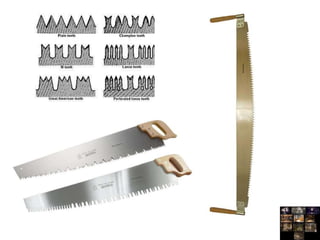
Crosscut saws generally have larger teeth
than rip saws.
They came into wide usage in Europe in
the middle of the 15th century.
RIP SAW
Handsaw used to cut the wood along the
grain
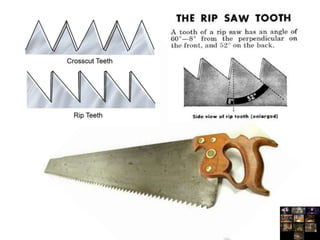
The cutting edge of each tooth has a flat
front edge and it is angled backward by
about 8°, in contrast to a crosscut saw,
which has teeth angled backward by
about 15°.
Rip saws typically have 4–10 teeth per
inch
COMPASS SAW
Used to cut irregular shape either in large or
small board
Saw used for making curved cuts known
as compasses, particularly in confined spaces
where a larger saw would not fit.
Compass saws have a narrow, tampered blade
usually ending in a sharp point, typically with
eight to ten teeth per inch
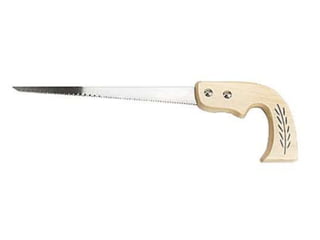
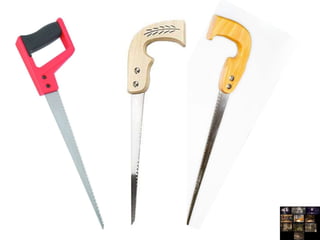
COMPASS SAW
have a curved, light "pistol grip" handle,
designed for work in confined spaces and
overhead.
Also known as keyhole saw, pad saws or
jab saws
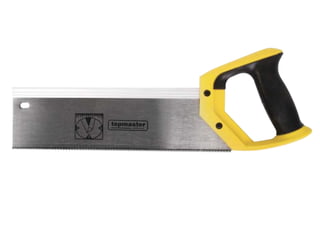
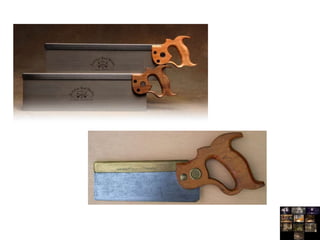
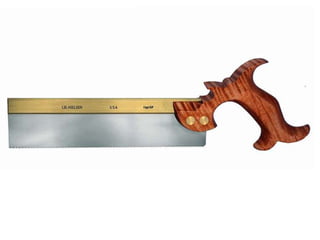
BACK SAW
Hand saw which has a stiffening rib on the edge
opposite the cutting edge, allowing for better
control and more precise cutting than with other
types of saws.
Backsaws are normally used in woodworking for
precise work.
Backsaws include the tenon saw, the dovetail
saw, and the (United Kingdom) sash saw.
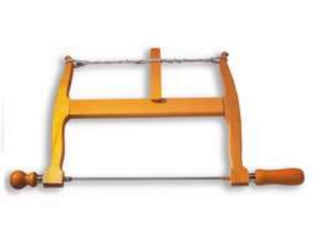
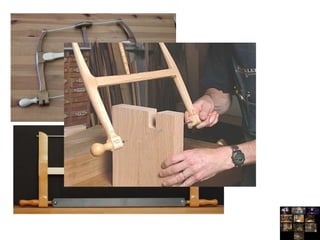
TURNING SAW
Bow saw, Swede saw, Finn saw or Buck saw.
Crosscut saw in the shape of a bow with a coarse
wide blade.
Can be used for cross-cutting branches or
firewood
Woodworking tool used for straight or curved
cuts.
The bow saw was used both in ancient China and
the Hellenistic period, and developed from earlier
saws.
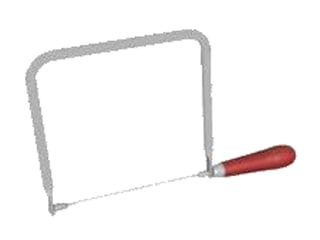
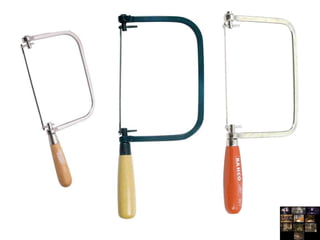
COPING SAW
hand saw used to cut intricate external shapes
and interior cut-outs in woodworking or
carpentry.
invented in middle of the 16th century
consists of a thin, hardened steel blade,
stretched between the ends of a square, c
shaped, springy-iron frame to which a handle
is attached
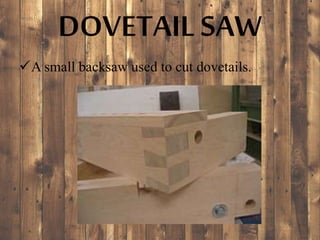
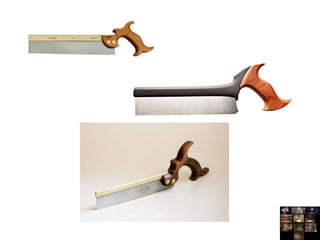
DOVETAIL SAW
A small backsaw used to cut dovetails.
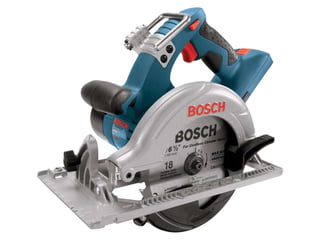
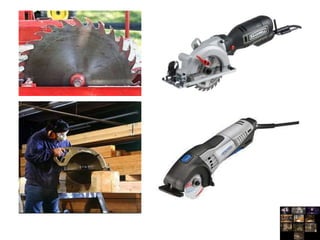
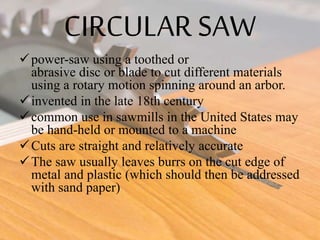
CIRCULAR SAW
power-saw using a toothed or
abrasive disc or blade to cut different materials
using a rotary motion spinning around an arbor.
invented in the late 18th century
common use in sawmills in the United States may
be hand-held or mounted to a machine
Cuts are straight and relatively accurate
The saw usually leaves burrs on the cut edge of
metal and plastic (which should then be addressed
with sand paper)
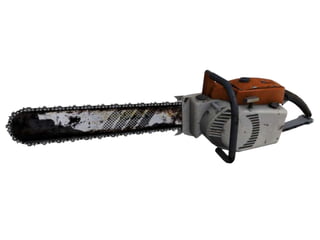
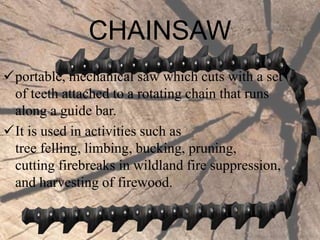
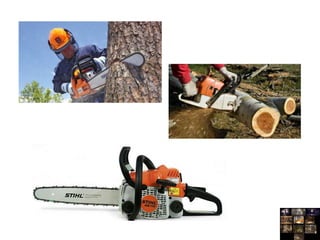
CHAINSAW
portable, mechanical saw which cuts with a set
of teeth attached to a rotating chain that runs
along a guide bar.
It is used in activities such as
tree felling, limbing, bucking, pruning,
cutting firebreaks in wildland fire suppression,
and harvesting of firewood.
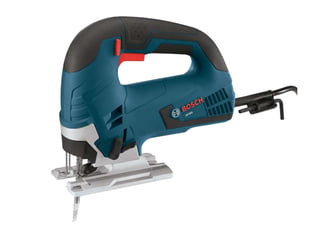
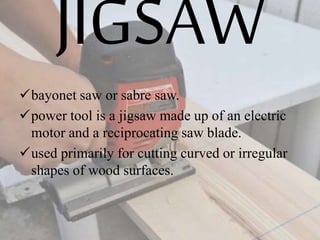
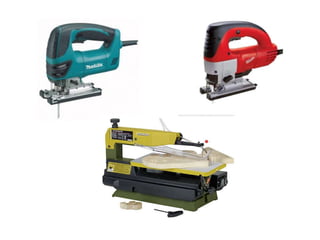
JIGSAW
bayonet saw or sabre saw.
power tool is a jigsaw made up of an electric
motor and a reciprocating saw blade.
used primarily for cutting curved or irregular
shapes of wood surfaces.
THANK YOU FOR HELPING ME
PRESENTEDBY:
FERNANDO C. RAYOS JR.
BSE - TLE II - B
THANK YOU!
HAVE A NICE DAY!

Types of Saw

  • 1.
  • 16.
    CROSS CUT SAW Thwartsaw Saw designed for cutting wood perpendicular to (across) the wood grain. Crosscut saws generally have larger teeth than rip saws. They came into wide usage in Europe in the middle of the 15th century.
  • 19.
    RIP SAW Handsaw usedto cut the wood along the grain The cutting edge of each tooth has a flat front edge and it is angled backward by about 8°, in contrast to a crosscut saw, which has teeth angled backward by about 15°. Rip saws typically have 4–10 teeth per inch
  • 22.
    COMPASS SAW Used tocut irregular shape either in large or small board Saw used for making curved cuts known as compasses, particularly in confined spaces where a larger saw would not fit. Compass saws have a narrow, tampered blade usually ending in a sharp point, typically with eight to ten teeth per inch
  • 23.
    COMPASS SAW have acurved, light "pistol grip" handle, designed for work in confined spaces and overhead. Also known as keyhole saw, pad saws or jab saws
  • 26.
    BACK SAW Hand sawwhich has a stiffening rib on the edge opposite the cutting edge, allowing for better control and more precise cutting than with other types of saws. Backsaws are normally used in woodworking for precise work. Backsaws include the tenon saw, the dovetail saw, and the (United Kingdom) sash saw.
  • 29.
    TURNING SAW Bow saw,Swede saw, Finn saw or Buck saw. Crosscut saw in the shape of a bow with a coarse wide blade. Can be used for cross-cutting branches or firewood Woodworking tool used for straight or curved cuts. The bow saw was used both in ancient China and the Hellenistic period, and developed from earlier saws.
  • 32.
    COPING SAW hand sawused to cut intricate external shapes and interior cut-outs in woodworking or carpentry. invented in middle of the 16th century consists of a thin, hardened steel blade, stretched between the ends of a square, c shaped, springy-iron frame to which a handle is attached
  • 35.
    DOVETAIL SAW A smallbacksaw used to cut dovetails.
  • 38.
    CIRCULAR SAW power-saw usinga toothed or abrasive disc or blade to cut different materials using a rotary motion spinning around an arbor. invented in the late 18th century common use in sawmills in the United States may be hand-held or mounted to a machine Cuts are straight and relatively accurate The saw usually leaves burrs on the cut edge of metal and plastic (which should then be addressed with sand paper)
  • 41.
    CHAINSAW portable, mechanical sawwhich cuts with a set of teeth attached to a rotating chain that runs along a guide bar. It is used in activities such as tree felling, limbing, bucking, pruning, cutting firebreaks in wildland fire suppression, and harvesting of firewood.
  • 44.
    JIGSAW bayonet saw orsabre saw. power tool is a jigsaw made up of an electric motor and a reciprocating saw blade. used primarily for cutting curved or irregular shapes of wood surfaces.
  • 46.
    THANK YOU FORHELPING ME
  • 47.
    PRESENTEDBY: FERNANDO C. RAYOSJR. BSE - TLE II - B THANK YOU! HAVE A NICE DAY!