WHAT IS PERSONALITY?
▧The personality is the typical
pattern of thinking, feeling, and
behaviors that make a person
unique.
▧The combination of characteristics
or qualities that form an individual's
distinctive character
WHAT IS DEVELOPMENT?
▧The process of
developing or being
developed.
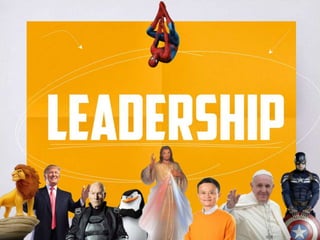
LEADERSHIP
LEADERSHIP
-The action of leading a
group of people or an
organization.
-The power or ability to lead
other people (MWD)
is both a research area and a
practical skill encompassing the
ability of an individual
or organization to "lead" or guide
other individuals, teams, or entire
organizations. (Wikipedia)
LEADERSHIP
STYLES
Autocratic Leadership
▧Autocratic leadership style is
centered on the boss. In this
leadership the leader holds all
authority and responsibility. In this
leadership, leaders make decisions
on their own without consulting
subordinates.
Democratic Leadership
▧In this leadership style, subordinates are
involved in making decisions. Unlike
autocratic, this headship is centered on
subordinates’ contributions. The
democratic leader holds final
responsibility, but he or she is known to
delegate authority to other people, who
determine work projects.
Strategic Leadership Style
▧Strategic leadership is one that involves
a leader who is essentially the head of an
organization. The strategic leader is not
limited to those at the top of the
organization. It is geared to a wider
audience at all levels who want to create a
high performance life, team or
organization.
Transformational Leadership
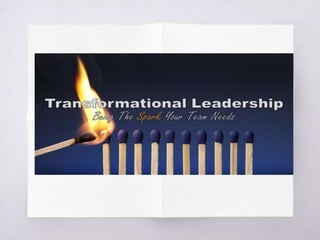
▧is all about initiating change in
organizations, groups, oneself and others.
▧Transformational leaders motivate others to
do more than they originally intended and
often even more than they thought possible.
They set more challenging expectations and
typically achieve higher performance.
Team Leadership
▧Team leadership involves the
creation of a vivid picture of its
future, where it is heading and
what it will stand for. The
vision inspires and provides a
strong sense of purpose and
direction.
Team leadership is about working with
the hearts and minds of all those
involved. It also recognizes that
teamwork may not always involve
trusting cooperative relationships. The
most challenging aspect of this
leadership is whether or not it will
succeed. According to Harvard
Business Review, team leadership may
fail because of poor leadership
qualities.
Cross-Cultural Leadership
▧Organizations, particularly international
ones require leaders who can effectively
adjust their leadership to work in
different environs. Most of the
leaderships observed in the United
States are cross-cultural because of the
different cultures that live and work
there.
Facilitative Leadership
▧An effective facilitative
leadership involves
monitoring of group dynamics,
offering process suggestions
and interventions to help the
group stay on track.
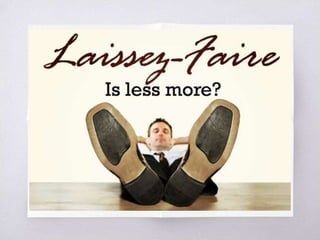
Laissez-faire Leadership
▧gives authority to employees.
According to azcentral, departments or
subordinates are allowed to work as
they choose with minimal or no
interference. According to research, this
kind of leadership has been consistently
found to be the least satisfying and
least effective management style.
Transactional Leadership
▧This is a leadership that maintains or
continues the status quo. It is also the
leadership that involves an exchange
process, whereby followers get
immediate, tangible rewards for
carrying out the leader’s orders.
Transactional leadership can sound
rather basic, with its focus on
exchange.
Coaching Leadership
▧involves teaching and supervising
followers. A coaching leader is highly
operational in setting where results/
performance require improvement.
Basically, in this kind of leadership,
followers are helped to improve their
skills. Coaching leadership does the
following: motivates followers, inspires
followers and encourages followers.
Charismatic Leadership
▧charismatic leader manifests
his or her revolutionary power.
Charisma does not mean
sheer behavioral change. It
actually involves a
transformation of followers’
values and beliefs.
Visionary Leadership
▧leaders who recognize that the
methods, steps and processes of
leadership are all obtained with and
through people. Most great and
successful leaders have the aspects
of vision in them.
▧Outstanding leaders will always
transform their visions into realities.
Top 5 Personality Development
Techniques to be a Better LEADER
▧1. Respect their time.
No matter where you are on the
corporate ladder, everyone’s time is
important and showing that you
respect their time speaks volumes
about you. This simple but important
personality development technique
will help you command respect as a
leader.
▧2. Take a break, often. It’s
important to leave some white space
in your daily schedule every day to
recharge. Constant work does not
necessarily lead to higher
productivity. The best ideas come
when you’re relaxed. This technique
will help you get back to work with
increased energy and creativity.
Top 5 Personality Development
Techniques to be a Better LEADER
▧3. Keep your ears open.
Smart leaders recognize that
they need to stop talking and
start listening. Don’t clamor to
prove your point and
demonstrate that you’re
smarter than everyone else.
Instead, be open to what you
can learn from others.
Top 5 Personality Development
Techniques to be a Better LEADER
▧4. Volunteer and offer
your time. Get involved in
community and charitable
programs. Giving back to
society fills your need for being
socially involved, provides
satisfaction, and also gives you
increased opportunities to build
your network.
Top 5 Personality Development
Techniques to be a Better LEADER
▧5. Work smart, not hard.
Effective leaders understand
that it’s not the number of
hours you put in that count; it’s
the results that you get. Make
the most efficient use of your
time by delegating tasks so you
can focus on the things that
really matter.
Top 5 Personality Development
Techniques to be a Better LEADER
GROUP
DYNAMICS
GROUP
DYNAMICS
▧the processes
involved when people
in a group interact
with each other, or
the study of these.
WHAT IS A GROUP?
▧Every organization is a
group unto itself. A group
refers to two or more
people who share a
common meaning and
evaluation of themselves
and come together to
achieve common goals.
•As applied to group
development, group
dynamics is
concerned with why
and how groups
develop.
The following are
strategies to
strengthen your
team's dynamics
Know
your
team.
Tackle
problems
quickly with
good feedback.
Define roles
and
responsibilities.
Break
down
barriers.
Focus on
communication.
Pay
attention.
TEAM BUILDING
▧is a collective term for various types of
activities used to enhance social relations
and define roles within teams, often involving
collaborative tasks
▧ is the process of turning a group of
individual employees into a cohesive team, a
group of people organized to work together
interdependently and cooperatively to meet
the needs of their customers by
accomplishing their purpose and goals.
6. Networking, socializing, and
getting to know each other better
▧Socializing and making friends
in the workplace is one of the
best ways to increase productivity
in the office. Not only does it
increase morale in the office, it
also allows for the office to work
better solving everyday
workplace issues.
5. Teamwork and boosting team
performance
▧Team bonding activities also improve
workplace projects that involve teamwork.
After completing team building activities
together, employees better understand
each other’s strengths, weaknesses, and
interests. This understanding helps them
work even better together on future
progress vital to a company.
4. Competition and bragging rights
▧Competition has been shown to
increase production. So, by
channeling that increased
production into a fun, inclusive
team building activity, employees
can bond in a way impossible by
other means.
3. Celebration, team spirit, fun, and
motivation
▧After any sports team wins a major
championship, they celebrate and
have fun. This motivates them to want
to win even more. This extreme
example shows that the celebration,
cheering, and fun that come with
every Team Bonding event can
motivate employees to bring their job
to the next level.
2. Collaboration and the fostering of
innovation and creativity
▧People tend to have a larger
imagination when they are around
people they are comfortable with. So,
successful team building events not
only bring people closer together but
they also lead to more successful and
creative workplace ideas. Also,
everyday workplace collaboration is
key to a successful business
1. Communication and working better
together
▧To no surprise, communication
and working better together is the
top reason why people choose
team building. Everybody wants a
friendly work environment, where
people are comfortable and
happy to talk to and work with
anyone.
IMPORTANCE
▧Team bonding activities also improve
workplace projects that involve
teamwork. After completing team
building activities together, employees
better understand each other's
strengths, weaknesses, and interests.
This understanding helps them work
even better together on future progress
vital to a company
EFFECTIVE TEAM BUILDING
▧The first rule of team building is an
obvious one: to lead a team
effectively, you must first establish
your leadership with
each team member. Remember that
the most effective
team leaders build their relationships
of trust and loyalty, rather than fear or
the power of their positions.
Leadership   tle 3 a pd

Leadership tle 3 a pd

  • 2.
    WHAT IS PERSONALITY? ▧Thepersonality is the typical pattern of thinking, feeling, and behaviors that make a person unique. ▧The combination of characteristics or qualities that form an individual's distinctive character
  • 3.
    WHAT IS DEVELOPMENT? ▧Theprocess of developing or being developed.
  • 5.
  • 6.
    LEADERSHIP -The action ofleading a group of people or an organization. -The power or ability to lead other people (MWD) is both a research area and a practical skill encompassing the ability of an individual or organization to "lead" or guide other individuals, teams, or entire organizations. (Wikipedia)
  • 7.
  • 8.
    Autocratic Leadership ▧Autocratic leadershipstyle is centered on the boss. In this leadership the leader holds all authority and responsibility. In this leadership, leaders make decisions on their own without consulting subordinates.
  • 10.
    Democratic Leadership ▧In thisleadership style, subordinates are involved in making decisions. Unlike autocratic, this headship is centered on subordinates’ contributions. The democratic leader holds final responsibility, but he or she is known to delegate authority to other people, who determine work projects.
  • 12.
    Strategic Leadership Style ▧Strategicleadership is one that involves a leader who is essentially the head of an organization. The strategic leader is not limited to those at the top of the organization. It is geared to a wider audience at all levels who want to create a high performance life, team or organization.
  • 14.
    Transformational Leadership ▧is allabout initiating change in organizations, groups, oneself and others. ▧Transformational leaders motivate others to do more than they originally intended and often even more than they thought possible. They set more challenging expectations and typically achieve higher performance.
  • 16.
    Team Leadership ▧Team leadershipinvolves the creation of a vivid picture of its future, where it is heading and what it will stand for. The vision inspires and provides a strong sense of purpose and direction.
  • 17.
    Team leadership isabout working with the hearts and minds of all those involved. It also recognizes that teamwork may not always involve trusting cooperative relationships. The most challenging aspect of this leadership is whether or not it will succeed. According to Harvard Business Review, team leadership may fail because of poor leadership qualities.
  • 19.
    Cross-Cultural Leadership ▧Organizations, particularlyinternational ones require leaders who can effectively adjust their leadership to work in different environs. Most of the leaderships observed in the United States are cross-cultural because of the different cultures that live and work there.
  • 21.
    Facilitative Leadership ▧An effectivefacilitative leadership involves monitoring of group dynamics, offering process suggestions and interventions to help the group stay on track.
  • 23.
    Laissez-faire Leadership ▧gives authorityto employees. According to azcentral, departments or subordinates are allowed to work as they choose with minimal or no interference. According to research, this kind of leadership has been consistently found to be the least satisfying and least effective management style.
  • 25.
    Transactional Leadership ▧This isa leadership that maintains or continues the status quo. It is also the leadership that involves an exchange process, whereby followers get immediate, tangible rewards for carrying out the leader’s orders. Transactional leadership can sound rather basic, with its focus on exchange.
  • 27.
    Coaching Leadership ▧involves teachingand supervising followers. A coaching leader is highly operational in setting where results/ performance require improvement. Basically, in this kind of leadership, followers are helped to improve their skills. Coaching leadership does the following: motivates followers, inspires followers and encourages followers.
  • 29.
    Charismatic Leadership ▧charismatic leadermanifests his or her revolutionary power. Charisma does not mean sheer behavioral change. It actually involves a transformation of followers’ values and beliefs.
  • 31.
    Visionary Leadership ▧leaders whorecognize that the methods, steps and processes of leadership are all obtained with and through people. Most great and successful leaders have the aspects of vision in them. ▧Outstanding leaders will always transform their visions into realities.
  • 34.
    Top 5 PersonalityDevelopment Techniques to be a Better LEADER ▧1. Respect their time. No matter where you are on the corporate ladder, everyone’s time is important and showing that you respect their time speaks volumes about you. This simple but important personality development technique will help you command respect as a leader.
  • 35.
    ▧2. Take abreak, often. It’s important to leave some white space in your daily schedule every day to recharge. Constant work does not necessarily lead to higher productivity. The best ideas come when you’re relaxed. This technique will help you get back to work with increased energy and creativity. Top 5 Personality Development Techniques to be a Better LEADER
  • 36.
    ▧3. Keep yourears open. Smart leaders recognize that they need to stop talking and start listening. Don’t clamor to prove your point and demonstrate that you’re smarter than everyone else. Instead, be open to what you can learn from others. Top 5 Personality Development Techniques to be a Better LEADER
  • 37.
    ▧4. Volunteer andoffer your time. Get involved in community and charitable programs. Giving back to society fills your need for being socially involved, provides satisfaction, and also gives you increased opportunities to build your network. Top 5 Personality Development Techniques to be a Better LEADER
  • 38.
    ▧5. Work smart,not hard. Effective leaders understand that it’s not the number of hours you put in that count; it’s the results that you get. Make the most efficient use of your time by delegating tasks so you can focus on the things that really matter. Top 5 Personality Development Techniques to be a Better LEADER
  • 43.
  • 44.
    GROUP DYNAMICS ▧the processes involved whenpeople in a group interact with each other, or the study of these.
  • 45.
    WHAT IS AGROUP? ▧Every organization is a group unto itself. A group refers to two or more people who share a common meaning and evaluation of themselves and come together to achieve common goals.
  • 46.
    •As applied togroup development, group dynamics is concerned with why and how groups develop.
  • 47.
    The following are strategiesto strengthen your team's dynamics
  • 48.
  • 49.
  • 50.
  • 51.
  • 52.
  • 53.
  • 55.
    TEAM BUILDING ▧is acollective term for various types of activities used to enhance social relations and define roles within teams, often involving collaborative tasks ▧ is the process of turning a group of individual employees into a cohesive team, a group of people organized to work together interdependently and cooperatively to meet the needs of their customers by accomplishing their purpose and goals.
  • 57.
    6. Networking, socializing,and getting to know each other better ▧Socializing and making friends in the workplace is one of the best ways to increase productivity in the office. Not only does it increase morale in the office, it also allows for the office to work better solving everyday workplace issues.
  • 58.
    5. Teamwork andboosting team performance ▧Team bonding activities also improve workplace projects that involve teamwork. After completing team building activities together, employees better understand each other’s strengths, weaknesses, and interests. This understanding helps them work even better together on future progress vital to a company.
  • 59.
    4. Competition andbragging rights ▧Competition has been shown to increase production. So, by channeling that increased production into a fun, inclusive team building activity, employees can bond in a way impossible by other means.
  • 60.
    3. Celebration, teamspirit, fun, and motivation ▧After any sports team wins a major championship, they celebrate and have fun. This motivates them to want to win even more. This extreme example shows that the celebration, cheering, and fun that come with every Team Bonding event can motivate employees to bring their job to the next level.
  • 61.
    2. Collaboration andthe fostering of innovation and creativity ▧People tend to have a larger imagination when they are around people they are comfortable with. So, successful team building events not only bring people closer together but they also lead to more successful and creative workplace ideas. Also, everyday workplace collaboration is key to a successful business
  • 62.
    1. Communication andworking better together ▧To no surprise, communication and working better together is the top reason why people choose team building. Everybody wants a friendly work environment, where people are comfortable and happy to talk to and work with anyone.
  • 63.
    IMPORTANCE ▧Team bonding activitiesalso improve workplace projects that involve teamwork. After completing team building activities together, employees better understand each other's strengths, weaknesses, and interests. This understanding helps them work even better together on future progress vital to a company
  • 64.
    EFFECTIVE TEAM BUILDING ▧Thefirst rule of team building is an obvious one: to lead a team effectively, you must first establish your leadership with each team member. Remember that the most effective team leaders build their relationships of trust and loyalty, rather than fear or the power of their positions.