TYPES OF WOOD
JOINT
Reymond E. Maliberan
Wood Joints
Advantages
• − Give strength
• − Long lasting
• − Decorative
• − Resist forces well
Disadvantages
• − Time-consuming
• − Require skill – difficult to make
• − Special tools needed
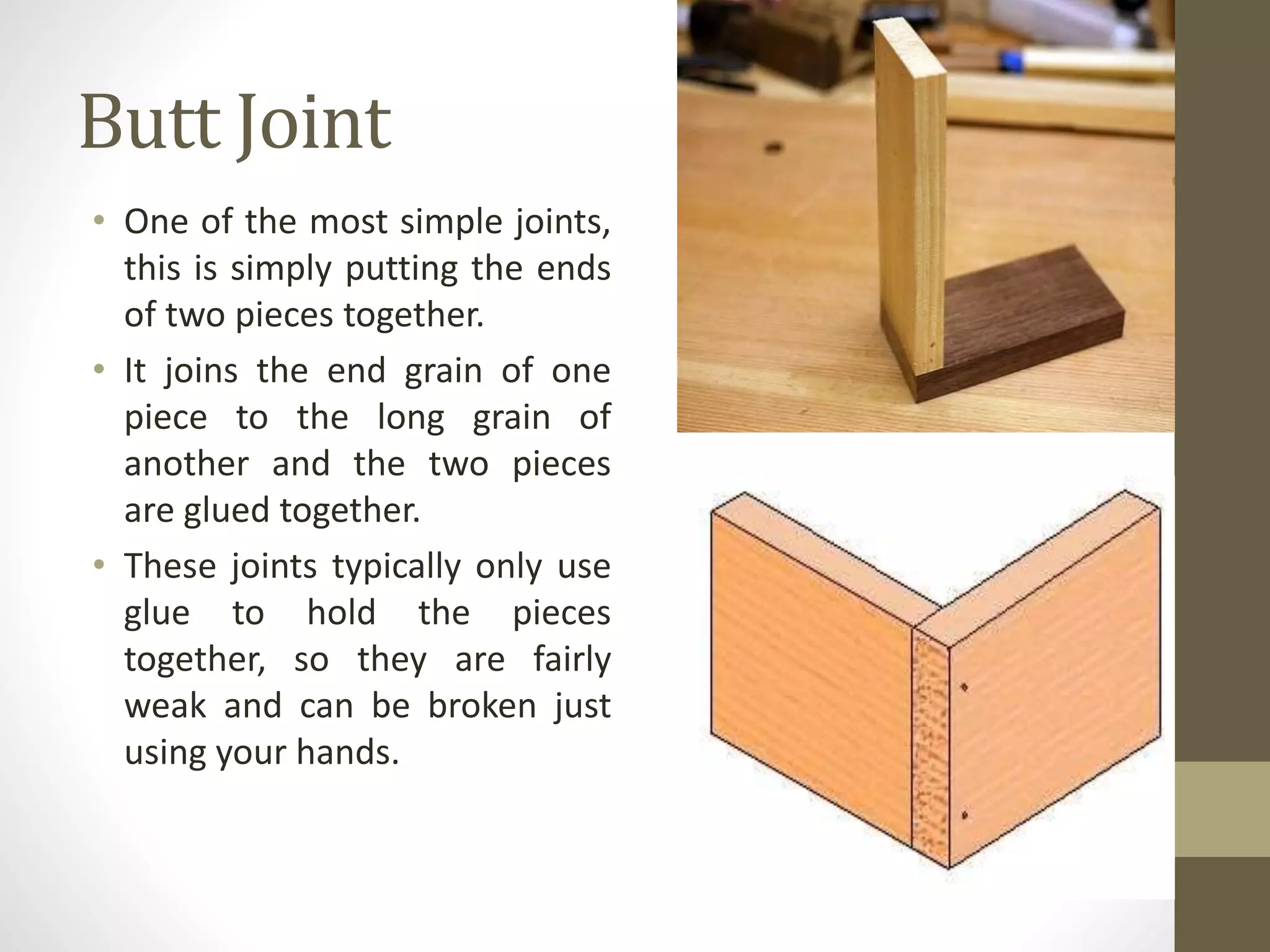
Butt Joint
• One of the most simple joints,
this is simply putting the ends
of two pieces together.
• It joins the end grain of one
piece to the long grain of
another and the two pieces
are glued together.
• These joints typically only use
glue to hold the pieces
together, so they are fairly
weak and can be broken just
using your hands.
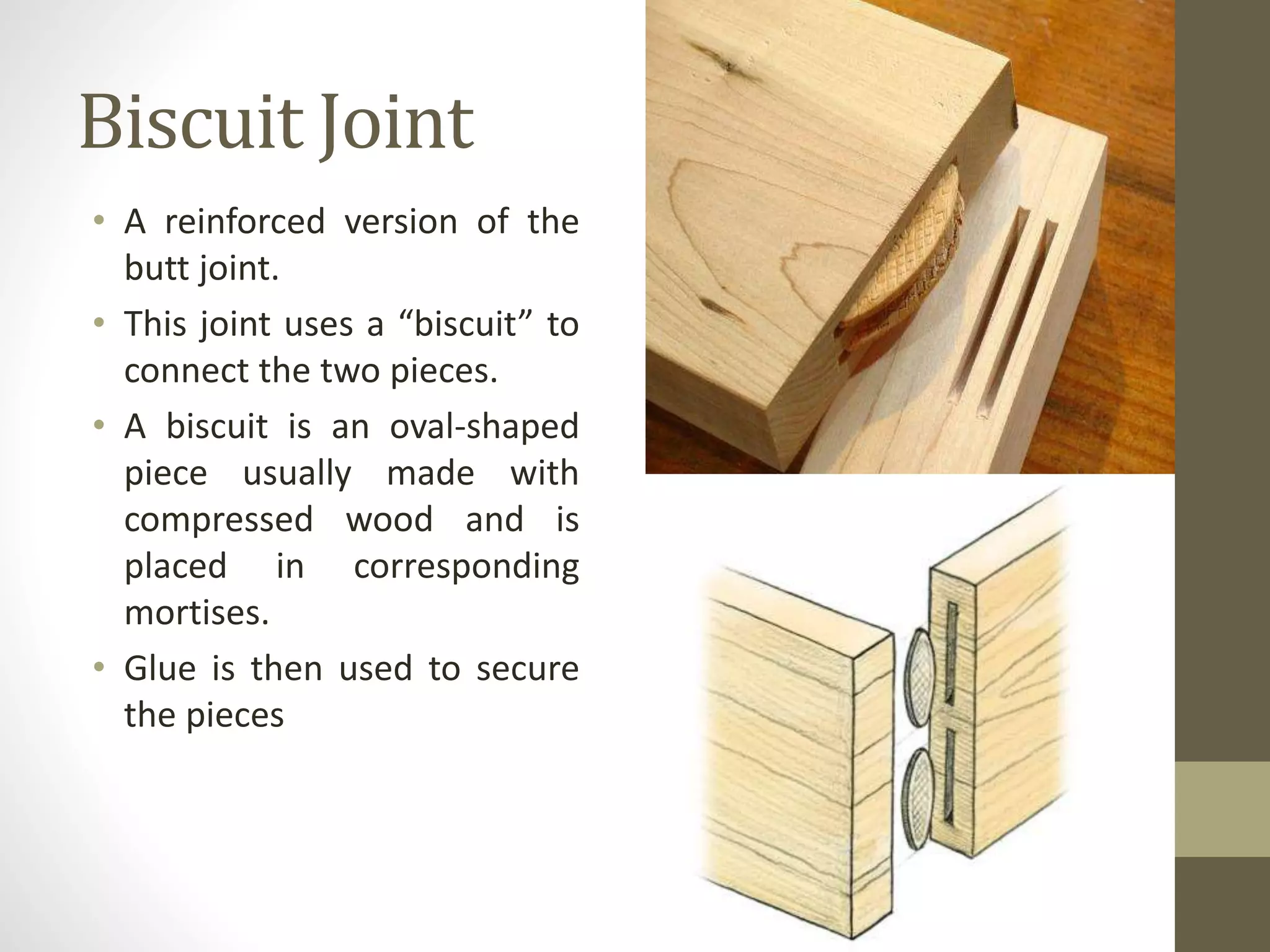
Biscuit Joint
• A reinforced version of the
butt joint.
• This joint uses a “biscuit” to
connect the two pieces.
• A biscuit is an oval-shaped
piece usually made with
compressed wood and is
placed in corresponding
mortises.
• Glue is then used to secure
the pieces
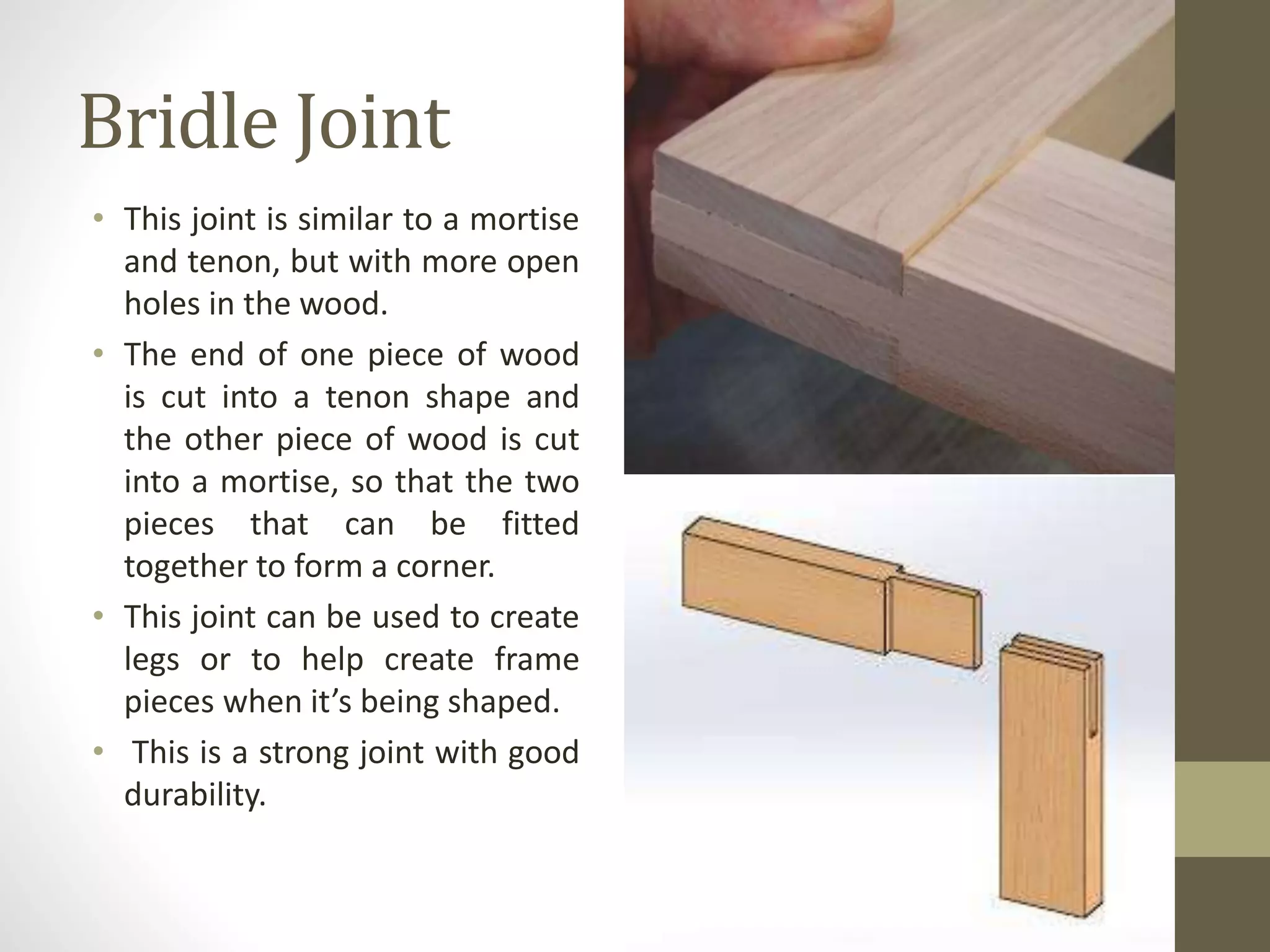
Bridle Joint
• This joint is similar to a mortise
and tenon, but with more open
holes in the wood.
• The end of one piece of wood
is cut into a tenon shape and
the other piece of wood is cut
into a mortise, so that the two
pieces that can be fitted
together to form a corner.
• This joint can be used to create
legs or to help create frame
pieces when it’s being shaped.
• This is a strong joint with good
durability.
Dado (Joinery)
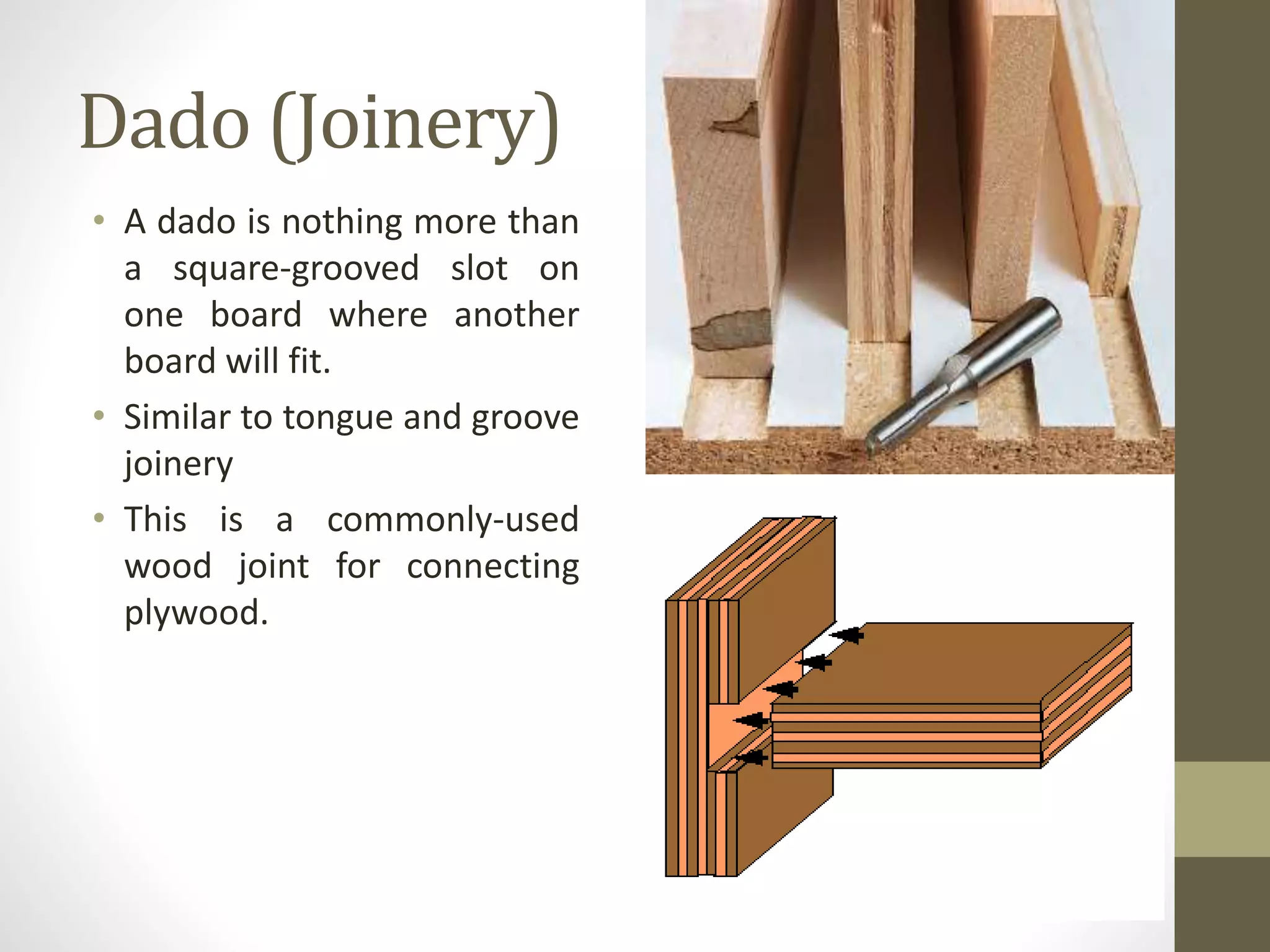
• A dado is nothing more than
a square-grooved slot on
one board where another
board will fit.
• Similar to tongue and groove
joinery
• This is a commonly-used
wood joint for connecting
plywood.
Dovetail Joint
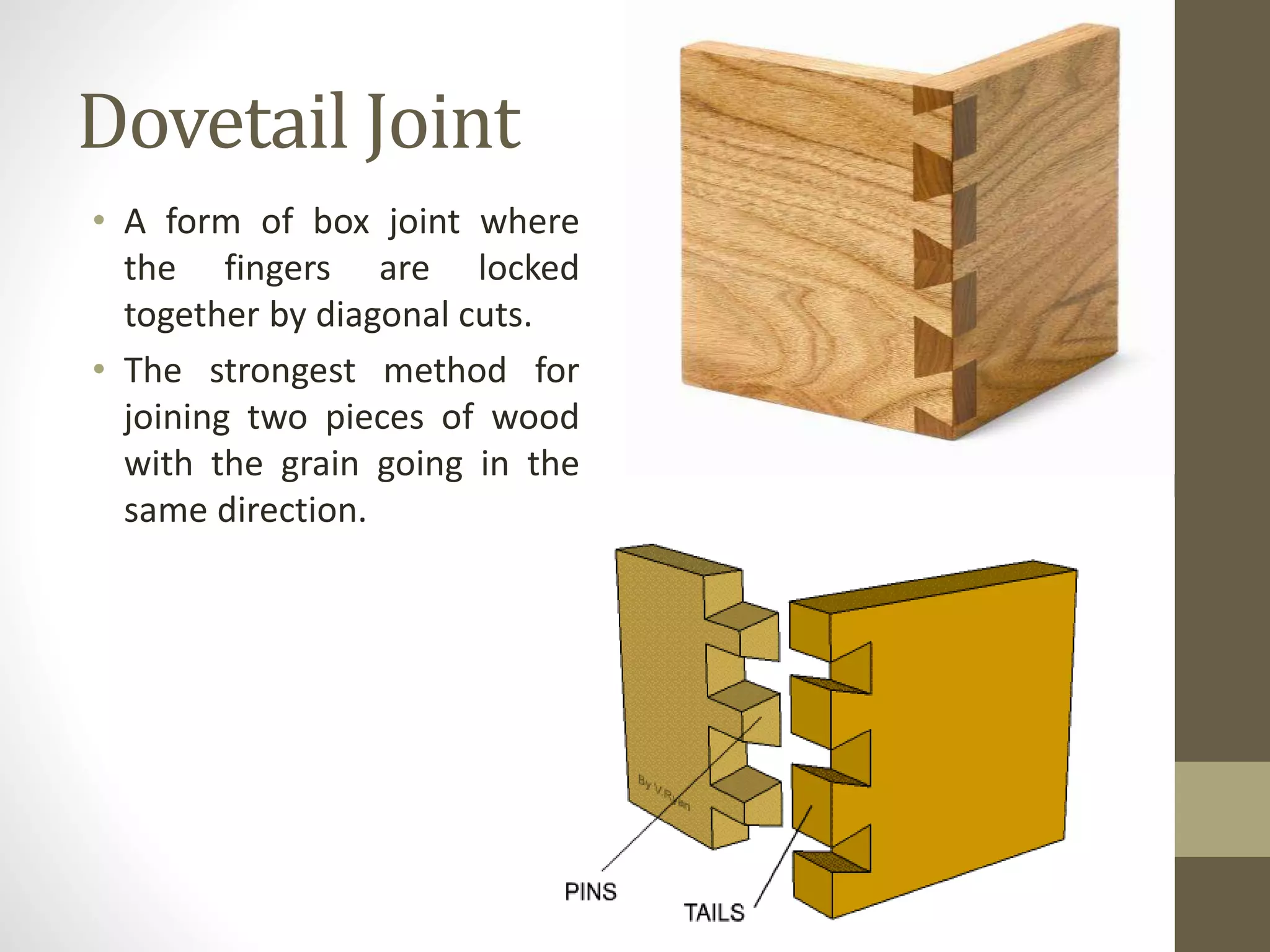
• A form of box joint where
the fingers are locked
together by diagonal cuts.
• The strongest method for
joining two pieces of wood
with the grain going in the
same direction.
Finger Joint
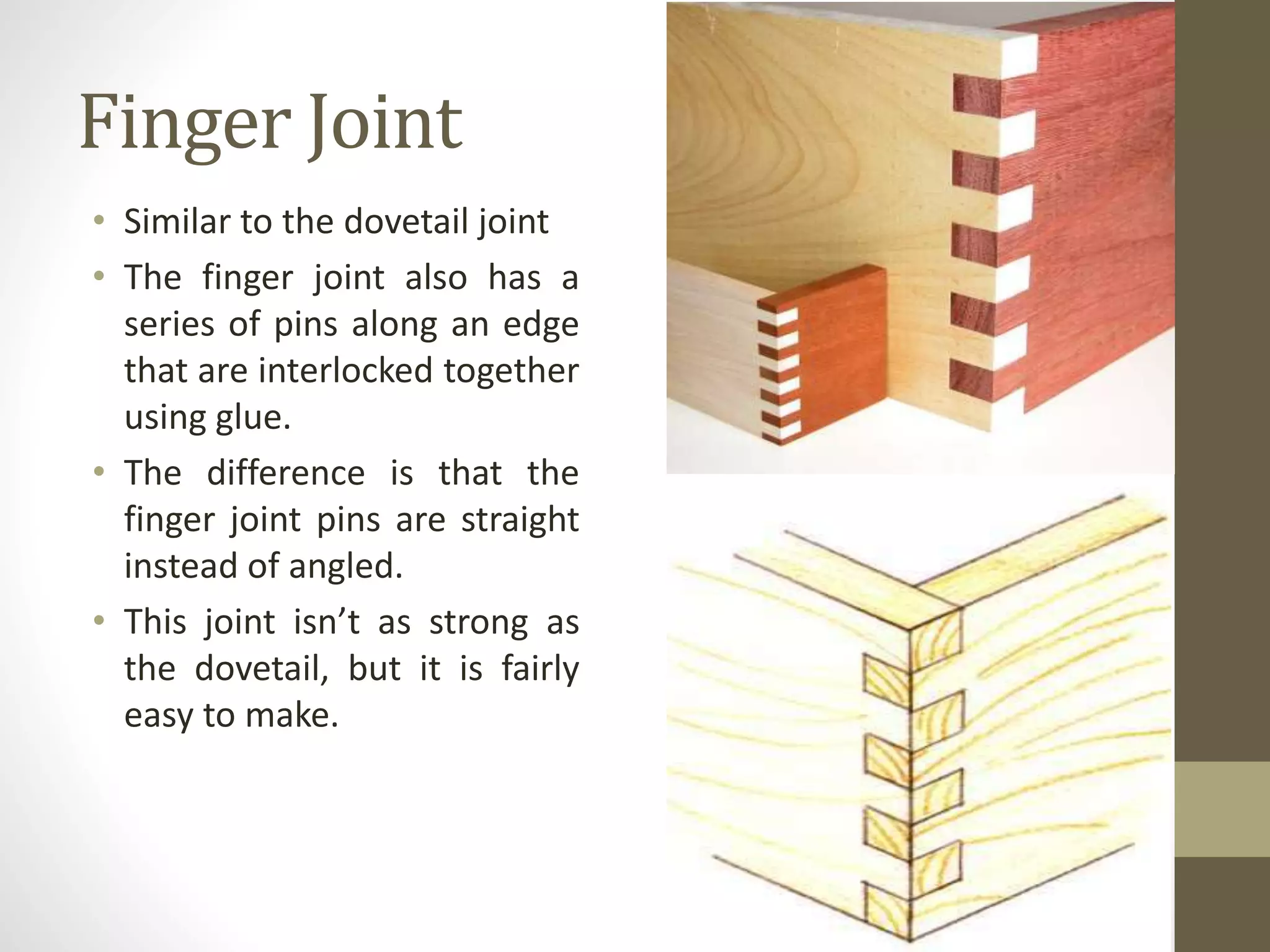
• Similar to the dovetail joint
• The finger joint also has a
series of pins along an edge
that are interlocked together
using glue.
• The difference is that the
finger joint pins are straight
instead of angled.
• This joint isn’t as strong as
the dovetail, but it is fairly
easy to make.
Lap Wood Joint
• The lap wood joint combines
two pieces of wood by
cutting away half the
thickness of the pieces.
• This joint is typically used
when the two pieces have
the same thickness.
• The portion of wood cut
away will fit into the
corresponding cutout on the
other piece.
Mortise and
Tenon
• One of the strongest
• The mortise and tenon is
used to attach two pieces of
wood at a 90-degree angle.
• The mortise part of the joint
is a hole or cavity cut into
one piece of wood.
• The tenon is typically around
⅓ the thickness of the piece
of wood.
Pocket Hole
• A strong joint that uses a
pocket hole that is cut into
one piece of wood with
another pilot hole that
allows a screw to be driven
into the adjoining piece of
wood.
Rabbet Joint
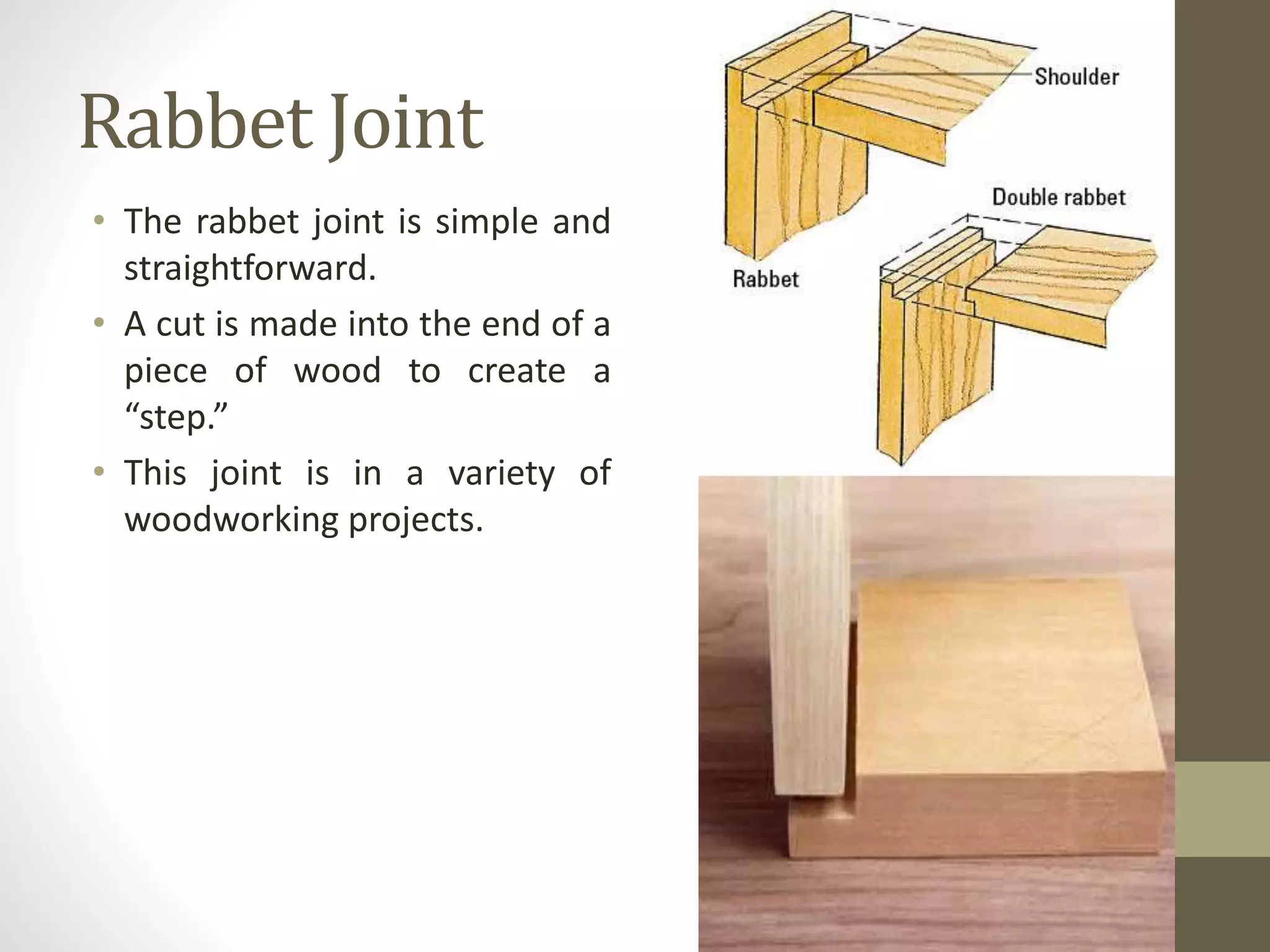
• The rabbet joint is simple and
straightforward.
• A cut is made into the end of a
piece of wood to create a
“step.”
• This joint is in a variety of
woodworking projects.
Tongue and
Groove
• Joining two boards square to
one another along a long
edge, one can simply butt the
joint together and hold it with
fasteners.
• The tongue and groove joint is
much stronger
• Provides more adjoining
surface areas, which is
particularly useful.

Types of wood joint

  • 1.
  • 2.
    Wood Joints Advantages • −Give strength • − Long lasting • − Decorative • − Resist forces well Disadvantages • − Time-consuming • − Require skill – difficult to make • − Special tools needed
  • 3.
    Butt Joint • Oneof the most simple joints, this is simply putting the ends of two pieces together. • It joins the end grain of one piece to the long grain of another and the two pieces are glued together. • These joints typically only use glue to hold the pieces together, so they are fairly weak and can be broken just using your hands.
  • 4.
    Biscuit Joint • Areinforced version of the butt joint. • This joint uses a “biscuit” to connect the two pieces. • A biscuit is an oval-shaped piece usually made with compressed wood and is placed in corresponding mortises. • Glue is then used to secure the pieces
  • 5.
    Bridle Joint • Thisjoint is similar to a mortise and tenon, but with more open holes in the wood. • The end of one piece of wood is cut into a tenon shape and the other piece of wood is cut into a mortise, so that the two pieces that can be fitted together to form a corner. • This joint can be used to create legs or to help create frame pieces when it’s being shaped. • This is a strong joint with good durability.
  • 6.
    Dado (Joinery) • Adado is nothing more than a square-grooved slot on one board where another board will fit. • Similar to tongue and groove joinery • This is a commonly-used wood joint for connecting plywood.
  • 7.
    Dovetail Joint • Aform of box joint where the fingers are locked together by diagonal cuts. • The strongest method for joining two pieces of wood with the grain going in the same direction.
  • 8.
    Finger Joint • Similarto the dovetail joint • The finger joint also has a series of pins along an edge that are interlocked together using glue. • The difference is that the finger joint pins are straight instead of angled. • This joint isn’t as strong as the dovetail, but it is fairly easy to make.
  • 9.
    Lap Wood Joint •The lap wood joint combines two pieces of wood by cutting away half the thickness of the pieces. • This joint is typically used when the two pieces have the same thickness. • The portion of wood cut away will fit into the corresponding cutout on the other piece.
  • 10.
    Mortise and Tenon • Oneof the strongest • The mortise and tenon is used to attach two pieces of wood at a 90-degree angle. • The mortise part of the joint is a hole or cavity cut into one piece of wood. • The tenon is typically around ⅓ the thickness of the piece of wood.
  • 11.
    Pocket Hole • Astrong joint that uses a pocket hole that is cut into one piece of wood with another pilot hole that allows a screw to be driven into the adjoining piece of wood.
  • 12.
    Rabbet Joint • Therabbet joint is simple and straightforward. • A cut is made into the end of a piece of wood to create a “step.” • This joint is in a variety of woodworking projects.
  • 13.
    Tongue and Groove • Joiningtwo boards square to one another along a long edge, one can simply butt the joint together and hold it with fasteners. • The tongue and groove joint is much stronger • Provides more adjoining surface areas, which is particularly useful.