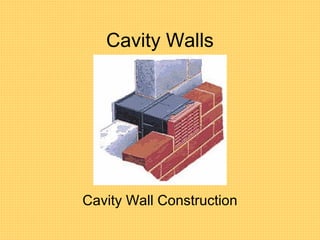
Cavity Walls
Cavity Wall Construction
Tutor Copy
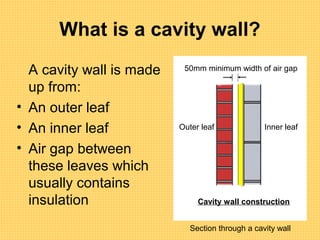
What is a cavity wall?
A cavity wall is made
up from:
• An outer leaf
• An inner leaf
• Air gap between
these leaves which
usually contains
insulation
Outer leaf
Cavity wall construction
Inner leaf
50mm minimum width of air gap
Section through a cavity wall
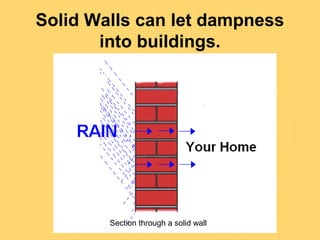
Solid Walls can let dampness
into buildings.
Section through a solid wall
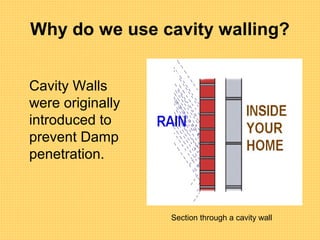
Why do we use cavity walling?
Cavity Walls
were originally
introduced to
prevent Damp
penetration.
Section through a cavity wall
Problems?
• Weakness: Two slender half brick / block
skins are not as strong as a one brick thick
solid wall.
How can this Kind of walling be
strengthened?
The use of Cavity Wall
Ties
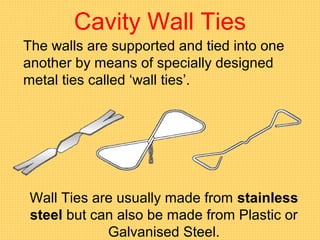
Cavity Wall Ties
The walls are supported and tied into one
another by means of specially designed
metal ties called ‘wall ties’.
Wall Ties are usually made from stainless
steel but can also be made from Plastic or
Galvanised Steel.
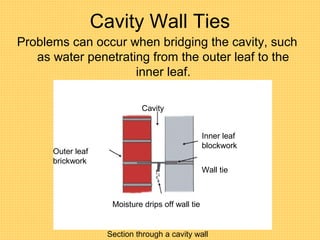
Cavity Wall Ties
Problems can occur when bridging the cavity, such
as water penetrating from the outer leaf to the
inner leaf.
Outer leaf
brickwork
Inner leaf
blockwork
Wall tie
Moisture drips off wall tie
Cavity
Section through a cavity wall
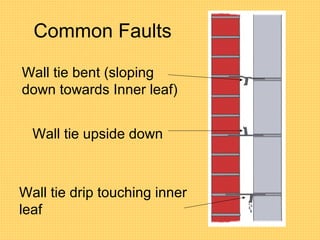
Common Faults
Wall tie bent (sloping
down towards Inner leaf)
Wall tie upside down
Wall tie drip touching inner
leaf
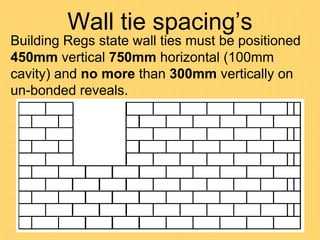
Wall tie spacing’s
Building Regs state wall ties must be positioned
450mm vertical 750mm horizontal (100mm
cavity) and no more than 300mm vertically on
un-bonded reveals.
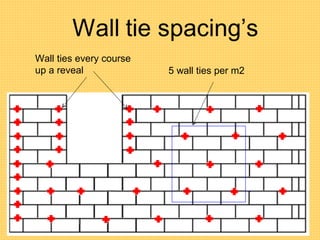
5 wall ties per m2
Wall ties every course
up a reveal
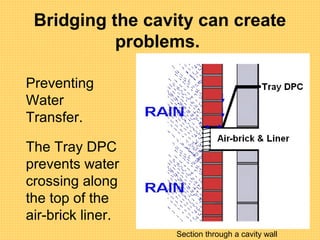
Bridging the cavity can create
problems.
Preventing
Water
Transfer.
The Tray DPC
prevents water
crossing along
the top of the
air-brick liner.
Section through a cavity wall
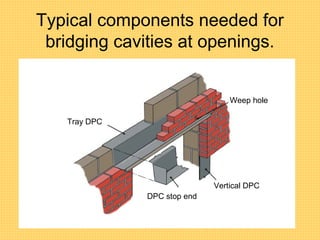
Typical components needed for
bridging cavities at openings.
Tray DPC
DPC stop end
Vertical DPC
Weep hole
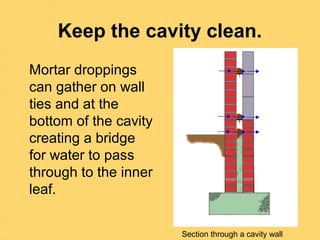
Keep the cavity clean.
Mortar droppings
can gather on wall
ties and at the
bottom of the cavity
creating a bridge
for water to pass
through to the inner
leaf.
Section through a cavity wall
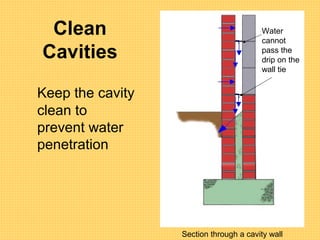
Clean
Cavities
Keep the cavity
clean to
prevent water
penetration
Section through a cavity wall
Water
cannot
pass the
drip on the
wall tie
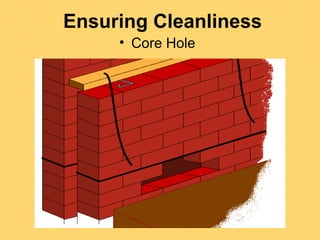
Ensuring Cleanliness
• Core Hole
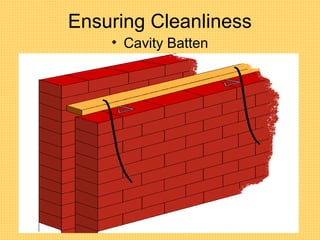
Ensuring Cleanliness
• Cavity Batten
Wall construction below ground
level
Cavity walling below ground level:-
• Cavity wall formed with two leafs of
common bricks. The external leaf will revert
to facing bricks 2 course below ground level
to allow the bricklayer to ensure that bond is
worked out
Broken Bond
If Broken Bond can not be avoided the piece
should be placed in the centre of the wall, or
against the reveal.
No cut should be less than ½ brick
If bastard sized window and doors are used
then the piece is better placed under the
opening if possible.
ANY CUT SHOULD ALWAYS STAY IN THE
SAME POSITION

Tutor l1 cavity wall construction

  • 1.
  • 2.
  • 3.
    What is acavity wall? A cavity wall is made up from: • An outer leaf • An inner leaf • Air gap between these leaves which usually contains insulation Outer leaf Cavity wall construction Inner leaf 50mm minimum width of air gap Section through a cavity wall
  • 4.
    Solid Walls canlet dampness into buildings. Section through a solid wall
  • 5.
    Why do weuse cavity walling? Cavity Walls were originally introduced to prevent Damp penetration. Section through a cavity wall
  • 6.
    Problems? • Weakness: Twoslender half brick / block skins are not as strong as a one brick thick solid wall. How can this Kind of walling be strengthened? The use of Cavity Wall Ties
  • 7.
    Cavity Wall Ties Thewalls are supported and tied into one another by means of specially designed metal ties called ‘wall ties’. Wall Ties are usually made from stainless steel but can also be made from Plastic or Galvanised Steel.
  • 8.
    Cavity Wall Ties Problemscan occur when bridging the cavity, such as water penetrating from the outer leaf to the inner leaf. Outer leaf brickwork Inner leaf blockwork Wall tie Moisture drips off wall tie Cavity Section through a cavity wall
  • 9.
    Common Faults Wall tiebent (sloping down towards Inner leaf) Wall tie upside down Wall tie drip touching inner leaf
  • 10.
    Wall tie spacing’s BuildingRegs state wall ties must be positioned 450mm vertical 750mm horizontal (100mm cavity) and no more than 300mm vertically on un-bonded reveals.
  • 11.
    5 wall tiesper m2 Wall ties every course up a reveal
  • 12.
    Bridging the cavitycan create problems. Preventing Water Transfer. The Tray DPC prevents water crossing along the top of the air-brick liner. Section through a cavity wall
  • 13.
    Typical components neededfor bridging cavities at openings. Tray DPC DPC stop end Vertical DPC Weep hole
  • 14.
    Keep the cavityclean. Mortar droppings can gather on wall ties and at the bottom of the cavity creating a bridge for water to pass through to the inner leaf. Section through a cavity wall
  • 15.
    Clean Cavities Keep the cavity cleanto prevent water penetration Section through a cavity wall Water cannot pass the drip on the wall tie
  • 16.
  • 17.
  • 18.
    Wall construction belowground level Cavity walling below ground level:- • Cavity wall formed with two leafs of common bricks. The external leaf will revert to facing bricks 2 course below ground level to allow the bricklayer to ensure that bond is worked out
  • 19.
    Broken Bond If BrokenBond can not be avoided the piece should be placed in the centre of the wall, or against the reveal. No cut should be less than ½ brick If bastard sized window and doors are used then the piece is better placed under the opening if possible. ANY CUT SHOULD ALWAYS STAY IN THE SAME POSITION