Building Methods &
Construction Technology
Brickwork Below Ground Level
Tutor Copy
Brickwork up to DPC Level on
Strip Foundations
After the foundations have been concreted,
the bricklayer has to set out the position of
the main corners of the building. The corner
profiles used to set out the building before
the foundations were dug need the ranging
lines re attaching. This will provide the
bricklayer with the relevant positions of the
new walls.
These ranging lines will cross at the corners of the
building to indicate the position of each
brickwork/blockwork quoin. At this stage the lines
must be checked for accuracy. This is essential as
the profiles may have been disturbed during the
excavation/concreting stages.
Width of Wall Width of trench
Mortar screed spread out and marked with a trowel to show the
position of the walls using a spirit level to range down from the lines
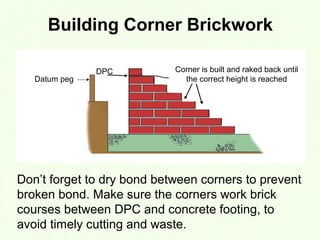
Building Corner Brickwork
DPC Corner is built and raked back until
the correct height is reached
Don’t forget to dry bond between corners to prevent
broken bond. Make sure the corners work brick
courses between DPC and concrete footing, to
avoid timely cutting and waste.
Datum peg
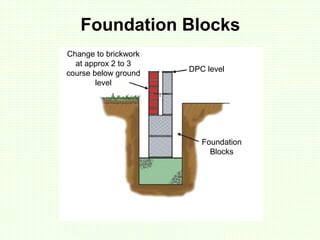
Foundation Blocks
Change to brickwork
at approx 2 to 3
course below ground
level
DPC level
Foundation
Blocks
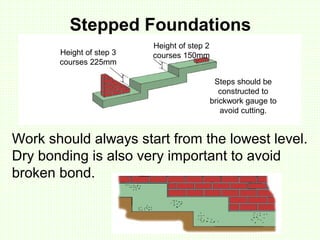
Stepped Foundations
Work should always start from the lowest level.
Dry bonding is also very important to avoid
broken bond.
Height of step 3
courses 225mm
Height of step 2
courses 150mm
Steps should be
constructed to
brickwork gauge to
avoid cutting.

Tutor brickwork below ground level

  • 1.
    Building Methods & ConstructionTechnology Brickwork Below Ground Level
  • 2.
  • 3.
    Brickwork up toDPC Level on Strip Foundations After the foundations have been concreted, the bricklayer has to set out the position of the main corners of the building. The corner profiles used to set out the building before the foundations were dug need the ranging lines re attaching. This will provide the bricklayer with the relevant positions of the new walls.
  • 4.
    These ranging lineswill cross at the corners of the building to indicate the position of each brickwork/blockwork quoin. At this stage the lines must be checked for accuracy. This is essential as the profiles may have been disturbed during the excavation/concreting stages. Width of Wall Width of trench Mortar screed spread out and marked with a trowel to show the position of the walls using a spirit level to range down from the lines
  • 5.
    Building Corner Brickwork DPCCorner is built and raked back until the correct height is reached Don’t forget to dry bond between corners to prevent broken bond. Make sure the corners work brick courses between DPC and concrete footing, to avoid timely cutting and waste. Datum peg
  • 6.
    Foundation Blocks Change tobrickwork at approx 2 to 3 course below ground level DPC level Foundation Blocks
  • 7.
    Stepped Foundations Work shouldalways start from the lowest level. Dry bonding is also very important to avoid broken bond. Height of step 3 courses 225mm Height of step 2 courses 150mm Steps should be constructed to brickwork gauge to avoid cutting.