Dr. Moustapha Ramadan
Head of Infection Control Department
Al Adan Hospital
Concept
 A safe injection is one that does not harm the
recipient, does not expose the provider to any
avoidable risks and does not result in waste that is
dangerous for the community.
 Injection safety is an important component of basic
infection control.
Concept
 The concept of “standard precautions”, with
mandatory safe practices, must be routinely applied in
all healthcare settings, and every person in such
settings should be considered a potential source of
infection
Risk
 Unsafe injection practices can lead to transmission of
blood borne pathogens (human immunodeficiency
virus (HIV), hepatitis B virus (HBV) and hepatitis C
virus (HCV) with their associated burden of disease.
Risk
 Recipients
(preparation in unclean area, injections with unsterile
equipment, reconstitution with non proper diluents…)
 Providers
( two hand recapping, absence of safety boxes, pierced or
overflow safety boxes, harmful waste collection…)
 Community
(waste not stored or managed properly, absence of waste
management instructions…)
Prevention Strategies
 Eliminating unnecessary injections is the best way to
prevent injection-associated infections.
 Vaccination of health workers with hepatitis B vaccine
is important in protecting both health workers and
patients.
Prevention Strategies
 General Best Practices
 Injection device and medication
 Needle stick injuries prevention and management
General Best Practices
 Hand Hygiene
 Personnel Protective equipment
 Aseptic technique
 Environmental Cleaning
 Waste Management
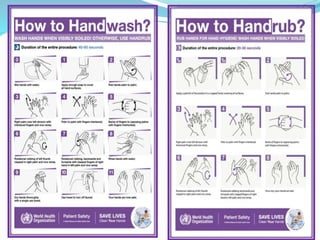
Hand Hygiene
Perform hand hygiene BEFORE:
 starting an injection session (i.e. preparing injection
material and giving injections).
 coming into direct contact with patients for health-
care related procedures
 putting on gloves (first make sure hands are dry).
Hand Hygiene
Perform hand hygiene AFTER:
 an injection session
 any direct contact with patients
 removing gloves.
Personnel Protective equipment
Gloves are recommended when:
 There is a likelihood to come into contact with blood
or body fluid, or mucous membrane
 Performing venipuncture or intravenous injection.
 If the Healthcare provider’s or patient’s skin are non
intact
Personnel Protective equipment
 Gloves are not recommended in routine intradermal,
intramuscular, subcutaneous injections.
 Masks, eye protection and other protective clothing
ARE NOT indicated for the injection procedures
unless exposure to blood splashes is expected.
 When using single-use personal protective equipment,
dispose of the equipment immediately after use.
Aseptic technique
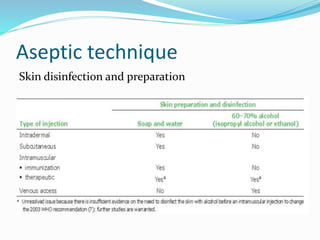
Skin disinfection and preparation
Aseptic technique
Environmental Cleaning
 Injections should be prepared in a designated clean area
where contamination by blood and body fluids is
unlikely.
 Injections preparation, phlebotomy and vaccination
areas should be always cleaned after procedure to
prevent cross infection.
Waste Management
 Discard all sharp objects once used, and unsealed
unused sharps in a puncture and leak-proof sharps
containers.
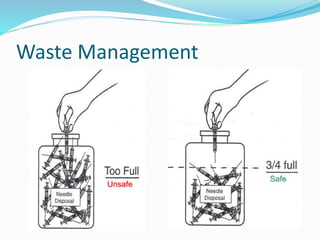
 Close, seal and dispose of sharps containers when the
containers are three quarters full.
 Ensure that infectious waste bags and sharps containers
are closed before they are transported for treatment or
disposal.
Waste Management
Unsafe
Safe
Injection devices
 Use a new single use device for each procedure,
including for the reconstitution of a unit of medication
or vaccine.
 Inspect the packaging of the device and discard the
device if the package has been punctured, torn or
damaged by exposure to moisture, or if the expiry date
has passed.
Injection devices
 Wipe the access diaphragm (septum) with 70% alcohol
before piercing the vial, and allow to air dry before
inserting a device into the bottle.
 Use a sterile syringe and needle for each insertion into a
multidose vial, and never leave a needle in a multidose
vial
 Once the loaded syringe and needle has been withdrawn
from a multidose vial, administer the injection as soon as
possible.
Medications
 Whenever possible, use a single-dose vial for each
patient, to reduce cross-contamination between
patients.
 Only use multidose vials if there is no alternative.
 If possible, keep one multidose vial for each patient,
and store it with the patient’s name on the vial in a
separate treatment or medication room.
Medications
Reconstitution
 If reconstitution using a sterile syringe and needle is
necessary, wipe the rubber septum with alcohol and
allow to dry.
 Inject the necessary amount of reconstitution fluid.
Medications
Reconstitution
 Mix the contents of the vial thoroughly until all visible
particles have dissolved.
 After reconstituting the contents of a multidose vial,
remove the needle and syringe and discard them
immediately as a single unit into a sharps container.
Medications
Label Multidose vial with:
 date and time of preparation.
 type and volume of diluent (if applicable)
 final concentration; – expiry date and time after
reconstitution.
 name and signature of the person reconstituting the
drug.
Medications
Discard Multidose vial when:
 If sterility or content is compromised
 If the expiry date or time has passed (even if the vial
contains antimicrobial preservatives).
 If it has not been properly stored after opening.
Medications
Discard Multidose vial when:
 Within 24 hours of opening, or after the time
recommended by the manufacturer, if the vial does
not contain antimicrobial preservatives.
 If found to be undated, improperly stored,
inadvertently contaminated or perceived to be
contaminated, regardless of expiration date.
DO NOT
 DO NOT use a single loaded syringe to administer
medication to several patients (i.e. ensure one needle,
one syringe, one patient!).
 DO NOT change the needle in order to reuse the
syringe.
 DO NOT use the same mixing syringe to reconstitute
several vials.
 DO NOT combine leftover medications for later use.
DO NOT
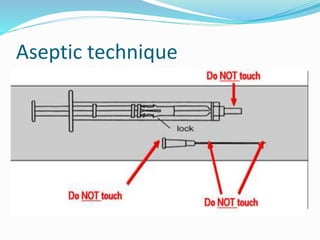
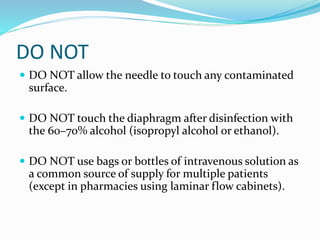
 DO NOT allow the needle to touch any contaminated
surface.
 DO NOT touch the diaphragm after disinfection with
the 60–70% alcohol (isopropyl alcohol or ethanol).
 DO NOT use bags or bottles of intravenous solution as
a common source of supply for multiple patients
(except in pharmacies using laminar flow cabinets).
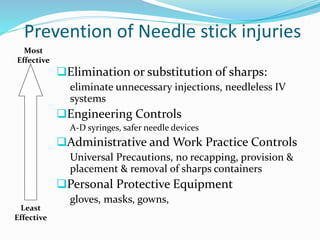
Prevention of Needle stick injuries
Elimination or substitution of sharps:
eliminate unnecessary injections, needleless IV
systems
Engineering Controls
A-D syringes, safer needle devices
Administrative and Work Practice Controls
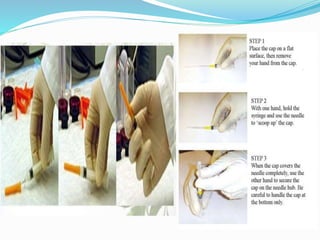
Universal Precautions, no recapping, provision &
placement & removal of sharps containers
Personal Protective Equipment
gloves, masks, gowns,
Least
Effective
Most
Effective
32

Injection safety

  • 1.
    Dr. Moustapha Ramadan Headof Infection Control Department Al Adan Hospital
  • 2.
    Concept  A safeinjection is one that does not harm the recipient, does not expose the provider to any avoidable risks and does not result in waste that is dangerous for the community.  Injection safety is an important component of basic infection control.
  • 3.
    Concept  The conceptof “standard precautions”, with mandatory safe practices, must be routinely applied in all healthcare settings, and every person in such settings should be considered a potential source of infection
  • 4.
    Risk  Unsafe injectionpractices can lead to transmission of blood borne pathogens (human immunodeficiency virus (HIV), hepatitis B virus (HBV) and hepatitis C virus (HCV) with their associated burden of disease.
  • 5.
    Risk  Recipients (preparation inunclean area, injections with unsterile equipment, reconstitution with non proper diluents…)  Providers ( two hand recapping, absence of safety boxes, pierced or overflow safety boxes, harmful waste collection…)  Community (waste not stored or managed properly, absence of waste management instructions…)
  • 6.
    Prevention Strategies  Eliminatingunnecessary injections is the best way to prevent injection-associated infections.  Vaccination of health workers with hepatitis B vaccine is important in protecting both health workers and patients.
  • 7.
    Prevention Strategies  GeneralBest Practices  Injection device and medication  Needle stick injuries prevention and management
  • 8.
    General Best Practices Hand Hygiene  Personnel Protective equipment  Aseptic technique  Environmental Cleaning  Waste Management
  • 9.
    Hand Hygiene Perform handhygiene BEFORE:  starting an injection session (i.e. preparing injection material and giving injections).  coming into direct contact with patients for health- care related procedures  putting on gloves (first make sure hands are dry).
  • 10.
    Hand Hygiene Perform handhygiene AFTER:  an injection session  any direct contact with patients  removing gloves.
  • 12.
    Personnel Protective equipment Glovesare recommended when:  There is a likelihood to come into contact with blood or body fluid, or mucous membrane  Performing venipuncture or intravenous injection.  If the Healthcare provider’s or patient’s skin are non intact
  • 13.
    Personnel Protective equipment Gloves are not recommended in routine intradermal, intramuscular, subcutaneous injections.  Masks, eye protection and other protective clothing ARE NOT indicated for the injection procedures unless exposure to blood splashes is expected.  When using single-use personal protective equipment, dispose of the equipment immediately after use.
  • 14.
  • 15.
  • 16.
    Environmental Cleaning  Injectionsshould be prepared in a designated clean area where contamination by blood and body fluids is unlikely.  Injections preparation, phlebotomy and vaccination areas should be always cleaned after procedure to prevent cross infection.
  • 17.
    Waste Management  Discardall sharp objects once used, and unsealed unused sharps in a puncture and leak-proof sharps containers.  Close, seal and dispose of sharps containers when the containers are three quarters full.  Ensure that infectious waste bags and sharps containers are closed before they are transported for treatment or disposal.
  • 18.
  • 19.
    Injection devices  Usea new single use device for each procedure, including for the reconstitution of a unit of medication or vaccine.  Inspect the packaging of the device and discard the device if the package has been punctured, torn or damaged by exposure to moisture, or if the expiry date has passed.
  • 20.
    Injection devices  Wipethe access diaphragm (septum) with 70% alcohol before piercing the vial, and allow to air dry before inserting a device into the bottle.  Use a sterile syringe and needle for each insertion into a multidose vial, and never leave a needle in a multidose vial  Once the loaded syringe and needle has been withdrawn from a multidose vial, administer the injection as soon as possible.
  • 21.
    Medications  Whenever possible,use a single-dose vial for each patient, to reduce cross-contamination between patients.  Only use multidose vials if there is no alternative.  If possible, keep one multidose vial for each patient, and store it with the patient’s name on the vial in a separate treatment or medication room.
  • 22.
    Medications Reconstitution  If reconstitutionusing a sterile syringe and needle is necessary, wipe the rubber septum with alcohol and allow to dry.  Inject the necessary amount of reconstitution fluid.
  • 23.
    Medications Reconstitution  Mix thecontents of the vial thoroughly until all visible particles have dissolved.  After reconstituting the contents of a multidose vial, remove the needle and syringe and discard them immediately as a single unit into a sharps container.
  • 24.
    Medications Label Multidose vialwith:  date and time of preparation.  type and volume of diluent (if applicable)  final concentration; – expiry date and time after reconstitution.  name and signature of the person reconstituting the drug.
  • 25.
    Medications Discard Multidose vialwhen:  If sterility or content is compromised  If the expiry date or time has passed (even if the vial contains antimicrobial preservatives).  If it has not been properly stored after opening.
  • 26.
    Medications Discard Multidose vialwhen:  Within 24 hours of opening, or after the time recommended by the manufacturer, if the vial does not contain antimicrobial preservatives.  If found to be undated, improperly stored, inadvertently contaminated or perceived to be contaminated, regardless of expiration date.
  • 27.
    DO NOT  DONOT use a single loaded syringe to administer medication to several patients (i.e. ensure one needle, one syringe, one patient!).  DO NOT change the needle in order to reuse the syringe.  DO NOT use the same mixing syringe to reconstitute several vials.  DO NOT combine leftover medications for later use.
  • 28.
    DO NOT  DONOT allow the needle to touch any contaminated surface.  DO NOT touch the diaphragm after disinfection with the 60–70% alcohol (isopropyl alcohol or ethanol).  DO NOT use bags or bottles of intravenous solution as a common source of supply for multiple patients (except in pharmacies using laminar flow cabinets).
  • 29.
    Prevention of Needlestick injuries Elimination or substitution of sharps: eliminate unnecessary injections, needleless IV systems Engineering Controls A-D syringes, safer needle devices Administrative and Work Practice Controls Universal Precautions, no recapping, provision & placement & removal of sharps containers Personal Protective Equipment gloves, masks, gowns, Least Effective Most Effective
  • 32.

Editor's Notes

  • #7 When effective treatment can be given by other routes (oral or rectal), this is preferred, because it reduces potential exposure to blood and infectious agents, and thus reduces infection risks.
  • #15  Wipe the area with 60–70% alcohol-based solution from the centre of the injection site working outwards, without going over the same area. Apply the solution for 30 seconds then allow it to dry completely.