Transition Elements
XII CHEMISTRY CHAPTER 14
SIDRA JAVED
TRANSITION ELEMENTS
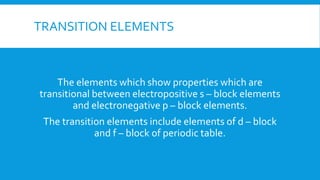
The elements which show properties which are
transitional between electropositive s – block elements
and electronegative p – block elements.
The transition elements include elements of d – block
and f – block of periodic table.
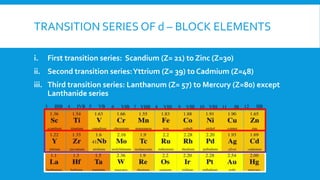
TRANSITION SERIES OF d – BLOCK ELEMENTS
i. First transition series: Scandium (Z= 21) to Zinc (Z=30)
ii. Second transition series:Yttrium (Z= 39) to Cadmium (Z=48)
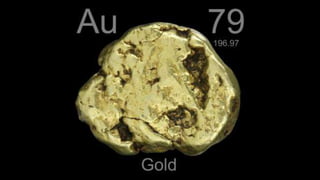
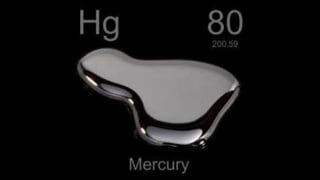
iii. Third transition series: Lanthanum (Z= 57) to Mercury (Z=80) except
Lanthanide series
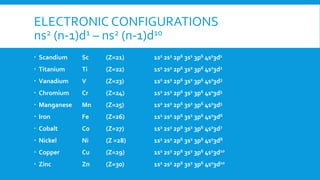
ELECTRONIC CONFIGURATIONS
ns2 (n-1)d1 – ns2 (n-1)d10
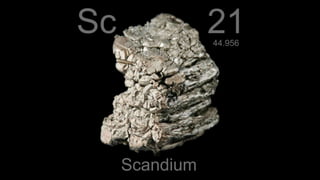
 Scandium Sc (Z=21) 1s2 2s2 2p6 3s2 3p6 4s23d1
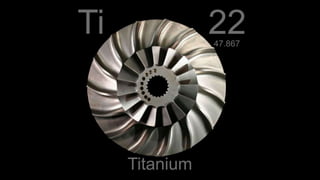
 Titanium Ti (Z=22) 1s2 2s2 2p6 3s2 3p6 4s23d2
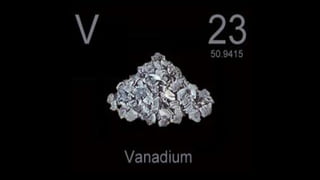
 Vanadium V (Z=23) 1s2 2s2 2p6 3s2 3p6 4s23d3
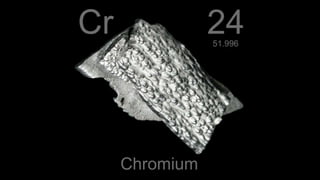
 Chromium Cr (Z=24) 1s2 2s2 2p6 3s2 3p6 4s13d5
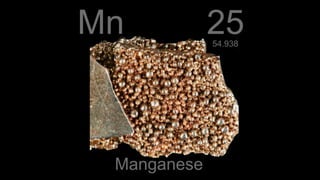
 Manganese Mn (Z=25) 1s2 2s2 2p6 3s2 3p6 4s23d5
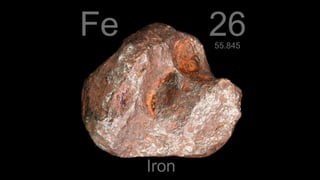
 Iron Fe (Z=26) 1s2 2s2 2p6 3s2 3p6 4s23d6
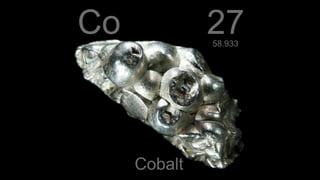
 Cobalt Co (Z=27) 1s2 2s2 2p6 3s2 3p6 4s23d7
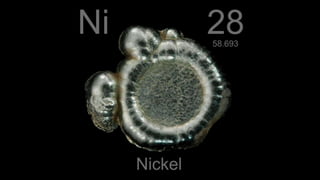
 Nickel Ni (Z =28) 1s2 2s2 2p6 3s2 3p6 4s23d8
 Copper Cu (Z=29) 1s2 2s2 2p6 3s2 3p6 4s13d10
 Zinc Zn (Z=30) 1s2 2s2 2p6 3s2 3p6 4s23d10
COMPLEX FORMATION
Transition metals form complex compounds which are
called coordination compounds
It is due to small and highly charged ions and vacant d
orbitals or suitable energies.
These vacant orbitals accepts lone pairs from atoms, ions
or molecules called ligand.
TRANSITION METAL COMPLEXES
A compound containing the complex ion or
complex molecule in which central metal atom is
surrounded by a number of oppositely charged
ions or neutral molecules called ligands, is known
as a Coordination Compound or Complex
Compound.
COORDINATION COMPOUND
[M(L)n]RTransition
metal
(Central Atom)
Ligand
Coordination number
Charge on
Coordination
Sphere
COORDINATION COMPOUNDS
 The central atom is always a transition metal.
 A ligand may be an ion or neutral molecule which surrounds the
central atom and donates one or more lone pairs.
 The number of ligands surrounding the metal atom is called
coordination number/Ligancy.
 The charge on complex is the sum of oxidation state of metal and
charge of ligands.
 To balance this charge, cations or anions are attached to the
complex.
LIGANDS
Ligands are Lewis bases which donates
electrons to transition metal ion.
Ligands are classifies as:
i. Mono dentate Ligands
ii. Poly dentate or multi dentate ligands
MONO DENTATE LIGANDS
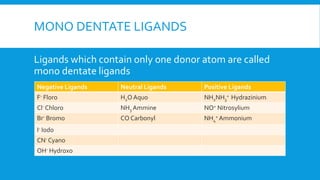
Ligands which contain only one donor atom are called
mono dentate ligands
Negative Ligands Neutral Ligands Positive Ligands
F- Floro H2O Aquo NH2NH3
+ Hydrazinium
Cl- Chloro NH3 Ammine NO+ Nitrosylium
Br- Bromo CO Carbonyl NH4
+ Ammonium
I- Iodo
CN- Cyano
OH- Hydroxo
POLY DENTATE LIGANDS
Ligands which contain more than one donor atom are
called poly dentate ligands.
They can be classified as:
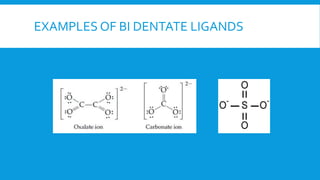
i. Bi dentate ligands
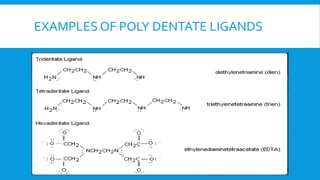
ii. Tri dentate ligands
iii. Tetra dentate ligands
iv. Hexa dentate ligands etc.
EXAMPLES OF BI DENTATE LIGANDS
EXAMPLES OF POLY DENTATE LIGANDS
CHELATING AGENT
Poly dentate ligands are also called chelating
agents.
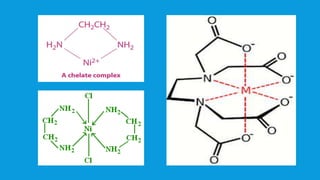
The chelating agent on coordination with metal
atom forms a ring structure called chelates i.e. a
Greek word meaning Crab’s Claw.
IUPAC NOMENCLATURE OF COMPLEX
COMPOUNDS
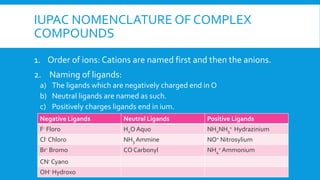
1. Order of ions: Cations are named first and then the anions.
2. Naming of ligands:
a) The ligands which are negatively charged end in O
b) Neutral ligands are named as such.
c) Positively charges ligands end in ium.
Negative Ligands Neutral Ligands Positive Ligands
F- Floro H2O Aquo NH2NH3
+ Hydrazinium
Cl- Chloro NH3 Ammine NO+ Nitrosylium
Br- Bromo CO Carbonyl NH4
+ Ammonium
CN- Cyano
OH- Hydroxo
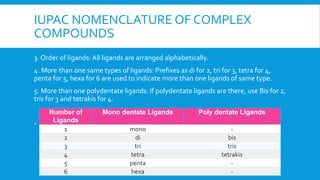
3. Order of ligands: All ligands are arranged alphabetically.
4. More than one same types of ligands: Prefixes as di for 2, tri for 3, tetra for 4,
penta for 5, hexa for 6 are used to indicate more than one ligands of same type.
5. More than one polydentate ligands: If polydentate ligands are there, use Bis for 2,
tris for 3 and tetrakis for 4.

IUPAC NOMENCLATURE OF COMPLEX
COMPOUNDS
Number of
Ligands
Mono dentate Ligands Poly dentate Ligands
1 mono -
2 di bis
3 tri tris
4 tetra tetrakis
5 penta -
6 hexa -
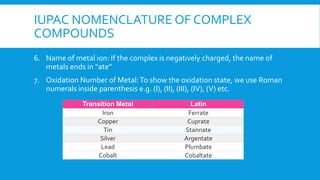
6. Name of metal ion: If the complex is negatively charged, the name of
metals ends in “ate”
7. Oxidation Number of Metal:To show the oxidation state, we use Roman
numerals inside parenthesis e.g. (I), (II), (III), (IV), (V) etc.
Transition Metal Latin
Iron Ferrate
Copper Cuprate
Tin Stannate
Silver Argentate
Lead Plumbate
Cobalt Cobaltate
IUPAC NOMENCLATURE OF COMPLEX
COMPOUNDS
COMPLEXTYPE
Complex Cation [Co(NH3)6]+3
Complex anion [Ni(CN)4]-2
Neutral complex [Pt(NH3)Cl4]
Coordination compound K4[Fe(CN)6]
CALCULATING OXIDATION
STATE OF METAL
OXIDATION STATE OF METAL ATOM
Charge on Coordination sphere = Oxidation State of metal + total charge of Ligands
Oxidation state of metal = Charge on coordination sphere – total Charge of ligands
[M(L)n]R
PRACTICE EXAMPLES
1. K4[Fe(CN)6]
4 K = +4
Charge on Coordination sphere = -4
6 CN- = (-1) 6 = -6
Oxidation state of Fe = -4 – (-6) = -4 + 6 = +2
2. K3[Fe(CN)6]
3 K = +3
Charge on Coordination sphere = -3
6 CN- = (-1) 6 = -6
Oxidation state of Fe = -3 – (-6) = -3 + 6 = +3
3. [Ag(NH3)2]Cl
Cl = -1
Charge on Coordination sphere = +1
3 NH3 = 0
Oxidation state of Ag = +1 – 0 = +1
3. [Ni(CO)4]
Charge on Coordination sphere = 0
4 CO = 0
Oxidation state of Ni = 0
PRACTICE EXAMPLES
NAMING THE COMPLEXES
GIVE IUPAC NAMES OFTHE FOLLOWING
TRANSITION METAL COMPLEXES
1. K3[Fe(CN)6]
2. K4[Fe(CN)6]
3. Na3[Co(NO2)6]
4. Na2[Zn(OH)4]
First write the
name of CationPotassium
Potassium
Sodium
Sodium
Write names of
Ligands
Hexa cyano
Hexa cyano
Hexa nitro
Tetra hydroxo
Write metal name
and oxidation
state
Ferrate (III)
Ferrate (II)
Cobaltate (III)
Zincate (II)
GIVE IUPAC NAMES OFTHE FOLLOWING
TRANSITION METAL COMPLEXES
6. Ni(CO)4
7. [Pt(NH3)2Cl2]
8. [Cr(NH3)3Cl3]
9. [Co(NH3)2(en)Cl3]
Write names of
Ligands
Write metal name
and oxidation
state
Tetra carbonyl
Dichloro diammine
Trichloro (ethylene diammine) diammine
Tri chloro tri ammine
nickel (0)
platinum (II)
cobalt (III)
chromium (III)
GIVE IUPAC NAMES OFTHE FOLLOWING
TRANSITION METAL COMPLEXES
10. [Co(NH3)6]Cl3
11. [Cr(H2O)5Br ]Br2
12. [Cu(NH3)4]SO4
13. [Cu(NH3)2(H2O)2](NO3)2
Write names of
Ligands
Write metal name
and oxidation
state
Write name of
anion
Hexa ammine
Bromo penta aquo
Tetra ammine
Diammine diaquo
Cobalt (III)
Chromium (III)
Copper (II)
Copper (II)
chloride
bromide
sulphate
nitrate
GIVE IUPAC NAMES OFTHE FOLLOWING
TRANSITION METAL COMPLEX IONS
1. [Zn(CN)4]-
2. [Co(NH3)6]+3
3. [Ni(CN)4]-2
4. [Co(en)2Cl2]+3
Write names of
Ligands
Write metal name
and oxidation
state
Tetra cyano
Hexa ammine
Tetra cyano
Dichloro bis ethylene diammine
zincate (II) ion
cobalt (III) ion
nickelate (II) ion
cobalt (III) ion
END OF LESSON
sidra.javedali@gmail.com

Transition Elements and Coordination Compounds

  • 1.
    Transition Elements XII CHEMISTRYCHAPTER 14 SIDRA JAVED
  • 2.
    TRANSITION ELEMENTS The elementswhich show properties which are transitional between electropositive s – block elements and electronegative p – block elements. The transition elements include elements of d – block and f – block of periodic table.
  • 3.
    TRANSITION SERIES OFd – BLOCK ELEMENTS i. First transition series: Scandium (Z= 21) to Zinc (Z=30) ii. Second transition series:Yttrium (Z= 39) to Cadmium (Z=48) iii. Third transition series: Lanthanum (Z= 57) to Mercury (Z=80) except Lanthanide series
  • 4.
    ELECTRONIC CONFIGURATIONS ns2 (n-1)d1– ns2 (n-1)d10  Scandium Sc (Z=21) 1s2 2s2 2p6 3s2 3p6 4s23d1  Titanium Ti (Z=22) 1s2 2s2 2p6 3s2 3p6 4s23d2  Vanadium V (Z=23) 1s2 2s2 2p6 3s2 3p6 4s23d3  Chromium Cr (Z=24) 1s2 2s2 2p6 3s2 3p6 4s13d5  Manganese Mn (Z=25) 1s2 2s2 2p6 3s2 3p6 4s23d5  Iron Fe (Z=26) 1s2 2s2 2p6 3s2 3p6 4s23d6  Cobalt Co (Z=27) 1s2 2s2 2p6 3s2 3p6 4s23d7  Nickel Ni (Z =28) 1s2 2s2 2p6 3s2 3p6 4s23d8  Copper Cu (Z=29) 1s2 2s2 2p6 3s2 3p6 4s13d10  Zinc Zn (Z=30) 1s2 2s2 2p6 3s2 3p6 4s23d10
  • 19.
    COMPLEX FORMATION Transition metalsform complex compounds which are called coordination compounds It is due to small and highly charged ions and vacant d orbitals or suitable energies. These vacant orbitals accepts lone pairs from atoms, ions or molecules called ligand.
  • 20.
    TRANSITION METAL COMPLEXES Acompound containing the complex ion or complex molecule in which central metal atom is surrounded by a number of oppositely charged ions or neutral molecules called ligands, is known as a Coordination Compound or Complex Compound.
  • 21.
  • 22.
    COORDINATION COMPOUNDS  Thecentral atom is always a transition metal.  A ligand may be an ion or neutral molecule which surrounds the central atom and donates one or more lone pairs.  The number of ligands surrounding the metal atom is called coordination number/Ligancy.  The charge on complex is the sum of oxidation state of metal and charge of ligands.  To balance this charge, cations or anions are attached to the complex.
  • 23.
    LIGANDS Ligands are Lewisbases which donates electrons to transition metal ion. Ligands are classifies as: i. Mono dentate Ligands ii. Poly dentate or multi dentate ligands
  • 24.
    MONO DENTATE LIGANDS Ligandswhich contain only one donor atom are called mono dentate ligands Negative Ligands Neutral Ligands Positive Ligands F- Floro H2O Aquo NH2NH3 + Hydrazinium Cl- Chloro NH3 Ammine NO+ Nitrosylium Br- Bromo CO Carbonyl NH4 + Ammonium I- Iodo CN- Cyano OH- Hydroxo
  • 25.
    POLY DENTATE LIGANDS Ligandswhich contain more than one donor atom are called poly dentate ligands. They can be classified as: i. Bi dentate ligands ii. Tri dentate ligands iii. Tetra dentate ligands iv. Hexa dentate ligands etc.
  • 26.
    EXAMPLES OF BIDENTATE LIGANDS
  • 27.
    EXAMPLES OF POLYDENTATE LIGANDS
  • 28.
    CHELATING AGENT Poly dentateligands are also called chelating agents. The chelating agent on coordination with metal atom forms a ring structure called chelates i.e. a Greek word meaning Crab’s Claw.
  • 30.
    IUPAC NOMENCLATURE OFCOMPLEX COMPOUNDS 1. Order of ions: Cations are named first and then the anions. 2. Naming of ligands: a) The ligands which are negatively charged end in O b) Neutral ligands are named as such. c) Positively charges ligands end in ium. Negative Ligands Neutral Ligands Positive Ligands F- Floro H2O Aquo NH2NH3 + Hydrazinium Cl- Chloro NH3 Ammine NO+ Nitrosylium Br- Bromo CO Carbonyl NH4 + Ammonium CN- Cyano OH- Hydroxo
  • 31.
    3. Order ofligands: All ligands are arranged alphabetically. 4. More than one same types of ligands: Prefixes as di for 2, tri for 3, tetra for 4, penta for 5, hexa for 6 are used to indicate more than one ligands of same type. 5. More than one polydentate ligands: If polydentate ligands are there, use Bis for 2, tris for 3 and tetrakis for 4.  IUPAC NOMENCLATURE OF COMPLEX COMPOUNDS Number of Ligands Mono dentate Ligands Poly dentate Ligands 1 mono - 2 di bis 3 tri tris 4 tetra tetrakis 5 penta - 6 hexa -
  • 32.
    6. Name ofmetal ion: If the complex is negatively charged, the name of metals ends in “ate” 7. Oxidation Number of Metal:To show the oxidation state, we use Roman numerals inside parenthesis e.g. (I), (II), (III), (IV), (V) etc. Transition Metal Latin Iron Ferrate Copper Cuprate Tin Stannate Silver Argentate Lead Plumbate Cobalt Cobaltate IUPAC NOMENCLATURE OF COMPLEX COMPOUNDS
  • 33.
    COMPLEXTYPE Complex Cation [Co(NH3)6]+3 Complexanion [Ni(CN)4]-2 Neutral complex [Pt(NH3)Cl4] Coordination compound K4[Fe(CN)6]
  • 34.
  • 35.
    OXIDATION STATE OFMETAL ATOM Charge on Coordination sphere = Oxidation State of metal + total charge of Ligands Oxidation state of metal = Charge on coordination sphere – total Charge of ligands [M(L)n]R
  • 36.
    PRACTICE EXAMPLES 1. K4[Fe(CN)6] 4K = +4 Charge on Coordination sphere = -4 6 CN- = (-1) 6 = -6 Oxidation state of Fe = -4 – (-6) = -4 + 6 = +2 2. K3[Fe(CN)6] 3 K = +3 Charge on Coordination sphere = -3 6 CN- = (-1) 6 = -6 Oxidation state of Fe = -3 – (-6) = -3 + 6 = +3
  • 37.
    3. [Ag(NH3)2]Cl Cl =-1 Charge on Coordination sphere = +1 3 NH3 = 0 Oxidation state of Ag = +1 – 0 = +1 3. [Ni(CO)4] Charge on Coordination sphere = 0 4 CO = 0 Oxidation state of Ni = 0 PRACTICE EXAMPLES
  • 38.
  • 39.
    GIVE IUPAC NAMESOFTHE FOLLOWING TRANSITION METAL COMPLEXES 1. K3[Fe(CN)6] 2. K4[Fe(CN)6] 3. Na3[Co(NO2)6] 4. Na2[Zn(OH)4] First write the name of CationPotassium Potassium Sodium Sodium Write names of Ligands Hexa cyano Hexa cyano Hexa nitro Tetra hydroxo Write metal name and oxidation state Ferrate (III) Ferrate (II) Cobaltate (III) Zincate (II)
  • 40.
    GIVE IUPAC NAMESOFTHE FOLLOWING TRANSITION METAL COMPLEXES 6. Ni(CO)4 7. [Pt(NH3)2Cl2] 8. [Cr(NH3)3Cl3] 9. [Co(NH3)2(en)Cl3] Write names of Ligands Write metal name and oxidation state Tetra carbonyl Dichloro diammine Trichloro (ethylene diammine) diammine Tri chloro tri ammine nickel (0) platinum (II) cobalt (III) chromium (III)
  • 41.
    GIVE IUPAC NAMESOFTHE FOLLOWING TRANSITION METAL COMPLEXES 10. [Co(NH3)6]Cl3 11. [Cr(H2O)5Br ]Br2 12. [Cu(NH3)4]SO4 13. [Cu(NH3)2(H2O)2](NO3)2 Write names of Ligands Write metal name and oxidation state Write name of anion Hexa ammine Bromo penta aquo Tetra ammine Diammine diaquo Cobalt (III) Chromium (III) Copper (II) Copper (II) chloride bromide sulphate nitrate
  • 42.
    GIVE IUPAC NAMESOFTHE FOLLOWING TRANSITION METAL COMPLEX IONS 1. [Zn(CN)4]- 2. [Co(NH3)6]+3 3. [Ni(CN)4]-2 4. [Co(en)2Cl2]+3 Write names of Ligands Write metal name and oxidation state Tetra cyano Hexa ammine Tetra cyano Dichloro bis ethylene diammine zincate (II) ion cobalt (III) ion nickelate (II) ion cobalt (III) ion
  • 43.