‘’ TRANSITION CURVE
‘’
GOVERNMENT ENGINEERING COLLEGE, BHARUCH
5TH SEM CIVIL
HIGHWAY ENGINEERING(2150601)
Presentation Done By :
MITHAIALA NACHIKETA R. 180143106010
INTRODUCTION…
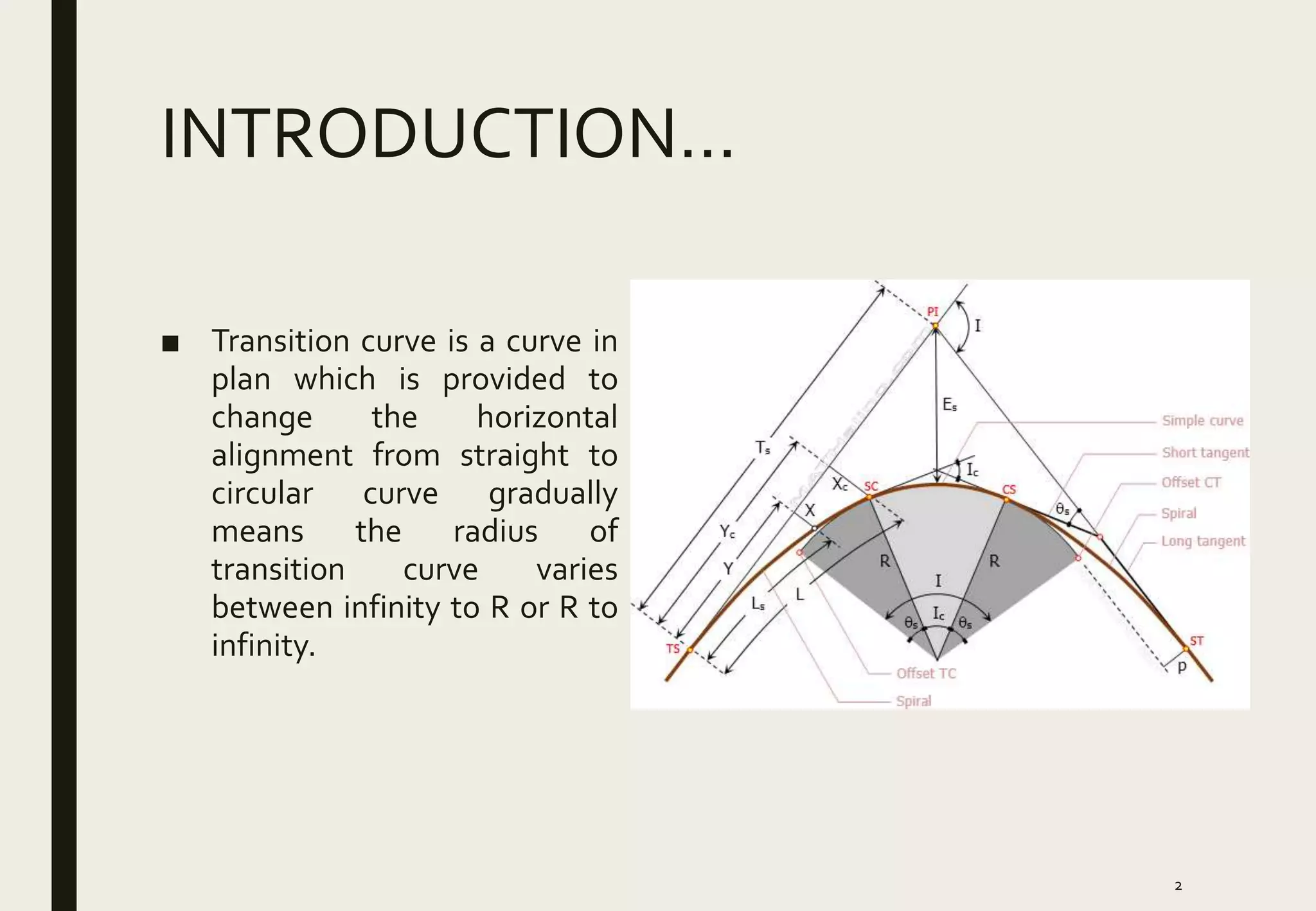
■ Transition curve is a curve in
plan which is provided to
change the horizontal
alignment from straight to
circular curve gradually
means the radius of
transition curve varies
between infinity to R or R to
infinity.
2
OBJECTIVES :-
■ For the gradual introduction Centrifugal force
■ To introduce super elevation gradually
■ To introduce extra widening gradually
■ To provide comfort for the driver that is to enable smooth vehicle
operation on road.
■ To enhance aesthetics of highways.
■ To prevent the possibility of overturning of vehicles on horizontal
curve.
■ To improve in design speed on horizontal curves.
3
TYPES OFTRANSITION
CURVES :-
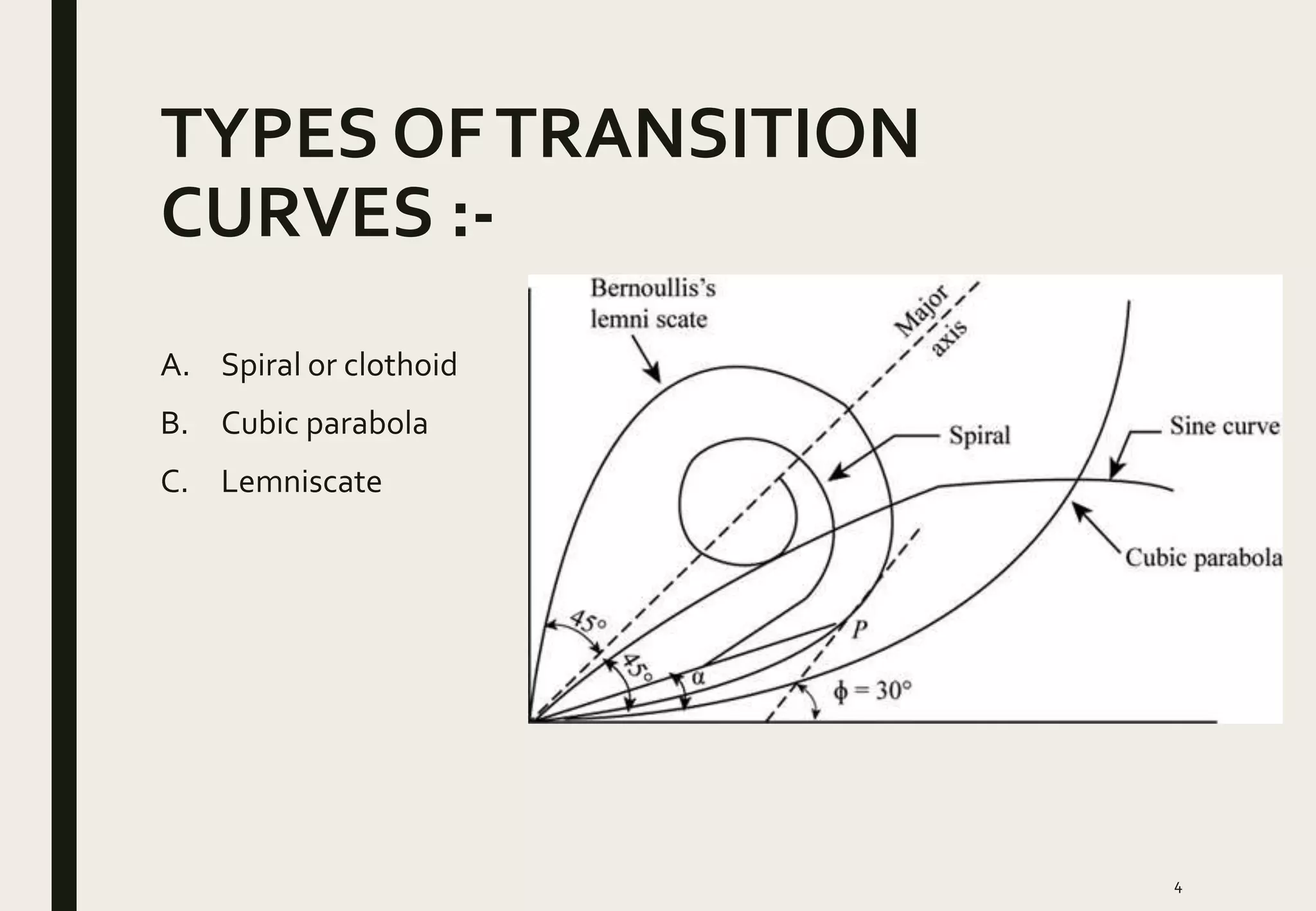
A. Spiral or clothoid
B. Cubic parabola
C. Lemniscate
4
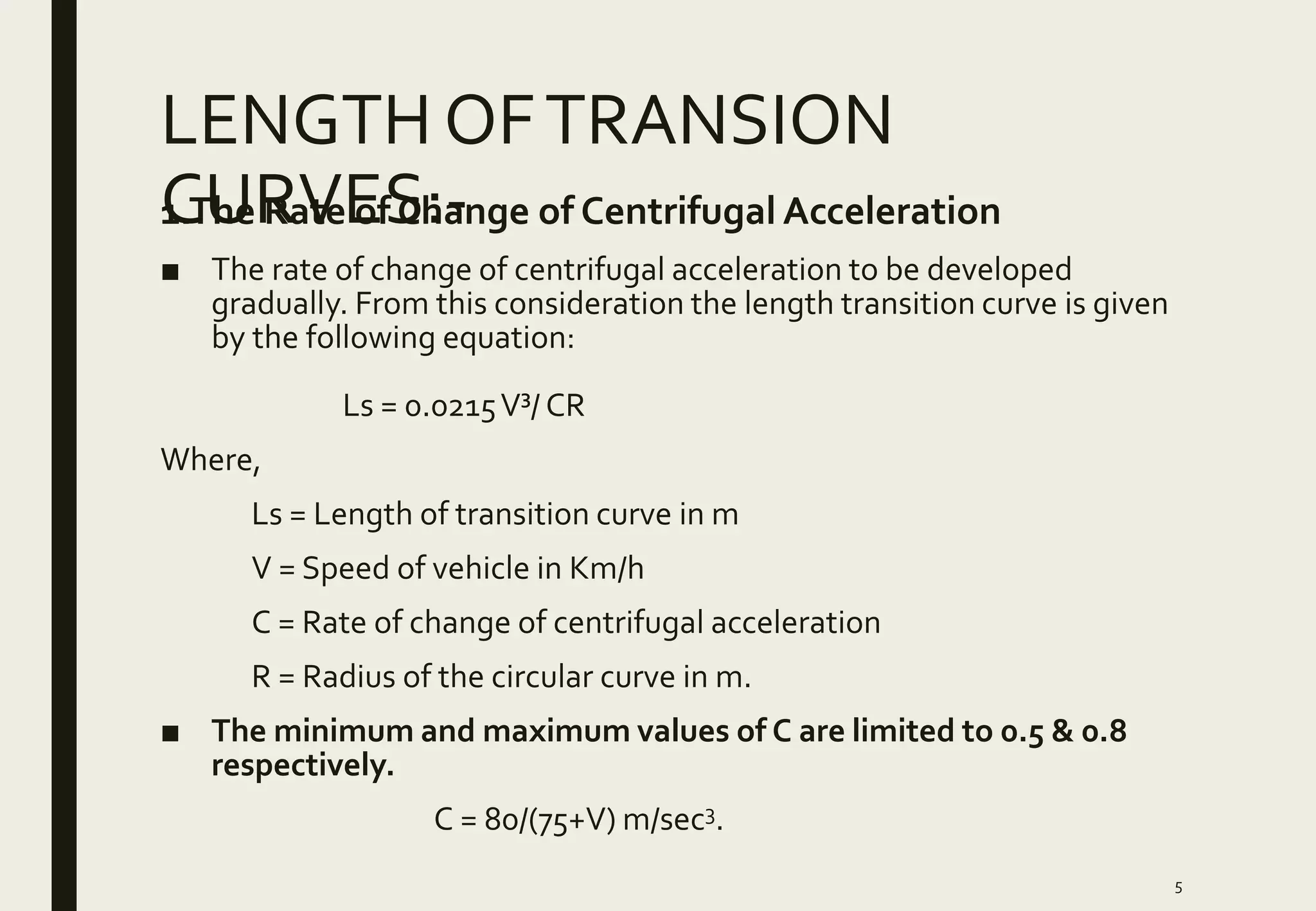
LENGTH OFTRANSION
CURVES:-1.The Rate of Change of Centrifugal Acceleration
■ The rate of change of centrifugal acceleration to be developed
gradually. From this consideration the length transition curve is given
by the following equation:
Ls = 0.0215V³/ CR
Where,
Ls = Length of transition curve in m
V = Speed of vehicle in Km/h
C = Rate of change of centrifugal acceleration
R = Radius of the circular curve in m.
■ The minimum and maximum values of C are limited to 0.5 & 0.8
respectively.
C = 80/(75+V) m/sec3.
5
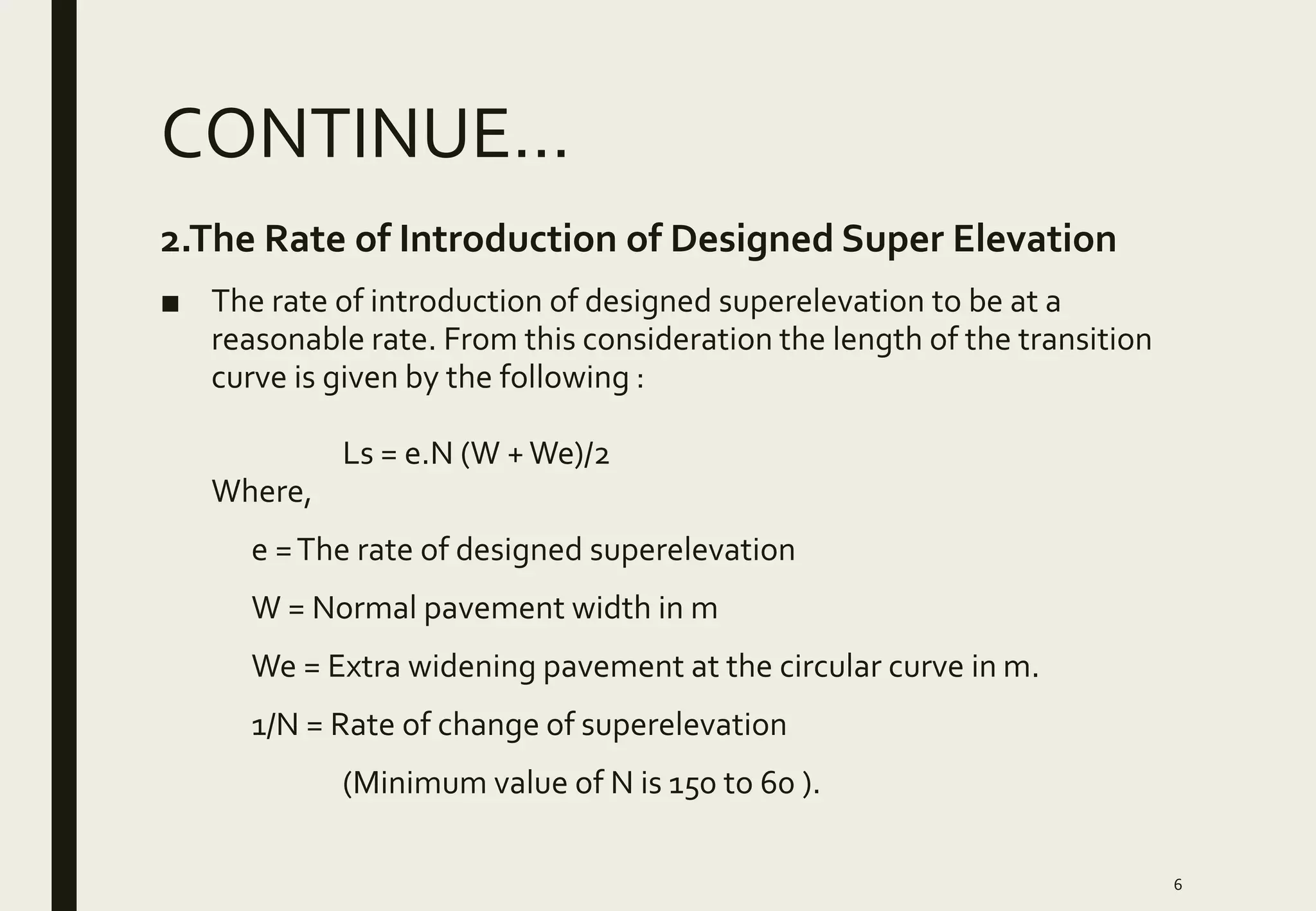
CONTINUE…
2.The Rate of Introduction of Designed Super Elevation
■ The rate of introduction of designed superelevation to be at a
reasonable rate. From this consideration the length of the transition
curve is given by the following :
Ls = e.N (W +We)/2
Where,
e =The rate of designed superelevation
W = Normal pavement width in m
We = Extra widening pavement at the circular curve in m.
1/N = Rate of change of superelevation
(Minimum value of N is 150 to 60 ).
6
CONTINUE…
7
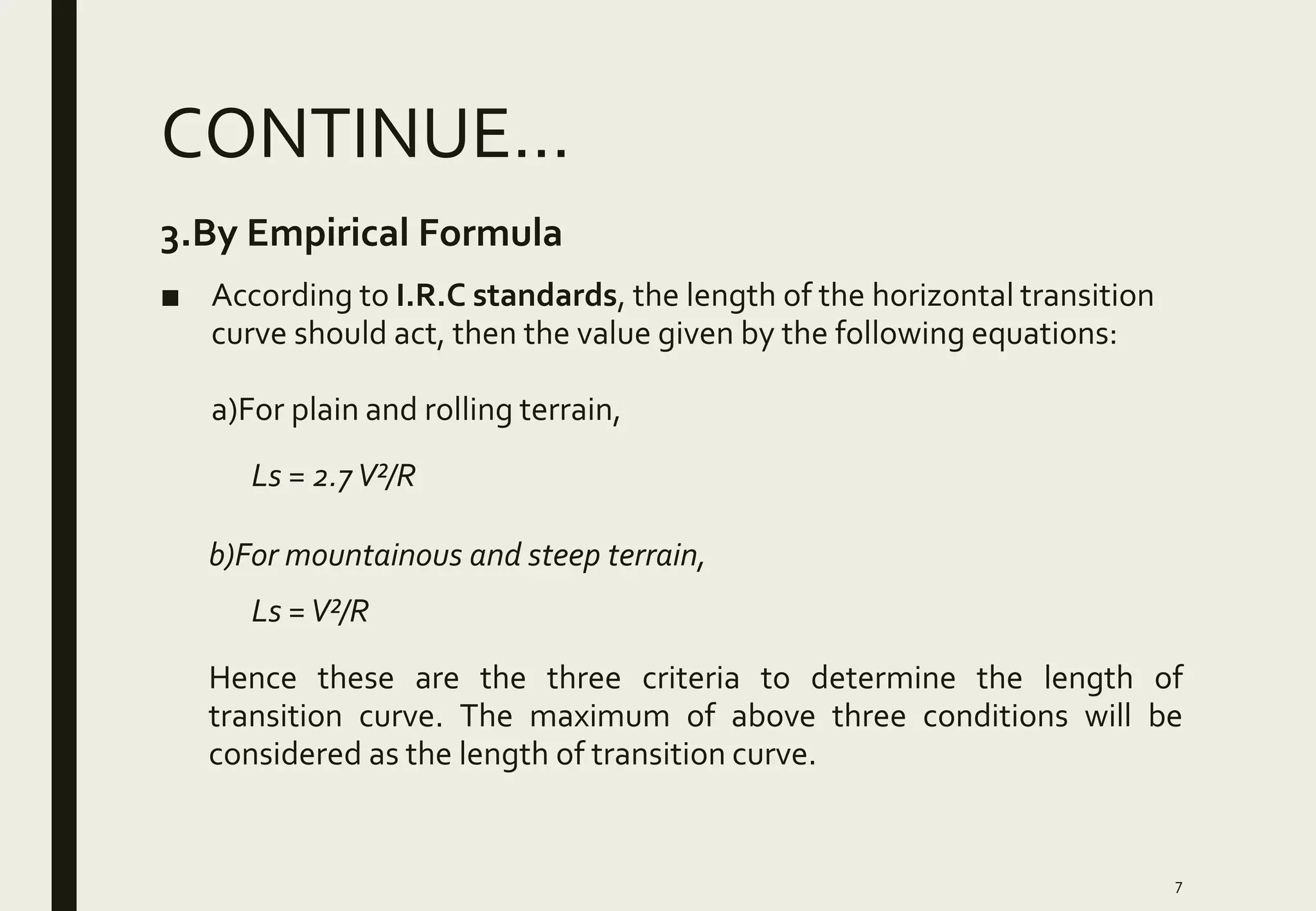
3.By Empirical Formula
■ According to I.R.C standards, the length of the horizontal transition
curve should act, then the value given by the following equations:
a)For plain and rolling terrain,
Ls = 2.7V²/R
b)For mountainous and steep terrain,
Ls =V²/R
Hence these are the three criteria to determine the length of
transition curve. The maximum of above three conditions will be
considered as the length of transition curve.
THANKYOU !
ANY QUESTIONS ?

transition curve in Highway Geometry Design

  • 1.
    ‘’ TRANSITION CURVE ‘’ GOVERNMENTENGINEERING COLLEGE, BHARUCH 5TH SEM CIVIL HIGHWAY ENGINEERING(2150601) Presentation Done By : MITHAIALA NACHIKETA R. 180143106010
  • 2.
    INTRODUCTION… ■ Transition curveis a curve in plan which is provided to change the horizontal alignment from straight to circular curve gradually means the radius of transition curve varies between infinity to R or R to infinity. 2
  • 3.
    OBJECTIVES :- ■ Forthe gradual introduction Centrifugal force ■ To introduce super elevation gradually ■ To introduce extra widening gradually ■ To provide comfort for the driver that is to enable smooth vehicle operation on road. ■ To enhance aesthetics of highways. ■ To prevent the possibility of overturning of vehicles on horizontal curve. ■ To improve in design speed on horizontal curves. 3
  • 4.
    TYPES OFTRANSITION CURVES :- A.Spiral or clothoid B. Cubic parabola C. Lemniscate 4
  • 5.
    LENGTH OFTRANSION CURVES:-1.The Rateof Change of Centrifugal Acceleration ■ The rate of change of centrifugal acceleration to be developed gradually. From this consideration the length transition curve is given by the following equation: Ls = 0.0215V³/ CR Where, Ls = Length of transition curve in m V = Speed of vehicle in Km/h C = Rate of change of centrifugal acceleration R = Radius of the circular curve in m. ■ The minimum and maximum values of C are limited to 0.5 & 0.8 respectively. C = 80/(75+V) m/sec3. 5
  • 6.
    CONTINUE… 2.The Rate ofIntroduction of Designed Super Elevation ■ The rate of introduction of designed superelevation to be at a reasonable rate. From this consideration the length of the transition curve is given by the following : Ls = e.N (W +We)/2 Where, e =The rate of designed superelevation W = Normal pavement width in m We = Extra widening pavement at the circular curve in m. 1/N = Rate of change of superelevation (Minimum value of N is 150 to 60 ). 6
  • 7.
    CONTINUE… 7 3.By Empirical Formula ■According to I.R.C standards, the length of the horizontal transition curve should act, then the value given by the following equations: a)For plain and rolling terrain, Ls = 2.7V²/R b)For mountainous and steep terrain, Ls =V²/R Hence these are the three criteria to determine the length of transition curve. The maximum of above three conditions will be considered as the length of transition curve.
  • 8.