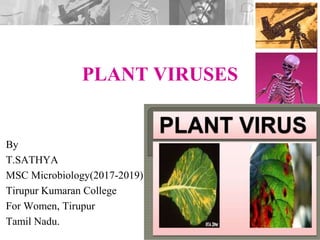
PLANT VIRUSES
By
T.SATHYA
MSC Microbiology(2017-2019)
Tirupur Kumaran College
For Women, Tirupur
Tamil Nadu.
Plant viruses are viruses that affect plants.
Pathogenic to higher plants.
•. Harmless to human and other animals.
•Reduce plant crop yield and quality of crops.
• Some may be able to multiply within the bodies
Of aphids and nematodes.
HISTORY
• Beijernick ( 1897) coined the latin
name “VIRUS” meaning Poison. He
studied plant juices and found they
caused healthy plants to become sick.
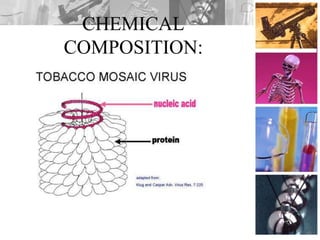
• Wendell Stanley (1935) crystallized
sap from sick Tobacco plants. He
discovered viruses were made of
nucleic acids and proteins.
CHEMICAL
COMPOSITION:
TYPES
DNA
SS- Geminivirus
ds- cauliflower mosaic virus
RNA
SS-?
ds-?
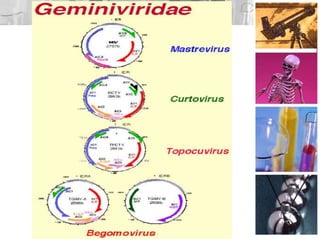
1) Geminiviridae:
• one of the family of plant virus.
• Currently over 360 species in this
family, divided among 9 genera.
• Diseases associated with this family
include bright yellow mosaic , yellow
mosaic, yellow mottle, leaf curling,
stunting, streaks, reduced yields.
• Ss circular dna diverge in both
directions from a virion strand origin of
replication (AMBISENSE).
Continued…
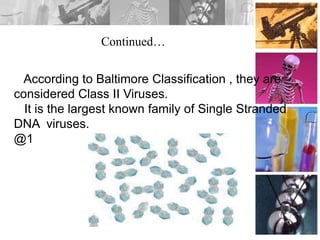
According to Baltimore Classification , they are
considered Class II Viruses.
It is the largest known family of Single Stranded
DNA viruses.
@1
VIRUS CLASSIFICATION:
• Group – Group II (ssDNA)
• Order - Unassigned
• Family - Geminiviridae
• Genera – Becurtovirus Grablovirus
Begomovirus Mastrevirus
Capulavirus Topocuvirus
curtovirus Turncurtovirus
Eragrovirus
STRUCTURE:
• have Circular single-stranded DNA.
• Genome is either in two segments.
• The non-segmented genome is 2500-3000
nucleotides long, and the segmented
genome is 4800-5600 nucleotides long.
• The genome encodes for both structural and
non-structural proteins.
• In geminivirus, both segments must be
transmitted to the host for a full systemic
infection to occur.
VIRION STRUCTURE:
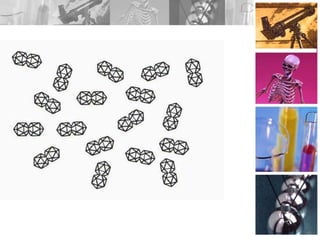
• Geminivirus are non-enveloped,
icosahedral virions that consists
of a capsid.
• The capsid is germinate, or
twinned, and consists of 22
Capsomers.
• The capsid is 30nm long and has
a diameter of 18-20nm.
SYMPTOMS:
• the time of infection, the virus
strains and the presence of mixed
infections.
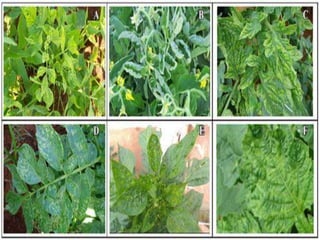
• Common symptoms are stunting,
curling, and twisting of leaves.
• Short internodes and stunted
appearance , no apical growth
caused by early infection.
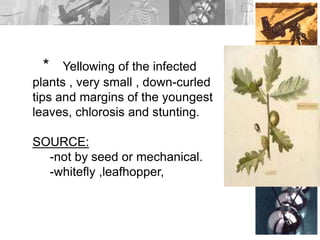
* Yellowing of the infected
plants , very small , down-curled
tips and margins of the youngest
leaves, chlorosis and stunting.
SOURCE:
-not by seed or mechanical.
-whitefly ,leafhopper,
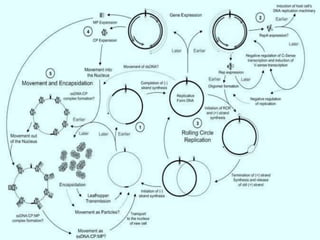
REPLICATION:
• Geminivirus encodes only a few
proteins, thus they need to dependent
host cell factors for replication.
• These factors are DNA polymerase
and repair polymerase to amplify their
genome.
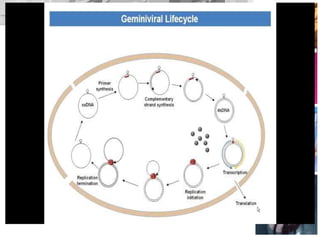
• Replicate by a rolling circle mechanism
like bacteriophages such as M13, and
many plasmids.
Contin…
• Replication takes place inside the
Nucleus of the host cell.
• 1st step: single strand circular DNA is
converted to a double stranded circular
intermediate. In this step Cellular DNA
repair enzymes produce complementary
negative strand for template.
• 2nd step: virus strand cleave at the site of
origin by viral Rep protein to initate
replication.
Continued..
• The ss DNA is packaged into germinate particles in
the nucleus.
• These viruses can introduced into differentiated
plant cells, by mouth of vector.
• These cells generally lack the host enzymes
necessary for DNA replication, making it difficult for
the virus to replicate.
• To overcome this block GEM viruses can induce
plant cells to reenter the cell cycle from a quiescent
state so that virus can replicate.
 plant viruses- Geminivirus ppt

plant viruses- Geminivirus ppt

  • 1.
    PLANT VIRUSES By T.SATHYA MSC Microbiology(2017-2019) TirupurKumaran College For Women, Tirupur Tamil Nadu.
  • 2.
    Plant viruses areviruses that affect plants. Pathogenic to higher plants. •. Harmless to human and other animals. •Reduce plant crop yield and quality of crops. • Some may be able to multiply within the bodies Of aphids and nematodes.
  • 3.
    HISTORY • Beijernick (1897) coined the latin name “VIRUS” meaning Poison. He studied plant juices and found they caused healthy plants to become sick. • Wendell Stanley (1935) crystallized sap from sick Tobacco plants. He discovered viruses were made of nucleic acids and proteins.
  • 4.
  • 5.
  • 6.
    1) Geminiviridae: • oneof the family of plant virus. • Currently over 360 species in this family, divided among 9 genera. • Diseases associated with this family include bright yellow mosaic , yellow mosaic, yellow mottle, leaf curling, stunting, streaks, reduced yields. • Ss circular dna diverge in both directions from a virion strand origin of replication (AMBISENSE).
  • 7.
    Continued… According to BaltimoreClassification , they are considered Class II Viruses. It is the largest known family of Single Stranded DNA viruses. @1
  • 8.
    VIRUS CLASSIFICATION: • Group– Group II (ssDNA) • Order - Unassigned • Family - Geminiviridae • Genera – Becurtovirus Grablovirus Begomovirus Mastrevirus Capulavirus Topocuvirus curtovirus Turncurtovirus Eragrovirus
  • 10.
    STRUCTURE: • have Circularsingle-stranded DNA. • Genome is either in two segments. • The non-segmented genome is 2500-3000 nucleotides long, and the segmented genome is 4800-5600 nucleotides long. • The genome encodes for both structural and non-structural proteins. • In geminivirus, both segments must be transmitted to the host for a full systemic infection to occur.
  • 12.
    VIRION STRUCTURE: • Geminivirusare non-enveloped, icosahedral virions that consists of a capsid. • The capsid is germinate, or twinned, and consists of 22 Capsomers. • The capsid is 30nm long and has a diameter of 18-20nm.
  • 13.
    SYMPTOMS: • the timeof infection, the virus strains and the presence of mixed infections. • Common symptoms are stunting, curling, and twisting of leaves. • Short internodes and stunted appearance , no apical growth caused by early infection.
  • 15.
    * Yellowing ofthe infected plants , very small , down-curled tips and margins of the youngest leaves, chlorosis and stunting. SOURCE: -not by seed or mechanical. -whitefly ,leafhopper,
  • 16.
    REPLICATION: • Geminivirus encodesonly a few proteins, thus they need to dependent host cell factors for replication. • These factors are DNA polymerase and repair polymerase to amplify their genome. • Replicate by a rolling circle mechanism like bacteriophages such as M13, and many plasmids.
  • 18.
    Contin… • Replication takesplace inside the Nucleus of the host cell. • 1st step: single strand circular DNA is converted to a double stranded circular intermediate. In this step Cellular DNA repair enzymes produce complementary negative strand for template. • 2nd step: virus strand cleave at the site of origin by viral Rep protein to initate replication.
  • 20.
    Continued.. • The ssDNA is packaged into germinate particles in the nucleus. • These viruses can introduced into differentiated plant cells, by mouth of vector. • These cells generally lack the host enzymes necessary for DNA replication, making it difficult for the virus to replicate. • To overcome this block GEM viruses can induce plant cells to reenter the cell cycle from a quiescent state so that virus can replicate.